Spotted Joe-Pye-Weed (Eupatorium maculatum)
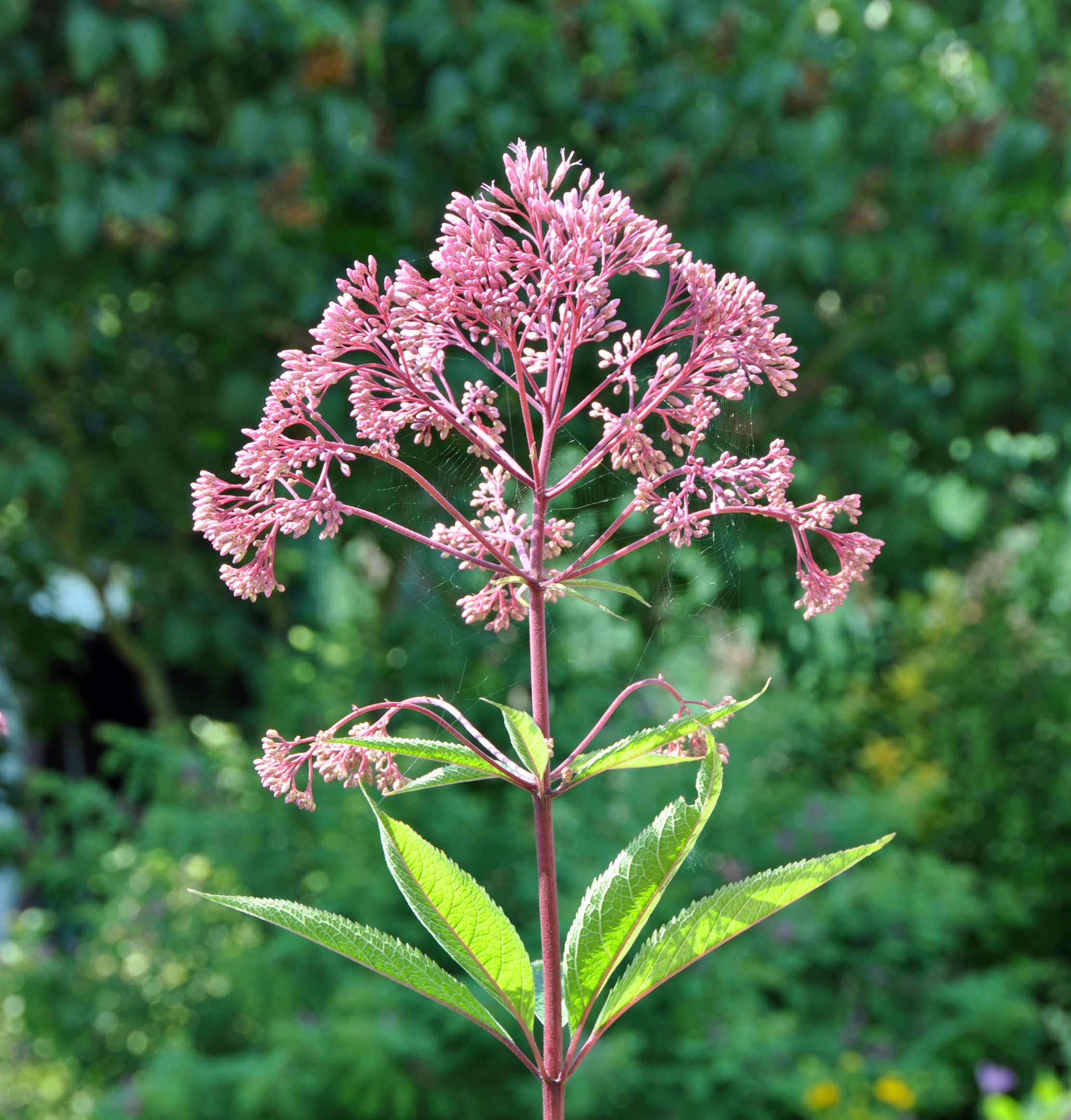
Eupatorium maculatum (also classified as Eutrochium maculatum), commonly called Spotted Joe-Pye-Weed, is one of the most spectacular and ecologically important native wildflowers of North American wet meadows, streambanks, and moist forest edges. This tall, robust perennial — reaching 3 to 7 feet or more in ideal conditions — produces large, flat-topped clusters of mauve-pink to dusty rose-purple flowers in midsummer through early fall, creating a show of color that rivals any ornamental perennial. The “spotted” in the common name refers to the distinctive purple-spotted stems, which help distinguish this species from related Joe-Pye-Weeds.
The name “Joe-Pye-Weed” itself has a fascinating if disputed history. One popular account attributes it to Joe Pye, a legendary Native American healer or herbalist said to have used the plant to cure typhus fever during colonial-era New England outbreaks — though historians debate whether this person was real or a folk invention. Whatever the etymology, the name reflects a deep tradition of medicinal use that extends across multiple Native American cultures throughout the plant’s range. The genus name Eupatorium honors Mithridates VI Eupator, ancient King of Pontus, who was famous for his experiments with plant-based antidotes and medicines.
For native plant gardeners, Spotted Joe-Pye-Weed is an outstanding plant for large-scale, late-season interest. Its combination of bold structure, extended bloom period (July through September), exceptional wildlife value, and adaptability to moist and wet sites makes it a cornerstone of any naturalistic garden in New England or the broader northeastern region. Few native plants attract as many butterflies and native bees simultaneously, making it a must-plant for butterfly gardens and pollinator landscapes across its entire range.
Identification
Spotted Joe-Pye-Weed is a large, upright perennial herb growing from a stout, fibrous root system. Stems are hollow, sturdy, and — most importantly for identification — conspicuously purple-spotted or purple-tinged throughout (hence “maculatum,” meaning “spotted”). This stem coloration is the most reliable field mark distinguishing it from the related Sweet Joe-Pye-Weed (E. purpureum) and Hollow Joe-Pye-Weed (E. fistulosum). Stems branch in the upper portion to produce the flat-topped flower clusters.
Leaves
The large, lanceolate to ovate leaves are arranged in whorls of 3 to 5 (usually 4) around the stem — another important identification feature, as related species may have leaves in whorls of 3 or 5. Individual leaves are 4 to 8 inches long, sharply toothed, and have a rough, slightly hairy texture. The leaves are rough-hairy on both surfaces, giving them a slightly scratchy feel. Leaf veination is pinnate and prominently visible. The whorled arrangement of large, rough leaves provides a bold, tropical texture to the garden from spring through fall.
Flowers
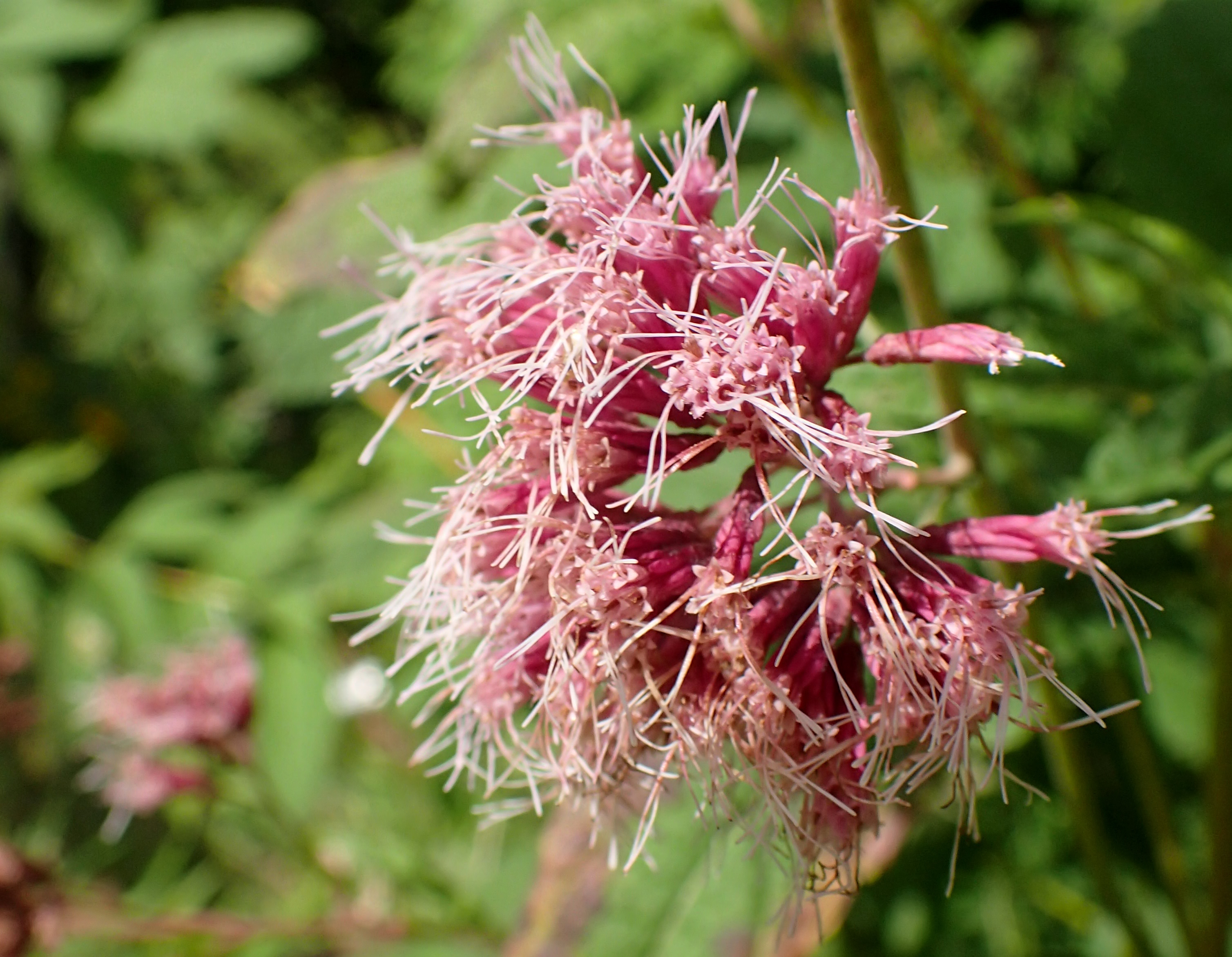
The flowers are borne in large, flat-topped or slightly dome-shaped compound clusters (corymbs) at the top of each stem. Individual florets are tiny — only 1/8 to 1/4 inch — with 8 to 22 florets per small head, each floret consisting of tubular disk flowers only (no ray flowers). The overall color is mauve-pink to rose-purple, with the fuzzy, exserted stamens giving each floret a soft, painterly texture. The combined effect of hundreds of tiny florets in a large flat cluster is a spectacular display that may be 8 to 12 inches across at its peak.
Fruit & Seeds
After pollination, the florets mature into small, 5-ribbed achenes topped with a tuft of white to tawny bristles (pappus). These are wind-dispersed in late fall, the tufted seeds carried considerable distances. The dried seed heads remain attractive through winter and provide foraging habitat for birds that pick through the fluffy seed masses for insects and any remaining seeds.
Quick Facts
| Scientific Name | Eupatorium maculatum (syn. Eutrochium maculatum) |
| Family | Asteraceae (Daisy / Composite) |
| Plant Type | Perennial Herbaceous Wildflower |
| Mature Height | 3–7 ft (1–2 m) |
| Sun Exposure | Full Sun to Part Shade |
| Water Needs | Moderate to High |
| Bloom Time | July – September |
| Flower Color | Mauve-pink to dusty rose-purple |
| Soil Type | Moist to wet; rich loam, clay loam, alluvial soils |
| Soil pH | 4.5–7.0 |
| Deer Resistant | Moderately (generally less palatable) |
| USDA Hardiness Zones | 2–8 |
Native Range
Spotted Joe-Pye-Weed has one of the widest ranges of any native wetland wildflower in North America, extending from Newfoundland and the Maritime provinces south to North Carolina and Tennessee, and west across the Great Lakes states to the Rocky Mountain foothills of Montana and Wyoming. It is native from sea level in coastal New England to high-elevation mountain meadows in the Appalachians and Rockies, reflecting extraordinary ecological adaptability.
Throughout New England — Connecticut, Massachusetts, and Rhode Island — Spotted Joe-Pye-Weed is a characteristic plant of wet meadows, alder thickets along stream edges, and the moist margins of roads through wet areas. It is often seen in spectacular abundance along highway shoulders through wetland areas in late summer, creating dramatic swaths of mauve color. In the interior of the northeast, it occurs along river floodplains, in sedge meadows, and in the shrubby margins of bogs. The species is most abundant in areas with consistent moisture but not permanent flooding.
Spotted Joe-Pye-Weed is distinguished from related species within its range by the combination of purple-spotted stems, leaves typically in whorls of 4, and the relatively flat-topped flower clusters. Sweet Joe-Pye-Weed (E. purpureum) has greenish (not purple-spotted) stems with only a purple tinge at the nodes, and typically has leaves in whorls of 3. Hollow Joe-Pye-Weed (E. fistulosum) has a completely hollow stem and tends to grow in warmer, more southerly parts of the range. All three species hybridize where they co-occur, making field identification occasionally challenging.
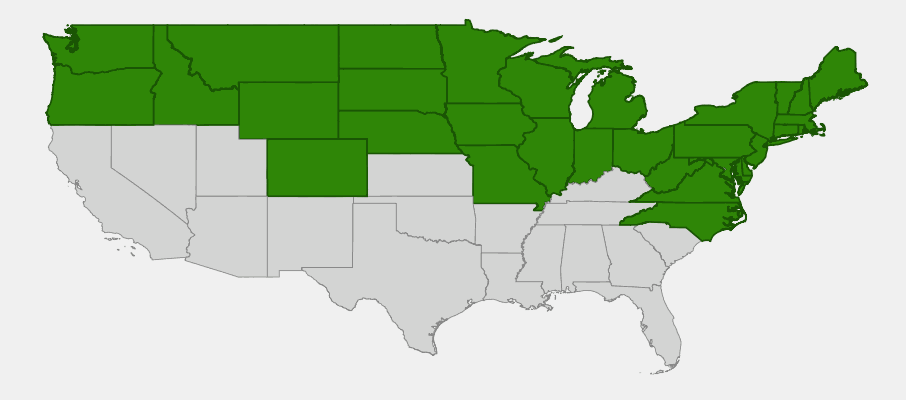
📋 Regional plant lists featuring Spotted Joe-Pye-Weed: Southeastern U.S.
Growing & Care Guide
Spotted Joe-Pye-Weed is a tough, vigorous native perennial that thrives with minimal care in moist to wet garden sites. Its impressive height and bold structure make it a statement plant in large gardens and naturalistic plantings. Given adequate moisture, it is virtually trouble-free — pest-resistant, disease-resistant, and long-lived.
Light
Joe-Pye-Weed performs best in full sun to part shade. In full sun with adequate moisture, it produces the tallest, most floriferous plants. In part shade (4–6 hours of sun), plants are somewhat shorter and slightly less floriferous but still impressive. In deeper shade, flowering is reduced but the bold foliage remains attractive as a textural element. In southern parts of the range, afternoon shade helps prevent heat stress during peak summer.
Soil & Water
Consistent moisture is the key to success with Spotted Joe-Pye-Weed. It thrives in moist to wet soils — wet meadow conditions, moist clay loam, rich alluvial soils, and the margins of rain gardens and stormwater facilities. It tolerates periodic flooding but not permanent standing water. In average garden soil, supplemental watering during dry periods is necessary, especially in the first year after planting. Once established with its deep root system, it has improved drought tolerance, but consistently moist conditions always produce the best performance.
Planting Tips
Plant in spring or fall, spacing plants 2 to 3 feet apart to allow for mature size. Joe-Pye-Weed spreads slowly by seed and is not aggressive — unlike some rhizomatous natives, it stays in place and doesn’t overwhelm neighboring plants. Because of its height, site it at the back of borders, in mass naturalistic plantings, or in the middle of island beds where its bulk and height can be appreciated from multiple angles. It makes spectacular partnerships with other tall, moist-site natives like Swamp Milkweed, Boneset, and Cardinal Flower.
Pruning & Maintenance
The “Chelsea chop” — cutting back by one-third to one-half in early June — is highly recommended for Joe-Pye-Weed. This reduces final height (keeping it to 4–5 feet rather than 6–7), promotes more branching and more flower heads, and produces sturdier stems less prone to wind damage. Plants cut back this way maintain a more compact, tidy appearance appropriate for formal garden settings. Leave seed heads through winter for bird foraging and winter interest. Cut stems back to the ground in late winter or early spring. Division every 4–5 years in spring refreshes the clump and provides division material for spreading the plant.
Landscape Uses
- Rain gardens and bioswales — ideal for the wet zone
- Streambank and wetland restoration — excellent native component
- Large naturalistic gardens — creates spectacular late-season displays
- Butterfly and pollinator gardens — unrivaled for attracting butterflies
- Back-of-border accents — bold height and texture anchor large plantings
- Tall meadow gardens — classic component of wet meadow plant communities
- Wildlife sanctuaries — attracts extraordinary diversity of insects and birds
Wildlife & Ecological Value
Spotted Joe-Pye-Weed is arguably one of the top five native perennials for wildlife value in eastern North America. Its large, flat-topped flower clusters are a magnet for virtually every butterfly and native bee species in its range during the July–September bloom period, and its structural value extends from spring through winter.
For Butterflies
Joe-Pye-Weed is one of the best butterfly plants in the eastern garden. Monarch butterflies in particular are strongly associated with Joe-Pye-Weed during their late-summer migration, nectaring heavily on the flowers as they bulk up for their long journey to Mexico. Eastern Tiger Swallowtails, Spicebush Swallowtails, Black Swallowtails, Giant Swallowtails, Red-spotted Purples, Baltimore Checkerspots, Fritillaries (Great Spangled, Regal, Aphrodite), skippers of many species, and Pearl Crescents all regularly visit. On a warm August day, a blooming Joe-Pye-Weed colony can host dozens of butterfly species simultaneously.
For Native Bees
Native bumblebees — including Common Eastern Bumblebee, Brown-belted Bumblebee, and Two-spotted Bumblebee — are among the most frequent visitors. Many specialist native bees also use Joe-Pye-Weed, including small sweat bees, mining bees, and leaf-cutter bees. The abundant nectar and accessible flower structure make it suitable for bees with a wide range of tongue lengths and body sizes. As a late-summer bloomer, it provides critical nectaring resources for bumblebee queens building up reserves before winter.
For Birds
American Goldfinches eat the seeds in fall, and various sparrows, chickadees, and juncos forage in the dried seed heads through winter. The tall stems provide singing perches for male territorial birds in spring. The dense growth provides nesting cover for marshland-edge bird species including Common Yellowthroat, Willow Flycatcher, and various sparrows.
Ecosystem Role
As a dominant species in wet meadow ecosystems, Spotted Joe-Pye-Weed provides critical structural habitat for the entire community of organisms dependent on that ecosystem. Its large, flat flower clusters host extraordinarily diverse insect communities that in turn support a cascade of predatory insects, spiders, amphibians, and birds. As a late-season bloomer, it extends the nectar season into September, helping pollinators accumulate resources for winter survival or migration.
Cultural & Historical Uses
Spotted Joe-Pye-Weed has a rich and well-documented history of medicinal use across multiple Native American cultures. The Cherokee used root tea preparations to treat urinary complaints and as a diuretic, and applied poulticed leaves to burns and skin inflammations. The Iroquois Confederacy used the plant as a fever-breaking remedy and to treat venereal diseases. The Menominee used infusions of the plant to treat fevers. The Meskwaki used it in combination with other plants to treat “difficult childbirth.” Across many cultures, the plant was valued for its diuretic properties — a use reflected in several folk names including “gravel root” and “kidney root.”
The legend of Joe Pye himself remains one of the most colorful stories in American ethnobotany. According to the most widely told version, Joe Pye was a Native American healer (sometimes described as Mohican, other times as of no specific tribe) who used this plant to cure an outbreak of typhus fever in colonial New England, reportedly in the 1600s or early 1700s. The story was popularized in 19th-century natural history writing and became so embedded in botanical lore that the common name “Joe-Pye-Weed” became universally adopted. More recent historical research has found no documentation of a historical person named Joe Pye, and scholars now generally believe the name is a folk legend, possibly attached to a real practice of Indigenous healing that European settlers observed and named without fully understanding the cultural context.
In contemporary horticulture, Joe-Pye-Weed has undergone a remarkable revival of appreciation. Landscape architect and influential native plant advocate Edith Eddleman helped bring Joe-Pye-Weed into mainstream garden design in the 1980s and 1990s, championing its use in moist, large-scale perennial borders. Today it is one of the most widely planted native perennials in ecological and wildlife-focused gardens across North America. Several cultivars have been developed — most notably ‘Gateway’, which grows to a more manageable 4–5 feet with particularly robust flower clusters — making it more suitable for smaller gardens without sacrificing ecological value.
Frequently Asked Questions
What is the difference between Spotted, Sweet, and Hollow Joe-Pye-Weed?
All three are related native Joe-Pye-Weeds. Spotted Joe-Pye-Weed (E. maculatum) has distinctly purple-spotted stems and leaves usually in whorls of 4–5; it tends to be shorter and more cold-hardy. Sweet Joe-Pye-Weed (E. purpureum) has greenish stems with purple only at the nodes, leaves with a vanilla scent when crushed, and grows taller in shadier locations. Hollow Joe-Pye-Weed (E. fistulosum) has completely hollow stems, typically grows taller, and is more common in warmer, southeastern parts of the range.
Is Joe-Pye-Weed toxic?
Spotted Joe-Pye-Weed contains pyrrolizidine alkaloids, which can be toxic to the liver if consumed in large quantities over time. Historical medicinal use was in diluted, short-term preparations — not as a dietary food. The plant is not dangerous to touch or be around, and livestock that have continuous access to large quantities of it may be at risk, but casual contact or incidental nibbling is not harmful. It is best treated as a medicinal plant with appropriate caution, not as a food.
How do I keep Joe-Pye-Weed from getting too tall?
The most effective approach is the “Chelsea chop” — cutting plants back by one-third to one-half in early June, before the main growth flush. This typically reduces final height from 6–7 feet to 4–5 feet while producing stockier, more branched plants with more (though somewhat smaller) flower clusters. Repeat cutting is not usually necessary or desirable.
Why is Joe-Pye-Weed sometimes called Eutrochium maculatum instead of Eupatorium maculatum?
Taxonomists have reorganized the old catch-all genus Eupatorium, moving the North American Joe-Pye-Weeds into a separate genus Eutrochium based on genetic and morphological analysis. Both names refer to the same plant. Older references and some nurseries still use Eupatorium maculatum; more current taxonomic treatments use Eutrochium maculatum. The two names are synonymous.
Does Spotted Joe-Pye-Weed self-seed prolifically?
Spotted Joe-Pye-Weed does produce abundant wind-dispersed seeds, but it is not typically considered aggressive or invasive in garden settings. Seedlings appear in disturbed soil near the parent plant, and the colonies spread modestly over time. In naturalistic and rain garden settings, occasional seedlings are welcome additions. To prevent any spread, simply deadhead the flowers before seeds disperse in September.

Looking for a nursery that carries Spotted Joe-Pye-Weed?
Browse our native plant nursery directory: Virginia · North Carolina · Georgia