
Canadian Yew (Taxus canadensis)
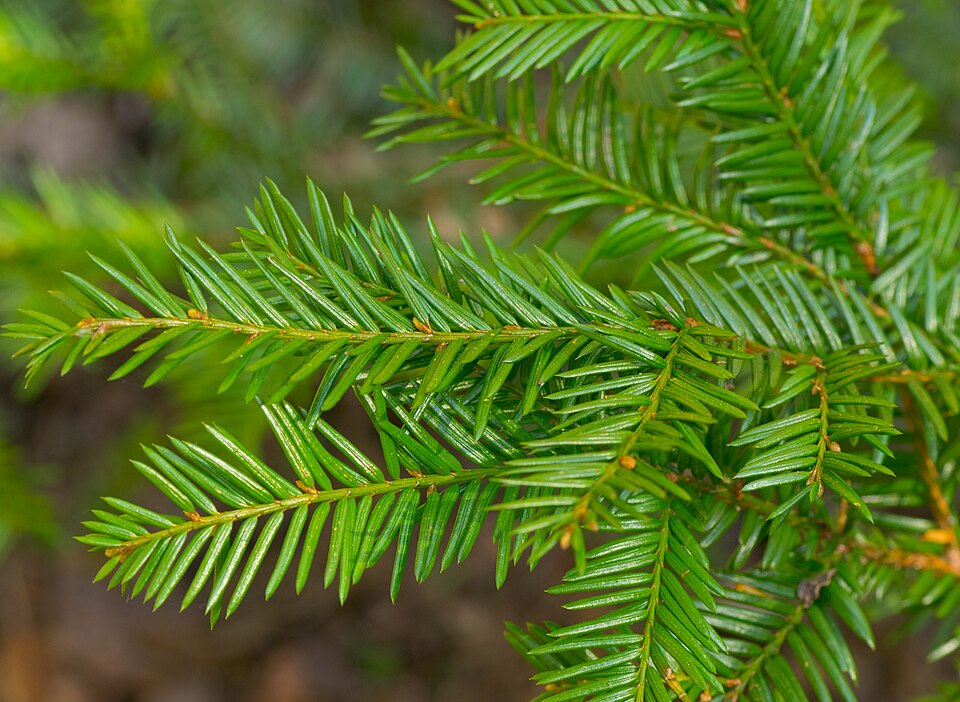
Taxus canadensis, the Canadian Yew or American Yew, is North America’s hardiest native yew — a low, spreading evergreen shrub that forms dense, sprawling mats in the cool, shaded understory of northern forests from the Great Lakes to New England and southern Canada. Unlike its European relative, the English Yew (Taxus baccata), which grows into a substantial tree, Canadian Yew remains a ground-hugging shrub typically reaching 3 to 6 feet in height and spreading considerably wider, making it a distinctive and valuable component of the northern forest floor.
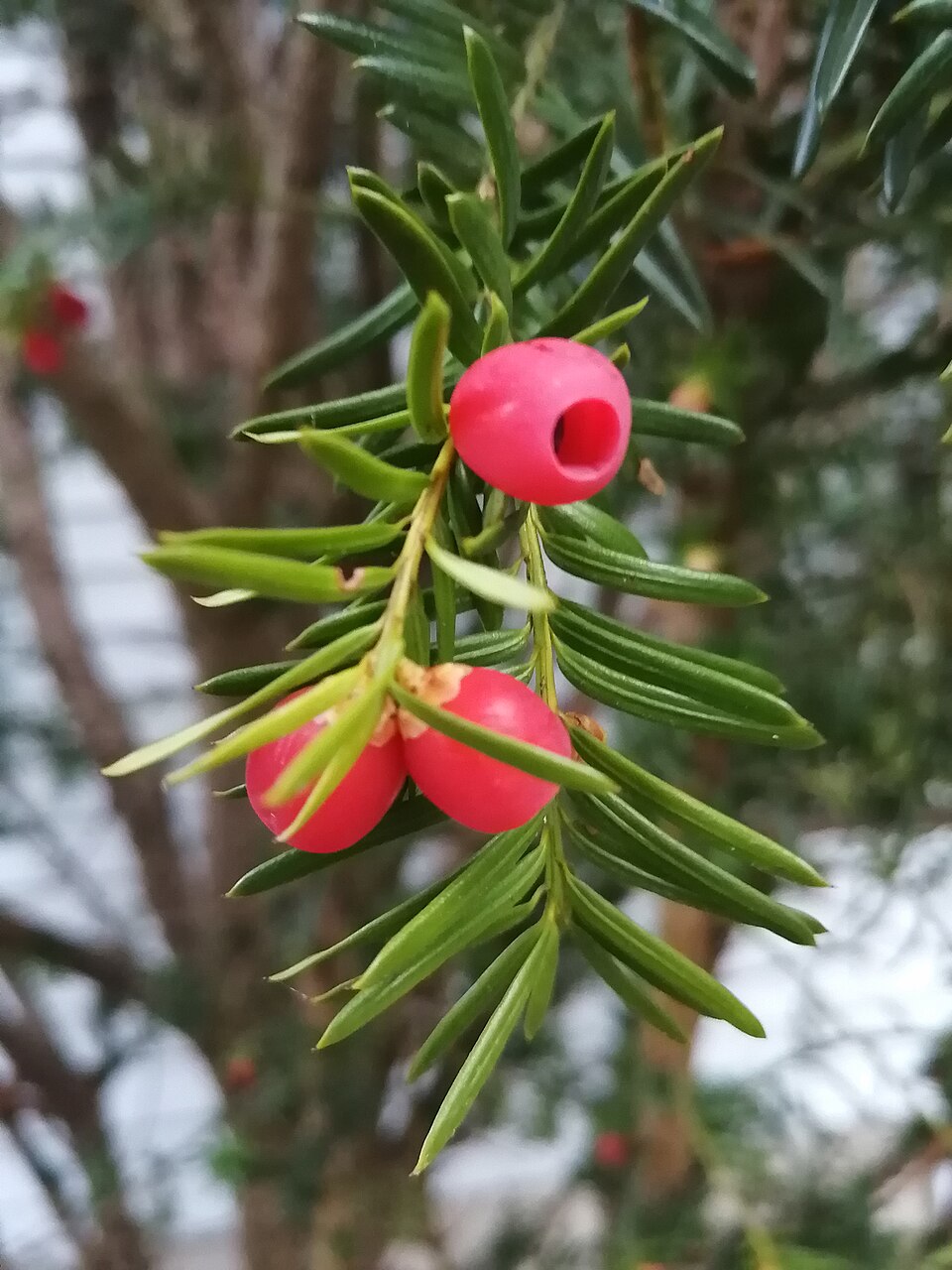
What makes Canadian Yew immediately recognizable are its intensely red, berry-like arils — fleshy, cup-shaped seed coverings that surround a single hard seed and ripen in late summer and fall. These arils are sweet-tasting and attract numerous birds and mammals, making Canadian Yew an important wildlife plant despite its toxicity concerns (the seed, bark, and foliage contain taxine alkaloids toxic to mammals, though birds are generally unaffected). The combination of dark, flat needles arranged in two rows along slender reddish-brown twigs and the brilliant red arils makes Canadian Yew one of the most visually striking shrubs of the northern forest in fall.
For New England gardeners, Canadian Yew fills a crucial ecological niche — it is one of very few native evergreen shrubs suited to deep, dry shade, making it irreplaceable for woodland gardens and naturalistic plantings beneath dense tree canopies. Its tolerance of extreme cold (to Zone 2), ability to grow in challenging shade, and moderate water requirements make it the “hardiest yew” as noted in the regional plant list data. In the landscape, it can be used as a low-maintenance ground cover, foundation planting in shaded areas, or as a component of native hedge and barrier plantings where deer-resistance through toxicity is a benefit.
Identification
Canadian Yew is a low-growing, sprawling to ascending evergreen shrub, typically 3–6 feet tall and often wider than tall. Its branches spread irregularly, often rooting where they contact the ground to create extensive, dense mats in the wild. The overall effect is a dark, layered mass of evergreen foliage close to the forest floor.
Bark & Twigs
The bark is thin, reddish-brown to purplish-brown, scaly, and peeling — more visible on older stems. Young twigs are green, becoming reddish-brown with age, and are notably slender compared to most shrubs. The reddish-brown twig color contrasts attractively with the dark green needles. Yew bark contains taxine alkaloids; do not handle extensively without washing hands.
Leaves (Needles)
The needles are flat, linear, 0.5 to 1 inch long, arranged in two distinct, flat rows along the twigs to create a characteristic feathery, comb-like spray. Needles are dark green and shiny above, paler yellowish-green below. They taper to a sharp point but are not prickly to the touch. Unlike most conifers, the needles do not have a central resin canal and are not aromatic. They remain on the twigs for 3–4 years before dropping.
Flowers & Fruit (Arils)
Canadian Yew is dioecious — male and female flowers are borne on separate plants. The small, inconspicuous flowers emerge in early spring (March–April) from the leaf axils. Male plants produce small, ball-like pollen cones; female plants produce tiny, bud-like structures. Only female plants bear fruit. The fruit is not a true berry but a single hard, brown seed partially surrounded by a fleshy, brilliant red aril (a modified seed coat). The arils ripen August–September and are strikingly attractive against the dark foliage. CAUTION: The seed is highly toxic — never consume it. The red aril flesh is mildly sweet but is best left for wildlife.
Quick Facts
| Scientific Name | Taxus canadensis |
| Family | Taxaceae (Yew) |
| Plant Type | Evergreen Shrub |
| Mature Height | 6 ft |
| Sun Exposure | Part Shade to Full Shade |
| Water Needs | Moderate |
| Bloom Time | March – April (inconspicuous) |
| Fruit Color | Brilliant red arils (August–September) |
| USDA Hardiness Zones | 2–6 |
Native Range
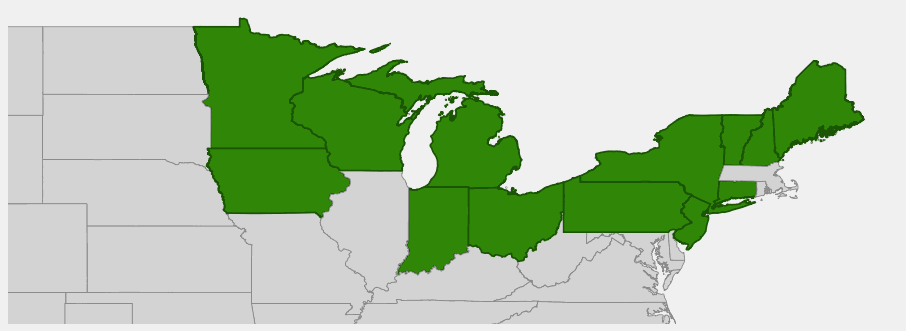
Canadian Yew has one of the broadest cold-hardiness ranges of any native yew species in the world, extending from the northeastern United States across southern Canada to Newfoundland and Manitoba. In the US, it is native to Maine, Vermont, New Hampshire, New York, New Jersey, Pennsylvania, Ohio, Indiana, Michigan, Minnesota, Wisconsin, and Iowa — always associated with cool, shaded forest conditions.
Within its range, Canadian Yew is characteristically found in the understory of mature, shaded northern forests — particularly cool, moist hemlock-hardwood forests, northern hardwood-conifer forests, and ravine forests where cold air drainage maintains consistently cool temperatures even in summer. It often grows along north-facing slopes, in stream valleys, and in other topographic positions that moderate temperature extremes. It is notably absent from dry, exposed, or warm forest types even within its range.
Historically, Canadian Yew was more abundant across its range than it is today. White-tailed Deer are highly effective browsers of Canadian Yew, and deer overpopulation in the 20th and early 21st centuries has dramatically reduced yew populations in many areas, particularly in the Great Lakes states and Pennsylvania. In areas with reduced deer pressure — especially in northern Maine and Vermont — healthy populations persist and the species remains a common understory component of mature northern forests.
📋 Regional plant lists featuring Canadian Yew: New England
Growing & Care Guide
Canadian Yew is one of the most shade-tolerant native shrubs available for New England gardens. When sited correctly, it is a low-maintenance, long-lived, and ecologically valuable landscape plant. The key to success is mimicking its natural habitat: cool, shaded, and moist.
Light
Canadian Yew thrives in partial to full shade — it is genuinely one of the few native shrubs that performs well in deep, dry shade beneath dense evergreen canopies. It can tolerate more sun in cool climates with adequate moisture, but in warmer regions or dry sites, even partial sun can stress the plant. The ideal exposure is a north-facing site with broken or dappled light, similar to a forest understory beneath Eastern Hemlock or mature Northern Hardwoods.
Soil & Water
Canadian Yew prefers cool, moist, well-drained soils with a slightly acidic pH (4.5–6.5). It is notably tolerant of dry shade once established — an unusual and valuable trait that makes it suitable for spots beneath mature tree canopies where many other shrubs fail. Avoid waterlogged or poorly drained soils; standing water is quickly fatal to yew. Amend heavy clay soils with organic matter to improve drainage. Mulch with 2–3 inches of organic material to maintain soil moisture and cool soil temperatures.
Planting Tips
Plant Canadian Yew in early spring or early fall. Choose a shaded, well-ventilated site with good soil drainage. Space plants 4–6 feet apart for foundation or ground cover use; allow 6–8 feet for naturalized plantings. Both male and female plants must be present within pollinating distance for female plants to produce arils — plant multiples of both sexes or purchase named cultivars from a reputable native plant nursery. Be aware that all parts except the aril flesh are toxic — site away from play areas if children are present.
Pruning & Maintenance
Canadian Yew requires minimal pruning under natural conditions. Unlike exotic yews, the native species has an informal, spreading habit — avoid trying to shear it into formal shapes. Remove dead or winter-damaged branches in early spring. The species tolerates light selective pruning to control spread. Deer browsing is the most significant maintenance challenge; deer will readily consume yew foliage and can kill established plants. Deer fencing or repellent sprays may be necessary in high-deer areas.
Landscape Uses
Canadian Yew is ideal for:
- Deep shade ground cover — one of the best native options for dry, dark spots beneath conifers
- Native foundation planting on north-facing exposures
- Wildlife gardens — red arils attract Cedar Waxwings, American Robins, and other thrushes
- Naturalistic woodland gardens as an understory shrub layer
- Native hedges or screens in shaded areas
- Deer-resistant barrier — the toxicity discourages most mammals other than deer themselves in low densities
Wildlife & Ecological Value
Despite its toxicity to mammals, Canadian Yew is a critically important wildlife plant in northern forest ecosystems, providing food and shelter at a season when few other plants offer comparable resources.
For Birds
The brilliantly red arils are one of the most important fall and winter food sources for frugivorous birds in northern forests. Cedar Waxwings are particularly attracted to yew arils and may descend on plants in large flocks during migration. American Robins, Hermit Thrushes, Swainson’s Thrushes, and other thrush species consume arils eagerly. Eastern Bluebirds, Pine Grosbeaks, and various sparrows also feed on yew fruit. Birds pass the hard seed intact through their digestive systems, making them the primary dispersal agents for Canadian Yew. The dense, low branches also provide excellent nesting sites and year-round cover for ground-nesting and low-nesting birds.
For Mammals
Taxine alkaloids in yew foliage, bark, and seeds are toxic to most mammals, including horses, cattle, dogs, cats, and humans. White-tailed Deer, however, can consume limited quantities and are significant browsers of yew — often to the point of eliminating plants. Moose also browse yew. The seed coat alkaloids pass through deer without harm; deer may act as seed dispersers. Small mammals generally avoid yew due to its toxicity.
For Pollinators
Canadian Yew is wind-pollinated and produces no nectar-bearing flowers. Its pollination value for bees and butterflies is minimal. However, the dense shade created by yew thickets provides cool, moist microhabitat for ground-dwelling invertebrates, amphibians, and other shade-dependent species.
Ecosystem Role
Canadian Yew contributes to forest structure by creating a dense, persistent understory layer that influences light penetration, moisture retention, and habitat complexity on the forest floor. The acidic needle litter contributes to soil chemistry, supporting the mycorrhizal fungi and invertebrate communities characteristic of cool northern forests. In forests with reduced deer pressure, yew thickets provide dense structural cover and food resources that support a wide range of forest wildlife.
Cultural & Historical Uses
The yews have a long and significant history across cultures worldwide, and Canadian Yew shares in this heritage as the North American representative of the genus. Indigenous peoples of northeastern North America used Canadian Yew in numerous ways. The strong, flexible wood was highly prized for making bows — yew wood has exceptional elasticity and tensile strength that made it a preferred bow-making material across cultures worldwide. The Wabanaki peoples and other northeastern tribes fashioned tools, paddles, and implements from the dense, fine-grained wood. The wood is also naturally resistant to decay, making it useful for outdoor implements.
Medicinally, various Indigenous peoples used preparations from Canadian Yew with great care, recognizing its toxicity. Small amounts of bark preparations were used to treat rheumatism and various ailments, and the berries were consumed in limited quantities for food. The toxic properties were also known and exploited — concentrated preparations were used as poisons. The compound taxol (paclitaxel), originally derived from the Pacific Yew (Taxus brevifolia) and now semi-synthetically produced, is one of the world’s most important cancer chemotherapy drugs; Canadian Yew’s taxine compounds share chemical similarities and the species has been studied for related pharmaceutical applications.
In traditional European herbalism and North American folk medicine, yew was associated with death, longevity, and transformation — themes consistent with its toxicity, slow growth, and extreme longevity as a genus. The ornamental yew industry, dominated by exotic and hybrid species, has largely supplanted the use of native Canadian Yew in modern horticulture, though conservation-minded gardeners increasingly prefer the native species for its ecological authenticity and cold hardiness.
Frequently Asked Questions
Is Canadian Yew toxic to dogs and children?
Yes — all parts of Canadian Yew except the red aril flesh are toxic to mammals, including dogs, cats, and humans. The seed within the red aril is especially dangerous. The foliage and bark contain taxine alkaloids that affect the heart and can be fatal in sufficient quantities. Plant Canadian Yew away from areas frequented by children or pets, and educate family members about its toxicity.
How do I tell male from female Canadian Yew plants?
Female plants produce the distinctive red arils in fall; male plants do not. During the inconspicuous spring flowering, male plants have small, ball-like pollen cones visible at close range; female plants have tiny, inconspicuous reproductive structures. Many nurseries sell named cultivars specified by sex. For arils, purchase confirmed female plants plus at least one male for pollination.
Will Canadian Yew grow in dry shade?
Yes — this is one of its most valuable landscape traits. Established Canadian Yew tolerates dry shade beneath dense conifers better than almost any other native shrub. However, “tolerates” doesn’t mean “prefers” — it will perform better with consistent moisture. In extremely dry conditions, supplemental watering during drought periods will keep plants healthier and more vigorous.
Does Canadian Yew lose its needles in winter?
No — Canadian Yew is evergreen and retains its dark green needles year-round. In very cold winters, the foliage may take on a slightly bronzy or yellowish cast, but it remains on the plant and resumes normal green color in spring. This evergreen quality makes it particularly valuable as winter structure and cover in the garden.
How fast does Canadian Yew grow?
Canadian Yew is a slow-growing shrub, typically adding 6–12 inches of growth per year under favorable conditions. In deep shade, growth may be even slower. The slow growth rate is offset by extreme longevity — individual plants can persist for many decades in suitable conditions.

Looking for a nursery that carries Canadian Yew?
Browse our native plant nursery directory: Maine · New Hampshire · Vermont · Connecticut