American Burreed (Sparganium americanum)
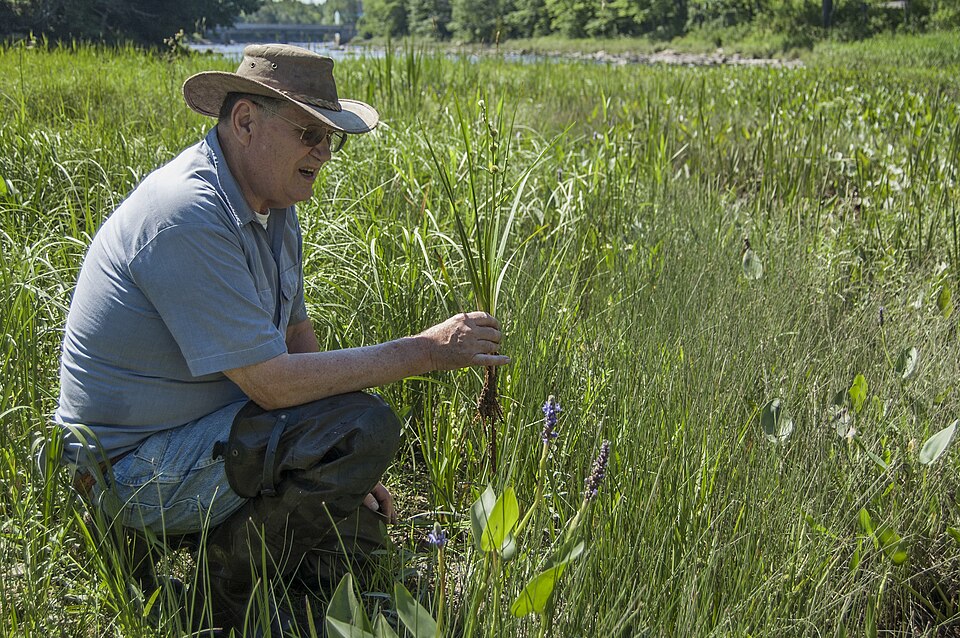
Sparganium americanum, commonly known as American Burreed, is a native aquatic and emergent wetland plant found throughout much of eastern and central North America. A member of the Typhaceae (cattail) family, American Burreed is a distinctive freshwater species recognized by its stiff, sword-like leaves and the unique spherical, burr-like seed heads that give the plant its common name. Growing at the margins of ponds, slow-moving streams, marshes, and wet ditches, it is one of the most important aquatic plants for waterfowl, shore birds, and wetland invertebrates in the Mid-Atlantic region.
American Burreed thrives in shallow water or saturated soils and is particularly well adapted to the kinds of slow, still, or gently flowing water found in Maryland, Virginia, and West Virginia wetlands. Its emergent growth form — with leaves rising above the waterline and flowers held on a branched stem — allows it to exploit the productive zone between open water and dry land that supports extraordinary biodiversity. The plant spreads both by seed and by rhizomes, forming dense colonies that stabilize streambanks and shorelines while providing crucial habitat structure.
Despite its ecological importance, American Burreed is often overlooked in garden and restoration plantings in favor of more showy aquatic species. Yet for anyone seeking to create or restore native wetland habitat in the Mid-Atlantic region, it is an indispensable plant — providing dense cover for nesting birds, a reliable food source for migrating waterfowl, and essential spawning and rearing habitat for amphibians and fish. Its robust, clumping growth also makes it effective for shoreline erosion control along ponds and stream margins.
Identification
American Burreed is an emergent aquatic perennial that grows from a creeping rhizome system in shallow water or saturated soils. Plants typically reach about 2 feet in height above the waterline, though the long, flexible leaves can extend further horizontally in deeper water, where they often float on the surface. The overall habit is grass-like, forming dense clumps that expand by rhizome over time.
Leaves
The leaves are among the most distinctive features of American Burreed — long, strap-like, and triangular in cross-section (the underside has a pronounced midrib keel), similar in appearance to iris or cattail leaves but somewhat stiffer. They are bright to medium green, 12 to 36 inches (30–90 cm) long, and about ½ to ¾ inch (1–2 cm) wide. Basal leaves float on the water surface or extend upward in a somewhat erect position depending on water depth. The upper portions of the stem bear reduced, clasping bracts.
Flowers & Fruit
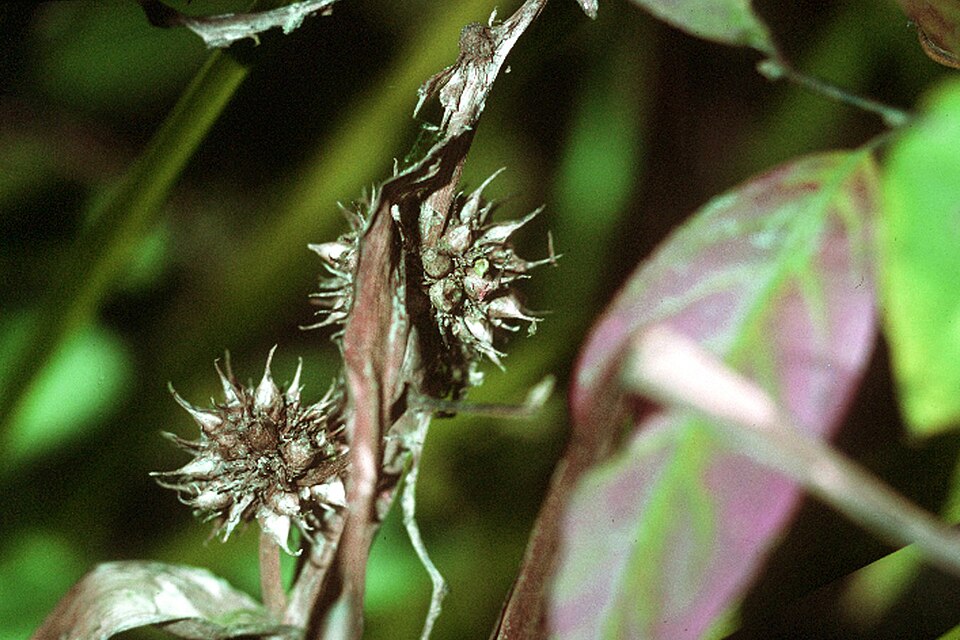
The flowers are arranged in small, spherical heads (1 to 2 cm in diameter) positioned alternately along a branching stem. The upper, smaller heads bear male (staminate) flowers; the lower, larger heads bear female (pistillate) flowers. Both are tiny and inconspicuous individually, but the rounded clusters of the female heads are very recognizable. The male heads fall off after pollen release, while the female heads mature into the hard, spiky brown burr-like fruiting heads that give the plant its name — each spike bearing numerous small, nutlet fruits (achenes) with a single seed each. These fruits mature in late summer through fall and persist on the plant well into winter.
Quick Facts
| Scientific Name | Sparganium americanum |
| Family | Typhaceae (Cattail) |
| Plant Type | Aquatic / Emergent Perennial |
| Mature Height | 2 ft |
| Sun Exposure | Full Sun to Part Shade |
| Water Needs | High (aquatic/emergent) |
| Bloom Time | June – August |
| Flower Color | Pale greenish-white |
| USDA Hardiness Zones | 3–9 |
Native Range
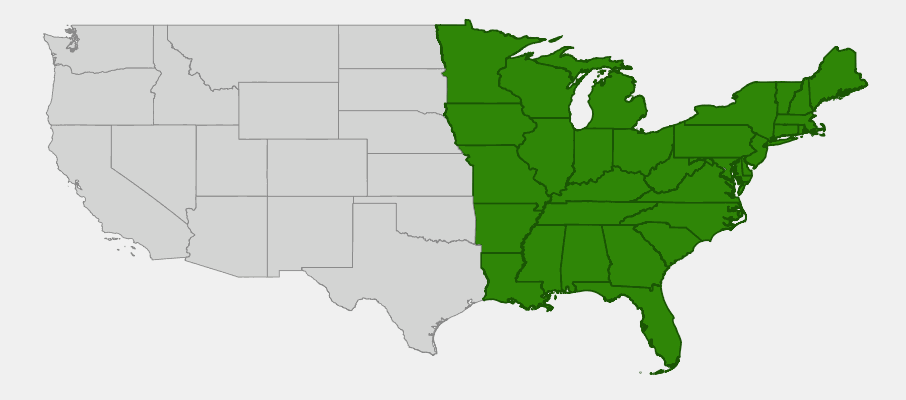
American Burreed is one of the most widely distributed aquatic plants in eastern North America. Its native range spans from the Maritime provinces of Canada and the northeastern United States west through the Great Lakes states and south through the Mid-Atlantic and into the Gulf Coast states. It is a consistent presence in Maryland, Virginia, and West Virginia, where it occupies wetland habitats across a variety of elevations — from tidal freshwater marshes along the Chesapeake Bay watershed to mountain seeps and beaver ponds in the Appalachians.
Within its range, American Burreed is closely associated with slow-moving or still freshwater — pond margins, marshes, slow streams, roadside ditches, beaver impoundments, and seasonal wetlands. It is notably tolerant of a range of water clarity conditions and moderate nutrient enrichment, which makes it a reliable colonizer of created and restored wetlands as well as disturbed natural sites. It tends to grow in water 2 to 18 inches deep or in continuously saturated soils at the water’s edge.
In the Mid-Atlantic states, American Burreed is commonly associated with many Chesapeake Bay tributary marshes and inland wetlands in the Piedmont and Ridge and Valley regions. It often grows alongside other emergent species including cattails (Typha spp.), soft rush (Juncus effusus), arrow arum (Peltandra virginica), and pickerelweed (Pontederia cordata), forming structurally diverse wetland communities that support exceptional biodiversity.
📋 Regional plant lists featuring American Burreed: Maryland, Virginia & West Virginia
Growing & Care Guide
American Burreed is one of the easiest native aquatic plants to establish in suitable conditions — give it shallow water or saturated soil and it largely takes care of itself. Its vigorous rhizomatous growth makes it ideal for naturalizing the margins of ponds, rain gardens, and wetland restorations.
Light
American Burreed performs best in full sun but tolerates partial shade quite well. In shaded conditions (such as under overhanging tree canopy along stream banks), it may flower and fruit less prolifically, but it continues to spread vegetatively through its rhizomes and provides the same cover and habitat structure. In open, sunny wetlands it tends to be most vigorous and productive.
Soil & Water
This plant requires constantly moist to wet soil or shallow standing water. It grows best in water 2 to 12 inches deep, though it tolerates depths up to 18 inches with robust growth of floating leaves in deeper water. It thrives in mucky, organic-rich wetland soils but is also adaptable to sandy or silty substrates. Unlike many wetland plants, it tolerates a broad range of soil pH — from slightly acidic to circumneutral — and moderate nutrient loading, making it useful for naturalized pond edges even where nutrient inputs from lawns or gardens are present.
Planting Tips
Plant American Burreed in spring or early summer from rhizome divisions or container-grown stock. Set plants at the water’s edge or in shallow water, pressing the rhizome into saturated soil or anchoring it with rocks or soil until established. For pond margin restorations, space plants 18 to 24 inches apart; they will quickly fill in through rhizome spread. Containment is rarely necessary in natural pond settings, but if planting in a formal water garden, consider planting in submerged containers to limit spread.
Pruning & Maintenance
American Burreed is essentially maintenance-free once established. The persistent seed heads provide winter bird food and visual interest. If you wish to prevent seed spread into adjacent areas, remove fruiting heads before they ripen in late summer. The plant will die back to its rhizomes in winter and emerge again in spring. Dense colonies can be thinned by dividing rhizomes in early spring if they spread beyond desired areas.
Landscape Uses
- Pond and lake margin planting — excellent at the water’s edge in 2–12 inches of water
- Rain garden edges — thrives at the wettest zone of a rain garden
- Wetland restoration — an important pioneer species for created and restored wetlands
- Streambank stabilization — dense rhizome networks hold soil against erosion
- Wildlife garden — critical food and cover plant for waterfowl and shorebirds
- Stormwater bioretention basins — tolerant of fluctuating water levels and nutrient enrichment
Wildlife & Ecological Value
American Burreed is one of the most ecologically productive native aquatic plants in eastern North America, providing food, shelter, and structural habitat for a wide range of wetland species.
For Birds
The seeds of American Burreed are a critical food source for migrating and wintering waterfowl, particularly dabbling ducks such as Mallards, American Black Ducks, Wood Ducks, and Teal. Canada Geese and American Coots consume both the seeds and the vegetative parts. Rails — including Virginia Rail, Sora, and King Rail — rely heavily on dense burreed stands for nesting cover and invertebrate foraging. Marsh Wrens and Red-winged Blackbirds use the plant’s structure for nest support. The persistent fruiting heads provide food well into winter when other sources are exhausted.
For Mammals
Muskrats are major consumers of American Burreed, eating the rhizomes, stems, and seeds throughout the year. Beavers use the plants for food and occasionally for dam construction materials. White-tailed Deer browse the emergent foliage where accessible. The dense stands also provide concealment and runway habitat for muskrats and other semi-aquatic mammals.
For Pollinators
While American Burreed is primarily wind-pollinated, its flowers attract small native bees and other insects that feed on pollen. More significantly, the plant provides crucial oviposition sites and larval habitat for many aquatic and semi-aquatic insects, including several specialist species of native bees and flies that depend on wetland environments. The leaf surfaces and stems support biofilm communities that are grazed by aquatic invertebrates.
Ecosystem Role
American Burreed plays multiple critical roles in wetland ecosystems. Its dense rhizome networks stabilize shorelines and reduce erosion; its emergent structure intercepts sediment and nutrients from runoff, improving water quality. The plant provides essential structural complexity in the emergent zone — creating the dense, protected stands that nesting marsh birds require. Decomposing burreed biomass feeds the detrital food web that underpins aquatic productivity, supporting fish, amphibians, and the invertebrates that everything else depends on.
Cultural & Historical Uses
American Burreed has a well-documented history of use among Indigenous peoples of eastern North America. Various nations, including tribes of the Great Lakes and northeast, used the starchy rhizomes as a food source — eating them raw, roasted, or ground into flour for bread. The starchy base of the young stems was also eaten. The plants were recognized as important duck food, and wetlands with abundant burreed were prized hunting grounds.
The European botanical tradition also noted the plant’s value as waterfowl food early in the colonial period, and American Burreed appeared in early American natural history writings as a characteristic plant of beaver ponds and freshwater marshes. Its association with productive wetlands made it a useful indicator species — naturalists learned that wherever burreeds grew abundantly, waterfowl and muskrats were likely to be found.
In contemporary practice, American Burreed has gained significant recognition in wetland restoration and stormwater management work. It is now routinely included in native plant palettes for created wetlands, constructed stormwater wetlands, and pond edge restorations throughout the eastern United States. Its tolerance of moderate nutrient enrichment, rapid establishment from divisions, and exceptional wildlife value make it a top-tier choice for ecological restoration in the Mid-Atlantic and beyond.
Frequently Asked Questions
Is American Burreed invasive?
No. Sparganium americanum is a native species and is not considered invasive anywhere in its natural range. It does spread vigorously by rhizome, which makes it excellent for wetland restoration and erosion control, but it does not behave aggressively outside of its preferred wetland habitat.
Can American Burreed grow in a garden pond?
Yes — it is well suited to garden ponds and water features where it can be planted in shallow water (2–12 inches deep). For formal water gardens, plant it in submerged containers to limit its spread. It pairs beautifully with pickerelweed, blue flag iris, and native water lilies.
How deep can American Burreed grow?
It grows best in water 2 to 12 inches deep but can survive in up to 18 inches of water, where its leaves often float horizontally on the surface. In saturated soil at the water’s edge (no standing water), it also thrives.
Do ducks really eat burreed?
Yes — American Burreed is one of the most important duck foods in the eastern United States. The seeds are consumed in large quantities by Mallards, Wood Ducks, American Black Ducks, Teal, and many other waterfowl species. If you are creating or managing waterfowl habitat, burreed is an essential plant.
Is American Burreed the same as common bur-reed?
American Burreed (Sparganium americanum) is one of several burreed species native to North America. It can be distinguished from closely related species by the number of stigmas on the pistillate flowers and characteristics of the fruiting heads. In the Mid-Atlantic region, it is the most commonly encountered burreed in freshwater habitats.

Looking for a nursery that carries American Burreed?
Browse our native plant nursery directory: Maryland · Virginia · West Virginia