Mist Flower (Eupatorium coelestinum)
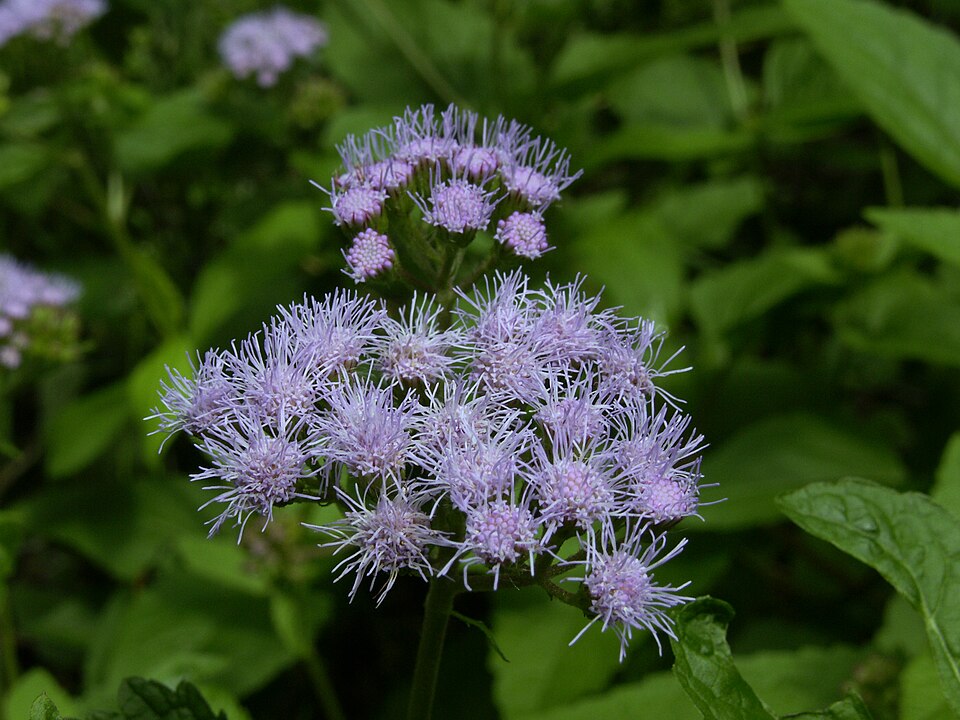
Conoclinium coelestinum (formerly Eupatorium coelestinum), commonly known as Mist Flower or Blue Mistflower, is one of the most charming and useful native perennials of the eastern United States — a low-growing, colony-forming wildflower that fills the gap in the garden calendar when summer color begins to fade. From late summer through the first killing frost, Mist Flower produces dense, hazy clusters of small, powder-blue to lavender-blue flowers that look remarkably like miniature Hardy Ageratum — a resemblance so striking that Mist Flower is sometimes sold as "Hardy Ageratum" in the garden trade, though it is a completely different genus and a true eastern native.
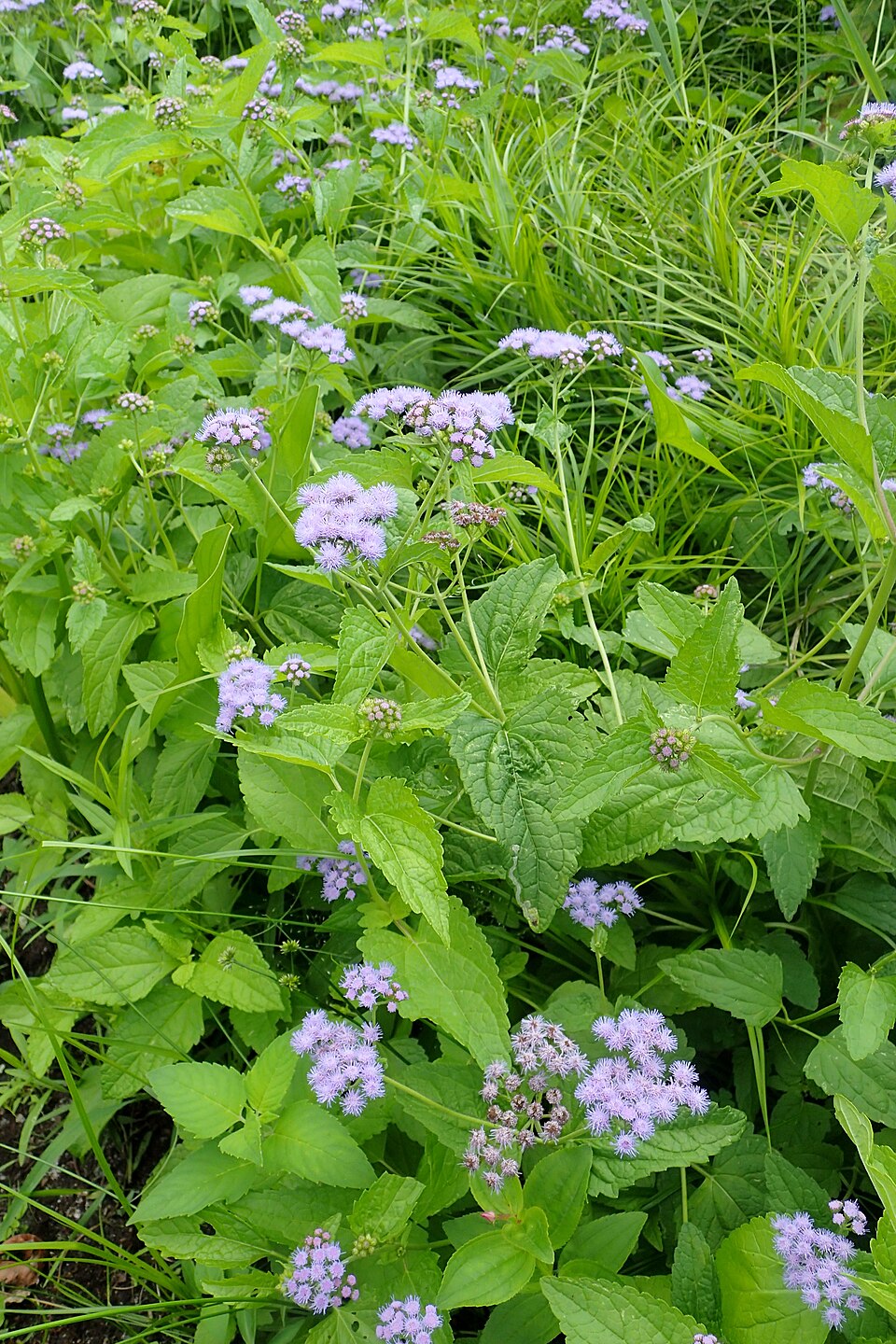
Growing 1 to 3 feet tall and spreading by rhizomes to form increasingly wide colonies, Mist Flower brings a soft, misty quality to woodland edges, stream banks, and shaded garden borders. The blue-to-violet color is genuinely rare in the late-season native plant palette — most fall-blooming wildflowers are yellow or white — making Mist Flower exceptionally valuable for creating color contrast and extending the season of interest in native plantings. The flowers are intensely attractive to late-season pollinators, particularly monarch butterflies, which are often seen nectaring on Mist Flower during their southward migration.
For the Mid-Atlantic gardener, Mist Flower is a rewarding and adaptable choice for semi-shaded, moist sites. Its naturalizing habit makes it ideal for woodland gardens, stream margins, and native plant meadow borders, while its late-season bloom time fills a critical pollinator support window when monarch and other migratory butterflies are fueling for their journeys south. Few native plants offer as much color, ecological value, and seasonal interest for such a modest investment of time and effort.
Identification
Mist Flower is a herbaceous perennial that dies back to the ground each winter and re-emerges from rhizomes in spring. Plants typically grow 1 to 3 feet tall with an upright to somewhat sprawling habit. The stems are opposite-branched and often tinged with purple, becoming noticeably hairy as they mature. Plants spread by underground rhizomes to form loose colonies that expand gradually over several seasons.
Leaves
The leaves are simple, opposite, and triangular to ovate in shape — 1 to 3 inches long with a truncate to heart-shaped base, pointed tip, and coarsely toothed margins. The leaf surface is slightly rough or hairy, dull green above, and paler below. Leaves are arranged oppositely along the stem on short petioles. The overall appearance of the foliage is somewhat coarse and weedy when not in bloom, but the plant's seasonal flower display more than compensates for its off-season appearance.
Flowers
The flowers are the unmistakable feature of Mist Flower and the source of both its common names. Each flowerhead is a small disc (no ray florets — no "petals" in the typical sense), about ¼ inch across, composed of 35 to 70 tiny tubular florets in powder-blue to bluish-lavender or occasionally white. These tiny flowerheads are gathered into flat-topped, densely packed corymbs (flower clusters) at the top of each stem and branch, creating the characteristic misty, hazy cloud of blue that defines this species' appearance. The stamens protrude beyond the florets, giving each cluster a finely fringed, fuzzy texture that adds to the soft appearance. Flowering typically begins in August and continues until the first hard frost, often persisting into October or November.
Quick Facts
| Scientific Name | Conoclinium coelestinum (syn. Eupatorium coelestinum) |
| Family | Asteraceae (Daisy) |
| Plant Type | Herbaceous Perennial |
| Mature Height | 1–3 ft |
| Sun Exposure | Full Sun to Part Shade |
| Water Needs | Moderate |
| Soil Type | Moist, fertile; loam, clay-loam, or sandy loam |
| Soil pH | 5.5–7.5 (adaptable) |
| Bloom Time | August – November (until frost) |
| Flower Color | Powder-blue to lavender-blue (occasionally white) |
| Spreads By | Underground rhizomes; forms colonies |
| Deer Resistant | Moderate (sometimes browsed) |
| USDA Hardiness Zones | 5–10 |
Native Range
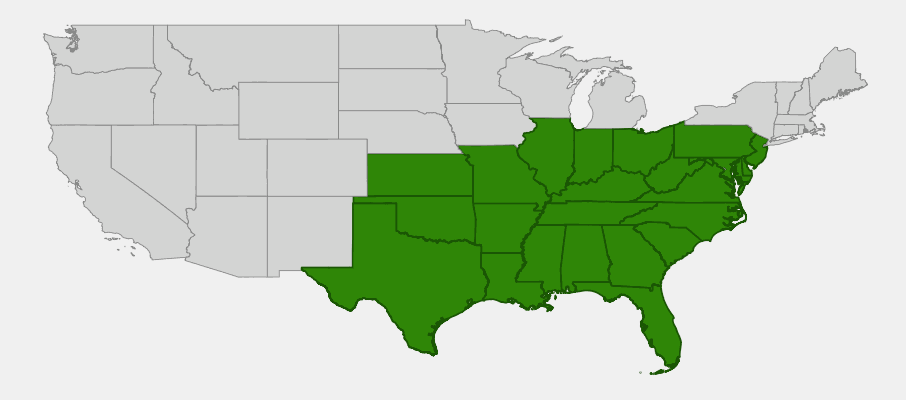
Mist Flower is native to the eastern and central United States, ranging from New Jersey and Pennsylvania south through the Mid-Atlantic states to Florida, and west through the Gulf Coast states to Texas, Oklahoma, and Kansas, with inland populations extending north into Missouri, Illinois, Indiana, Ohio, and Kentucky. The species is most abundant in the southeastern coastal plain and Piedmont, where it occurs naturally along stream banks, in moist woodland clearings, and along roadsides in disturbed, moist habitats.
In Maryland, Virginia, and West Virginia, Mist Flower occurs naturally in moist woodland edges, floodplain forests, roadside ditches, and along stream margins throughout the Coastal Plain and Piedmont regions. It is less common in the mountains of western Virginia and West Virginia, where it may be found in sheltered valleys and along creek margins at lower elevations. The species is widely naturalized throughout its range and in adjacent areas, as it escapes easily from cultivation by seed and rhizome spread.
Throughout its range, Mist Flower is a characteristic component of moist, disturbed habitats — floodplain edges, abandoned fields, wet roadsides, and the margins of streams and wetlands where periodic disturbance keeps competition from taller vegetation in check. It is a late-successional herbaceous layer species that persists under light to moderate canopy, thriving in the dappled shade of woodland edges where its rhizomatous growth allows it to colonize suitable habitat patches efficiently.
📋 Regional plant lists featuring Mist Flower: Maryland, Virginia & West Virginia
Growing & Care Guide
Mist Flower is an easy, rewarding perennial for moist, semi-shaded garden sites. Its main requirements are consistent moisture and a location with at least morning sun, and in return it delivers outstanding late-season color and pollinator support with minimal maintenance.
Light
Mist Flower performs best in full sun to part shade. In full sun, plants are more compact and produce the most abundant flowers, but require consistently moist soil. In part shade — dappled light beneath high-branching trees or morning sun with afternoon shade — plants grow taller, somewhat looser, and bloom just as prolifically. This shade tolerance makes Mist Flower particularly useful for difficult garden transitions between sunny open areas and shaded woodland margins. Avoid deep, dense shade where flowering will be significantly reduced.
Soil & Water
Mist Flower prefers consistently moist, fertile, loamy or clay-loam soils. It grows naturally along stream margins and in moist clearings where soil moisture is reliable throughout the growing season. It tolerates clay soils well but may struggle in very dry, sandy, or nutrient-poor soils. Supplemental irrigation may be needed in summer if rainfall is inadequate — wilting foliage is a reliable indicator of moisture stress. Rich soil with organic matter produces the most lush and floriferous plants, though the species is also quite adaptable to average garden soils.
Planting Tips
Plant Mist Flower in spring after the last frost, or in early fall for next-season establishment. Container plants transplant easily; divide established colonies in spring to create new plants. Space plants 18–24 inches apart — they will fill in quickly. Be aware that Mist Flower spreads both by rhizome and by self-seeding, and can become aggressive in ideal conditions. In smaller garden spaces, remove spent flower heads before seed set to limit self-seeding, and use a spade to cut back rhizome spread at the colony margins each spring. In naturalistic plantings and meadows, allow it to spread freely — it naturalizes beautifully.
Pruning & Maintenance
Cut back Mist Flower to the ground in late fall or early spring after new growth appears. Pinching stem tips in late spring (late May or early June) encourages branching and produces a more compact plant with more flower heads, though it may delay bloom slightly. Divide crowded colonies every 2–3 years in spring to maintain vigor and prevent excessive spread. In good conditions, Mist Flower requires no staking — plants in shade may need support if stems become too elongated. The species has very few pest or disease problems.
Landscape Uses
Mist Flower is most effective in naturalistic and wildlife-focused plantings where its spreading habit is an asset rather than a concern:
- Stream bank plantings — thrives in the moist conditions along water features
- Woodland garden borders — fills in shaded edges with late-season blue
- Rain gardens — tolerates temporary wet conditions with moderate overall moisture
- Butterfly gardens — exceptional magnet for monarchs and other fall butterflies
- Native meadow plantings — adds rare blue color to the fall palette
- Groundcover in semi-shade — rhizomatous habit quickly fills open areas
- Cut flower garden — long-lasting in arrangements; excellent filler
Wildlife & Ecological Value
Mist Flower is one of the most ecologically significant late-season native plants for pollinators. Its late bloom time — August through hard frost — fills a critical window when many other native plants have finished flowering and pollinators are urgently seeking fuel for migration or winter preparation.
For Birds
The fluffy, wind-dispersed seeds of Mist Flower are consumed by small seed-eating birds including American Goldfinch and various sparrows. The dense foliage and colony structure provides cover and nesting habitat for ground-nesting birds in more naturalized settings. The insects attracted to Mist Flower blooms also provide important food resources for insectivorous birds during the fall migration period.
For Mammals
Mist Flower provides modest but meaningful habitat structure for small mammals, particularly where it forms large, dense colonies. The dense growth at soil level creates tunnel networks used by meadow voles, shrews, and other small mammals. White-tailed deer may browse the foliage opportunistically, though the plant is not a preferred food source and typically regrows vigorously after deer damage.
For Pollinators
Mist Flower is a pollinator powerhouse in the late-season garden. The blue to violet color of its flowers is particularly attractive to butterflies, which preferentially visit blue and purple flowers. Monarch butterflies are among the most conspicuous visitors — migrating monarchs nectaring on Mist Flower are a reliable sight in the Mid-Atlantic from August through October. Other important visitors include Eastern Tiger Swallowtail, Cloudless Sulphur, Pearl Crescent, and numerous skipper species. Native bees, including bumble bees, mining bees, and sweat bees, visit avidly throughout the bloom period. Honeybees also collect nectar from Mist Flower in late summer and fall. The flowers provide vital fuel for migrating and overwintering insects during the critical September–October period.
Ecosystem Role
As a late-season bloomer, Mist Flower occupies a unique phenological niche in eastern plant communities — providing floral resources during the "late-summer gap" when many earlier-blooming plants have set seed and few other native perennials are in flower. In stream-bank and floodplain communities, its rhizomatous growth helps stabilize soils and reduce erosion during periods of high water flow. The species is an important component of native plant meadow restorations in the Mid-Atlantic, where its blue color, spreading habit, and pollinator value make it an indispensable component of diverse, multi-season native plant communities.
Cultural & Historical Uses
Mist Flower was known and used by various Indigenous peoples of the southeastern United States. The Houma people of Louisiana used infusions of the leaves as a treatment for fever, and the Cherokee used plant preparations for treating cold and flu symptoms, particularly in combination with other plants. The name "Eupatorium" — the former genus name now replaced by Conoclinium — honors the ancient Pontic king Mithridates Eupator, who was renowned for his knowledge of herbal medicines; the European herbalists who named the genus believed the plants had medicinal properties analogous to those used by native peoples around the world.
In 19th-century American folk medicine, Mist Flower and related Eupatorium species were used in various herbal preparations for treating fever, malaria symptoms, and general ailments. Botanical collectors in the 1800s and early 1900s brought Mist Flower into cultivation in Europe, where it became a popular border plant in English and Continental gardens before it gained widespread recognition as a garden plant in its native North America. This pattern — American native plants becoming popular in European gardens before being re-appreciated in their homeland — is a recurring theme in horticultural history.
Today, Mist Flower is increasingly valued both in ecological restoration and in designed native plant gardens. It is often recommended as a "gateway plant" for gardeners new to native plants — its blue flowers are strikingly beautiful and immediately recognizable as a true garden perennial, helping to challenge the perception that native plants are "weedy" or unattractive. Several selections with improved compactness and even more vivid blue color have been introduced to the horticultural trade in recent years, broadening its appeal and availability to home gardeners throughout the Mid-Atlantic.
Frequently Asked Questions
Is Mist Flower the same as Hardy Ageratum?
Yes, Mist Flower is sometimes sold as "Hardy Ageratum" because it closely resembles the annual garden Ageratum (Ageratum houstonianum). However, they are different plants — Mist Flower is a native perennial (Conoclinium coelestinum) that dies back and regrows from rhizomes each year, while garden Ageratum is a tender annual that must be replanted each year. Mist Flower is ecologically far more valuable as a native species.
Will Mist Flower take over my garden?
Mist Flower can spread aggressively in ideal moist conditions, both by rhizome and by self-seeding. In naturalistic settings, this spreading habit is a virtue. In more structured gardens, manage spread by removing spent flower heads to prevent seeding, and cutting back rhizomes at the colony margins each spring. Division every 2–3 years also keeps plants vigorous and in bounds.
Why is the flower blue? Most Eupatorium relatives are white or pink.
Mist Flower's blue color is genuinely unusual in the composite (Asteraceae) family, which is why the plant was moved out of the genus Eupatorium (where it sat alongside white-flowered Joe Pye Weeds and Boneset) and into its own genus, Conoclinium. The pigment responsible is derived from anthocyanins that produce blue-to-purple tones rather than the more common yellow, white, or pink of its relatives.
Does Mist Flower attract monarch butterflies?
Yes — Mist Flower is a highly reliable monarch magnet during fall migration. Its late bloom time (August through frost) coincides precisely with the southward migration of monarch butterflies through the Mid-Atlantic, making it one of the most important fueling plants for migrating monarchs in the region. Planting Mist Flower is a direct and meaningful action to support monarch butterfly conservation.
Can Mist Flower grow in heavy clay soil?
Yes — Mist Flower tolerates clay soils reasonably well, particularly if they stay consistently moist. Amend heavy clay with organic matter (compost) at planting to improve structure, and avoid sites where clay becomes brick-hard and cracks in summer. In consistently moist clay, Mist Flower often thrives without amendment.

Looking for a nursery that carries Mist Flower?
Browse our native plant nursery directory: Maryland · Virginia · West Virginia