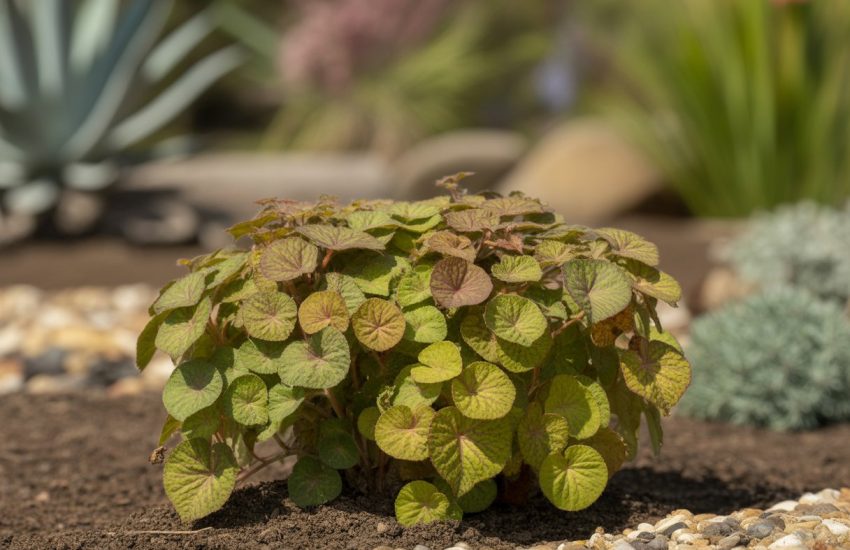
Arizona Rosewood (Vauquelinia californica)
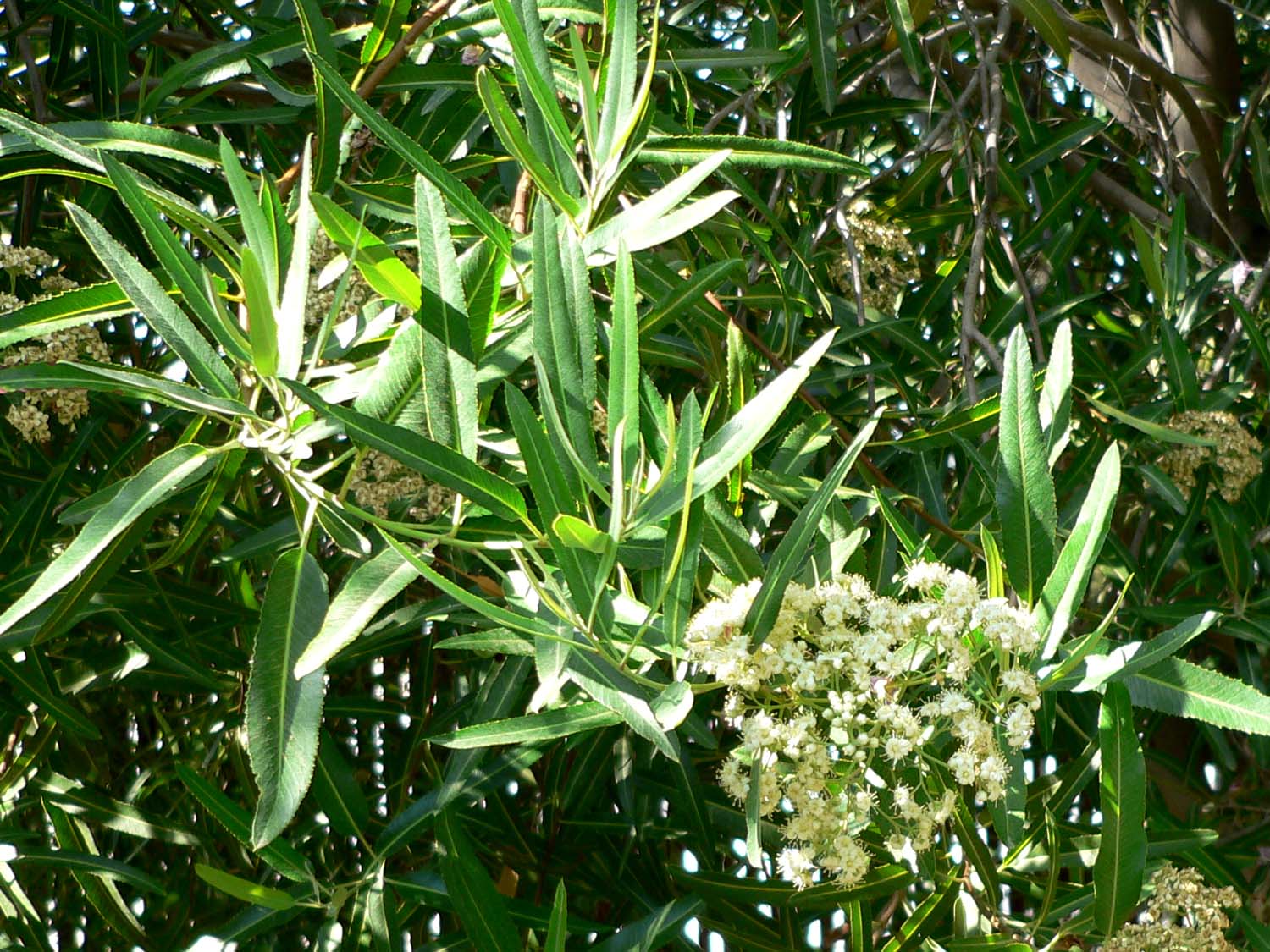
Vauquelinia californica, commonly known as Arizona Rosewood, is a handsome and tough evergreen shrub or small tree native to the rocky desert slopes and canyon walls of the Sonoran and Chihuahuan Deserts. A member of the rose family (Rosaceae), Arizona Rosewood thrives in conditions far more arid than any of its close relatives. In the wild, it forms dense thickets on rocky hillsides and canyon margins, where it stabilizes slopes and provides year-round cover and food for a remarkable variety of desert wildlife. Growing to about 14 feet in height, Arizona Rosewood is genuinely multi-season: its glossy, dark green serrated leaves persist through the year, providing evergreen screening even in the driest desert summers, while in late spring it puts on a striking show of flat-topped, bright white flower clusters that cover the canopy and attract a host of native bees and butterflies.
What sets Arizona Rosewood apart from most broadleaf desert shrubs is its combination of evergreen foliage, drought tolerance, and genuine wildlife value. The white flower clusters give way to persistent russet-brown seed capsules that remain on the plant well into winter, adding textural interest and providing food for birds. The bark on older stems is attractive — gray-brown and finely furrowed — and can be revealed by training the plant into a multi-trunk small tree. For the dry-climate gardener, Arizona Rosewood is one of the most drought-tolerant broadleaf evergreens available for the low desert, tolerating intense reflected heat, alkaline soils, and extended drought once established.
Arizona Rosewood is equally at home as a wildlife hedge, a screen plant, a foundation shrub near hot south-facing walls, or a specimen in a xeriscape garden. Its moderate size, tidy upright habit, and year-round foliage make it a practical and attractive choice for both residential and commercial landscapes throughout the Southwest. Landscape architects frequently specify it for water-wise demonstration gardens, LEED-certified sustainable landscapes, and urban wildlife corridors throughout southern Arizona and New Mexico.
Identification
Arizona Rosewood is a multi-stemmed evergreen shrub or small tree with stiff, upright to spreading branches. Mature plants typically form a dense, rounded to vase-shaped crown 8–14 feet tall and equally wide. The bark is gray-brown and finely furrowed on older stems, with smoother reddish-brown bark on younger branches.
Leaves
The leaves are simple, alternate, lanceolate to narrowly oblong, 1.5–3.5 inches (4–9 cm) long and ½–¾ inch (1–2 cm) wide. They are thick, leathery, and glossy dark green above with a paler, duller underside. The leaf margins are finely and sharply toothed (serrate) throughout — a distinctive feature that sets Arizona Rosewood apart from most other desert shrubs. Leaves are evergreen and persist year-round, though older leaves may yellow and drop in spring as new growth flushes. The fine, sharp teeth can be seen easily with the naked eye, giving the leaf edges a distinctly saw-like appearance.
Flowers & Fruit
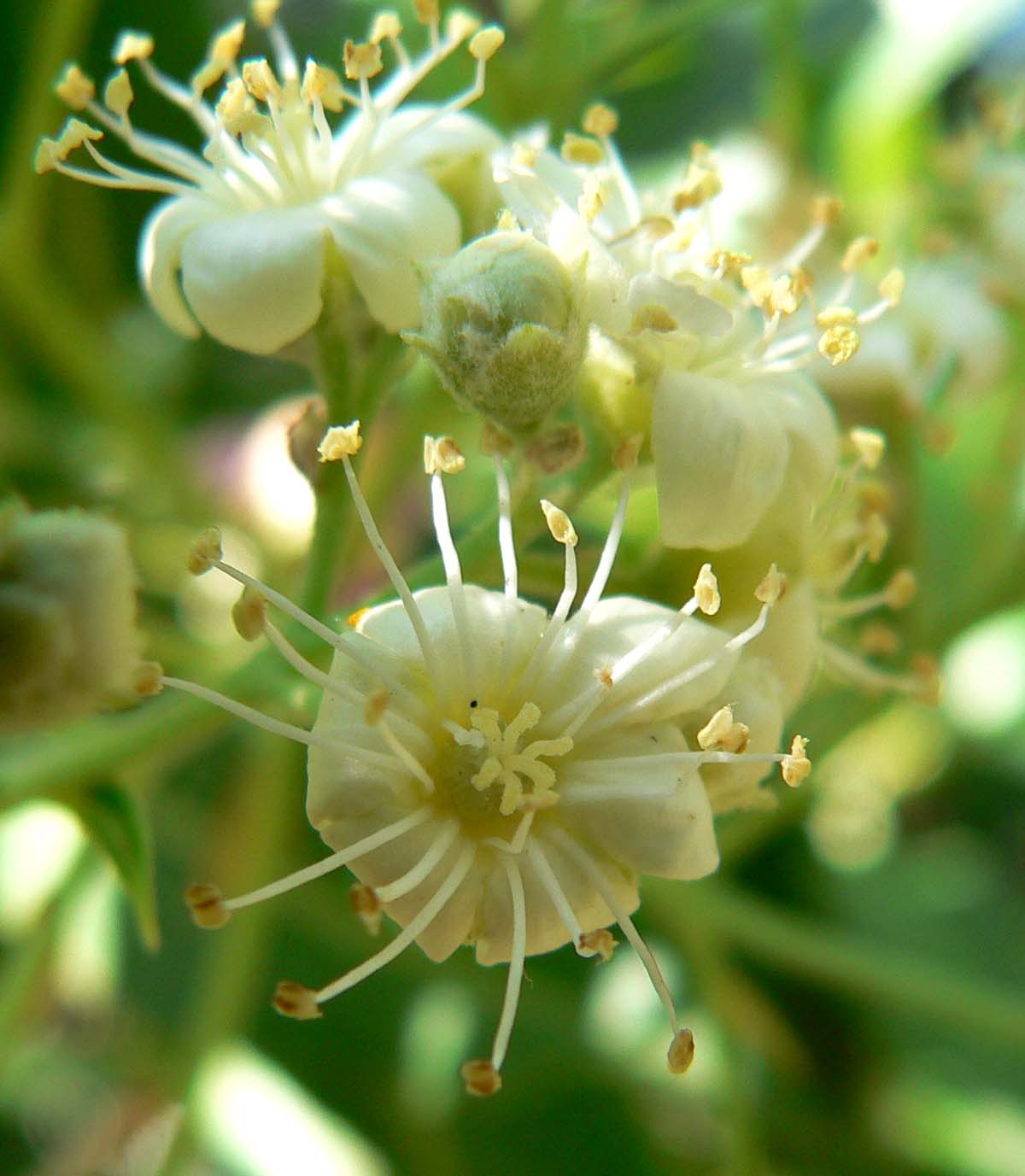
Flowers appear from late April through June in flat-topped to rounded corymbs (compact, branched clusters) 2–4 inches across at the branch tips. Each individual flower is small — about ¼ inch (6 mm) — with five rounded white petals and numerous white stamens, giving the clusters a delicate, frothy appearance reminiscent of a scaled-down mountain ash or photinia. The flowers are mildly fragrant and attract a wide variety of native bees, butterflies, and other pollinators. After flowering, the plant develops small, woody, urn-shaped capsule clusters that turn from green to russet-brown as they mature and persist on the plant through fall and winter, opening to release tiny seeds. These seed capsule clusters give the plant an attractive bronze-brown appearance during the dormant season and provide food for birds.
Quick Facts
| Scientific Name | Vauquelinia californica |
| Family | Rosaceae (Rose Family) |
| Plant Type | Evergreen Shrub / Small Tree |
| Mature Height | 14 ft |
| Sun Exposure | Full Sun |
| Water Needs | Low (Drought Tolerant) |
| Bloom Time | April – June |
| Flower Color | White |
| USDA Hardiness Zones | 7–11 |
Native Range
Arizona Rosewood is native to the rocky slopes, canyon walls, and desert mountain ranges of the Sonoran and Chihuahuan Deserts. In the United States, it occurs primarily in southern and central Arizona, with populations extending into southwestern New Mexico and the Trans-Pecos region of western Texas. The plant reaches its northern limit at elevations around 5,000–6,000 feet in central Arizona’s mountain ranges, and its eastern limit in the Guadalupe Mountains of Texas and the Sacramento Mountains of New Mexico. South of the border, Arizona Rosewood extends well into the Mexican states of Sonora, Chihuahua, Baja California, and Baja California Sur.
The species shows a strong affinity for granitic and limestone rocky slopes, particularly in the transitional zone between the lower Sonoran Desert and the upper foothill chaparral and oak woodland zones. It is rarely found on flat valley floors, preferring the rocky, well-drained hillsides where competition from other plants is reduced and where its deep root system can access moisture from crevices in the bedrock. Arizona Rosewood is an important landscape indicator species for the rocky desert montane habitat type, and its presence in a plant community suggests well-drained, calcareous, or granitic substrates.
Within its range, Arizona Rosewood is often a dominant or co-dominant shrub in the foothill chaparral community, growing alongside jojoba, desert lavender, brittlebush, and various cacti at lower elevations, transitioning to communities with canyon live oak, Mexican blue oak, and manzanita at higher elevations. Its adaptability across this elevational gradient reflects its broad physiological tolerance of both extreme heat and occasional hard frost.
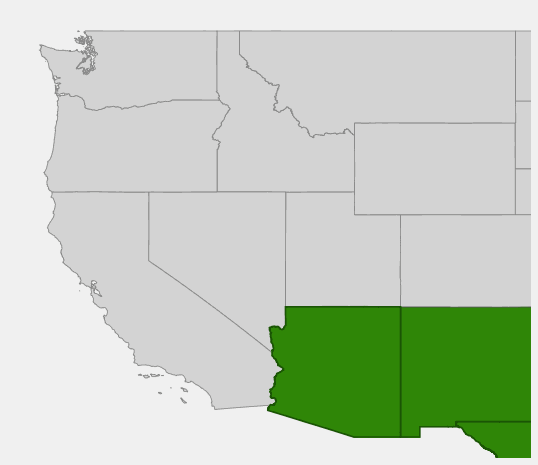
📋 Regional plant lists featuring Arizona Rosewood: Arizona
Growing & Care Guide
Arizona Rosewood is one of the most drought-tolerant broadleaf evergreens available to gardeners in the Desert Southwest. Once established, it requires very little care. Its main requirements are excellent drainage and full sun exposure to bring out its dense, compact growth and profuse flowering.
Light
Plant Arizona Rosewood in full sun for best performance. It grows most densely and flowers most heavily in locations with at least 6–8 hours of direct sun per day. In full sun it develops a tight, rounded crown and displays its white flower clusters to best effect. It tolerates light afternoon shade, especially at the lower, hotter elevations of the Sonoran Desert, but grows more open and flowers less freely under significant shade. At Phoenix or Tucson valley elevations, morning sun with a bit of afternoon relief can help reduce heat stress during the most intense summer months.
Soil & Water
Arizona Rosewood requires excellent drainage above all else — heavy clay soils that hold moisture will cause root rot and eventual death. Native granite decomposed granite, caliche-amended soils, or similar gritty, lean mixes are ideal. It is highly drought tolerant and perfectly adapted to the alkaline, rocky, fast-draining soils of its native desert habitat. Once established (typically after 1–2 years), it survives on natural rainfall alone throughout most of its native range. During establishment, water deeply every 1–2 weeks in summer, then gradually taper off to once monthly or less in winter.
Planting Tips
Plant in fall (October–November) or early spring (February–March), avoiding the hottest summer months. Dig a wide, shallow planting hole — no deeper than the rootball but 2–3 times as wide. Do not amend the backfill soil; native soil encourages roots to spread outward. Mulch the soil surface to 3 inches with coarse gravel or decomposed granite, keeping mulch away from the trunk.
Pruning & Maintenance
Arizona Rosewood is naturally tidy and requires minimal pruning. For a tree form, selectively remove lower branches over several years to reveal the attractive bark. Otherwise, allow it to develop its natural multi-stemmed shrub form. Prune lightly in late winter to remove any frost-damaged growth. Avoid heavy shearing, which destroys the natural form and removes flowering wood. This plant is naturally pest- and disease-resistant in low-moisture conditions and rarely requires intervention from the gardener.
Landscape Uses
- Wildlife habitat hedges — dense growth provides cover for birds and small mammals
- Hot south or west-facing walls — handles reflected heat that stresses most other plants
- Xeriscape foundation planting — provides year-round structure and screening
- Canyon garden or rock garden — looks natural cascading over rocky slopes
- Mixed desert shrub border alongside palo verde, jojoba, and desert willow
- Erosion control on rocky slopes and road cuts
- Pollinator garden — white flower clusters attract native bees and butterflies
Wildlife & Ecological Value
Despite its tough exterior, Arizona Rosewood supports a rich web of wildlife interactions in the desert ecosystem. Its combination of year-round cover, seasonal flowers, and persistent seed capsules provides food and shelter across multiple seasons.
For Birds
The dense, multi-stemmed growth of Arizona Rosewood makes it exceptional nesting and roosting habitat for desert birds. Curve-billed Thrashers, Cactus Wrens, Black-throated Sparrows, and White-crowned Sparrows all use the shrub for cover and nesting. The persistent seed capsules are consumed by finches and sparrows in fall and winter. The shrub also supports large numbers of insects on its flowers and foliage, providing essential protein for breeding birds and their nestlings throughout spring and summer. The dense canopy intercepts predators and provides thermal insulation for roosting birds during cold winter nights.
For Mammals
The dense canopy of Arizona Rosewood provides valuable thermal cover for desert rodents, rabbits, and other small mammals. Javelinas (collared peccaries) may browse the foliage during dry periods when other food is scarce. The dense growth offers escape cover for cottontail rabbits and other small mammals fleeing predators. The plant’s deep roots and dense canopy contribute to shading the soil surface, creating cooler microhabitats for reptiles and invertebrates beneath the plant.
For Pollinators
The white flower clusters are a significant late-spring nectar source for native bees, including digger bees, sweat bees, and native bumble bees. Butterflies — various hairstreaks, sulphurs, and skippers — also visit the flowers. Because the plant blooms when many spring wildflowers have already finished, it provides an important bridge nectar source for pollinators in the late spring desert landscape. The concentrated, accessible flower clusters are particularly attractive to smaller native bee species.
Ecosystem Role
Arizona Rosewood plays an important structural role in the rocky desert slope community. Its deep root system helps stabilize eroding hillsides and rocky outcrops, reducing soil loss on canyon walls and mountain slopes. As an evergreen in a seasonally dry landscape, it provides year-round canopy structure that shelters the soil from direct sun and wind, reducing evaporation and creating micro-habitats for shade-tolerant plants beneath its canopy. Over time, leaf litter enriches the rocky, nutrient-poor soils of its native habitat.
Cultural & Historical Uses
Arizona Rosewood has a long history of use among the Indigenous peoples of the Sonoran Desert region. The Tohono O’odham and other desert peoples used various parts of the plant medicinally, particularly the leaves and bark, which have astringent properties consistent with other members of the rose family. The dense, hard wood was used for making tool handles, arrow shafts, and small implements where strong, hard wood was needed in a desert environment where larger timber was scarce. The fine-grained, dense wood was prized for carving and decorative work throughout the desert Southwest.
The plant’s common name “Arizona Rosewood” reflects both its geographic range and the quality of its wood, which is fine-grained, dense, and takes a polish well, resembling the rosewoods of tropical origin. Though rarely harvested commercially due to the small size of individual plants, the wood was locally valued wherever it was available. Arizona Rosewood’s membership in the Rosaceae family — which includes many economically important species such as apples, pears, roses, and hawthorns — makes it botanically significant as a desert-adapted relative of these temperate crop plants.
In modern horticulture, Arizona Rosewood has gained considerable appreciation as a tough, drought-resistant evergreen for low-maintenance desert landscapes. It is widely used in Tucson, Phoenix, and other southwestern cities as a hedging and screening plant. Its performance in LEED-certified sustainable landscapes and water-wise demonstration gardens has helped introduce it to a wider audience of gardeners seeking plants that thrive without supplemental irrigation. The Arizona Department of Transportation uses it in highway plantings for its ability to survive with minimal maintenance once established.
Frequently Asked Questions
Is Arizona Rosewood truly drought tolerant?
Yes — once established (typically after 1–2 years), Arizona Rosewood survives on natural rainfall alone throughout the Sonoran Desert. During establishment, water every 1–2 weeks in summer and monthly in winter. After that, rainfall alone is sufficient in most parts of its native range. It is one of the most drought-tolerant broadleaf evergreens available for low-desert gardens.
How fast does Arizona Rosewood grow?
Arizona Rosewood grows at a moderate rate — typically 1–2 feet per year in good conditions. In full sun with well-drained soil and occasional deep watering during establishment, plants can reach 6–8 feet in 4–5 years. Growth is slower in very dry conditions or poor soils, but the plant is long-lived and ultimately forms a substantial shrub.
Can I use Arizona Rosewood as a hedge?
Yes, Arizona Rosewood makes an excellent informal evergreen hedge or screen. Its dense, upright growth and evergreen foliage provide year-round privacy screening. Space plants 6–8 feet apart for a continuous screen, or 8–10 feet apart for a more naturalistic look. It does not require heavy shearing to maintain a tidy form.
Is Arizona Rosewood deer resistant?
Arizona Rosewood is generally considered deer resistant due to its tough, leathery leaves. While no plant is completely deer-proof, it is rarely browsed heavily. In areas with high deer pressure, new plantings may benefit from protection until established, after which the plant’s woody structure and dense canopy make it less attractive to deer than softer-leaved plants.
Does Arizona Rosewood have any fragrance?
The white flowers have a mild, pleasant fragrance especially noticeable in early morning and evening. The fragrance is sweet but not overpowering — subtle enough to be enjoyable near a patio without being intrusive. The foliage has no notable fragrance when brushed.

Looking for a nursery that carries Arizona Rosewood?
Browse our native plant nursery directory: Arizona