Lindheimer Senna (Senna lindheimeriana)
Senna lindheimeriana, commonly known as Lindheimer Senna, Velvet Leaf Senna, or Lindheimer’s Senna, is a striking native perennial shrub of the desert Southwest named in honor of Ferdinand Jacob Lindheimer (1801–1879), the pioneering German-born botanist who spent decades collecting and describing the flora of Texas and became known as the “Father of Texas Botany.” This beautiful plant is everything a desert native shrub should be: drought-tolerant, deer-resistant, wildlife-supporting, and spectacularly ornamental, with bright yellow flowers and exceptionally soft, velvety green leaves that invite touching.
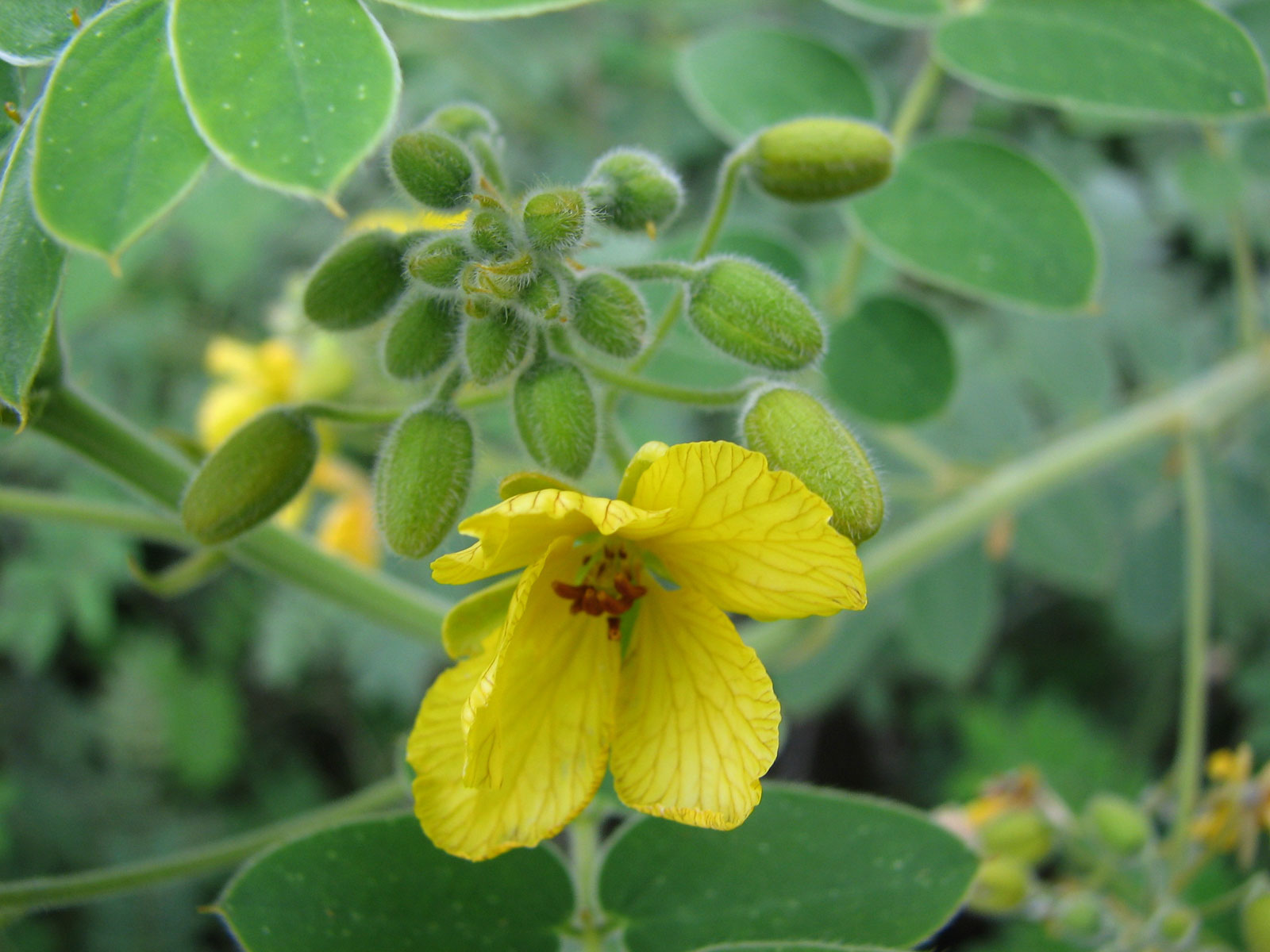
Lindheimer Senna typically grows 4–5 feet tall, forming a rounded, semi-woody shrub with erect to arching stems clothed in pinnate compound leaves. The leaves are covered in dense, soft pubescence (fine hairs) that gives them their distinctive velvety texture and a grayish-green to silvery-green color. The bright yellow flowers, produced in clusters from summer through fall, are followed by flat, sword-like seedpods that provide seeds for birds and small mammals. The plant’s drought tolerance and deer resistance, combined with its ornamental appeal, make it an excellent choice for naturalistic desert gardens in Arizona, New Mexico, and Texas.
As a member of the Fabaceae family, Lindheimer Senna is a nitrogen-fixing plant that improves soil fertility while providing beautiful flowers. In the landscape, it works well as a mid-border shrub, background planting, or wildlife habitat element. Yellow flowers bloom from late summer into fall — exactly when many other plants have finished blooming, making Lindheimer Senna a critical late-season nectar source for butterflies, bees, and other pollinators preparing for winter.
Identification
Lindheimer Senna is a semi-woody perennial shrub growing 4–5 feet tall and 3–4 feet wide. The overall form is rounded to somewhat irregular, with multiple arching stems arising from a woody base. The plant is semi-evergreen in mild winters, dying back to the base after hard freezes and resprouting vigorously the following spring. The combination of velvety soft leaves and bright yellow flowers makes this plant immediately distinctive.
Stems & Leaves
The stems are densely pubescent (covered with soft hairs), giving them a velvety feel. Leaves are pinnately compound with 4–7 pairs of leaflets, each leaflet oval and 1–2 inches long, with dense soft hairs on both surfaces. The leaf texture is remarkably soft — almost like felt — and the silvery-green color is eye-catching against the desert landscape. This dense pubescence reflects solar radiation and reduces water loss, contributing to the plant’s excellent drought tolerance.
Flowers & Fruit
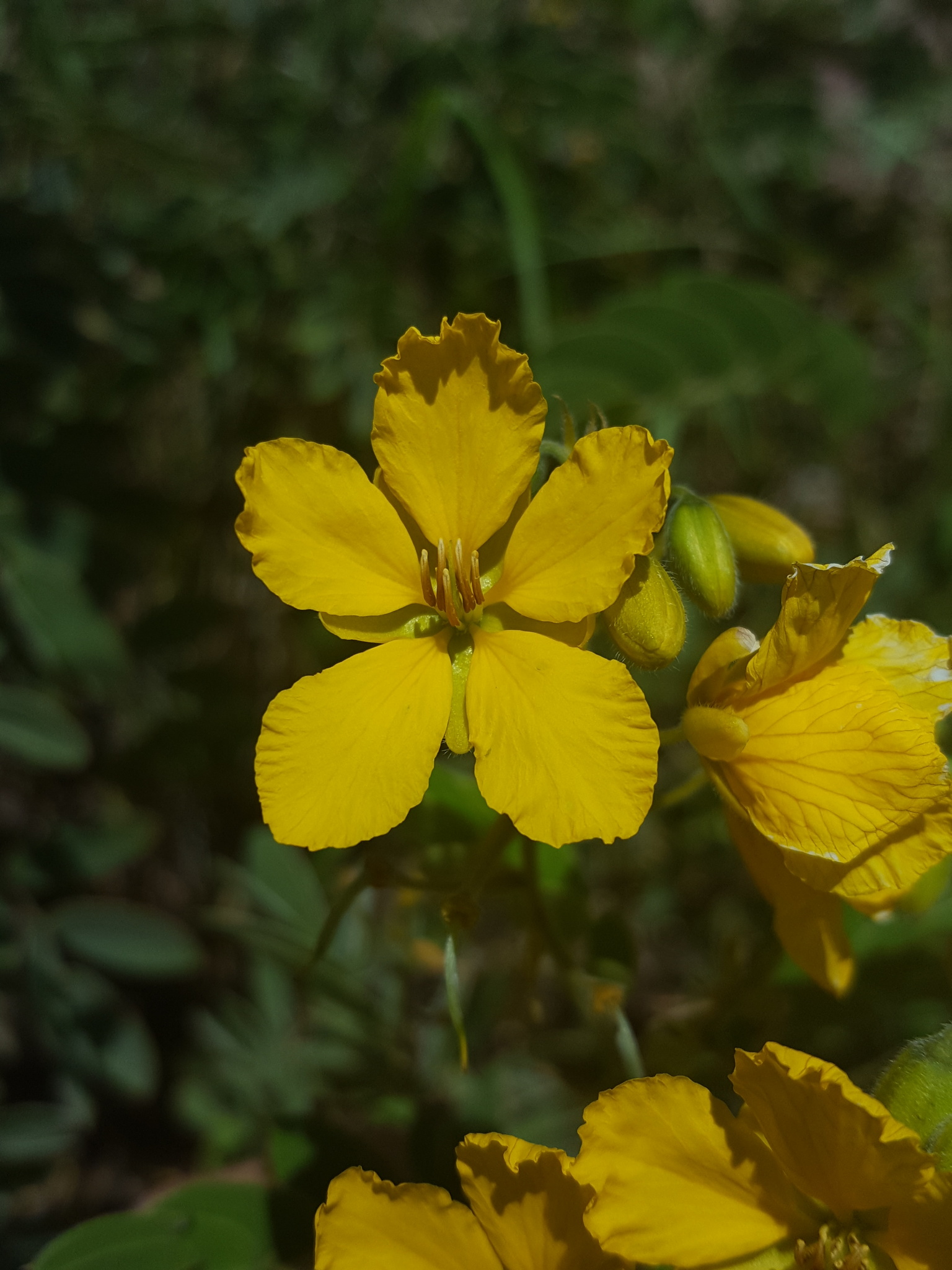
The bright yellow flowers are produced in clusters (racemes) from the upper leaf axils. Each individual flower is about 1 inch across with five rounded, bright yellow petals typical of the pea family’s casual (not bilaterally symmetric) flower form. Flowers appear from July through October, with peak bloom in August and September following summer monsoon rains. The seedpods are flat, sword-shaped, and 2–4 inches long, maturing to dark brown. Seeds within the pods are round and hard, dispersed when pods split or are eaten by birds.
Quick Facts
| Scientific Name | Senna lindheimeriana |
| Family | Fabaceae (Pea / Legume Family) |
| Plant Type | Perennial Shrub (semi-woody) |
| Mature Height | 5 ft |
| Sun Exposure | Full Sun to Part Shade |
| Water Needs | Low (Drought Tolerant) |
| Bloom Time | July – October |
| Flower Color | Bright Yellow |
| USDA Hardiness Zones | 7–11 |
Native Range
Lindheimer Senna is native to the Chihuahuan Desert and adjacent semi-arid regions of Texas, New Mexico, and Arizona, extending into northern Mexico. In the United States, it occurs primarily in western Texas (Trans-Pecos region and Edwards Plateau), southern New Mexico, and southeastern Arizona, where it grows on rocky limestone hills, canyon slopes, desert grasslands, and open shrublands at elevations from 1,500 to 5,500 feet.
In Texas, Lindheimer Senna is most common in the Trans-Pecos region — the Chihuahuan Desert of far west Texas — and on the limestone hills of the Edwards Plateau. In New Mexico and Arizona, it is found in the Chihuahuan Desert grassland transition zones, growing on rocky hillsides, canyon walls, and desert flat margins. The plant thrives in areas with 10–20 inches of annual precipitation, particularly those with a distinct summer monsoon pattern that provides warm-season rainfall during the plant’s peak growth and bloom period.
Like many southwestern native plants, Lindheimer Senna has a disjunct range that reflects the complex geological and climatic history of the Chihuahuan Desert region. Its populations in Arizona and New Mexico represent the western edge of its natural range, where it occurs in scattered colonies along canyon systems and on favorable rocky exposures. The species is named for Ferdinand Lindheimer, who collected the first botanical specimens in Texas in the 1840s.
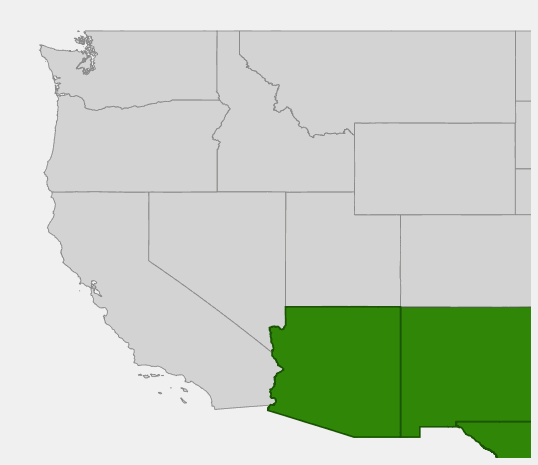
📋 Regional plant lists featuring Lindheimer Senna: Arizona
Growing & Care Guide
Lindheimer Senna is an excellent, low-maintenance native shrub for desert gardens in its native range. It combines outstanding drought tolerance with ornamental appeal and deer resistance — three traits that are often hard to find together in a single plant.
Light
Lindheimer Senna thrives in full sun to part shade. In its native habitat, it often grows on canyon slopes where it may receive direct sun for part of the day and dappled shade at other times. In hot desert gardens, afternoon shade can reduce water stress and extend the bloom season. For maximum flowering, plant in full sun. The plant is notably more tolerant of shade than most desert shrubs, making it useful in partially shaded settings near buildings or beneath tree canopy.
Soil & Water
Well-drained rocky or gravelly soil is preferred. Lindheimer Senna is naturally adapted to limestone soils and does well in alkaline conditions. It tolerates drought once established but looks its best and produces the most flowers with occasional deep watering — particularly important during prolonged dry spells before or between monsoon rains. Avoid wet or waterlogged conditions. Mulching around the root zone helps retain moisture without keeping soil constantly wet.
Planting Tips
Plant in fall (October–November) or spring (February–March) to avoid heat stress during establishment. Space plants 4–5 feet apart to allow for mature spread. Container-grown plants establish readily. Seeds germinate after scarification (nicking or soaking the hard seed coat) and can be sown directly after the last frost. The plant grows moderately fast and begins flowering in its first or second year from container stock.
Pruning & Maintenance
Cut back to 12–18 inches in late winter or early spring before new growth begins. This rejuvenating prune encourages vigorous new growth and better flower production. In areas with mild winters (no hard freezes), the plant may remain semi-evergreen and require only light trimming. After hard freezes in colder zones (7–8), it may die back to the ground but reliably resprouts from the root crown. Deadhead spent flowers to extend the bloom period, or leave seedpods for birds.
Landscape Uses
- Desert border planting — excellent mid-border shrub for desert gardens
- Wildlife habitat — provides late-season nectar and seeds
- Deer-resistant landscaping — reliably ignored by deer
- Slope stabilization — roots hold rocky hillside soils effectively
- Naturalistic desert gardens — blends beautifully with other desert natives
- Butterfly gardens — larval host for several sulfur butterflies
Wildlife & Ecological Value
Lindheimer Senna has outstanding ecological value, particularly as a late-season flowering plant that provides resources when most other plants have finished blooming.
For Birds
The hard, round seeds within the flat pods are consumed by doves, quail, and various sparrows. The persistent seedpods remain on the plant well into winter, providing a food source during lean months. The dense stems provide shelter and nesting opportunities for desert birds.
For Mammals
Lindheimer Senna is notably deer-resistant — the soft foliage, despite its appealing texture to humans, is consistently avoided by white-tailed and mule deer, making it an excellent choice for gardens with heavy deer pressure. Small mammals and rodents collect and store the hard seeds.
For Pollinators
The bright yellow flowers of Lindheimer Senna are highly attractive to bees and butterflies, particularly during the late summer and fall bloom period when many other nectar sources are exhausted. It is especially important for sulfur butterflies (Cloudless Sulphur, Orange Sulphur, and others) — both as a nectar source for adults and as a larval host plant for caterpillars. Bumblebees are particularly adept at accessing pollen from Senna flowers through a process called “buzz pollination” (sonication), in which they vibrate their flight muscles to shake loose the pollen.
Ecosystem Role
As a legume, Lindheimer Senna fixes atmospheric nitrogen through root nodule bacteria, enriching the surrounding soil and benefiting neighboring plants. In rocky hillside communities, its root system helps stabilize thin soils and reduce erosion. Its late-season flowering fills an important ecological gap, sustaining pollinators through the period between the end of monsoon season and the onset of winter dormancy.
Cultural & Historical Uses
Lindheimer Senna, like many Senna species, has a history of Indigenous and traditional use in the desert Southwest. The Mescalero Apache and other southwestern peoples recognized the plant’s medicinal properties — the leaves and pods of various Senna species contain anthraquinone compounds with well-established laxative effects, and southwestern groups reportedly used Lindheimer Senna as one of several native plants for similar purposes. The seeds were occasionally used in various preparations by Indigenous peoples familiar with the plant’s properties.
The plant is named for Ferdinand Jacob Lindheimer (1801–1879), one of the most important botanical figures in Texas history. Lindheimer was a German political exile who arrived in Texas in 1836 and spent the next three decades collecting and describing the flora of Texas with remarkable dedication and scientific rigor. He discovered and described hundreds of plant species new to science, and numerous plants bear his name — including Lindheimer’s Muhly Grass, Lindheimer’s Prickly Pear, and of course Lindheimer Senna. His collections, sent to Asa Gray at Harvard and George Engelmann in St. Louis, formed the foundation for the scientific understanding of Texas botany.
In modern native plant horticulture, Lindheimer Senna has gained recognition as one of the best native shrubs for drought-tolerant, deer-resistant desert gardens in the Southwest. Native plant nurseries in Texas and Arizona have increasingly made it available to gardeners, and it is used in restoration plantings on Chihuahuan Desert hillsides. Its combination of ornamental appeal, ecological value, and low maintenance requirements make it an ideal plant for native landscaping in its natural range.
Frequently Asked Questions
Is Lindheimer Senna a perennial?
Yes. Lindheimer Senna is a perennial shrub that comes back each year from its woody root crown. In USDA Zone 9–11, it may remain semi-evergreen in mild winters. In Zones 7–8, it dies back to the ground after hard freezes but reliably resprouts in spring. Cut back dead stems in late winter to encourage vigorous new growth.
Why isn’t my Lindheimer Senna blooming?
Lindheimer Senna typically blooms from July through October, with peak flowering in August–September. If your plant isn’t blooming, check that it’s receiving adequate sun (at least 4–6 hours of direct sun daily) and that it’s been in the ground long enough to establish — first-year plants may bloom sparsely or not at all. Also, ensure it’s not being over-fertilized, which promotes foliage over flowers.
Do deer eat Lindheimer Senna?
Lindheimer Senna is reliably deer-resistant. The plant is consistently listed among the best deer-resistant native shrubs for Texas and Arizona gardens. While no plant is completely deer-proof in severe drought or when deer populations are very high, Lindheimer Senna is one of the better bets for deer-prone areas.
How big does Lindheimer Senna get?
Lindheimer Senna typically reaches 4–5 feet tall and about 3–4 feet wide at maturity. In very favorable conditions with extra moisture, it can exceed 6 feet. Annual pruning in late winter keeps the plant at a manageable size and promotes better flowering.
Is Lindheimer Senna good for butterflies?
Yes — Lindheimer Senna is a larval host plant for several sulfur butterfly species, including Cloudless Sulphur and Sleepy Orange. Adults of these and many other butterfly species visit the flowers for nectar. It is an excellent choice for butterfly gardens in Arizona, New Mexico, and Texas.

Looking for a nursery that carries Lindheimer Senna?
Browse our native plant nursery directory: Arizona