Sand Sagebrush (Artemisia filifolia)
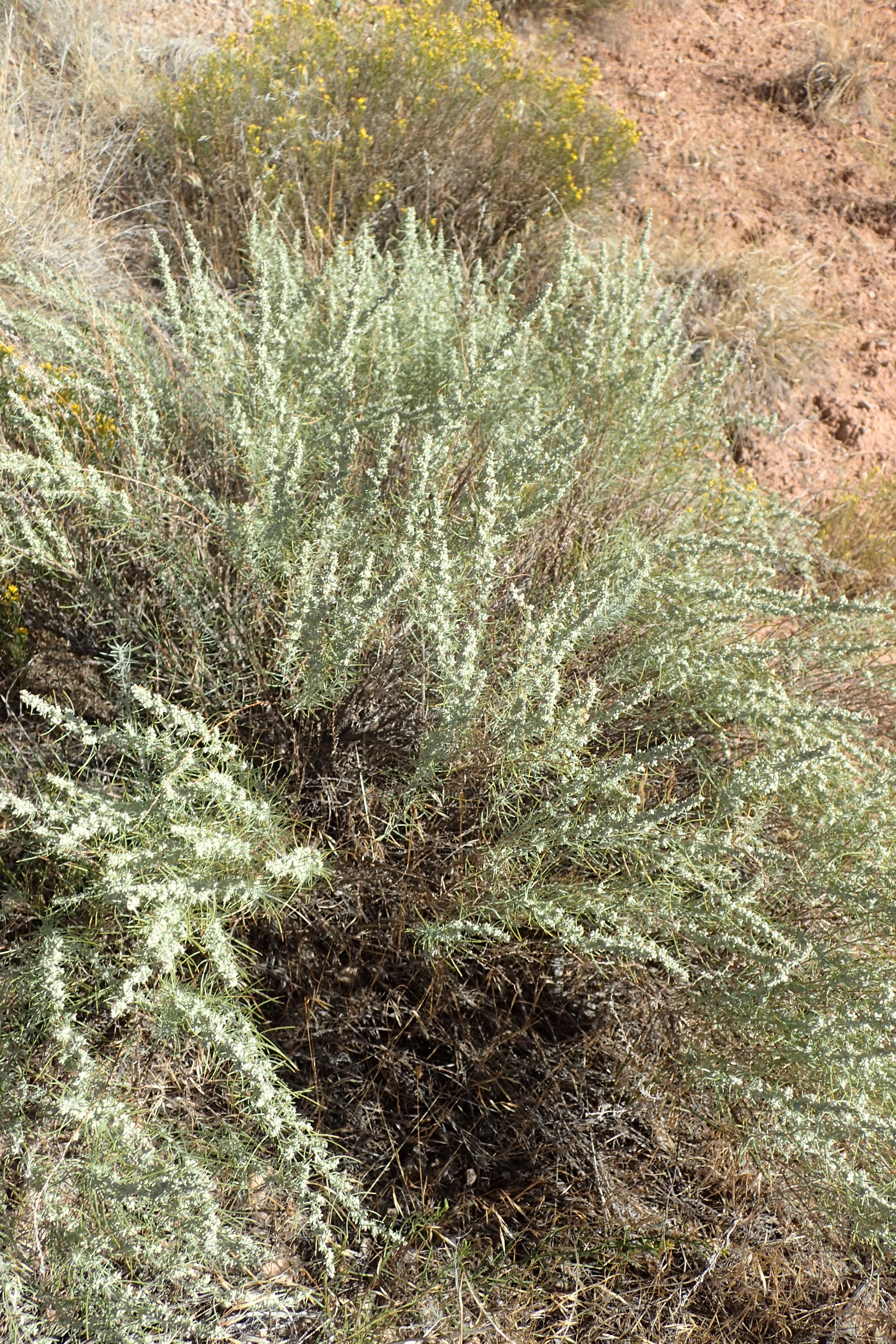
Artemisia filifolia, commonly known as Sand Sagebrush or Threadleaf Sagebrush, is a graceful, aromatic native shrub of sandy soils throughout the desert Southwest and southern Great Plains. Unlike the more famous Big Sagebrush (Artemisia tridentata) with its broader, three-toothed leaves, Sand Sagebrush has remarkably fine, thread-like leaves (hence “filifolia” — thread-leaved) that give the plant an extraordinarily delicate, airy appearance quite unlike any other native shrub. The silvery-green thread-like foliage shimmers and moves in the lightest breeze, creating a beautiful, almost ethereal visual effect that has made Sand Sagebrush increasingly popular in naturalistic and xeriscape gardens throughout the region.
Growing 3 to 5 feet tall and often wider, Sand Sagebrush forms a densely branched, rounded to oval shrub with a strong, classic sage fragrance. The plant is evergreen, retaining its distinctive thread-like foliage year-round and providing important wildlife cover throughout all seasons. As the native plant list notes, it is “Evergreen. Provides ground cover for wildlife” — an accurate and succinct description of its most ecologically important characteristics. In the sandy plains and dune systems where it thrives, Sand Sagebrush is often a dominant shrub, creating a characteristic community type of great ecological importance for numerous wildlife species.
Sand Sagebrush is the primary food plant for the Lesser Prairie Chicken, a species of significant conservation concern across the Southern Great Plains. It is also a critical nesting and foraging habitat component for numerous other birds, and its seeds are consumed by many species of desert songbirds. The plant’s adaptations to sandy, shifting soils — including deep taproots, flexible stems, and the ability to resprout after partial burial by blowing sand — make it uniquely suited to the challenging aeolian (wind-deposited) soil environments it occupies.
Identification
Sand Sagebrush is immediately recognizable by its exceptionally fine, thread-like foliage — unlike anything else in the desert shrub flora. Combined with its classic sagebrush fragrance, silvery-green color, and sandy habitat preference, it cannot be confused with other species.
Leaves
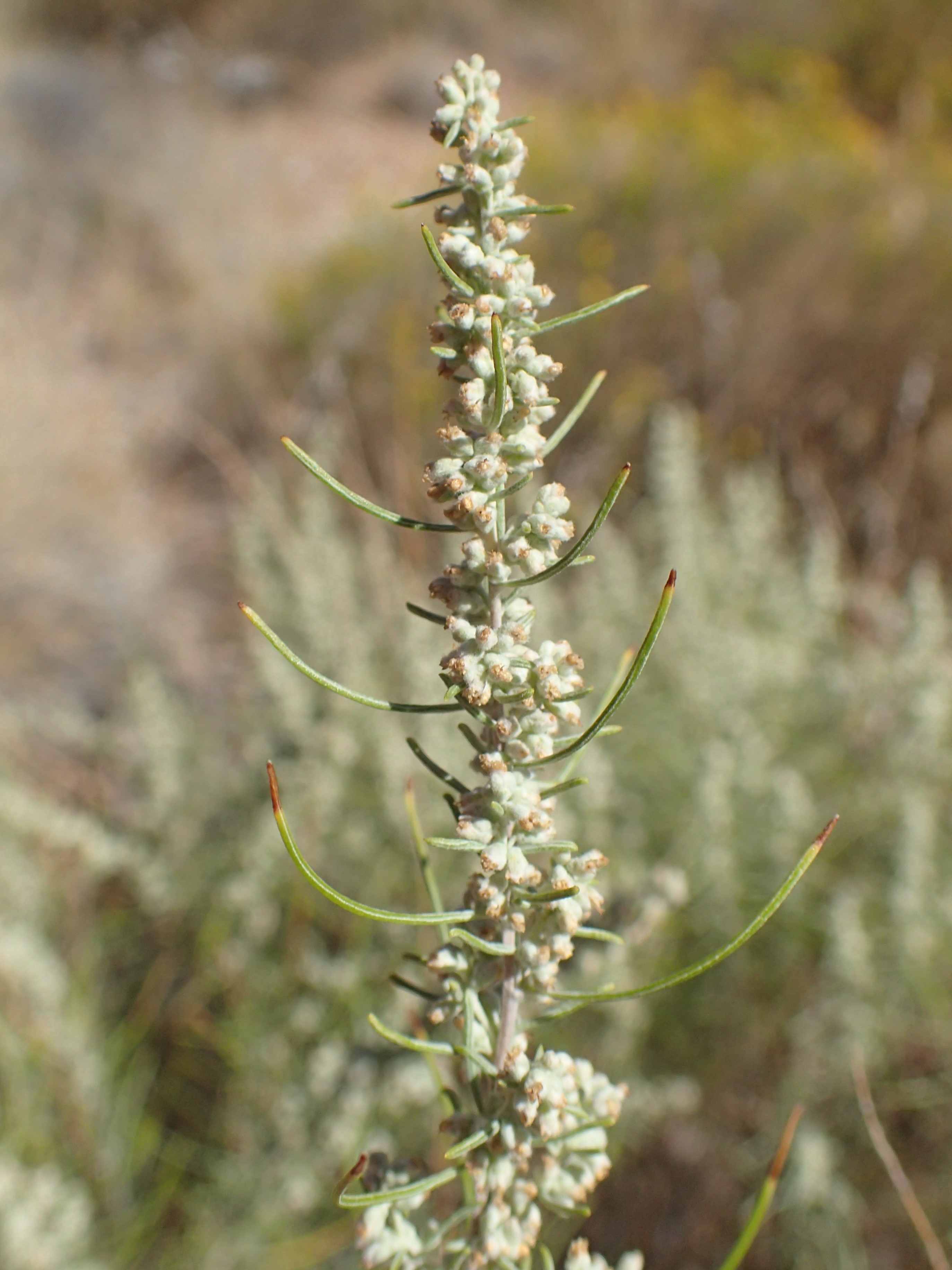
The leaves are the defining feature: they are extremely narrow (filiform), typically less than 1 mm wide and 0.5 to 1.5 inches long, silvery-green and covered with fine silky hairs. The leaves are entire (unlobed), unlike the three-toothed leaves of Big Sagebrush. They are arranged alternately on the stems and are densely packed on young growth, giving branches a feathery, silvery appearance. The leaves are aromatic, releasing the distinctive camphor-sage fragrance when touched. The plant remains evergreen through winter, though leaves may be smaller and more reduced in cold conditions.
Flowers
Sand Sagebrush flowers in late summer through fall (August–October), producing small, inconspicuous flower heads in narrow panicles at branch tips. The individual flower heads are tiny (2–3 mm) and yellowish, with both disc and ray florets, though the rays are rudimentary. The flowers are wind-pollinated and produce copious pollen that can be allergenic for some people. Despite their tiny size, the massed flowers contribute to the visual texture of the plant in late summer.
Bark & Stems
Older stems have gray, slightly shreddy bark. Young stems are silvery and hairy. The stems are flexible and tough, well-adapted to bending without breaking in the strong winds characteristic of sandy plains and dune environments. The root system includes a deep taproot that anchors the plant in loose sandy soils and accesses deep soil moisture. Unlike some sagebrush species, Sand Sagebrush does not generally produce many lateral roots near the surface.
Quick Facts
| Scientific Name | Artemisia filifolia |
| Family | Asteraceae (Daisy/Composite) |
| Plant Type | Evergreen Perennial Shrub |
| Mature Height | 4 ft |
| Sun Exposure | Full Sun |
| Water Needs | Low (Drought Tolerant) |
| Bloom Time | August – October |
| Flower Color | Yellowish (inconspicuous) |
| USDA Hardiness Zones | 4–9 |
Native Range
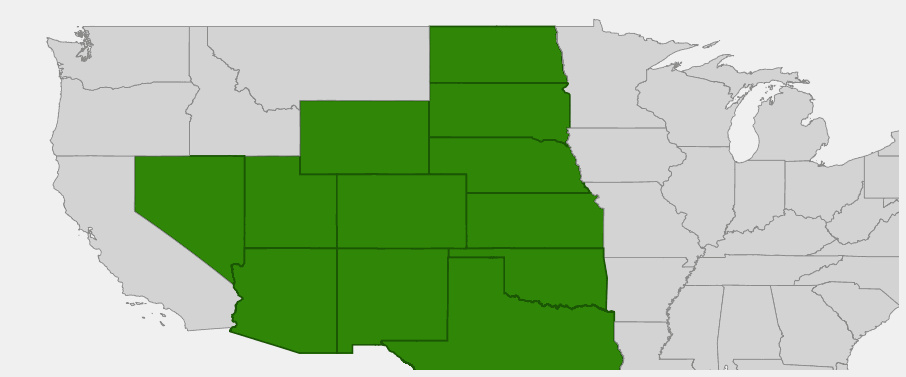
Sand Sagebrush is native to the sandy soils of the desert Southwest and southern Great Plains, ranging from southeastern Arizona and southwestern New Mexico east across the southern Great Plains through Texas, Oklahoma, Kansas, Nebraska, and the Dakotas, with outlier populations in Nevada, Utah, Colorado, and Wyoming. It is most characteristic of and abundant in the sandy plains and sandhills ecosystems — particularly the Sandhills of Nebraska, the Texas-Oklahoma panhandle region, and the sandy desert plains of eastern New Mexico and southeastern Colorado.
The species is strongly edaphically specialized — it is almost always found on sandy soils (sandy loams, fine sands, or dune sands) and is one of the most reliable indicators of sandy soil conditions across its range. Where rocky or clay soils occur even a short distance away, Sand Sagebrush gives way to Big Sagebrush or other shrubs. This soil specificity limits its distribution to sandy habitat patches but within those habitats it often achieves remarkable abundance and ecological dominance.
In Arizona and New Mexico, Sand Sagebrush occurs primarily in the sandy plains of the eastern portions of both states — the southern extension of the Chihuahuan Desert and the transition to the Great Plains. It is a characteristic species of the Espanola Basin in New Mexico and the sandy plains east of the Sandia Mountains. Elevation range in the Southwest is typically 4,500–6,500 feet.
📋 Regional plant lists featuring Sand Sagebrush: Arizona
Growing & Care Guide
Sand Sagebrush is an excellent evergreen shrub for sandy-soiled garden settings in the desert Southwest and Great Plains. Its unique texture, beautiful silvery color, and strong sagebrush fragrance make it a standout specimen plant, while its extreme drought tolerance and wildlife value add functional benefits.
Light
Sand Sagebrush requires full sun for best growth. In partial shade, the plant becomes leggy and loses much of its characteristic dense, silvery appearance. Plant in the sunniest location available with excellent drainage.
Soil & Water
This is perhaps the most soil-specific of all the plants in this guide. Sand Sagebrush strongly prefers sandy, well-drained soils and may perform poorly in heavy clay, compacted soils, or any location with poor drainage. In sandy garden soils, it is exceptionally drought tolerant — once established, it thrives on natural precipitation alone in most of its range. If your garden has clay soil, amend generously with coarse sand and gravel before planting, or grow in a raised bed or container. Do not overwater.
Planting Tips
Plant in fall or early spring in sandy, well-drained soil. Choose a permanent location — Sand Sagebrush develops a deep taproot and does not transplant well once established. Give the plant ample space — mature shrubs can reach 4–5 feet tall and equally wide. In landscape settings, the silvery foliage contrasts beautifully with dark-leaved plants or red rock features. Allow at least 4–5 feet between plants for air circulation.
Pruning & Maintenance
Sand Sagebrush needs minimal pruning. Light shaping in spring after any frost damage removes dead tips and encourages compact growth. Heavy pruning is generally unnecessary and may be counterproductive. The plant’s natural form — an airy, rounded shrub of silvery threads — is its greatest aesthetic asset. Remove only dead or damaged wood, and let the plant express its natural beauty.
Landscape Uses
- Silver accent specimen — the unique thread-like foliage is a conversation piece in any native garden
- Windbreak and wildlife cover — dense evergreen structure provides year-round shelter
- Sandy soil landscapes — thrives where other shrubs struggle in loose, sandy conditions
- Fragrance garden — the classic sagebrush scent is incomparable
- Wildlife habitat planting — critical for lesser prairie chicken and many other species
- Naturalistic restoration — appropriate for sandy desert plains restoration projects
Wildlife & Ecological Value
Sand Sagebrush is one of the most ecologically important shrubs of the southern Great Plains and desert Southwest sandy habitats, providing food, cover, and nesting resources for numerous wildlife species including some of significant conservation concern.
For Birds
The seeds of Sand Sagebrush are consumed by sparrows, buntings, and finches. The dense, evergreen structure provides critical nesting habitat for songbirds — Brewer’s Sparrow and Sage Thrasher are characteristic nesting species in dense sagebrush communities. Most importantly, Sand Sagebrush is the primary nesting and foraging habitat for the Lesser Prairie Chicken (Tympanuchus pallidicinctus), a Threatened species of the southern Great Plains that has declined dramatically as sagebrush habitats have been lost to agriculture and energy development.
For Mammals
Pronghorn, mule deer, and pronghorn antelope browse Sand Sagebrush, especially in winter when other food sources are scarce. The deep taproot system and wind-resistant structure make it a reliable winter food source even in harsh conditions. Jackrabbits and cottontails shelter beneath the dense skirt of foliage, and their warrens under sagebrush communities provide refuge for many small mammals. Swift Foxes and other predators use sagebrush as hunting cover.
For Pollinators
Sand Sagebrush is wind-pollinated and provides little direct pollinator value. However, the structural complexity of sagebrush communities supports diverse invertebrate communities. The aromatic compounds in sagebrush foliage may also contribute to the chemical ecology of desert plant communities in ways not yet fully understood.
Ecosystem Role
Sand Sagebrush communities play a critical role in sandy desert and grassland ecosystems. The plants’ extensive root systems bind loose sandy soils, dramatically reducing wind erosion. In actively eroding dune systems, the establishment of Sand Sagebrush can stabilize mobile sand and allow the development of more complex plant communities. The evergreen cover provides year-round thermal regulation for wildlife, insulating the ground surface from extreme temperatures. The dense structure also intercepts rainfall, directing it toward root zones and increasing the effective precipitation available to the plant community.
Cultural & Historical Uses
Sand Sagebrush and other sagebrush species have been important to the Indigenous cultures of the Southwest and Great Plains for thousands of years. Various Pueblo and Plains peoples used sagebrush branches and leaves medicinally, as aromatic smudge for cleansing and ceremonial purposes, as bedding material, and as fuel. The aromatic oils in sagebrush foliage have documented antimicrobial and insect-repellent properties that would have made sagebrush smoke valuable as a fumigant for shelters and as a deterrent for biting insects.
Seeds of Sand Sagebrush were occasionally collected and ground into flour as a food supplement during lean seasons, though the strongly bitter taste limited their use as a primary food. More commonly, sagebrush plants were used to mark landscape features and seasonal camp locations — the distinctive fragrance and appearance made them reliable landmarks in the featureless sandy plains where Sand Sagebrush is most abundant.
In the ranching history of the southern Great Plains, Sand Sagebrush communities were a key landscape feature that guided cattle drives, water access routes, and seasonal grazing patterns. Ranchers recognized that Sand Sagebrush communities indicated the best sandy soils for certain forage grasses, and the presence of dense sagebrush indicated areas of sufficient groundwater to support productive ranching. Today, Sand Sagebrush is recognized as a flagship habitat indicator for the critically threatened Lesser Prairie Chicken, and its conservation is central to the preservation of that charismatic bird and the broader sagebrush grassland ecosystem it represents.
Frequently Asked Questions
How is Sand Sagebrush different from Big Sagebrush?
The easiest way to tell them apart is by the leaves. Sand Sagebrush (Artemisia filifolia) has thread-like, unbranched leaves less than 1 mm wide. Big Sagebrush (Artemisia tridentata) has broader, three-toothed leaves 0.5–1 cm wide. Habitat is also a clue: Sand Sagebrush grows on sandy soils; Big Sagebrush typically grows on rocky or clay soils in sagebrush steppe. Both smell similarly — the classic sage scent.
Can Sand Sagebrush grow in clay soil?
Not well. Sand Sagebrush is one of the most strongly sandy-soil-adapted shrubs in North American flora. In clay soils with poor drainage, it typically declines and dies. If you want to grow it in clay soil conditions, you must create a raised bed filled with a sandy, well-drained medium. This is worth the effort if you have a specific design goal.
Does Sand Sagebrush cause allergies?
Yes — like all sagebrush species, Sand Sagebrush produces wind-dispersed pollen that can trigger hayfever in sensitive individuals. The fall bloom period (August–October) coincides with peak pollen production. People with sagebrush allergies should consider their sensitivity before planting in close proximity to living areas. The aromatic foliage odor is separate from pollen allergy and is not an allergen for most people.
How long does Sand Sagebrush live?
Sand Sagebrush is a long-lived shrub, with lifespans reported at 20–50 years in favorable sandy soil conditions. Established plants develop deep, robust root systems that anchor them in shifting sandy soils and provide substantial water storage capacity, contributing to their longevity in harsh desert environments.
Is Sand Sagebrush the same as Threadleaf Sagebrush?
Yes — “Threadleaf Sagebrush” is an alternative common name for Artemisia filifolia that refers to the same distinctive thread-like leaf morphology that gives the species its Latin name (filifolia = thread-leaved). “Sand Sagebrush” emphasizes the habitat preference; “Threadleaf Sagebrush” emphasizes the leaf form. Both refer to the same plant.

Looking for a nursery that carries Sand Sagebrush?
Browse our native plant nursery directory: Arizona