Creosote Bush (Larrea tridentata)
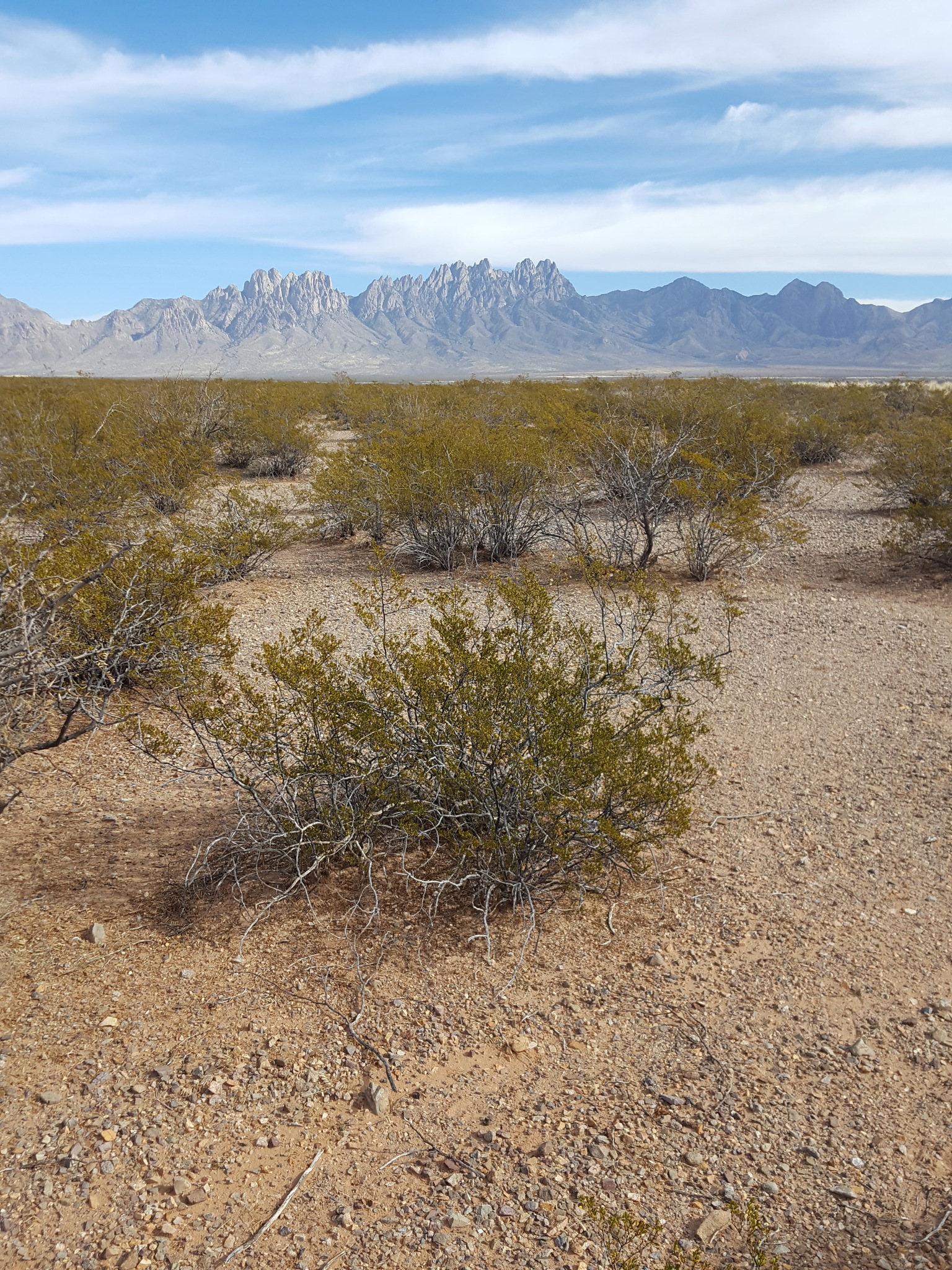
Larrea tridentata, known universally as Creosote Bush (and in Spanish as gobernadora or hediondilla), is arguably the most iconic shrub of the American Southwest, and among the most extraordinary plants on Earth. It is the dominant shrub across vast expanses of the Sonoran, Mojave, and Chihuahuan Deserts — the three great hot deserts of North America — covering millions of acres with an essentially uniform carpet of small, dark green, resin-coated leaves. If you have ever smelled the desert after rain, you have smelled Creosote Bush: that distinctive, complex, resinous aroma released as moisture hits the leaves is one of the most powerful olfactory signatures in nature, evoking the American Southwest for anyone who has experienced it.
Creosote Bush is a slow-growing but exceptionally long-lived shrub, typically reaching 4 to 8 feet tall in most desert settings, though mature specimens can reach 12 feet in favorable conditions. It is extraordinarily drought tolerant — studies have shown it can survive soil moisture levels approaching zero — and produces bright yellow flowers following any significant rainfall event, making it one of the most reliable bloomers in the desert. After flowering, it produces distinctive white, fuzzy seed capsules that add textural interest and provide food for wildlife.
Among the most remarkable aspects of Creosote Bush is its potential longevity. Individual clonal rings — formed as central stems die and the plant regenerates outward from its root crown — have been dated at over 11,700 years old in the Mojave Desert, making Creosote Bush colonies among the oldest living organisms on the planet. Even as individual stems die back, the clone lives on, slowly expanding its ring diameter over millennia. For the home gardener, a single Creosote Bush planted today may still be thriving centuries from now — an extraordinary legacy plant for the desert landscape.
Identification
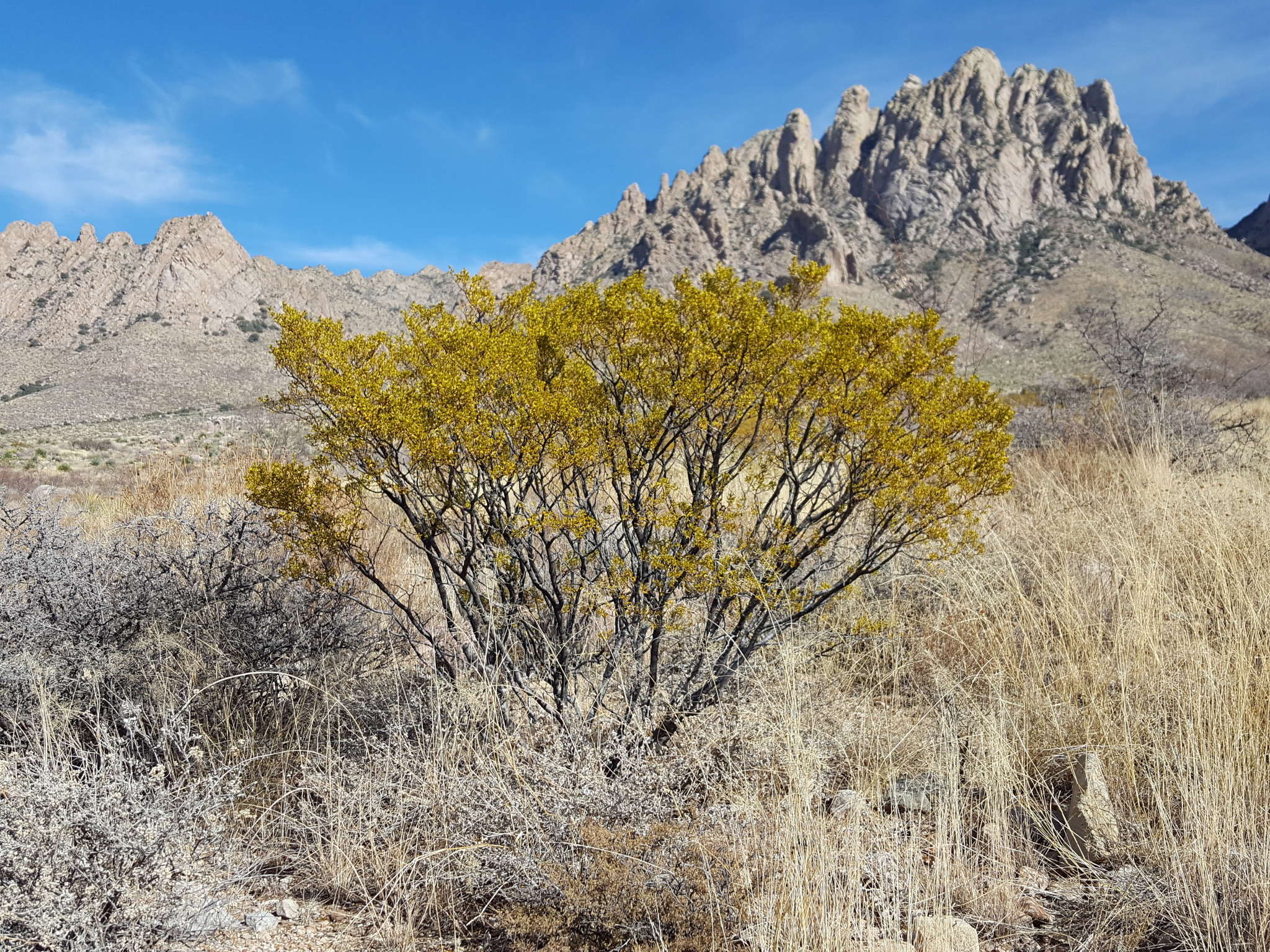
Creosote Bush is an evergreen shrub with a distinctive open, airy structure of multiple stems arising from a woody base. The branching pattern is irregular and somewhat zigzag, creating a characteristic silhouette. The plant’s most immediately recognizable features are its small, dark green, varnished-looking leaves and its pervasive resinous scent, which intensifies dramatically when wet.
Leaves
The leaves are compound with just two leaflets — appearing almost as a single leaf with a notch — and are arranged alternately on the stems. Each leaflet is small, ¼ to ½ inch long, oval to lance-shaped, and has a thick, waxy, resinous coating that gives the leaves their characteristic dark green, almost lacquered appearance. This resin coating serves multiple functions: it reduces water loss through transpiration, reflects intense solar radiation, and contains powerful allelopathic compounds (nordihydroguaiaretic acid, or NDGA) that inhibit the germination and growth of other plants near the root zone — one reason why Creosote Bush plants tend to maintain even spacing across desert landscapes. The leaves have a distinctive three-part appearance due to the two-leaflet structure plus a winged leaf stem, which inspired the species name tridentata (three-toothed).
Flowers
The flowers are small but very attractive — bright, pure yellow, with five petals arranged in a pinwheel pattern, ¼ to ½ inch across. They bloom prolifically following significant rainfall events at almost any time of year, but peak flowering typically occurs March through May and again after summer monsoon rains in July through September. The flowers have a faint, pleasant fragrance distinct from the vegetative resin scent.
Fruit
The fruit is a small, round capsule about ¼ inch in diameter, densely covered with long, silky white hairs that give it a fuzzy, almost cotton-ball-like appearance. These distinctive white fruits often cover the plant profusely after a flowering event and turn straw-colored as they dry. Each fruit contains 5 seeds.
Quick Facts
| Scientific Name | Larrea tridentata |
| Family | Zygophyllaceae (Caltrop) |
| Plant Type | Evergreen Shrub |
| Mature Height | 6 ft |
| Growth Rate | Slow |
| Sun Exposure | Full Sun |
| Water Needs | Low (Drought Tolerant) |
| Bloom Time | March – May; July – September (after rains) |
| Flower Color | Bright yellow |
| Soil Type | Sandy, gravelly, well-drained desert soils; tolerates caliche |
| Deer Resistant | Yes (resin makes it unpalatable to most herbivores) |
| USDA Hardiness Zones | 7–11 |
Native Range
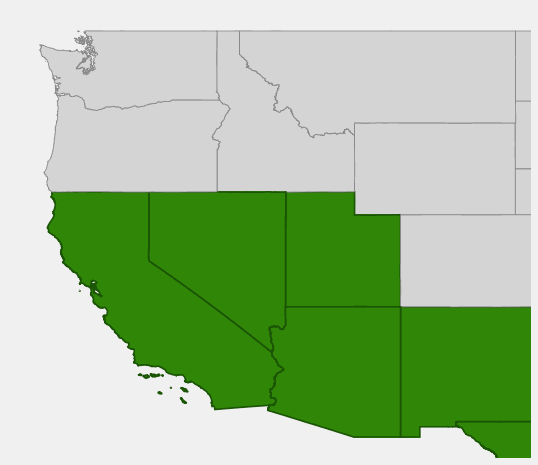
Creosote Bush is native to the three hot deserts of North America — the Sonoran Desert (Arizona and northwestern Mexico), the Mojave Desert (California, Nevada, and Utah), and the Chihuahuan Desert (New Mexico, Texas, and Mexico). It is the dominant shrub in all three desert systems and covers an estimated 70 million acres across the southwestern United States and northern Mexico. Within this enormous range, it occupies virtually every type of desert flat, slope, and bajada (alluvial fan) from near sea level to elevations of about 4,500 feet.
In Arizona, Creosote Bush is ubiquitous across the Sonoran Desert, occurring from the Colorado River valley in the western part of the state eastward to the Chihuahuan Desert grassland transition zone. It is a defining feature of the Tucson Basin, Phoenix metropolitan area, Yuma Desert, and virtually every low-elevation desert landscape in the state. In most of the Sonoran Desert, it co-dominates with Triangleleaf Bursage (Ambrosia deltoidea) to form the classic “creosote-bursage” desertscrub community, one of the most extensive native plant communities in North America.
Botanically interesting is the fact that North American Creosote Bush is actually a relatively recent immigrant — it crossed from South America into North America approximately 16,000 to 18,000 years ago as glaciers retreated and desert conditions expanded. The South American species Larrea cuneifolia is its close relative. The polyploid variation within North American populations (with diploid, tetraploid, and hexaploid races corresponding roughly to the three desert types) reflects the complex history of its colonization of the continent.
📋 Regional plant lists featuring Creosote Bush: Arizona
Growing & Care Guide
Creosote Bush is one of the most low-maintenance plants you can grow in the desert Southwest — once established, it essentially takes care of itself. The key to success is patience during establishment and proper siting from the start.
Light
Creosote Bush demands full sun. In its native desert habitat, it grows in the most exposed, sun-drenched conditions on earth, and it will not thrive with reduced light. Choose the hottest, sunniest spot in your landscape — south or west-facing slopes and walls are ideal. Never plant it in shade or even dappled light conditions.
Soil & Water
Plant in well-drained, sandy or gravelly soil with a neutral to alkaline pH. Creosote Bush is exquisitely sensitive to overwatering and root rot in poorly drained soils. Never amend the planting hole with organic matter, as this retains moisture and can kill the plant. In-ground planting in the desert requires no irrigation once established — the natural rainfall pattern of the Sonoran Desert is sufficient. During establishment (the first 1–2 years), water deeply once or twice a month during summer and once every 4–6 weeks in winter. After that, supplemental water is generally not needed, though occasional deep watering during extended drought can promote flowering and maintain vigor.
Planting Tips
Plant Creosote Bush in fall (September–November) for best establishment in Arizona. Container-grown plants transplant readily. Avoid disturbing the root ball — Creosote Bush resents root disturbance and may sulk for a season after planting if roots are damaged. Plant it no deeper than it was in the container. Spacing of 8 to 10 feet apart reflects its natural spacing pattern, which is maintained by allelopathic root chemicals. Give it room — a crowded Creosote Bush is an unhappy one. Note: Creosote Bush grows slowly (typically under 12 inches per year), so purchase the largest container size affordable for faster garden impact.
Pruning & Maintenance
Creosote Bush needs minimal pruning. Remove dead stems in spring. Do not shear or heavily prune — this destroys the plant’s natural structure and is counterproductive to its slow growth. Light thinning of crossing branches can improve the plant’s natural form. Never attempt to move an established Creosote Bush — transplanting mature specimens almost always fails due to deep, sensitive root systems.
Landscape Uses
- Desert foundation plantings — core structural shrub for Sonoran Desert-style gardens
- Xeriscape backbone — virtually zero water once established
- Wildlife habitat — critical host plant for specialized desert insects
- Slope stabilization on sunny desert slopes
- Screen planting — dense foliage provides excellent privacy when massed
- Bajada restoration — replicates the natural creosote-bursage community
Wildlife & Ecological Value
Despite the harsh chemical compounds in its leaves, Creosote Bush is a critical ecological resource in the desert, supporting a remarkable array of specialized wildlife.
For Birds
The dense branching structure of Creosote Bush provides excellent nesting sites for small desert birds including Verdins, Black-tailed Gnatcatchers, Crissal Thrashers, and Curve-billed Thrashers. The white fuzzy fruits are consumed by some bird species. The insect community associated with Creosote Bush — which is astonishingly rich — provides food for insectivorous birds.
For Mammals
Creosote Bush clumps provide shelter for jackrabbits, cottontails, desert woodrats, cactus mice, and many other small mammals. The desert woodrat (Neotoma spp.) constructs its large stick mound nests beneath Creosote Bush and incorporates the branches into its structure. Kangaroo rats dig burrows near Creosote Bush roots. Most large mammals avoid consuming Creosote Bush foliage due to its resin content, making it an excellent deer-resistant landscape plant.
For Pollinators
Creosote Bush supports one of the most specialized and diverse bee communities of any desert shrub — at least 22 species of native bees are specialists on Creosote Bush pollen, including the spectacular Diadasia diminuta (Creosote Bush miner bee), which feeds exclusively on its pollen. These specialist bees are found nowhere else in the world and represent a unique desert pollinator community that depends entirely on the survival of Creosote Bush stands.
Ecosystem Role
As the dominant shrub of North American hot deserts, Creosote Bush is arguably the single most important plant in these ecosystems. It structures the physical landscape, creates microhabitats under and around its canopy, supports a unique food web of specialized insects, and plays a critical role in soil dynamics. The allelopathic spacing between plants has been shown to reduce wind erosion by creating an evenly spaced mat of shrubs, each trapping sediment beneath its canopy.
Cultural & Historical Uses
Creosote Bush holds profound significance in the cultures of numerous Indigenous peoples of the American Southwest. The Tohono O’odham, Seri, Yaqui, Apache, Navajo, and many other nations have used virtually every part of the plant medicinally for thousands of years. In traditional Tohono O’odham medicine, Creosote Bush leaves were prepared as steam baths and poultices to treat arthritis, rheumatism, and musculoskeletal pain — a use that modern pharmacology has partially validated, as NDGA (nordihydroguaiaretic acid) from the resin has demonstrated anti-inflammatory properties in laboratory studies.
A tea prepared from Creosote Bush leaves was used by many nations to treat respiratory conditions including colds, bronchitis, and chest congestion. The Pima and Yaqui peoples used the leaves as a poultice for wounds, cuts, and skin sores, valuing its antimicrobial and antifungal properties — properties that have also been confirmed in modern research. The Seri people of Sonora applied the resin as a wound sealant and used the stems as fire-starting sticks (the resin content makes them remarkably flammable). The branches were also used as frame material in temporary shelters, as the resin helps repel insects.
In recent decades, NDGA from Creosote Bush attracted significant scientific attention as a potential antioxidant and cancer-fighting compound. Clinical trials have been conducted for various applications, though results have been mixed and the FDA has not approved NDGA-based products for medical use. The plant remains an important subject of ethnobotanical and pharmacological research. Creosote Bush honey — produced in areas where bees work the flowers — has a distinctive, complex flavor and is considered a prized artisanal product in some Southwestern communities.
Frequently Asked Questions
Why does Creosote Bush smell so strongly after rain?
The distinctive post-rain scent comes from aromatic compounds — primarily nordihydroguaiaretic acid (NDGA) and other resins — in the leaf coating that volatilize rapidly when contacted by moisture. This scent is released as rain wets the resin, creating the iconic petrichor scent of the Sonoran Desert. Many people find this scent one of the most evocative and beautiful natural perfumes.
How old can Creosote Bush get?
Individual clonal rings of Creosote Bush have been aged at over 11,700 years — making them among the oldest known living organisms on Earth. A famous clone in the Mojave Desert, nicknamed “King Clone,” is estimated at 11,700 years old and spans about 70 feet in diameter. Individual stems within the clone live for decades to centuries, but the clone as a whole persists far longer.
Is Creosote Bush toxic?
The NDGA in Creosote Bush resin is toxic in large amounts and has caused kidney damage in some individuals who consumed very large quantities as a dietary supplement. In traditional use, small amounts as medicinal preparations were generally considered safe. Do not consume any part of the plant without expert medical guidance. Skin contact with the resin rarely causes problems for most people.
Why don’t other plants grow under Creosote Bush?
Creosote Bush is allelopathic — its root exudates include compounds that inhibit germination and growth of many other plants. This gives each Creosote Bush a “personal space” of bare soil around it, creating the remarkably even spacing of plants that characterizes natural Creosote Bush desert. This self-spacing mechanism has fascinated ecologists and is one of nature’s most elegant examples of resource partitioning.
Can Creosote Bush be transplanted?
Young container-grown plants transplant well if handled carefully and not planted too deep. Never attempt to transplant an established wild or landscape specimen — the root systems of mature plants are extensive and extremely sensitive to disturbance, and transplanting success rates are essentially zero for plants more than 2 years old in the ground.

Looking for a nursery that carries Creosote Bush?
Browse our native plant nursery directory: Arizona