Rattlesnake Fern (Botrychium virginianum)
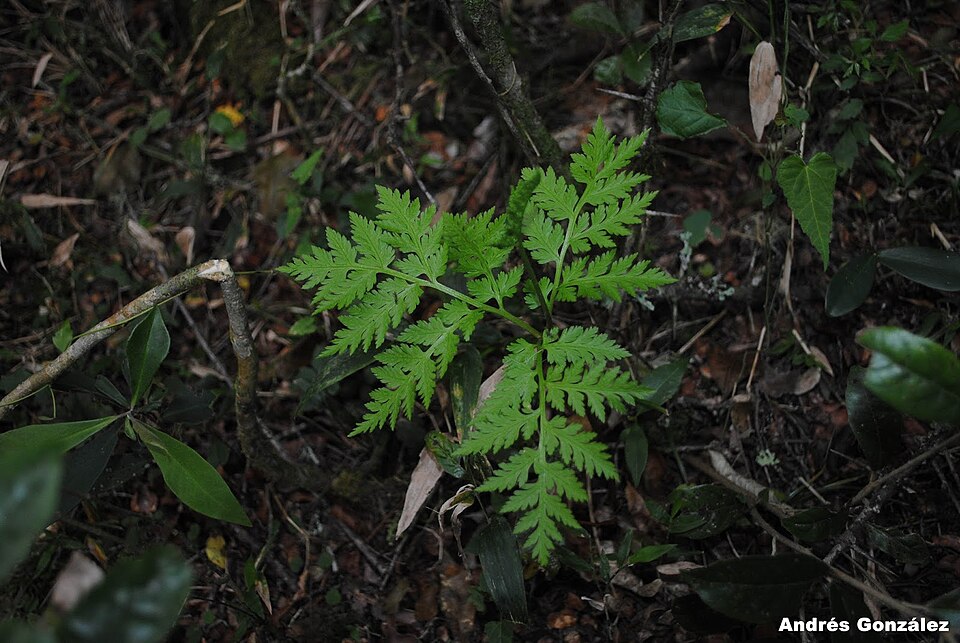
Botrychium virginianum, commonly known as Rattlesnake Fern, Virginia Grape Fern, or Rattlesnake Grape Fern, is one of the most distinctive and botanically fascinating ferns native to North America. Unlike the typical ferns familiar to most gardeners, Rattlesnake Fern belongs to the ancient family Ophioglossaceae — a lineage so primitive and botanically unusual that some botanists classify its members as distinct from conventional ferns entirely, considering them closer in evolutionary terms to whisk ferns and horsetails. This remarkable plant produces only a single frond each year — simultaneously bearing both a large, triangular, bright green sterile blade and a separate, erect fertile spike that bears the spore-producing structures in grape-like clusters that rattle when dry, inspiring the common name.
Rattlesnake Fern is one of the most widely distributed ferns in North America, occurring across virtually the entire eastern United States and extending through the Great Plains, Rocky Mountain foothills, and Pacific Northwest — a nearly transcontinental distribution unusual among ferns, and one it shares with few other species. In the Southeast, it thrives in moist, rich deciduous woodlands and mesic forest floors from the Appalachians through the coastal plain. It is a deciduous fern, emerging in spring when forest floors are still cool, producing its distinctive frond through summer, and disappearing entirely by fall — leaving no visible trace above ground until the following spring.
Despite its wide distribution and highly unusual appearance, Rattlesnake Fern is often overlooked because it produces only a single frond that blends with the vegetation of the forest floor. Yet it plays an important ecological role as an indicator species of high-quality, long-undisturbed deciduous woodland — its presence signaling intact soil, adequate moisture, functioning mycorrhizal networks, and the kind of stable, mature forest conditions that support the full suite of native woodland flora and fauna. Field botanists and ecologists use Rattlesnake Fern as a reliable bioindicator of forest quality.
Identification
Rattlesnake Fern is unlike any conventional fern in structure and appearance. It produces a single compound frond annually, divided into two distinct parts emerging from a single underground stalk: a large, broadly triangular, pinnately compound sterile blade and a separate, erect fertile spike. No other North American fern has this combination of features, making identification straightforward once the plant is known.
Sterile Frond
The sterile (photosynthetic) blade is broadly triangular in outline, 6 to 18 inches across, and held roughly horizontally on a stalk that connects at mid-height of the common stalk arising from the soil. The frond is divided 2–3 times (2–3-pinnate), creating a delicate, lacy appearance with many small, oblong to ovate pinnules. The texture is thin and somewhat soft; the color is bright to medium green. Importantly, the frond has a unique developmental property: it lacks the rolled-up “fiddlehead” stage of conventional ferns — it simply emerges from the soil already largely unrolled, a reflection of its ancient evolutionary lineage predating the fiddlehead innovation.
Fertile Spike
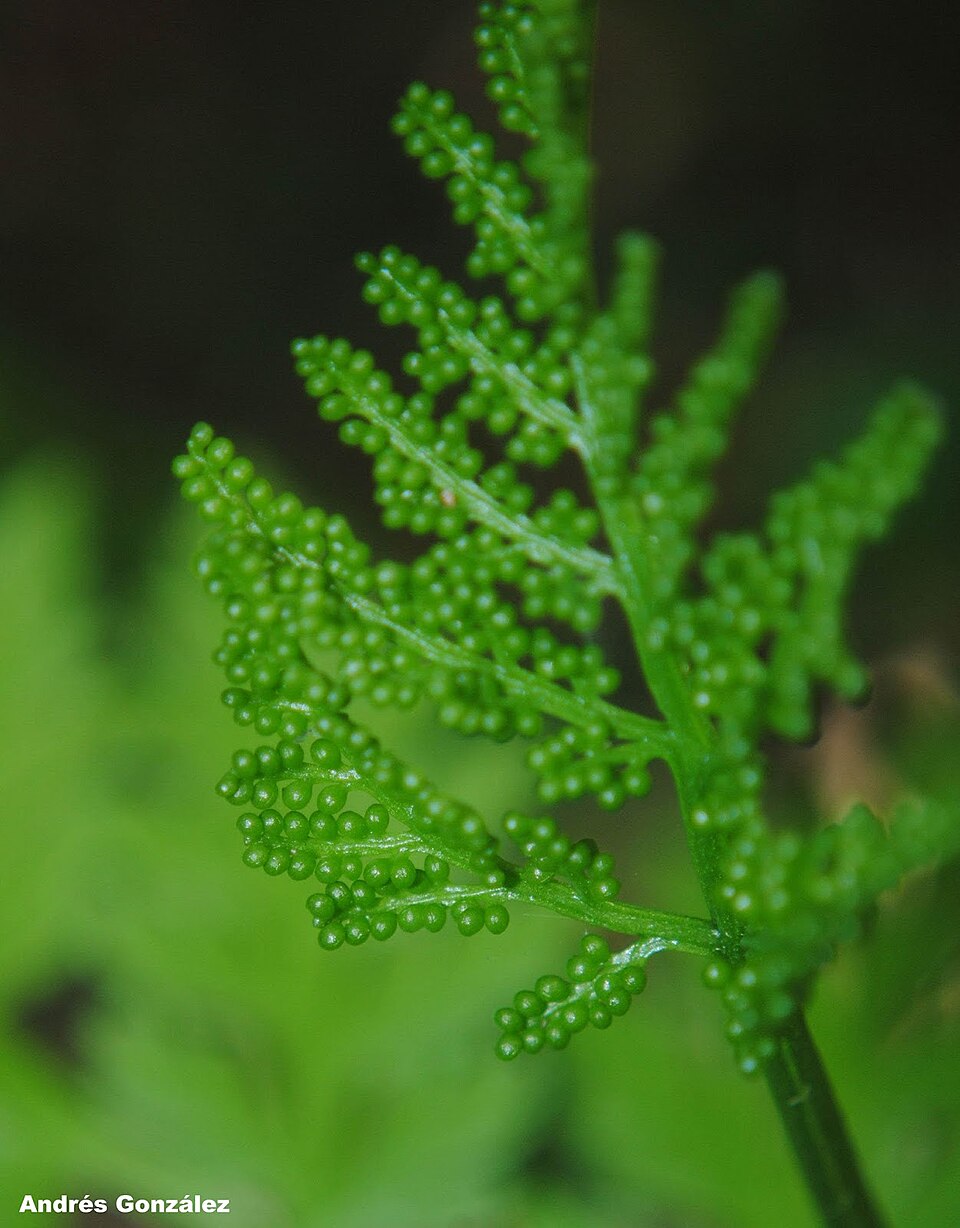
The fertile portion rises as an erect stalk above and through the sterile blade, terminating in a compound cluster of grape-like spherical sporangia (spore capsules) 2–3 inches long. The sporangia are green when young, turning progressively yellow then tan-brown as they mature in late spring to early summer. When fully dried, the sporangia rattle audibly when shaken or brushed against — an evocative sound that gives the plant its most memorable common name. The spores are released as dust-fine particles and dispersed by wind, potentially traveling miles before settling to the forest floor.
Root System & Mycorrhizal Dependence
Rattlesnake Fern has an extraordinary root system and lifecycle: the underground portions are intimately associated with specific mycorrhizal fungi in a relationship so profound that the plant cannot germinate or establish without its fungal partner. Young plants spend 4–7 years entirely underground, nourished exclusively by the mycorrhizal network before producing their first above-ground frond. This explains why Rattlesnake Fern is essentially impossible to transplant successfully from the wild — and why it establishes only very slowly even from spore in garden settings without the right fungal community present in the soil.
Quick Facts
| Scientific Name | Botrychium virginianum |
| Family | Ophioglossaceae (Adder’s-tongue) |
| Plant Type | Deciduous Fern (primitive lineage) |
| Mature Height | 2.5 ft |
| Sun Exposure | Part Shade to Full Shade |
| Water Needs | Moderate |
| Spore Release | Late spring – early summer |
| Frond Structure | Single annual frond: sterile blade + fertile spike |
| Special Feature | Ancient primitive plant family; profound mycorrhizal dependence |
| Indicator Value | High-quality undisturbed deciduous woodland |
| USDA Hardiness Zones | 3–9 |
Native Range
Rattlesnake Fern has one of the widest distributions of any North American fern, occurring across virtually the entire lower 48 states and much of Canada — from Newfoundland and Nova Scotia west to British Columbia, and south throughout the eastern United States to Florida and Texas, with additional populations in the Pacific Northwest and northern Rocky Mountains. It also occurs in Asia, Europe, and other continents, making it one of the most cosmopolitan fern species in the world and a genuine link between ancient Pangaean plant communities.
Within the eastern United States, Rattlesnake Fern is a characteristic component of moist, rich deciduous and mixed forests, growing in the deep shade of sugar maple, American beech, basswood, and oak-hickory forests on well-drained, moderately to highly fertile soils. It prefers mesic (moderately moist) conditions — neither too dry nor too wet — and is typically found on north-facing slopes, in sheltered ravines, and in rich, humus-laden lowland forests where conditions remain cool and moist throughout the growing season.
In the southeastern United States, Rattlesnake Fern grows in mesic upland hardwood forests, rich ravine slopes, and moist loamy bottomland forests throughout the coastal plain, Piedmont, and Appalachian mountains. Its presence is widely used by field botanists and ecologists as a reliable indicator of high-quality, long-undisturbed forest conditions — areas with intact soil mycorrhizal networks, stable moisture regimes, and minimal historical soil disturbance that allowed the fungal community to develop fully.
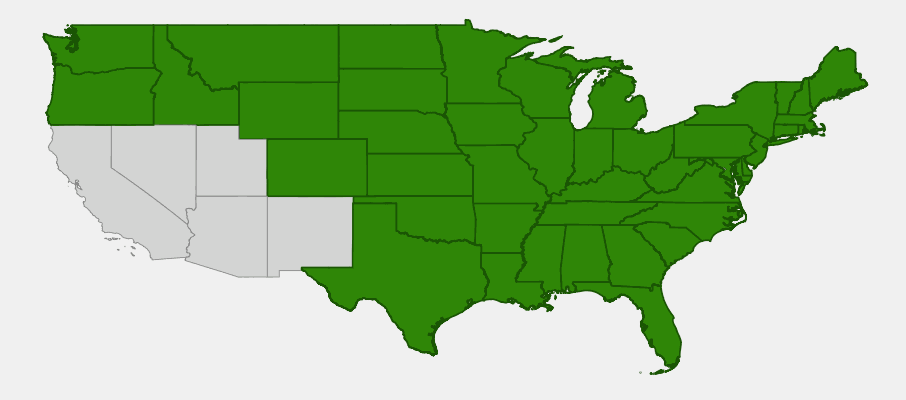
📋 Regional plant lists featuring Rattlesnake Fern: Alabama, Georgia & Mississippi
Growing & Care Guide
Rattlesnake Fern is genuinely challenging to establish in cultivation due to its profound dependence on specific soil mycorrhizal fungi for germination and early growth. The plant spends years entirely underground before emerging, and the fungal partners it requires are typically absent in typical garden or disturbed soils. However, it can naturalize in appropriate garden conditions over time if those conditions closely replicate an intact forest floor.
Light
Part shade to full shade is essential. Rattlesnake Fern grows on the forest floor beneath a closed deciduous canopy, and it requires protection from direct sunlight. Morning sun with afternoon shade may be acceptable, but full midday or afternoon sun will stress and eventually eliminate the plant. A deeply shaded woodland garden beneath mature deciduous trees is the ideal setting — the more it resembles an undisturbed forest floor, the better.
Soil & Water
Rich, moist, humus-laden soil with consistent moderate moisture is critical. Rattlesnake Fern grows in the kind of deep, organically rich forest soil that forms over decades — even centuries — under a mature deciduous canopy. Amend planting areas very generously with aged leaf mold, well-rotted wood, and composted forest debris. Soil pH should be slightly acidic to neutral (5.5–7.0). Consistent moisture through the growing season is needed, but the soil must drain adequately to prevent waterlogging.
Planting Tips
Seek spore-grown nursery stock from reputable native plant specialty nurseries — never collect from the wild, as transplanting invariably kills the plant by severing the mycorrhizal network. Plant in early spring or fall in prepared, richly amended soil in deep shade beneath established deciduous trees. Mulch with 2–3 inches of shredded leaves — mimicking the natural leaf litter environment is critical for maintaining the soil conditions the plant’s fungal partners need. Do not disturb the soil around established plants. Avoid fertilizers, especially phosphorus-heavy products that suppress mycorrhizal fungi.
Pruning & Maintenance
No pruning or maintenance is needed or appropriate. Allow the single annual frond to complete its full lifecycle — leave the fertile spike intact until it has released its spores in late spring or early summer, as this may help the colony slowly self-propagate over time. Allow fallen leaves to accumulate naturally as mulch. This is a plant for patient, ecologically-minded gardeners who appreciate botanical rarity and the deep history of life on Earth more than immediate visual impact.
Landscape Uses
- Native plant collection — an extraordinary specimen for enthusiasts of rare and unusual native plants
- Mature woodland garden — a stunning botanical curiosity beneath established deciduous trees
- Forest floor restoration — contributes to rebuilding the diversity of high-quality deciduous woodland understory
- Educational planting — remarkable for demonstrating primitive plant evolution and forest ecology
Wildlife & Ecological Value
Rattlesnake Fern is not a primary wildlife food plant in the conventional sense — its spores are not a significant food resource, and the frond is rarely browsed by deer or other animals. Its ecological value lies primarily in its role as a component and indicator of the rich mycorrhizal soil community of the forest floor, and as a structural element of the complex forest floor habitat.
For Birds
The rich, undisturbed deciduous woodland floor habitat where Rattlesnake Fern grows is prime territory for ground-nesting and ground-foraging birds such as Wood Thrushes, Ovenbirds, Louisiana Waterthrushes, and Worm-eating Warblers. While the fern itself is not a direct food resource, its presence signals the kind of high-quality, intact woodland habitat these sensitive forest-interior birds require and depend upon for successful breeding.
For Invertebrates
The moist, humus-rich soil and deep leaf litter habitat associated with Rattlesnake Fern supports an exceptionally rich community of soil invertebrates — earthworms, millipedes, springtails (Collembola), ground beetles, ants, and the larval stages of numerous insects — which form the base of the woodland food web supporting birds, salamanders, shrews, and other insectivores that forage on the forest floor.
Ecosystem Role
The most profound ecological role of Rattlesnake Fern is as a participant in and indicator of intact soil mycorrhizal networks — the underground fungal web connecting the roots of virtually all forest trees and plants in a complex web of nutrient exchange, chemical communication, and mutual support. The presence of Rattlesnake Fern signals that this underground network is functioning properly, which in turn supports the health and resilience of the entire above-ground forest community from canopy trees to ground-layer herbs.
Cultural & Historical Uses
Rattlesnake Fern has a rich and intriguing history in North American folk medicine and Indigenous botanical knowledge, despite being a plant with no obvious food or fiber utility. Its common name “Rattlesnake Fern” directly reflects the plant’s widespread historical association with snakebite medicine — across diverse and unrelated cultures, the plant was believed to be an antidote to or treatment for rattlesnake venom. The Delaware, Cherokee, Iroquois, and numerous other Indigenous nations used preparations of the root and frond in various medicinal contexts, including treatments for cuts, wounds, fever reduction, and eye problems. The consistency of this use across unrelated cultures and vast geographic distances is botanically remarkable.
The common name “Grape Fern” reflects the grape-like appearance of the clustered sporangia on the fertile spike. The earliest European botanical descriptions of this species came from Virginia, where it was collected by colonial botanists in the 1600s and sent to European herbaria, contributing to the growing understanding of the extraordinary diversity of North American flora. The species epithet “virginianum” — meaning “of Virginia” — commemorates this early collection history.
Today, Rattlesnake Fern is primarily of interest to native plant enthusiasts, field botanists, and ecologists as a beautiful indicator of forest quality and as a living representative of one of the most ancient plant lineages still present on Earth. Botrychium species have a fossil record extending back hundreds of millions of years, making them living links to the ancient forest communities of the Carboniferous and Devonian periods. For gardeners who appreciate deep biological history and the ecological complexity of undisturbed forests, Rattlesnake Fern is a plant of exceptional significance.
Frequently Asked Questions
Why is Rattlesnake Fern so hard to establish in gardens?
The plant spends its first 4–7 years of life entirely underground, dependent on specific mycorrhizal fungi for nutrition before it can produce its first frond. These fungi are typically present only in undisturbed, long-established forest soil. In most garden soils — even well-amended soil — the necessary fungal partners are absent, making successful spore germination and early development extremely difficult without extensive soil preparation.
Should I collect Rattlesnake Ferns from the wild to plant in my garden?
No — wild collection is both ineffective and harmful. Plants dug from the wild almost invariably die during and after transplanting because the extensive underground mycorrhizal network cannot survive the soil disturbance. Wild collection also damages populations of this ecologically important species. Seek spore-grown nursery stock from reputable native plant nurseries instead.
Is Rattlesnake Fern truly a fern?
In the broad sense, yes — it reproduces by spores and lacks flowers and seeds. But botanically, the family Ophioglossaceae represents a very ancient lineage that diverged from “true ferns” hundreds of millions of years ago. Modern molecular phylogenetics classifies Ophioglossaceae as a sister group to all other ferns, making Rattlesnake Fern essentially as distantly related to a typical garden fern as it is to a horsetail or whisk fern.
Why does the plant produce only one frond per year?
This is a fundamental characteristic of all Botrychium species and reflects their conservative, ancient growth strategy. The underground stem produces a single frond bud each year, investing all available resources in that one frond. This approach reflects adaptation to stable, low-disturbance forest environments where long-term persistence is more important than maximizing annual growth or reproduction.
Where can I see Rattlesnake Fern growing naturally in the Southeast?
Look in rich, moist deciduous forests with deep loamy soil — north-facing slopes and ravines, mature bottomland hardwood forests with beech and maple, and cove forests in the Appalachians. The single triangular, lacy-leaved frond about 1–2 feet across with a distinctive erect central spike appears from April through October. Many state natural areas and nature preserves in Alabama, Georgia, Mississippi, and surrounding states maintain stands of this remarkable plant.

Looking for a nursery that carries Rattlesnake Fern?
Browse our native plant nursery directory: Alabama · Georgia · Mississippi