Southern Crabapple (Malus angustifolia)
Malus angustifolia, the Southern Crabapple or Narrowleaf Crabapple, is the native crabapple of the southeastern United States — a small, spreading deciduous tree that transforms into a breathtaking spectacle of fragrant pink blossoms each spring. A member of the Rosaceae (rose) family and the only native apple species throughout much of the Southeast, the Southern Crabapple evolved alongside the rich forest communities of the region and carries deep ecological relationships with dozens of wildlife species that depend on its fruit, flowers, and shelter.
Growing 15 to 30 feet tall with a broadly spreading crown, the Southern Crabapple develops a naturally picturesque form over time — often broader than it is tall, with gracefully arching branches that dip nearly to the ground under the weight of fruit-laden branchlets. In March and April, it produces masses of sweetly fragrant flowers ranging from pale pink in bud to nearly white when fully open, releasing a perfume so pervasive it can scent the air for yards around the tree. By summer, small yellowish-green apples develop and ripen through late summer and fall, providing an abundant harvest for wildlife from deer to bears to Cedar Waxwings.
The Southern Crabapple occupies a unique position in the eastern native plant palette as both an ornamentally outstanding tree and a critical wildlife food plant. Unlike its many hybrid ornamental crabapple relatives from Asia, the Southern Crabapple provides all the visual appeal of a spring-blooming tree while contributing meaningfully to the local food web. It is also one of the best native trees for supporting specialist native insects — supporting over 300 species of moth and butterfly caterpillars across its range — making it a cornerstone plant for bird-friendly, insect-supporting native gardens.
Identification
Southern Crabapple is a small, spreading deciduous tree, typically 15 to 30 feet tall and as wide or wider. The form is often somewhat irregular and picturesque, with a slightly zigzagging branch pattern characteristic of the apple genus. Older specimens develop a broad, low-branching crown ideal for wildlife habitat. It may bear thorny spur shoots (short, stubby lateral branches that can be sharply pointed), particularly in wild specimens.
Bark
The bark of mature Southern Crabapple is gray-brown to reddish-brown, breaking into thin, slightly scaly or plated ridges — similar in texture to a domesticated apple tree. Young stems are smooth and reddish-brown. The wood is dense and hard. On very old specimens, the bark becomes deeply furrowed and develops an interesting fibrous texture characteristic of old orchard apples.
Leaves
The leaves are simple, alternate, and deciduous, varying from narrowly elliptical to broadly oval (reflecting the “angustifolia” — narrow-leafed — in the scientific name, though leaf shape is quite variable). Leaves are 2 to 4 inches long and 1 to 2 inches wide, with toothed or irregularly lobed margins, particularly on vigorous shoots. The upper surface is dark green and somewhat glossy; the lower surface is paler. In autumn, the foliage turns yellow to orange-red before dropping. Leaves emerge in spring as a beautiful bronze-green, providing additional seasonal interest at the time of bloom.
Flowers & Fruit
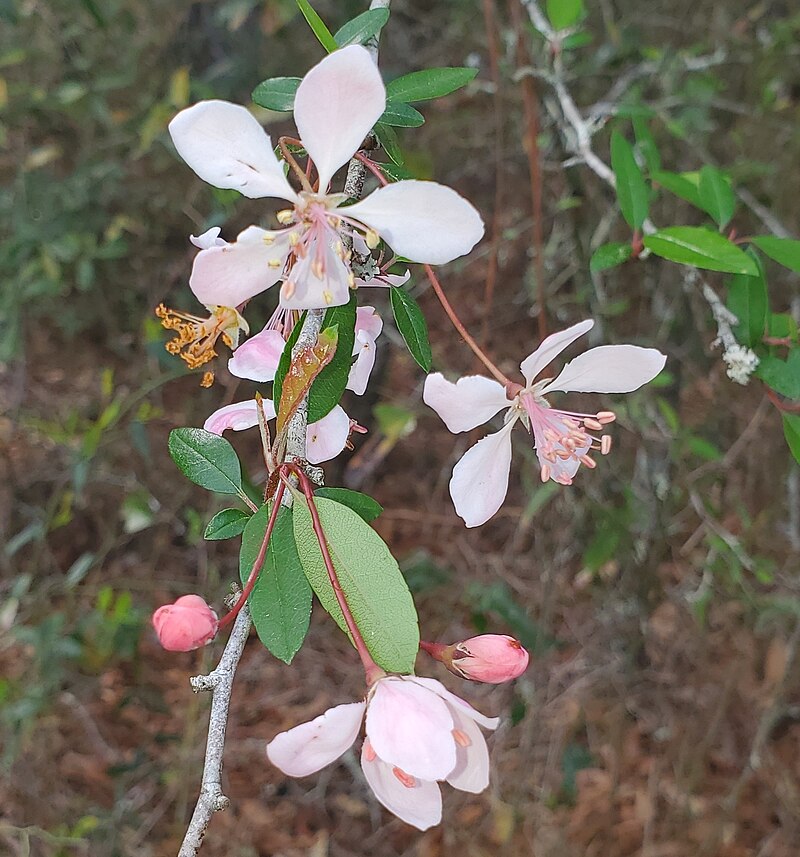
The flowers are the tree’s crowning glory — appearing in March and April in dense clusters of 4 to 6 blossoms on short spur shoots, emerging simultaneously with the leaves or slightly before them. Each flower is about 1 inch across, with five rounded petals that open deep pink from rose-colored buds and fade to pale pink or nearly white as they mature, creating a beautiful gradient across the canopy. The fragrance is exceptional — sweet, fruity, and intensely apple-like, perfuming the entire garden. The flowers attract a wide diversity of early spring pollinators including bumblebees, mason bees, and numerous fly species.
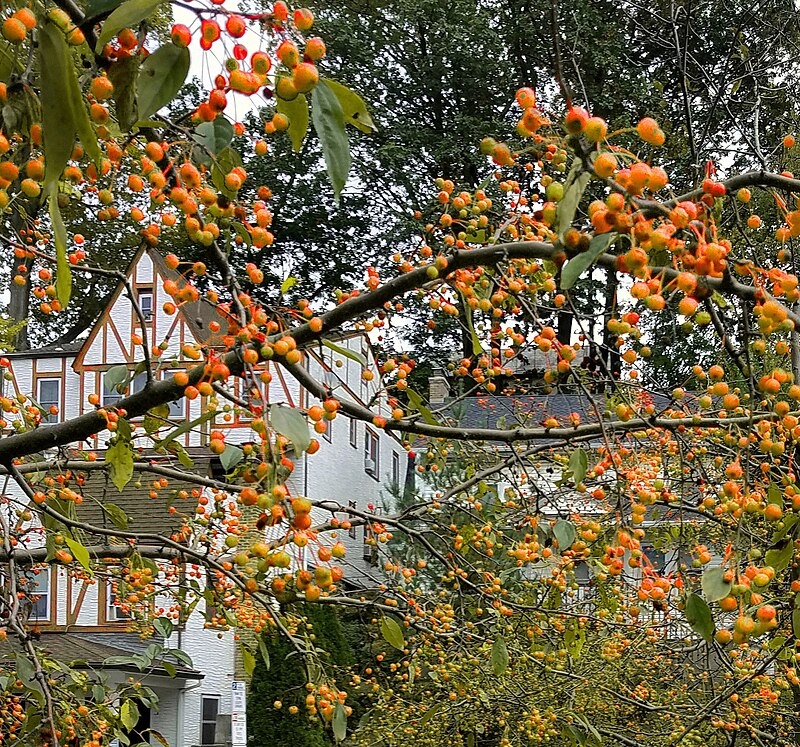
The fruits are small pome fruits (true apples), ¾ to 1¼ inches in diameter, yellowish-green with a flush of pink or red when ripe in late summer and fall (August–October). They are edible for humans — tart, astringent, and seedy — and are best used in jellies, cider, and preserves. For wildlife, they are one of the most valuable fall and winter fruits available: deer, bears, turkeys, foxes, and dozens of bird species eagerly consume them.
Quick Facts
| Scientific Name | Malus angustifolia |
| Family | Rosaceae (Rose) |
| Plant Type | Deciduous Small Tree |
| Mature Height | 30 ft |
| Sun Exposure | Full Sun to Part Shade |
| Water Needs | Low to Moderate |
| Bloom Time | March – April |
| Flower Color | Pink (bud) to white (open) |
| Fragrance | Strong apple-like fragrance |
| Fruit | Small yellow-green crabapples; wildlife food |
| USDA Hardiness Zones | 5–9 |
Native Range
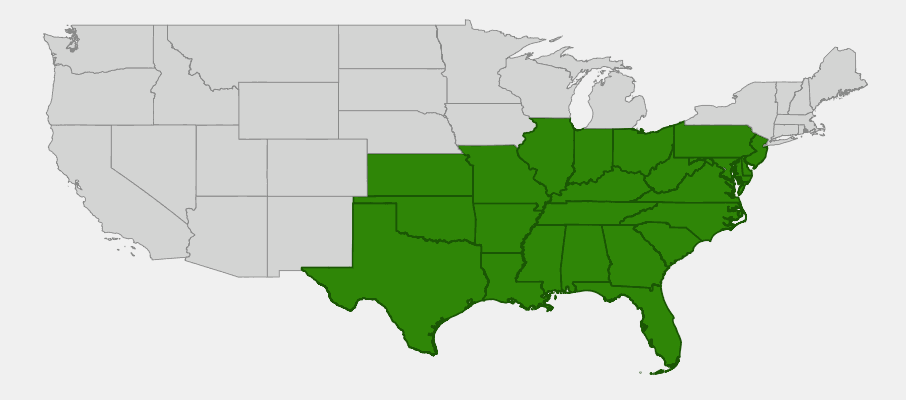
Southern Crabapple ranges across the eastern and southeastern United States, from southern New Jersey and Delaware south and west through the Piedmont and Coastal Plain to Florida, Alabama, Mississippi, Louisiana, and Texas, and northward through the Appalachians and Interior Low Plateaus into Kansas, Missouri, Illinois, Indiana, Ohio, Pennsylvania, and West Virginia. It is most abundant in the southeastern Piedmont and Coastal Plain, where it grows commonly in forest edges, old fields, hedgerows, and woodland margins. In the northern and western portions of its range, it tends to be less common and more restricted to specific habitats.
Within its range, Southern Crabapple occupies a variety of habitats — always preferring the transitional zones between open and forested conditions where it gets adequate sunlight. It is particularly common in old fields, pasture margins, and disturbed areas throughout the Piedmont, where it often colonizes naturally and forms loose, spreading thickets. Along stream margins, roadsides, and forest edges throughout the Coastal Plain, it is one of the most frequently encountered native fruiting trees. Its tolerance for a wide range of soil conditions (sandy to loamy, acidic to neutral, moist to moderately dry) contributes to this broad habitat range.
In the context of the broader Malus (apple) genus, Southern Crabapple is closely related to Sweet Crabapple (Malus coronaria) of the Midwest and Prairie Crabapple (Malus ioensis) of the Prairie states, forming part of a complex of native eastern American apples. All three species can hybridize where their ranges overlap. The Southern Crabapple is the most salt- and heat-tolerant of the group, making it the appropriate species for the Deep South.
📋 Regional plant lists featuring Southern Crabapple: Alabama, Georgia & Mississippi
Growing & Care Guide
Southern Crabapple is one of the most rewarding native small trees for southeastern gardens, combining spectacular spring flowering, fragrance, wildlife value, and a naturally attractive form. While it shares some of the disease susceptibility of its domesticated apple relatives, selecting a well-drained site with good air circulation and planting in full sun minimizes most issues.
Light
Full sun is strongly preferred for maximum flowering and fruiting — Southern Crabapple flowers most prolifically and develops the healthiest, most disease-resistant growth in full sun (6+ hours daily). It tolerates part shade, particularly morning sun with afternoon shade, but flowers less freely and is more prone to fungal diseases like apple scab in shadier, more humid conditions. Avoid planting in dense shade.
Soil & Water
Southern Crabapple is adaptable to a wide range of soils — sandy, loamy, or clay — as long as drainage is adequate. It does not tolerate permanently wet or waterlogged soils but handles brief periods of excess moisture. The ideal soil is well-drained, organically rich, and moderately moist. pH adaptability is broad (5.0–7.5). Once established (2–3 years), the tree is moderately drought-tolerant, though it fruits best with consistent summer moisture. Avoid excessively fertile soils that promote lush, disease-susceptible growth.
Planting Tips
Plant in fall or early spring from container or balled-and-burlapped stock. Choose a site with full sun and good air circulation — avoid planting near the house or in enclosed spaces where humidity stays high. Stake if needed for the first year, but remove stakes after 12 months to encourage trunk taper development. Mulch with 2–3 inches of organic material. Space specimens 15–20 feet from other trees and structures to allow full crown development.
Pruning & Maintenance
Prune in late winter or early spring, before flower bud break, to shape the canopy and remove dead, crossing, or diseased wood. The tree’s natural spreading form is one of its greatest assets — avoid heavy shaping that destroys this character. Remove water sprouts (vigorous, upright suckers) as they appear to maintain the tree’s form. If fire blight strikes (symptoms: branches wilting and blackening), prune 12 inches below visible symptoms and sterilize pruning tools. Apple scab can be reduced by choosing a site with good air circulation and raking and disposing of fallen leaves in autumn.
Landscape Uses
- Specimen flowering tree — spring fragrance and bloom are exceptional
- Wildlife orchard — fruit feeds deer, turkeys, bears, and dozens of bird species
- Bird garden focal plant — attracts caterpillar-eating songbirds
- Old-field restoration — naturally colonizes disturbed areas
- Native hedgerow component — pairs beautifully with other spring-blooming natives
- Edible landscape — fruits for jelly, cider, and preserves
Wildlife & Ecological Value
Southern Crabapple is a keystone wildlife plant of the eastern and southeastern United States. Few native trees provide as comprehensive a package of wildlife benefits — spring flowers for pollinators, summer and fall fruit for frugivores, and caterpillar hosting for birds throughout the growing season.
For Birds
The small crabapples are consumed by over 40 species of birds, including Cedar Waxwings, American Robins, Ruffed Grouse, Wild Turkeys, Gray Catbirds, Brown Thrashers, and Eastern Bluebirds. The fruit is particularly valuable in fall and early winter, when many other fruit sources have been depleted. The dense, spreading canopy provides excellent nesting habitat for warblers, vireos, and thrushes. In spring, the flowers attract insects that insectivorous birds actively hunt to feed their nestlings.
For Mammals
Southern Crabapple fruit is highly valued by white-tailed deer, black bears, gray and fox squirrels, opossums, raccoons, and gray foxes. Deer browse the fallen fruit intensively in early fall. The dense canopy structure also provides roosting and denning opportunities for small mammals. Wild pigs are significant consumers where they are present.
For Pollinators
The spring flowers provide early-season nectar and pollen for a wide variety of native bees: bumblebees, mason bees, mining bees, and sweat bees all visit enthusiastically. Southern Crabapple is one of the primary native larval host plants for the Tiger Swallowtail butterfly in the Southeast, as well as numerous moth species — including the striking Cecropia Moth, Luna Moth, and Polyphemus Moth — making it extraordinarily valuable for the insect food web that sustains bird populations.
Ecosystem Role
Southern Crabapple serves as an important ecological bridge between open fields and mature forest. As a pioneer tree that readily establishes in old fields and disturbed edges, it accelerates forest succession by creating the shaded, humid microclimate that allows more shade-tolerant forest species to establish beneath its canopy. Its fruit, consumed and then distributed by deer, bears, and birds, contributes significantly to seed dispersal and forest regeneration across the landscape.
Cultural & Historical Uses
Native peoples throughout the eastern United States made extensive use of wild crabapples, including the Southern Crabapple. The fruits, while too tart for pleasant fresh eating, were cooked and dried into fruit leathers, mixed with dried meat for trail food, fermented into a mildly alcoholic cider-like beverage, and processed into preserves and sauces that balanced the richness of venison and other meats. Various nations including the Cherokee, Creek, Choctaw, and Chickasaw incorporated wild crabapple preparations into their cuisine and ceremonies.
Early European settlers quickly recognized the Southern Crabapple’s value and began making “verjuice” (a tart fruit juice used as a cooking acid similar to lemon juice or vinegar) and apple jelly from the wild fruit. By the 18th century, Southern Crabapple was also being used as rootstock for grafting domesticated apple varieties, a practice that continues to interest heirloom orchardists today. The dense, hard wood was used for tool handles, woodworking mallets, and fuel.
Modern foragers and homesteaders are rediscovering the Southern Crabapple’s value, particularly for making crabapple jelly (which sets reliably without added pectin due to the fruit’s naturally high pectin content), crabapple cider, and fermented crabapple vinegar. The tree is also being increasingly planted in food forest designs alongside pawpaw, persimmon, and other native fruiting trees as part of sustainable, wildlife-friendly edible landscapes. Its deep ecological roots make it a meaningful choice for anyone seeking to restore both biodiversity and human connections to the native landscape.
Frequently Asked Questions
How does Southern Crabapple compare to ornamental crabapples?
Southern Crabapple offers comparable ornamental value to many hybrid crabapples in terms of spring flower display, but with the added benefits of supporting native wildlife: its caterpillars feed birds, its fruits are genuine wildlife food, and it doesn’t introduce genes that could complicate restoration plantings. The main tradeoff is somewhat more disease susceptibility than modern disease-resistant ornamental varieties, which can be managed through good siting.
Can you make apple products from Southern Crabapple fruits?
Absolutely! Southern Crabapple jelly is outstanding — high in natural pectin, it sets reliably and has a delicious tart flavor. Crabapple cider, either fresh or fermented, is another excellent product. The fruits can also be used in fruit leather, combined with sweeter fruits in preserves, or used as a substitute for verjuice in cooking. Harvest when the fruits are fully colored (yellow-green to red) in late summer and fall.
Is Southern Crabapple affected by apple scab and fire blight?
Yes — Southern Crabapple shares the disease susceptibility of its domesticated apple relatives. Apple scab (caused by Venturia inaequalis) causes dark scabby spots on leaves and fruit; fire blight (caused by Erwinia amylovora) causes branch dieback with a burnt appearance. Both are manageable through good cultural practices (full sun, good air circulation, clean-up of fallen leaves) without fungicide applications in most years.
How can I use Southern Crabapple to attract wildlife?
Plant Southern Crabapple where you can observe the wildlife activity it generates from a window. Leave fallen fruit on the ground — many ground-feeding birds and mammals prefer this. Avoid excessive mulching beneath the tree, as a light leaf litter layer underneath supports the ground-nesting bees that are the tree’s most effective pollinators. Plant companion native shrubs (Possumhaw Holly, American Beautyberry, Virginia Sweetspire) to create a diverse habitat planting.
Does Southern Crabapple need cross-pollination?
Southern Crabapple is self-fertile and can produce fruit when grown alone, but fruit set is significantly heavier when cross-pollinated by another compatible crabapple flowering at the same time. Other native crabapple species, domesticated crabapple varieties flowering simultaneously, or even some early-blooming apple varieties can serve as pollinators. In areas with multiple wild crabapples nearby, natural cross-pollination occurs readily through native bee activity.

Looking for a nursery that carries Southern Crabapple?
Browse our native plant nursery directory: Alabama · Georgia · Mississippi