
Alaheʻe (Psydrax odorata)
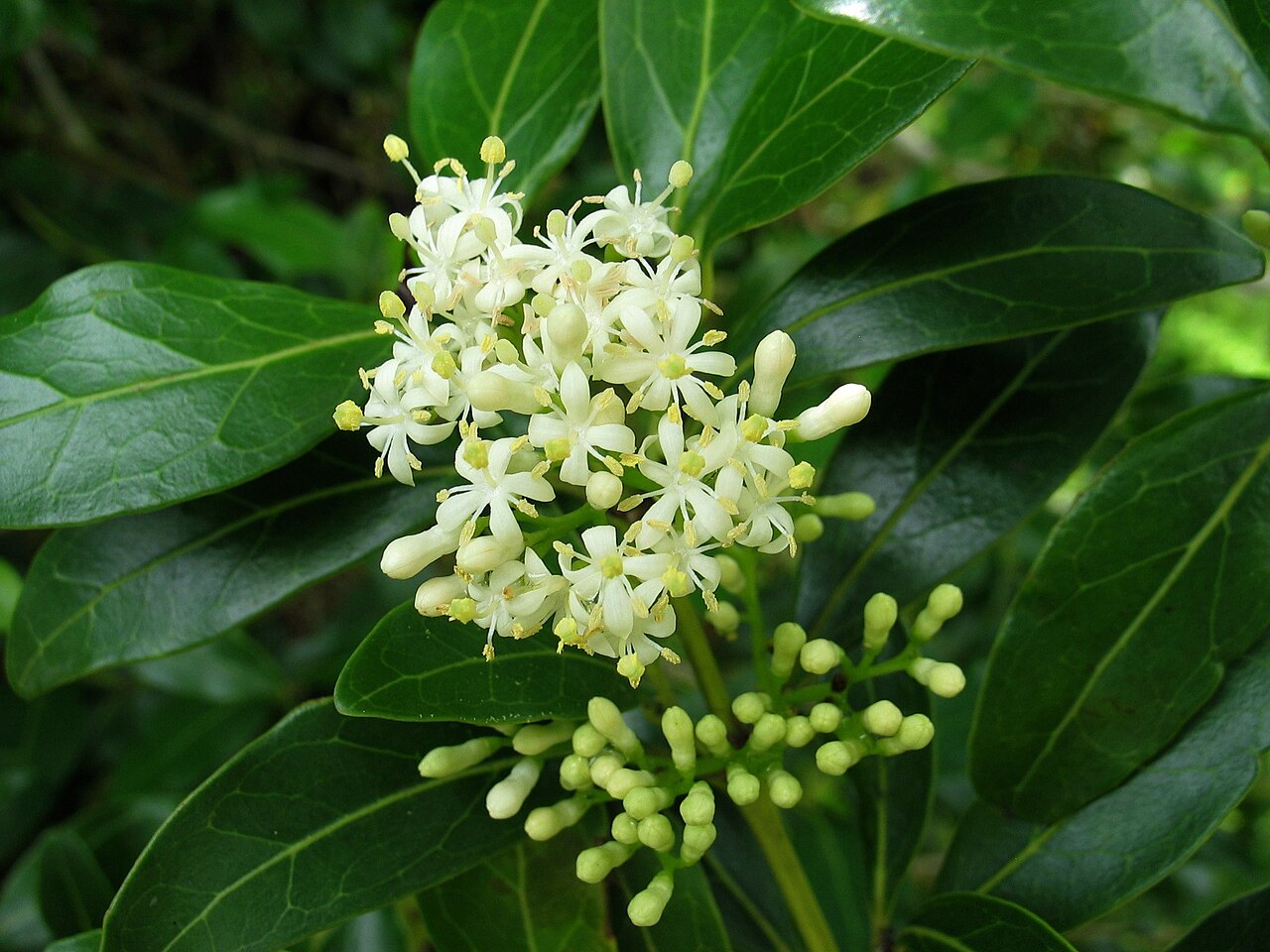
Alaheʻe (Psydrax odorata) is a Hawaiian native tree valued for glossy foliage, a naturally attractive crown, and clusters of fragrant white flowers. It belongs to the coffee family, Rubiaceae. Unlike many spectacular but oversized shade trees, it can work well as a smaller landscape tree where a patient approach to establishment is acceptable.
The species is indigenous to Hawaiʻi rather than endemic: it occurs naturally in the islands but is not restricted to them. Older references may call it Canthium odoratum. Those names should be reconciled when reading horticultural accounts; they are not a reason to substitute an unrelated plant sold under a similar common name.
Alaheʻe is sometimes compared with introduced mock orange or alaheʻe haole because of the glossy leaves and fragrant flowers. For a native planting, verify Psydrax odorata on the label. The resemblance is useful for imagining a landscape role, not evidence that the plants have the same identity or ecological history.
Identification
Bark & Stems
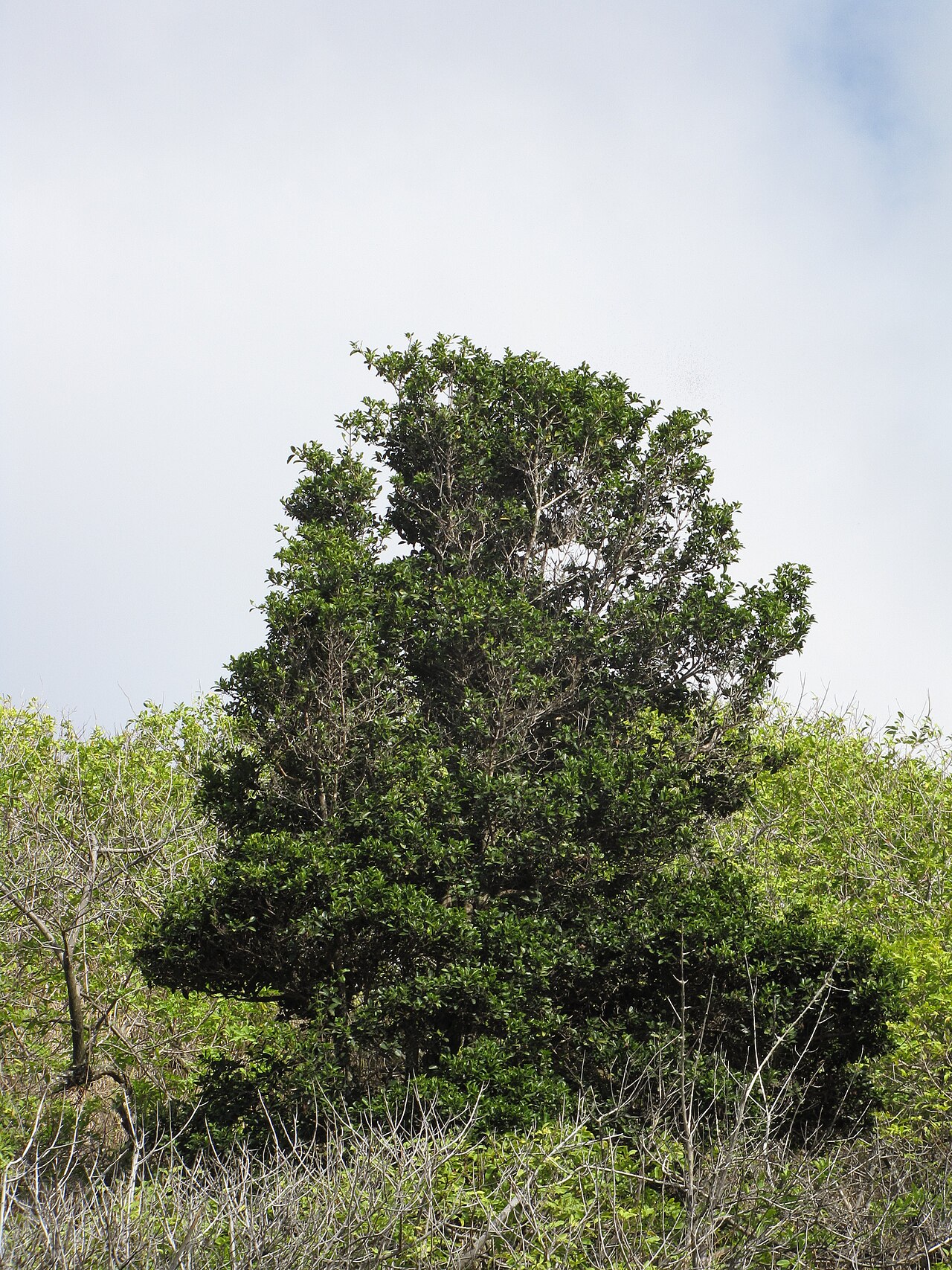
Alaheʻe often develops a tidy, rounded or relatively narrow crown with well-defined branching. Some plants naturally have an attractive form even when young. Before planning routine pruning, watch the tree’s own architecture develop; a good specimen may need little shaping.
Leaves
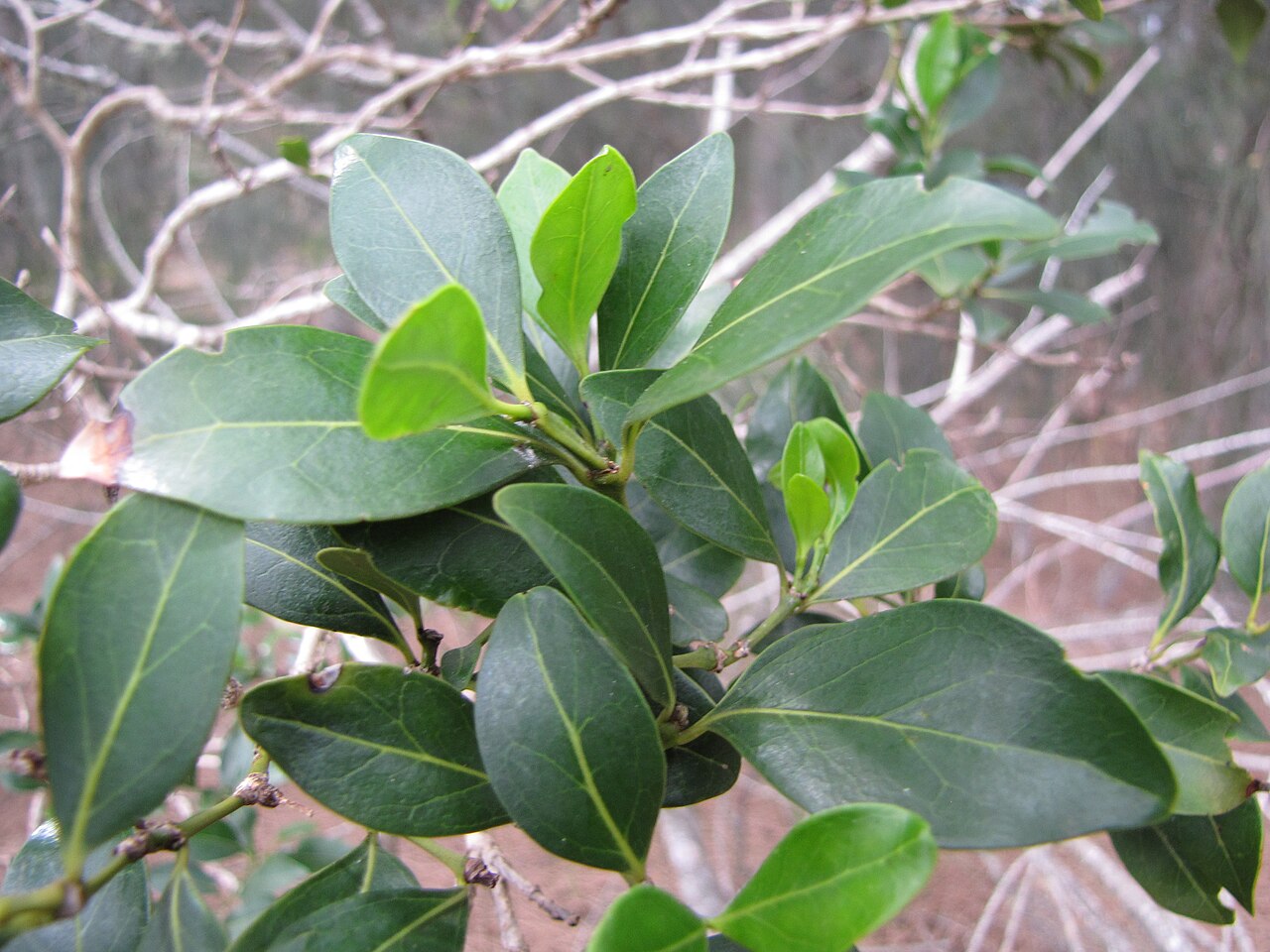
Leaves are simple and opposite, with a glossy upper surface and a duller underside. The foliage can remain visually effective even between flowering periods. Check the paired arrangement and other botanical features rather than identifying it solely by shine, since many introduced ornamentals also have glossy leaves.
Flowers
Clusters of small white flowers can produce a conspicuous display. Fragrance ranges from mild to strong and is often most noticeable in the morning. Individual plants differ in flower abundance, so a heavily blooming photograph illustrates a possibility rather than a guaranteed display from every nursery seedling.
Fruit & Seeds
Fruits follow the flowers and become dark purple or greenish-purple, appearing nearly black when mature. Older botanical accounts describe them as small rounded drupes. They are not coffee beans for a home beverage crop, despite the family relationship, and ornamental fruit should not be sampled from an uncertain identification.
Quick Facts
| Scientific Name | Psydrax odorata |
| Family | Rubiaceae |
| Plant Type | Evergreen native tree |
| Mature Height | 15–30 ft in many gardens; can be taller |
| Mature Spread | Often under 10 ft; old plants can spread 20 ft or more |
| Growth Rate | Generally slow |
| Sun Exposure | Full sun to partial sun |
| Water Needs | Dry to average; tolerates moisture with good drainage |
| Soil Type | Well-drained, site-appropriate soils; protect roots from compaction |
| Soil pH | Assess actual soil and local nursery performance; do not amend routinely |
| Bloom Time | Seasonal to sporadic; timing varies with source and conditions |
| Flower Color | Fragrant white flowers |
| Fall Color | Evergreen; new growth may provide seasonal contrast |
| Fruit | Dark-purple or greenish-purple drupes |
| Deer Resistant | Protect young plants from introduced browsing animals |
| USDA Hardiness Zones | Hawaiian tropical to subtropical sites; match island, elevation, and exposure |
Native Range
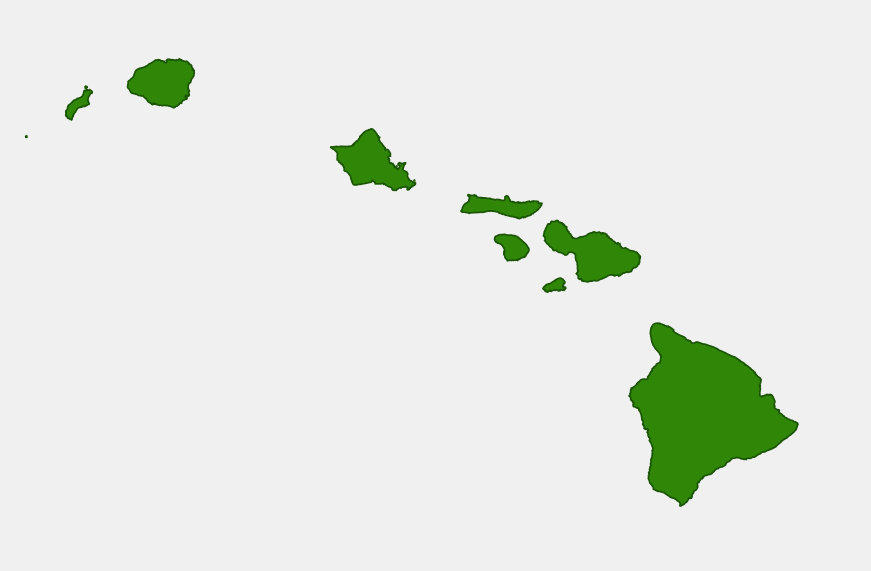
Alaheʻe is indigenous to Hawaiʻi and also native elsewhere in the Pacific. Within Hawaiʻi, the University of Hawaiʻi profile records it on Kauaʻi, Oʻahu, Molokaʻi, Lānaʻi, Maui, and Hawaiʻi Island. It is not a Polynesian-introduced substitute placed on a native list merely because it is culturally familiar.
Its habitats include shrubland and dry, mesic, and wet forest, with a reported Hawaiian elevation range from around 30 feet to more than 3,800 feet. That breadth should be interpreted alongside the plant’s nursery source and local conditions. A wet-forest occurrence does not mean garden roots should remain waterlogged.
The map below is a state-level native-range overview. It is not a record of every wild population or a prescription to plant material from one island into another island’s natural area. Use documented nursery plants for gardens and project-specific guidance for restoration.
Native Range
| U.S. States | Hawaii |
| Hawaiian Islands | Kauaʻi, Oʻahu, Molokaʻi, Lānaʻi, Maui, Hawaiʻi |
| Mexico / Canadian Provinces | Not included in the verified native range used here |
| Ecoregion | Hawaiian tropical forest and woodland |
| Elevation Range | About 30–3,800 ft or more |
| Habitat | Shrubland and dry, mesic, or wet forest |
| Common Associates | Locally appropriate native trees and understory matched to the same habitat |
USDA PLANTS profile (PSOD). Species identity verified; this link is not a guarantee of county-level distribution data.
📋 Compare alaheʻe with other selections in the Hawaii native plant list.
Growing & Care Guide
Light
Full sun generally produces the best landscape appearance, while partial sun can be tolerated. Nursery plants should be appropriately hardened before moving into a more exposed position. Ask how the stock was grown rather than assuming that a recently purchased plant is already adapted to hot afternoon sun and wind.
Soil & Water
Established alaheʻe tolerates drought and can also accept more moisture when drainage is good. During establishment, monitor the root ball and surrounding ground separately. A nursery mix can dry at a different rate from the site soil, so a damp surface does not prove that the roots have enough water.
Match irrigation to weather and the actual planting rather than repeating a fixed schedule. Avoid a low spot where runoff collects. If alaheʻe is planted with thirstier ornamentals, consider separating the irrigation zone so that its roots are not kept wet simply to satisfy a neighboring plant.
Planting Tips
Plan for a tree commonly listed at 15–30 feet in gardens, with older specimens capable of greater size. The crown can remain fairly narrow, but mature spread varies. Leave clearance from windows, paths, and structures instead of relying on future pruning to correct an overly tight position.
Plant at the nursery depth with sound root contact and a visible root collar. Keep mulch off the trunk and establish a protected, weed-managed area around the roots. Slow early growth can be normal; judge establishment by healthy foliage and new growth over time, not by comparing it with a fast-growing introduced hedge.
Pruning & Maintenance
Many alaheʻe trees need little pruning because their natural form is already balanced. If used in a screen, allow enough spacing and avoid shearing so frequently that flowering growth is continually removed. A specimen tree can be appreciated for its branching and foliage without being forced into a uniform ball.
If a plant declines, review the root zone, irrigation, and recent maintenance before reaching for fertilizer. Compaction, changing shade, and buried trunk bases are easy to overlook when attention is focused only on leaves. Document symptoms and seek local advice if growth remains abnormal.
Propagation
Alaheʻe can be raised from seed, and Hawaiian propagation references discuss the handling of its fleshy fruit and seed. Use a method from a reliable local source and keep collections clean and labeled. Do not substitute seed from an introduced plant sold under the related common name alaheʻe haole.
Nursery time is part of producing a good tree. Strong roots and accurate identity matter more than obtaining the tallest plant as quickly as possible. For restoration, retain locality information and use a collection plan appropriate to the receiving site rather than mixing available garden seed.
Landscape Uses
- Fragrant specimen: place where flowers and foliage can be enjoyed without crowding a walkway.
- Native screen: use the natural crown structure and allow enough room for mature plants.
- Dry-to-average garden: combine with compatible native plants in well-drained soil.
- Replacement planting: consider alaheʻe where an introduced glossy-leaved flowering shrub or small tree would otherwise be used.
Wildlife & Ecological Value
For Pollinators
Flower clusters provide resources for visiting insects. Observe the actual visitors in the garden instead of assuming every insect is a native pollinator. Avoid spraying blooms and combine alaheʻe with other appropriate plants that flower at different times.
For Birds
The crown and fruiting branches contribute habitat structure and potential food resources within a larger planting. A single ornamental tree is not a replacement for native forest, but it can be one component of a thoughtfully managed native garden.
For Mammals
Do not assume that a native tree is automatically browse-proof. Where introduced ungulates or livestock have access, protect young plants and monitor both direct browsing and trampling of the root zone.
Ecosystem Role
Alaheʻe participates in several Hawaiian native habitat types. Its evergreen canopy and litter add structure to the plant community, while its flowers and fruits mark seasonal reproductive activity. Maintain compatible understory and control invasive competition so that the surrounding planting supports that role.
Cultural & Historical Uses
The hard, durable wood of alaheʻe was used for tools and fishing implements. Hawaiian accounts include digging sticks, spears, and hooks among its uses. The value of the wood reflects practical knowledge of material properties rather than a generic usefulness shared by all native trees.
Historical accounts also describe dye uses associated with the leaves. A cultural garden can interpret those practices without encouraging casual harvesting of a wild tree. Work with knowledgeable practitioners when demonstrations or cultural explanations are part of the project.
As a living landscape plant, alaheʻe offers an opportunity to connect fragrant flowers with a less familiar history of craftsmanship. Correct naming matters: the native tree and introduced alaheʻe haole should remain distinct in labels, nursery purchases, and educational material.
Frequently Asked Questions
Is alaheʻe the same as mock orange?
No. The native tree is Psydrax odorata. Similar common names and fragrant flowers can cause confusion, so check the scientific label.
Why does an old reference say Canthium odoratum?
That is an older botanical name used for this species. Modern Hawaiian horticultural sources use Psydrax odorata.
Does it need regular clipping?
Often not. Many plants develop an attractive natural shape, and a specimen tree can be maintained with little pruning.
Can it tolerate dry conditions?
Yes, once established, while still requiring establishment care and good drainage. Drought tolerance does not mean a newly planted root ball can be ignored.
Is it found only in Hawaiʻi?
No. It is indigenous to Hawaiʻi but also native elsewhere in the Pacific; indigenous and endemic are not the same term.
Sources & Further Reading
- University of Hawaiʻi, Native Plants Hawaiʻi species profile
- USDA Forest Service, Common Forest Trees of Hawaii species account
Botanical range, identification, and cultural information are based on these sources. Garden-management advice should be adapted to local soil, exposure, and nursery provenance.
Find Native Plants Near You
Look for correctly identified, nursery-propagated plants with documented Hawaiian provenance. Visit our Hawaii native plant nursery directory and ask about stock suited to your island, elevation, and rainfall.