
Prairie Trillium (Trillium recurvatum)
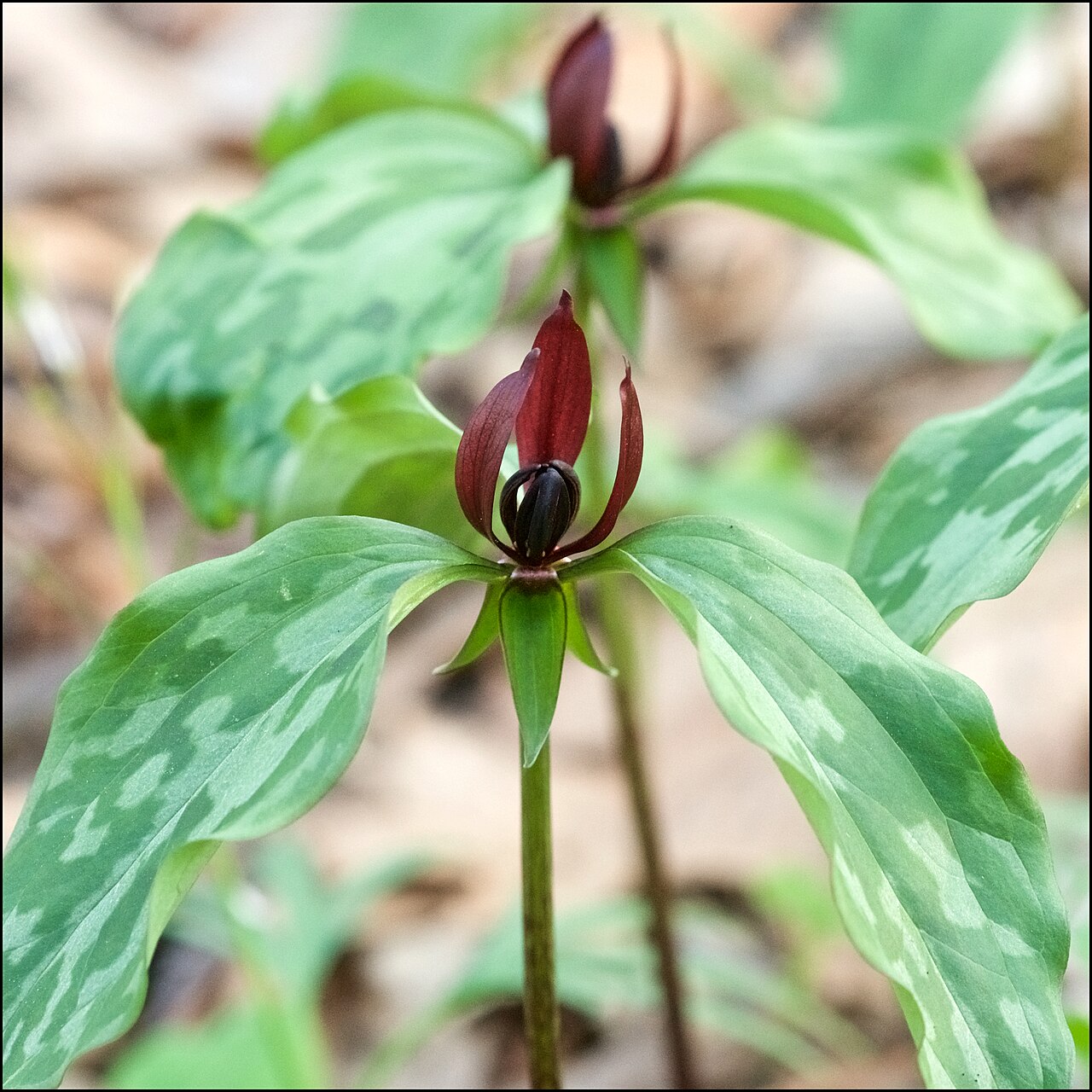
Prairie trillium is a woodland plant despite its common name. Trillium recurvatum rises in spring with a whorl of three mottled, leaflike bracts and a maroon flower seated directly above them. The combination is distinctive and close to the ground, making it a plant for a shaded path edge or a quiet woodland bed rather than an exposed summer prairie border.
The regional row gives a representative height of 12 inches and average moisture. Its old full-to-part-sun code has been corrected to partial shade through shade, consistent with the woodland conditions described by NC State. Spring sunlight beneath leafless deciduous trees is useful, but it is not the same as all-day summer sun in an open bed.
Patience is essential. Trilliums establish slowly and may disappear aboveground by midsummer as part of their normal cycle. A newly planted specimen should not be repeatedly dug up because its leaves have gone dormant. Mark the location, preserve the root zone, and purchase genuinely propagated stock so the garden does not come at the expense of a wild colony.
Identification
Stem & Growth Form
A sturdy seasonal stem rises from an underground rhizome and supports the three-part display. The visible shoot is only the temporary aboveground portion of a long-lived perennial. Keep that distinction in mind during summer cleanup. The space is still occupied after the leaves disappear, and a shovel placed there for a new annual can damage the dormant plant.
Leaves & Bracts
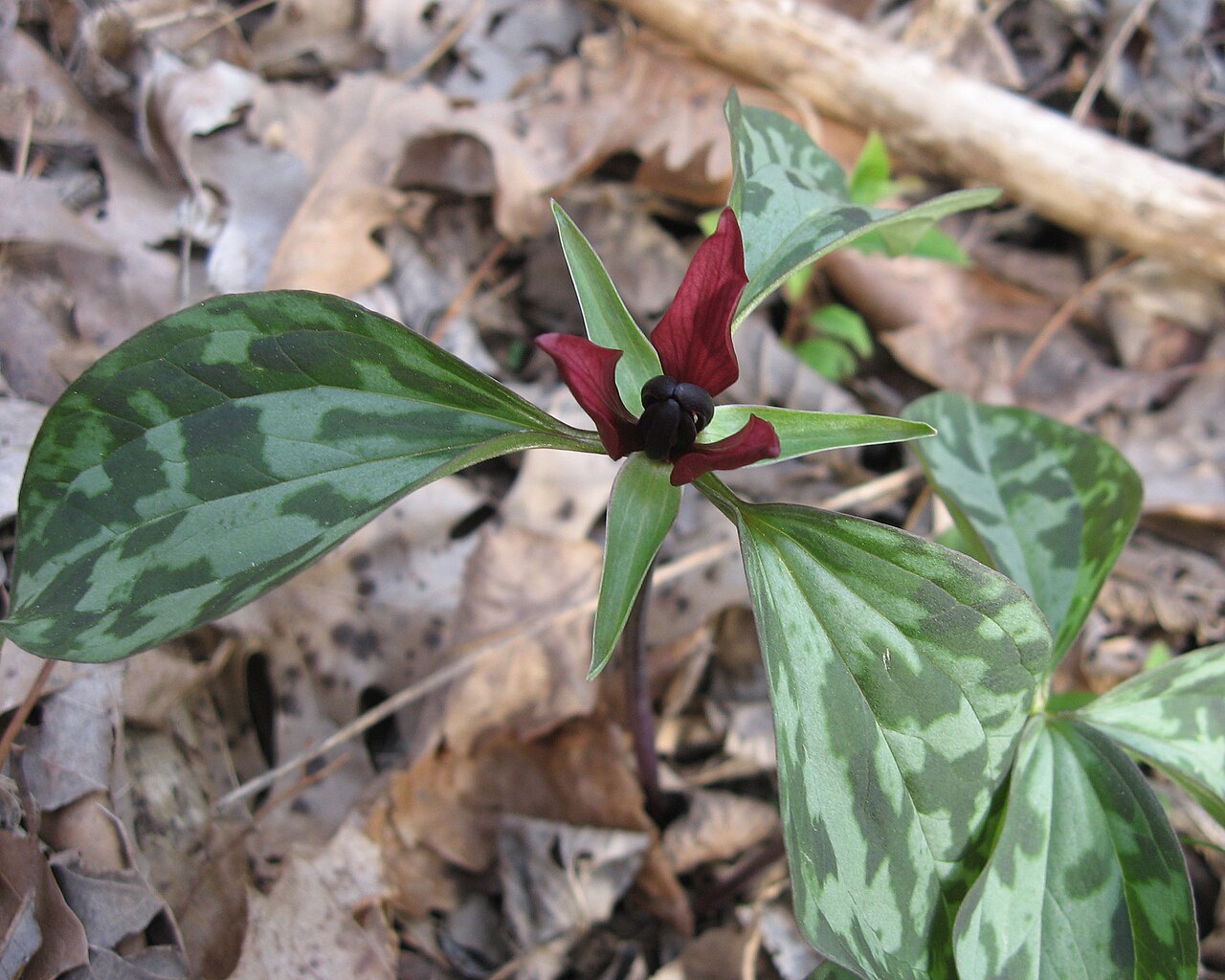
The three broad green structures are botanically bracts, although gardeners commonly call them leaves. They often show contrasting darker and lighter mottling. The surface pattern is attractive, but it varies and is not sufficient by itself to distinguish every sessile-flowered trillium. Examine the flower, the attachment of the bracts, and the recurved sepals as well.
Flowers
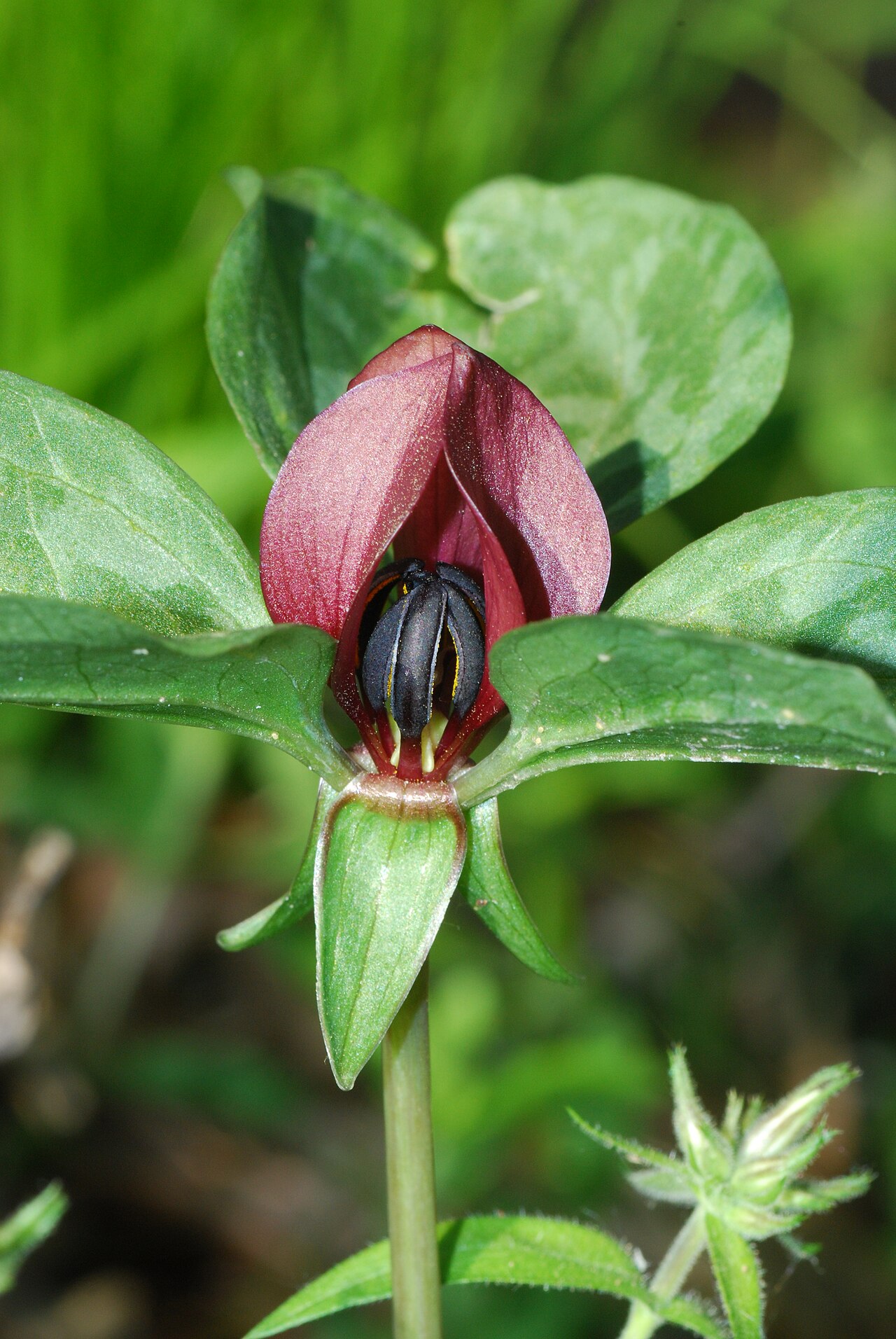
Three maroon petals stand above the bracts without a long flower stalk. The sepals bend backward, a feature reflected in the name recurvatum. Look from the side rather than relying only on a top-down photograph. Similar trilliums can grow in the same general region, so use several characters before identifying an unlabeled plant or seedling.
Fruit & Seeds
The flower can develop into a berry-like capsule containing seeds. Ants help disperse the seeds, an ecological interaction easily overlooked when the plant is grown only for its flower. Leave mature plants undisturbed through this stage where possible. Seed-grown trilliums require years of development, so a seedling is a long-term investment rather than an instant replacement for a flowering nursery plant.
Quick Facts
| Scientific Name | Trillium recurvatum |
| Family | Melanthiaceae (trillium group) |
| Plant Type | Slow-growing woodland herbaceous perennial |
| Mature Height | Usually 6–18 inches; approximately 12 inches in the regional list |
| Mature Spread | About 9–12 inches per mature shoot cluster; slowly colonizing |
| Growth Rate | Slow |
| Sun Exposure | Partial shade to shade; spring light beneath deciduous trees |
| Water Needs | Average woodland moisture with drainage |
| Soil Type | Humus-rich, well-drained loam or suitable clay |
| Soil pH | Generally neutral to locally suitable woodland soil |
| Bloom Time | Spring |
| Flower Color | Usually maroon to deep reddish brown |
| Fall Color | Usually dormant before autumn |
| Fruit | Berry-like capsule containing ant-dispersed seeds |
| Deer Resistant | No; protect from browsing where pressure is high |
| USDA Hardiness Zones | 4–9 in NC State’s listing |
Native Range
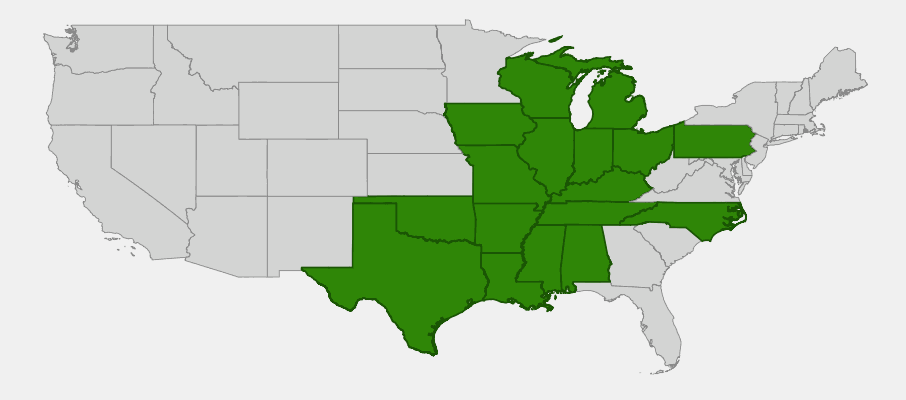
NC State’s distribution includes Iowa, Illinois, and Missouri along with a wider central and eastern U.S. range. The map follows that state list. It is a broad summary, not evidence that the species occurs in every county or every woodland within a shaded state.
Forest and woodland ground layers provide the relevant setting. The common name prairie trillium should not be used as a shortcut to full-sun prairie care. Rich leaf litter, seasonal canopy light, and a protected root zone are more useful design cues than the English name alone.
Use locally appropriate provenance when available. A nursery-grown plant from a similar climate is a sensible starting point for a garden, while restoration calls for more exact local documentation. Ask explicitly whether the stock was propagated rather than simply held in a nursery after collection from the wild. Slow growth makes that distinction especially important for trilliums.
📋 Regional plant list: Iowa, Illinois & Missouri
Growing & Care Guide
Light
Plant in partial shade or shade, particularly beneath a deciduous canopy that admits light in spring. Avoid a hot open site exposed through summer. Watch the actual seasonal shade pattern before planting; a bed beneath a leafless tree in March may become appropriately shaded later, while a west-facing wall remains hot even when called part shade.
Soil & Water
Provide humus-rich soil with drainage and adequate moisture during active growth. Retain a naturalistic organic surface without burying the crown under a heavy pile of mulch. Water new transplants when needed, checking the root zone rather than the appearance of dry leaf litter. Persistent waterlogging is not the same as the moist woodland conditions the plant prefers.
Planting Tips
Choose the permanent site carefully, because repeated moving is undesirable. Handle nursery stock gently and maintain the intended planting depth. Leave enough room to see the spring display without placing the plant directly where feet or tools will pass. Mark each crown before dormancy so later work in the bed does not disturb the rhizome.
Pruning & Maintenance
Do not pick the entire leafy flowering shoot or cut green growth merely to tidy the bed. That seasonal foliage supports the underground plant. Allow it to senesce naturally, then remove only what is necessary for access or plant health. In a woodland planting, ordinary leaf litter can remain part of the soil-building system instead of being stripped away every week.
Propagation
Seed and carefully managed division are listed as propagation methods, but neither makes trillium a fast crop. NC State notes that plants may take many years to reach flowering size. For a home garden, propagated nursery stock is often the most practical route. Maintain labels through the dormant season, and follow specialist instructions if working with seed rather than assuming it behaves like a quick-germinating annual.
Summer Dormancy
A plant that vanishes aboveground by midsummer may simply be following its normal seasonal rhythm. Check the earlier pattern of growth and the condition of the site before intervening. Do not keep adding water or fertilizer solely to force leaves to remain green. Use compatible neighbors to provide later interest while leaving the dormant trillium’s root zone intact.
Browsing & Disturbance
Inspect spring shoots where deer or other herbivores are common. Losing a small plant’s entire seasonal shoot is more consequential than losing one leaf from a large shrub. Temporary protection may be worthwhile during establishment. Slugs and snails can also damage foliage, but identify the actual problem before treating; broad pesticide use is not a substitute for observation in a wildlife-oriented woodland bed.
Landscape Uses
- Shaded spring gardens in Iowa, Illinois, and Missouri using propagated local native plants.
- Woodland path edges where mottled bracts and recurved sepals are easy to inspect.
- Small groups beneath deciduous trees with protected root space.
- Mixed spring-ephemeral plantings with compatible sedges and other restrained woodland companions.
- Educational gardens demonstrating ant seed dispersal and seasonal dormancy.
Wildlife & Ecological Value
For Pollinators
NC State notes associations with flies and beetles around the dark flowers and identifies moth larval-host relationships. A flower need not be brightly colored to have ecological interactions. Observe quietly and avoid treating every insect near the plant as a pest. Keep the woodland planting diverse so other flowers provide complementary seasonal resources.
For Birds
This low spring plant should not be promoted as a complete bird-habitat solution. It belongs within a woodland structure that also includes trees, shrubs, litter, and other ground-layer plants. Its value is part of that community rather than a promise of conspicuous bird visitation to every flower.
For Mammals
Small mammals may use the fruits, while browsing animals can also damage the seasonal shoots. Those interactions have different consequences for a tiny new planting and an established wild colony. Protect vulnerable nursery plants where necessary while retaining the wider habitat features that make a woodland garden functional.
Ecosystem Role
Ant-assisted seed movement is one of the distinctive processes associated with trilliums. Preserve undisturbed soil and litter where compatible with the garden’s use. Repeated raking, digging, and replacement of the ground layer with annual bedding plants interrupt the quiet long-term development this species needs. A successful planting is measured over years, not a single summer display.
Cultural & Historical Uses
The name recurvatum points to the backward-bending sepals, a botanical feature visible in the living plant. The repeated groups of three in the flower and bracts help explain the familiar trillium identity. Learning those structures is more dependable than identifying plants only by mottled foliage.
Common names can preserve regional usage without accurately describing the best garden conditions. Prairie trillium is a good example: its documented forest and woodland habitat should guide care. A species-specific profile prevents the name from becoming an instruction to plant it in a hot, dry prairie bed.
Trilliums have long attracted gardeners because of their spring flowers and symmetrical form. Slow growth also makes wild collection especially damaging and encourages the need for trustworthy propagation. Ask growers clear questions about origin and production, and let established wild colonies remain where their ecological relationships developed.
Frequently Asked Questions
Should prairie trillium grow in full sun?
No. Use partial shade to shade, with seasonal spring light beneath deciduous trees. The regional row has been corrected to reflect that woodland preference.
Why did the leaves disappear in summer?
Summer dormancy is normal. Mark the crown and avoid digging or planting over it. Evaluate the full seasonal history before assuming the plant died.
How tall is it?
Many plants fall within about 6–18 inches, with 12 inches a useful representative value in the regional table. Size varies with plant age and site.
Can I pick the flower with its leaves?
Avoid removing the whole seasonal shoot. The foliage supports the perennial rhizome, and repeated loss can weaken the plant.
What should I ask a nursery?
Ask whether the plants are genuinely nursery-propagated and request species and provenance information. Holding wild-collected plants in pots does not make them equivalent to propagated stock.
Sources & Further Reading
Find Native Plants
Ask growers about nursery propagation and regional provenance. Browse our Iowa native plant nurseries, Missouri native plant nurseries directory for suppliers.