
Northern Monkshood (Aconitum delphiniifolium)
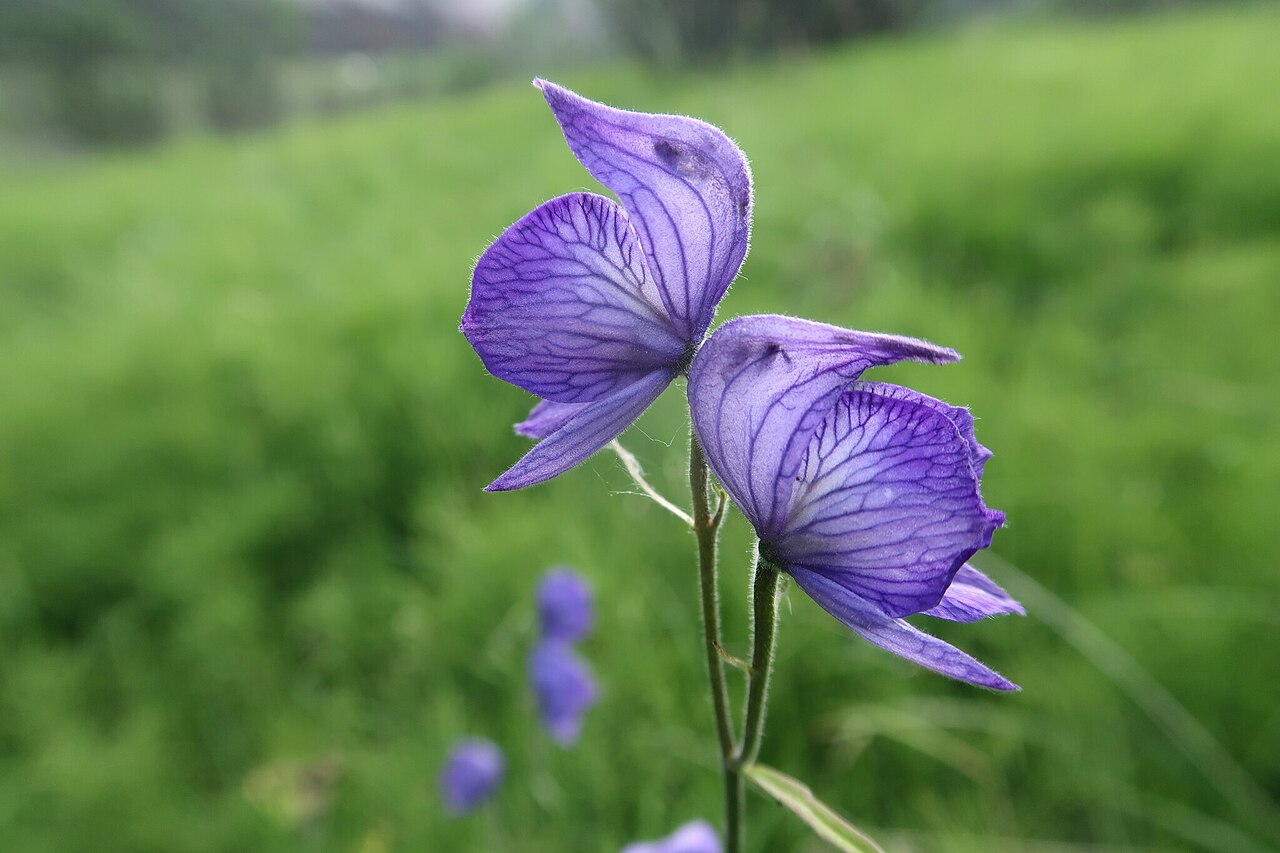
Northern Monkshood (Aconitum delphiniifolium, also written A. delphinifolium) brings deep violet, hood-shaped flowers to Alaska’s summer landscape. Slender stems and finely divided leaves give it a delicate appearance, but its underground storage roots support a long-lived herbaceous perennial. The flowers are especially striking among meadow grasses or against the green background of an open woodland.
The Alaska regional list places it in part to full sun and wet-to-average soil moisture, with a typical listed height of 10–30 inches. These are garden-selection guidelines, not a guarantee that every population stays within that range. Northern monkshood is variable; local seed origin, exposure and surrounding vegetation matter when choosing a planting site.
Important: this is a poisonous ornamental, not an edible wildflower. Keep it away from food gardens, grazing animals and places where children or pets may chew plants. Wear gloves for handling and keep roots and seed clearly labeled. Its presence in a native-plant list is not a recommendation for every household: a different native perennial is the better choice wherever accidental ingestion is plausible.
Identification
Recognizing the Hood
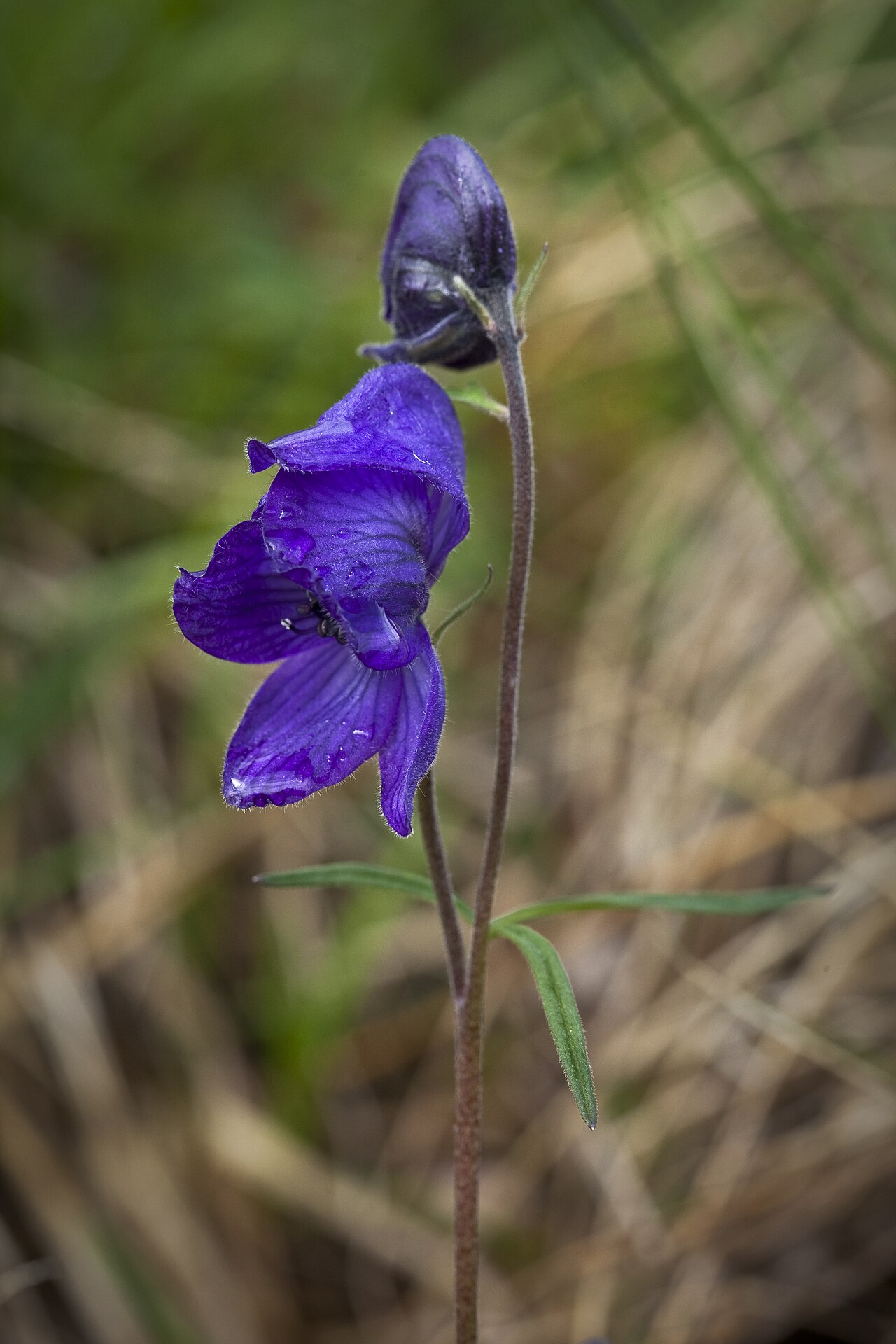
The upper part of the flower arches over the center like a helmet. That distinctive silhouette is the most useful first clue to monkshood. The conspicuous colored parts are sepals; the smaller true petals are largely concealed within the hood. Look at a flower from the side as well as straight on, without pulling it apart. Photographs from both angles help separate the hood outline from shadows and folded buds.
Blue-purple flowers are typical, but pale and other color forms occur. Color alone does not establish identity. Northern monkshood can resemble other Aconitum species, and a nursery plant sold only as “blue monkshood” may be a non-native ornamental. Ask for a scientific name and provenance, especially when planting beside natural vegetation or for a restoration project.
Leaves & Seasonal Stems
The foliage is divided deeply into narrow segments. Rather than a single broad oval leaf, the outline has a finely cut appearance. Leaves are carried along seasonal stems that die back; the plant is not a shrub. Early shoots can be difficult to identify confidently among other deeply divided meadow plants, which is one reason to label established clumps before they disappear in winter.
A flower-bearing stem may be modest in a windswept site and taller among sheltered vegetation. Do not use the height of a photographed tundra specimen as the spacing rule for a richer garden bed. Allow enough room to see the leaves and flower stems without having to push aside neighboring plants every time you inspect it.
Similar Plants
Larkspurs also have deeply cut leaves and often blue flowers, but their flower architecture differs: the backward-projecting spur is not the same as the monkshood helmet. Neither plant should be tasted to distinguish it. Columbian monkshood is another close relative, and floras note overlapping characters. For a wild specimen, use a regional botanical key and photographs of several organs rather than guessing from one blue blossom.
Flowers, Fruit & Dormancy
Flowering falls within the northern summer, with timing changing across latitude, elevation and snowmelt conditions. After flowering, the plant can develop dry seed-bearing fruits. A mature specimen becoming less showy late in the season is not automatically dying. Mark its position and keep the crown intact during fall maintenance so dormant roots are not mistaken for an empty planting space.
Do not dig up roots simply to confirm an identification. Underground structures are not necessary for ordinary garden observation, and handling loose roots creates avoidable confusion with edible root crops. The photographs on this page are identification aids, not a substitute for expert confirmation of an unknown plant.
Quick Facts
| Common Name | Northern Monkshood; Larkspurleaf Monkshood |
| Scientific Name | Aconitum delphiniifolium (also spelled A. delphinifolium) |
| Plant Type | Herbaceous perennial |
| Family | Ranunculaceae |
| Mature Height | Regional table: 10–30 inches; wild plants vary beyond this |
| Sun Exposure | Part to full sun (P–F) |
| Water Needs | Wet to average (W–A); avoid a stagnant planting hole |
| Flower Color | Usually blue to violet; pale forms occur |
| Bloom Time | Summer, varying with locality and snowmelt |
| Safety | Poisonous; not edible or suitable for grazing areas |
| USDA Symbol | ACDE2 |
Native Range
Kew recognizes northern monkshood across eastern Siberia, Alaska and western Canada. Alaska is its native United States region; a map covering only the contiguous states would therefore be misleading. The green map below deliberately shows Alaska. It does not imply that every part of the state contains the species, nor does it display the Canadian and Asian portions of the range.
Botanical records place it in several kinds of northern vegetation, including meadows, creekside growth, thickets, woods, rocky slopes and tundra. This variety of settings should not be flattened into a single garden recipe. A plant from a cool open meadow may face very different conditions from one beneath shrubs, even when both collection labels say Alaska.
Use local botanical records to judge whether a proposed natural-area planting belongs at that particular site. A statewide native designation is broader than a seed-transfer recommendation. For a home garden, nursery-propagated regional stock is preferable to digging an attractive wild clump; wild collection can damage both the plant and its surrounding habitat.
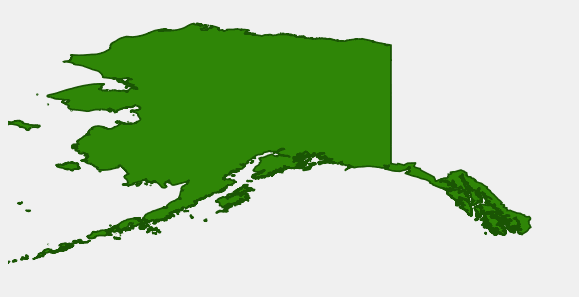
📋 Regional plant lists featuring Northern Monkshoods: Alaska
Growing & Care Guide
Decide Whether It Belongs in the Garden
Begin with access and maintenance, not flower color. A poisonous perennial is a poor fit beside a kitchen herb bed, a children’s digging area, a pet run or livestock fencing. If different people tend the garden, all need to recognize the plant and know that its roots and seed are not food. A label that survives winter is useful, but a label alone does not make an unsuitable site safe.
For a property where these precautions are unrealistic, choose a different native plant suited to the same light and moisture. Northern geranium, for example, offers purple flowers without requiring a monkshood planting. The goal of a native garden is a workable landscape, not possession of every species on a regional list.
Light & Exposure
Use the regional recommendation of partial to full sun as a starting point. A bright, cool site is different from a hot strip beside reflective paving. In a sunny position, check the root zone during dry weather rather than assuming an Alaska native never needs supplemental water. In heavy shade, compare the plant’s vigor with nearby open conditions before adding fertilizer to compensate for weak flowering.
Wind and surrounding vegetation also affect presentation. A sheltered position can keep flowering stems easier to observe, but avoid packing the clump tightly between vigorous shrubs. Leave a clear maintenance route so stems do not need frequent handling. For an exposed garden, locally sourced material and a small trial planting are more sensible than ordering a large number of unfamiliar selections.
Soil & Water
The table’s W–A code means wet-to-average moisture, not a rating of drought tolerance. Aim for a root zone that retains moisture without becoming an airless sump. If a planting hole remains full after nearby ground has drained, correct the site problem or choose another location rather than treating chronic stagnation as a requirement of the species.
When planting a nursery-grown specimen, water the root ball and surrounding soil thoroughly, then check actual moisture before watering again. Rain reaching the garden surface may not wet a pot-bound root ball evenly. Conversely, frequent watering on already saturated ground is not helpful. Adjust to weather and drainage instead of following a fixed daily schedule.
A light organic mulch can reduce exposed soil and make watering more consistent, but do not bury the crown under a deep wet mound. Keep labels visible and avoid mixing this plant’s discarded roots with vegetable-garden material. Soil testing is more useful than automatically adding lime, sulfur or strong fertilizer: this guide does not assign an unsupported narrow pH requirement.
Planting & Establishment
Buy correctly identified propagated stock from a responsible supplier. Check that the container label matches the invoice, and keep the provenance information with garden records. A cultivar of a different Aconitum species is not a replacement for a local native simply because its flowers have the same shape.
Set the plant at its previous growing depth unless the nursery provides a reason to do otherwise. Firm soil gently around the root ball and keep nearby weeds from overtopping the emerging stems. Wear gloves, use dedicated garden tools and wash up afterward. Avoid unnecessary bare-root handling, particularly around food preparation areas.
During the first season, watch for persistent wilting, crowding and drying of the original root ball. Record the planting position before winter. Do not immediately disturb a dormant clump in spring because nearby plants have emerged sooner; northern perennials respond to their own site conditions and seasonal cues.
Seed & Propagation
Propagation is best treated as a specialist nursery task when the plant is being grown near a household garden. Keep any seed in clearly labeled closed packets, separate from edible seed, and do not leave loose material where it might be handled casually. Ask the supplier for a tested protocol for the particular seed lot rather than applying a generic online recipe for European monkshood.
Cold-season sowing is used for many temperate perennials, but germination timing and pretreatment vary. This page does not promise a particular number of refrigerator weeks or a reliable germination percentage for northern monkshood. If seed remains dormant, retain labels and consult a propagation specialist before repeatedly digging or drying the material.
For divisions, the same identity and handling concerns apply more strongly because roots are exposed. A nursery-grown replacement is often the simplest option for a home gardener. Do not collect roots from wild populations to establish a garden, and never share unlabeled divisions.
Seasonal Maintenance
Remove damaged stems only as needed, using gloves and tools rather than pulling barehanded. Whether to retain seed heads depends on the garden’s management plan and access. If seedlings are unwanted, remove developing seed structures before they disperse; if retaining them, keep the plant’s identity clear through the dormant season.
Do not assume toxicity makes the plant immune to garden problems or browsing. Inspect actual damage before treating it. Slug damage, broken stems, weather stress and root-zone problems need different responses; routine pesticide spraying is not a substitute for diagnosis. Seek local extension advice if decline continues after light and moisture have been checked.
Designing a Naturalistic Planting
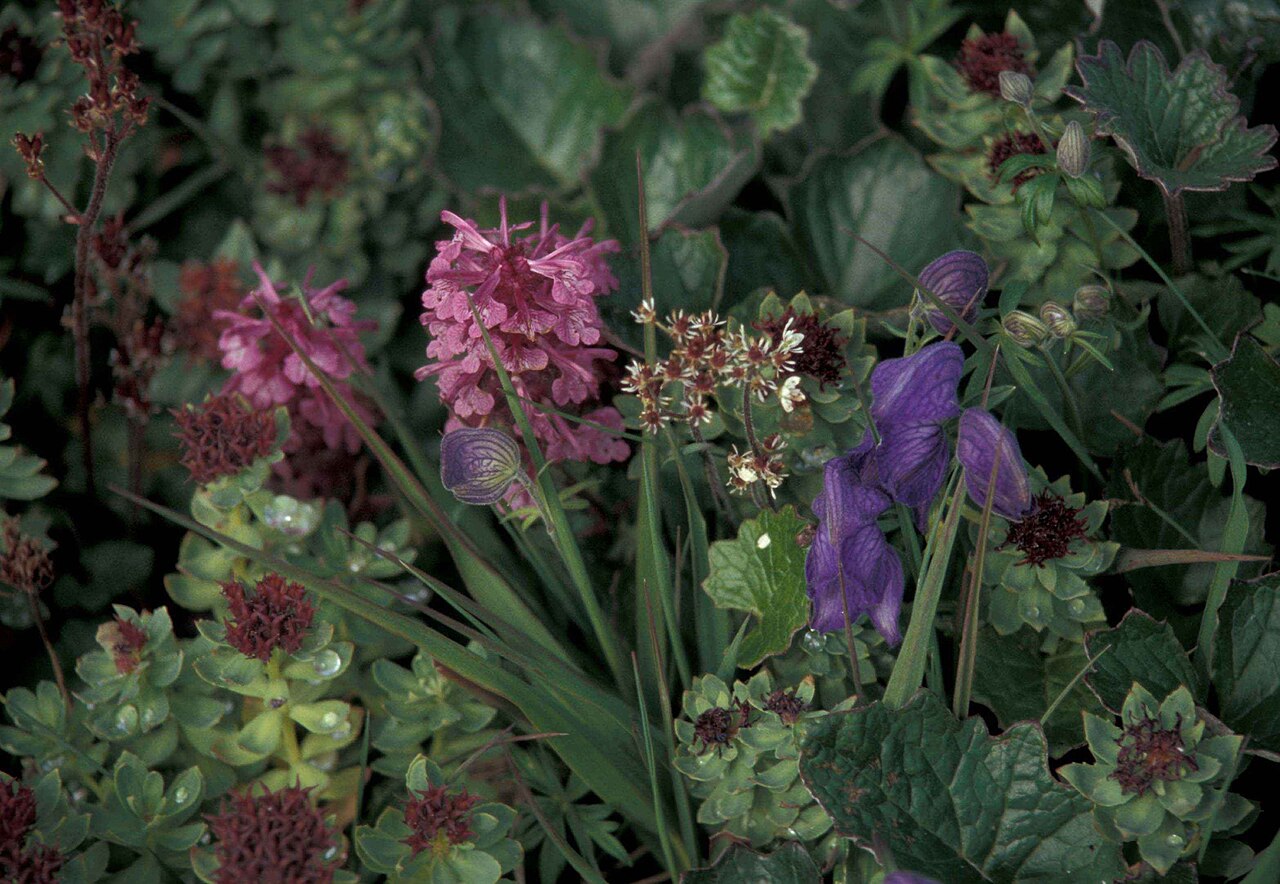
Place northern monkshood where its upright flowers can be seen against contrasting foliage without encouraging people to pick them. A mixed planting should still allow individual clumps to be identified. Avoid weaving it through edible berry or salad crops merely because those plants share a moisture preference.
When planning companions, select species with compatible site needs and comparable vigor. Native grasses and other meadow perennials can provide context, but aggressive neighbors may hide the smaller plant. Trial a modest grouping, observe a full season and expand only where the combination works.
Wildlife & Ecological Value
Monkshood flowers are visited by insects, and flower structure matters to how visitors reach their rewards. A plant being poisonous to people does not mean it has no ecological relationships. At the same time, this guide does not label northern monkshood a universal butterfly host, a bird-food shrub or a safe forage plant without species-specific evidence.
In a native landscape, its value also lies in maintaining the composition and seasonal variety of an appropriate plant community. It is one element among meadow or woodland plants, not a complete wildlife garden on its own. Retain other locally native species with complementary structure and flowering periods rather than replacing a diverse planting with a single attractive flower.
A photograph of an insect on a flower documents that visit; it does not demonstrate that the insect’s caterpillars feed on the leaves. Likewise, an absence of visible browsing does not make this a recommended deterrent around livestock. Keep poisonous plants out of grazing settings rather than relying on animals to avoid them.
Cultural & Historical Uses
The name monkshood refers to the flower’s hooded outline. “Larkspurleaf” points to the resemblance between its divided foliage and that of larkspurs. Scientific references use both delphiniifolium and delphinifolium; the spelling variation should not lead to duplicate garden records or two supposedly different nursery species.
Older references sometimes divide northern monkshood into named subspecies, while broader modern treatments emphasize variation and overlap. Record the identification supplied with a documented nursery accession rather than assigning an old subspecies name from flower size alone.
Historical accounts of poisonous plants require careful context. This gardening guide does not reproduce preparation methods, doses or supposed household remedies. Traditional knowledge is not a reason to experiment with monkshood, and records concerning other Aconitum species should not be transferred automatically to this one. Appreciate its botanical history and form without ingesting it or making extracts.
Frequently Asked Questions
Is northern monkshood native to Alaska?
Yes. Alaska is its native United States region, with additional native range in western Canada and eastern Siberia.
Is it safe to eat?
No. Treat the entire plant as poisonous. It is not an edible flower, root crop or home-remedy ingredient.
Does W–A mean drought tolerant?
No. In this regional table it means wet-to-average soil moisture. It is not the separate E/G/M/P drought-tolerance system used by some other tables.
Why does my plant exceed 30 inches?
The table gives a typical garden range, not the full variation found in botanical descriptions. Site and provenance influence height.
Can I substitute a nursery monkshood labeled only Aconitum?
Not for a native planting. Obtain the species name and origin; ornamental monkshoods include other species and hybrids.
Is this the same as larkspur?
No. They are related but distinct genera with different flowers. Do not use taste to identify either.
Should I collect it from the wild?
No. Choose propagated nursery stock, respect protected sites and keep wild populations intact.

Looking for a nursery that carries Northern Monkshood?
Browse our native plant nursery directory: Alaska
Sources & Further Reading
- Flora of North America: Aconitum delphiniifolium — identification and habitat.
- Kew Plants of the World Online — accepted name and distribution.
- USDA PLANTS — species record.
- Alaska Native Plant Society seed list — native cultivation and handling caution.
- Morton Arboretum: Monkshood — general Aconitum handling and cultivation guidance, not an Alaska range record.