Netted Chain Fern (Woodwardia areolata)
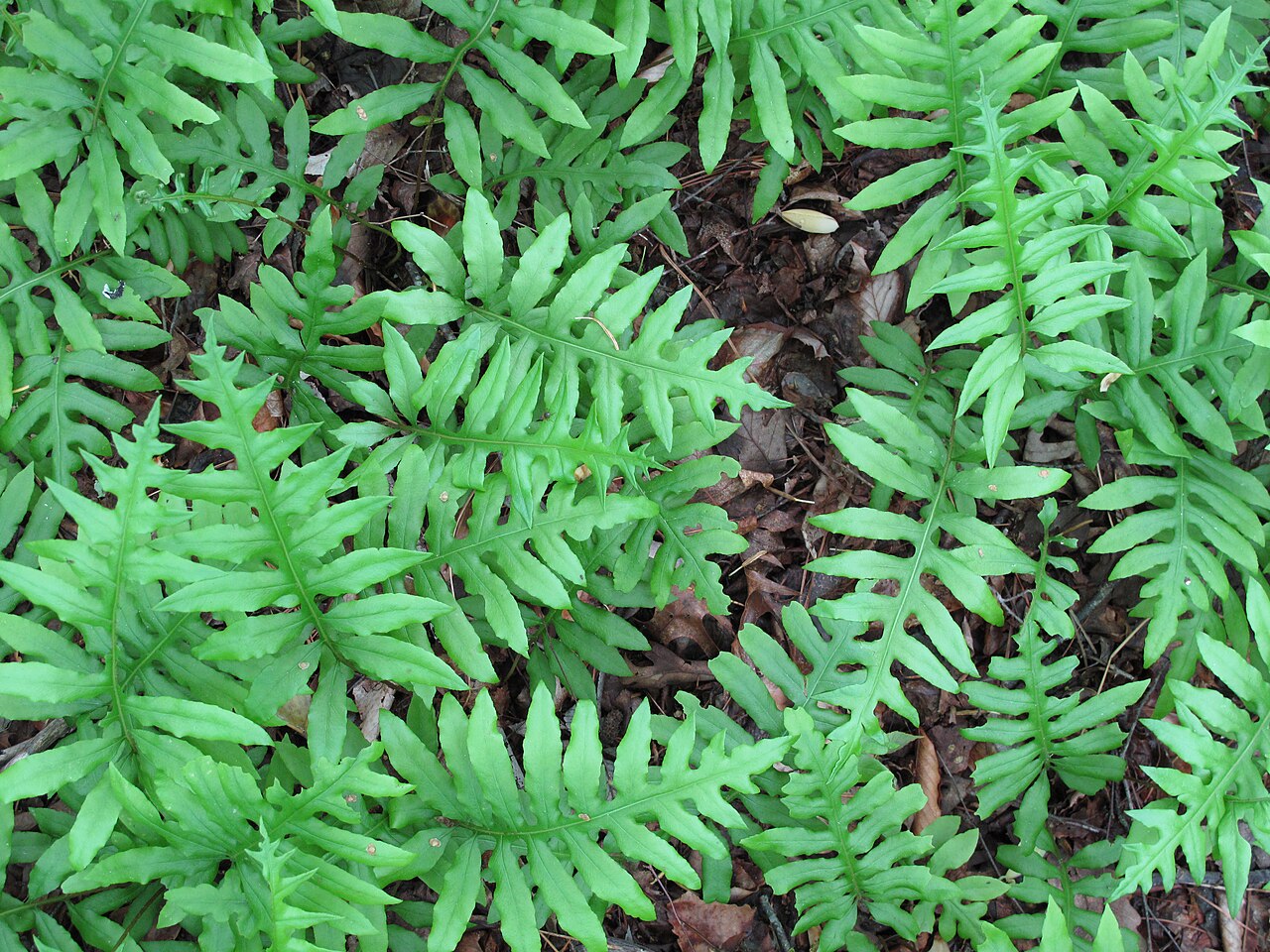
Netted chain fern (Woodwardia areolata, also known as Lorinseria areolata) is a native fern for damp, acidic ground. Its broad, glossy green sterile fronds create a strong woodland texture, while separate fertile fronds carry much narrower divisions. Look closely at the veins and spore-bearing structures and the common name becomes descriptive rather than mysterious: a net of veins in the leaf and a chain-like arrangement of sori.
For gardens in Alabama, Georgia and Mississippi, this is a useful candidate for a moist shaded margin, a damp woodland bed or a suitable rain-garden zone. It is not a dry rock-garden fern. The attractive foliage depends on matching the moisture regime, especially where summer heat can quickly dry the upper soil. Shade is helpful, but shade alone cannot turn a dry bed into wet-woodland habitat.
Netted chain fern spreads by creeping, branching rhizomes and can form a substantial colony under favorable conditions. Use that habit deliberately. A broad patch beside a damp path can look natural and cohesive; the same growth may overwhelm a small collection of delicate woodland plants. Buy identified nursery-propagated stock, plan a boundary and allow the fern to occupy the type of habitat it actually needs.
Identification
Rhizomes and habit
Fronds emerge along creeping rhizomes rather than remaining confined to one permanent vase-shaped crown. A young planting may begin as a few separate fronds, then fill the ground as the underground stems extend. This explains both its value as a moist-site groundcover and the need to inspect the edge of a garden colony periodically.
Broad sterile fronds
Sterile fronds are usually the most conspicuous part of the plant. Their blades are deeply lobed, with pointed segments along the central axis and tissue connecting those segments. The surface often appears glossy, and new growth can carry a pinkish or copper tint before becoming green. Typical garden height is about 18–24 inches, although site and age influence individual fronds.
Small teeth along segment margins and the vein pattern help distinguish this species from similar coarse ferns. The segments are often alternate or nearly opposite rather than perfectly paired throughout. Do not rely on one feature viewed from a distance: frond texture, margins, veins and fertile structures together make a stronger identification.
Netted veins
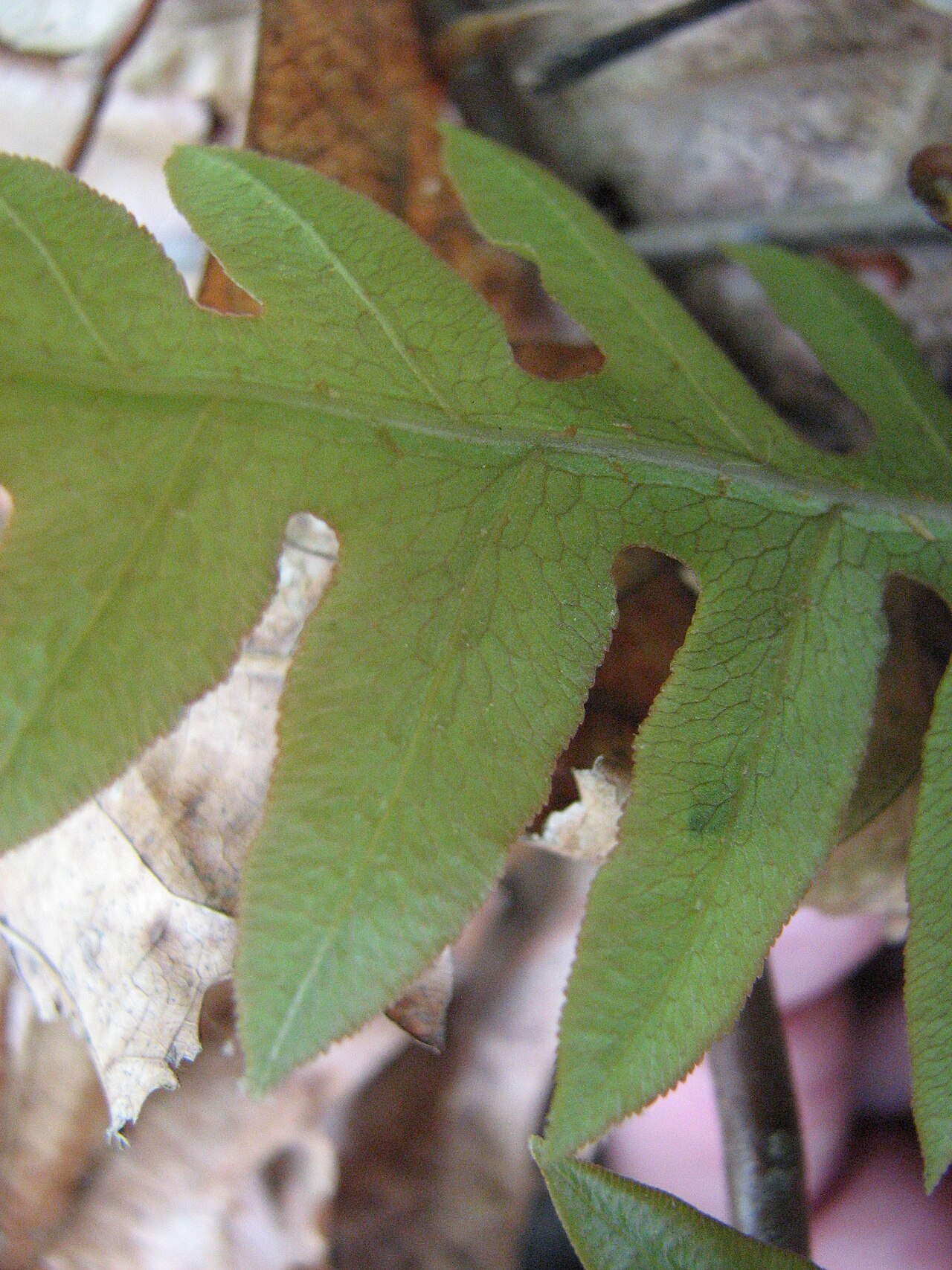
The veins divide and rejoin to enclose small areas of leaf tissue. This network is easiest to see on a backlit frond or on the underside of a close-up leaf segment. It explains the “netted” part of the common name and the epithet areolata. In a garden, it is a useful teaching detail because it can be examined without removing an entire plant.
Narrow fertile fronds
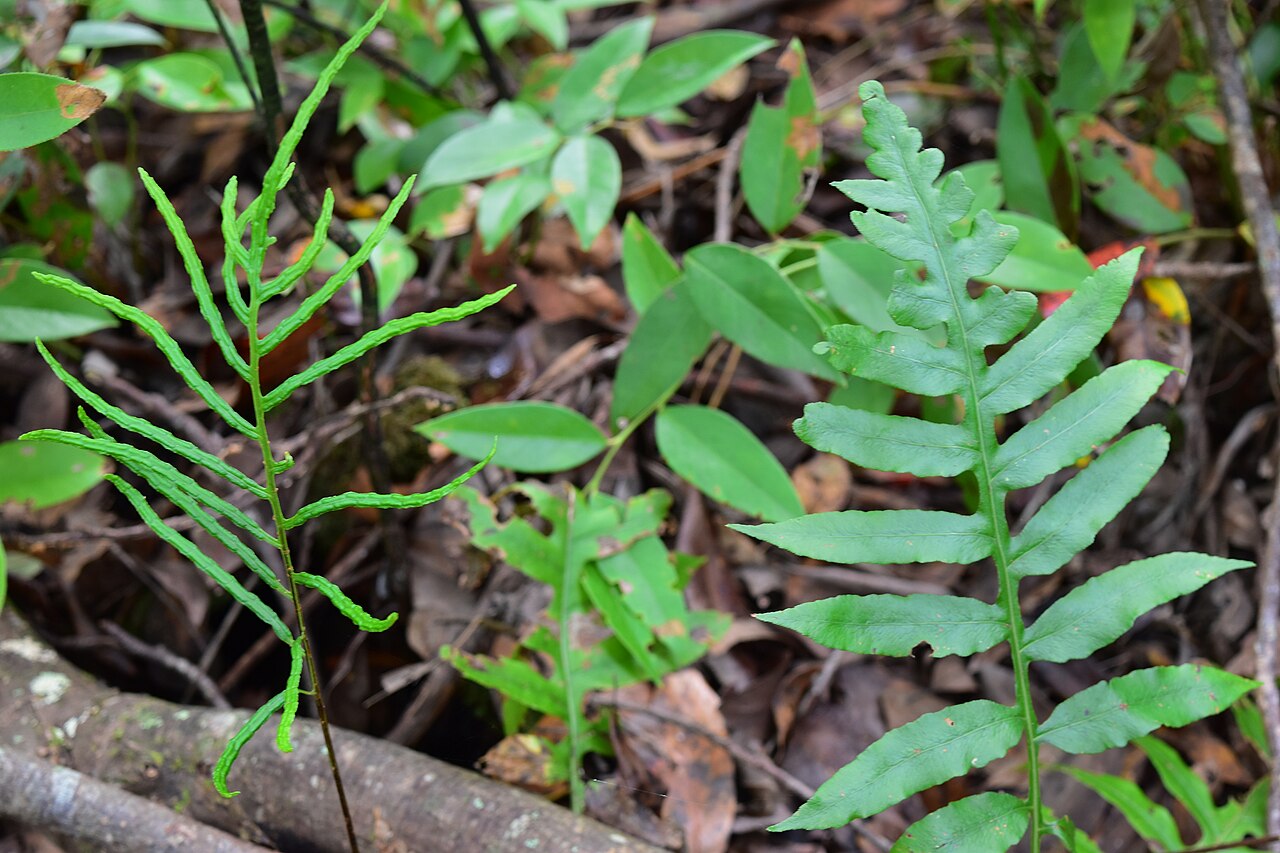
Fertile fronds have much narrower divisions than the leafy sterile fronds. Their sori are arranged in elongated, chain-like rows along the segment midribs. These are not flowers, seed heads or insect damage. Sensitive fern has a superficially similar contrast between frond types, but its fertile structures look more like closed beads. Seeing the fertile frond makes the distinction much clearer.
Similar species
Virginia chain fern, Woodwardia virginica, is a different native fern and should not be substituted solely because the common names overlap. Netted chain fern’s distinct sterile and fertile forms are especially useful in comparison. When ordering, request the full scientific name and avoid listings that use “chain fern” without identifying which species is supplied.
Quick Facts
| Scientific Name | Woodwardia areolata |
| Family | Blechnaceae (included in broader Aspleniaceae in some classifications) |
| Plant Type | Deciduous, rhizomatous wetland fern |
| Mature Height | Usually 18–24 in |
| Mature Spread | 1–2 ft initially; spreads into larger colonies |
| Growth Rate | Vigorous in suitable moist conditions |
| Sun Exposure | Partial shade to shade; more sun only with reliable moisture |
| Water Needs | Average to wet; consistently moist soil preferred |
| Soil Type | Organic, acidic, moisture-retentive soil |
| Soil pH | Acidic |
| Bloom Time | Non-flowering; narrow fertile fronds carry sori |
| Flower Color | None; glossy green fronds, sometimes pinkish when young |
| Fall Color | Fronds brown with seasonal dormancy; timing varies by climate |
| Fruit | None; chain-like rows of sori on fertile fronds |
| Deer Resistant | Generally highly resistant, but site performance varies |
| USDA Hardiness Zones | 3–9 |
Native Range
Netted chain fern is native in eastern and parts of central North America, extending from Nova Scotia through much of the eastern United States and south into the Gulf region. The state map follows Kew’s native-distribution account, including both southeastern states and scattered northern or interior occurrences. It is a summary of native presence, not evidence that every county or every upland site within a shaded state supports the fern.
Wet woods, swamp margins, damp acidic ground and shaded streamside settings provide a more useful habitat picture than the map alone. In the Southeast it is particularly associated with moisture-retaining sites, including Coastal Plain habitats. The difference between a naturally damp bed and a site watered briefly once a week can be substantial in hot weather.
Nova Scotia forms the Canadian part of the range listed by the source used here. The U.S.-only map does not attempt to portray Canada. Near the edge of the range, consult local flora records and use regionally appropriate propagated material. A state-level native plant list is a starting point for site selection, not a replacement for local habitat knowledge.
Native Range at a Glance
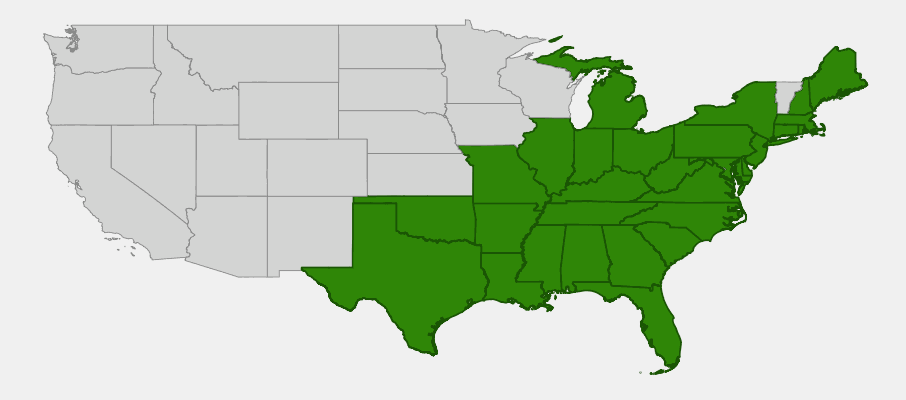
| U.S. States | Alabama, Arkansas, Connecticut, Delaware, Florida, Georgia, Illinois, Indiana, Kentucky, Louisiana, Massachusetts, Maryland, Maine, Michigan, Missouri, Mississippi, North Carolina, New Hampshire, New Jersey, New York, Ohio, Oklahoma, Pennsylvania, Rhode Island, South Carolina, Tennessee, Texas, Virginia, West Virginia |
| Canada / Other Native Regions | Nova Scotia; no Mexican range in the account used |
| Ecoregion | Eastern wet woodlands, Coastal Plain habitats and scattered interior wet sites |
| Elevation Range | Varies across the range; no single numeric interval established by the sources used here |
| Habitat | Wet woods, swamp margins, damp acidic ground and shaded stream margins |
| Common Associates | Native wetland sedges, damp-woodland herbs and locally appropriate wet-site shrubs |
| Distribution Sources | Kew Plants of the World Online; USDA (County-Level Data) |
Map: U.S. state-level native occurrence based on Kew, not county coverage or a guarantee of garden suitability. Canadian and other native regions are described in the text.
📋 See the Alabama, Georgia & Mississippi native plant list for regional context.
Growing & Care Guide
Light
Partial shade and dappled woodland light are good default conditions. Netted chain fern also tolerates substantial shade and can accept more sun when the soil stays consistently moist. In southern gardens, protect it from intense afternoon exposure unless the hydrology clearly supports that placement. Bright foliage in a photograph does not mean the plant was growing in dry, all-day sun.
Consider seasonal light changes. A deciduous canopy admits more light early in the year and protects the fern during summer, while a dense evergreen screen creates a different environment. Match the fern to the actual site through the growing season rather than judging conditions during a single spring visit.
Soil and water
Use acidic soil with organic matter and sustained moisture. A damp loam, wet woodland margin or appropriate rain-garden area can work well. The regional W–A moisture code means wet to average moisture; it is not a drought-resistance grade. If the planting area repeatedly dries hard in summer, another fern may be a better choice unless you can reliably maintain moisture.
The plant can tolerate wet periods, but “wet-site fern” should not be read as an instruction to keep every nursery pot submerged indefinitely. In a garden, evaluate soil aeration, water movement and the depth of saturation. A connected moist bed is preferable to a small planting hole filled with water inside dense, dry soil. The whole root environment matters.
Retain leaf-derived organic material and avoid unnecessary liming. If neighboring plants require alkaline conditions, do not try to force both groups into the same small bed. A soil test can clarify pH and nutrient questions; repeated amendments without measurements can create more problems than they solve.
Planting tips
Plant healthy, propagated material at approximately its existing depth, settling soil around the roots without burying the emerging growth. Water thoroughly and keep moisture even while the rhizome establishes. Moderate weather makes this easier than planting immediately before a hot dry spell. Protect the new planting from trampling, particularly when the surrounding soil is wet and easily compacted.
Allow room for a colony rather than arranging plants as though each will remain an isolated tuft. A maintained path or accessible edge gives you a way to monitor expansion. Do not place the fern where every new rhizome will have to be extracted from the roots of a rare or slow-growing neighbor.
Pruning and maintenance
There is no flowering stem to deadhead. Allow fronds to complete their growing season and remove dead or damaged material only as needed. Seasonal browning is not automatically a disease, especially when it follows cold weather. If browning arrives during hot weather, inspect soil moisture and exposure before deciding that fertilizer or a pesticide is required.
Keep the colony’s edge visible and reduce unwanted expansion while shoots are still easy to trace. In a mixed native garden, the goal is to retain several compatible species rather than let the fastest colonizer occupy every damp opening. Where the fern meets a water feature, avoid throwing cut material or soil into the water during maintenance.
Propagation
Division of an established cultivated colony is the simplest practical method for most gardeners. Use pieces with healthy rhizome buds and roots, replant promptly and maintain moisture during establishment. Do not collect plants from wild wetlands. Digging can damage both the fern and sensitive soil structure, and a wetland community should not be treated as a free nursery.
Spore propagation offers a more detailed view of fern reproduction but requires care through the gametophyte stage. The chain-like sori are not ordinary seedpods, and their contents should not be sown as though they were large flowering-plant seeds. Use a fern propagation reference or guidance from an experienced grower if attempting this route.
Landscape uses
- A damp, acidic woodland bed where glossy, broad fronds provide contrast with finer-textured foliage.
- A shaded stream or pond margin above open water, with an appropriate moist root zone.
- A rain-garden area that retains adequate summer moisture between storms.
- A naturalistic colony beside a path, where visitors can compare the leafy sterile fronds with the narrow fertile fronds and inspect the netted veins.
Wildlife & Ecological Value
Pollinators
This fern does not flower and offers no floral nectar or pollen. Its habitat value comes from its place in the ground layer, not from an invented pollinator role. Include suitable native flowers in nearby areas if pollinator resources are a goal, while keeping enough room for those plants to avoid being covered by the fern’s expanding colony.
Cover for small animals
A dense, moist patch provides low vegetation and shelter within the larger garden. The combination of fronds, leaf litter and damp soil supports a more complex ground-level environment than bare mulch alone. That contribution is different from producing berries or seeds for birds; netted chain fern produces spores, and its narrow fertile structures are not a food crop of fleshy fruit.
Deer resistance
Extension sources describe substantial resistance to deer damage. This can make the plant useful where browsing limits more palatable vegetation, but it does not mean every plant will remain untouched. Assess the whole site, including foot traffic, drying and competition. A fern can fail from poor hydrology even when deer never take a bite.
Wetland context
A native wetland fern is most valuable when the wet habitat around it is respected. Avoid unnecessary drainage changes, compaction or removal of surrounding native vegetation merely to make a garden patch look tidy. Where a natural wetland already exists, protect its plant community and use the garden as a place to learn from it rather than attempting to simplify it into a single-species display.
Cultural & Historical Uses
Netted chain fern has two particularly descriptive names: one points to the visible vein network and the other to the arrangement of the spore-bearing sori. Together they encourage close observation rather than identification by vague resemblance. A small garden group can demonstrate both features without collecting or damaging wild plants.
The names Woodwardia areolata and Lorinseria areolata reflect different taxonomic treatments of the same species. Both remain useful search terms in nursery catalogs and botanical references. Keeping those synonyms connected prevents duplicate plant-list entries and helps gardeners find the right species when a supplier follows a different classification.
No food or medicinal use is recommended here. Ferns differ greatly in chemistry and growth requirements, and broad stories about edible fiddleheads should never be transferred to an unidentified fern. The appropriate use of netted chain fern in this guide is as an identified native plant for a matching moist habitat, with propagation and sourcing that do not harm wild wetlands.
Frequently Asked Questions
How is netted chain fern different from sensitive fern?
Both have distinct sterile and fertile fronds, but netted chain fern typically shows pointed, finely toothed segments and chain-like rows of sori on narrow fertile divisions. Sensitive fern’s fertile structures resemble beads. Compare both frond types and the vein pattern rather than relying only on the overall green leaf shape.
Can it grow in ordinary garden soil?
Yes, if the soil is acidic and stays adequately moist. An ordinary bed that dries deeply during summer is not equivalent to the damp woodland habitat the plant prefers. Check hydrology before deciding that a general “shade garden” label is enough.
Does it flower?
No. It reproduces by spores and can also spread vegetatively through rhizomes. The narrow fertile fronds are not flower spikes or seed heads; their appearance is part of the normal fern reproductive cycle.
Will it take over a small bed?
It can form extensive colonies in favorable conditions. Give it space, maintain an accessible boundary and monitor growth around smaller neighbors. If that amount of spread conflicts with the design, select a more compact fern instead of relying on constant corrective work.
Is Lorinseria areolata a separate plant?
No. It is a scientific synonym used in another taxonomic treatment of netted chain fern. Search both names when comparing information, but do not count them as two different species or assume different care requirements from the name alone.
Sources & Further Reading
- NC State Extension — Netted Chain Fern
- Kew Plants of the World Online — native distribution and taxonomy
- USDA PLANTS — WOAR
- NC State Wetland Plant Guide — netted chain fern
- Native Plant Trust Go Botany — netted chain fern
Find Native Plants Near You
Ask for nursery-propagated, accurately identified plants and a seed or stock source suited to your region. Browse native plant nurseries in Alabama, Georgia, and Mississippi. Confirm local nativity and site suitability before ordering.