
Hala (Pandanus tectorius)
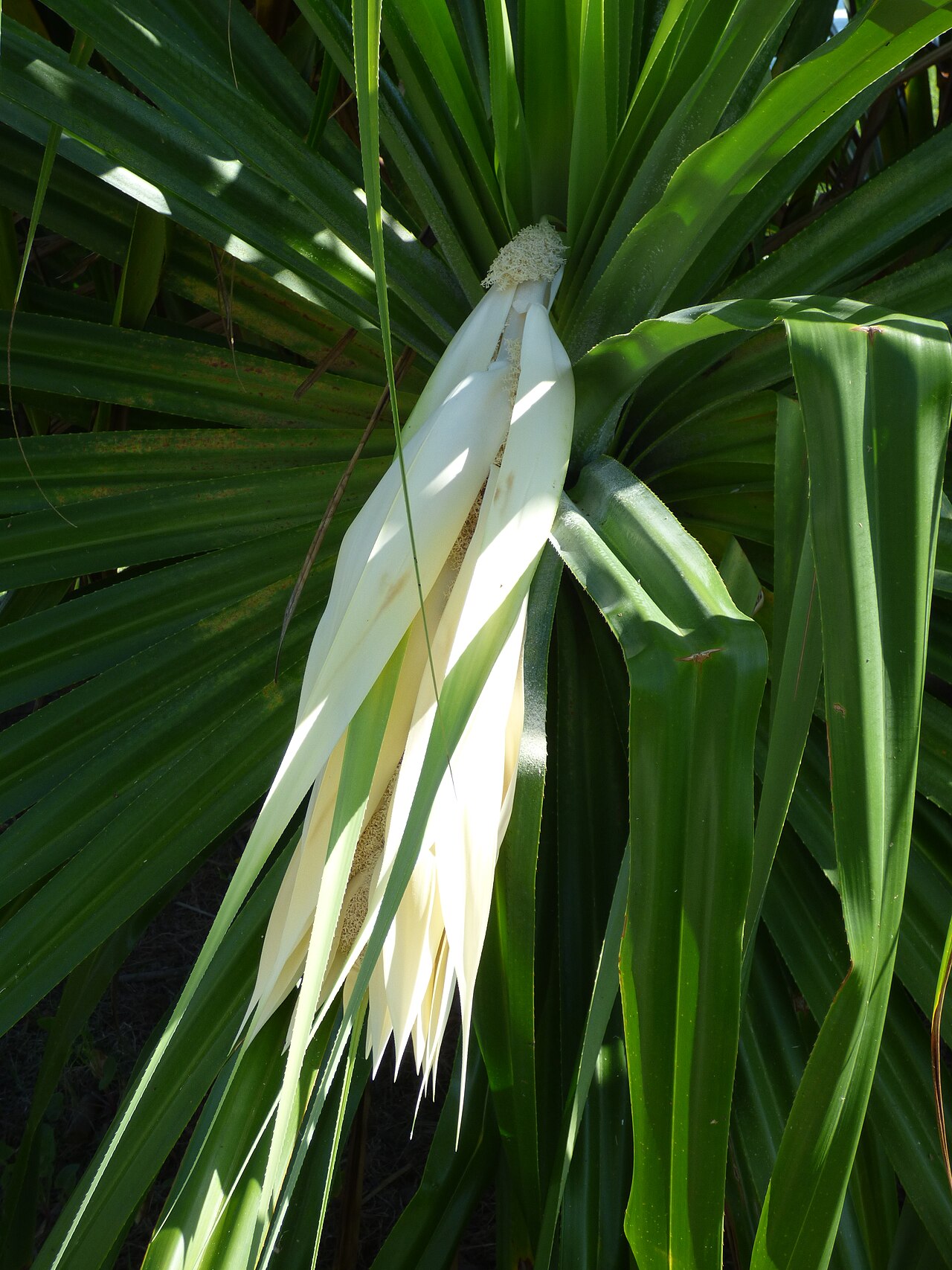
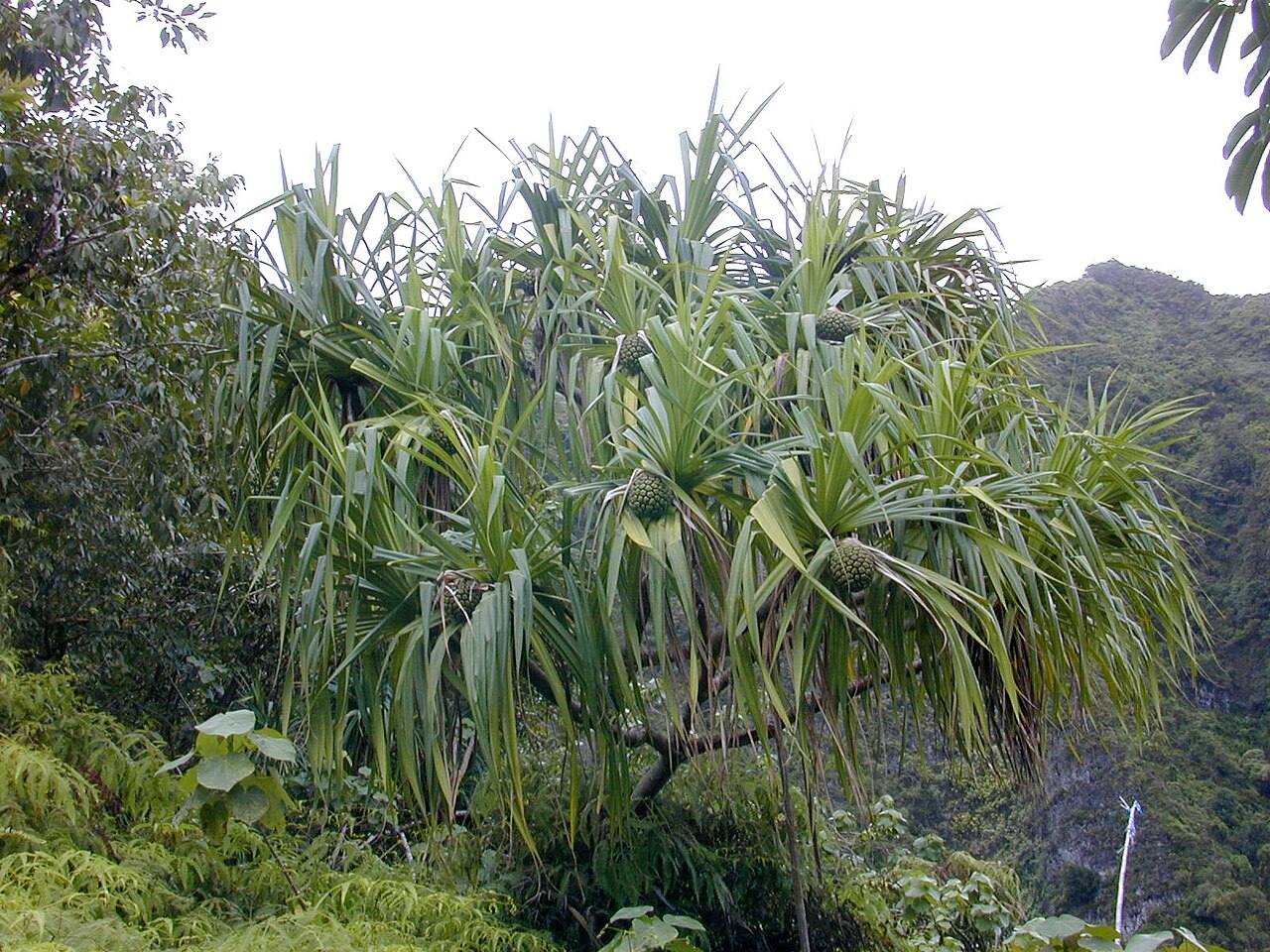
Hala (Pandanus tectorius) is one of Hawaiʻi’s most recognizable coastal trees. Long, strap-shaped leaves spiral around branch ends, while substantial prop roots give older plants a sculptural base. Female trees carry large compound fruit heads; male trees produce fragrant hīnano flowers surrounded by pale bracts. Both sexes contribute to the character of a hala planting, even though fruiting females often receive more attention.
Hala is indigenous to Hawaiʻi and has a wider natural range beyond the islands. Its extensive Hawaiian cultural use does not make it merely an introduced “canoe plant.” The University of Hawaiʻi profile explicitly treats it as indigenous. At the same time, not every ornamental pandanus form sold in a nursery represents Hawaiian-origin material, so provenance remains important.
This is a practical tree for many sunny, low-elevation sites where wind, salt spray, or sandy soil challenge less tolerant plants. Its advantages come with spatial requirements: sharp leaf margins, spreading branches, prop roots, and falling leaves or fruit need to be considered before it is placed beside a narrow path or busy entrance.
Quick Facts
| Scientific Name | Pandanus tectorius |
| Family | Pandanaceae |
| Plant Type | Evergreen native tree or large shrub |
| Mature Height | 20–30 ft in many landscapes; form and site vary |
| Mature Spread | Around 20 ft; allow additional clearance for prop roots |
| Growth Rate | Variable with site |
| Sun Exposure | Full sun |
| Water Needs | Average to dry after establishment; irrigate young plants as needed |
| Soil Type | Well-drained soil matched to native habitat and nursery provenance |
| Soil pH | Assess local soil and nursery performance before amending |
| Bloom Time | Variable with source and conditions; observe local seasonality |
| Flower Color | White to cream male inflorescences with fragrant bracts |
| Fall Color | Evergreen; seasonal new growth may contrast with older foliage |
| Fruit | Large compound fruit heads on female trees |
| Deer Resistant | Not a browse-proof planting; protect young trees where needed |
| USDA Hardiness Zones | Use Hawaiian island, elevation, and exposure guidance for site selection |
Recognizing Hala
Despite the common name “screwpine,” hala is not a pine. It belongs to Pandanaceae, the screw-pine family. The spiraled arrangement of the leaves helps explain the English name, but the plant’s flowers, fruits, and roots are very different from those of conifers. A mature hala may branch broadly, creating several leafy crowns above its supporting roots.
The University of Hawaiʻi profile gives leaf lengths of roughly two to six feet. Most forms have sharply toothed margins, and handling fallen leaves or working beneath the crown requires attention to those edges. Some spineless or variegated ornamental forms may not be of Hawaiian origin. For a native garden or cultural planting, ask exactly what stock is being offered.
Male Flowers and Female Fruit
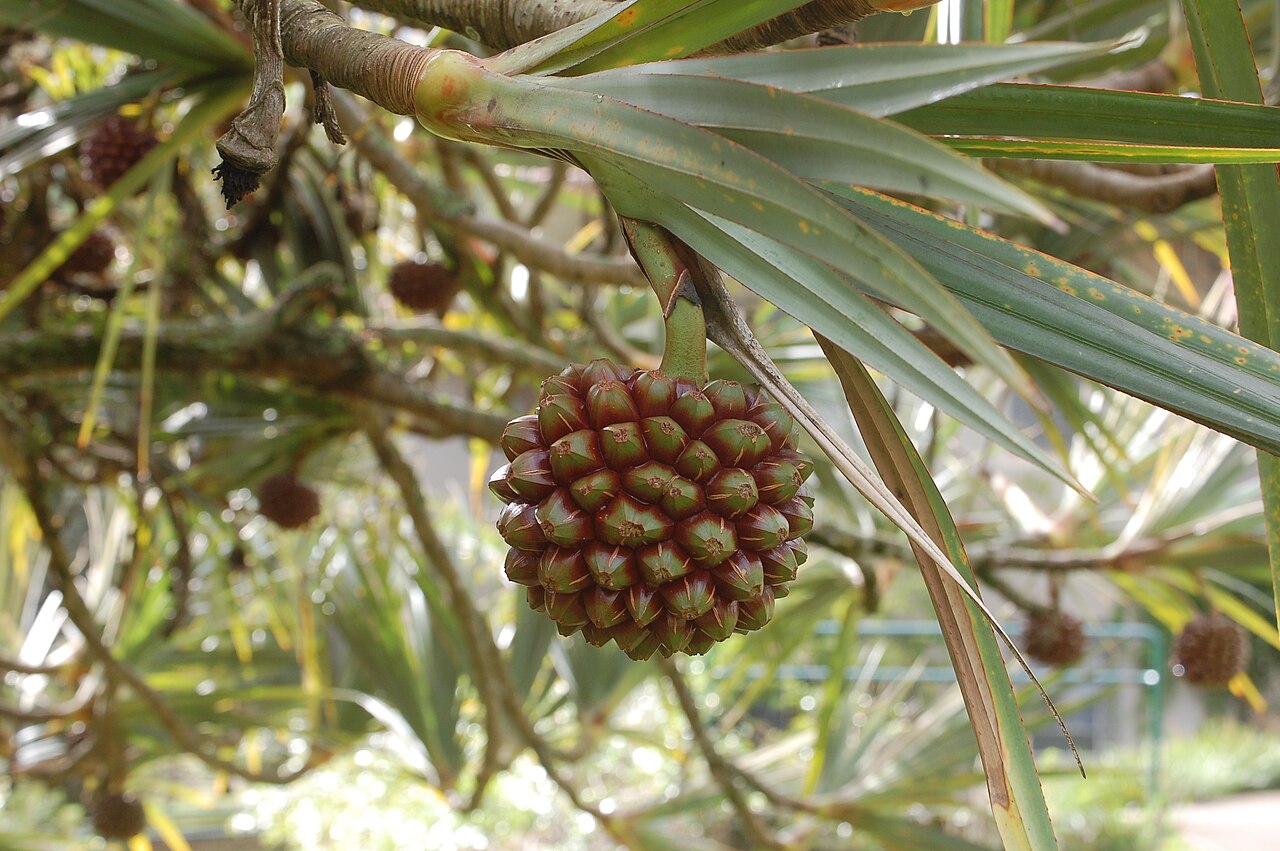
Male and female reproductive structures occur on separate trees. Female trees produce the familiar pineapple-like compound fruit heads, which separate into individual segments commonly called keys. Male trees produce hīnano, with showy pale bracts and a notable fragrance. A male tree is not an unsuccessful fruit tree; it has a different and valuable role.
If fruit or hīnano is important to the planting, ask whether the nursery can identify the sex of its stock. A small seedling may not provide an immediate answer. Do not buy an unsexed young plant with a guarantee that it will eventually produce the particular material wanted for a garden or cultural practice.
Native Range and Coastal Habitat
The University of Hawaiʻi account lists hala across the main Hawaiian Islands and describes it in coastal mesic settings, lower valleys, and low-elevation slopes. It is usually found from sea level to below about 2,000 feet. Windward coasts and valleys support groves ranging from a few trees to much larger stands.
Historically notable hala groves are associated with places including Puna, Hāna, and parts of Oʻahu. These place-based relationships are more informative than treating the species as an interchangeable tropical landscaping plant. Local forms and histories matter, especially where planting is intended to support cultural use or habitat restoration.
Native Range
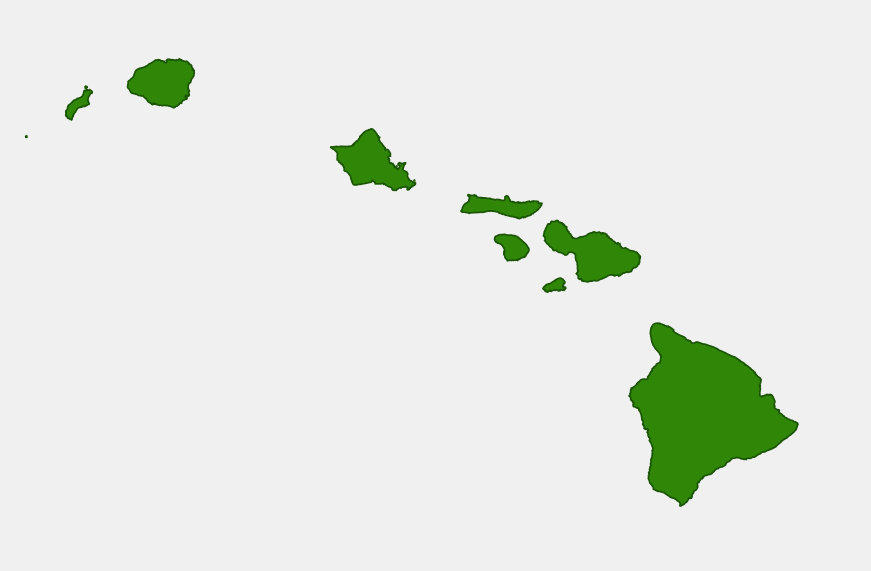
| U.S. States | Hawaii |
| Hawaiian Islands | Main Hawaiian Islands; indigenous, with a wider Pacific range |
| Mexico / Canadian Provinces | Not included in the verified native range used here |
| Ecoregion | Hawaiian tropical forest and woodland |
| Elevation Range | Sea level to low-elevation slopes, rarely above about 2,000 ft |
| Habitat | Coastal and lowland mesic sites, including sandy and windy shores |
| Common Associates | Site-appropriate native forest canopy and understory |
USDA PLANTS profile (PATE2). Species identity verified; this link is not a guarantee of county-level distribution data.
The map shows Hawaiʻi as the U.S. native-range state, not the species’ complete range or every local population. The wider distribution of Pandanus tectorius means that overseas photographs can illustrate botanical features without documenting Hawaiian provenance. For restoration, source plants according to the project’s local requirements rather than assuming all material bearing the species name is equivalent.
Where Hala Works Well
Sun, Wind, and Salt Spray
Full sun is the main growing recommendation. Hala can grow with intermediate shade, but heavy shade may reduce or stop flowering and fruiting. If reproductive features are part of the reason for planting, choose a location with adequate light rather than assuming the tree will perform the same beneath a dense canopy.
The species tolerates drought, heat, wind, and salt spray, and the University of Hawaiʻi account highlights its usefulness in sandy coastal soils. Those qualities make it a strong candidate for appropriate shore-adjacent landscapes. They do not remove the need to establish a new plant carefully or justify exposing nursery stock abruptly to the harshest available conditions.
Leave Room for Roots and Leaves
A broad crown can spread around twenty feet, and prop roots occupy additional space around the base. Place the tree where those roots can develop without conflicting with access. A narrow paved opening is not a good long-term match for a plant valued partly for its conspicuous supporting roots.
Sharp leaf margins and aerial roots are specifically identified as concerns in high-traffic locations. Keep the mature plant away from places where pedestrians must brush through foliage or step between roots. Consider the movement of children, visitors, and maintenance workers, not only the view from a distance.
Planting and Soil
Hala is useful in relatively poor, sandy, or salty soils, but good drainage is still recommended. Check whether the intended location drains freely or receives concentrated runoff. A coastal species’ tolerance of occasional difficult conditions should not be converted into a recommendation for continuously stagnant soil.
Set the young plant at the appropriate original soil level and protect the root ball from drying during installation. Prepare the site before removing the container, backfill carefully, and water to settle the soil. Leave the stem base visible rather than burying it beneath a mound of soil or mulch.
Do not design the planting around removing future prop roots to preserve a narrow outline. Those roots are part of the tree’s structure and appearance. Give them an appropriate area from the beginning, and use that developing root system as a reason to keep surrounding hardscape and access routes at a sensible distance.
Watering: Establishment Is Different From Maturity
The University of Hawaiʻi guidance recommends watering young hala when the ground is dry until new growth is evident, then reducing supplemental water to prolonged dry periods. Mature plants often need little additional irrigation except during severe drought. The important distinction is between a new root system and an established tree.
Check moisture in the root ball as well as in nearby ground. Nursery media and sandy soil can dry differently. Apply water slowly enough to reach roots, then allow drainage. Adjust the routine for rainfall, wind, and the size of the plant rather than following an identical schedule in every garden.
Although the species has notable tolerance of saline conditions, fresh water is the appropriate default for garden irrigation. Salt tolerance is a survival trait, not a reason to impose unnecessary salt stress. Avoid interpreting a tolerance statement as a preferred growing condition.
Maintenance and Garden Design
Hala sheds older leaves as it grows. Yellow or brown leaves can be removed for appearance, while routine cleanup keeps paths and gathering areas usable. Plan access so that maintenance does not require squeezing through sharp foliage or stepping over substantial roots.
Female trees also produce fruit heads and fallen keys. Consider where these will land as the crown expands. A setting with a manageable ground surface is easier to care for than a tightly planted bed in which debris is difficult to see or reach. Male trees avoid that particular fruit cleanup but still shed leaves and flower material.
The University of Hawaiʻi profile suggests compatible native companions such as ʻūlei, ʻākia, ʻilima, maʻo, loulu, and naupaka kahakai, with choice dependent on the actual site. Use plants that share the light and moisture conditions, and allow the hala to establish before surrounding it with dense competition.
Nutrition and Plant Health
Young plants may benefit from appropriate nutrition where soil conditions warrant it, while mature hala often perform without additional fertilizer. Observe growth and leaf condition rather than assuming a coastal native needs routine heavy feeding. Local soil assessment is useful if a persistent problem suggests nutrient imbalance.
Ants, scale insects, mealybugs, and aphids are among the problems listed in the species profile. Inspect affected foliage closely and identify the cause before treatment. Distinguish normal aging of lower leaves from widespread new damage, and check irrigation and root conditions when the whole plant appears stressed.
Keep a record of major changes such as transplanting, irrigation adjustments, or nearby construction. A decline after root-zone disturbance may require a different response from a localized insect problem. The tree’s toughness should not discourage investigation when its condition changes.
Lau Hala and Hawaiian Cultural Practice
Hala has extensive Hawaiian cultural significance. Lau hala, the leaves, are associated with weaving and plaiting, including mats and other useful or decorative objects. Hīnano flowers and bracts, fruit keys, wood, and other parts also appear in historical accounts of Hawaiian uses. These relationships help explain why hala was planted and cared for near homes.
A garden intended to support weaving should be planned with a knowledgeable practitioner. Leaf quality, source, form, access, and preparation all matter. The presence of a hala tree alone does not establish that its leaves are the preferred material for a particular technique or tradition.
Historical food and medicinal uses should be distinguished from casual experimentation. The species is variable across its wide range, and a general planting guide cannot substitute for the specific knowledge needed to prepare plant material appropriately. The cultural record is valuable context, not a universal instruction to eat fruit keys or use plant parts as medicine.
Questions Before Buying
Is hala native or introduced? It is treated as indigenous by the University of Hawaiʻi Native Plants Hawaiʻi account. Its cultural importance and human cultivation coexist with that native status.
Will every tree make the familiar fruit? No. Female trees bear fruit; male trees produce fragrant hīnano. Ask about the sex of nursery stock if a particular reproductive feature is important.
Can it fit beside a narrow walkway? Usually that is a poor starting point. Plan for long, often sharp-edged leaves and substantial prop roots, and keep clear pedestrian space beyond the mature plant.
Are spineless or variegated forms automatically Hawaiian natives? Not necessarily. Confirm provenance and suitability for the purpose of the planting.
Does it require wet soil? No. The growing guidance emphasizes dry conditions after establishment and good drainage. Young plants still need water while roots develop.
A Coastal Tree With Room to Be Itself
Hala is most successful where its spreading architecture, prop roots, and reproductive features are welcomed rather than continually constrained. Choose a sunny, well-drained site, establish the young tree carefully, and plan access around its mature form. The result can be a durable native landscape feature with a deep connection to Hawaiian places and living cultural practice.
Sources & Further Reading
- University of Hawaiʻi, Native Plants Hawaiʻi species profile
- USDA Forest Service: identification and ecology
Botanical range, identification, and cultural information are based on these sources. Garden-management advice should be adapted to local soil, exposure, and nursery provenance.
Find Native Plants Near You
Look for correctly identified, nursery-propagated plants with documented Hawaiian provenance. Visit our Hawaii native plant nursery directory and ask about stock suited to your island, elevation, and rainfall. Compare other trees in our Hawaii native plant list.