
Kokiʻo Keʻokeʻo (Hibiscus arnottianus)
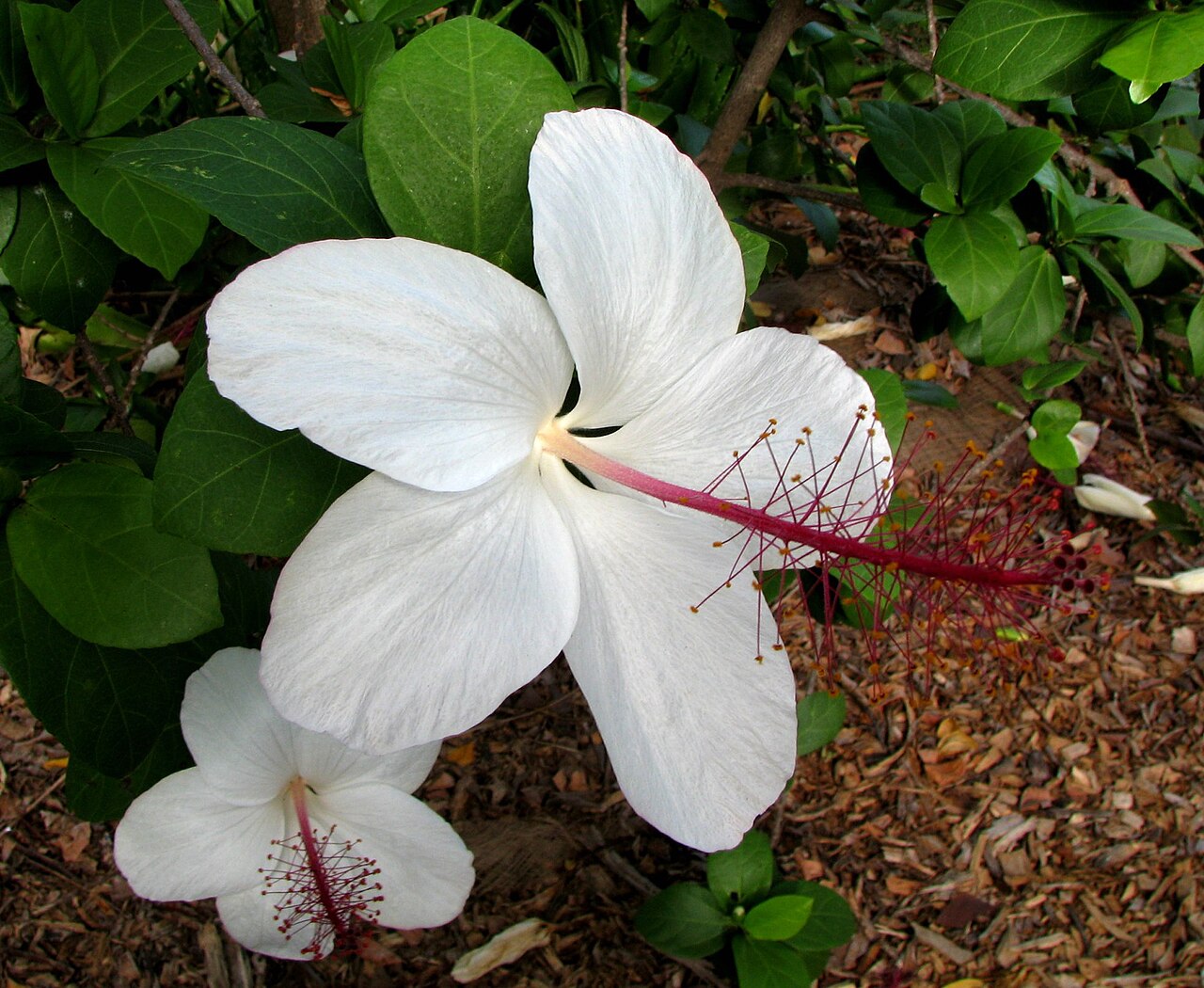
Kokiʻo keʻokeʻo (Hibiscus arnottianus) is a native Hawaiian white hibiscus that can grow as a large shrub or small tree. Its white petals and projecting red staminal column make a clear, graceful display against green foliage. Some plants have lightly fragrant flowers, although fragrance varies with the source and should not be promised equally for every nursery specimen.
The name requires a little care. Older horticultural accounts use Hibiscus arnottianus broadly for several white-flowered forms, including plants from Molokaʻi. The current Bishop Museum Plants of Hawaiʻi treatment recognizes a narrower H. arnottianus native to Oʻahu. This page uses that current species identity while explaining the older labels a gardener may encounter.
For a landscape, the plant offers more than a single flower. It can provide a loose screen, a flowering specimen, or a small-tree presence where there is enough room for branching. Full sun to partial sun, drainage, and moderate root-zone moisture are useful starting points. Choosing documented nursery stock is especially important because Hawaiian white hibiscuses have also been used extensively in hybridization.
Quick Facts
| Scientific Name | Hibiscus arnottianus |
| Family | Malvaceae |
| Plant Type | Evergreen native tree or large shrub |
| Mature Height | 15–30 ft as a large shrub or small tree; smaller when managed |
| Mature Spread | Can approach 20 ft |
| Growth Rate | Variable with site and form |
| Sun Exposure | Full sun to partial sun |
| Water Needs | Average; moist, well-drained conditions with some established drought tolerance |
| Soil Type | Well-drained soil matched to native habitat and nursery provenance |
| Soil pH | Assess local soil and nursery performance before amending |
| Bloom Time | Variable with source and conditions; observe local seasonality |
| Flower Color | White petals with red staminal column in the current narrower species |
| Fall Color | Evergreen; seasonal new growth may contrast with older foliage |
| Fruit | Dry seed capsules |
| Deer Resistant | Not a browse-proof planting; protect young trees where needed |
| USDA Hardiness Zones | Use Hawaiian island, elevation, and exposure guidance for site selection |
Identification and Current Taxonomy
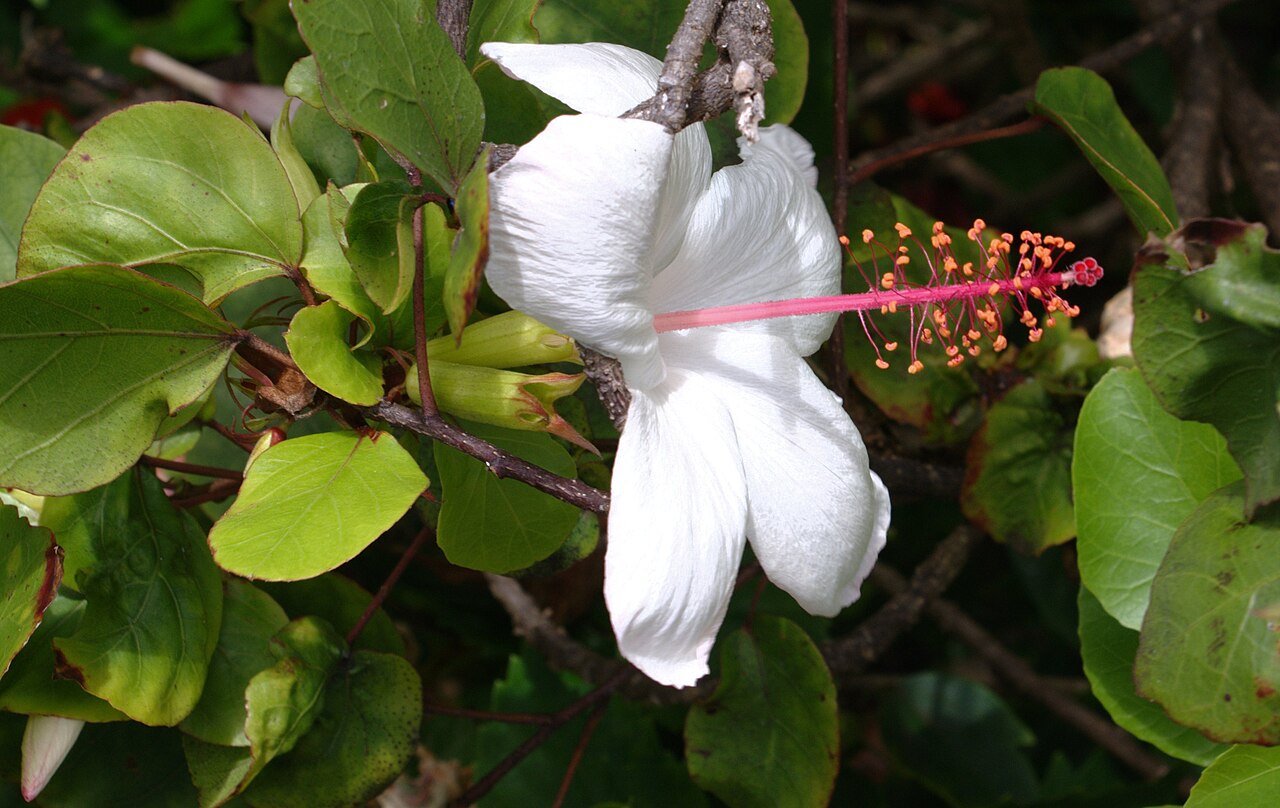
The familiar flowers have white petals and a red or pink-red projecting staminal column. Leaves are green, and some forms show reddish veins. The overall plant may be open and airy or denser, depending on source and management. A white flower alone does not distinguish this species from other Hawaiian white hibiscuses or from ornamental hybrids.
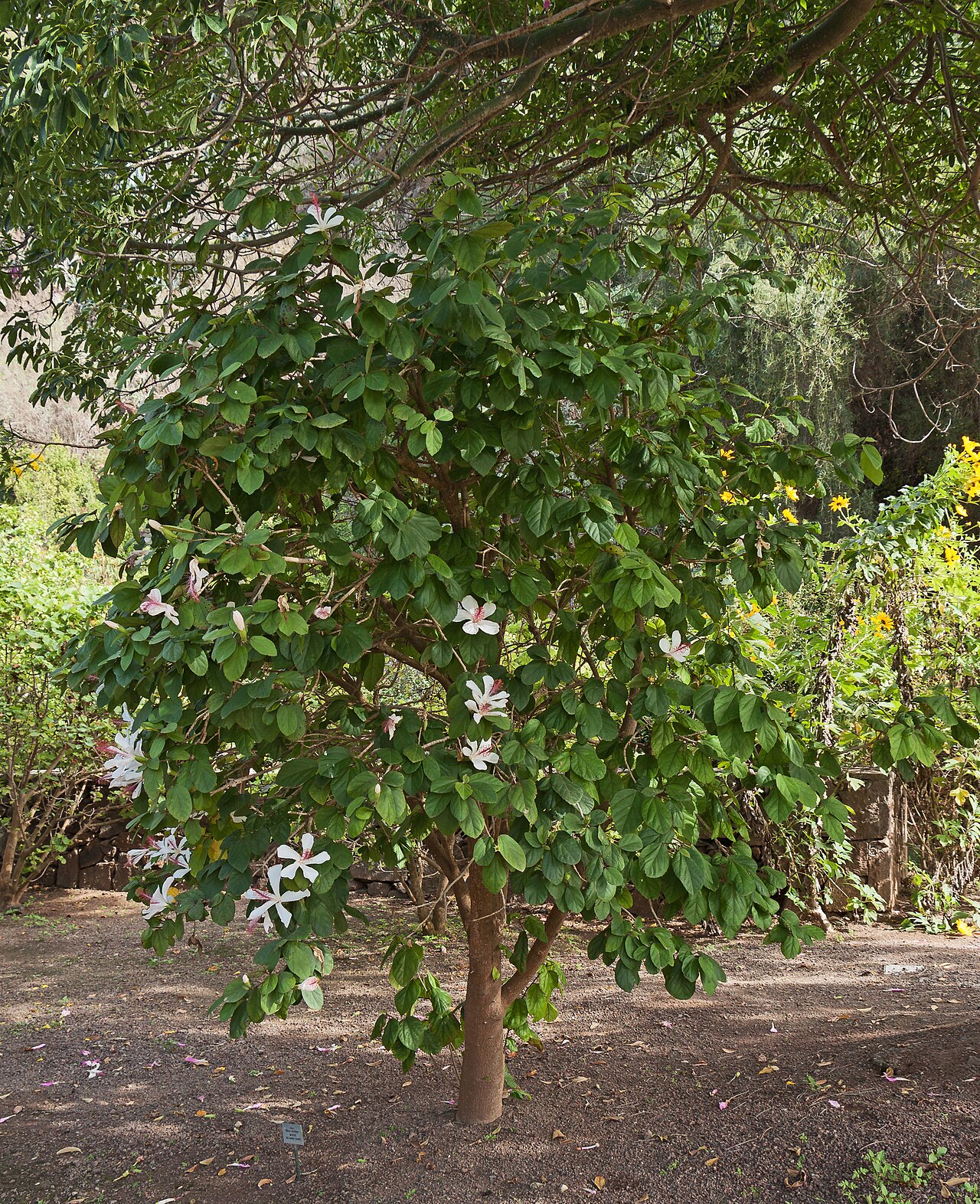
Bishop Museum describes Hibiscus arnottianus as a shrub or small tree, commonly up to about eight to ten meters in its botanical description. The regional planting list’s 15–30-foot height is therefore a reasonable small-tree planning range, while managed shrubs can be much smaller. Leave space for the form actually purchased rather than assuming every plant will remain a low hedge.
Older Subspecies Names
The University of Hawaiʻi horticultural profile groups subspecies arnottianus, punaluuensis, and immaculatus under one broad species account. It notes the white staminal column of the Molokaʻi immaculatus form, contrasting with the colored columns of the other forms. Current treatments do not necessarily retain that same broad grouping.
When comparing a nursery label with a database, check which taxonomic treatment is being used. A plant labeled H. arnottianus subsp. immaculatus should not be silently treated as an Oʻahu H. arnottianus merely because the older label begins with the same words. For conservation work, resolve the identity and provenance before planting.
The photographs here show plants identified as the Oʻahu arnottianus form, including the cultivated selection ‘Kanani Kea’. They are not used to imply that every white-flowered Hawaiian hibiscus belongs to this species. Cultivated locations also should not be mistaken for wild native-range records.
Native Range and Habitat
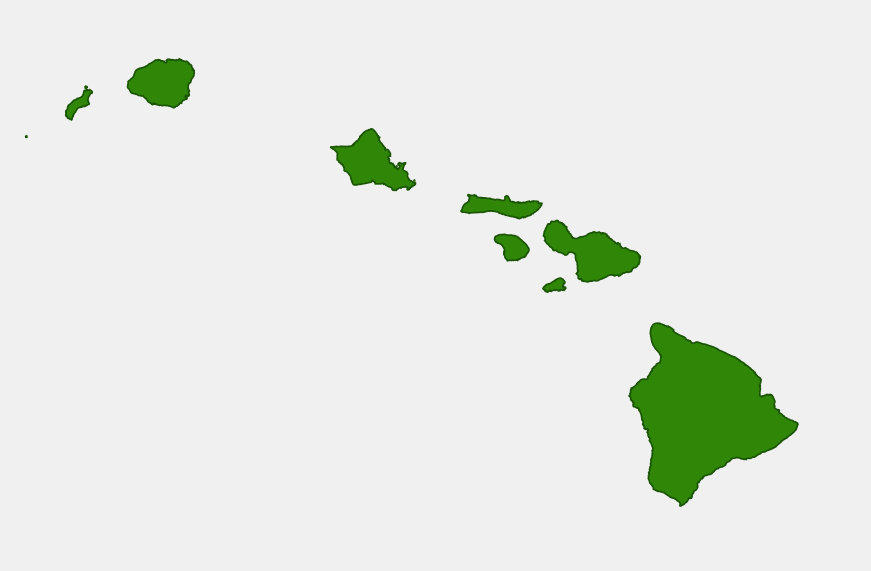
Under the current Bishop Museum account, Hibiscus arnottianus is endemic to Oʻahu. Specimen records include mesic forest, streamside woodland, and ridge settings. Other islands have cultivated records, but cultivation does not establish a natural population. The older broad University of Hawaiʻi profile includes Molokaʻi because it includes the immaculatus form.
This distinction matters most when choosing plants for restoration or interpreting conservation status. It also improves garden recordkeeping. Retain the complete source label, the nursery name, and any provenance information so the plant can be understood if botanical names change again.
Native Range
| U.S. States | Hawaii |
| Hawaiian Islands | Oʻahu under current Bishop Museum treatment; older broad accounts include Molokaʻi relatives |
| Mexico / Canadian Provinces | Not included in the verified native range used here |
| Ecoregion | Hawaiian tropical forest and woodland |
| Elevation Range | Lowland to upland mesic forest; use local provenance guidance |
| Habitat | Mesic to wet forest and sheltered forest margins |
| Common Associates | Site-appropriate native forest canopy and understory |
USDA PLANTS profile (HIAR). Species identity verified; this link is not a guarantee of county-level distribution data.
The map highlights Hawaiʻi at the state level. It does not claim that this species is native to every shaded island. For a specific project, the Oʻahu treatment and local records provide the relevant detail. A garden outside Oʻahu can still cultivate the tree successfully without becoming part of its native range.
Designing With a White Native Hibiscus
Specimen, Screen, or Small Tree
A single plant can be effective near a place where flowers are viewed at close range, provided its mature branches have enough space. As a loose screen, it offers a softer outline than a tightly clipped hedge. Tree-form specimens can become substantial, so allow clearance from roofs, windows, and paths.
Repeated severe pruning changes the plant’s character and can remove flowering growth. If a very narrow formal hedge is required, choose a form and placement appropriate to that maintenance goal. Do not install a vigorous small-tree form in a tiny bed and assume hard cutting will always be the simplest solution.
White flowers are particularly noticeable against darker foliage or in a mixed native planting with contrasting leaf textures. Select companions with compatible light and water needs. Give a new hibiscus enough root space before surrounding it with fast-growing plants that may compete or conceal early problems.
Fragrance Without Exaggeration
The University of Hawaiʻi account describes flowers ranging from scentless to mildly fragrant depending on source and variety. If fragrance is a principal reason for planting, inspect flowering nursery stock or ask about the particular selection. A species-level description should not become a guarantee that every flower will strongly perfume a garden.
Bloom can recur through the year in suitable conditions, but intensity varies. Observe the actual plant’s response to light, pruning, and weather. A period with fewer flowers may reflect recent cutting or seasonal growth rather than a serious health problem.
Light and Water
Full sun to partial sun is the published recommendation, with more abundant flowering generally associated with greater sunlight. Evaluate the quality of the exposure, not just its duration. Morning sun and filtered light differ from reflected afternoon heat beside a wall or driveway.
The University of Hawaiʻi profile describes moist conditions while also noting performance in drier settings and some drought tolerance. For a new planting, maintain adequate root-zone moisture and good drainage. Established tolerance should not be used as a reason to let a newly transplanted root ball dry repeatedly.
Water according to the soil and weather rather than a universal schedule. Check both the nursery root ball and the surrounding ground, which can retain water differently. As roots expand, broaden the irrigated area and adjust the routine to rainfall and growth.
Soil and Planting
Well-drained soil is important. Before planting, observe the site after rain and consider whether roof runoff or compacted ground concentrates water around the roots. A plant from mesic or wet forest does not necessarily tolerate stagnant water in a poorly aerated garden hole.
Set the plant at its appropriate original soil level, keeping the root-to-stem transition from being buried. Handle the root ball carefully, protect it from drying during installation, and water after backfilling to settle the soil. Recheck the level after the first substantial watering or rain.
Mulch can moderate surface moisture and reduce weeds, but leave a clear space around the stem. Keep the planting accessible for inspection. Dense groundcovers pressed against the base can make it difficult to notice irrigation problems, pests, or damage from maintenance.
Nutrition: Avoid the High-Phosphorus Assumption
The University of Hawaiʻi horticultural guidance favors fertilizer ratios with relatively low phosphorus and includes attention to minor elements. It specifically cautions against phosphorus accumulation. The practical lesson is not to apply a high-phosphorus “bloom booster” automatically whenever flowers are sparse.
Assess light, pruning history, soil, and overall growth before deciding nutrition is the limiting factor. Where feeding is needed, use a product and rate appropriate to local conditions and follow the label. Soil testing and advice from a grower familiar with native hibiscus are more useful than combining several products in hopes of a stronger display.
Yellow foliage has multiple possible causes. Check moisture and root conditions as well as nutrition. A wet root zone, a dry nursery root ball, and a nutrient imbalance require different responses, even if all can affect leaf color.
Pruning and Flowering
Prune with a specific purpose: removing damaged growth, improving structure, or maintaining necessary clearance. The University of Hawaiʻi profile recommends avoiding overly heavy pruning. Allowing the plant to retain a natural branching framework preserves both its small-tree character and opportunities for flowers.
If a screen is desired, begin with a suitable form and enough width. A plant repeatedly cut back to a narrow plane may require more work and produce fewer flowers than one given room. Make changes gradually and observe the response rather than removing most of the crown at once.
Use clean, appropriate tools and inspect branches while working. Pruning is an opportunity to notice pests, rubbing stems, or damaged bark. It should not become a substitute for correcting an unsuitable planting location.
Pests and Leaf Problems
Sap-feeding insects, Chinese rose beetles, and leaf spot are among the issues described in the University of Hawaiʻi account. Inspect the pattern of damage and identify the cause. Holes chewed in leaves are different from spotting or distorted new growth, and treatment should follow that distinction.
Maintain reasonable airflow and avoid crowding the plant, while preserving the foliage needed for healthy growth. When disease is suspected, consider watering practices and the duration of leaf wetness as part of the assessment. Local extension or nursery guidance can help separate a cosmetic issue from a problem requiring intervention.
Native status does not confer immunity to garden pests. Conversely, not every insect seen on the plant is damaging. Observe before treating, and choose responses that fit the identified problem and the surrounding native planting.
Cultural Context and Nursery Identity
Historical accounts record native red and white hibiscuses grown near Hawaiian homes for their flowers. The University of Hawaiʻi profile also records traditional medicinal uses. Those accounts provide cultural context, not a recommendation to administer plant parts or reproduce a preparation from a short gardening article.
Modern horticulture has produced named selections and used native white hibiscuses in breeding. That history makes accurate nursery labels important. A hybrid with a native parent may be attractive, but it is not automatically the same as a documented plant of Hibiscus arnottianus.
Ask whether a plant is a species selection, a named cultivar, or a hybrid, and retain that information. For restoration, ornamental suitability is not enough; source and identity must match the project. For a home garden, documentation still helps explain flower form, size, and performance.
Common Questions
Is every white Hawaiian hibiscus this species? No. Other native species and cultivated hybrids can have white flowers. Use complete botanical identification rather than color alone.
Why do sources disagree about Molokaʻi? Older broad accounts include the immaculatus form under H. arnottianus. The current Bishop Museum account used here treats H. arnottianus more narrowly as an Oʻahu endemic.
Will it always have a strong fragrance? No. Fragrance varies and can be slight or absent. Choose a documented selection if that feature is important.
Can it become a tree? Yes. It may be a large shrub or small tree, and mature dimensions should guide placement even when the nursery plant is compact.
A Clear Identity and a Generous Planting Space
Kokiʻo keʻokeʻo combines elegant flowers with the lasting structure of a native shrub or small tree. Confirm the identity of the stock, choose adequate sunlight and drainage, and manage water and pruning with the plant’s actual response in mind. A well-documented specimen can be both a beautiful garden feature and a useful introduction to the diversity of Hawaiian hibiscuses.
Sources & Further Reading
- University of Hawaiʻi, Native Plants Hawaiʻi species profile
- Bishop Museum Plants of Hawaiʻi: current taxonomy and native records
Botanical range, identification, and cultural information are based on these sources. Garden-management advice should be adapted to local soil, exposure, and nursery provenance.
Find Native Plants Near You
Look for correctly identified, nursery-propagated plants with documented Hawaiian provenance. Visit our Hawaii native plant nursery directory and ask about stock suited to your island, elevation, and rainfall. Compare other trees in our Hawaii native plant list.