
Kokiʻo ʻUla (Hibiscus kokio)
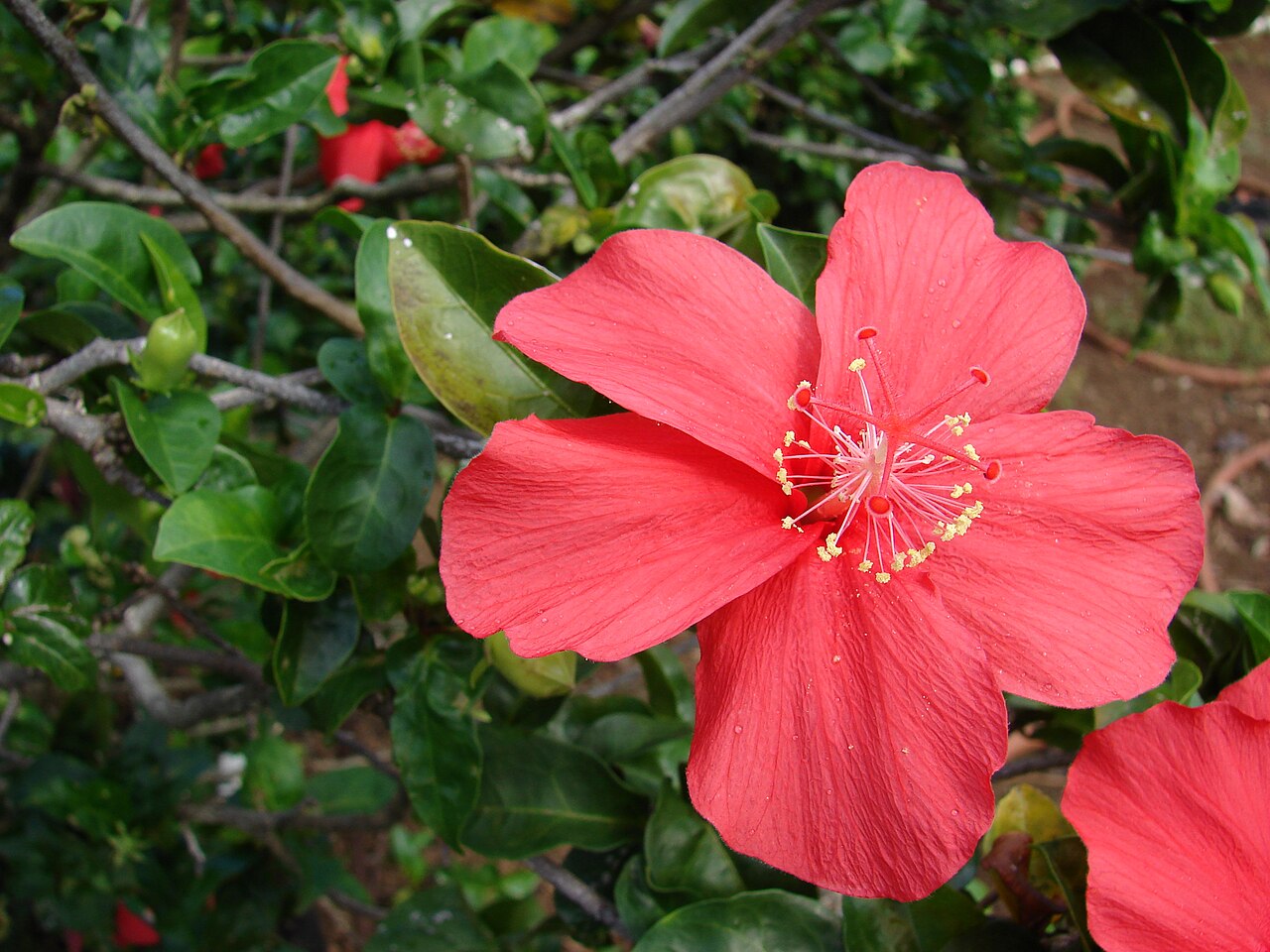
Kokiʻo ʻula (Hibiscus kokio) is a native Hawaiian red hibiscus that can be grown as a shrub or small tree. Its flowers provide a vivid accent without requiring the enormous blooms of many ornamental hybrids. Glossy foliage, flexible branching, and the possibility of recurrent flowering make it useful as a specimen, a loose screen, or a carefully managed container plant.
The common name is not exclusive to this species. It is also used for other native red hibiscuses, including Hibiscus clayi. Older horticultural treatments may additionally group orange- and yellow-flowered plants under H. kokio subsp. saintjohnianus. This page centers the red-flowered H. kokio recognized in the current Bishop Museum species account and explains those related labels rather than treating them as interchangeable.
For planting, choose documented nursery stock and a sunny to partly sunny position with good drainage. The species tolerates relatively dry conditions once established, but a young plant still needs appropriate water. Protection from strong wind is particularly useful for plants in containers and for developing branches.
Quick Facts
| Scientific Name | Hibiscus kokio |
| Family | Malvaceae |
| Plant Type | Evergreen native tree or large shrub |
| Mature Height | 10–20 ft commonly; variable shrub or small tree |
| Mature Spread | Variable; allow room for branching |
| Growth Rate | Variable with conditions |
| Sun Exposure | Full sun to partial sun |
| Water Needs | Average to dry after establishment; well drained |
| Soil Type | Well-drained soil matched to native habitat and nursery provenance |
| Soil pH | Assess local soil and nursery performance before amending |
| Bloom Time | Variable with source and conditions; observe local seasonality |
| Flower Color | Red, with form-dependent variation |
| Fall Color | Evergreen; seasonal new growth may contrast with older foliage |
| Fruit | Dry seed capsules |
| Deer Resistant | Not a browse-proof planting; protect young trees where needed |
| USDA Hardiness Zones | Use Hawaiian island, elevation, and exposure guidance for site selection |
Identification and Related Names
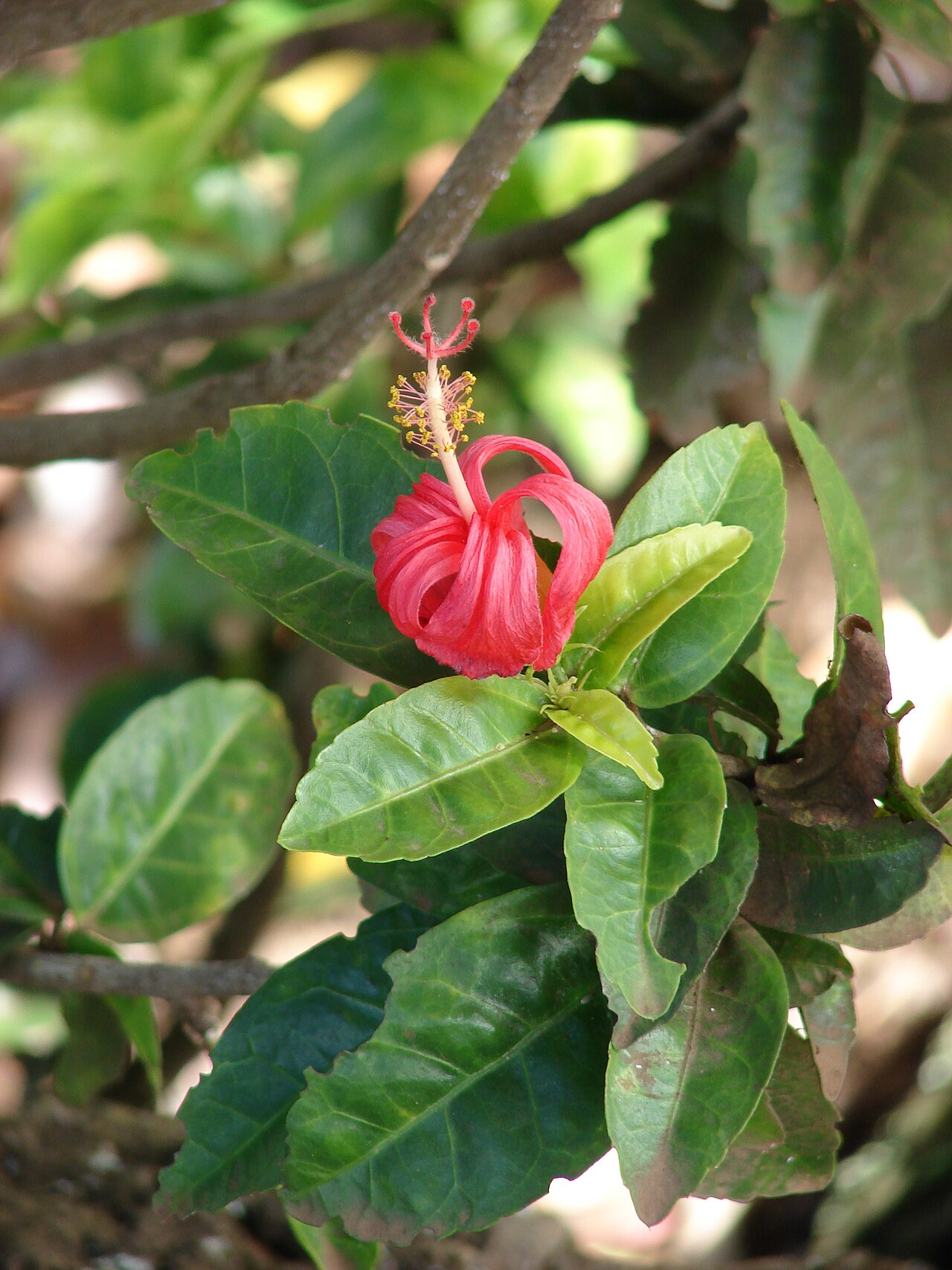
Hibiscus kokio belongs to Malvaceae, the mallow family. Its leaves are generally glossy green and vary in shape and size. The red flowers have a conspicuous projecting staminal column, while the plant itself can range from a manageable shrub to a small tree. A single flower photograph is not enough to distinguish every native red hibiscus or cultivated hybrid.
Bishop Museum describes shrubs to small trees, commonly around three to seven meters tall, with smaller plants also occurring. The regional list’s 10–20-foot range is a practical guide for many landscape forms, not a rigid maximum or a promise that every plant reaches the same size. Pruning and nursery selection can strongly affect the appearance of cultivated specimens.
The Saintjohnianus Question
The University of Hawaiʻi horticultural profile uses a broader concept that includes subspecies kokio and saintjohnianus, with flower colors extending through orange and yellow. The current Bishop Museum H. kokio account centers the taxon historically called subsp. kokio. A gardener should retain the complete nursery label rather than shortening every related name to “red hibiscus.”
That distinction matters when choosing a specific flower color, comparing conservation information, or sourcing plants for restoration. An orange-flowered plant may be a legitimate Hawaiian native while still not representing the narrower species treatment used for this page’s photographs and main description.
Similarly, Hibiscus clayi shares the common name kokiʻo ʻula but is a different species. Confirm identification with a reliable nursery and botanical references. Common names express cultural and horticultural relationships; they do not always map one-to-one onto modern botanical species.
Native Range and Habitat
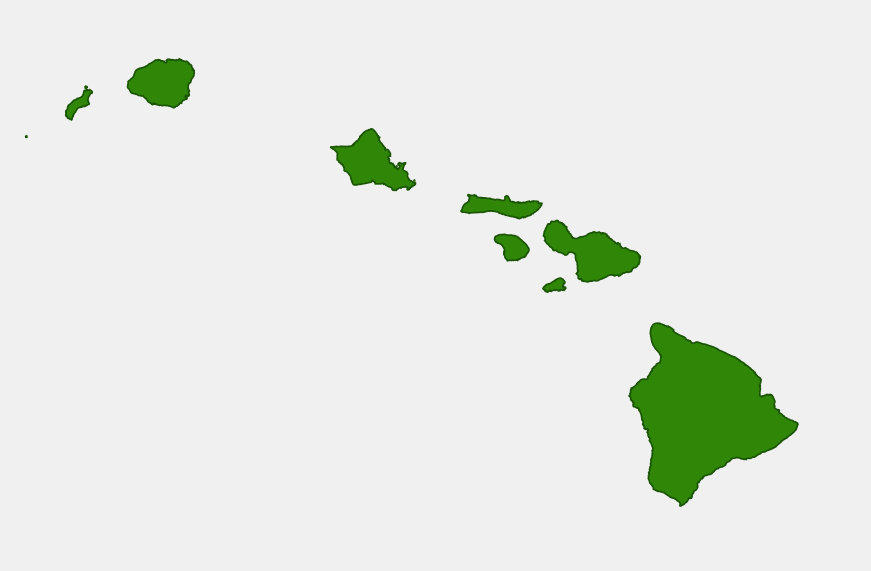
The current Bishop Museum account lists Hibiscus kokio as endemic on Kauaʻi, Oʻahu, Molokaʻi, Maui, and Hawaiʻi. The University of Hawaiʻi profile describes the broader horticultural group in dry, mesic, and wet forests. Those records reflect ecological and geographic variation, so the origin of a nursery plant remains useful information.
A plant photographed in a nursery or park demonstrates cultivation at that location, not necessarily a native population. The photographs here include cultivated plants on Maui, identified specifically as the kokio form. Their captions preserve that context rather than turning a garden location into a distribution claim.
Native Range
| U.S. States | Hawaii |
| Hawaiian Islands | Kauaʻi, Oʻahu, Molokaʻi, Maui, Hawaiʻi |
| Mexico / Canadian Provinces | Not included in the verified native range used here |
| Ecoregion | Hawaiian tropical forest and woodland |
| Elevation Range | Lowland and upland forest settings; source dependent |
| Habitat | Dry, mesic, and wet forest in the broader horticultural account |
| Common Associates | Site-appropriate native forest canopy and understory |
USDA PLANTS profile (HIKO). Species identity verified; this link is not a guarantee of county-level distribution data.
The map highlights Hawaiʻi at the state level. It does not resolve every island population or the boundaries of related taxa. Restoration work needs locality records, appropriate provenance, and the guidance of those responsible for the project. Home gardeners can still benefit from those distinctions when choosing stock suited to local conditions.
Landscape Uses
A Flowering Specimen or Loose Screen
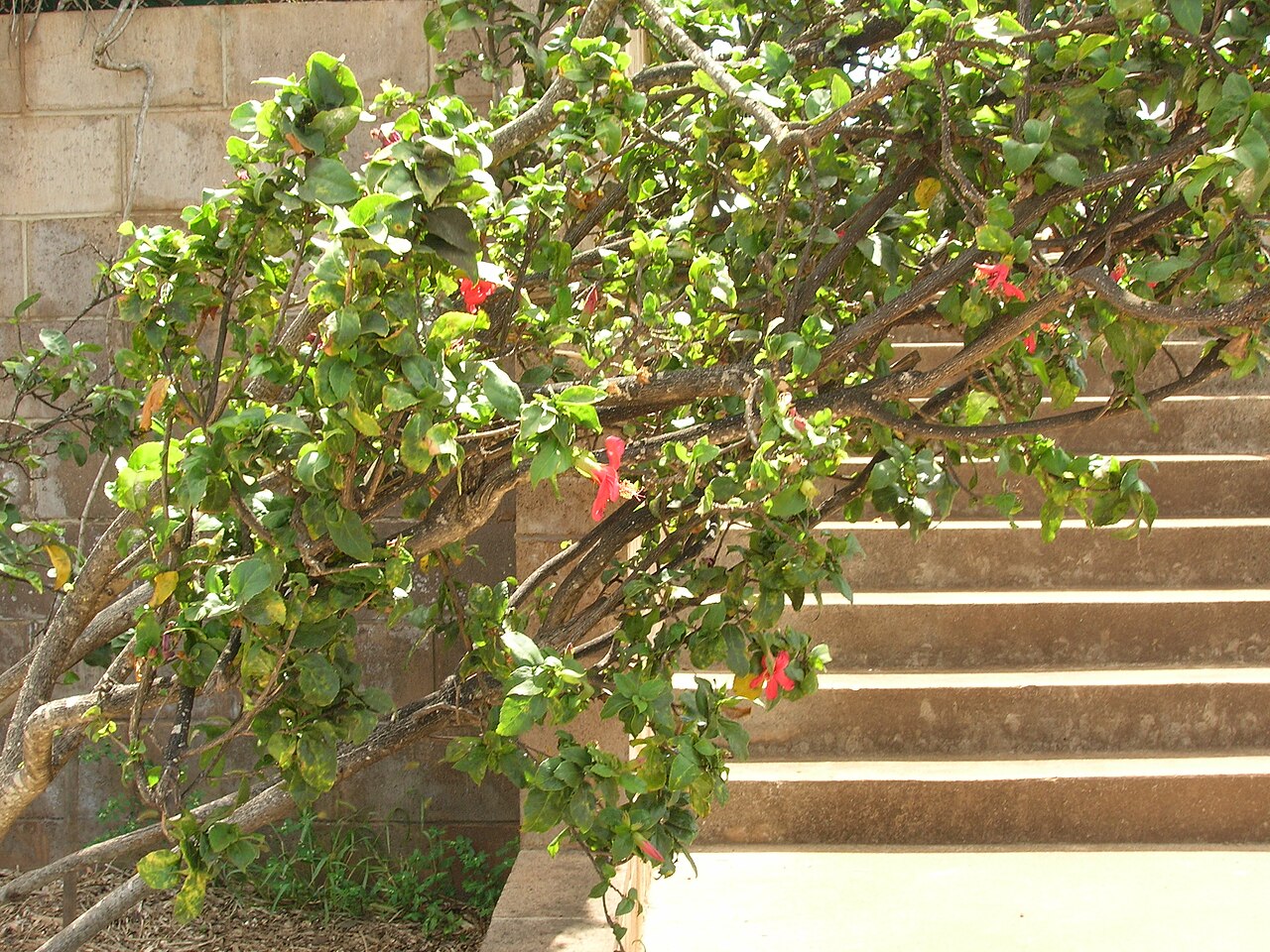
Kokiʻo ʻula can be effective where its flowers are seen close enough to appreciate their form. A specimen beside a gathering area, a mixed native border, or a loose screen can allow the branching pattern to remain visible. Give the plant enough room that flowers and foliage are not constantly removed for clearance.
The University of Hawaiʻi profile lists hedges, screening, containers, and specimen planting among its uses. These roles require different management. A hedge needs a form that responds well to shaping and enough width for healthy foliage; a small tree needs space to develop a crown. Decide which role is intended before planting.
Repeated severe clipping can make the plant look dense while reducing the flowering display. If flowers are the priority, allow some growth to develop naturally and observe how pruning affects subsequent bloom. A slightly looser outline may deliver more of the qualities for which a native hibiscus was chosen.
Container Culture
Container use is documented, but a small pot is a temporary environment for a potentially substantial plant. Provide adequate root space, drainage, and stability. A top-heavy specimen in a windy location can become difficult to manage even if its foliage appears healthy.
Inspect container moisture frequently enough to understand how quickly the particular pot dries. Exposure, pot material, root density, and weather all matter. A routine suitable for an in-ground plant may be inadequate or excessive for a container only a few feet away.
Light and Wind
Full sun to partial sun is the published recommendation. More light generally supports more abundant flowering, while the plant can tolerate some shade. Evaluate whether a proposed location receives useful light or merely a brief period of intense reflected heat.
Protect plants from strong wind, especially when grown in containers. Wind can increase water loss and stress developing branches. Shelter need not mean deep shade; a position with good light and moderated exposure can provide a better balance than either a dark corner or an exposed wind channel.
When moving nursery stock into a brighter setting, pay attention to how it was previously grown. A plant accustomed to sheltered conditions may need a careful transition. Ask the nursery about its culture and watch the new growth rather than assuming all stock has already been hardened to the intended site.
Soil and Water
Good drainage is essential to the growing guidance. The species is associated with relatively dry garden conditions after establishment, but roots still need access to water. Avoid both repeated drying of a new root ball and a planting hole that remains saturated after irrigation.
Check the nursery root ball and surrounding soil separately during establishment. Container media may behave differently from garden soil. Apply water slowly enough to wet roots, allow drainage, and adjust the interval according to rainfall, wind, and observed moisture.
As the plant grows, broaden the irrigated area rather than keeping a small wet patch against the stem. Established drought tolerance should be understood as resilience under suitable conditions, not a guarantee that any plant can thrive without water in every dry period.
Planting and Root-Zone Care
Prepare the site before removing the container, keep roots protected from sun and wind, and plant at the appropriate original soil level. Do not bury the stem base. Water after backfilling and check that the plant remains at the intended height as soil settles.
Mulch can reduce weeds and moderate surface conditions, provided it is kept clear of the stem. Maintain access for inspection and avoid dense competition immediately around a young plant. A manageable root zone helps establish the hibiscus before the surrounding planting fills in.
If the plant declines after installation, review the sequence of events. Changes in exposure, root disturbance, irrigation, or drainage may explain the problem more directly than a presumed lack of fertilizer. Correcting the underlying condition is more useful than applying several products at once.
Pruning With a Purpose
The University of Hawaiʻi account notes that kokiʻo ʻula tolerates pruning and can be managed at a smaller size. Use that flexibility thoughtfully. Remove dead wood, address damaged branches, and shape the plant according to its intended role rather than cutting every new shoot simply to maintain a rigid outline.
For a hedge, monitor how often shaping is actually required under local conditions. For a specimen or small tree, retain enough branching to support a balanced crown. A plant repeatedly reduced to a few bare stems may survive, but survival is not the same as the best flowering or landscape appearance.
Keep tools suitable for the cuts being made and inspect branch junctions while working. Avoid leaving damaged or rubbing growth that will become more difficult to address later. Thoughtful early structure can reduce the need for large corrective cuts as the plant matures.
Nutrition and Common Problems
The University of Hawaiʻi guidance favors relatively low-phosphorus fertilizer ratios and attention to minor elements. This argues against automatically using high-phosphorus products whenever flowers are sparse. Light, pruning, water, and root health should also be considered.
Where feeding is warranted, follow a locally appropriate product label and seek soil-based guidance for persistent problems. Yellow leaves do not identify a single nutrient deficiency by themselves. Inspect the pattern, the age of affected leaves, and the root-zone conditions before deciding what to add.
Sap-feeding insects, Chinese rose beetles, and hibiscus erineum mites are among the issues mentioned in the species profile. Native red hibiscuses can be affected just as ornamental relatives can. Identify the cause of distortion, chewing, or discoloration before treatment, and distinguish significant damage from a minor cosmetic issue.
Regular observation is especially useful for plants grown close to buildings or in containers, where stress can develop quickly. Check new shoots, leaf undersides, and irrigation performance. Responding to a clearly identified early problem is generally more effective than waiting until the entire plant looks poor.
Cultural Context and Responsible Planting
Historical Hawaiian accounts record native red and white hibiscuses grown near homes for their flowers. The University of Hawaiʻi profile also records lei use and the production of fine charcoal from wood. These uses connect the plant to everyday life and craft, not only to modern ornamental gardening.
Traditional medicinal accounts are part of that history, but they are not instructions for self-treatment. A landscape guide cannot establish safe preparation or use. The living plant offers a way to learn about Hawaiian botanical diversity while respecting the specialized knowledge associated with cultural practices.
Obtain nursery-propagated plants with reliable identification. For conservation-oriented work, match the source to the project rather than choosing solely by flower color or compact growth. A cultivated selection may be excellent for a garden while not being appropriate material for a particular wild population.
Common Questions
Is every red Hawaiian hibiscus Hibiscus kokio? No. Other native species and many hybrids have red flowers. The common name kokiʻo ʻula is shared, so complete identification matters.
Why do some sources show orange or yellow flowers? Older broad treatments include the saintjohnianus group. This page focuses on the narrower current H. kokio treatment and its red-flowered forms.
Can it be kept smaller than a tree? Yes, suitable forms tolerate pruning and can be managed as shrubs. Choose the form and space deliberately rather than depending on repeated severe cutting.
Will more fertilizer guarantee more flowers? No. Light, pruning, root health, and watering can be equally important, and excessive phosphorus is specifically discouraged in the cited horticultural guidance.
Does it need protection from wind? Strong wind can be problematic, particularly for container plants. Provide good light with sensible shelter where possible.
A Native Hibiscus With Room to Flower
Kokiʻo ʻula is most rewarding when its identity, source, and intended garden role are clear. Give it sunlight, drainage, establishment care, and enough room for useful branching. Managed with observation rather than a rigid recipe, it can provide a lasting red-flowered presence in a Hawaiian native landscape.
Sources & Further Reading
- University of Hawaiʻi, Native Plants Hawaiʻi species profile
- Bishop Museum Plants of Hawaiʻi: current taxonomy and native records
Botanical range, identification, and cultural information are based on these sources. Garden-management advice should be adapted to local soil, exposure, and nursery provenance.
Find Native Plants Near You
Look for correctly identified, nursery-propagated plants with documented Hawaiian provenance. Visit our Hawaii native plant nursery directory and ask about stock suited to your island, elevation, and rainfall. Compare other trees in our Hawaii native plant list.