
Eastern Rosemallow (Hibiscus moscheutos)
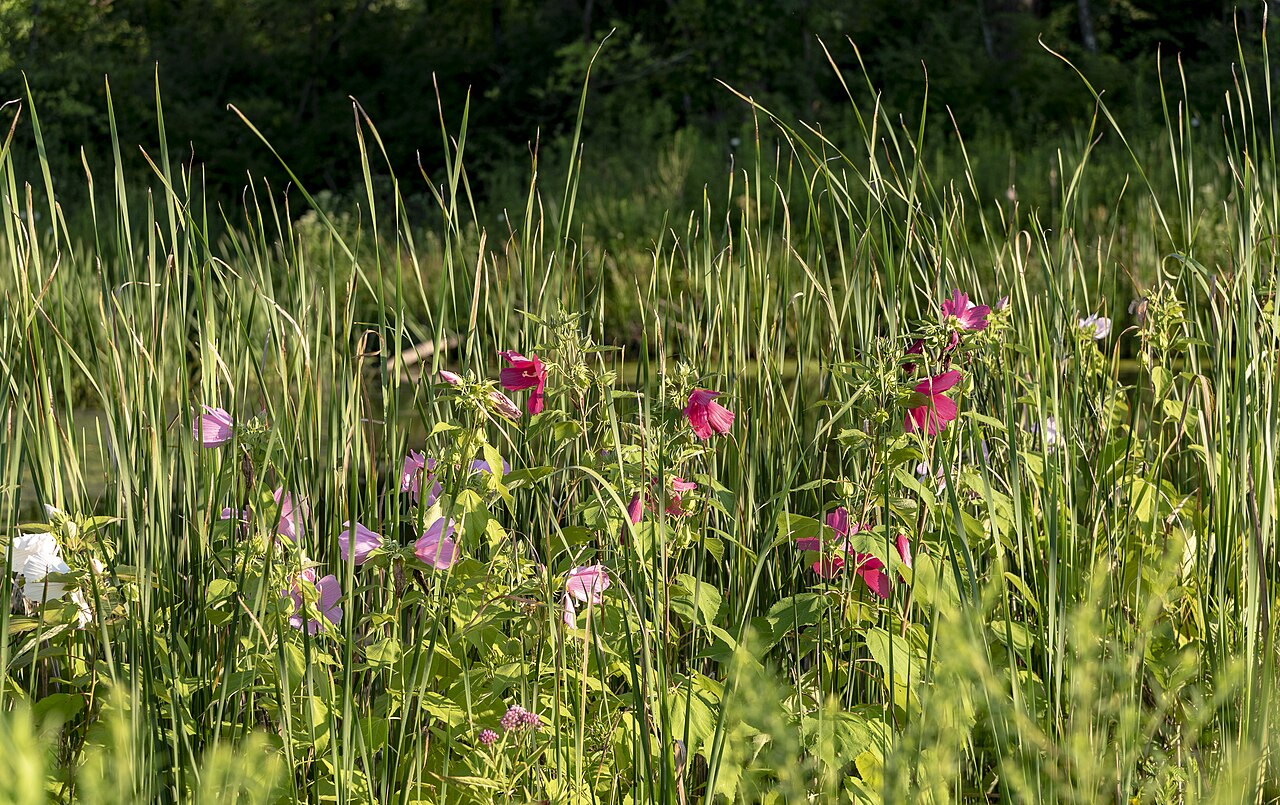
Eastern rosemallow (Hibiscus moscheutos) produces the kind of flower that can stop a visitor in mid-sentence: broad white or pink petals, often surrounding a deep crimson eye, on a tall native perennial. Yet its natural setting is not a tropical patio. It is a plant of wet meadows, marsh edges, and other moist places in eastern North America, returning from its crown after winter dieback.
In Maryland, Virginia, and West Virginia, the combination of sun and dependable root moisture is the key to success. Give a native form enough room for a tall, broad summer clump. The regional table’s 4–7-foot height is appropriate planning scale for a vigorous plant, although compact cultivated selections can be much shorter. A dwarf nursery hybrid should not be used to predict the dimensions of seed-grown regional stock.
This guide uses the familiar name Hibiscus moscheutos, while some modern references, including NC State, use Muenchhusia moscheutos. The name change does not turn the plant into a tropical hibiscus. It also does not make every hardy hibiscus in a garden center the straight native species: many named selections have complex breeding histories. Ask the nursery about identity and provenance when the purpose is a regional native planting.
Identification
Crown and Stems
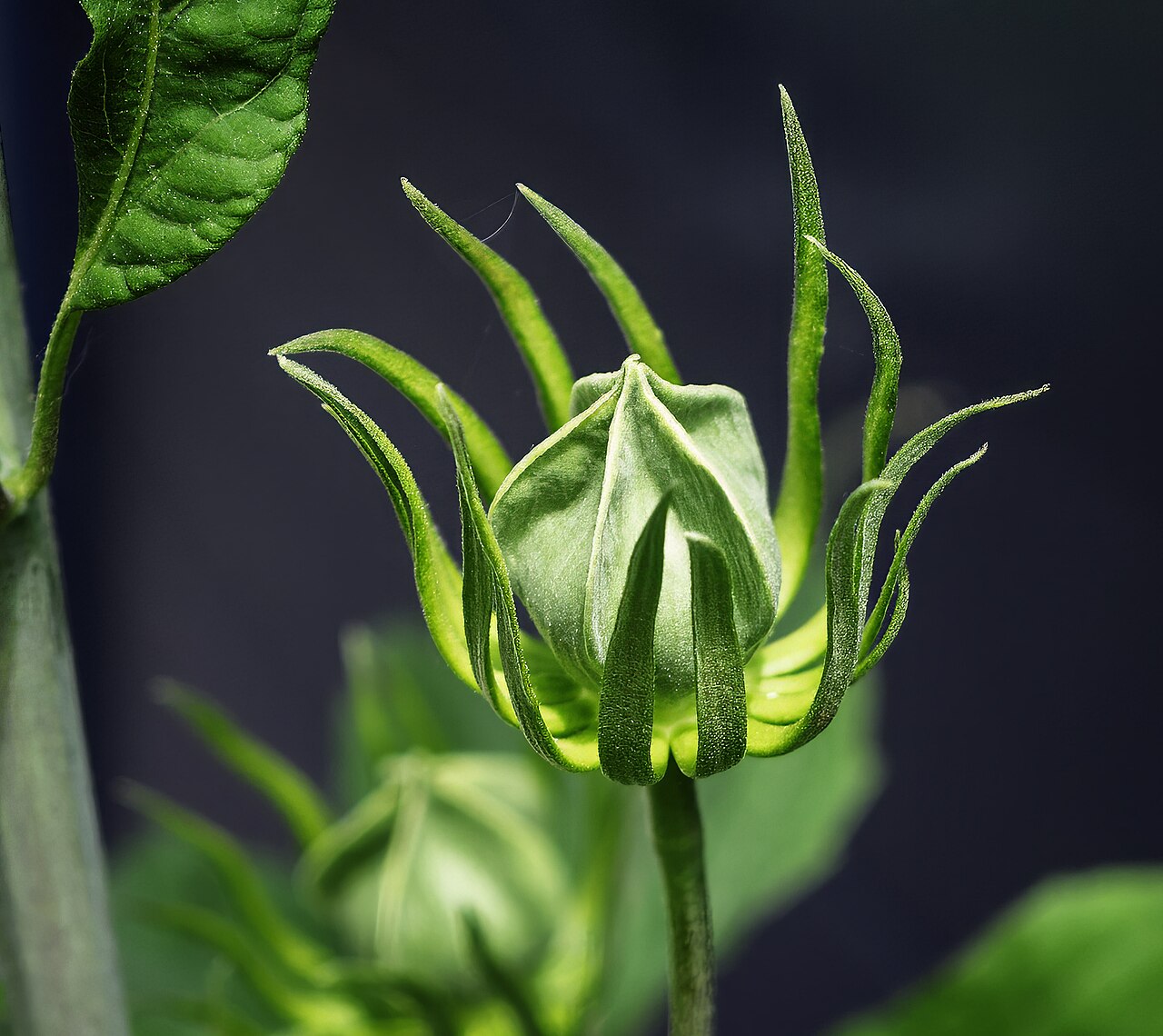
Several sturdy upright stems rise from a perennial crown. The base may become woody-looking, but the above-ground stems are not a permanent shrub framework in cold climates. New growth develops from the base each season, often later than neighboring perennials. Mark the crown so it is not accidentally dug out during spring cleanup. Tall stems benefit from a site protected from repeated wind battering while still receiving good air circulation.
Leaves
Leaves are alternate and generally broad to lance-shaped, with teeth and sometimes shallow lobes. Their upper surfaces are green to gray-green, while the undersides are paler and hairy. Leaf shape varies, so identification should include flowers, stem habit, and a reliable label. Deeply divided leaves and red narrow-petaled flowers may indicate a different native rosemallow species or a hybrid, not simply an unusual individual of H. moscheutos.
Flowers
Large flowers have five overlapping petals and a projecting central staminal column. Wild-type color is commonly white to pink, often with a darker red or burgundy center. A single flower is short-lived, but new buds open in succession over the summer display. Flower size and color in named cultivars can differ dramatically from native populations. A photograph of a red dinner-plate hybrid is not adequate evidence for the appearance of a locally sourced straight species.
Seed Capsules
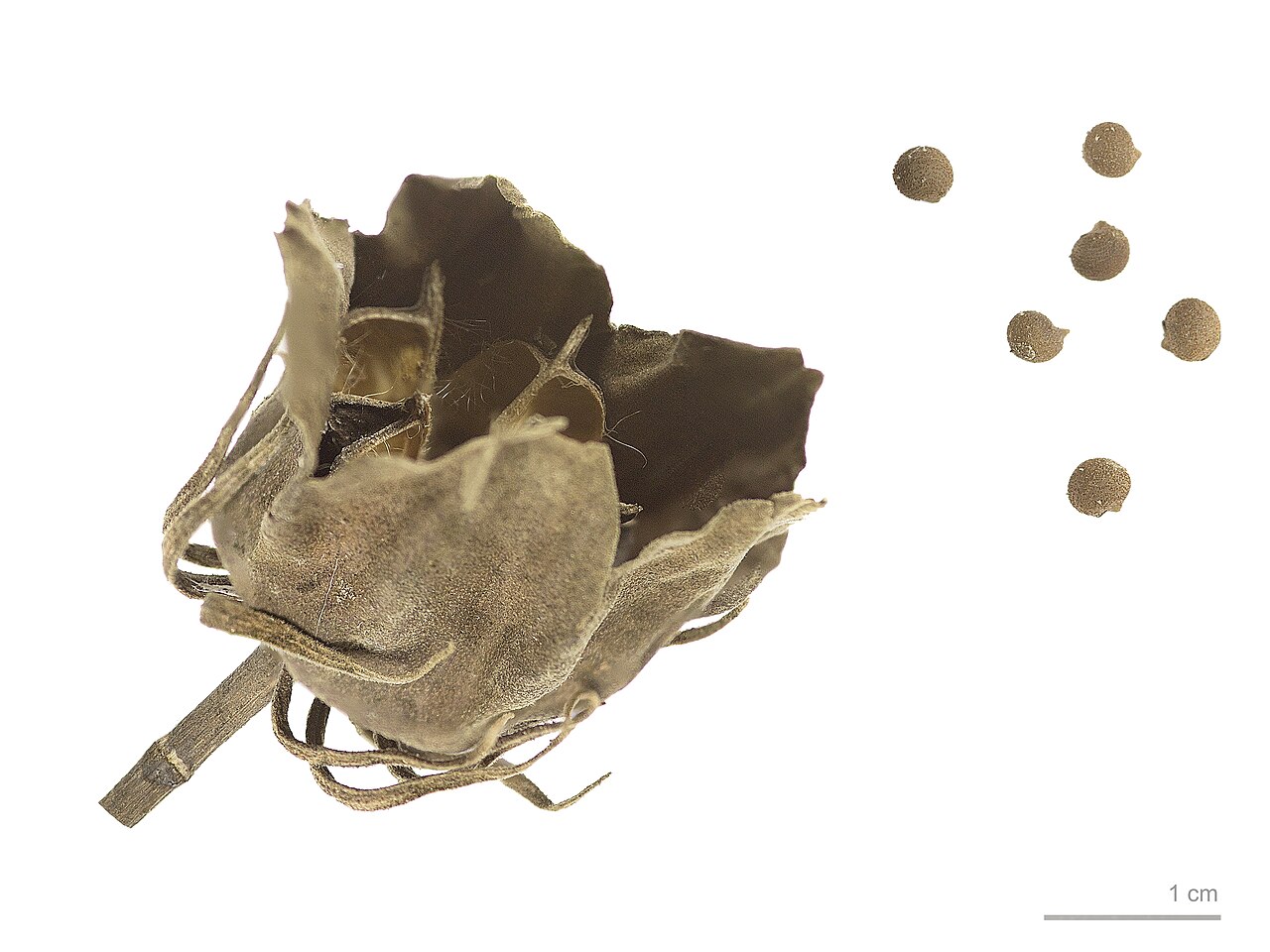
After flowering, rounded to oval capsules mature and turn brown. They contain dark seeds and eventually split. If collecting from garden plants, inspect seed quality and retain accurate records of the parents; nearby cultivated hibiscus may complicate assumptions about offspring. Seed heads and standing stems can remain visually interesting after bloom, but remove material that is diseased or interfering with paths.
Quick Facts
| Scientific Name | Hibiscus moscheutos L. |
| Name in Some Modern Treatments | Muenchhusia moscheutos |
| Family | Malvaceae (mallow family) |
| Plant Type | Tall, crown-forming herbaceous perennial |
| Mature Height | Commonly 4–7 ft for tall native forms; references report roughly 3–8 ft |
| Mature Spread | Approximately 2–5 ft, depending on stock and conditions |
| Growth Rate | Rapid seasonal growth after a late spring start |
| Sun Exposure | Full sun best; partial sun tolerated |
| Water Needs | High; consistently moist to wet soil |
| Soil Type | Moist loam, silt, or sandy soil with organic matter |
| Soil pH | Slightly acidic to neutral generally suitable |
| Bloom Time | Summer into early fall, often July–September |
| Flower Color | White to pink, often with a crimson eye; cultivars vary |
| Fall Color | Not primarily grown for autumn foliage |
| Fruit | Brown capsules containing dark seeds |
| Deer Resistant | Not reliable; browsing can occur |
| USDA Hardiness Zones | 4–9; cultivar and provenance matter |
Native Range
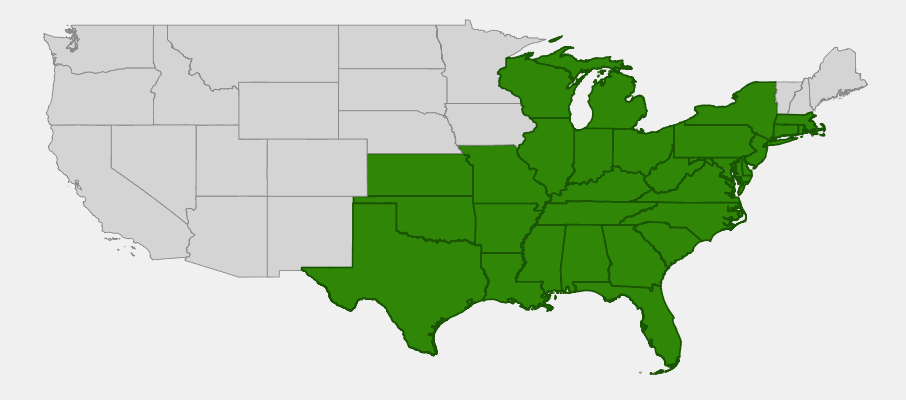
Eastern rosemallow is native to central and eastern North America, including portions of southern Ontario and the eastern United States, with related regional treatments extending into northeastern Mexico. Wetlands and creek margins are the consistent ecological theme. General occurrence lists also contain western records; an occurrence alone should not be treated as proof of local native status.
The map emphasizes the eastern and central U.S. native area and does not shade western states solely because plants have been reported there. Botanical treatments have differed in how they separate or combine related rosemallows, including plants historically called H. palustris. The USDA profile and a current regional flora are useful companions when matching nursery material to a restoration site.
Within the Mid-Atlantic, choose a sunny wet meadow or pond-edge analogy rather than a dry upland bed. The species can grow in ordinary garden soil with dependable moisture, but that is a managed garden use, not evidence that its wetland requirements have disappeared. In natural areas, avoid introducing unverified ornamental cultivars or moving wild plants between wetlands.
📋 Regional plant list: Maryland, Virginia & West Virginia
Growing & Care Guide
Light
Provide full sun for the strongest flowering and a sturdy clump. Partial sun may work, but dense shade is likely to reduce bloom and encourage a looser habit. Leave air around the mature foliage, particularly in humid Mid-Atlantic summers. A sheltered location should still be open enough for light and airflow; wedging a tall plant between a wall and a dense shrub is not good wind protection.
Soil and Water
Keep the root zone consistently moist. A low garden area, wet meadow edge, or pond margin can provide that naturally. In a conventional border, supplemental water may be needed during drought, especially while the plant is establishing. Avoid treating a short spring flood as proof that a site stays wet all summer. Organic matter can help a loamy bed retain moisture, but do not create a stagnant planting hole in compacted fill and assume every kind of waterlogging is harmless.
Planting Tips
Allow the eventual spread before planting. A tall native clump needs substantially more space than a small annual or a dwarf cultivar. Set the crown at its original level, water the root ball thoroughly, and keep surrounding weeds down while growth begins. Mark the plant’s position for the following spring because emergence is late. If using a container, choose enough volume to buffer water loss and plan for winter protection of roots; a small decorative pot will dry far faster than a wetland soil.
Pruning and Maintenance
Flowers form on current-season growth. Remove dead stems near the base when appropriate for the garden’s winter habitat and cleanup schedule, taking care not to injure emerging shoots. Some gardeners pinch young tips to encourage branching, but repeated late cutting can reduce or delay flowering. Deadheading improves appearance if desired; leaving some capsules supports observation and seed collection. Retain sound dead stems where feasible for stem-associated insects rather than automatically removing every stalk in autumn.
Propagation
Seed, cuttings, and division can be used, but choose the method according to the goal. Seed-grown plants can provide diversity for a native garden; a named cultivar is not guaranteed to reproduce faithfully from seed. Follow a reliable seed protocol and keep parentage records. Take cuttings or divide only healthy cultivated stock, and maintain moisture while new roots establish. Do not collect wild crowns from marshes or assume that an ornamental seedling is suitable for release into natural habitat.
Pests and Troubleshooting
Inspect before treating. Chewed leaves may reflect insects using the plant, while severe repeated defoliation can require management. Extension sources note pests such as Japanese beetles, aphids, and whiteflies, but their presence and impact vary. Avoid blanket spraying during bloom. Wilting can reflect a dry root ball even in a generally damp bed. Failure to emerge early in spring may be normal; check the crown’s position and wait for the season rather than immediately replacing it.
Landscape Uses
- Use as a tall summer focal point in a sunny native rain garden with reliable moisture.
- Plant along a managed pond or streamside garden edge above deep water.
- Create a seasonal screen where winter dieback is acceptable.
- Combine with lower wetland plants, leaving enough space for the mature clump.
Wildlife & Ecological Value
For Pollinators
The large flowers attract bees and other visitors. Native rosemallows are associated with specialized bees as well as more general flower visitors, so preserving the straight species and regional planting context can matter. Do not assume that every heavily bred cultivar has identical ecological performance. Avoid insecticide exposure during flowering and include other native plants to extend resources beyond the rosemallow’s bloom season.
For Birds and Butterflies
Hummingbirds and butterflies may visit, and the plant can support leaf-feeding insects. Those relationships are a reason to tolerate some cosmetic damage in a habitat garden, not a promise that every plant will attract the same animals. Nearby shrubs, grasses, and flowering perennials broaden the habitat beyond a single dramatic summer flower.
For Stem-Associated Insects
Sound dead stems can provide structure for insects, including stem-nesting bees noted in extension guidance. Where garden safety and disease management allow, leave some stems through winter and clean up selectively. Avoid interpreting this as a requirement to retain infected or dangerously leaning material. A mixed garden can provide habitat without making every individual stalk untouchable.
Ecosystem Role
A tall seasonal clump adds cover and flowering resources to wet ground. It is not a substitute for preserving natural wetland hydrology. In a small garden, its size can shade neighboring plants, so allow room and monitor competition. A species native to a broad region should still be chosen and placed with attention to the particular site, especially where ornamental hybrids are sold under the same common name.
Cultural & Historical Uses
Rosemallows belong to the mallow family, recognizable in part by their showy flowers and prominent staminal column. Common names such as swamp rose and marshmallow hibiscus describe a garden impression or habitat association; they do not make this plant a true rose or the culinary marshmallow plant.
Hibiscus moscheutos and related hardy species have contributed to ornamental breeding. Modern cultivars may have compact stature, unusually large flowers, dark foliage, or colors unlike a local wild population. Those selections can be useful garden plants, but a native-species guide should keep their identity separate from regionally sourced straight-species stock.
The newer generic name Muenchhusia appears in some current references while Hibiscus remains familiar in nurseries and older floras. Preserve both names in records rather than allowing the change to produce duplicate or conflicting labels. The practical care remains centered on sun, moisture, room for seasonal growth, and patience with spring emergence.
Frequently Asked Questions
Is eastern rosemallow a tropical hibiscus?
No. It is a hardy herbaceous perennial that returns from its crown after seasonal dieback. Tropical hibiscus sold for patios has different overwintering requirements.
Why has it not emerged with my other perennials?
Rosemallows often begin growth late in spring. Mark the crown and avoid digging the area prematurely. If the site and crown remain sound, patience is often more appropriate than replacement.
Does every hardy hibiscus count as this native species?
No. Many named cultivars have complex parentage or strongly selected traits. Ask for the scientific identity and provenance when planting for a regional native landscape.
Do the flowers last only a day?
Individual flowers are short-lived, but successive buds extend the overall display. A faded bloom does not mean the plant has finished flowering.
Can I grow it in a dry sunny border?
Only with enough supplemental water to meet its moisture needs. A consistently moist site is a better fit than trying to force a wetland perennial into a drought-tolerant design.
Sources & Further Reading
- NC State Extension: Muenchhusia moscheutos, formerly Hibiscus moscheutos
- Lady Bird Johnson Wildflower Center: crimson-eyed rosemallow
- USDA PLANTS: Hibiscus moscheutos
Find Native Plants
Ask growers about nursery propagation and regional provenance. Browse our Maryland native plant nurseries, Virginia native plant nurseries, West Virginia native plant nurseries directory for suppliers.