
Virginia Chain Fern (Woodwardia virginica)
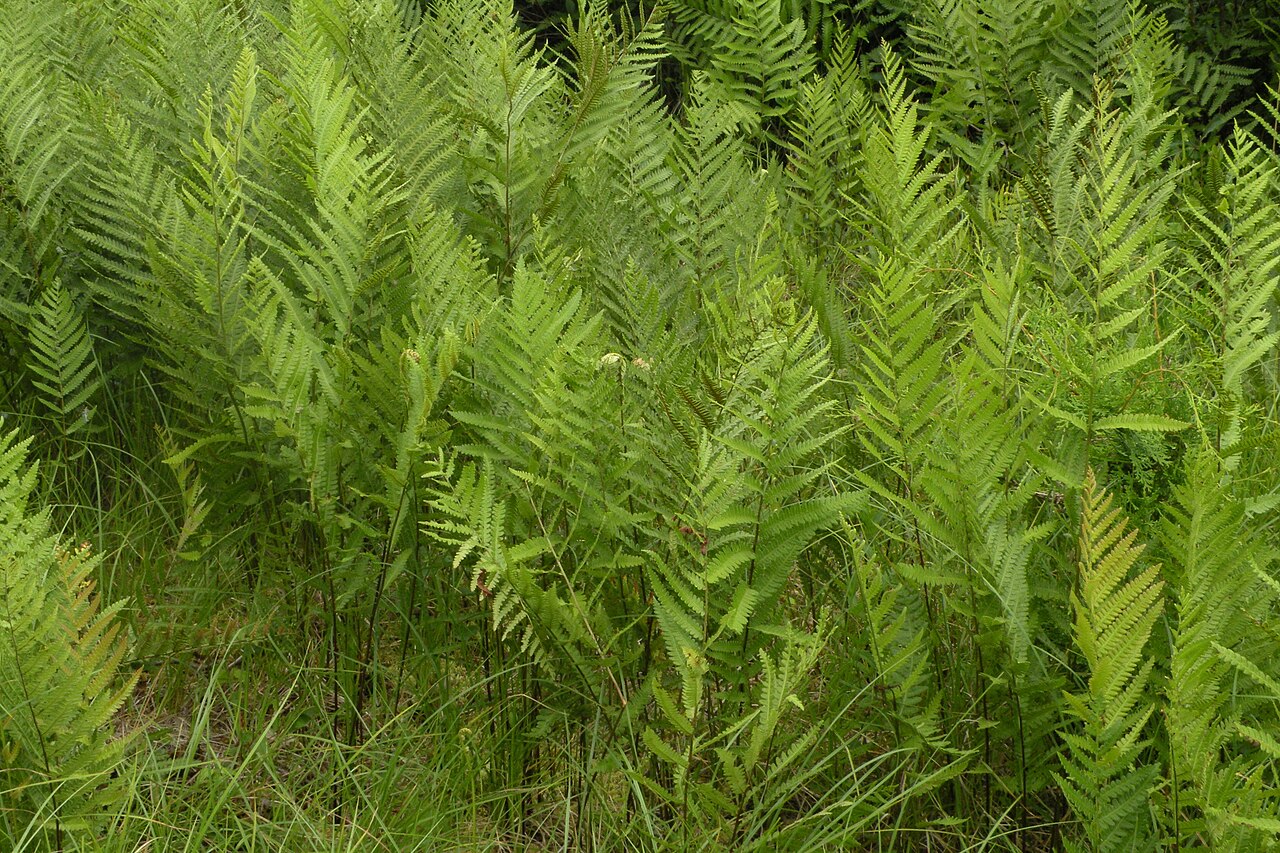
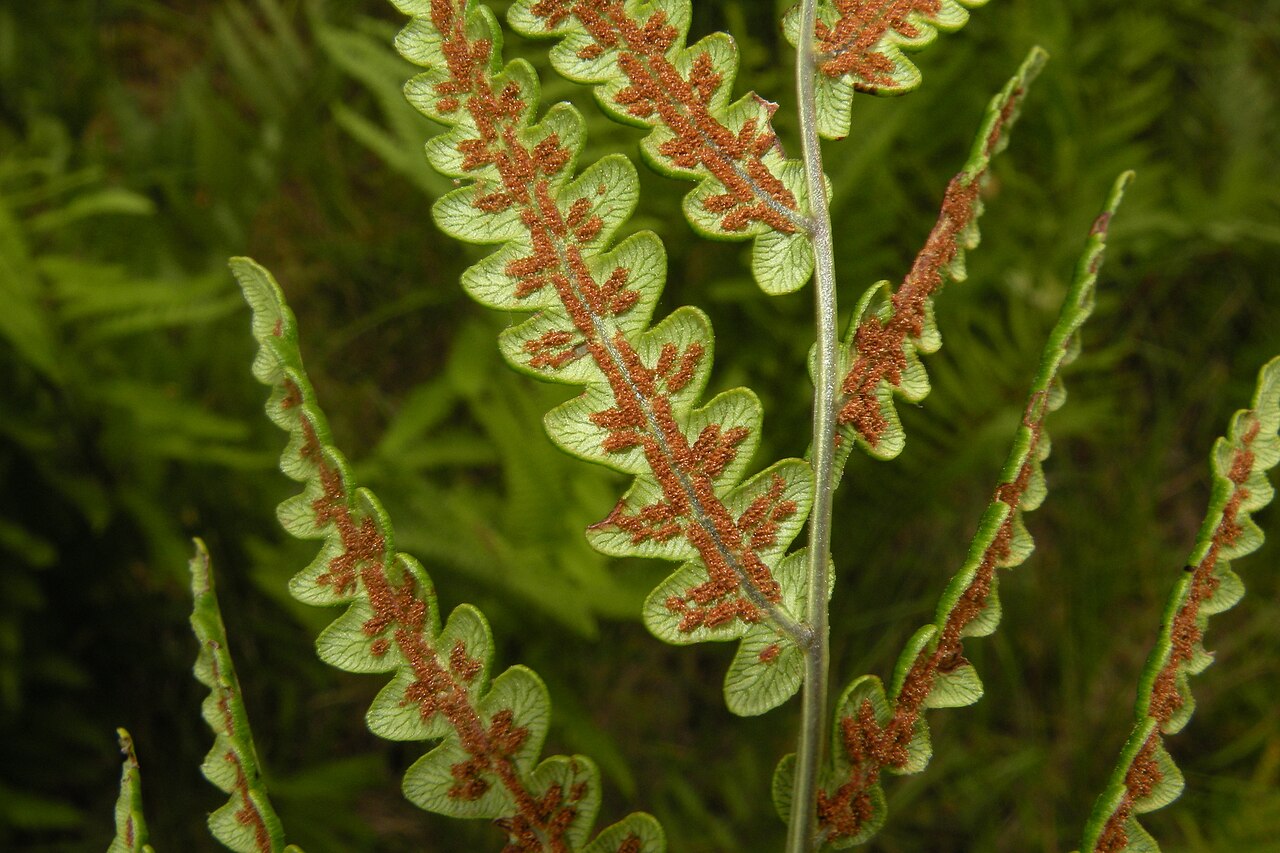
Virginia chain fern (Woodwardia virginica) is a substantial native fern of eastern North American wetlands and other persistently moist places. Its arching green fronds can form an attractive colony where creeping rhizomes have room to spread. The common name comes from the elongated spore-bearing structures underneath the fronds, arranged in rows that suggest links in a chain.
This fern offers useful height and texture in a wet native garden without pretending to be a flowering perennial. It has no flowers, berries, or seeds. Its appeal lies in the foliage, seasonal growth, and the way a colony fits into a moist ground layer. Suitable soil chemistry matters: the species is associated with acidic, noncalcareous sites rather than the lime-rich seep habitats favored by some other ferns.
Botanical names differ among references. Kew accepts Woodwardia virginica and lists Anchistea virginica as a synonym; some regional sources and image labels use Anchistea. Both names appear in the evidence for this page, but they do not represent two separate plants to purchase or two separate pages to create.
Identification
Fronds and colony form
The fronds are once pinnate with deeply divided pinnae, producing a featherlike outline with a strong central axis. Botanical descriptions commonly give frond lengths around 50–100 centimeters, while extension garden descriptions allow plants about 2–4 feet tall. Long-creeping rhizomes produce new fronds over an expanding area. A colony can therefore occupy more ground than the footprint of the original nursery pot.
Dark stalk bases and young growth
The lower portion of the stalk can be dark to blackish, and newly emerging fronds may show coppery tones before turning green. Mature foliage is generally greener and coarser-looking than a delicate maidenhair. Seasonal color and height vary with light and moisture, so use these as supporting characters rather than as a complete identification.
The chain beneath the leaf
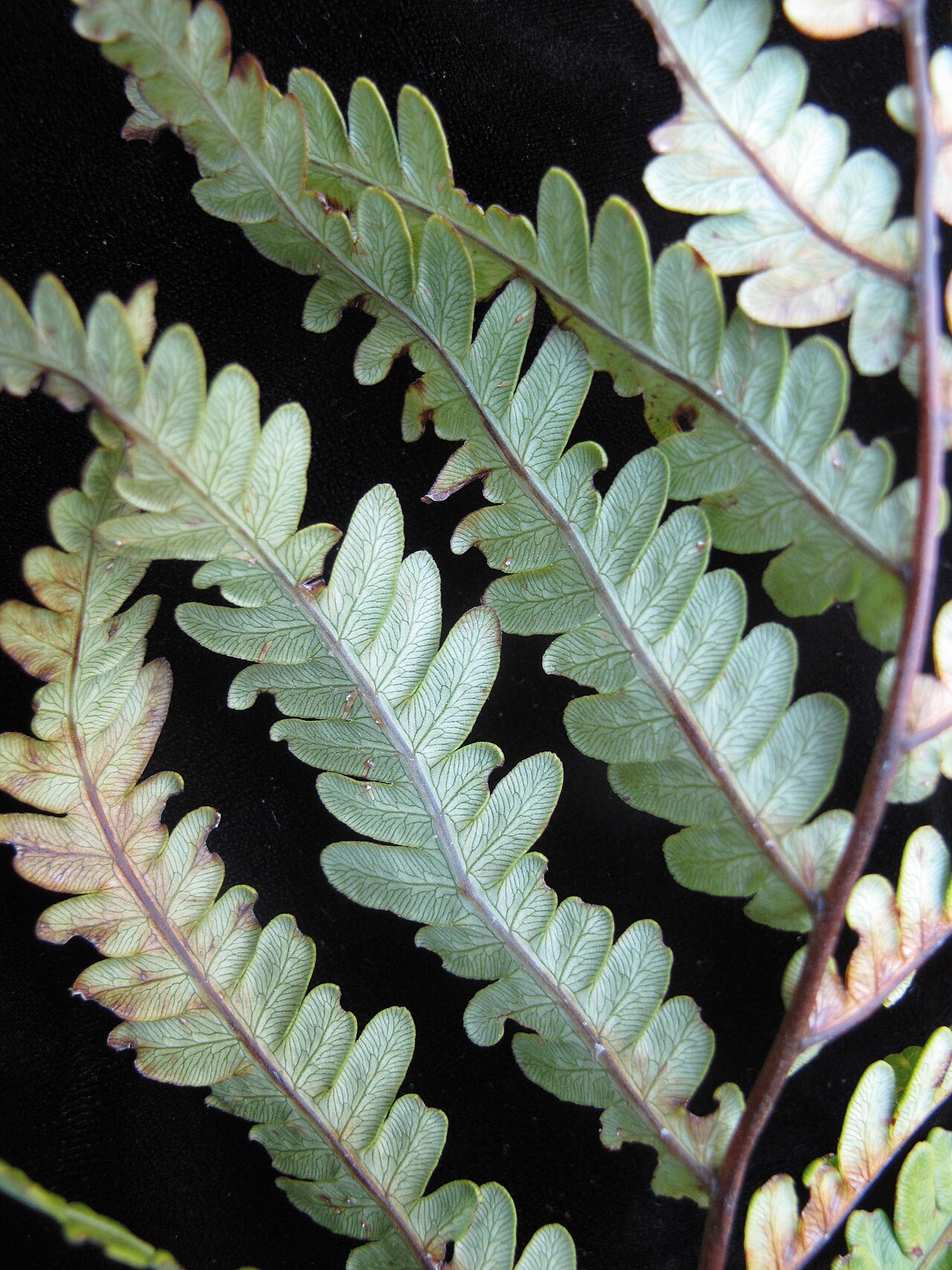
Look underneath a fertile frond for elongated sori arranged in linear rows along the veins. These are the chainlike structures behind the common name. Vein connections also form a characteristic network. A hand lens is useful, and the underside photograph on this page shows the feature more clearly than a distant view of the colony. Young or sterile fronds may not display developed sori.
Separate it from other wetland ferns
Marsh fern and other wet-site ferns can look similar from a distance, but their spore structures differ. Cinnamon fern produces separate conspicuous fertile fronds rather than this pattern of linear sori on ordinary green fronds. Netted chain fern is another distinct species, so a label containing chain fern alone is not sufficiently precise. Use a regional fern key and mature material when a restoration planting depends on exact identification.
Quick Facts
| Scientific Name | Woodwardia virginica |
| Synonym | Anchistea virginica |
| Family | Blechnaceae in the narrower family treatment used here |
| Plant Type | Perennial colony-forming fern |
| Mature Height | Usually about 2–4 feet in cultivation |
| Mature Spread | Often 2–3 feet initially; rhizomes can extend a colony farther |
| Growth Rate | Fast where moisture and soil conditions are suitable |
| Sun Exposure | Sun to shade, with sufficient moisture; partial shade is useful in gardens |
| Water Needs | Consistently moist to wet |
| Soil Type | Acidic, noncalcareous, organic or sandy wetland soils |
| Flowers and Fruit | None — spores are produced in elongated sori |
| USDA Hardiness Zones | Commonly listed for USDA zones 4–10; match local provenance and habitat |
| Foliage | Arching divided fronds, seasonally deciduous in colder climates |
| Bloom Time | Not applicable — a nonflowering fern |
Native Range
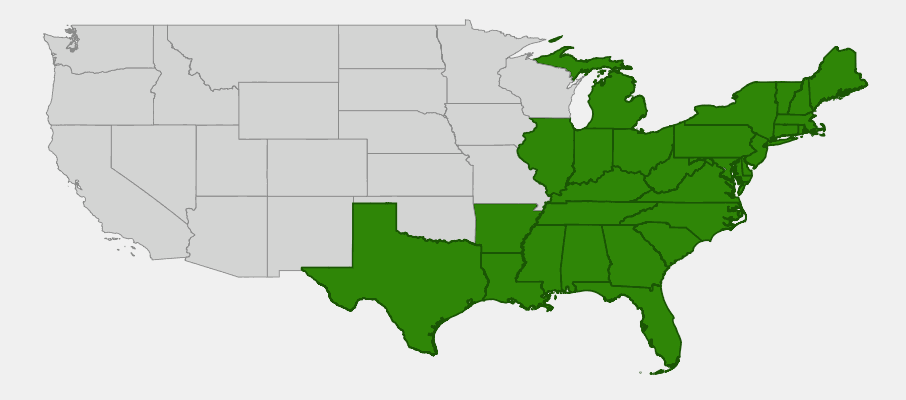
Virginia chain fern is native across much of the eastern United States and southeastern Canada. Kew's distribution treatment includes Alabama, Arkansas, Connecticut, Delaware, Florida, Georgia, Illinois, Indiana, Kentucky, Louisiana, Maine, Maryland, Massachusetts, Michigan, Mississippi, New Hampshire, New Jersey, New York, North Carolina, Ohio, Pennsylvania, Rhode Island, South Carolina, Tennessee, Texas, Vermont, Virginia, and West Virginia.
Canadian native provinces listed in the same broad treatment are Ontario, Quebec, New Brunswick, Nova Scotia, and Prince Edward Island. The map on this page displays United States states only; the province list prevents that cartographic boundary from being mistaken for a biological one. Within the highlighted area, natural populations occupy suitable habitats rather than occurring uniformly across the landscape.
Flora of North America describes swamps, marshes, bogs, and ditches on noncalcareous substrates, mainly from sea level to about 300 meters. That habitat association is central to choosing a garden site. The Arkansas–Louisiana–eastern Oklahoma–eastern Texas table is a combined regional resource, but Oklahoma is not part of the native state set used here. Check local records before treating a broad regional listing as evidence of nativity at a particular location.
📋 Regional plant list: Arkansas, Louisiana, Eastern Oklahoma and Eastern Texas
Growing & Care Guide
Choose a genuinely moist site
A low garden area with a dependable moisture supply is more promising than an ordinary dry shaded border. Assess summer conditions as well as spring wetness: a depression that dries hard for months may not provide what this fern needs. A rain-garden edge can work only if its actual hydrology is suitable. The term rain garden covers many designs and does not automatically guarantee consistent moisture.
Acidic substrate matters
This species is associated with noncalcareous wetland soils. Do not apply a generic fern recipe that includes lime or assumes all ferns prefer the same chemistry. Test an uncertain site before making amendments. Organic matter can help retain moisture and support soil structure, but it cannot by itself reverse persistent alkaline seepage or make an unsuitable location ecologically equivalent to a natural bog.
Light and moisture interact
Virginia chain fern can grow across a broad light range when moisture is sufficient. More sun increases water demand, particularly in hot weather, so partial shade is often a practical garden choice. Deep shade may change the density and appearance of the colony. Watch the plant's response at the specific site rather than interpreting sun tolerance as permission to neglect the root zone.
Planting and establishment
Use nursery-propagated plants and set the rhizome at a depth consistent with its existing growth. Avoid burying the crown beneath heavy mulch or packing soil tightly around new fronds. Water to settle the root system and maintain moisture during establishment. A young division has fewer reserves and a smaller root system than an established colony, so it can need attention even in a generally suitable garden.
Give the rhizomes room
The species spreads through creeping rhizomes and can build a patch larger than the original plant. That is useful for a naturalistic wet bed but can be inconvenient beside delicate, slow-growing neighbors. Plan the available area in advance and divide or redirect growth when necessary. Vigorous local spread is not the same as labeling a native species invasive; the practical question is whether its growth fits the designed space.
Seasonal foliage and cleanup
In colder climates, expect the fronds to decline seasonally rather than remain an immaculate evergreen display. Leave harmless spent material where appropriate or trim it carefully before new growth is easily damaged. Pulling old stalks through emerging croziers can injure the plant. Do not mistake normal seasonal change for a need to fertilize heavily or apply a fungicide.
Propagation from divisions or spores
Division of healthy nursery-grown stock is the straightforward method for many gardeners. Retain adequate rhizome and roots, replant promptly, and prevent drying while the division establishes. Spore culture is possible and has been documented by fern growers, but requires suitable clean, moist conditions and care through the small gametophyte stage. There are no fern seeds to sow. Obtain propagation material ethically rather than stripping a natural wetland colony.
Water quality and disturbance
Changes to drainage, soil grade, or nearby construction can alter a fern bed long after planting. Avoid compacting wet soil or diverting runoff carrying sediment, deicing salts, or other contaminants into the colony. If decline appears, examine these site changes before assuming a pest is responsible. A consistently moist site still needs an appropriate root environment; prolonged smothering or polluted water is not beneficial merely because the plant is a wetland fern.
Landscape Uses
- A textural colony in a moist acidic native garden where rhizomes can spread.
- A planted wetland margin or suitable water-feature edge above damaging scour and inappropriate deep submergence.
- A companion to locally native sedges and shrubs with matching hydrology and soil chemistry.
- A foliage contrast beside finer-textured wet-site plants, with room for mature fronds.
- Not a dry-shade ground cover or a substitute for assessing the actual conditions of a rain garden.
Wildlife & Ecological Value
A ground-layer contribution
Virginia chain fern supplies cover and structural complexity in moist habitats. Its ecological value is not based on showy flowers or fruit crops, since it produces neither. A colony contributes to the living ground layer around other wetland plants, creating a different setting from bare soil or closely cut lawn.
Wetland relationships
The habitats supporting this fern can also support a variety of moisture-dependent organisms. Protecting water quality, soil structure, and surrounding native vegetation is more meaningful than making an unsupported claim that one fern alone will attract a particular animal. Think in terms of a functioning plant community rather than a single-species wildlife product.
Leaf litter and organic material
Seasonal fronds become part of the organic layer as they break down. This cycling is normal in a naturalistic planting. Manage litter according to the site: retain useful organic material without burying new crowns or blocking a designed overflow. A tidy appearance should not require stripping every bit of plant material from a wet native bed.
Deer and browsing expectations
Extension descriptions often list ferns such as this among plants with useful deer resistance, but no broad label guarantees protection in every landscape. Heavy browsing pressure and local animal behavior can differ. Monitor young plantings and use appropriate physical protection if needed rather than treating any species as absolutely deer-proof.
Cultural & Historical Uses
The name chain fern describes a botanical character visible on the underside of a fertile frond. Looking for those linear sori turns an ornamental plant into a useful lesson in fern reproduction: the green leaf is supporting spore production without ever making a flower or seed.
The species has been placed in more than one genus, including Anchistea. That history is why a correctly identified herbarium record or licensed photograph may carry a name different from the heading on this page. Recording the synonym helps prevent duplicate listings while preserving the ability to follow older references.
Its most appropriate modern garden role is as a native wet-site foliage plant. This guide does not recommend food or medicinal use. Nor does its broad eastern distribution justify collecting plants from wetlands: nursery propagation preserves natural populations and provides a more responsible source for landscaping.
Frequently Asked Questions
Why is it called chain fern?
The elongated sori beneath fertile fronds occur in rows resembling a chain. They contain the structures that produce spores.
Is Anchistea virginica a different plant?
It is a synonym used by some botanical treatments for the species called Woodwardia virginica here.
Does it need acidic soil?
Its natural habitat is described as noncalcareous, and acidic moist soils are the sensible garden starting point. Do not add lime automatically.
Can it grow in sun?
Yes, where adequate moisture is maintained, but greater sun exposure increases water demand. Partial shade is often easier to manage.
Will it stay in one clump?
Not necessarily. Creeping rhizomes can expand the colony, so provide space and manage divisions if needed.
Is it evergreen?
Seasonal behavior depends on climate, and colder-region plants lose their fronds. Do not promise year-round green foliage across the entire native range.
Sources & Further Reading
- Flora of North America — Woodwardia virginica
- NC State Extension — Virginia Chain Fern
- Kew Plants of the World Online — Woodwardia virginica
- USDA Forest Service — species review
- Florida Native Plant Society — Palmetto fern propagation article
Find Native Plants
Ask growers about nursery propagation and regional provenance. Browse our Arkansas native plant nurseries, Louisiana native plant nurseries, Oklahoma native plant nurseries, Texas native plant nurseries directory for suppliers.