
Gulf Muhly (Muhlenbergia capillaris)
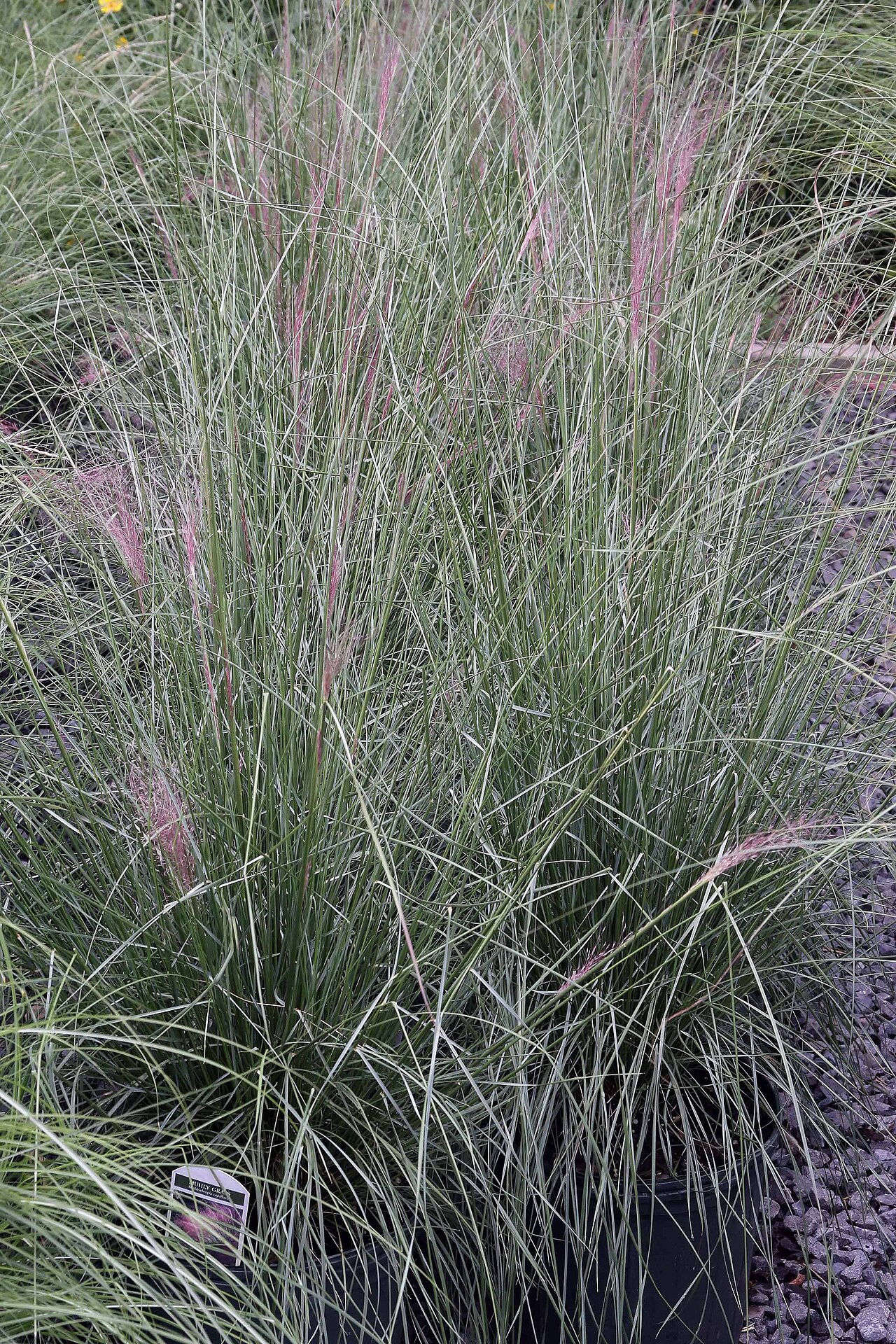
Gulf muhly (Muhlenbergia capillaris), often sold as pink muhly grass, is a clumping native grass with a memorable autumn performance. For much of the year its wiry green leaves form a rounded mound. Then fine branching panicles rise above the foliage, turning a group of plants into a translucent pink or purple-red cloud.
The display works particularly well when light shines through it. A broad planting viewed against darker foliage can be more effective than a single plant lost among shrubs. Before that autumn moment, however, the garden still needs to work: leave the mound room, combine it with compatible plants, and appreciate the narrow foliage as part of the summer structure.
Good drainage and sun are the central decisions. Gulf muhly can handle demanding sites once established, but drought tolerance is not permission to bury a new root ball in a wet planting hole or abandon it before roots spread. Native provenance also matters. This is a particular species of Muhlenbergia, not a promise that every muhly or every pink ornamental grass has the same range or garden behavior.
Identification
Clumping Habit
Gulf muhly is a perennial bunchgrass, producing a dense mound rather than woody branches. The green foliage commonly reaches roughly two to three feet, while the flowering display may approach four feet under favorable conditions. The clump can become around three feet wide. Give that width real space instead of measuring only the narrow nursery pot.
Leaves and Stems
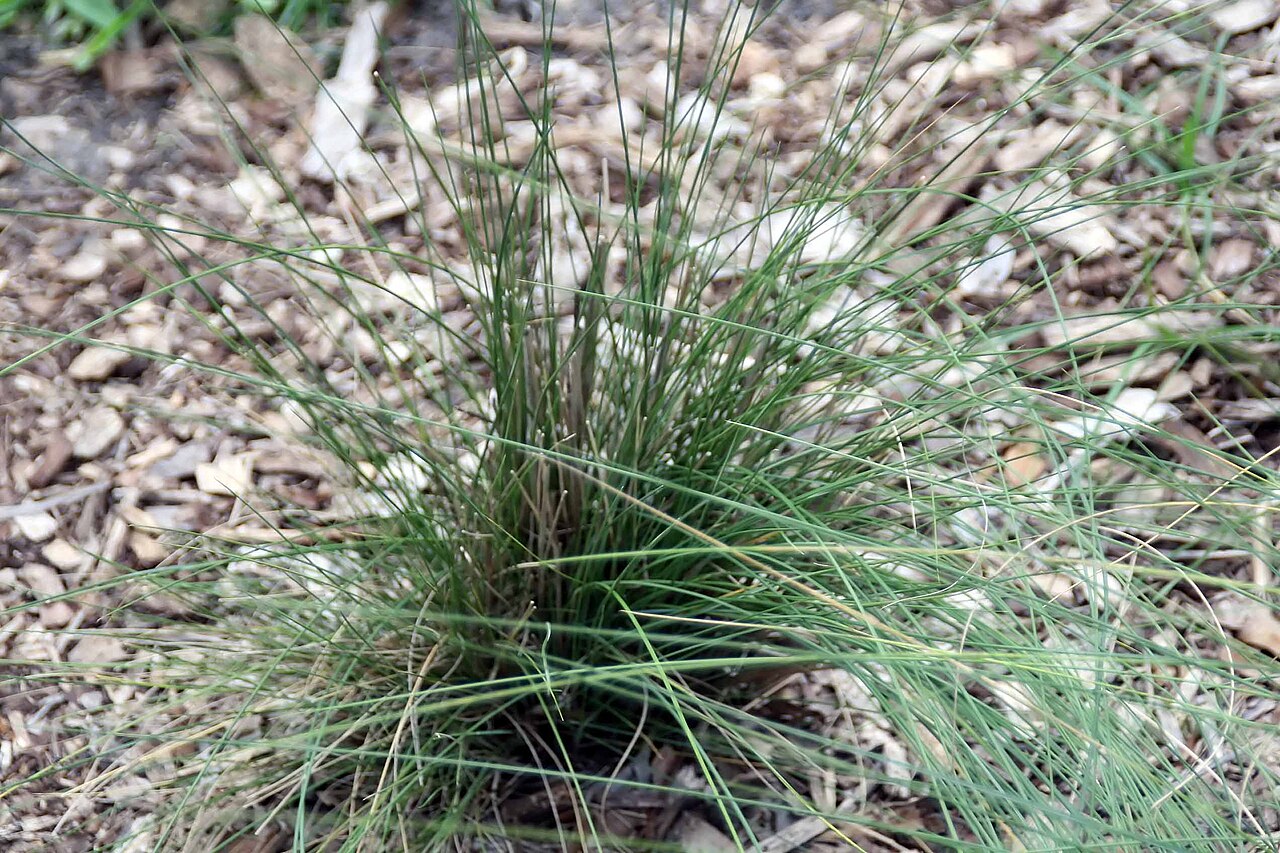
The leaves are narrow, wiry, and usually dark green. Their fine texture distinguishes the mound from broad-bladed river oats and many coarse ornamental grasses. The species name capillaris refers to the hairlike appearance. A photograph of leaves alone may not establish identity, because many grasses share a fine texture; inspect flowering material and a reliable botanical label as well.
Flowering Panicles
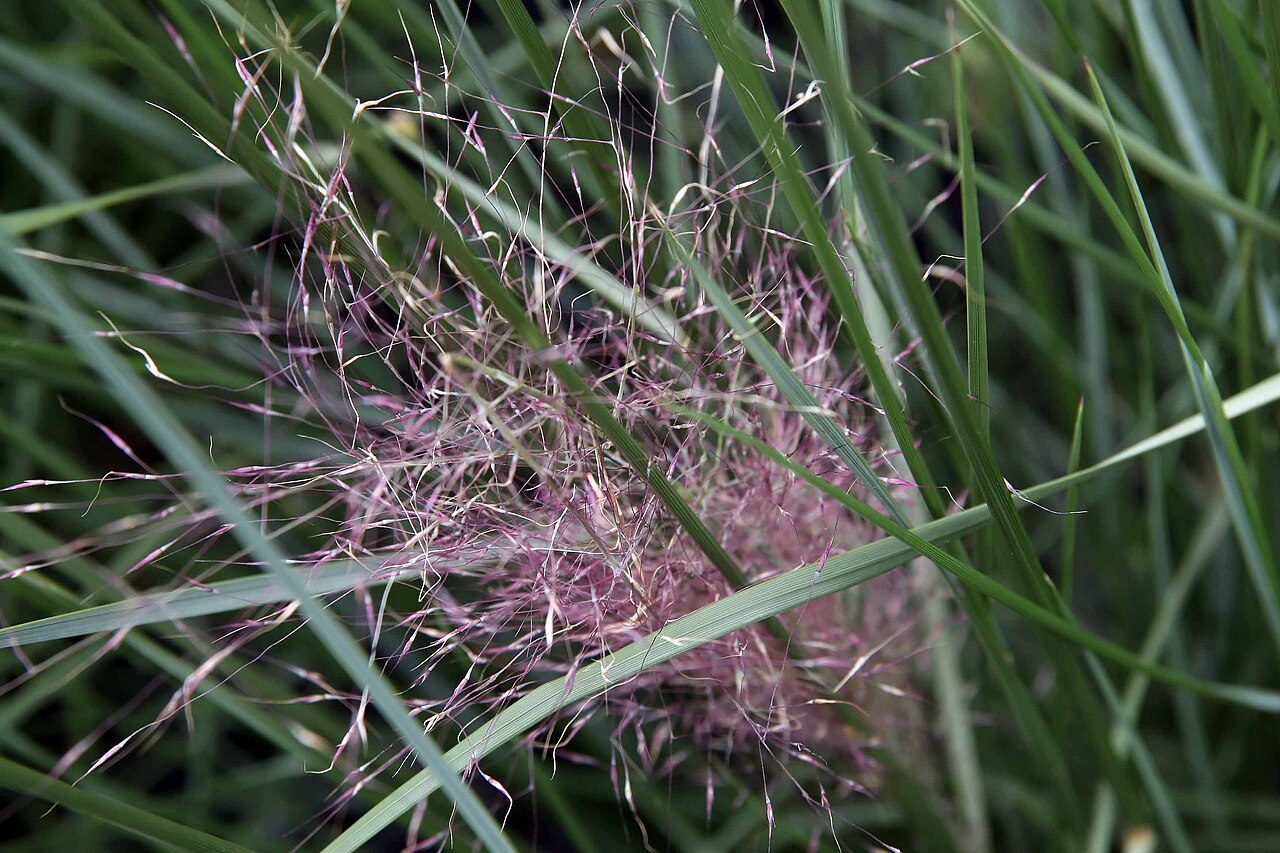
In the latter part of the growing season, delicate branched heads rise through and above the leaves. Pink to reddish-purple color is distributed across many tiny flowers, producing the familiar haze. The individual florets are small grass flowers rather than petaled blossoms. Weather, provenance, maturity, and growing conditions affect both the timing and intensity of the display.
Seeds and Dormancy
The heads fade to a buff or tan color as the season progresses and small grains mature. Dry panicles can remain useful in the winter composition if they are not flattened by weather. Green foliage may persist longer in mild climates, but a cold-season brown mound is not automatically a dead plant. Check the crown and the next season’s new growth before replacing it.
Taxonomic and Garden Lookalikes
Some older treatments and labels have applied capillaris broadly to related forms, including plants called filipes. This guide addresses Muhlenbergia capillaris as named in the linked USDA and horticultural accounts; a restoration project should use a locally accepted flora to resolve varieties or segregate species. Pink color by itself is not sufficient evidence to substitute another muhly.
Quick Facts
| Scientific Name | Muhlenbergia capillaris |
| Family | Poaceae — grass family |
| Plant Type | Warm-season perennial bunchgrass |
| Mature Height | Foliage commonly 2–3 ft; flowering stems may reach 4 ft |
| Mature Spread | Usually about 2–3 ft |
| Growth Rate | Moderate under suitable conditions |
| Sun Exposure | Full sun for the strongest flowering display |
| Water Needs | Dry to average after establishment; drainage essential |
| Soil Type | Sandy, rocky, loamy or clay soil that drains adequately |
| Soil pH | Adaptable; avoid unnecessary amendments without a soil test |
| Bloom Time | Late summer to fall, depending on locality |
| Flower Color | Pink to purple-red; dry heads turn tan |
| Fall Color | Pink panicles above green foliage, then buff winter tones |
| Fruit | Tiny grass grains |
| Deer Resistant | Often resistant, not immune |
| USDA Hardiness Zones | Commonly grown in zones 6–9; provenance affects cold performance |
Native Range
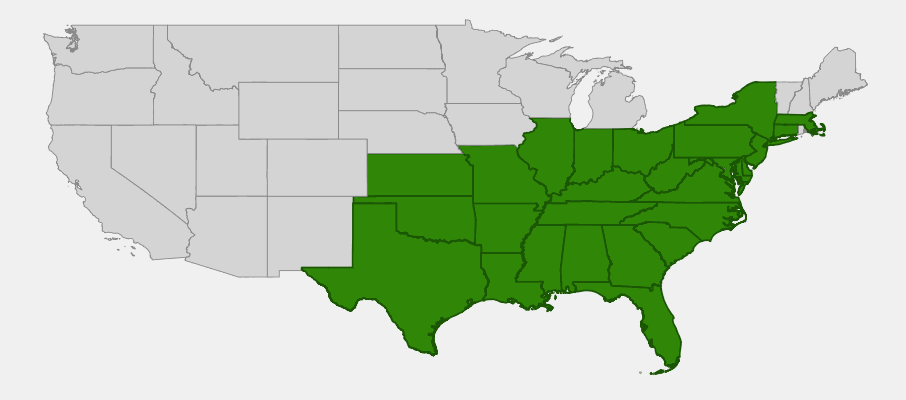
Gulf muhly has a broad central and eastern U.S. distribution and extends south beyond the United States. Regional accounts describe it in open woods, savannas, rocky openings, and other sunny or lightly wooded settings. Different treatments of varieties and related taxa affect the outer boundary of the range, so a state map should not replace a regional flora.
The Arkansas, Louisiana, eastern Oklahoma, and eastern Texas list includes it because parts of that region offer appropriate habitat. That does not mean every prairie, wetland, or woodland in those states is suitable. The nursery plant that succeeds beside a sunny house may be a poor choice for ecological restoration in a nearby habitat with different soil and hydrology.
The map summarizes the U.S. states listed by Kew and NC State for the species. It provides orientation, not a claim that every mapped county has a native population. Verify local occurrence and the identity of purchased stock when planting for conservation. Photographs taken in a garden outside the native range show cultivated plants, not evidence of native occurrence there.
📋 Regional plant list: Arkansas, Louisiana, Eastern Oklahoma and Eastern Texas
Growing & Care Guide
Choose the Light First
Plant in a genuinely sunny place if the autumn flowers are the priority. A site that receives good winter light but becomes heavily shaded by summer shrubs will not provide the same conditions. Position the plant where the panicles can be seen without blocking a narrow walkway. Backlighting is attractive, but adequate growing light comes before the ideal viewing angle.
Drainage
Check what happens after prolonged rain, not just whether the surface looks dry on planting day. The crown should not sit in a pocket of stagnant water. Sandy or rocky soil can work well, and clay can be suitable when its structure permits drainage. Avoid using a deep layer of rich amendment inside a compacted hole as a substitute for fixing a drainage problem.
Planting Depth and Spacing
Keep the crown at the surrounding soil level. Water the root ball before planting if it is dry, loosen circling outer roots gently, and firm the backfill so there are no large air pockets. Space plants for their mature width: crowding may create an immediate display but leaves little room for air and maintenance as the mounds enlarge.
Establishment Water
Water newly planted stock when the root zone is drying, taking rainfall and soil texture into account. A small container root system needs time to extend into surrounding ground. After establishment, adjust irrigation downward rather than keeping the planting on the same schedule as thirsty annuals. Observe the plant and soil together; a wilted appearance can result from either drought or damaged roots in wet soil.
Fertility
Gulf muhly does not need a rich vegetable-bed regime. Excessive feeding can encourage soft growth or favor weeds in the spaces around young plants. If the foliage is weak, check shade, root health, planting depth, and water movement before adding fertilizer. A soil test is a better guide to a suspected deficiency than an attempt to make every native plant grow as fast as possible.
Pruning
Old foliage can be cut back before active new growth makes the job difficult. Work above the crown and avoid slicing into emerging green shoots. Do not shear the plant repeatedly through the growing season if you want the autumn flower heads. Where the dry form remains attractive, delay major cleanup until late winter or the local pre-growth period rather than removing it immediately after flowering.
Dividing a Clump
Divide cultivated plants when weather is mild enough for re-establishment and water is available. Each division needs a healthy portion of crown and roots. Replant at the original depth and monitor moisture while it recovers. Very old crowded clumps may be easier to handle with appropriate digging tools; there is no reason to divide an otherwise healthy plant annually.
Growing from Seed
Correctly identified seed can be used to produce new plants. Obtain a named source with provenance where possible, and follow the supplier’s instructions for that seed lot. Small grass seedlings need protection from weed competition and accidental removal. Seed-grown plants may vary in display, which is appropriate for many native plantings but differs from buying a selected ornamental clone.
Problems to Watch
Persistent wetness, crowding, and unsuitable light should be investigated before declaring a mysterious disease. NC State notes muhlygrass mealybug as an emerging concern in its region. If abnormal white material or declining growth appears, obtain a local diagnosis rather than treating every clump preventively. A correctly identified problem is the basis for a targeted response.
Designing for the Whole Year
Combine the grass with plants that provide earlier flowers and compatible root-zone needs. Keep taller neighbors from closing over it before the panicles emerge. A repeated group of mounds can link a planting visually, while a few individual plants can serve as accents. In either case, retain room to reach the crowns for cleanup without trampling the surrounding bed.
Landscape Uses
- Autumn color in sunny native borders and broad mass plantings.
- Fine foliage contrasted with larger-leaved, site-compatible perennials.
- Dry-to-average garden margins with adequate drainage.
- A seasonal screen at knee-to-waist height rather than a tall privacy hedge.
Wildlife & Ecological Value
Pollination
The fine flowers are wind-pollinated; the pink display is not a guarantee of nectar for insects. Combine gulf muhly with locally native flowering herbs to provide a broader set of resources. The visual role of a grass and its ecological role overlap, but they are not interchangeable with those of a nectar-producing wildflower.
Cover and Seed
The mound provides low shelter, and seed can be used by birds and small mammals. Retaining some dry structure into winter preserves cover where doing so is practical. A planting cut to a neat stump immediately after bloom loses much of that seasonal structure, even if it remains alive and ready to regrow.
A Diverse Ground Layer
In a mixed planting, grass roots and crowns occupy space while gaps allow compatible wildflowers to persist. The goal should be a functioning community rather than a single species repeated wherever there is bare ground. Use local provenance for ecological projects, and do not introduce garden stock into natural communities merely because the species is native somewhere in the state.
Cultural & Historical Uses
The genus name honors the botanist Gotthilf Heinrich Ernst Muhlenberg, while capillaris describes the hairlike aspect of the plant. Gulf muhly, pink muhly, and hairawn muhly are among the common names encountered in nursery and botanical literature. Keep the scientific name with purchased plants because common names are applied inconsistently.
Its modern landscape popularity is easy to understand: a fine green mound becomes a large seasonal color effect without needing enormous flowers. Nursery selections may emphasize color or habit, but their existence does not erase the importance of regional origin in habitat work. A show garden and a restoration project can legitimately have different sourcing requirements.
This article makes no medicinal or edible-use recommendation. The useful cultural story here is one of native ornamental gardening and careful observation of seasonal growth. Choose nursery-propagated material, avoid digging wild clumps, and preserve botanical labels so future gardeners can distinguish this species from other attractive but different muhly grasses.
Frequently Asked Questions
Why does my gulf muhly not turn pink?
Check season, plant maturity, and sunlight. The show occurs late in the growing season, and heavy shade can reduce it.
Should I cut it back every month?
No. Repeated shearing removes the developing display. Tidy old growth before the next active season without cutting into the crown.
Can it live in clay?
It can grow in suitable clay soil, but persistent saturation is a problem. Drainage and soil structure matter more than the texture label alone.
Is a brown winter mound dead?
Not necessarily. Dormancy and dry foliage are normal in colder conditions; assess the crown and new seasonal growth.
Are all plants sold as pink muhly the same?
No. Nursery names, cultivars, and taxonomic treatments vary. Verify Muhlenbergia capillaris and local provenance when identity matters.
Sources & Further Reading
- NC State Plant Toolbox
- University of Florida IFAS muhly grass guide
- NC State Extension Gardener feature
- USDA PLANTS
- Kew Plants of the World Online native distribution
Find Native Plants
Ask growers about nursery propagation and regional provenance. Browse our AR native plant nurseries, LA native plant nurseries, OK native plant nurseries, TX native plant nurseries directory for suppliers. Explore the native nursery finder.