
False Aloe (Manfreda virginica)
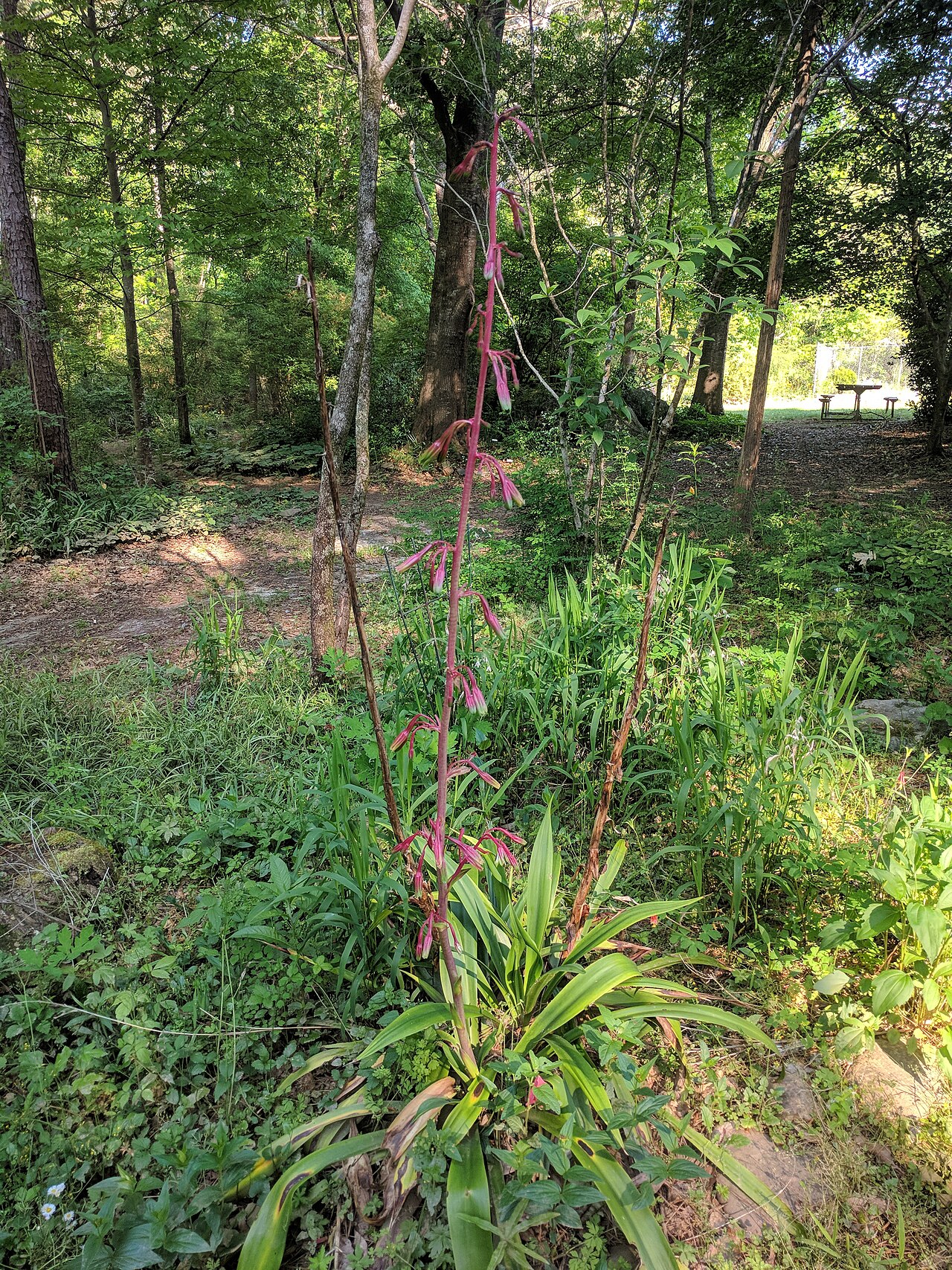
False aloe combines two very different shapes: a low rosette of fleshy leaves and a tall, spare flowering stalk. That contrast makes it useful in a sunny native planting where a broad leaf at ground level is as welcome as a summer flower. Its flowers are not brightly colored trumpets; their greenish yellow tones reward a closer look, especially when the long stamens extend from an open bloom.
The scientific name needs explanation. Current Plants of the World Online accepts Manfreda virginica and treats Agave virginica as a synonym, while some respected horticultural sources use Agave virginica. Both names occur in nursery listings and botanical references. This page brings those records together rather than creating two pages for the same plant.
Despite the common name, this is not Aloe vera and should not be used as a substitute for it. Nor is it the familiar evergreen, spiny century plant of desert-themed landscapes. Its softer seasonal foliage and repeat flowering belong to a different garden rhythm. Match it to a drained site and appreciate it as a native perennial, not as a generic succulent.
Identification
The basal rosette
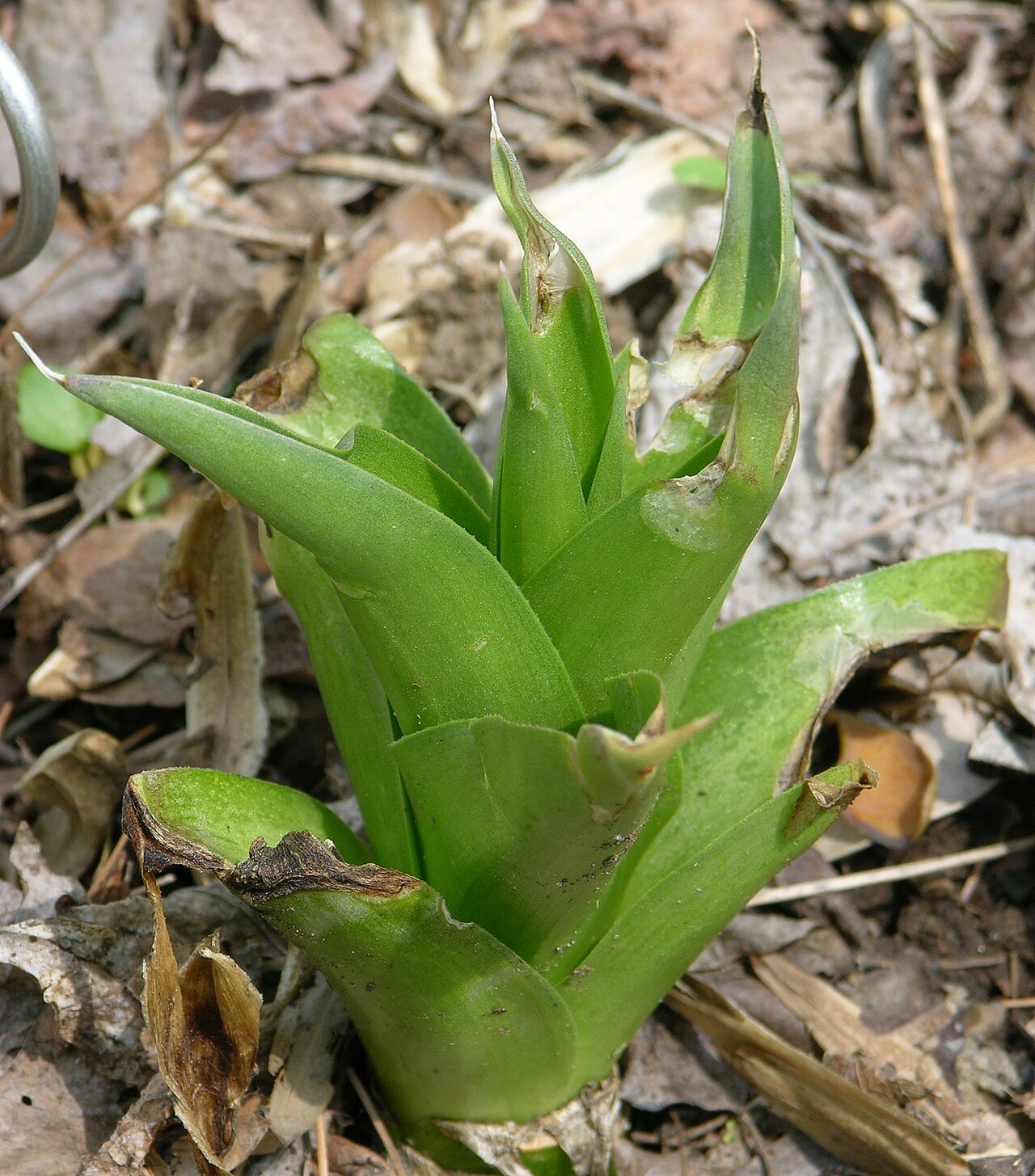
Leaves arise near ground level in an open rosette. They are fleshy, elongated and sword-like but more flexible than the rigid leaves of many familiar agaves. Some plants show purplish markings. The size and degree of spotting vary, so the presence or absence of purple marks alone should not decide an identification. A young rosette needs time before it displays the proportions of a mature flowering plant.
Flowering height versus foliage height
The flowering stalk can rise several feet above a low cluster of leaves. A height label of three to six feet usually describes that stalk, not a solid shrub-like mass of foliage. When planning a border, place the rosette where it receives light while allowing the airy stem to rise through or beside neighboring plants. Crowding the leaves with dense, taller neighbors defeats that design.
Flowers and stamens
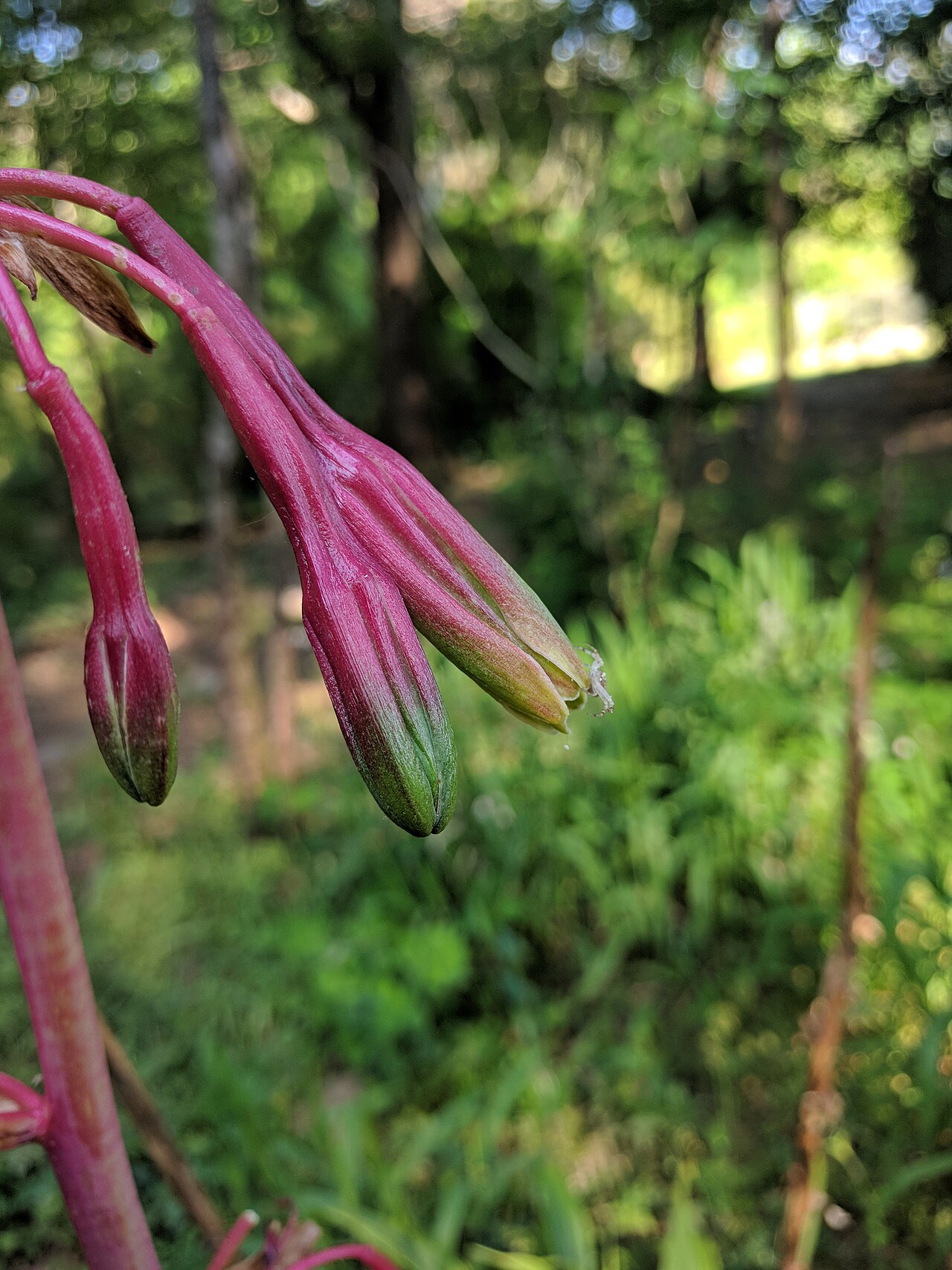
Pale greenish to yellow flowers are spaced along the upper stalk. Their narrow tubes and protruding reproductive parts are more informative than color alone. Buds can look quite different from fully open flowers, and a photograph of a closed cluster may not show the long stamens that appear later. Flowering proceeds over time, rather than every flower opening at once.
Fruit and winter appearance
After successful pollination, dry capsules replace the flowers and eventually release dark seeds. The above-ground leaves are seasonal; a winter garden should not be designed on the assumption of a permanent evergreen rosette. Mark the planting position unobtrusively so that routine digging or weeding does not damage the resting plant.
Names and look-alikes
False aloe, American aloe and eastern agave are names used for this taxon. An unlabelled rosette is not enough to separate it from every related plant or garden hybrid. A nursery label, flower structure and a reliable flora provide stronger evidence together. Keep the Manfreda–Agave synonym connection in your records if seed or a nursery plant arrives under the alternate name.
Quick Facts
| Scientific Name | Manfreda virginica (syn. Agave virginica) |
| Family | Asparagaceae |
| Plant Type | Herbaceous perennial with a basal rosette and tall flowering stalk |
| Mature Height | Flower stalk commonly 3–6 feet; foliage stays much lower |
| Mature Spread | Mature clumps may reach roughly 3–4 feet across |
| Growth Rate | Persistent perennial rosette; size varies with site and age |
| Sun Exposure | Full sun to partial shade |
| Water Needs | Dry to moderately moist during establishment; avoid prolonged saturation |
| Soil Type | Well-drained sandy, rocky or open woodland soils |
| Soil pH | Tolerates alkaline conditions; local site matching is more important than a single pH target |
| Bloom Time | Summer, commonly June–August; timing varies regionally |
| Flower Color | Greenish yellow to pale yellow |
| Fall Color | Foliage declines seasonally; not an evergreen century plant |
| Fruit | Dry, three-chambered capsules containing dark seeds |
| Deer Resistant | Browsing response varies; protect new plants where needed |
| USDA Hardiness Zones | 6–9, as listed by NC State Extension |
Native Range
False aloe is native across a broad central and southeastern U.S. range and into northeastern Mexico. The current Kew treatment includes all four states represented by our Arkansas–Louisiana–eastern Oklahoma–eastern Texas regional list, although its actual occurrence is patchy within them. A green state on the map is not a statement that every county contains a natural population.
It occurs in drained habitats such as open woods, rocky ground, glades and barrens. The limits become particularly important near the edge of its range: the Virginia flora records a very localized native occurrence in Lee County. A species can be widespread across a continent while remaining rare or highly restricted within an individual state.
For a restoration planting, county records, habitat and local seed origin are more useful than a broad hardiness zone. For a home garden, a nursery-grown plant still needs a suitable soil and winter environment. Do not move plants out of wild barrens or glades; those communities can be vulnerable even where the species itself is not globally rare.
Native Range at a Glance
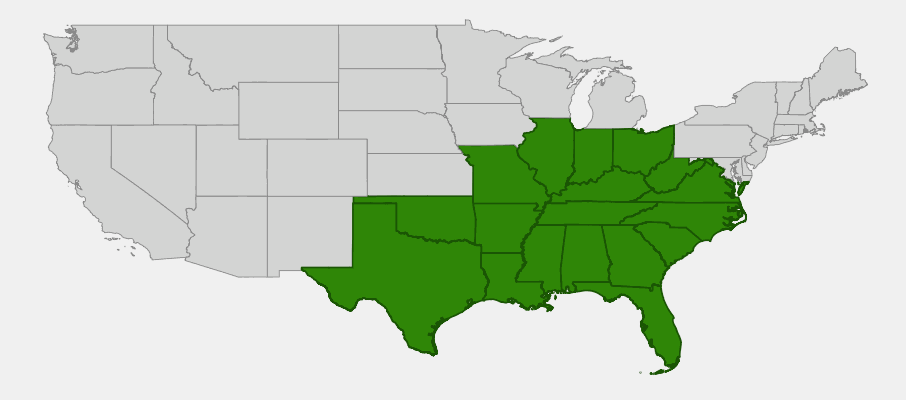
| U.S. States | Alabama, Arkansas, Florida, Georgia, Illinois, Indiana, Kentucky, Louisiana, Mississippi, Missouri, North Carolina, Ohio, Oklahoma, South Carolina, Tennessee, Texas, Virginia, West Virginia |
| Mexico / Canada / Other Range | Native into northeastern Mexico; not a Canadian native |
| Ecoregion | Dry woodland openings, barrens and rocky habitats of the central and southeastern range |
| Elevation Range | Locally variable; no single elevation interval is used here |
| Habitat | Open woods, rocky slopes, glades, sandy ground and limestone barrens |
| Common Associates | Dry-site native grasses and open-woodland herbs; use local communities as the guide |
Explore our regional native-plant lists: ARLA regional list. These lists cover several states; each species has its own native range.
Growing & Care Guide
Sun and spacing
Choose full sun or an open partly shaded site where the rosette will not disappear beneath a dense canopy of neighboring foliage. Leave horizontal space for leaves as well as vertical space for the flowering stalk. A path edge can be effective if the leaves will not be trampled and the stalk does not repeatedly brush visitors. Avoid designing from flower height alone.
Drainage comes before drought tolerance
Check how the soil behaves after rain. A well-drained rocky or sandy bed is a different environment from a clay depression that only looks dry in August. Do not compensate for a wet planting hole by adding a small pocket of grit while water still collects around it. Move the planting to a genuinely drained location or redesign the broader drainage pattern.
Water during establishment
Water the nursery root ball at planting and inspect it as the surrounding soil dries. A small plant cannot initially exploit the same volume of soil as a mature one. As roots establish, allow the site to move toward its normal dry-to-moderate cycle. Avoid repeatedly filling water into the crown simply because the leaves look succulent; succulent texture is not a signal to keep the base wet.
Soil, feeding and mulch
Use the soil conditions of an appropriate local habitat as a starting point. Heavy feeding is not necessary to enjoy the plant’s distinctive form. Keep thick, damp mulch away from the center of the rosette, and do not bury the crown while topping up a bed. If surrounding plants require constant water and fertilizer, false aloe may be the wrong partner for that planting.
Flowers, seed and repeat performance
This perennial is not managed as a century plant that is expected to die immediately after one enormous flowering event. Retain the stalk if seed or seasonal structure is wanted, or remove a spent stalk carefully without cutting into the living base. A young or recently moved plant may concentrate on establishment before giving a strong flower display.
Propagation and winter care
Use nursery-propagated divisions or correctly identified seed. Follow the propagator’s method for the particular seed lot instead of applying a generic treatment intended for an unrelated aloe. Leave the crown in a drained position through winter and mark its location when foliage disappears. In an exposed site near the hardiness limit, local experience is more informative than a national zone label.
Landscape Uses
- A structural rosette among shorter native grasses in a drained sunny planting.
- An airy summer flowering accent beside a path where the tubular flowers can be seen closely.
- A dry open-woodland or glade-inspired border using species native to the local area.
- A botanical teaching garden that explains common-name confusion and scientific synonyms.
Wildlife & Ecological Value
For Pollinators
The flowers are visited by a range of insects, and Missouri’s conservation account describes moth associations as well as other visitors. Fragrance and the flower tube help explain why a dull-colored flower can have substantial ecological interest. Leave some flowering stalks undisturbed and avoid treating an evening insect visitor as a pest simply because it is not a butterfly.
For Birds
Hummingbird visits are reported in regional natural-history accounts, but a garden should not promise a dependable hummingbird display from one plant. Habitat, season and other available flowers influence visits. The broad planting should include a succession of suitable native flowers and safe cover rather than relying on a single ornamental feature.
For Mammals
No plant label can guarantee protection from hungry mammals. If a young rosette is repeatedly damaged, temporary protection may be needed while it establishes. Choose a barrier that does not shade or constrict the leaves, and remove it when it no longer serves a purpose. A damaged flower stalk does not necessarily mean the perennial crown has died.
Ecosystem Role
False aloe adds a distinctive growth form to dry native communities. Its value is diminished if wild populations are dug to supply gardens. Ask how nursery stock was propagated and keep provenance information. A locally appropriate, nursery-grown plant supports both garden goals and protection of the specialized habitats in which wild plants occur.
Cultural & Historical Uses
The common name records a resemblance, not a botanical equivalence. People encountering the thick leaves may think of an aloe, while the flowering stem suggests an agave. Botanical classifications have also changed, which is why both Manfreda virginica and Agave virginica remain visible in credible references.
A careful garden label can include the accepted name used here followed by the familiar synonym. This is especially useful in a community garden or teaching collection, where visitors may compare the label with an older field guide. A change in genus does not by itself mean the plant in the bed was misidentified.
This page does not recommend eating the plant or applying its sap to skin. Similarity to a commercially used species is not evidence of safety or equivalent chemistry. Enjoy its form, flowers and natural history without turning a common-name resemblance into a medicinal claim.
Frequently Asked Questions
Is false aloe the same as Aloe vera?
No. The name refers to an appearance. Do not substitute it for an aloe in food, skin preparations or home remedies.
Should I search for Manfreda or Agave virginica?
Use both when checking nursery records. Kew currently accepts Manfreda virginica, while Agave virginica is a widely used synonym. Confirm the full species identity rather than choosing on genus alone.
Does the plant die after flowering?
It is a repeat-flowering perennial, not the familiar once-flowering century plant. A spent stalk and a living perennial base should be treated separately.
Why does the label say six feet when the leaves are low?
The upper height refers to the flowering stalk. The basal rosette is much shorter, so design for both its ground-level footprint and its vertical flower display.
Can I grow it in a damp border?
Persistent wetness is a poor starting point. Select a site that drains well through all seasons, not just one that happens to dry on the surface in summer.
Sources & Further Reading
- Kew Plants of the World Online: identity, synonyms and native distribution
- USDA PLANTS profile
- NC State Extension: Agave virginica
- Missouri Department of Conservation: False Aloe
- Missouri Plants: Manfreda virginica
- Illinois Wildflowers: Eastern Agave
- Digital Atlas of the Virginia Flora: occurrence
Find Native Plants Near You
Ask a native-plant nursery for correctly identified, nursery-propagated stock and information about regional provenance. Match the plant to your site rather than collecting it from a wild population.
Arkansas native plant nurseries · Louisiana native plant nurseries · Oklahoma native plant nurseries · Texas native plant nurseries