Carolina Anemone (Anemone caroliniana)
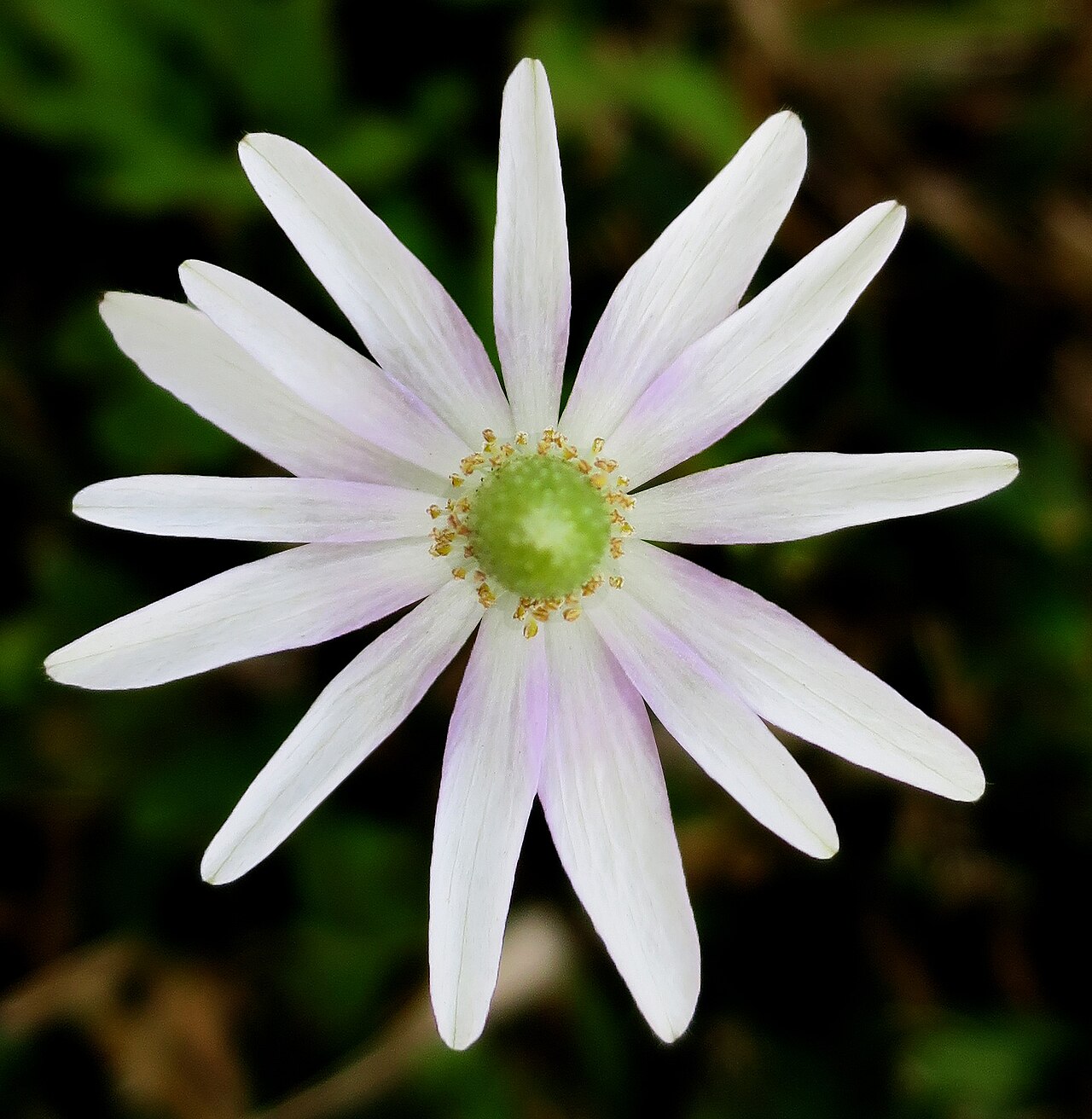
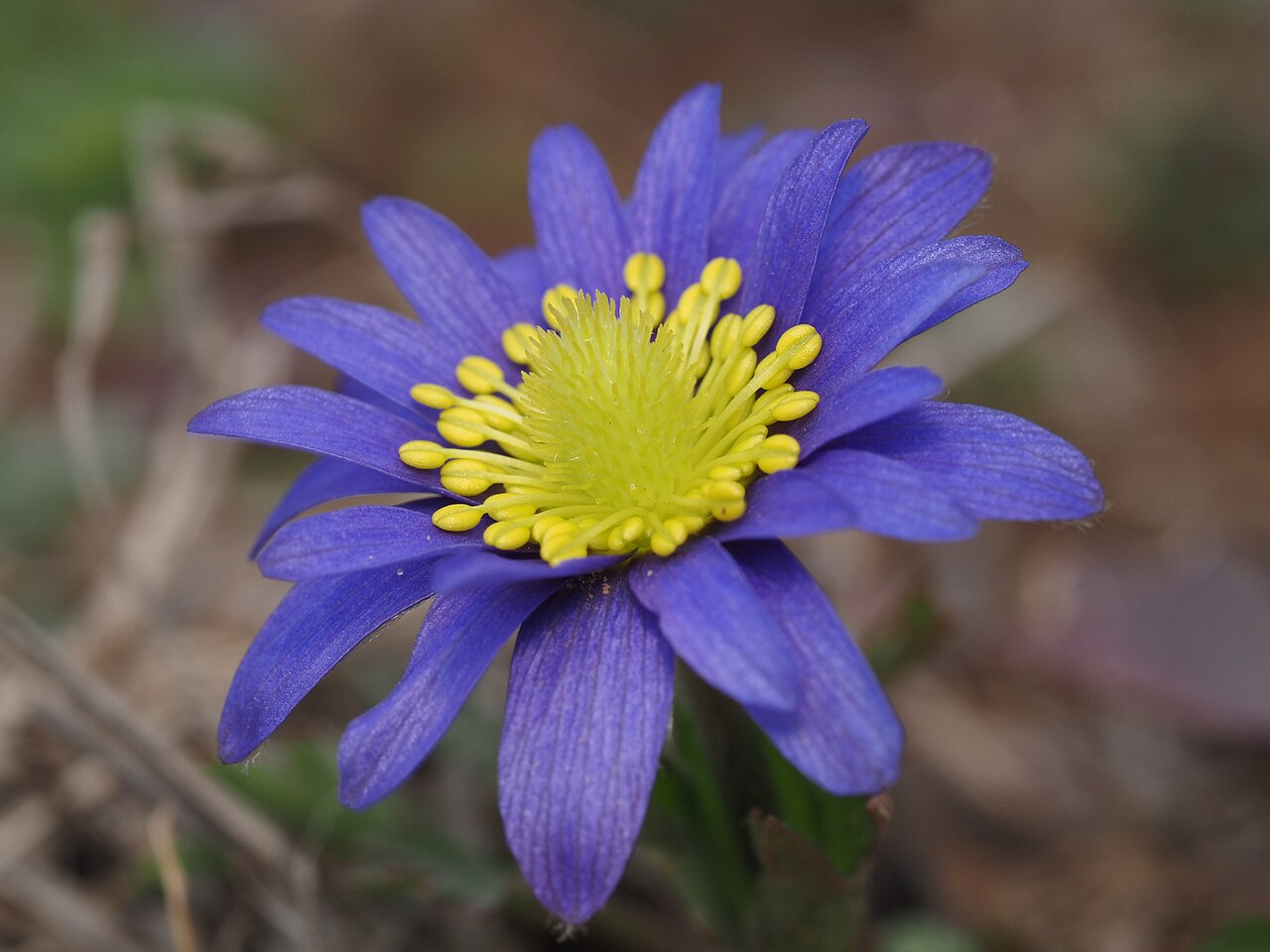
Carolina anemone is a small spring wildflower with a much larger visual presence than its height suggests. A solitary flower opens above a divided whorl of leaves, its many pale or purple segments surrounding a crowded center of stamens. In an open prairie planting, the effect is delicate and precise rather than a mass of summer color.
The showy flower parts are sepals, not the petals of a daisy or sunflower. That distinction matters when identifying it: a central cluster of reproductive structures is surrounded by numerous separate, petal-like sepals. The old shorthand comparison to a sunflower is not a useful diagnostic description for this species.
This guide concerns Anemone caroliniana Walter. Botanical authorship matters here because a later use of the same species name by different authors has been associated with Anemone berlandieri. For nursery purchases, conservation work and image identification, do not silently combine those plants just because a shortened name looks identical.
Identification
A low spring plant
The flowering stem is short compared with many summer prairie perennials, often placing the bloom only a few inches above surrounding vegetation. Its underground structure allows it to persist between periods of visible growth. Do not judge a site unsuitable merely because the plant is not conspicuous late in the growing season; keep a record of where it was planted and when it was last observed.
Basal leaves and the stem whorl
Basal leaves are divided, and a whorl of three divided, leaf-like bracts occurs below the flower. Their arrangement is a useful clue that separates the plant from unrelated spring flowers with a superficially similar color. Examine the entire stem rather than taking a top-down flower photograph alone. A close photograph of the divided foliage is valuable evidence.
Flower color and structure
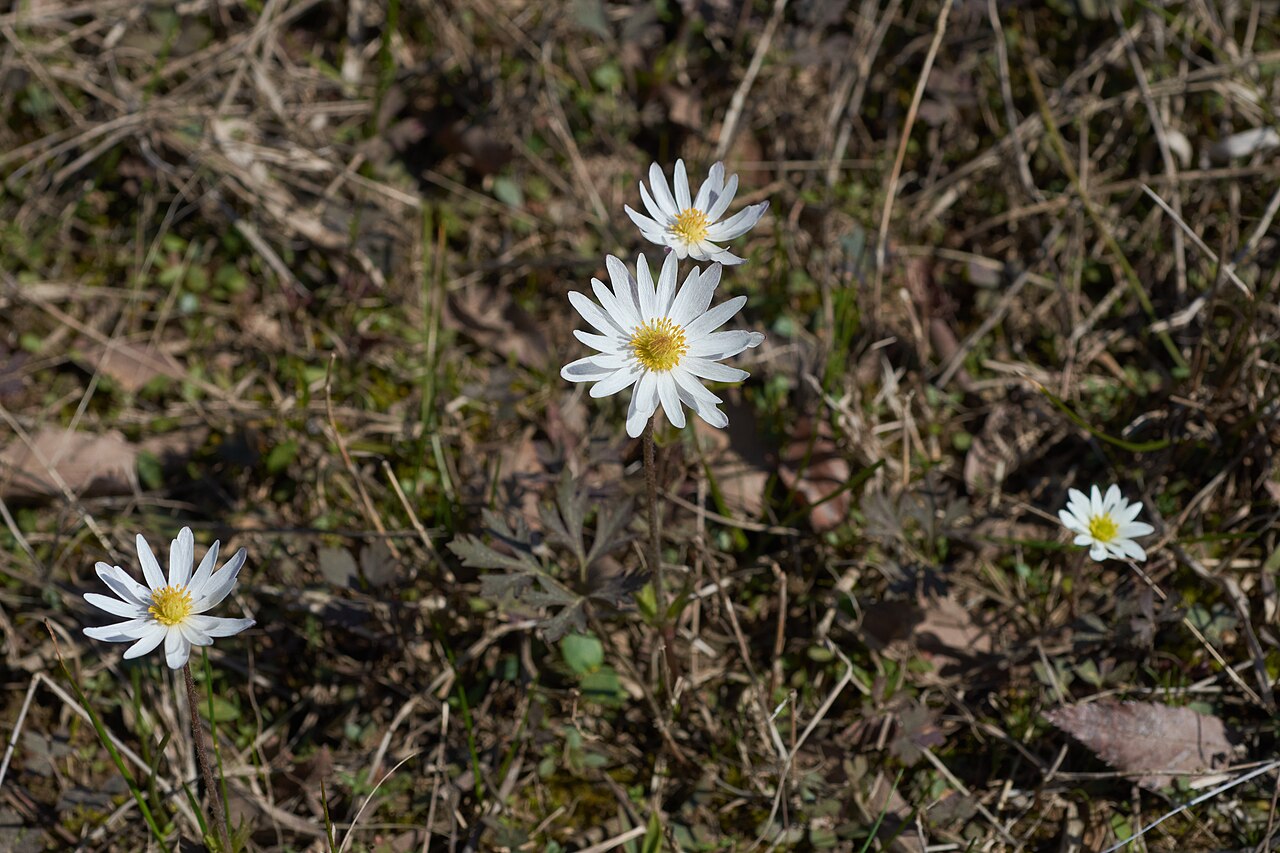
Flowers may be white or shaded pink, blue-purple or violet. Color alone does not establish a different species. Numerous petal-like sepals surround many stamens, which can make the center appear yellow when pollen is visible. Count and shape vary, so combine flower structure with leaf arrangement, habitat and a regional key.
Fruit after the bloom
As the flower ages, the sepals fall and the central fruiting structure develops into a head of small hairy fruits. This stage can look very different from the neat open blossom. A plant photographed only in fruit may need careful comparison with earlier photographs or a botanical key. Avoid removing every spent flower if you want to observe this part of its life cycle.
Carolina versus related anemones
Other small anemones occur in parts of the range, including plants that have been confused in historical naming. The author citation Walter is retained in the source record for this page. If a nursery or photograph uses a different concept, request clarification rather than deciding that every spring anemone is interchangeable. Local floras are particularly useful where more than one species grows nearby.
Quick Facts
| Scientific Name | Anemone caroliniana |
| Family | Ranunculaceae |
| Plant Type | Small tuberous perennial wildflower |
| Mature Height | Commonly about 4–12 inches; regional descriptions vary |
| Mature Spread | Small individual tufts; allow room for a naturalized colony |
| Growth Rate | Seasonal spring growth from an underground perennial structure |
| Sun Exposure | Full sun in open habitats |
| Water Needs | Dry to moderately moist, with good drainage |
| Soil Type | Open, well-drained prairie, sandy or rocky soils |
| Soil pH | Use local habitat and soil evidence; no universal numerical target |
| Bloom Time | Spring, often March–April in the southern range |
| Flower Color | White, pale pink, blue-purple or violet |
| Fall Color | Not grown for fall foliage; mark the planting position |
| Fruit | A head of small, hairy dry fruits |
| Deer Resistant | Not a dependable deer-proof planting; avoid edible-use assumptions |
| USDA Hardiness Zones | Use regional provenance and local nursery guidance rather than an unsupported zone range |
Native Range
Plants of the World Online places the native range across parts of the central United States and into the Southeast. The mapped states include Arkansas, Louisiana, Oklahoma and Texas, but populations are tied to suitable open habitat rather than being spread evenly across those states. The overview map is a first filter, not a county-level restoration prescription.
Some state records represent historical rather than surviving populations. Indiana has treated Carolina anemone as extirpated in its state plant review. Indiana is shown as part of the historical native range here, not as a promise that wild populations can currently be found there. This distinction is important whenever a broad native-range map is compared with a modern local survey.
Open prairie and glade habitats can become unsuitable through changes in vegetation and land use even when regional climate remains suitable. Choose nursery-grown material and a planting position that preserves light at ground level. A name that includes “Carolina” should not replace an actual distribution check; common names often tell only part of a plant’s geographic story.
Native Range at a Glance
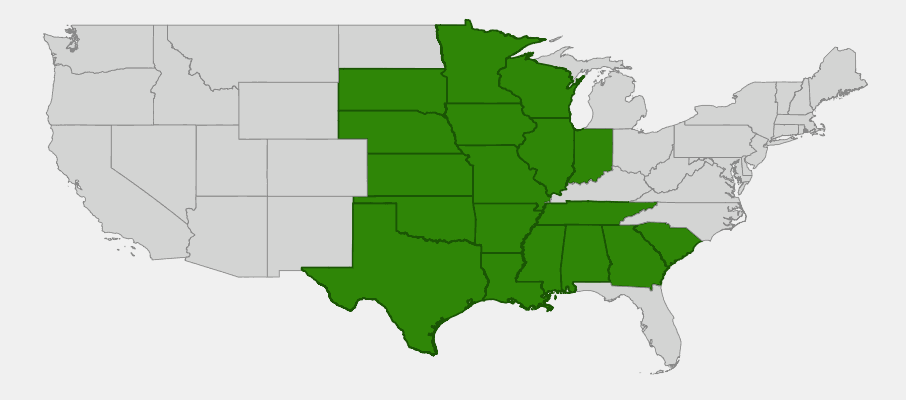
| U.S. States | Alabama, Arkansas, Georgia, Illinois, Indiana, Iowa, Kansas, Louisiana, Minnesota, Mississippi, Missouri, Nebraska, Oklahoma, South Carolina, South Dakota, Tennessee, Texas, Wisconsin |
| Mexico / Canada / Other Range | Native range in this treatment is within the United States |
| Ecoregion | Open prairie, glade and grassland habitats within the central and southeastern range |
| Elevation Range | Variable across its range; confirm local occurrence for restoration |
| Habitat | Open, well-drained grassland and glade sites, including sandy soils |
| Common Associates | Low native grasses and spring prairie herbs; use locally documented communities |
Explore our regional native-plant lists: ARLA regional list. These lists cover several states; each species has its own native range.
Growing & Care Guide
Give the spring foliage light
A sunny, open site is the most useful starting point. Pay attention to light at soil level during spring rather than counting sunlight above a tall summer canopy. Dense groundcovers can compete with a small anemone before it has a chance to flower. Keep its immediate space open without repeatedly disturbing the underground plant.
Match drainage to the habitat
Use a well-drained site that does not remain saturated after rain. A small dry-looking surface patch above compacted, wet subsoil is not equivalent to a prairie or glade soil. If the only available location is a poorly drained depression, choose a plant adapted to that condition instead of expecting this anemone to tolerate it.
Plant nursery-grown stock carefully
Place a nursery-grown plant at the depth recommended by the grower and preserve the root system as much as possible. Water it into the surrounding soil, then check moisture during establishment. Small plants are easy to lose among weeds or mulch, so a discreet marker and a planting photograph can prevent accidental removal during routine maintenance.
Use restrained companions
Select nearby plants that will not create a thick, permanent mat over the anemone. A mix of locally appropriate short grasses and spring herbs can leave room for its early display. Avoid planting a vigorous spreading species directly over a small colony and then trying to solve the competition by frequent digging around the anemone’s roots.
Propagate with reliable instructions
Correct identification is the first propagation step. Use a specialist nursery or seed supplier that distinguishes this taxon from similar anemones, and follow its current instructions for the seed lot. Do not assume that a treatment for a different Anemone species applies unchanged. Record the name, source and sowing date so that a delayed emergence is not mistaken for a weed.
Observe before intervening
The plant’s small size and seasonal cycle can make it seem absent when it is simply inconspicuous. Check your spring records before replacing it or digging the same spot. If several plants fail, reassess competition and drainage first. There is little benefit in applying a pesticide or fertilizer without a specific diagnosis, especially in a planting intended to support native insects.
Landscape Uses
- A small, visible spring accent in an open prairie-style planting with compatible neighbors.
- A botanical garden collection that can explain sepals, leaf whorls and careful species identification.
- A drained native wildflower bed where early-season plants are not smothered by dense groundcovers.
- A locally sourced restoration planting only after county, habitat and taxonomic checks.
Wildlife & Ecological Value
For Pollinators
The open flower exposes pollen to visiting insects. A regional Illinois account documents a sweat-bee visitor, illustrating the value of small flowers early in the season. That observation does not justify a long invented list of specialist pollinators. In a garden, protect the bloom period from unnecessary spraying and observe which insects actually visit.
For Birds
This is not primarily a berry or large-seed plant for attracting birds. Its contribution is better understood as one element in a diverse ground-layer community. Bird habitat depends on cover, insects and the surrounding landscape; avoid assigning a dramatic bird-feeding role to a plant simply because it produces a fruiting head.
For Mammals
Members of the buttercup family should not be treated as edible because their flowers look delicate. Keep the plant out of culinary experiments and do not use deer-resistance claims as a substitute for observing local browsing. Protect young stock if trampling or digging, rather than leaf eating, is the main threat.
Ecosystem Role
A surviving patch in a native grassland is part of a habitat, not a source of free garden transplants. Small spring plants can be overlooked in broad surveys and damaged by poorly timed disturbance. Nursery propagation and accurate records make it possible to enjoy the species without removing individuals from vulnerable wild populations.
Cultural & Historical Uses
Anemones are often called windflowers, a name that suits the light movement of a slender flowering stem. A garden interpretation can use that familiar word while still displaying the complete scientific identity. Common names are helpful introductions but do not resolve the difficult boundary between closely related species.
This species is a useful example of why historical names need to be read carefully. An author citation may appear like an unnecessary technical detail until two different botanical usages share the same shortened name. Keeping Walter with the source record helps prevent a wrong plant or image from being folded into this page.
No medicinal or culinary use is recommended here. Historical reports for a genus should not be repurposed as directions for a particular species. The practical cultural value of this plant in a modern garden is its spring display, its connection to native grasslands and the opportunity to learn close botanical observation.
Frequently Asked Questions
Are the white or purple flower parts petals?
They are petal-like sepals. The flower is not a miniature sunflower; look at the sepals, stamens and divided leaf whorl together.
Can Carolina anemone be purple?
Yes. Flower color varies, so white and purple photographs are not automatically different species. Structure and a reliable regional identification remain important.
Why does the scientific author matter?
This page uses Anemone caroliniana Walter. A later historical use of the same name has been associated with another species, so abbreviated labels can conceal a real identification problem.
Does a green Indiana on the map mean it is still common there?
No. The map includes historical native range, and Indiana has listed the species as extirpated. A present-day county survey and a broad range map answer different questions.
Can I collect a few from a prairie?
Use nursery-propagated material instead. Small wild populations and their habitat can be damaged by digging, even when a species has a broad overall range.
Sources & Further Reading
- Kew Plants of the World Online: identity, synonyms and native distribution
- USDA PLANTS profile
- USDA Forest Service: Carolina Anemone
- Missouri Plants: Anemone caroliniana
- Native Plant Society of Texas: Carolina Anemone
- Illinois Wildflowers: documented flower visitors
- Indiana Natural Resources Commission: state-listed plant changes
Find Native Plants Near You
Ask a native-plant nursery for correctly identified, nursery-propagated stock and information about regional provenance. Match the plant to your site rather than collecting it from a wild population.
Arkansas native plant nurseries · Louisiana native plant nurseries · Oklahoma native plant nurseries · Texas native plant nurseries