
Frost Aster (Symphyotrichum pilosum)
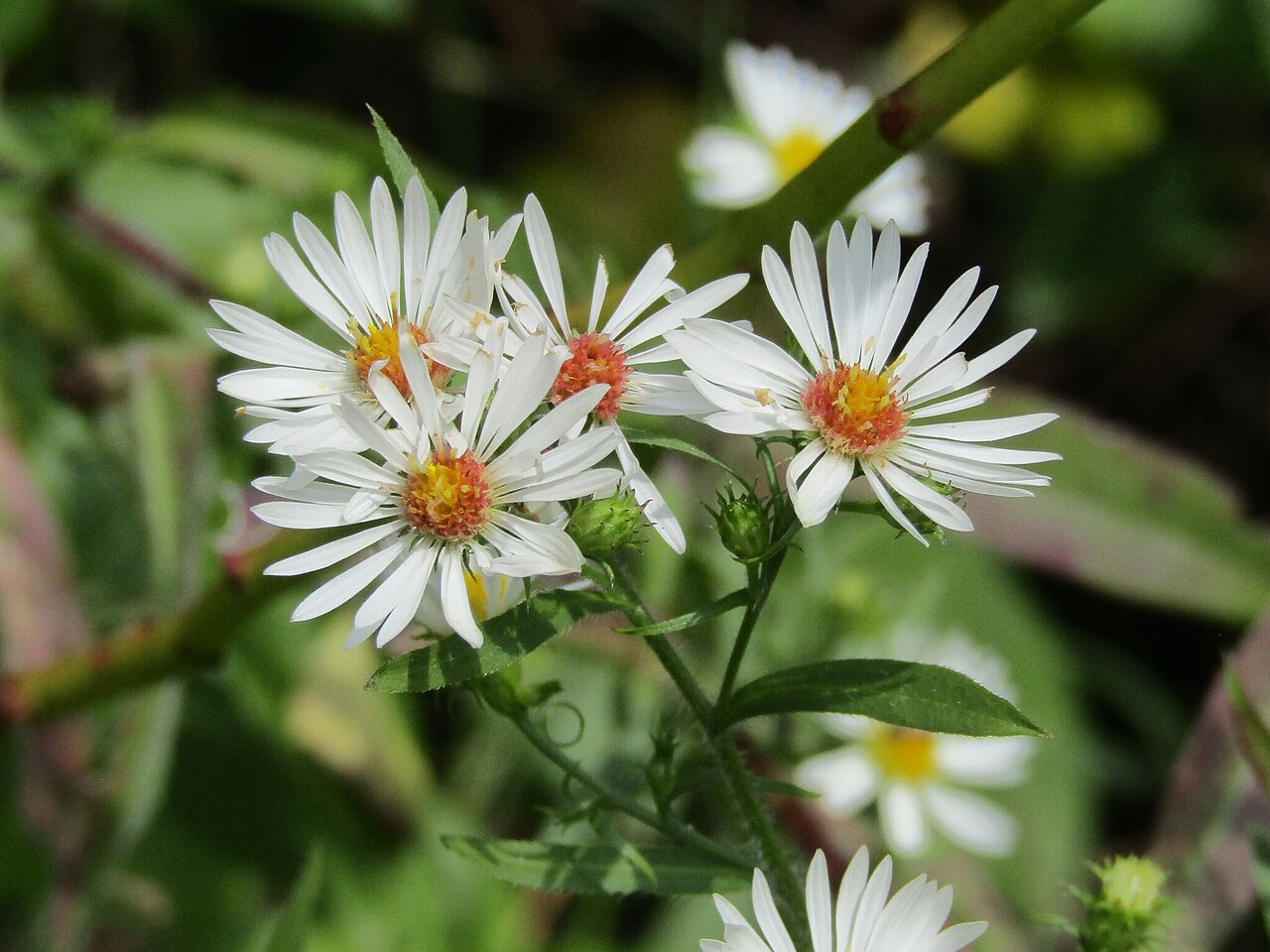
Frost aster can turn a rough sunny edge into a cloud of small white flowers late in the season. Its branching stems carry many heads above a framework of narrow leaves, making it visually light even when the plant occupies a substantial patch. It is useful where a vigorous native perennial is welcome, but it should not be sold as a tiny, stationary edging plant.
The accepted name used here is Symphyotrichum pilosum. Aster pilosus, the name in many older lists and horticultural records, refers to the same taxon. Keeping that synonym visible helps gardeners find accurate information without mistaking a change in genus for a different plant.
There is an important regional caution: the current Kew native-range treatment includes Arkansas and Oklahoma but does not list Louisiana or Texas as native for this species. Our regional list covers all four states, so a row in that list must not be read as an endorsement for every part of the region. Use the map and local botanical records together.
Identification
Branching architecture
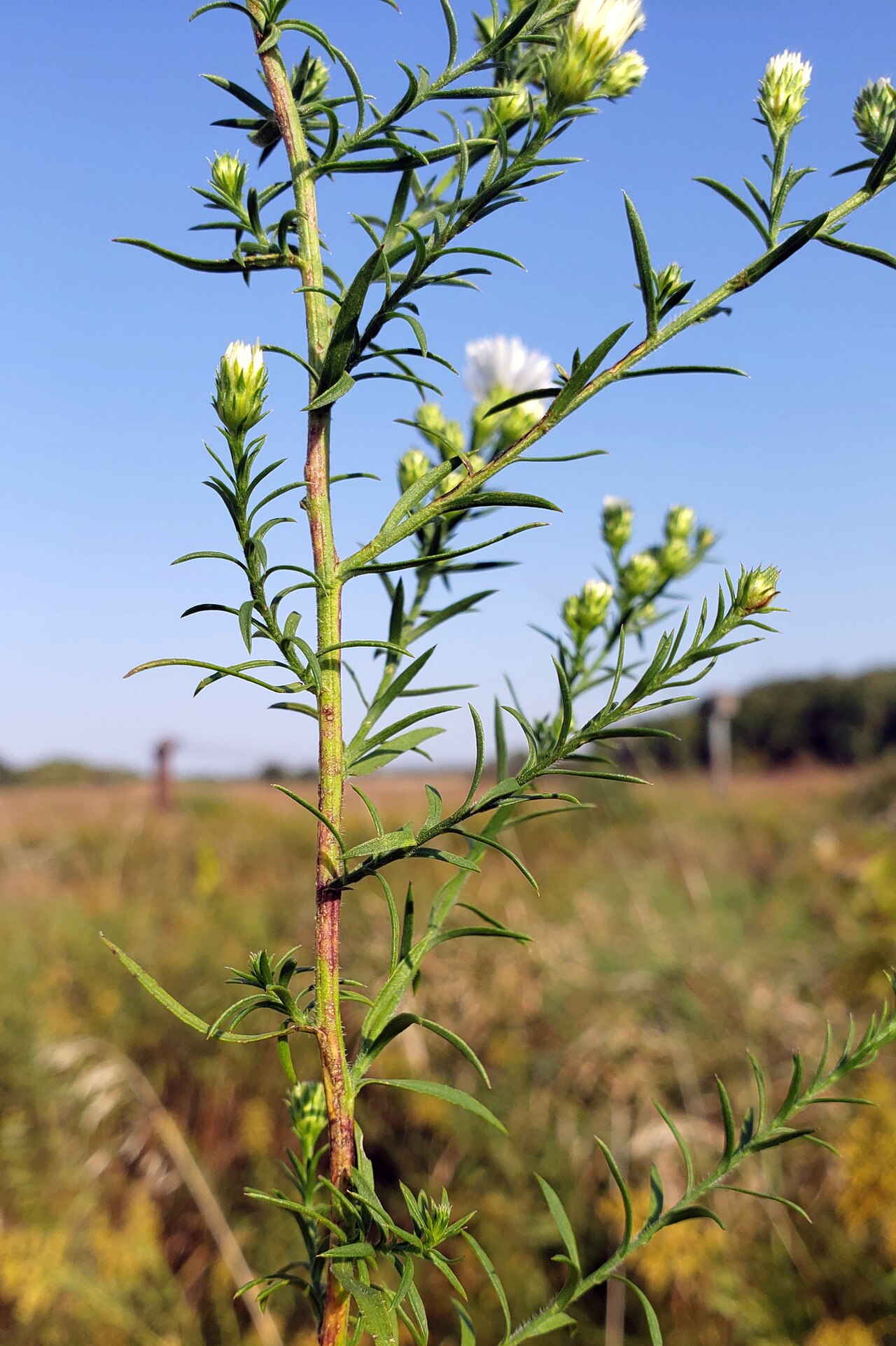
A mature plant develops many branches and can be several feet tall and wide. The overall outline may be loose rather than neatly upright. A mown, grazed or drought-stressed plant can be much smaller, so height is a poor identification feature by itself. Look for the way numerous flowering branchlets develop along the stems.
Hairs and leaves
Stems and leaves commonly carry noticeable hairs, contributing to the alternate name hairy aster. Lower leaves are longer and broader than the small leaves on the upper flowering branches. Small leaf clusters may appear in the axils. Photograph both lower foliage and upper branches; a close-up of one white flower is not enough to identify a small-flowered aster confidently.
Flower heads
The small heads have white ray florets around a central disc. Disc florets start yellow and can become reddish or brownish as a head ages, so several center colors may appear on the same plant. This progression is not necessarily a sign of disease. A flowering patch viewed from above can hide important diagnostic details below the heads.
Bracts beneath the heads
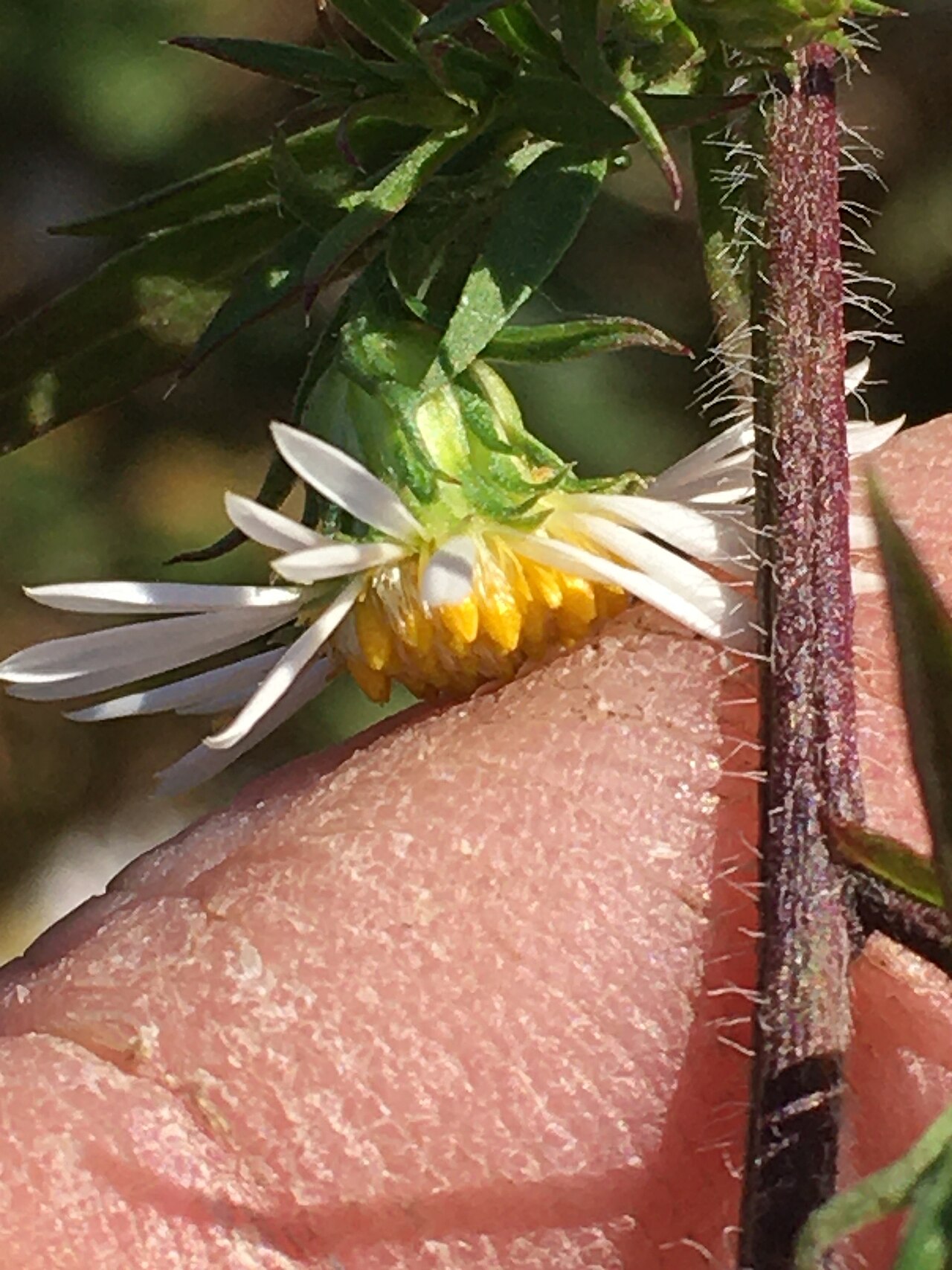
The green tips of the involucral bracts tend to curve outward. Combined with hairiness, leaf pattern and overall form, these bracts help distinguish frost aster from superficially similar species. A side view of the underside of a head is often more useful than another frontal flower photograph. Regional keys may be needed where several related asters occur together.
Basal growth and seed heads
Low foliage can persist beyond the main flowering season, while old heads become pale and fluffy as their dry fruits mature. A patch that appears to have finished flowering may still be producing viable seed. Keep track of its boundary in a small garden and distinguish desirable basal regrowth from seedlings appearing at a distance.
Quick Facts
| Scientific Name | Symphyotrichum pilosum (syn. Aster pilosus) |
| Family | Asteraceae |
| Plant Type | Branching herbaceous perennial |
| Mature Height | Usually about 1–4 feet, depending on site and competition |
| Mature Spread | Branching plants may be several feet wide; colonies can expand |
| Growth Rate | Vigorous, with seed dispersal and perennial regrowth |
| Sun Exposure | Full sun preferred |
| Water Needs | Dry to moderately moist; tolerates a range of drained sites |
| Soil Type | Loam, clay, sand or gravelly soils with suitable drainage |
| Soil pH | Broad soil tolerance; use local conditions rather than a narrow pH prescription |
| Bloom Time | Late summer and autumn, often continuing toward frost |
| Flower Color | White rays; yellow discs becoming reddish brown with age |
| Fall Color | Abundant white flowers and later seed heads |
| Fruit | Small dry fruits with wind-dispersed hairs |
| Deer Resistant | Can be browsed by deer and rabbits; not reliably resistant |
| USDA Hardiness Zones | Confirm local provenance and nursery guidance across the broad native range |
Native Range
The native range spans much of central and eastern North America, including parts of eastern Canada. The map follows the current Plants of the World Online state-level treatment. It deliberately excludes introduced occurrences and does not substitute a map of every observation for a map of native range.
Frost aster is well known from open and disturbed habitats. Its ability to grow along a roadside or in a field outside its native range does not make that occurrence native. Similarly, photographs from overseas can be correctly identified while providing no evidence about North American nativity. Species identity and geographic status are separate checks.
Within our Arkansas–Louisiana–eastern Oklahoma–eastern Texas table, the supported native-state recommendation on this page is Arkansas and Oklahoma. For Louisiana or Texas, select a locally documented native aster or resolve the local botanical status before planting for restoration. A broad regional table heading is not a replacement for that check.
Native Range at a Glance
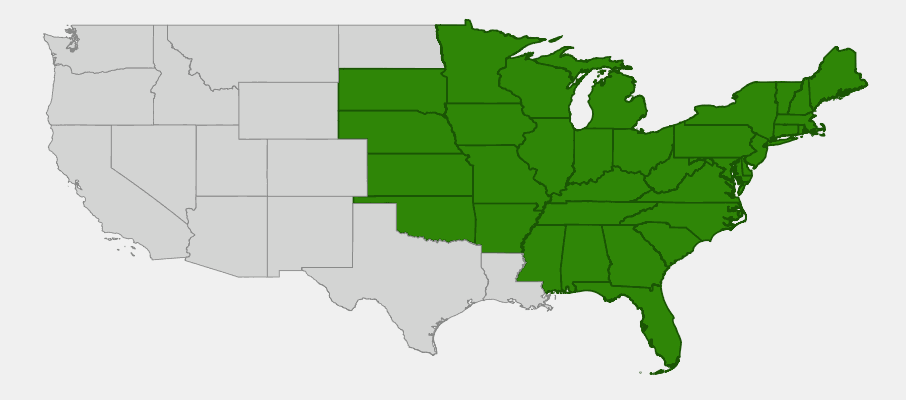
| U.S. States | Alabama, Arkansas, Connecticut, Delaware, DC, Florida, Georgia, Illinois, Indiana, Iowa, Kansas, Kentucky, Maine, Maryland, Massachusetts, Michigan, Minnesota, Mississippi, Missouri, Nebraska, New Hampshire, New Jersey, New York, North Carolina, Ohio, Oklahoma, Pennsylvania, Rhode Island, South Carolina, South Dakota, Tennessee, Vermont, Virginia, West Virginia, Wisconsin |
| Mexico / Canada / Other Range | Native in parts of eastern Canada; introduced records elsewhere are excluded from the map |
| Ecoregion | Open fields, disturbed grassland, edges and roadsides within the native range |
| Elevation Range | Variable; consult local flora for elevation-sensitive plantings |
| Habitat | Sunny open ground, fields, banks and disturbed sites |
| Common Associates | Locally native grasses, goldenrods and other late-season meadow plants |
Explore our regional native-plant lists: ARLA regional list. These lists cover several states; each species has its own native range.
Growing & Care Guide
Use it where vigor is useful
Choose an open, sunny location with room for branching stems and potential seedlings. A meadow edge, informal habitat border or sunny bank is often a better fit than a narrow formal bed. If every neighboring plant must stay in an exact position, a more restrained species may be a better choice. Native status does not automatically mean suitable for every garden design.
Establish without overwatering
Water new plants into the soil and monitor moisture while roots establish. Mature plants tolerate dry to moderately moist conditions across a range of soils, but a fresh nursery root ball can still dry too rapidly. Adjust watering to actual soil moisture and rainfall rather than maintaining a permanently wet pocket around the crown.
Allow light through the planting
Dense shade can reduce the quality of an open-habitat planting. Keep nearby shrubs or taller plants from closing completely over the aster’s growing space. In a meadow, evaluate the balance of grasses and flowering plants over several seasons rather than assuming the original spacing will remain unchanged.
Control seedlings and patch size
Check for seedlings in paths and small neighboring beds. Remove unwanted young plants before their roots become established, or leave them where naturalization is part of the plan. Cutting some heads before dispersal reduces seed production but also removes a late-season feature. Keep a deliberate portion of the patch for flowers and seed rather than treating all growth as either desirable or undesirable.
Pruning and seasonal cleanup
If the stems are leaning into a path, a selective trim can be more sensible than cutting the entire colony during peak flowering. Avoid repeated late-season clipping when insect forage is the goal. Leave some stems through winter where they are safe, then clear or shorten them according to local conditions and the needs of the planting.
Propagation and monitoring
Use correctly labeled nursery stock, divisions or seed from a reliable source. Because small white asters can be confused, do not assume every volunteer nearby is this species. Monitor leaf and flower details as the new plant matures. Where browsing is intense, protect young plants and accept that a native aster may be eaten rather than advertising it as deer-proof.
Landscape Uses
- A late-flowering, informal native meadow component within its documented native range.
- A sunny habitat border where an expanding patch can be monitored and managed.
- A demonstration planting for learning aster identification from bracts, leaves and hairs.
- A seasonal floral layer with locally appropriate goldenrods and grasses, not a substitute for a diverse planting.
Wildlife & Ecological Value
For Pollinators
Regional accounts document a wide variety of insects visiting frost aster. The many open heads provide numerous small feeding sites late in the season. Preserve a portion of the flowering patch and avoid spraying blossoms. A list of visitors from one region is evidence of potential use, not a guarantee that every listed insect will occur in a particular garden.
For Birds
The seeds and the broader insect community can contribute to a wildlife planting, but bird use depends on the surrounding habitat. Retain cover and a range of seed-bearing species rather than expecting one aster to meet every need. A garden that is completely cleared at the first frost loses much of its structural diversity.
For Mammals
Deer and rabbits may browse asters, including this species. Repeated browsing can reduce flowers and change the plant’s outline without making it a different taxon. Temporary protection can help a new planting establish. Where animal pressure remains high, plan the planting around realistic browsing conditions rather than relying on an unsupported resistance label.
Ecosystem Role
Frost aster illustrates the difference between a vigorous native and an introduced invasive. It can be abundant in disturbed ground within its native range and still require management in a small garden. Outside that range, the ecological question changes. Use regional nativity, site behavior and landscape purpose together instead of treating the word native as a universal exemption from observation.
Cultural & Historical Uses
The name frost aster points to its late-season display. White flowers among browning grasses can seem especially conspicuous as the growing season closes. A garden label can connect that familiar seasonal observation with the more precise scientific name.
Many North American plants formerly grouped under Aster are now placed in other genera. Old seed lists, nursery labels and field notes may retain Aster pilosus, which is why the synonym remains useful. A good record preserves both names while avoiding duplicate entries for the same biological plant.
This guide does not recommend medicinal or edible use. The most practical human value in a garden is the late display, the opportunity to observe insects and the chance to learn the features of a frequently overlooked native plant. Those benefits do not require unsupported claims about traditional remedies.
Frequently Asked Questions
Is Aster pilosus a different plant?
It is the older scientific name used for the frost aster treated here as Symphyotrichum pilosum. Keep both names in your records when comparing references.
Why are some flower centers red or brown?
The disc changes color as a head ages. Several stages can occur on one plant; center color alone is not a diagnosis of disease.
Is it native throughout the four-state regional list?
No. The current Kew treatment used here supports Arkansas and Oklahoma but does not list Louisiana or Texas as native. The regional table covers several states, not a uniform species range.
Will it stay in a small clump?
It can branch widely and spread, including by seed. Give it room and monitor volunteers. Choose another species if a strictly contained, low-maintenance edging plant is required.
How do I identify it among other white asters?
Use the hairy stems and foliage, leaf arrangement and outward-curving green bract tips together with a regional key. A frontal flower photograph by itself is often insufficient.
Sources & Further Reading
- Kew Plants of the World Online: identity, synonyms and native distribution
- USDA PLANTS profile
- Illinois Wildflowers: Frost Aster
- Illinois Wildflowers: flower visitors
- Illinois Wildflowers: associated insects
- NC State horticultural plant guide
- University of Connecticut native-plant resource
Find Native Plants Near You
Ask a native-plant nursery for correctly identified, nursery-propagated stock and information about regional provenance. Match the plant to your site rather than collecting it from a wild population.
Arkansas native plant nurseries · Oklahoma native plant nurseries