
Three-way Sedge (Dulichium arundinaceum)
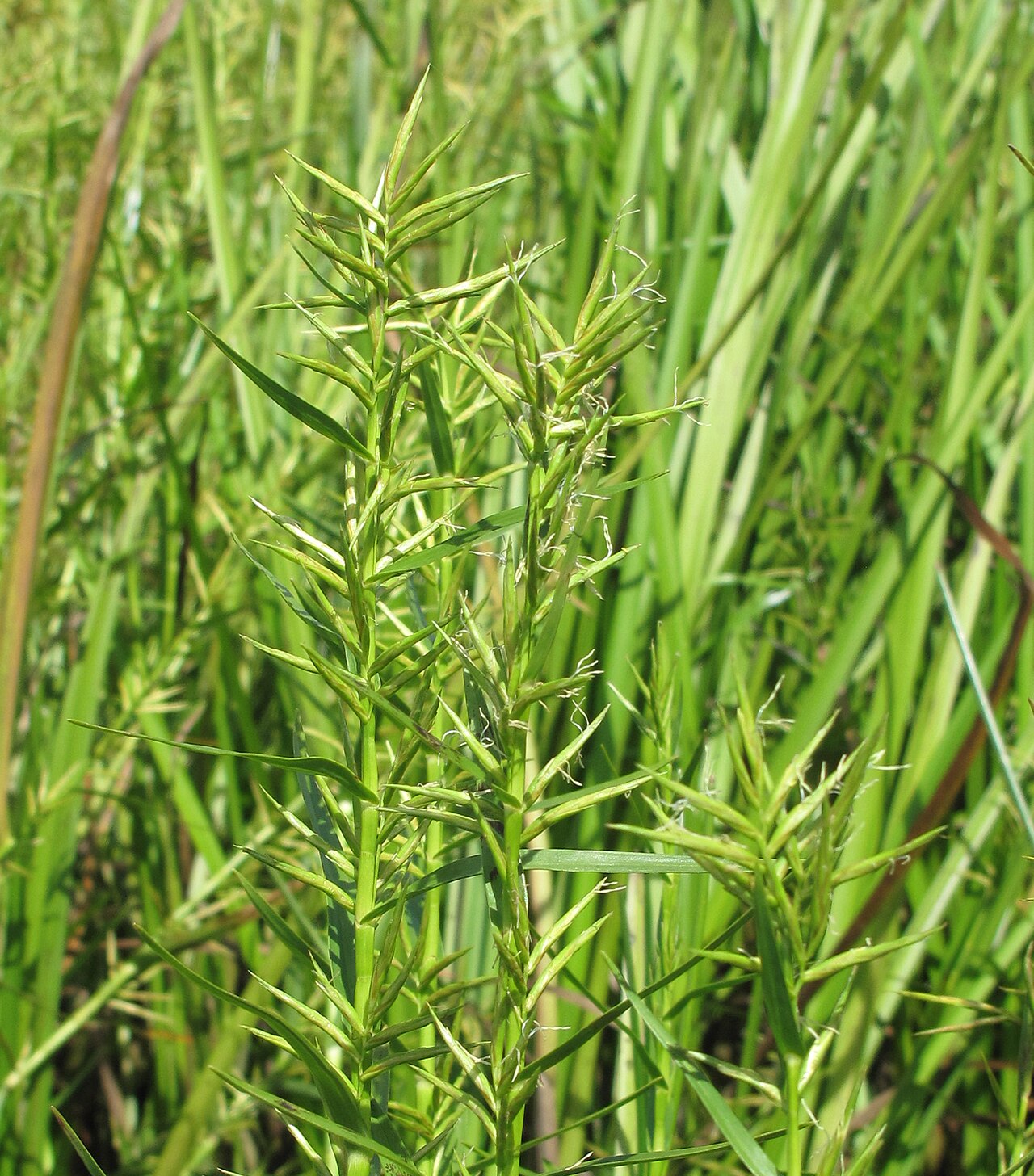
Three-way sedge gives a pond margin the look of miniature bamboo without being a bamboo at all. Its upright stems carry narrow leaves in three ranks, so a view from above reveals the geometry behind its common name. Small flowering clusters emerge beside the leaves instead of making a single showy plume at the top. It rewards close observation and works especially well where a gardener can see the edge of a wet planting at eye level.
Dulichium arundinaceum belongs to Cyperaceae, the sedge family. It is native across a broad part of mainland North America and is appropriate for suitable wet habitats in Delaware, southern New Jersey, and Long Island. The familiar variety in much of this range is D. arundinaceum var. arundinaceum. Its modest height and leafy outline distinguish it from the much larger reeds that can dominate a shoreline.
This is a wetland plant, not an ornamental grass for a dry border. Choose a pond shelf, a persistently moist swale, or another place where the root zone stays wet. A rain garden that dries hard between storms may be unsuitable without a reliably moist lower pocket. Despite a legacy entry in our Hawaii table, this species is not a Hawaiian native; its mainland distribution must not be interpreted as a recommendation for Hawaiian restoration.
Identification
Stems and Growth Habit
The plant is an upright perennial that commonly reaches 1–3 feet tall. It can make colonies through its underground growth, but individual leafy stems remain recognizable. Unlike the simple rule that all sedges have triangular stems, Dulichium can have rounded or only slightly angular, hollow stems. That makes it a useful reminder to identify a sedge from a set of features rather than from one familiar rhyme.
Three-ranked Leaves
The narrow green blades arise at successive levels around the stem in three directions. Looking down at an intact shoot is often the easiest way to see the arrangement. Leaves are flat rather than needlelike and have sheathing bases. Do not confuse a single flattened photograph with a two-ranked arrangement: turn the living shoot gently or compare more than one view.
Flowers
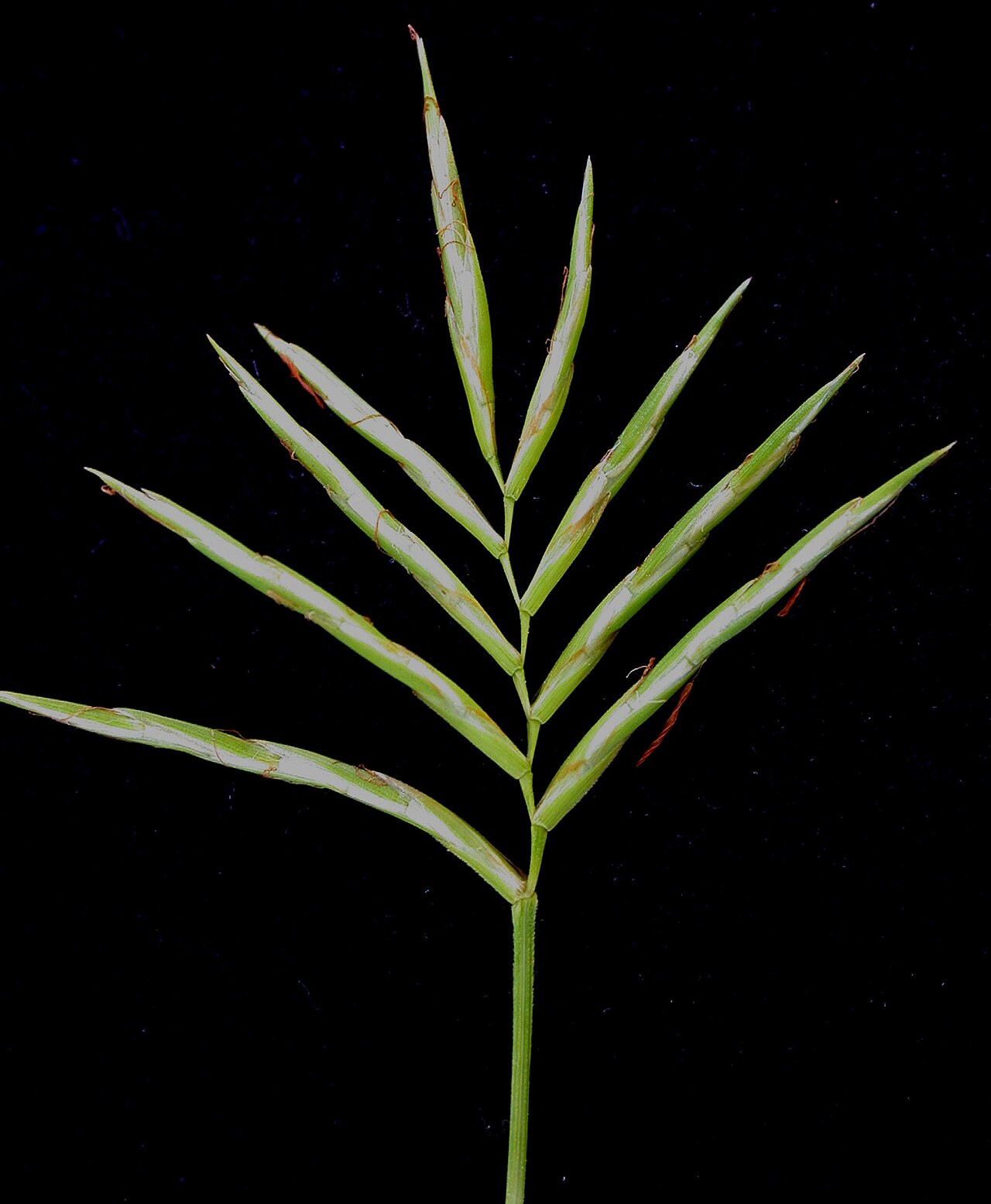
Slender flowering branches develop in the leaf axils. Their narrow, flattened spikelets carry small flowers beneath overlapping scales. The overall effect is green and delicate, with flowering generally in summer and into fall depending on latitude. It lacks the conspicuous petals of a pond-edge iris and the large terminal seed heads of many familiar ornamental grasses.
Fruit and Similar Plants
The fruit is a small dry achene, not a fleshy berry. Mature flowering material helps separate this plant from leafy grasses and other sedges. The three-ranked stem leaves, rather rounded stems, and slender side-borne spikelets are a helpful combination. For a formal wetland survey, use a regional key and mature material; a young nonflowering shoot is less reliable evidence.
Quick Facts
| Scientific Name | Dulichium arundinaceum; common regional variety D. a. var. arundinaceum |
| Family | Cyperaceae — sedge family |
| Plant Type | Rhizomatous native wetland perennial |
| Mature Height | Usually 1–3 ft (30–90 cm) |
| Mature Spread | About 1–2 ft initially; colonies can expand |
| Growth Rate | Seasonal; spreads where wet conditions remain suitable |
| Sun Exposure | Full sun to partial shade |
| Water Needs | High; persistently moist to wet soil or shallow water |
| Soil Type | Wetland soil along ponds, marshes, bog margins, and streams |
| Soil pH | Match local wetland conditions; no single narrow range prescribed |
| Bloom Time | Summer into fall, commonly July–October |
| Flower Color | Small greenish spikelets, aging tan |
| Fall Color | Foliage and stems become tan as they senesce |
| Fruit | Small dry achenes |
| Deer Resistant | Not guaranteed; protect new plugs where browsing is heavy |
| USDA Hardiness Zones | Use locally sourced material matched to climate and hydrology |
Native Range
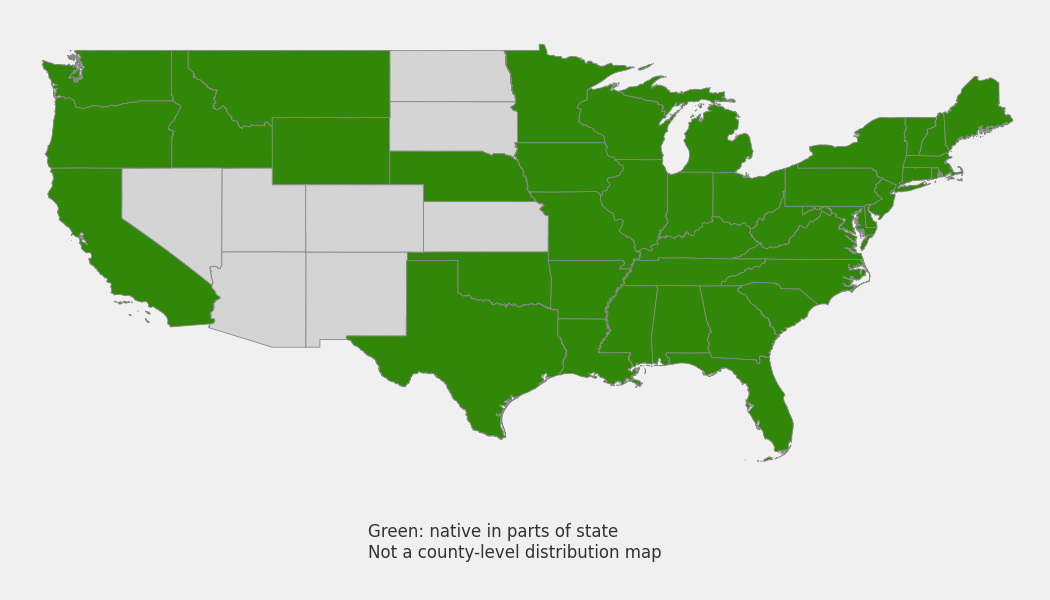
Three-way sedge is native in Canada and much of the United States, with a large eastern range and a western component extending through parts of the Pacific and northern interior states. Kew lists it in Delaware, New Jersey, and New York, and Native Plant Trust records it throughout New England. A state-level record indicates presence somewhere in that state, not continuous cover across its landscape.
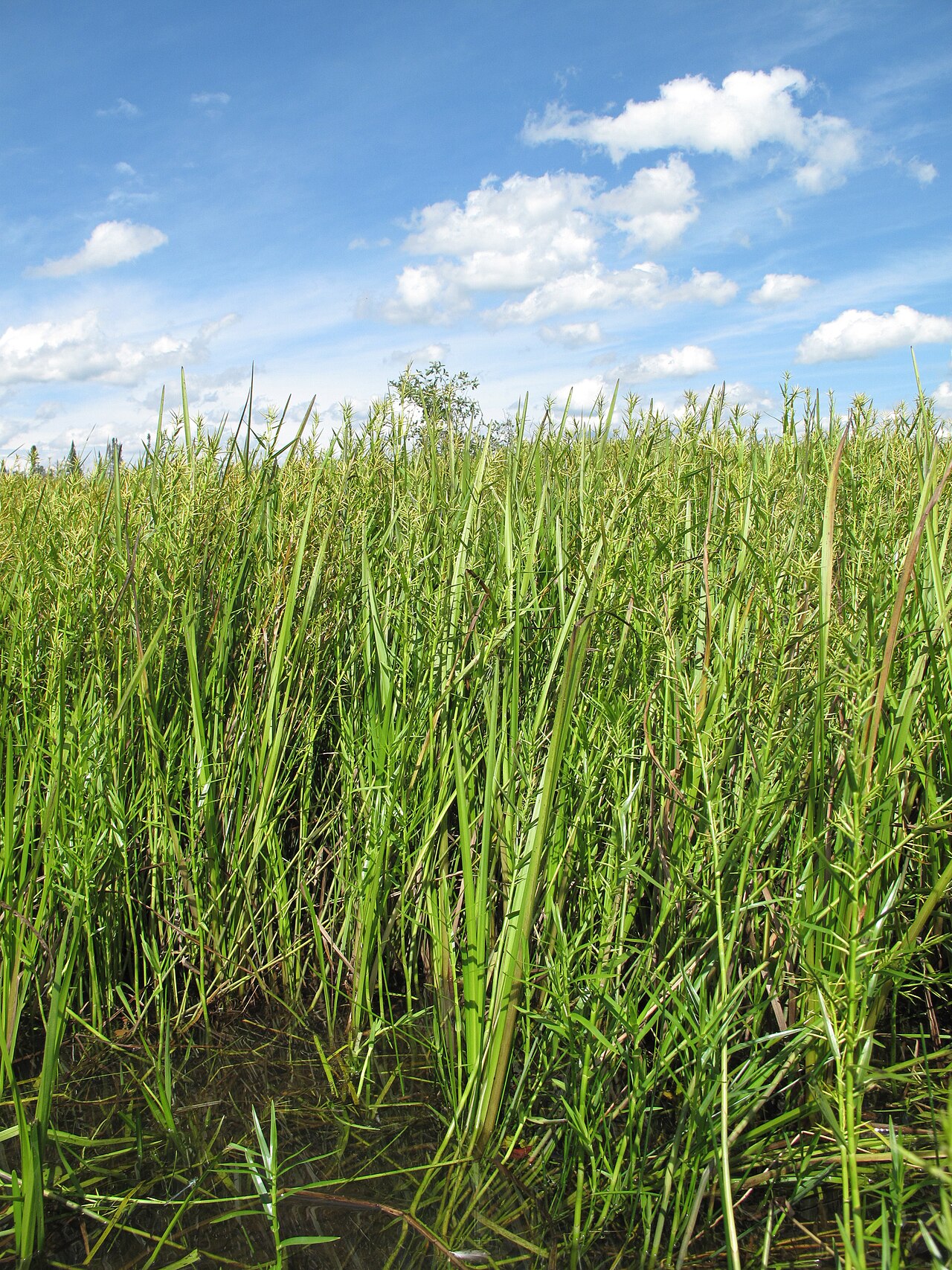
Its distribution is tied to water. Marshes, lake and river edges, bog margins, and other open wetlands provide the wet rooting environment that an ordinary upland garden lacks. A shaded wetland edge can be suitable, but dense shade and dry ground are not interchangeable with the full-sun to part-shade wet conditions recommended for cultivation.
The map follows Kew’s state-level native distribution and excludes Hawaii and Alaska. The Hawaii table entry is retained with an explicit correction rather than presented as a native planting suggestion. Within the mainland range, use local wetland guidance before installing plants in a natural waterbody. Nursery pond culture and ecological restoration have different standards for provenance and site disturbance.
📋 Regional plant list: Delaware, Southern New Jersey and Long Island
Growing & Care Guide
Light
Choose full sun or partial shade. An open pond edge often makes the three-ranked leaves especially easy to appreciate, while light shade can soften the visual transition into nearby shrubs. Check the mature shade pattern before installing a large colony. If a small pond is progressively shaded by trees, reduced light may change the balance between this sedge and its neighbors.
Soil and Water
Keep the root zone moist to wet through the growing season. Shallow standing water is suitable, but do not assume a newly planted plug can be dropped into deep water. Place it near the wet margin and observe whether new shoots remain above the surface. In a lined garden pond, use a stable aquatic planting medium and prevent floating potting mix from washing into the water.
Planting Tips
Buy correctly labeled, nursery-propagated material. Set a plug at approximately the depth at which it was grown, firm it gently into the wet medium, and make sure moving water cannot lift it out. Small repeated groups usually look more natural than isolated single shoots. Keep an open viewing edge so the leafy stems can be seen rather than hidden behind taller cattails or coarse rushes.
Pruning and Maintenance
Remove collapsed material selectively when it interferes with the garden pond, but avoid clearing every stem at once. Old stems and litter are part of the habitat around a wetland margin. Use hand tools from firm footing rather than trampling a saturated planting bed. If plants decline, investigate changes in water level, shading, or competition before adding fertilizer.
Propagation
Division of an established nursery colony is a practical garden method when permitted and when the plants are actively able to regrow. Keep roots wet during handling and retain rooted portions rather than bare fragments. Seed propagation is also possible, but dormancy and moisture requirements deserve guidance from an experienced native-plant supplier. Do not strip seed or dig divisions from a wild wetland.
Managing Spread
Allow some room for lateral growth. A container on a pond shelf can make a small ornamental planting easier to manage, provided the container does not dry out or allow roots to escape unnoticed. In a larger wet garden, monitor the boundary between the sedge and less vigorous neighbors. Expansion inside its native range is not the same thing as an invasive exotic, but even a native colony can outgrow a tiny design.
Rain Gardens versus Wetlands
The label rain garden covers very different conditions. Some basins drain within a day and become dry; others stay wet because of a high water table. Observe the site during the driest part of summer, not just after a storm. Use three-way sedge only where its moisture needs can be met without turning an otherwise dry, well-designed basin into a permanently irrigated one.
Landscape Uses
- A leafy accent on a shallow freshwater pond shelf
- A small colony in a consistently wet native garden
- A wetland-edge teaching plant for leaf arrangement and sedge identification
- A locally sourced component of a restoration design prepared for an appropriate wetland
Wildlife & Ecological Value
Pollinators
The small sedge flowers are not a showy nectar display. Include native wetland flowers nearby when designing specifically for bees and butterflies. The sedge supplies a different layer of habitat: stems, leaves, and sheltered spaces around the water’s edge. A mixed planting is more useful than asking one species to provide every resource.
Birds
Small sedge fruits and the invertebrates living among wetland stems can contribute to a shoreline food web. Bird use depends on the surrounding habitat, season, and size of the planting. Avoid claims that a small garden clump will attract a particular species. Maintain clean water and a mixture of cover and open access if wildlife is a goal.
Mammals and Aquatic Life
A leafy emergent margin adds cover between open water and dry land. In a garden pond, avoid introducing wild-collected material that might carry unwanted organisms or pathogens. The plant is not a guarantee against herbivory. If new plugs disappear, inspect for grazing, dislodgement, and unsuitable water depth rather than assuming the species cannot grow there.
Wetland Function
Roots and stems contribute to the physical structure of a living shoreline. They can slow small-scale movement of water and sediment within a planting, but one sedge does not make contaminated runoff safe or stabilize an actively eroding streambank. Protect the hydrology and the whole wetland community first. Any work in a natural wetland should follow applicable local rules and ecological advice.
Cultural & Historical Uses
The name three-way sedge is unusually descriptive: it points directly to the leaf arrangement a gardener can observe. The older name Cyperus arundinaceus appears in botanical synonym lists, while Dulichium arundinaceum is the accepted species name used here. Recognizing the synonym can help with older floras without implying that every Cyperus is this plant.
Its value in contemporary gardens is mainly structural and educational. It demonstrates how a small, green-flowered plant can be visually distinctive without a large blossom. A low pond edge or boardwalk offers a good vantage point for comparing leaves, flowering branches, and the changes from fresh green shoots to tan late-season stems.
No specific medicinal or culinary use is recommended in this guide. A wetland plant may be exposed to waterborne contaminants, and a common name is not sufficient identification for consumption. The most useful way to bring it into a garden is through a reputable native aquatic-plant grower, with a clear understanding of its mainland origin and moisture requirements.
Frequently Asked Questions
Is three-way sedge a bamboo?
No. It is a sedge in Cyperaceae. Its leafy upright stems may suggest miniature bamboo, but the flower and fruit structures, leaf arrangement, and family are different. Do not substitute a plant sold only under a bamboo nickname.
Can I grow it in a normal flowerbed?
Only if that bed stays reliably moist to wet. A dry, freely draining border is generally the wrong environment. Observe summer conditions and select a plant adapted to the actual site rather than compensating indefinitely with irrigation.
Will it tolerate standing water?
Yes, shallow water is appropriate, especially around a pond margin. Start with a depth suitable for the size of the plug and keep the shoots above water. Deep submergence is not the same growing condition as wet soil.
Is it native to Hawaii?
No. Its documented native range is mainland North America. A legacy Hawaii-table occurrence has been flagged as a regional error and must not be used to justify planting it as a Hawaiian native.
Why did the table formerly say only 1–2 feet?
That is a possible garden size, but botanical and extension descriptions include plants up to about 3 feet. The revised range allows for mature growth without implying that every plant will reach the maximum.
Sources & Further Reading
- Kew — Dulichium arundinaceum native distribution
- NC State Extension — Three-way sedge
- Native Plant Trust Go Botany — Dulichium arundinaceum
- NatureServe — Dulichium arundinaceum
- University of Florida IFAS — Dulichium arundinaceum
Find Native Plants
Ask growers about nursery propagation and regional provenance. Browse our DE native plant nurseries, NJ native plant nurseries, NY native plant nurseries directory for suppliers. Explore the native nursery finder.