
Late Purple Aster (Symphyotrichum patens)
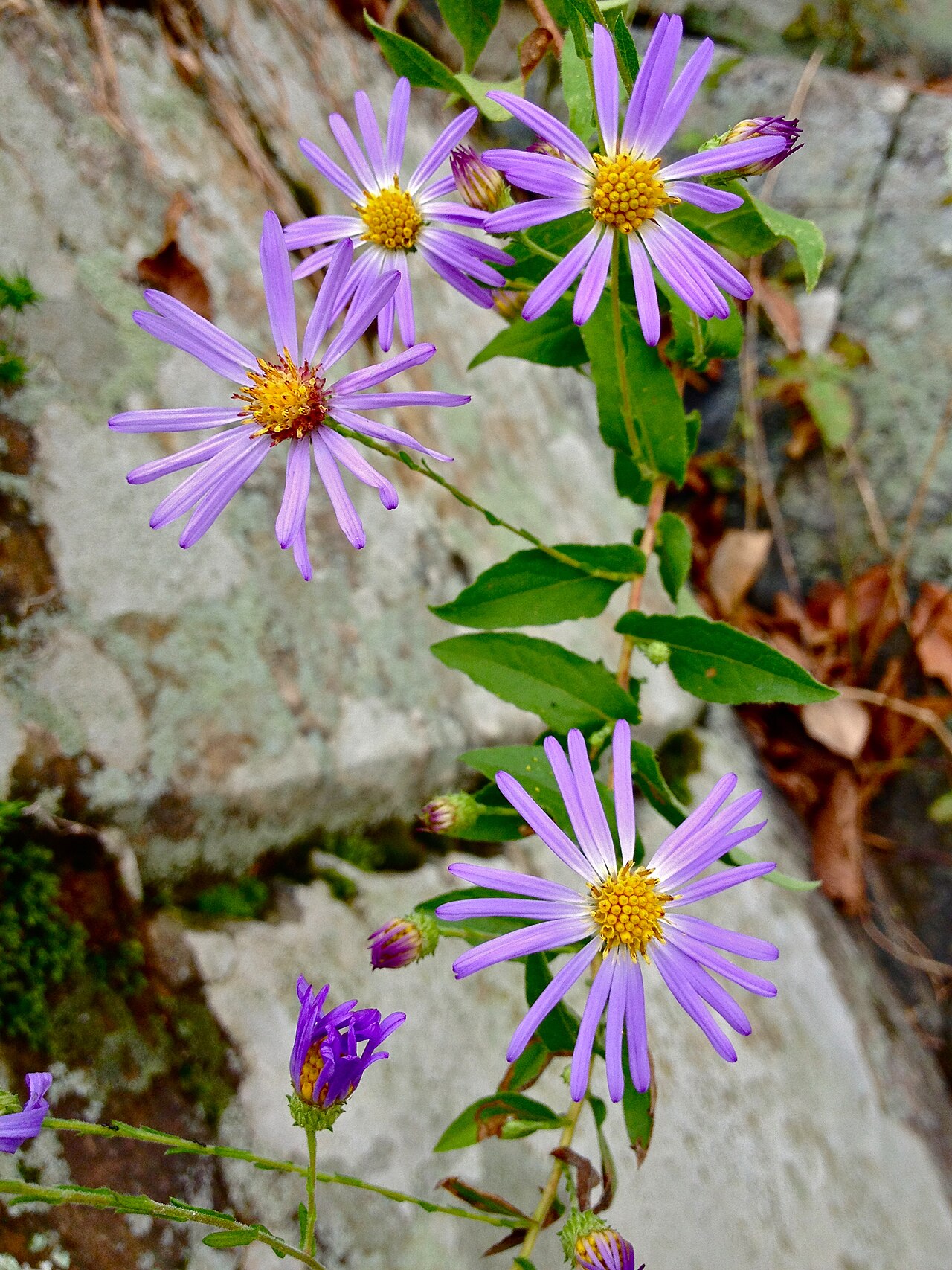
Late purple aster (Symphyotrichum patens) gives a sunny woodland edge a final wash of violet when many summer flowers have finished. Its open, branching stems carry yellow-centered flower heads above modest green foliage, so it can look airy rather than like a solid mound. In a small native planting, that looseness is useful: neighboring grasses remain visible between the stems, and the flowers can lean into the light without filling every inch of space.
The older name Aster patens still appears in regional plant lists and nursery catalogs. Kew accepts Symphyotrichum patens; both names refer to the species treated here, not to a separate garden hybrid. Common names such as spreading aster and late purple aster are less dependable for identification than the botanical name. A purple flower alone is not enough to distinguish it from the numerous other native asters blooming at the same time.
This is a plant for a reasonably open, well-drained location, not a substitute for a wetland aster. Start with nursery-grown material of regional origin and match its habitat to your garden. A sunny bank or light woodland margin may work better than a heavily watered perennial bed. The photographs below show flowers and diagnostic details rather than named double-flowered cultivars, which should not be used as evidence for the wild species.
Identification
Flowers and season
The conspicuous head is a cluster of small flowers: violet to blue-purple ray florets surround a yellow disk. Flowering generally falls in late summer and autumn, with local timing affected by latitude and weather. Look at a flowering branch rather than one detached head. An open arrangement of heads, leaf attachment and the texture of the stem together provide a stronger identification than color alone.
Leaves and stems
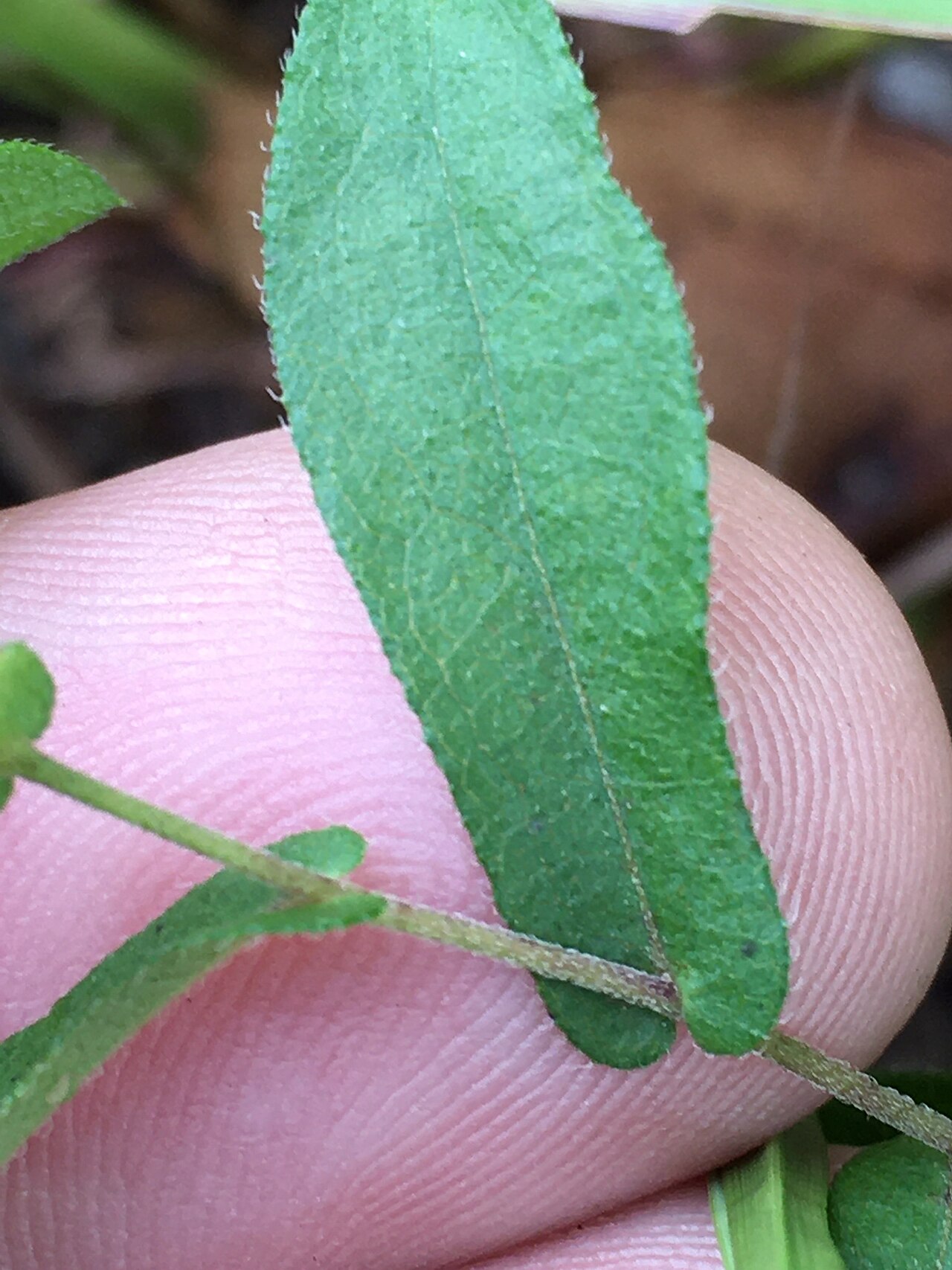
Leaves are arranged alternately along the stem and commonly lack a long stalk; their bases can clasp the stem. The illustrated leaf shows the close-fitting base and short hairs that are easy to miss from a distance. Stems and leaves can feel rough or hairy. The upper leaves are generally smaller than those lower down, so compare several positions before concluding that two plants are different species.
Form and comparison
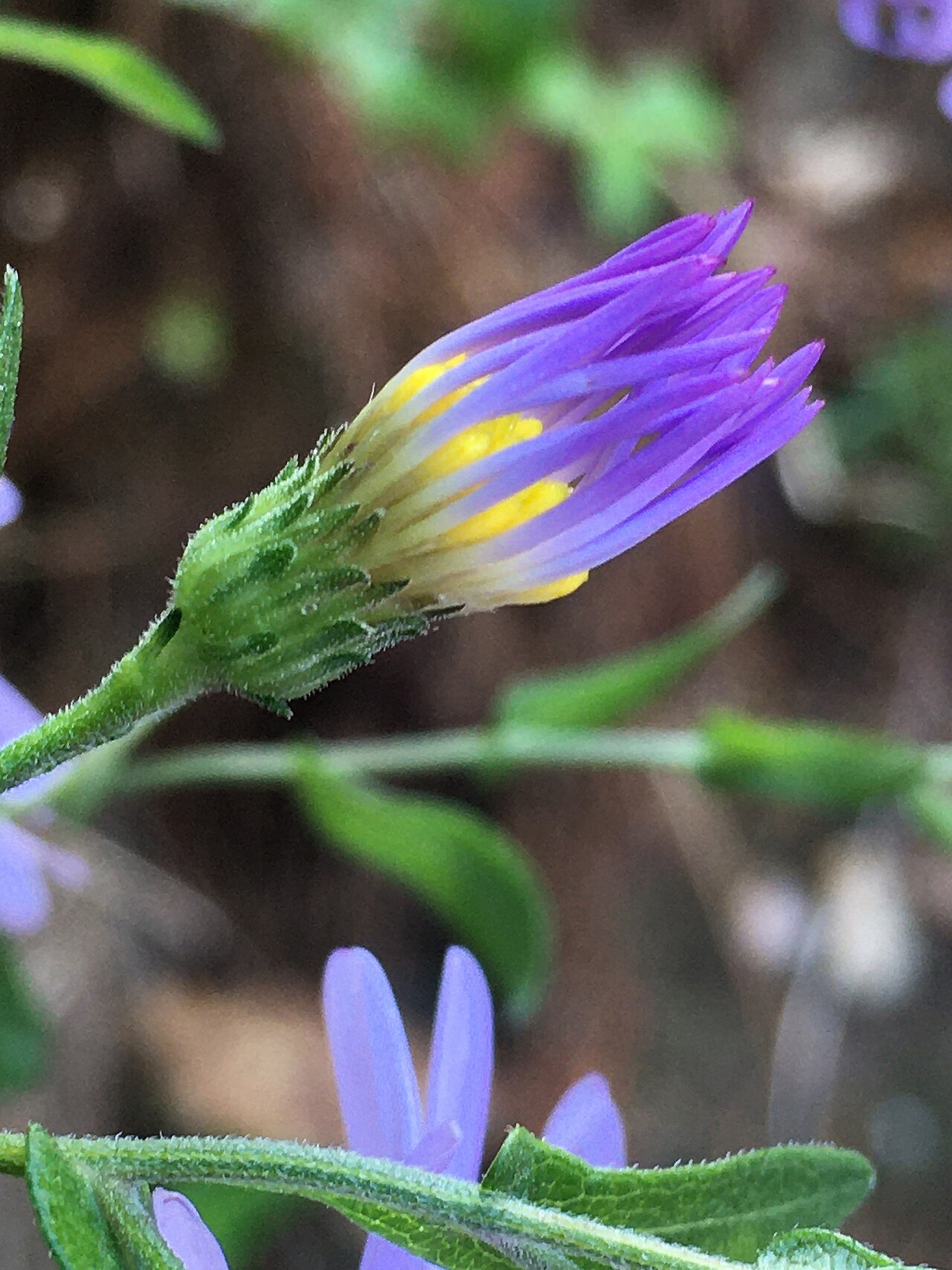
Typical garden plants stand about two to three feet tall, with a spread around a foot and a half to two feet, although lean wild sites can produce smaller individuals. Branches often arch rather than forming a rigid column. Several related asters share some of these characters. For a wild identification, use a regional flora and examine the bracts immediately beneath the flower heads; do not assign a scientific name solely from a photograph of purple rays.
Quick Facts
| Common Name | Late Purple Aster; Spreading Aster |
| Scientific Name | Symphyotrichum patens |
| Former Name | Aster patens |
| Family | Asteraceae (aster family) |
| Plant Type | Herbaceous perennial |
| Mature Height | Usually 2–3 feet; site dependent |
| Mature Width | About 1.5–2 feet |
| Sun Exposure | Full sun to partial sun |
| Water Needs | Dry to average; allow drainage |
| Soil Type | Well-drained, including sandy or rocky soil |
| Flower Color | Blue-purple to violet rays; yellow disk |
| Bloom Time | Late summer to fall |
| Foliage | Alternate, often hairy leaves; deciduous |
| Landscape Role | Woodland edge, meadow margin, sunny border |
| Regional Status | Native in North Carolina and South Carolina |
| Maintenance | Keep crown drained; manage leaning stems if needed |
Native Range
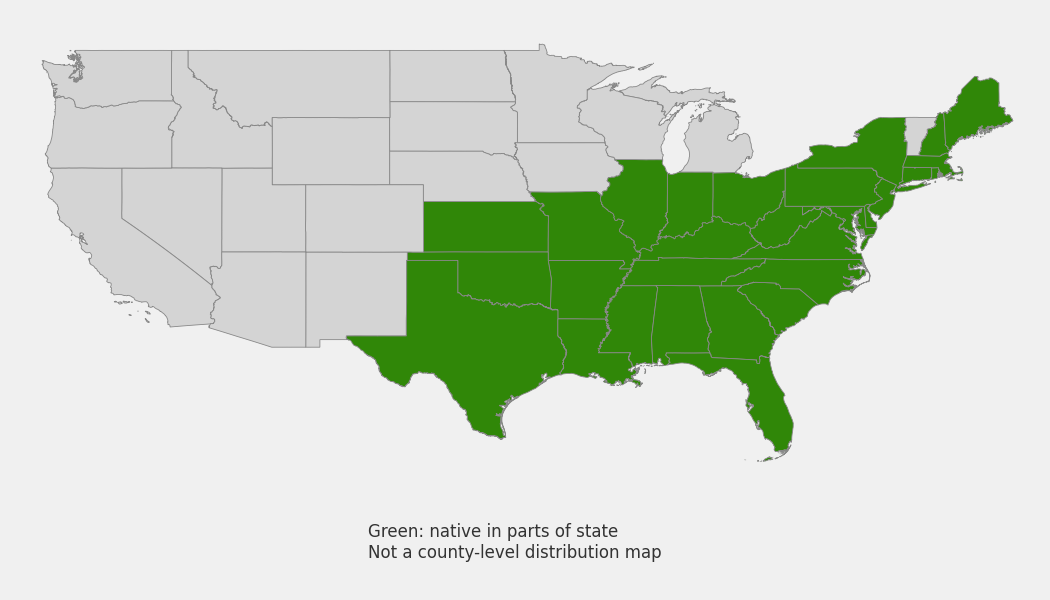
Kew records a broad native distribution through the eastern and central United States, from parts of New England south into Florida and west to the south-central states. Both Carolinas are within that native range. The state-level map follows that native distribution rather than treating every photographed garden plant or isolated occurrence as a wild population.
Habitats include relatively open woods, thickets and dry, rocky or sandy places where sufficient light reaches the ground. A state shaded green does not imply that all soils or every county within it support this aster. On a property dominated by heavy, wet soil, choose a naturally elevated, drained site or a different native species; changing the plant is often easier than permanently changing the hydrology.
Local provenance matters across such a wide range. Plants raised from a nearby seed source are more relevant to restoration than material selected far away for a particular flower display. The map is a broad screening tool, while herbarium records and local floras are better tools for county-level planning. The USDA link supplies another route to distribution records, which may use a different taxonomic treatment.
📋 Regional plant list: North Carolina & South Carolina Native Plants
Growing & Care Guide
Choosing a position
Watch the intended spot through a summer day before planting. Full sun supports a more compact, floriferous display, while light shade can be acceptable at an open woodland edge. Deep shade is a poor match for a plant being grown for its autumn flowers. Leave room for arching branches instead of forcing the crown against a path where every leaning stem will have to be removed.
Soil and water
The essential distinction is drainage, not a demand for constant irrigation. Sandy or stony soils can be suitable, provided a newly planted root ball receives enough water to establish. Water the root zone when it begins to dry, then reassess the actual soil rather than following an automatic daily schedule. If water stands at the crown after rain, address placement before adding compost or fertilizer.
Planting and establishment
Use nursery-grown plants or responsibly produced seed, not plants dug from a wild population. Place a container plant at its previous soil level and loosen constricted roots gently. Water it in thoroughly, then keep weeds from crowding the small crown during the first growing season. A few widely separated specimens are easier to observe than a dense mass in which weak growth or drainage trouble is hidden.
Seasonal maintenance
Stems may lean naturally, especially toward light. Small neighboring grasses can provide support without disguising the plant. Remove broken growth with clean tools and postpone routine cleanup until the seed heads have finished their seasonal role. Where seedlings would be unwelcome, remove a portion of spent heads before seed dispersal; retain others in a less formal part of the garden.
Propagation and purchasing
Ask a native nursery for the species and its seed origin, particularly when a label carries only an old Aster name. Seed and division are routes used for perennial asters, but timing and pretreatment should follow the supplier's species-specific instructions. Keep young plants labeled through the first flowering season. Do not distribute an unidentified volunteer as late purple aster just because it resembles the parent from a distance.
Troubleshooting
Sparse flowering can reflect shade or competition rather than a nutrient deficiency. Mildew or wilt should prompt a check of airflow, watering and root condition, not an automatic fertilizer application. Avoid crowding plants into a damp pocket. If symptoms persist, send photographs of whole plants, leaves and stems to local extension staff so that treatment follows an identification of the problem.
Landscape Uses
- Place near a path where fall flowers and their visitors can be observed without trampling the crown.
- Combine with locally appropriate, nonaggressive native grasses for contrasting texture.
- Use at a sunny woodland edge rather than a pond margin or chronically wet depression.
- Repeat a few plants through a mixed border instead of expecting one specimen to form a solid screen.
Wildlife & Ecological Value
Autumn flower visitors
The open heads offer accessible floral resources during the later growing season. Bees and other flower-visiting insects can move among the many small florets in a head. Garden observations should be recorded as observations, not turned into a claim that every visiting insect depends exclusively on this species. A succession of different native flowers is more resilient than relying on a single autumn bloomer.
Asters in a food web
Native asters as a group participate in a wider insect food web through both flowers and foliage. Exact host relationships differ among species and regions. Allow a little leaf chewing where it is tolerable, and identify the insect before deciding that damage requires action. Avoid broad-spectrum sprays on blooming plants, which can expose the very visitors a pollinator garden is intended to support.
Winter structure
Leaving some stems and seed heads adds texture after the showy season has ended. It also avoids repeatedly disturbing the small patch of soil around the crown. A tidy path edge can coexist with an uncut interior section; ecological gardening need not mean leaving every stem in every location regardless of access or disease concerns.
Responsible regional planting
Within its native area, this aster can be part of a habitat-oriented border. Outside a documented local range, a nursery plant should not be represented as a restoration species simply because it survives the climate. Consult a local native-plant organization when a project is intended to reconstruct a specific plant community rather than decorate a garden.
Cultural & Historical Uses
The change from Aster patens to Symphyotrichum patens reflects modern botanical classification of the large, historically broad aster group. Retaining the older name as a synonym makes older floras and nursery references searchable without creating two separate species records. A good plant label can include the accepted name first and the older name in parentheses.
The common name emphasizes a season and color rather than a unique identifying feature. That is useful in a garden conversation, but it is not a substitute for a botanical determination. This is especially important when shopping online, where unrelated ornamental asters may be shown under broad search terms. The images on this page were selected to illustrate the named species, including the leaf base and flower bracts.
No food or medicinal use is recommended here. The practical cultural value of this plant is as a regional ornamental and a late-season component of native planting. Choose propagated stock, keep provenance information with garden records, and let botanical names connect modern plants with older references instead of relying on a generic packet labeled purple aster.
Frequently Asked Questions
Is Aster patens a different plant?
No. It is the older botanical name used for Symphyotrichum patens. A nursery should still identify the actual species rather than use a broad aster trade name.
Will it grow in a rain garden?
Use it only in a well-drained part that matches its dry-to-average preference. It is not the best choice for the basin where water remains after a storm.
Why are the stems leaning?
Arching growth is part of its habit. Strong one-sided light, rich soil or competition may make leaning more pronounced. Give it space and assess its light before adding supports.
Can I identify it from purple flowers?
Not reliably. Compare leaves, stem hairs, branching and the bracts beneath the heads with a regional botanical key; many native asters have similar colors.
Is it native throughout both Carolinas?
It is native to both states, but state-level presence does not mean every county or habitat. Check local records for restoration or conservation work.
Sources & Further Reading
- NC State Extension — Symphyotrichum patens
- Kew Plants of the World Online — accepted name and native distribution
- Native Plant Trust Go Botany — species identification
- USDA PLANTS — Symphyotrichum patens
Find Native Plants
Ask growers about nursery propagation and regional provenance. Browse our NC native plant nurseries, SC native plant nurseries directory for suppliers. Explore the native nursery finder.