
Coastal Doghobble (Leucothoe axillaris)
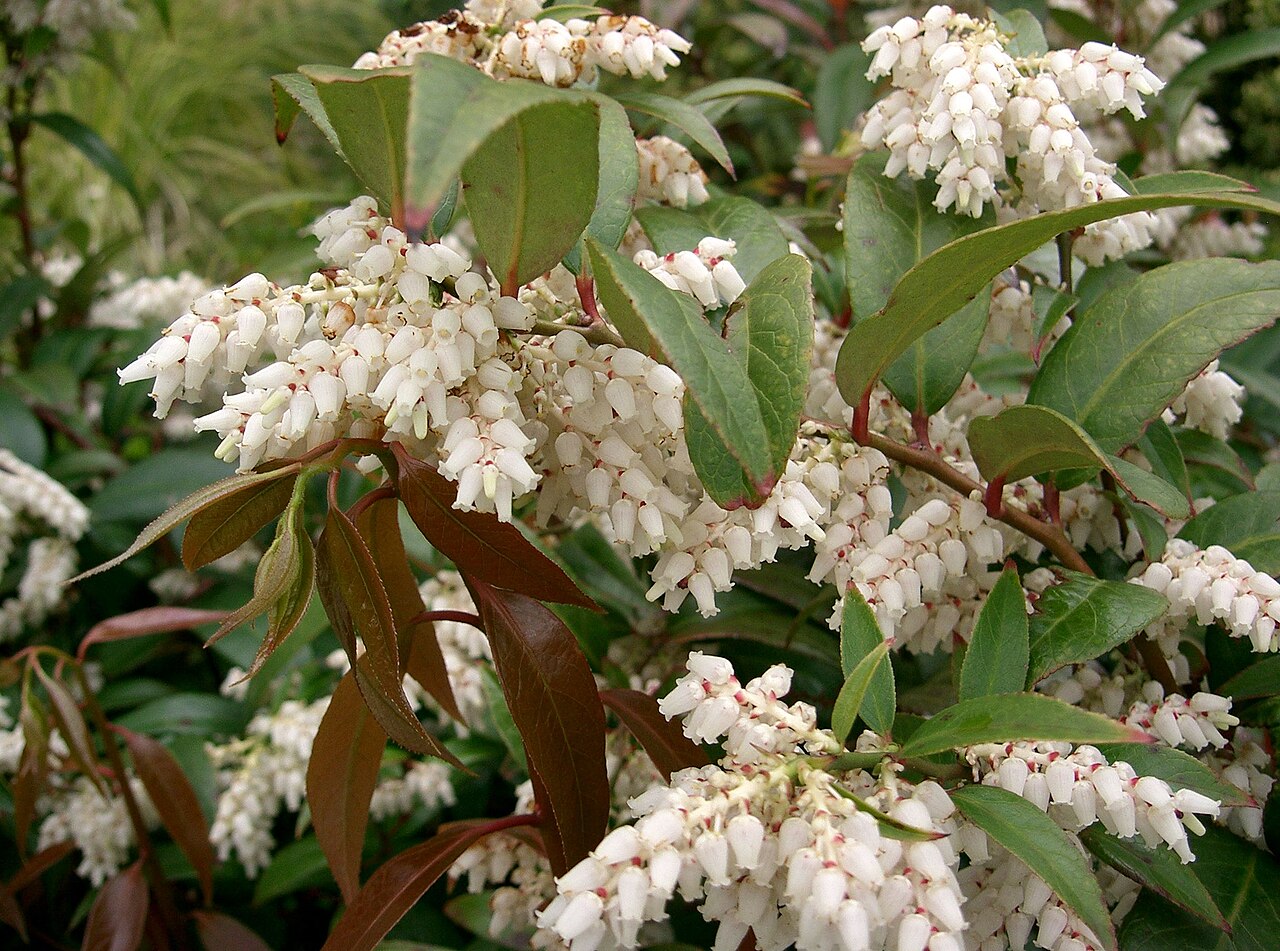
Coastal doghobble (Leucothoe axillaris) is an evergreen shrub for a moist, acidic woodland garden. Its arching branches carry leathery leaves and clusters of small white spring flowers. It provides a lower evergreen layer beneath taller trees, but it is not a universal groundcover for dry shade. The roots need dependable moisture, and a site sheltered from drying winds is usually more appropriate than an exposed foundation bed.
The species belongs to the heath family, alongside blueberries and azaleas. That relationship helps explain its soil preferences but does not make the leaves or flowers edible. Coastal doghobble is poisonous if eaten and should not be placed where grazing animals can reach it. Choose a site with both horticultural needs and household use in mind, especially where pets habitually chew plants.
The regional table once suggested a dry-to-wet tolerance range. That is misleading for this shrub: dry soil is not a recommended condition. The practical target is moist, acidic, organic soil with drainage. A plant surviving a brief dry interval is not evidence that it belongs in a drought garden. This guide separates the coastal species from mountain doghobble and from curled-leaf ornamental selections.
Identification
Growth form
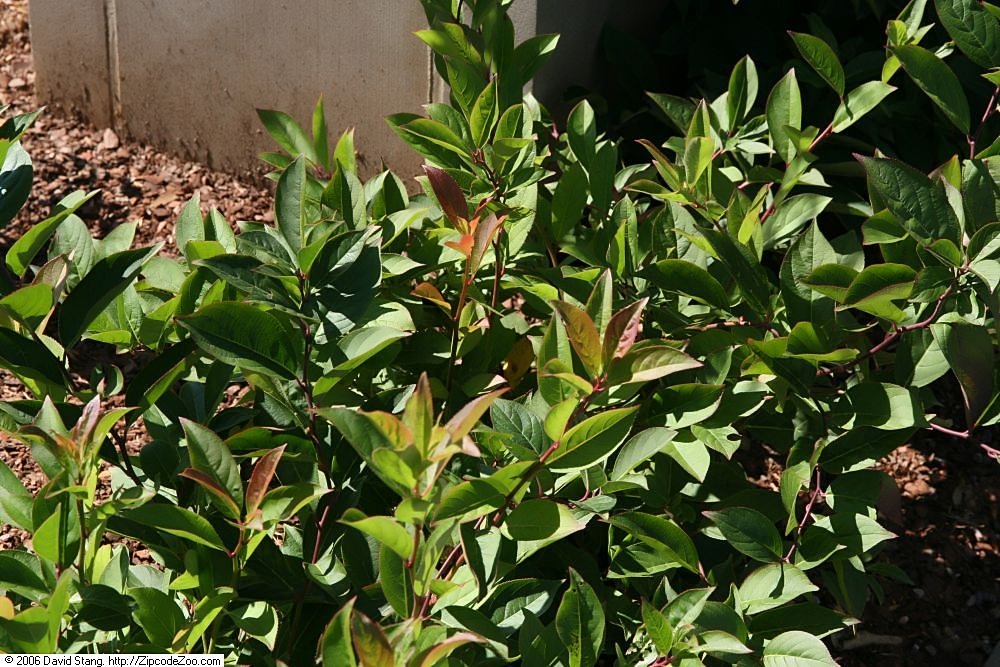
Coastal doghobble makes a spreading, mounded shrub with outward-arching branches, commonly around 3–4 feet tall and wider than high. Shade, pruning and selection can change the outline. A regularly clipped hedge may conceal the arching habit, so examine an untrimmed branch when comparing plants. Do not identify it solely from the red flush of new leaves; many unrelated shrubs share that feature.
Evergreen leaves
Leaves are alternate, simple, leathery and usually glossy, with an elongated oval shape and pointed tip. Older foliage remains through winter while fresh growth may have bronze or reddish tones. Cold weather can bring purplish coloration without automatically indicating disease. The typical species has relatively ordinary flat leaves; strongly curled leaves sold under a cultivar name are not the best model for identifying wild plants.
Flowers and fruits
Short clusters of small, nodding, urnlike white flowers appear along the stems in spring. Their position near leaf axils helps distinguish the flowering pattern from a shrub with one large terminal flower head. After flowering, dry capsules develop; these are not blueberries. Examine flowers and leaves together because an isolated white bell could belong to several members of the heath family.
Distinguishing related doghobbles
Mountain doghobble, Leucothoe fontanesiana, is a separate species even though nursery common names overlap. Fetterbush is also used for plants outside Leucothoe. For a native planting, require the complete name Leucothoe axillaris and, where relevant, a named selection. Historical names such as Leucothoe catesbaei can be ambiguous in horticultural use, so a modern botanical determination is better than a guess from a weathered tag.
Quick Facts
| Scientific Name | Leucothoe axillaris |
| Family | Ericaceae |
| Plant Type | Broadleaf evergreen shrub |
| Mature Height | Usually 3–4 ft; some forms nearer 2 ft |
| Mature Spread | About 4–6 ft |
| Growth Rate | Slow |
| Sun Exposure | Part shade or dappled shade; sheltered shade tolerated |
| Water Needs | Consistently moist; not drought tolerant |
| Soil Type | Organic, well-drained woodland soil |
| Soil pH | Acidic |
| Bloom Time | Spring, often March–May in the Southeast |
| Flower Color | White, sometimes faintly pinkish |
| Fall Color | Evergreen; foliage may bronze or purple in cold weather |
| Fruit | Small dry capsules |
| Deer Resistant | Often resistant, not guaranteed |
| USDA Hardiness Zones | Approximately 5–9; shelter and provenance matter |
Native Range
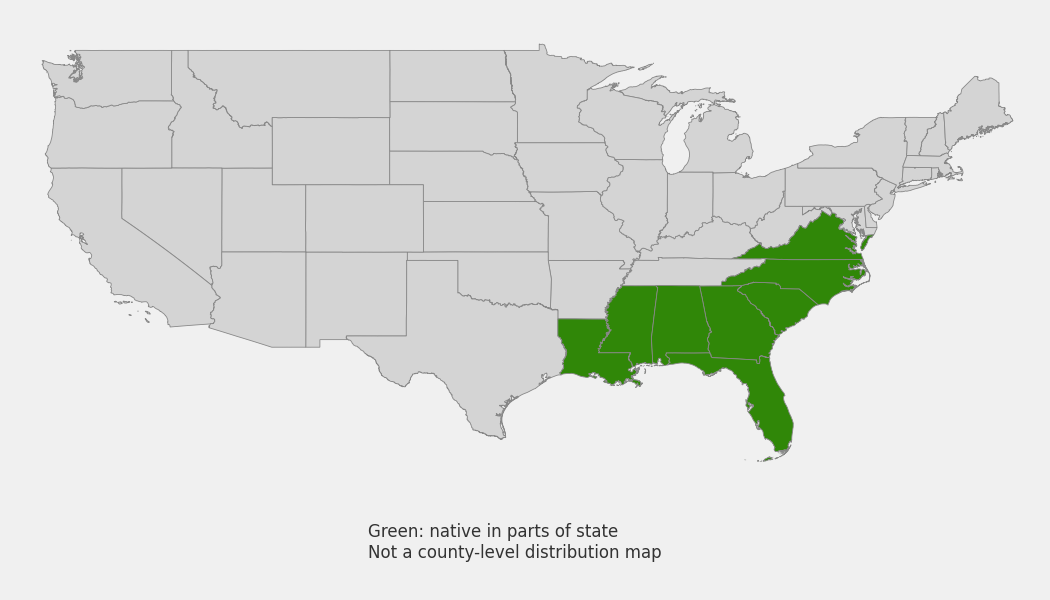
Kew recognizes native populations in Alabama, Florida, Georgia, Louisiana, Mississippi, North Carolina, South Carolina and Virginia. It separately lists introductions in Kentucky, Maryland and Rhode Island; those are not included in the native map. This distinction matters because a photographed or naturalized garden plant outside the Southeast is not evidence that the species belongs in a local restoration palette.
Coastal doghobble is associated with acidic, moist southeastern settings, including swamp margins, streamside woods and pocosin-related habitats. The name coastal does not mean it is a salt-spray shrub for an exposed beach. Its habitat is better understood through freshwater moisture, organic soil and shelter than through proximity to seawater alone.
The Alabama–Georgia–Mississippi regional list is an appropriate entry point, not a claim that every part of those states is equally suitable. Check local records and soil conditions before buying. A nursery in a northern state may sell a hardy specimen, but hardiness describes winter survival rather than native status or the provenance needed for ecological restoration.
📋 Regional plant list: Alabama, Georgia & Mississippi
Growing & Care Guide
Choosing the right shade
Bright shade or morning light with afternoon shelter is a useful garden arrangement. Deep shade may preserve foliage while reducing flowering. Sun is possible only where the soil remains suitable and moisture is dependable; it is not a license to put the shrub beside hot paving. Observe the site in summer, when a deciduous canopy changes the light considerably from the conditions at spring planting.
Testing soil before planting
Measure soil pH if the site is unfamiliar. Coastal doghobble is a poor choice for strongly alkaline soil, and repeatedly adding products without testing can create other problems. Work with an existing acidic woodland bed when possible. Do not bury the root crown under a mound of compost, and do not create a small water-holding pot of amended soil inside a compacted clay landscape.
Water and mulch
Keep the root zone moist without making it airless. A modest layer of leaf-based mulch helps moderate drying and temperature, but it should not be packed against stems. During establishment, check beneath the surface before irrigating: a container root ball and surrounding native soil may dry at different rates. Browning foliage can accompany both inadequate water and damaged, waterlogged roots, so inspect rather than watering blindly.
Planting distance and access
Allow for a shrub wider than it is tall. Planting tightly against a path invites constant clipping and removes the graceful outer branches. Leave space to inspect the base, pull weeds by hand and check moisture. In a group planting, use the mature spread as the starting point and let the plants knit together gradually rather than crowding large specimens into an instant hedge.
Pruning and seasonal care
Remove dead or damaged wood when needed and use selective cuts to retain the arching form. If shaping is necessary, work after the spring display rather than repeatedly shearing all new growth. Heavy pruning to force a naturally spreading shrub into a narrow box is a sign that the chosen site or plant spacing needs reconsideration. Clean tools between diseased plants.
Winter exposure
Evergreen foliage can lose moisture in cold wind while roots are unable to replace it quickly. A sheltered site and sound root-zone moisture are more useful than treating every bronze leaf as a fertilizer deficiency. Do not assume the coldest published hardiness zone guarantees good foliage in an exposed container. Ground planting and local nursery advice are safer starting points at the edge of its horticultural range.
Purchasing and propagation
Buy nursery-grown plants with a clear species label. Named forms may differ in leaf texture, size or growth habit and should remain labeled in the garden. Do not collect shrubs from a swamp or pocosin. If propagating a garden selection, ask the source nursery about a suitable vegetative method; seedlings may not reproduce its selected appearance. Keep source information when the planting has conservation goals.
Safety and troubleshooting
Treat the shrub as ornamental, not edible. Prevent access by livestock and by pets that chew foliage, and seek professional poison advice after suspected ingestion rather than relying on home remedies. For leaf spotting or decline, assess air movement, irrigation, drainage and plant identity before choosing a treatment. Avoid routine spraying while flowers are attracting insects.
Landscape Uses
- Evergreen understory in a moist acidic woodland garden.
- A low, informal grouping along a sheltered path with adequate width.
- Freshwater rain-garden edge that stays moist but drains.
- A native shrub layer around taller trees, outside heavily trafficked or grazed areas.
Wildlife & Ecological Value
For pollinators
Spring flower clusters offer forage to visiting bees and other insects. A planting that retains flowers is more useful than one sheared just before bloom. Combine it with other locally native species that flower at different times rather than expecting one evergreen shrub to supply an entire season of resources.
For birds
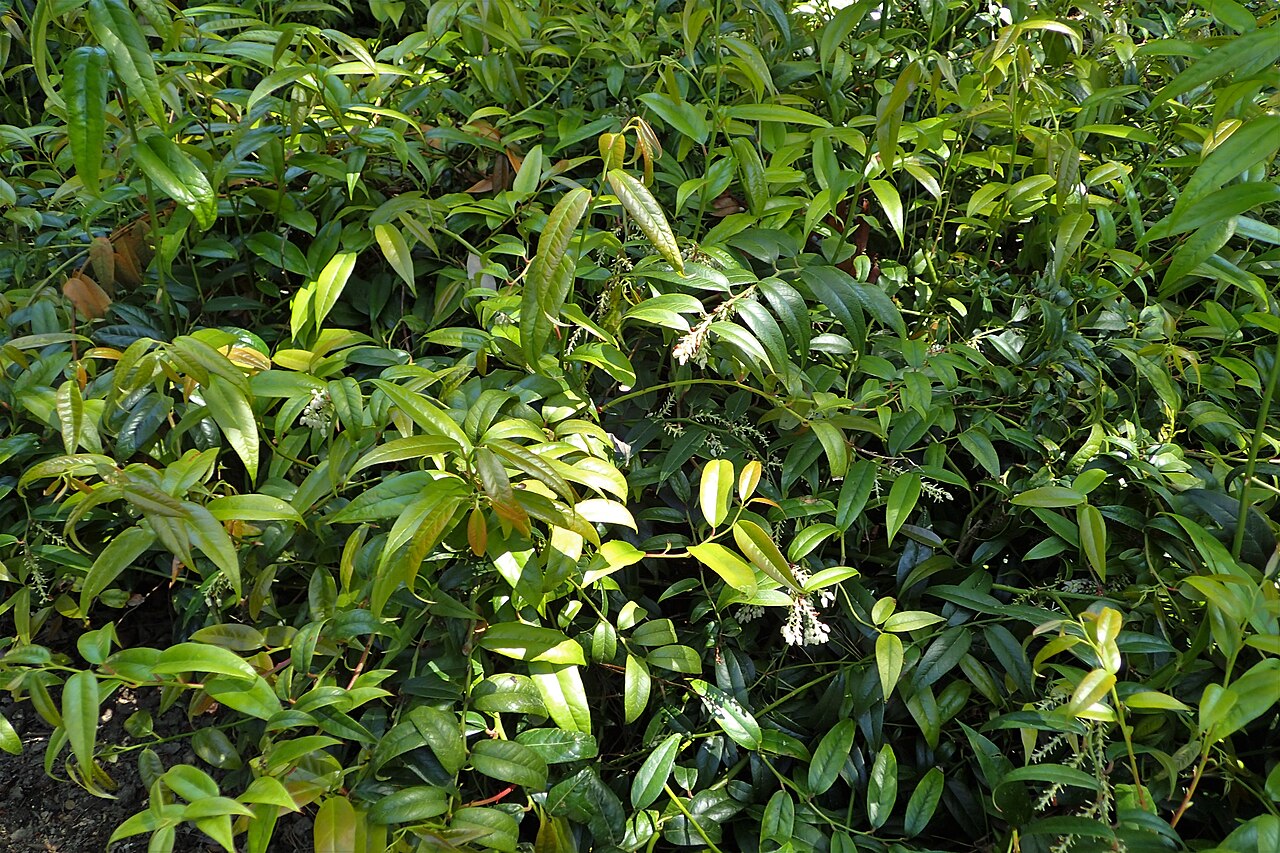
Its foliage adds low evergreen cover. That structural contribution is different from providing fleshy fruit: coastal doghobble develops dry capsules. Maintain a layered planting with suitable native fruiting shrubs elsewhere if fruit for birds is a goal. Avoid placing dense cover immediately beside a spot where outdoor cats can ambush wildlife.
For browsing animals
Deer often leave it relatively undamaged, but browsing resistance is not a guarantee and is not proof of safety for livestock. Toxic foliage should not be promoted as animal feed. Where browsing pressure is intense, monitor new plantings and use appropriate temporary protection rather than planting solely on the basis of a deer-resistant tag.
Habitat context
An existing moist woodland or wetland margin is a complex system, not empty ground waiting for ornamental planting. Preserve its drainage and native vegetation. Garden-grown doghobble can add a useful shrub layer on a suitable residential site, but installing it should not involve draining, filling or stripping a natural wetland.
Cultural & Historical Uses
The epithet axillaris points to the position of the flower clusters near leaf axils. Common names such as doghobble and fetterbush refer to a thicket-forming appearance and are used inconsistently across several plants. Scientific names are therefore especially useful when ordering this shrub or comparing a regional flora with a nursery catalog.
Coastal doghobble has become a garden evergreen beyond its southeastern native range. Ornamental selections are often chosen for leaf color or shape. Such selection does not change the species-level distinction between coastal and mountain doghobble, and a colorful nursery plant should not automatically be described as locally native where it is sold.
No edible or medicinal use is recommended in this guide. The useful lesson from its long horticultural history is practical: a shade shrub can still have demanding soil requirements and serious ingestion hazards. Choose it for a site where its evergreen structure is valuable and where people and animals can enjoy the garden without treating its foliage as food.
Frequently Asked Questions
Is coastal doghobble drought tolerant?
No. It needs dependable moisture. The old dry-to-wet table shorthand was too broad and has been replaced with a moist-soil recommendation.
Is it the same as mountain doghobble?
No. Leucothoe fontanesiana is a different species. Common names and older nursery labels overlap, so verify the complete scientific name.
Are the leaves safe for pets or livestock?
No. The plant is poisonous if eaten. Site it away from grazing animals and chewing pets; contact a qualified poison service if ingestion is suspected.
Does winter purple foliage mean the plant is dying?
Not necessarily. Seasonal bronzing can be normal. Check whether leaves are merely colored or actually scorched, and examine moisture and wind exposure before deciding what to do.
Can I use it at the beach?
Not simply because it is called coastal. Its natural associations are freshwater, acidic and sheltered. An exposed salt-spray site is a different environment.
Sources & Further Reading
- NC State Extension: coastal doghobble
- Kew: native versus introduced distribution
- Florida Native Plant Society species profile
- Florida Wildflower Foundation: coastal doghobble
Find Native Plants
Ask growers about nursery propagation and regional provenance. Browse our AL native plant nurseries, GA native plant nurseries, MS native plant nurseries directory for suppliers. Explore the native nursery finder.