
Northern Catalpa (Catalpa speciosa)
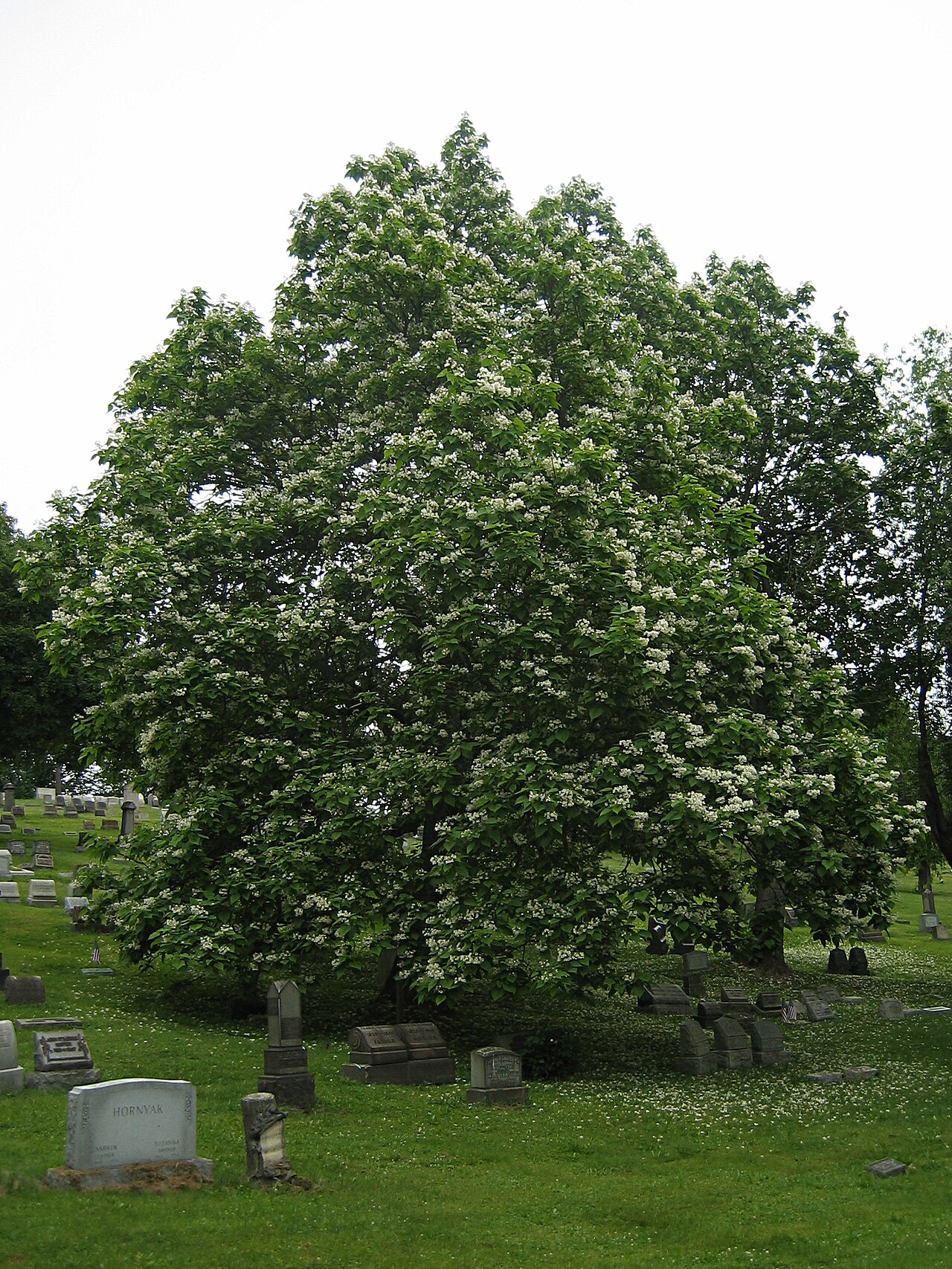
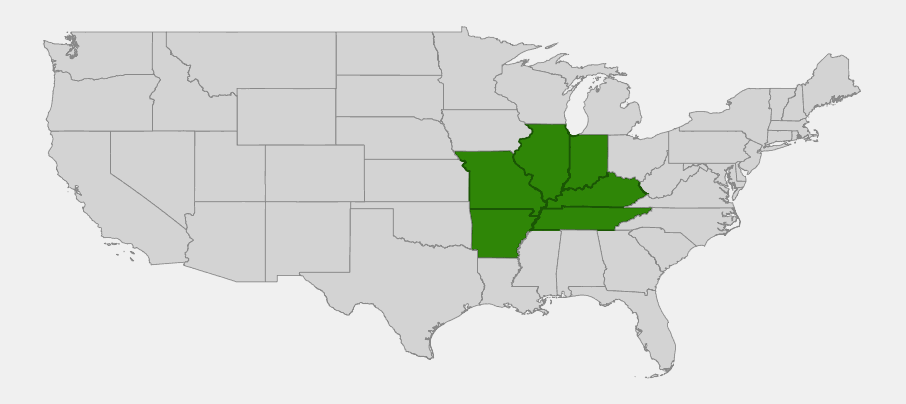
Catalpa speciosa, the Northern Catalpa, is a fast-growing deciduous tree native to a small, scattered area of the Mississippi River lowlands, from southeastern Missouri and the Missouri Bootheel into western Tennessee and Kentucky, northeastern Arkansas, and southern Illinois and Indiana. It is instantly recognizable for its huge heart-shaped leaves, show-stopping clusters of orchid-like white flowers in early summer, and the long, slender, bean-like seed pods that dangle from its branches well into winter.
In the wild, northern catalpa grows in moist bottomland woods, along stream banks, and at the base of bluffs, where deep, rich soil supports its rapid growth. It has been planted so widely across the eastern and central United States as a shade and specimen tree, far beyond this small native core, that many gardeners are surprised to learn its true natural range is so narrow and so often disputed by botanists.
Catalpa’s bold, tropical-looking foliage and dramatic June bloom make it a conversation-piece shade tree for a large yard. It grows fast, tolerates wet or dry soil and a wide pH range, and asks for almost no maintenance once established, though its size, brittle wood, and heavy leaf and pod drop mean it suits an open lawn better than a small urban lot.
Identification
Northern catalpa is a medium to large deciduous tree, typically 40 to 70 feet tall with a broad, rounded, somewhat irregular crown and a trunk that often forks low. It grows quickly when young, adding 2 feet or more a year in good soil, and develops a coarse, open branching pattern as it matures.
Bark & Trunk
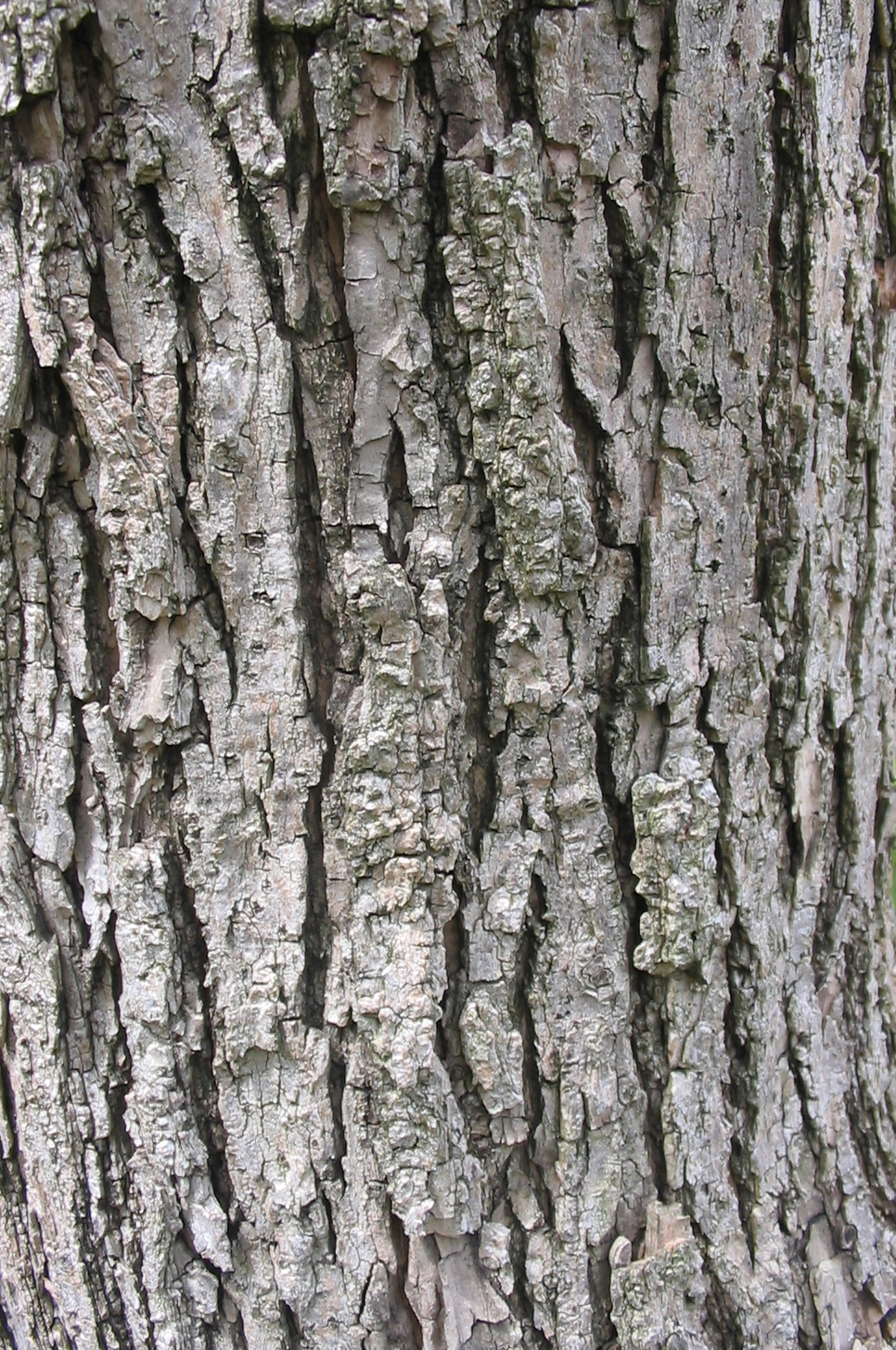
Bark on young trees is thin and grayish, becoming thick, gray-brown, and broken into irregular, somewhat scaly ridges and furrows on mature trunks. The wood is light, soft, and brittle, so large limbs are prone to breaking in ice storms or high wind, a point to consider when siting the tree.
Leaves
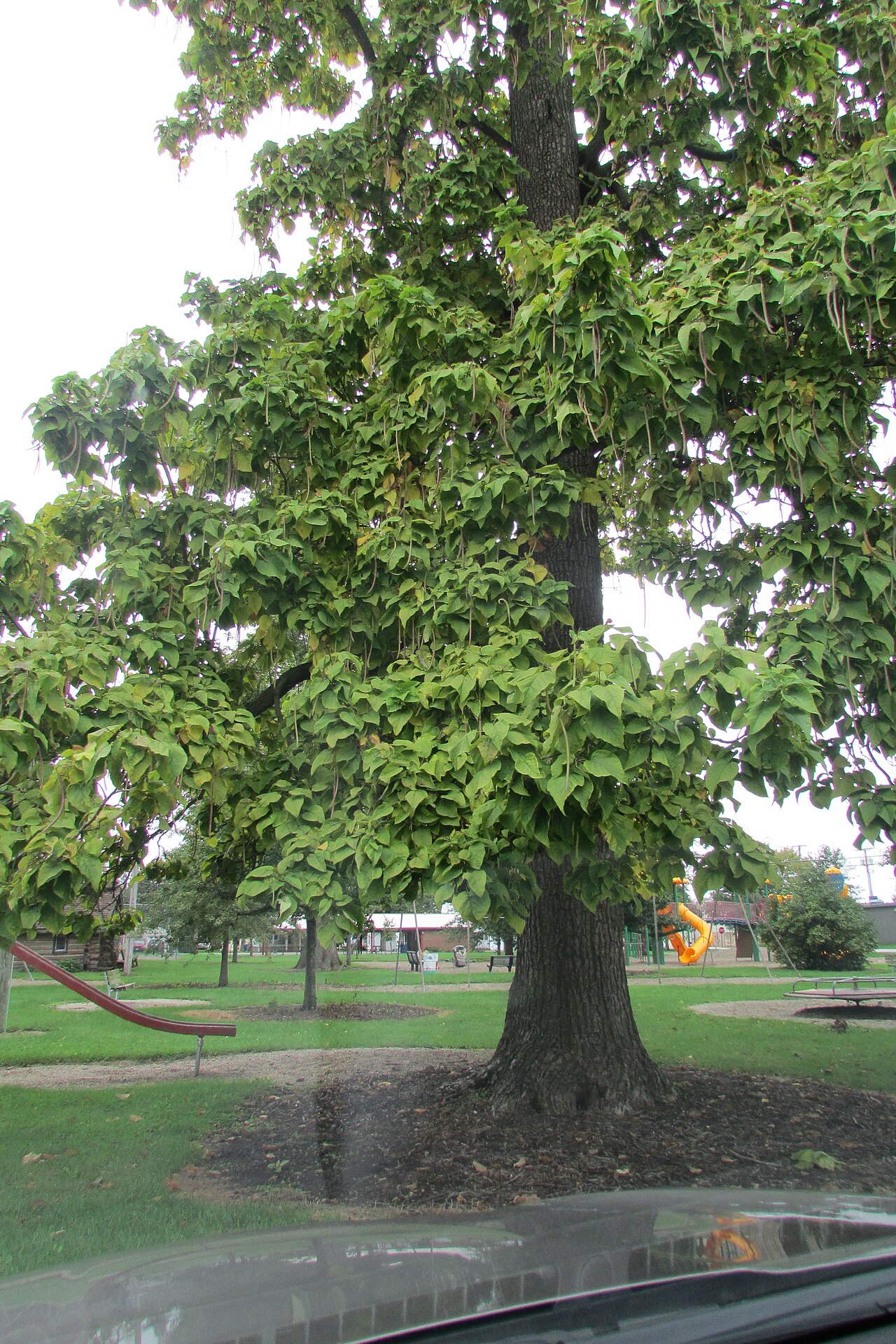
The leaves are the tree’s signature feature: broadly heart-shaped, 6 to 12 inches long and nearly as wide, with a pointed tip and smooth margins, arranged in pairs or whorls of three along the stem. They emerge late in spring, well after most trees have leafed out, and have a mild, slightly unpleasant odor when crushed. Fall color is an undistinguished yellow-green before an early leaf drop.
Flowers & Fruit
In late May and June, northern catalpa produces upright, pyramidal clusters of showy, two-inch, orchid-like white flowers, each marked inside with yellow stripes and purple-brown spots that guide pollinators to the nectar. The flowers give way to northern catalpa’s other famous feature: slender, cylindrical seed pods 10 to 20 inches long that hang from the branches through fall and winter before splitting open to release flat, papery, fringed seeds.
Quick Facts
| Scientific Name | Catalpa speciosa |
| Family | Bignoniaceae (Trumpet creeper) |
| Plant Type | Deciduous tree |
| Mature Height | 40–70 ft |
| Mature Spread | 25–40 ft |
| Growth Rate | Fast |
| Sun Exposure | Full Sun to Part Shade |
| Water Needs | Average to moist; tolerates occasional flooding and drought |
| Soil Type | Adaptable; best in deep, rich bottomland soil |
| Soil pH | Wide range, about 5.5–8.5 |
| Bloom Time | Late May – June |
| Flower Color | White with yellow and purple throat markings |
| Fall Color | Undistinguished yellow-green |
| Fruit | Slender pods 10–20 in, persisting into winter |
| Wood | Soft, light, brittle; prone to storm damage |
| USDA Hardiness Zones | 4–8 |
Native Range
Northern catalpa has one of the smallest and most debated native ranges of any widely planted American shade tree. Botanists generally place its original range in the Mississippi River lowlands centered on the Missouri Bootheel, extending into southeastern Missouri, southern Illinois, southern Indiana, western Kentucky, western Tennessee, and northeastern Arkansas. Some authorities consider even this small area partly a result of very early naturalization, since the tree was already being planted and traded by Native Americans and early settlers before botanists first documented it.
Within this native core, catalpa grows in moist bottomland woods, along streams and rivers, and at the bases of bluffs, often alongside sycamore, cottonwood, and hackberry in rich, well-watered soil. Because it transplants and grows so easily almost anywhere in temperate North America, catalpa has naturalized widely across the eastern and midwestern United States and into southern Canada, far outside this native range, and gardeners should recognize that a catalpa seen growing wild in most states is not evidence of local native status.
📋 Regional plant lists featuring Northern Catalpa: Arkansas, Louisiana, Eastern Oklahoma & Eastern Texas · Illinois, Iowa & Missouri · Ohio & Indiana · Kentucky & Tennessee
Growing & Care Guide
Northern catalpa is one of the easiest large shade trees to grow, tolerating a wide range of conditions and asking for little attention once established. Its main requirement is simply room: this is a big tree with coarse branches, large leaves, and long pods that need space to drop without creating constant cleanup near walkways or patios.
Light
Plant catalpa in full sun for the fullest crown and heaviest bloom. It tolerates part shade, particularly as a young tree, but growth is slower and flowering lighter with reduced light.
Soil & Water
Catalpa is remarkably adaptable, thriving in deep, rich bottomland soil but also tolerating poor, compacted, wet, or dry soils and a wide pH range. It handles occasional flooding, reflecting its native streamside habitat, and is drought tolerant once established, though young trees benefit from regular watering through their first two seasons.
Planting Tips
Give catalpa plenty of room: a mature tree easily reaches 40 to 70 feet tall and just as wide, with surface roots and heavy leaf, flower, and pod drop that make it a poor choice near patios, pools, or parking areas. Plant it in an open lawn or large naturalized area where its bold texture and dramatic bloom can be appreciated without the litter becoming a nuisance. Stake young trees in windy sites, since the soft wood can bend before it hardens.
Pruning & Maintenance
Prune young trees to develop a strong central leader and well-spaced scaffold branches, since the brittle wood is prone to storm damage if allowed to develop weak, narrow branch angles. Established trees need little pruning beyond removing dead or damaged wood after storms. Rake up fallen pods and leaves in fall if a tidy lawn is wanted; they break down slowly.
Propagation
Catalpa grows easily from seed collected from the long pods in fall; seeds germinate readily without special pretreatment when sown in spring. Root cuttings also take well. Because it grows so quickly and seeds so freely, volunteer seedlings often appear near parent trees and are easy to transplant while small.
Landscape Uses
- Specimen shade tree for a large open lawn where its bold leaves and showy bloom have room to shine
- Bottomland and streamside plantings within the native range, alongside sycamore and eastern cottonwood
- Fast shade for new properties that need a quick-growing canopy tree
- Naturalized wet-soil plantings, since it tolerates occasional flooding better than most shade trees
- Pollinator and bee gardens, since the June bloom draws bumblebees and other long-tongued pollinators
Wildlife & Ecological Value
Northern catalpa supports a smaller but notable set of wildlife relationships, most famously its namesake caterpillar.
For Pollinators
The large, showy flowers are pollinated primarily by bumblebees and other large bees strong enough to push past the flower’s throat markings to reach the nectar. The bloom is brief but heavy, offering a concentrated nectar source for a couple of weeks each June.
For Birds
Catalpa’s open branching and large leaves provide nesting cover for songbirds, and the tree’s association with catalpa sphinx moth caterpillars (see below) makes it a magnet for insect-eating birds during outbreak years, when caterpillars can be extremely abundant.
For Insects
Catalpa is the required host plant for the catalpa sphinx moth, whose large caterpillars, known regionally as “catalpa worms,” feed exclusively on catalpa foliage and can defoliate entire branches in heavy years. These caterpillars are prized by anglers across the South and Midwest as premier fish bait, and some catalpa trees are deliberately planted or maintained specifically to produce a reliable worm crop.
Ecosystem Role
Within its small native range, catalpa is a component of rich bottomland forest, tolerating the periodic flooding that shapes those habitats. Its rapid growth and adaptability have also made it a popular reclamation and windbreak tree outside its native range, though gardeners should favor locally native bottomland trees where ecological fit matters most.
Cultural & Historical Uses
Catalpa wood is soft, light, and notably rot-resistant for a fast-growing tree, a combination that made it valuable for fence posts and railroad ties in the late nineteenth and early twentieth centuries, when catalpa was planted in large plantations across the Midwest specifically for this purpose. Though the wood’s softness limits its use in construction, its decay resistance in ground contact kept demand strong for decades.
The tree’s most enduring cultural legacy, though, is recreational: the catalpa sphinx moth caterpillar, or “catalpa worm,” remains one of the most sought-after live fish baits in the South and Midwest, and generations of anglers have planted or protected catalpa trees purely to keep a worm supply on hand. The dramatic June flowers and huge heart-shaped leaves also made catalpa a favorite ornamental tree for parks, cemeteries, and farmsteads throughout the nineteenth century, which is part of why it now grows so far beyond its small native range.
Frequently Asked Questions
Is northern catalpa native to my state?
Only within a small area of the Mississippi River lowlands: southeastern Missouri, northeastern Arkansas, southern Illinois and Indiana, and western Kentucky and Tennessee. It has naturalized widely elsewhere, so a catalpa growing wild in most other states is not evidence that it is native there.
What are catalpa worms?
They are the caterpillars of the catalpa sphinx moth, which feed exclusively on catalpa leaves and are a popular live fish bait across the South and Midwest. They can appear in large numbers and strip foliage from affected branches in heavy outbreak years.
How big do catalpa trees get, and why is it also called “cigar tree”?
Mature trees typically reach 40 to 70 feet tall and nearly as wide. The nickname “cigar tree” comes from the long, slender, cylindrical seed pods, which can reach 10 to 20 inches and resemble oversized cigars hanging from the branches.
Is catalpa a messy tree?
Yes, moderately. It drops large leaves, showy but short-lived flowers, and long pods through fall and winter, so it suits an open lawn or naturalized area better than a spot near a patio, pool, or walkway.
Does catalpa tolerate wet soil?
Yes. Its native bottomland habitat means it handles occasional flooding and heavier soils better than most shade trees, while also tolerating drier conditions once established.

Looking for a nursery that carries Northern Catalpa?
Browse our native plant nursery directory: Arkansas · Illinois & Indiana · Kentucky & Missouri · Tennessee