
Lechuguilla (Agave lechuguilla)
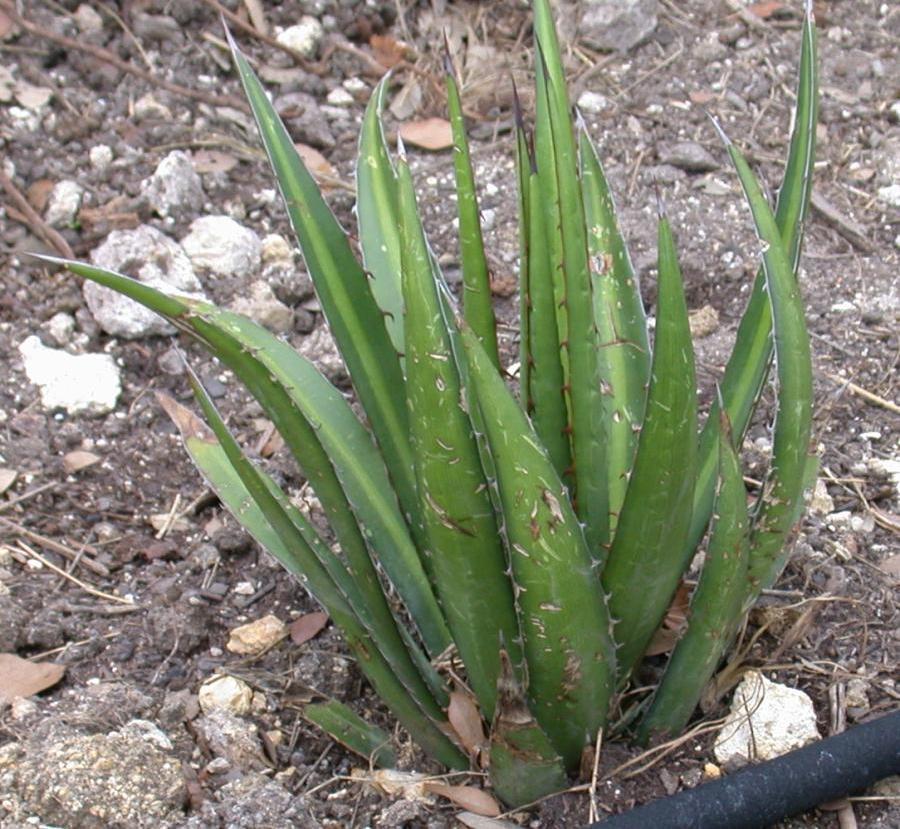
Agave lechuguilla, known simply as Lechuguilla (and sometimes “Shin Dagger” for the way its rigid, spine-tipped leaves catch unwary ankles), is the signature small agave of the Chihuahuan Desert. So closely tied to this one desert that botanists use its presence to help define the Chihuahuan Desert’s boundaries, Lechuguilla forms dense, low rosettes of stiff, gray-green leaves armed with a wicked terminal spine and fine marginal teeth — an unmistakable, if unfriendly, presence on rocky desert slopes from the Trans-Pecos of Texas through southern New Mexico and deep into the Mexican states of Chihuahua, Coahuila, and beyond.
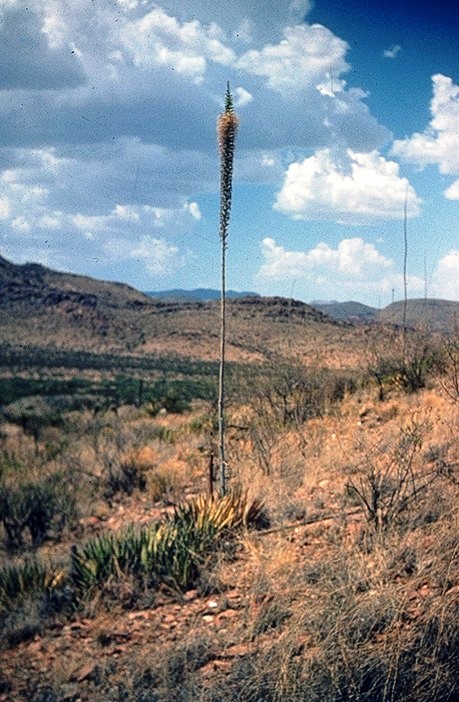
Unlike the larger, more familiar landscape agaves, Lechuguilla stays compact — typically under 2 feet tall and wide — and spreads by rhizomes into tight colonies that can carpet limestone hillsides. Each individual rosette lives for years before sending up, just once, a single tall, slender flower stalk that can reach 10 feet, bloom, set seed, and die, leaving its offsets to carry on the colony.
For gardeners in its native range, Lechuguilla offers extreme drought and heat tolerance, a striking sculptural form, and genuine ecological authenticity — a true Chihuahuan Desert native rather than an agave borrowed from Mexico or the Sonoran Desert. It asks for almost nothing: rocky, fast-draining soil, full sun, and to be left alone. Its sharp spines make it a natural choice for barrier or “crime prevention” plantings beneath windows, but they also mean it belongs well away from paths and play areas.
Identification
Lechuguilla is a small, rhizomatous, rosette-forming succulent that spreads to form dense clonal colonies, each rosette typically 1 to 2 feet tall and wide.
Leaves
Leaves number 20 to 50 per rosette, are narrowly lance-shaped, rigid, and 10 to 20 inches long, colored pale yellow-green to gray-green, sometimes with a faint reddish tinge in strong sun. Each leaf ends in a sharp, dark brown to blackish terminal spine up to 1.5 inches long, and the margins bear small, hooked or straight teeth along their length — together making the plant genuinely hazardous to brush against, hence “shin dagger.”
Flowers
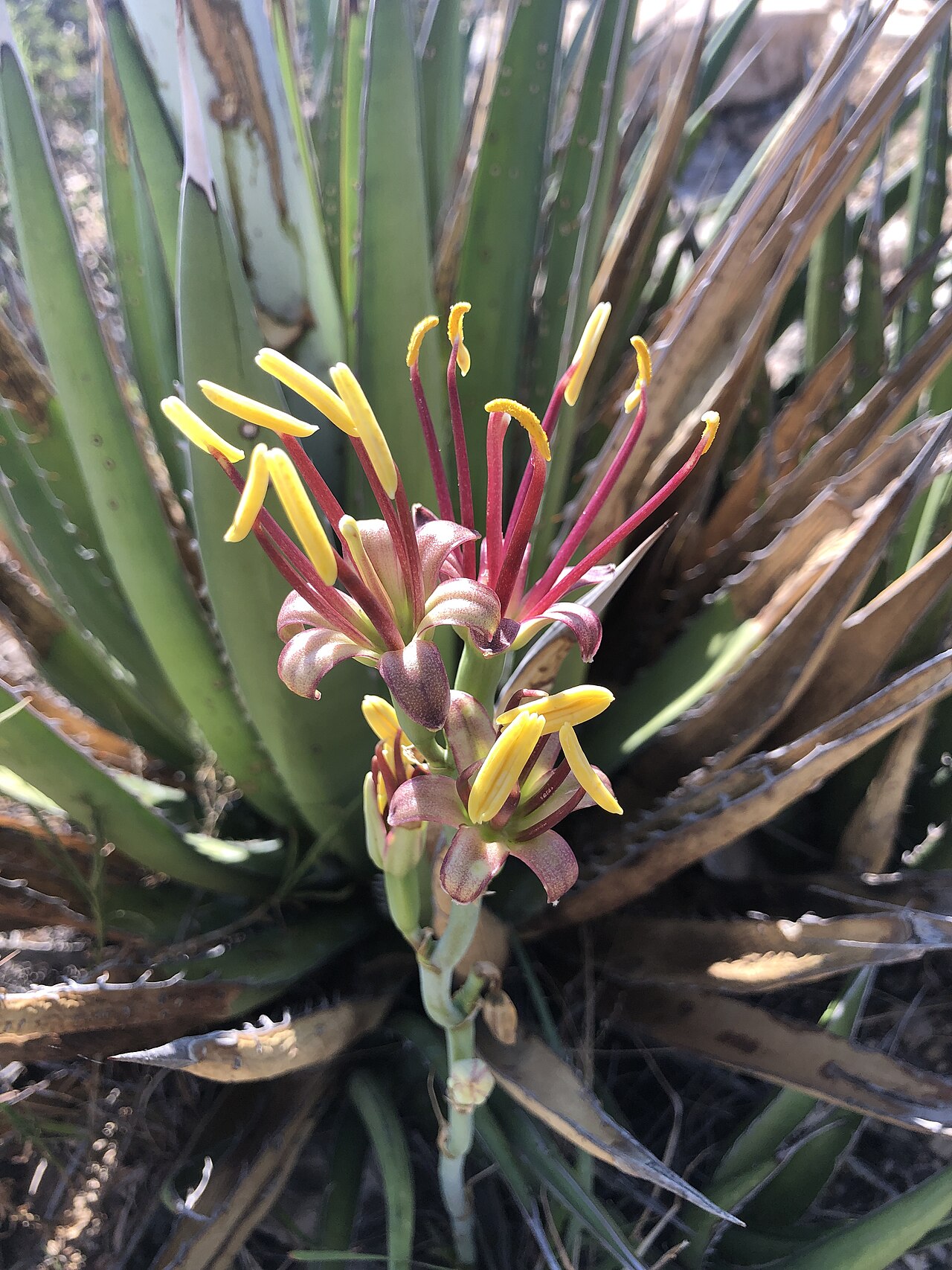
Lechuguilla is monocarpic: a given rosette flowers only once, in its own time, usually after 8 to 20 years of growth, then dies. The flower stalk (inflorescence) is a slender, unbranched spike 6 to 15 feet tall bearing small, tubular, purplish-to-yellow flowers clustered along the upper portion. Blooming occurs chiefly in spring (April to June), triggered by sufficient accumulated moisture, which is why bloom stalks can appear erratically across a colony rather than all at once.
Fruit & Seeds
After flowering, each stalk produces a crop of dry, three-chambered capsules that split open to release flat, black seeds, dispersed mainly by wind and gravity down the slope. Because each rosette dies after flowering, most colony expansion happens vegetatively via rhizome offsets (called “pups”) rather than from seed, producing the dense, genetically uniform patches typical of mature stands.
Quick Facts
| Scientific Name | Agave lechuguilla |
| Family | Asparagaceae (Agave subfamily) |
| Plant Type | Evergreen Succulent Rosette (Cacti/Succulent category) |
| Mature Height | 1–2 ft (rosette); flower stalk to 10 ft |
| Mature Spread | 1–2 ft per rosette; colonies spread by rhizome |
| Growth Rate | Slow |
| Sun Exposure | Full Sun |
| Water Needs | Very Low |
| Soil Type | Rocky, gravelly, sharply drained; limestone-derived preferred |
| Soil pH | 7.0–8.5 (neutral to alkaline) |
| Bloom Time | April – June (once per rosette, after years of growth) |
| Flower Color | Purplish-red to yellow |
| Fall Color | None (evergreen) |
| Fruit | Dry three-chambered seed capsules |
| Deer Resistant | Yes (spines deter nearly all browsers) |
| USDA Hardiness Zones | 8–11 |
Native Range
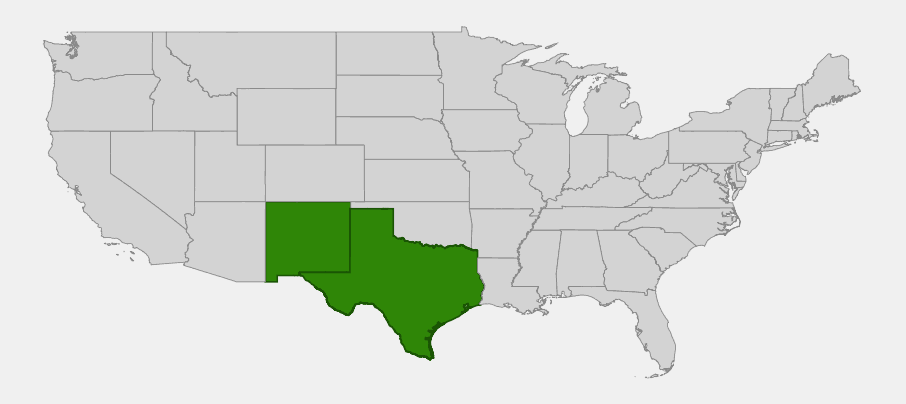
Lechuguilla is native to the Chihuahuan Desert of the southwestern United States and north-central Mexico. In the U.S. it occurs in the Trans-Pecos region of far western Texas and in the bootheel and southern portions of New Mexico, reaching its northern range limits in these areas. South of the border, it is far more widespread, ranging through Chihuahua, Coahuila, Durango, Nuevo León, San Luis Potosí, Tamaulipas, Zacatecas, and Hidalgo.
Across its range, Lechuguilla is a defining species of Chihuahuan Desert scrub and desert grassland, typically growing on rocky limestone slopes, bajadas, and mesas between about 1,000 and 6,000 feet elevation. It is frequently a dominant or co-dominant understory plant alongside creosote bush, tarbush, sotol, and various cacti, and its presence is considered one of the most reliable indicators botanists use to mark the Chihuahuan Desert’s boundary from surrounding vegetation types.
Lechuguilla is common and secure within its native range and is not considered rare or threatened. It is not native outside the Chihuahuan Desert region — gardeners outside far west Texas and southern New Mexico should treat it strictly as a xeriscape or container specimen rather than a locally native planting.
📋 Regional plant lists featuring Lechuguilla: Arizona & New Mexico
Growing & Care Guide
Lechuguilla is about as low-maintenance as native plants get within its range, provided its one non-negotiable requirement — sharp drainage — is met.
Light
Give Lechuguilla full, unfiltered sun. It is built for the open desert and will not thrive, and may rot, in shaded or overly sheltered positions.
Soil & Water
Rocky, gravelly, alkaline soil with excellent drainage is essential — Lechuguilla naturally grows on limestone slopes where water never stands. Established plants need no supplemental irrigation in their native range and can rot quickly in heavy clay or poorly drained soil. In a garden setting, a gritty, mineral-based soil mix (as used for cacti and other succulents) mimics its native conditions well.
Planting Tips
Plant container-grown offsets in spring after the danger of hard frost has passed, siting them well away from paths, patios, and anywhere people or pets might brush against the spine-tipped leaves. Because colonies spread outward by rhizome, allow 2 to 3 feet of room for a planting to expand naturally over time, or plan to remove unwanted offsets periodically.
Pruning & Maintenance
Lechuguilla needs essentially no pruning; remove only dead or damaged leaves for appearance, cutting carefully given the terminal spines. After a rosette flowers and dies — usually after many years — simply remove the spent rosette and its flower stalk; the surrounding offsets will continue the colony.
Propagation
The easiest method is dividing and transplanting rooted offsets (“pups”) from an established colony, which establish quickly. Seed propagation is possible but slow, given the long juvenile period before a rosette reaches flowering size.
Landscape Uses
Lechuguilla fits a specific but valuable niche in regional gardens:
- Xeriscape and rock gardens needing zero supplemental water once established
- Security or barrier plantings beneath windows, thanks to its sharp spines
- Chihuahuan Desert habitat restoration on rocky, caliche, or limestone sites
- Textural accent in a desert or xeric container planting
- Erosion control on rocky desert slopes where its rhizomatous colonies hold soil
Wildlife & Ecological Value
As a dominant species across huge stretches of the Chihuahuan Desert, Lechuguilla anchors an entire desert ecosystem.
For Pollinators
The tall flower stalks, though each rosette blooms only once, attract bees, wasps, and other insects to their small tubular flowers, and are also visited by nectar-feeding bats in parts of the species’ Mexican range, which move pollen between widely scattered flowering stalks.
For Birds
Dead, dried flower stalks left standing provide perches for desert birds, and the dense, spiny rosettes offer secure nesting cover for ground-dwelling and shrub-nesting species that benefit from near-total protection against predators.
For Mammals
Few mammals attempt to browse Lechuguilla’s spine-armed leaves, making it one of the most herbivore-proof plants of the Chihuahuan Desert; javelina and some rodents will occasionally dig into the base for moisture-rich tissue during extreme drought. Dense colonies provide secure, nearly impenetrable cover for small mammals and reptiles seeking refuge from predators and the desert sun.
Ecosystem Role
Lechuguilla is considered a foundation species of the Chihuahuan Desert — so consistently present that ecologists use its distribution to help map the desert’s boundaries. Its rhizomatous colonies stabilize thin, rocky desert soils against erosion, and the extensive bare-ground patches and leaf litter it creates shape microhabitat conditions for countless smaller desert plants and animals.
Cultural & Historical Uses
Lechuguilla has a long history of use by Indigenous peoples of the Chihuahuan Desert region, who processed the fibrous leaves into cordage, nets, baskets, mats, and sandals — the tough leaf fibers, known as ixtle, were a significant source of cordage material across northern Mexico and the border region. Historically, ixtle fiber harvested from Lechuguilla and related agaves became a commercial export product in Mexico, used for brushes, rope, and other fiber goods, an industry that persisted in parts of its range well into the 20th century.
The plant’s name — “Lechuguilla,” a Spanish diminutive related to “lechuga” (lettuce) — reflects the pale, somewhat lettuce-like look of its young, unfurled central leaves rather than any culinary use. The common name “shin dagger” is a more recent, practical nickname from hikers and ranchers who have learned to respect its leaf-tip spines the hard way.
Today Lechuguilla remains primarily of ecological and regional horticultural interest, valued by desert gardeners as an authentic, low-water Chihuahuan Desert native rather than for any commercial product.
Frequently Asked Questions
Is Lechuguilla dangerous to touch?
Its leaf-tip spines and marginal teeth are sharp enough to puncture skin and clothing, which is the source of the nickname “shin dagger.” It is not toxic, but the mechanical injury from its spines is real — site it away from paths, play areas, and anywhere people or pets regularly pass.
How long does it take Lechuguilla to bloom?
An individual rosette typically takes 8 to 20 years to reach flowering size. Once it blooms, that rosette dies, but the colony continues through its rhizome offsets, so a healthy planting is never without new rosettes coming along.
Can I grow Lechuguilla outside Texas and New Mexico?
You can grow it as an adapted xeriscape or container succulent in other hot, dry climates with excellent drainage, but it is native only to the Trans-Pecos of Texas and southern New Mexico (and north-central Mexico) — elsewhere it should be considered an introduced desert ornamental, not a native planting.
Does Lechuguilla need any water once established?
In its native range, established plants typically need no supplemental irrigation and rely entirely on natural desert rainfall. Overwatering, especially in poorly drained soil, is far more likely to kill it than drought.
Why is Lechuguilla used to define the Chihuahuan Desert?
It is one of the most widespread and consistently present species across the Chihuahuan Desert’s full extent, occurring almost everywhere the desert’s characteristic rocky, limestone-derived soils and climate occur, which makes it a useful botanical indicator for where the desert begins and ends.

Looking for a nursery that carries Lechuguilla?
Browse our native plant nursery directory: New Mexico · Texas