
Vasevine (Clematis viorna)
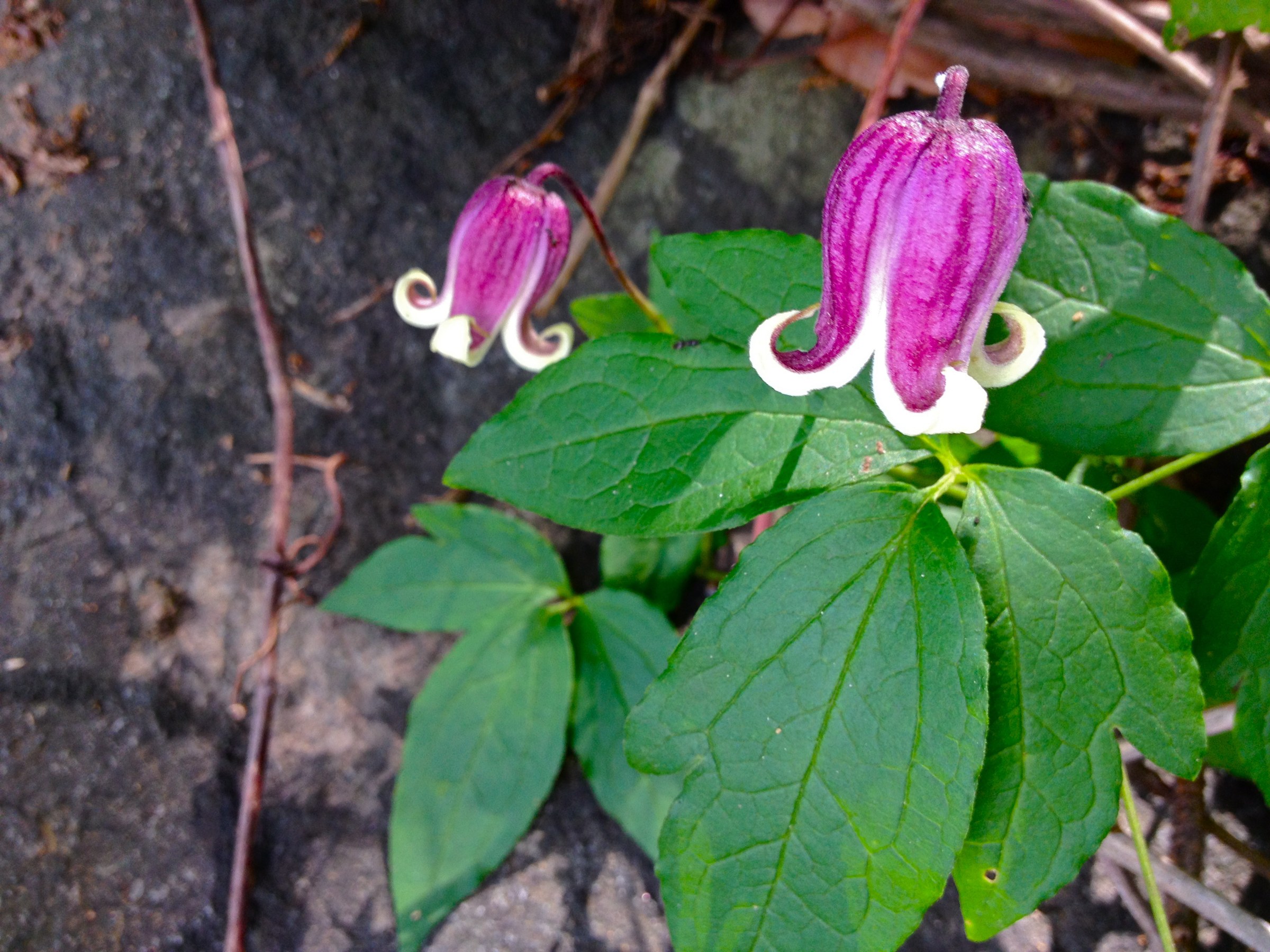
Clematis viorna, known as Vasevine or Leatherflower, is a slender, herbaceous-to-semi-woody climbing vine native to the southeastern and south-central United States, reaching north and west into the lower Midwest and Mid-Atlantic. Its most distinctive feature gives the plant both of its common names: solitary, thick-textured, urn- or vase-shaped flowers in dusky reddish-purple to pink, with four leathery sepals that flare and curl back only at their pale tips.
Vasevine threads itself through fencerows, shrub thickets, and open woodland edges across much of the eastern interior, especially on the east-facing slopes and rich coves of the lower Appalachians, where the greatest diversity of native American clematis occurs. It climbs by twining leaf stalks rather than tendrils, draping loosely over whatever shrubby support it finds rather than smothering it. The nodding flowers hang like small lanterns among the three-parted leaves from late spring through summer, followed by silky, plume-tailed seed heads that are nearly as ornamental as the blooms.
For native plant gardeners within its range, Vasevine is an easy-going, well-mannered vine for a fence, low trellis, or the base of a large shrub, asking only for a reasonably sunny spot with its roots kept cool and the soil well drained. It is a far less aggressive grower than the related, much larger-flowered Jackman-type garden clematis, and makes a good choice for anyone who wants an authentic regional native rather than an imported cultivar.
Identification
Vasevine is a slender, deciduous perennial vine, typically climbing 3 to 10 feet into surrounding vegetation, with a woody base and softer, herbaceous upper growth each season.
Stems
Stems are thin, ridged or slightly angled, and largely hairless to lightly hairy, often with a purplish or reddish cast, especially toward the growing tips. As with other clematis, there are no true tendrils; instead, the long leaf stalks twist and curl around twigs, wire, and branches to anchor the climbing stems.
Leaves
Leaves are opposite and pinnately compound, usually divided into three to seven ovate to heart-shaped leaflets with smooth or slightly wavy margins and pointed tips. The leaflets are a dull to semi-glossy medium green, thin in texture, and the terminal leaflet of each leaf is often itself divided or modified into an extra tendril-like twining stalk that helps the vine grip its support.
Flowers
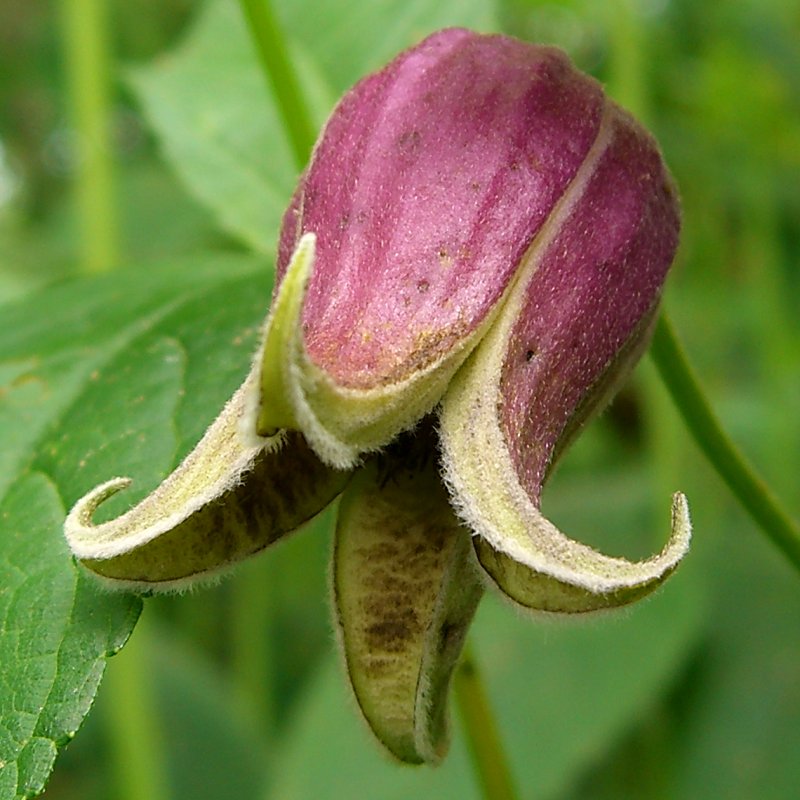
The flowers are the plant’s signature feature: solitary, nodding, and distinctly urn- or vase-shaped, 1 to 1.5 inches long, borne on long stalks from the leaf axils from late spring into summer. The four thick, leathery sepals are fused for most of their length into a bell, in dusky reddish-purple to pink, usually with a paler, cream-to-yellow margin, and only the slender tips flare outward and curl backward. Unlike many clematis, the flowers never open flat; their closed, leathery texture and drooping posture are what give the plant its “leatherflower” name.
Fruit & Seeds
After flowering, Vasevine produces a rounded cluster of achenes, each tipped with a long, silvery, feathery plume up to 1.5 inches long. These plumed seed heads mature from late summer into fall, catching the light attractively, and are carried off on the wind once ripe.
Quick Facts
| Scientific Name | Clematis viorna L. |
| Family | Ranunculaceae (Buttercup) |
| Plant Type | Deciduous climbing vine (woody-based perennial) |
| Mature Height | 3–10 ft climbing length |
| Mature Spread | 2–4 ft at the base |
| Growth Rate | Moderate |
| Sun Exposure | Full Sun to Part Shade |
| Water Needs | Average; good drainage, roots kept cool and moist |
| Soil Type | Rich, well-drained loam; tolerates rocky soil |
| Soil pH | Neutral to slightly alkaline |
| Bloom Time | May – August |
| Flower Color | Dusky reddish-purple to pink, cream-margined |
| Fall Color | None notable; showy silvery seed plumes instead |
| Fruit | Feathery-plumed achene clusters, late summer–fall |
| Deer Resistant | Yes, generally avoided by deer |
| USDA Hardiness Zones | 5–9 |
Native Range
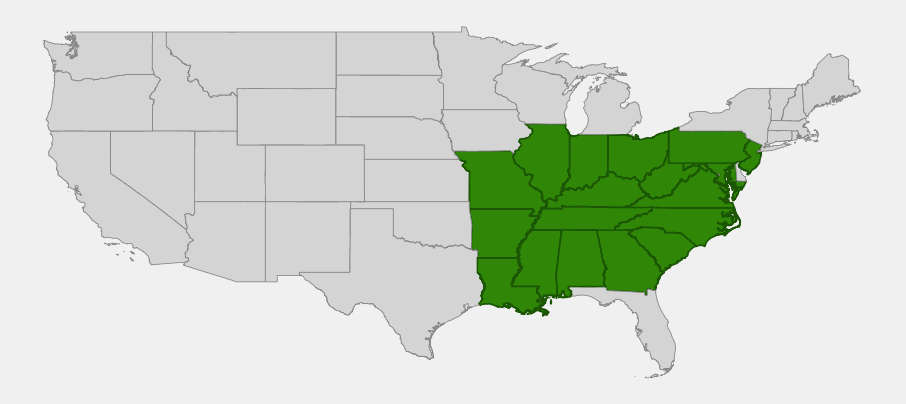
Vasevine is native to the southeastern and south-central United States, with its heaviest concentration in the Appalachian region and the mid-South. Its range runs from Missouri and southern Illinois and Indiana east through Ohio, Kentucky, Tennessee and West Virginia into Virginia, Maryland and Pennsylvania, with a disjunct rare presence extending into northern New Jersey; it continues south through North and South Carolina, Georgia, Alabama and Mississippi, and west into Arkansas and Louisiana. It is especially common on the east-facing slopes and rich coves of the lower Appalachians, an area that holds the richest diversity of native American clematis species.
Typical habitat includes open deciduous woodland edges, fencerows, streamside thickets, and rocky or calcareous slopes, usually in part shade with well-drained soil. Vasevine is often found scrambling over low shrubs or fences at the margins of woods rather than deep in closed-canopy forest, since it needs at least filtered sun to flower well.
Vasevine is absent as a native plant from the Deep South coastal plain, peninsular Florida, the northern Midwest and Great Lakes states, and all of New England and the West, where it is not found in the wild. Where it is native, it is not considered rare across most of its range, though some populations at the northern and eastern edges (such as in New Jersey and parts of Pennsylvania) are local and uncommon.
📋 Regional plant lists featuring Vasevine: Georgia, Alabama & Mississippi · Arkansas, Louisiana, Eastern Oklahoma & Eastern Texas · Illinois, Iowa & Missouri · Ohio & Indiana · Kentucky & Tennessee · Maryland, Virginia & West Virginia · North Carolina & South Carolina · New York, Pennsylvania & Northern New Jersey
Growing & Care Guide
Vasevine is one of the easiest native clematis to grow in the Southeast and Mid-Atlantic, asking only for a sunny-enough spot and something to climb.
Light
Full sun to part shade suits it well; it flowers most heavily with at least a half day of direct sun, though it tolerates the dappled light of a woodland edge. As with most clematis, keeping the base of the plant shaded and cool while the vine climbs into brighter light produces the best growth and bloom.
Soil & Water
Vasevine prefers rich, well-drained soil with a neutral to slightly alkaline pH, and it tolerates rocky or gravelly ground readily. It does best with average, consistent moisture and good drainage; avoid soggy, poorly drained sites. A layer of mulch over the root zone helps keep roots cool through hot summers.
Planting Tips
Give Vasevine something modest to climb — a low fence, split-rail rail, large shrub, or small trellis — since it is a light, well-mannered climber rather than an aggressive one. Plant in fall or early spring, and set the crown slightly below soil level as is customary for clematis, which helps the plant recover if the top growth is ever damaged.
Pruning & Maintenance
Vasevine flowers on new growth, so it can be cut back hard in late winter if a tidy, compact habit is wanted, or simply left alone to drape naturally over its support. Remove dead stems in spring and thin congested growth occasionally to keep air circulating through the foliage.
Landscape Uses
Good placements for this vine include:
- Fences and split-rail borders, where it can twine naturally
- Woodland edge and native hedgerow plantings
- Low trellises near a porch or garden entry
- Pollinator and native plant gardens within its home range
- Rock gardens and slopes with well-drained soil
Wildlife & Ecological Value
Vasevine contributes modestly but reliably to the food webs of the woodland edges and fencerows where it grows.
For Pollinators
The thick, leathery flowers are specialized for larger bees, particularly bumblebees, which are strong enough to force their way into the narrow, closed urn shape to reach pollen and nectar; smaller insects generally cannot access the flower’s interior the way they can with flatter-flowered clematis. This makes Vasevine a useful, if specialized, nectar source for bumblebee populations through the long summer bloom period.
For Birds
Small songbirds occasionally forage among the tangled vines for insects, and the twining growth over fences and shrubs provides some cover and nesting structure at woodland edges, though the plant is not a major food source for birds.
For Mammals
Deer and rabbits generally leave Vasevine alone, making it a reliably low-browse option for gardens in areas with heavy deer pressure.
Ecosystem Role
As a light, non-smothering vine, Vasevine adds structural diversity to woodland edges and fencerows without overwhelming its host shrubs, unlike some more aggressive non-native vines. Its long bloom season helps support pollinator activity through the heat of summer when many spring woodland wildflowers have already finished.
Cultural & Historical Uses
Vasevine has a relatively modest historical record compared with some better-known regional wildflowers, in part because its scattered, climbing habit along woodland margins made it a less conspicuous plant than showier meadow or forest-floor species. It was formally described by Carl Linnaeus in 1753, one of the earliest native American clematis species to receive a scientific name, reflecting early botanical interest in the unusual, urn-shaped flowers of the American “leatherflower” clematis group.
Within the Appalachian region, where native clematis diversity is greatest, Vasevine and its close relatives have long been noted by botanists and collectors for their distinctive, almost sculptural flower form, and the species has appeared repeatedly in nineteenth- and twentieth-century botanical illustration, including works held today by institutions such as the Smithsonian American Art Museum.
In recent decades, Vasevine has found a modest niche in native plant horticulture as gardeners look for well-behaved regional alternatives to imported ornamental clematis. Its restrained growth, long bloom season, and strong bumblebee visitation have made it a favorite recommendation among native plant nurseries across its range.
Frequently Asked Questions
Why don’t Vasevine flowers open flat like other clematis?
Vasevine belongs to a group of American clematis, sometimes called the leatherflowers, whose thick, fused sepals never fully separate and spread. Only the narrow tips curl back, which keeps the flower in its distinctive urn or vase shape throughout its bloom. This is a normal, healthy trait of the species, not a sign of a problem.
Is Vasevine aggressive like some other clematis vines?
No. Compared with large hybrid clematis or aggressive non-native vines, Vasevine is a light, restrained climber that drapes over its support rather than smothering it. It is generally easy to keep in bounds with occasional light pruning.
What pollinates Vasevine?
Mainly bumblebees. The narrow, leathery, urn-shaped flowers require a strong insect to force its way inside, and bumblebees are well suited to the job. This makes Vasevine a particularly valuable nectar source for bumblebee species through the summer.
Does Vasevine need a trellis?
It benefits from something to climb, such as a fence, shrub, or small trellis, but because it is a light vine it does not require heavy structural support the way larger hybrid clematis sometimes do.
How is Vasevine different from the related Clematis crispa (swamp leatherflower)?
Both are American leatherflower-type clematis with urn-shaped blooms, but Clematis crispa favors wet, swampy ground and has more strongly waved, ruffled sepal margins, while Vasevine favors drier, well-drained woodland edges and has flatter, less ruffled sepals. Checking the habitat and sepal texture together is the most reliable way to tell them apart.

Looking for a nursery that carries Vasevine?
Browse our native plant nursery directory: Georgia · Alabama & Arkansas · Illinois & Indiana · Kentucky, Louisiana, Maryland, Mississippi & Missouri · North Carolina, New Jersey & Ohio · Pennsylvania, South Carolina, Tennessee & Virginia · West Virginia