
Desert Sunflower (Geraea canescens)
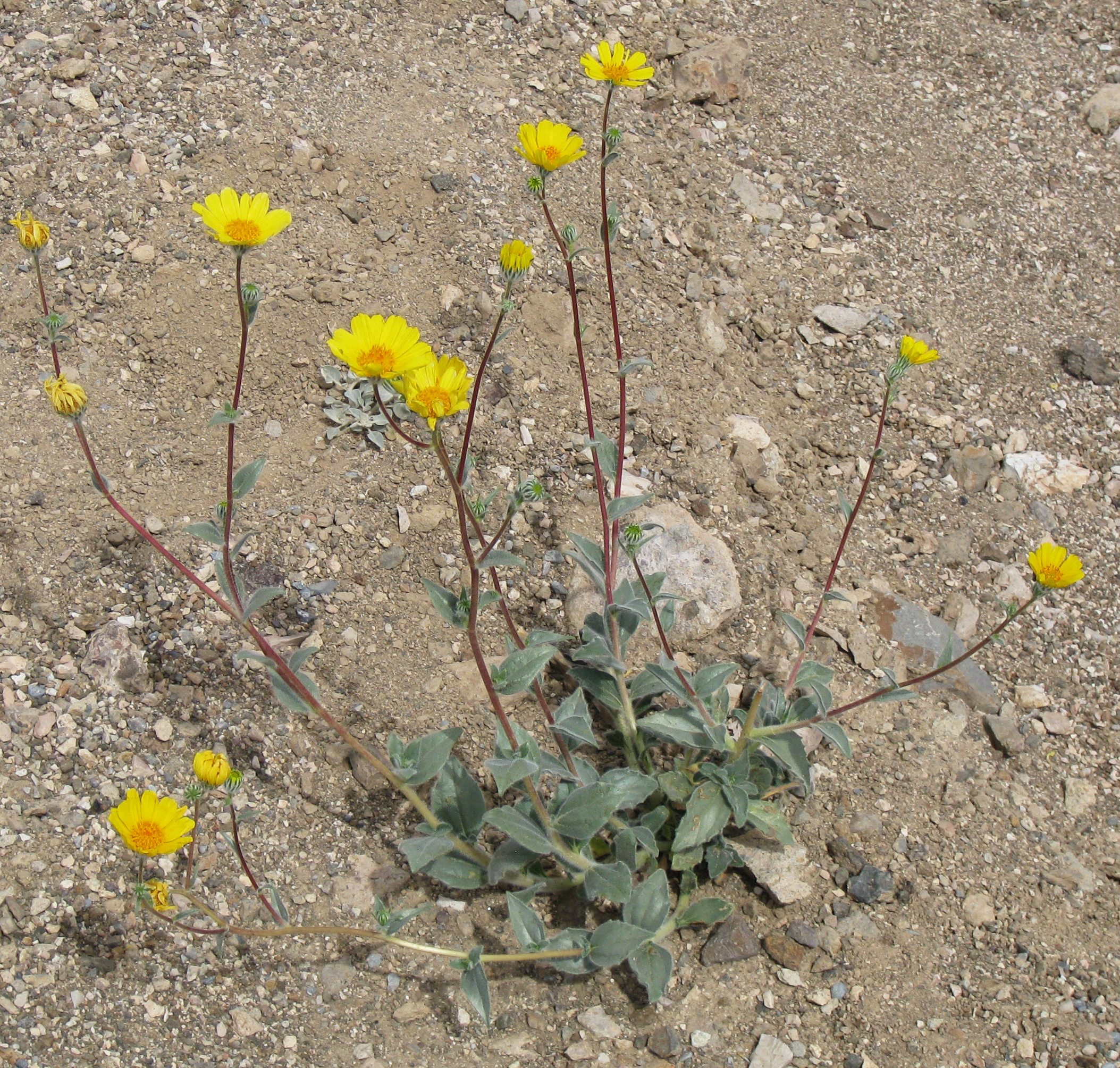
Geraea canescens, commonly known as Desert Sunflower, Hairy Desertsunflower, or Desert Gold, is a low, bushy annual wildflower native to the hot, dry deserts of the American Southwest. A member of the aster family (Asteraceae), it is one of the signature wildflowers of the Mojave and Sonoran Deserts, famous for carpeting sandy washes, dunes, and gravelly flats with sheets of bright gold, daisy-like blooms during the rare years when winter rainfall triggers a desert superbloom.
Desert sunflower grows as a rounded, many-branched annual 8 to 24 inches tall, with soft, silvery-gray, hairy foliage that helps reflect intense desert sun and reduce water loss. From late winter through late spring — and again after late-summer monsoon rain in some years — each plant produces a long succession of cheerful yellow flowerheads on slender stalks, making it one of the most reliably showy annuals of the low desert floor.
In the garden, desert sunflower is a natural fit for xeriscape and low-desert native plantings across its native range in California, Arizona, Nevada, and Utah. As a true desert annual, it completes its entire life cycle — germination, bloom, seed set, and death — within a single growing season, relying on seed banked in the soil to reappear, often spectacularly, whenever winter rains are generous.
Identification
Desert sunflower is a low, mounding annual forb, typically 8 to 24 inches tall and somewhat wider than tall, with multiple branching stems arising from the base. The whole plant has a soft, grayish, slightly sticky-haired texture that is distinctive even before it flowers.
Stems & Foliage
Stems are reddish to purplish, branching freely from near the base, and covered in short, soft hairs that give the plant an overall silvery-gray cast. The leaves are simple, alternate to nearly opposite near the base, oval to lance-shaped, 1 to 3 inches long, with entire or slightly toothed margins and the same dense, soft, grayish hairs as the stems. This hairy coating helps the plant tolerate intense sun and reduce water loss in its hot, exposed habitat.
Flowers
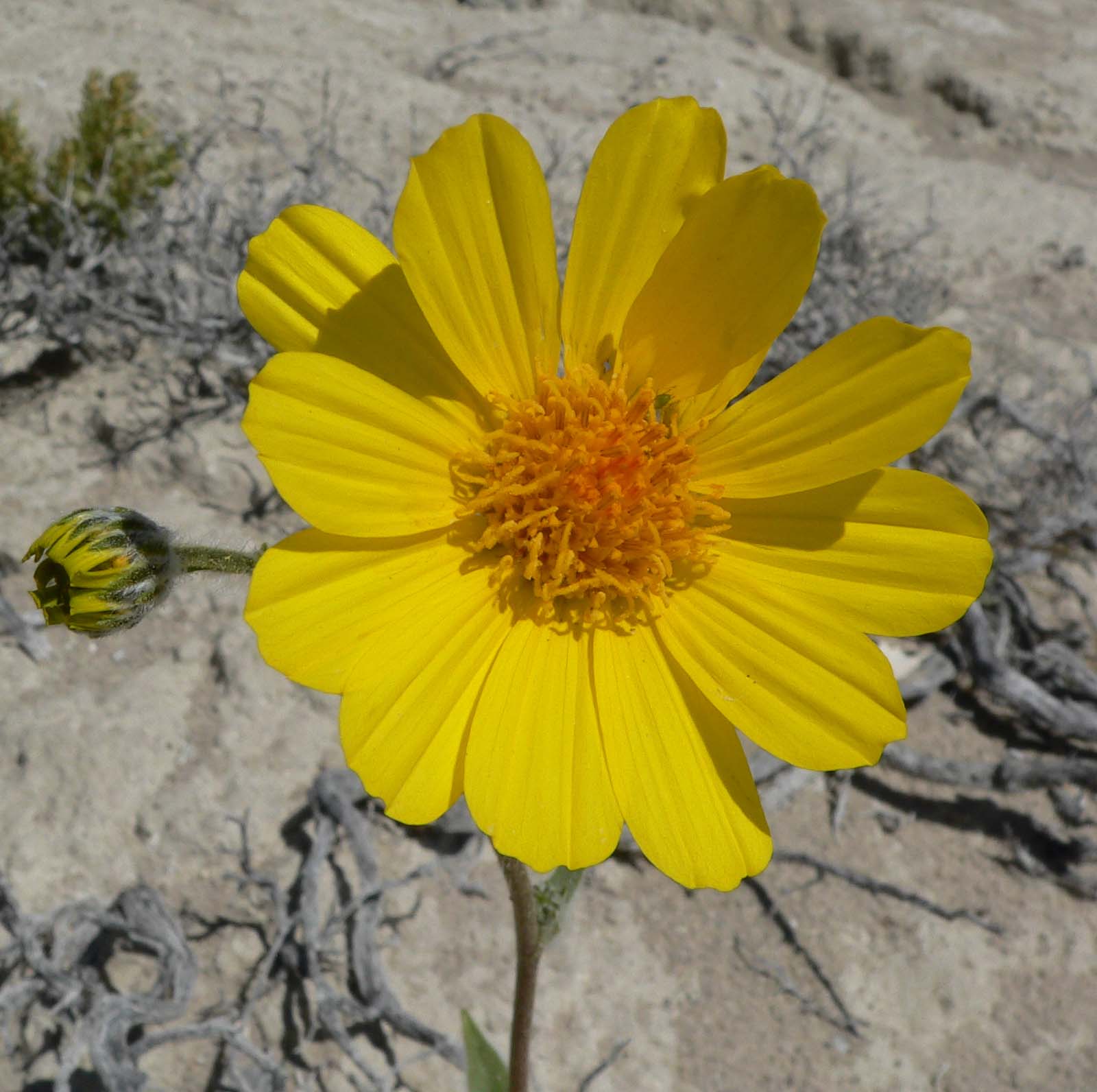
Each flowerhead is a classic daisy form, 1.5 to 2.5 inches across, with 10 to 21 broad, bright yellow to golden ray florets surrounding a dense cluster of darker orange-yellow disc florets at the center. Flowerheads are borne singly on long, slender, upward-curving stalks well above the foliage, and the phyllaries (bracts beneath each flowerhead) are edged with fine white hairs. Bloom is heaviest from February through May, with plants capable of flowering again after summer monsoon moisture in some years.
Fruit & Seeds
After flowering, each disc floret matures into a small, hairy, wedge-shaped seed (an achene) without the showy pappus bristles seen in many other sunflower-family seeds. Seeds drop near the parent plant and remain dormant in the desert soil seed bank, sometimes for years, germinating in mass only when winter rains are substantial enough to trigger a reliable bloom — the mechanism behind the Southwest’s famous superbloom years.
Quick Facts
| Scientific Name | Geraea canescens |
| Family | Asteraceae (Aster/Sunflower) |
| Plant Type | Annual forb/wildflower |
| Mature Height | 8–24 in |
| Mature Spread | 1–2 ft, mounding |
| Growth Rate | Fast (completes life cycle in one season) |
| Sun Exposure | Full sun |
| Water Needs | Very low; relies on winter rain |
| Soil Type | Sandy or gravelly, fast-draining desert soil |
| Soil pH | Neutral to alkaline |
| Bloom Time | February – May; sometimes again after summer rain |
| Flower Color | Bright yellow to gold |
| Fall Color | None (annual; plant dies back after seed set) |
| Fruit | Small hairy achene (dry seed) |
| Deer Resistant | Generally yes |
| USDA Hardiness Zones | 8–11 (grown as a self-seeding annual) |
Native Range
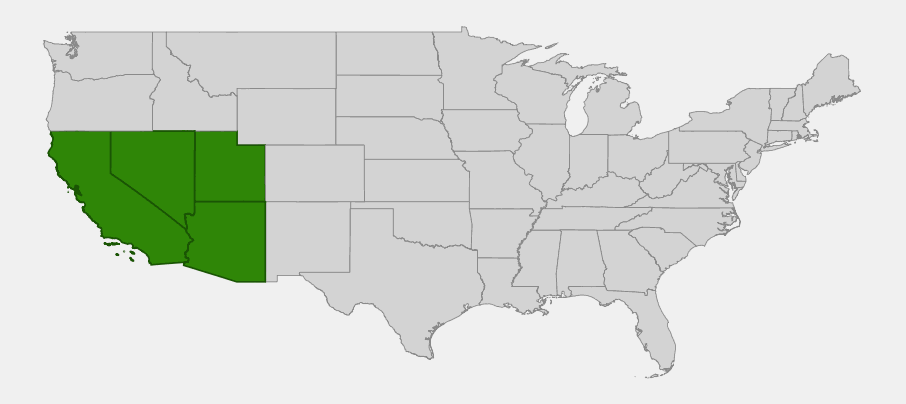
Desert sunflower is native to the low desert regions of the southwestern United States, occurring across southeastern California, Arizona, southern Nevada, and southwestern Utah, with its range extending south into Sonora and Baja California, Mexico. Within the United States, it is especially common and conspicuous in the Mojave and Colorado (Sonoran) Deserts, including well-known wildflower areas such as Death Valley, the Anza-Borrego Desert, and the Coachella Valley.
Across this range, desert sunflower grows in open, sandy to gravelly desert flats, washes, dunes, and roadside disturbance, generally from below sea level up to around 3,700 feet elevation. It is frequently found growing alongside creosote bush, forming one of the signature combinations of the low desert floor, and often appears in dense, showy stands during years of above-average winter rainfall.
Desert sunflower’s range is tightly tied to its arid, low-elevation desert habitat; it is not native to the higher, cooler deserts or mountain areas within Arizona, Nevada, and Utah, and gardeners outside the hot, dry lowland Southwest should not expect this species to perform or self-sustain as it does within its native desert range.
📋 Regional plant lists featuring Desert Sunflower: Arizona & New Mexico · Utah & Western Colorado
Growing & Care Guide
Desert sunflower is an easy, low-fuss annual for low-desert gardeners who want authentic, reliable spring color without any supplemental irrigation beyond what nature provides. The main trick to success is accepting its boom-and-bust nature rather than fighting it.
Light
Full sun is essential. Desert sunflower is adapted to the open, shadeless floor of the low desert and will not perform well, or may not germinate at all, in shaded or part-shade garden sites.
Soil & Water
Give desert sunflower sandy, gravelly, fast-draining soil that mimics its native desert wash habitat; it does poorly in heavy clay or any soil that holds moisture. In its native range it depends entirely on winter rainfall, and garden plantings should be treated the same way — avoid summer irrigation, which the plant does not need and is not adapted to use, since by summer the natural life cycle has already finished.
Planting Tips
Desert sunflower is grown from seed, direct-sown in fall ahead of the winter rainy season rather than transplanted, since like many desert annuals it establishes poorly from nursery starts. Scatter seed on bare, disturbed soil in a sunny, well-drained spot and let natural winter rain trigger germination; in a good rain year, expect a strong flush of seedlings and bloom the following spring. Once established in a garden, desert sunflower will often self-sow in future years whenever rainfall is adequate.
Landscape Uses
Desert sunflower earns its keep in authentic low-desert native plantings:
- Desert wildflower meadows and naturalistic dryland plantings
- Xeriscape color requiring no summer water
- Pollinator gardens in the low desert Southwest
- Erosion control on open, sandy slopes and disturbed desert soils
- Companion planting with creosote bush and other low-desert natives
- Roadside and reclamation seeding in appropriate desert habitats
Wildlife & Ecological Value
Desert sunflower is a key spring resource in an environment where flowering plants and the pollinators that depend on them are often scarce for much of the year.
For Pollinators
The bright, abundant flowerheads attract a wide range of native bees, including solitary desert bee species, as well as butterflies and beneficial flies, providing an important nectar and pollen source during the relatively brief desert spring bloom window.
For Birds
The small seeds produced after flowering are eaten by various seed-eating desert birds, including sparrows and finches, contributing modestly to the food web of the desert floor during and after the spring bloom season.
For Mammals
Desert sunflower foliage is browsed opportunistically by desert mammals including jackrabbits and desert cottontails, particularly in years when the superbloom provides unusually abundant green forage in an otherwise sparse landscape.
Ecosystem Role
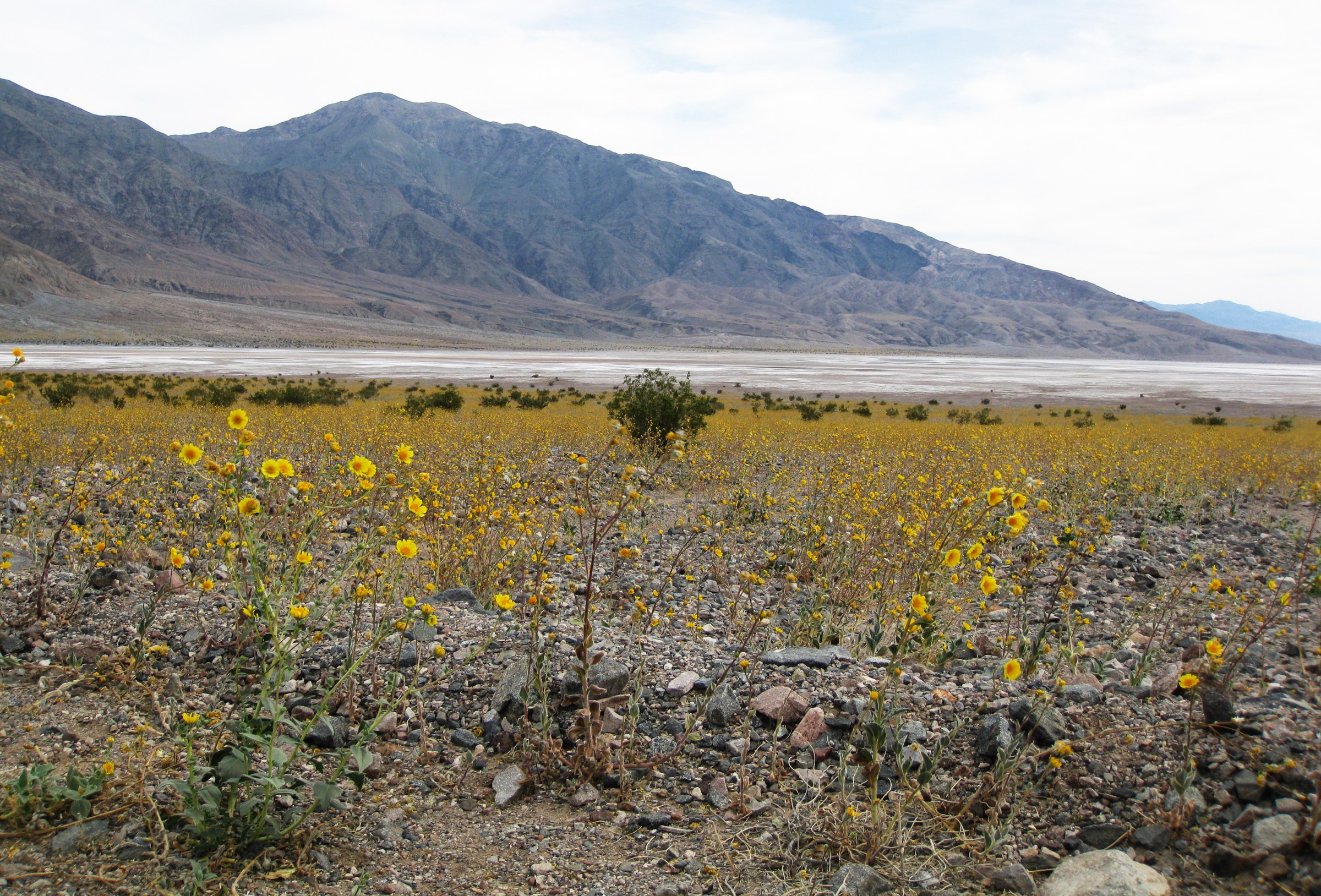
As one of the dominant annual wildflowers of superbloom events, desert sunflower plays an outsized ecological role in pulse years, when mass germination briefly transforms bare desert ground into a continuous carpet of forage, nectar, and seed. Its persistent soil seed bank is a key desert adaptation, allowing the species to survive multi-year droughts as dormant seed and reappear reliably whenever conditions allow.
Cultural & Historical Uses
Desert sunflower has long been recognized by Southwestern desert travelers and naturalists as one of the most visually striking signs of a good rain year, and it remains a centerpiece of the desert wildflower tourism that draws visitors to places like Death Valley and Anza-Borrego during notable bloom seasons.
The common name “desert gold,” used alongside “desert sunflower,” reflects both the plant’s color and its historical role as a welcome visual marker of favorable conditions in an otherwise austere landscape — early travelers and settlers in the low desert would have recognized a strong bloom year as a sign of unusually generous winter rains.
Beyond its ornamental and ecological significance, desert sunflower has limited documented use in traditional Indigenous plant knowledge compared to larger or more resource-rich desert species; its primary historical and cultural value lies in its role as a dependable, visually dramatic indicator species of desert rainfall and bloom conditions.
Frequently Asked Questions
Is desert sunflower the same as “desert gold”?
Yes — “Desert Gold” and “Hairy Desertsunflower” are both common names used for Geraea canescens, alongside “Desert Sunflower,” which is the most widely used name.
Why didn’t my desert sunflower seeds come up this year?
Desert sunflower germination depends heavily on adequate winter rainfall; in dry years, much of the seed bank simply stays dormant rather than germinating and failing. This is normal desert annual behavior, not a planting mistake, and the same seed bank can produce a strong bloom in a wetter year.
Can desert sunflower be grown outside the low desert?
It is native only to the hot, low-elevation Mojave and Sonoran Desert regions of California, Arizona, Nevada, and Utah, and is unlikely to thrive or reliably self-sow in cooler, higher-elevation, or wetter-summer climates outside that range.
Does desert sunflower need regular watering?
No. It is adapted entirely to winter rainfall and naturally completes its life cycle before the hottest, driest part of the desert summer. Supplemental summer watering is unnecessary and does not match the plant’s natural growing season.
How long does desert sunflower bloom?
In a good rain year, individual plants can flower continuously from February into May, with the showiest mass displays occurring in exceptional “superbloom” years following unusually wet winters.

Looking for a nursery that carries Desert Sunflower?
Browse our native plant nursery directory: California · Arizona · Nevada · Utah