
Alligator Juniper (Juniperus deppeana)
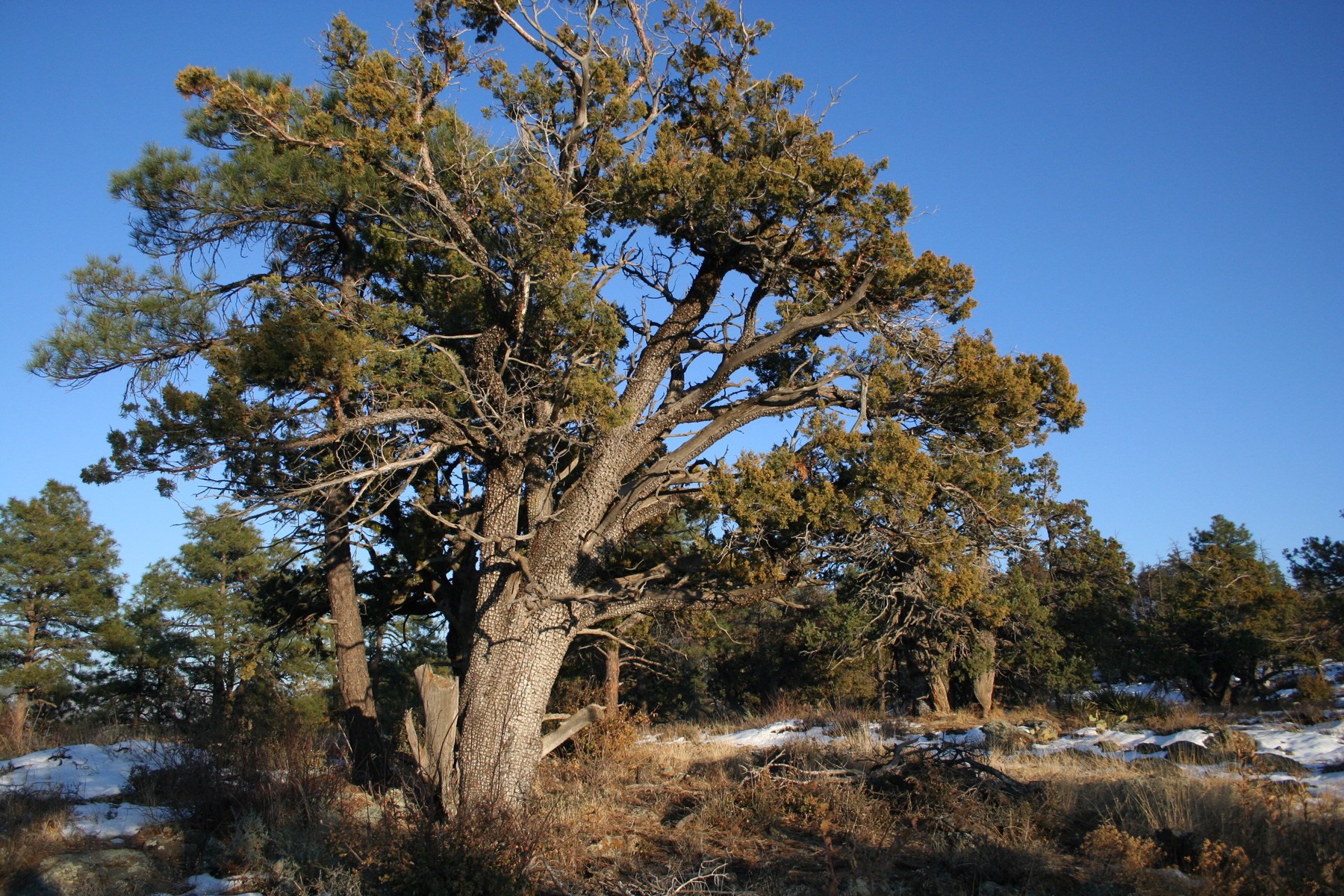
Juniperus deppeana, the Alligator Juniper, is a slow-growing evergreen tree of the Southwest’s mountain woodlands, named for its thick, deeply checkered bark that looks remarkably like the hide of an alligator. It is one of the largest native junipers, often reaching 40 to 50 feet with a broad, rounded crown, and some old individuals in Arizona and New Mexico are estimated to be many centuries old.
Alligator juniper grows on dry, rocky slopes and mesas at moderate elevations, usually mixed with pinyon pine and various oaks in what botanists call pinyon-juniper or oak-juniper woodland. It tolerates thin, alkaline soil, blazing summer sun and long dry spells once established, which makes it a dependable choice for xeriscaping in its native region. The blue-green, scale-like foliage stays attractive year-round, and the copper-colored, berry-like cones feed a long list of birds and mammals.
For gardeners in the Southwest, alligator juniper is a slow but rewarding investment: a tough, low-water evergreen that eventually becomes a dramatic specimen tree with one of the most distinctive barks of any conifer in North America. It is not a fast screen or a quick fix, but a tree planted for the long term, sometimes literally for generations.
Identification
Alligator juniper is usually recognized from a distance by its rounded, often multi-trunked silhouette and up close by its unmistakable bark.
Bark & Trunk
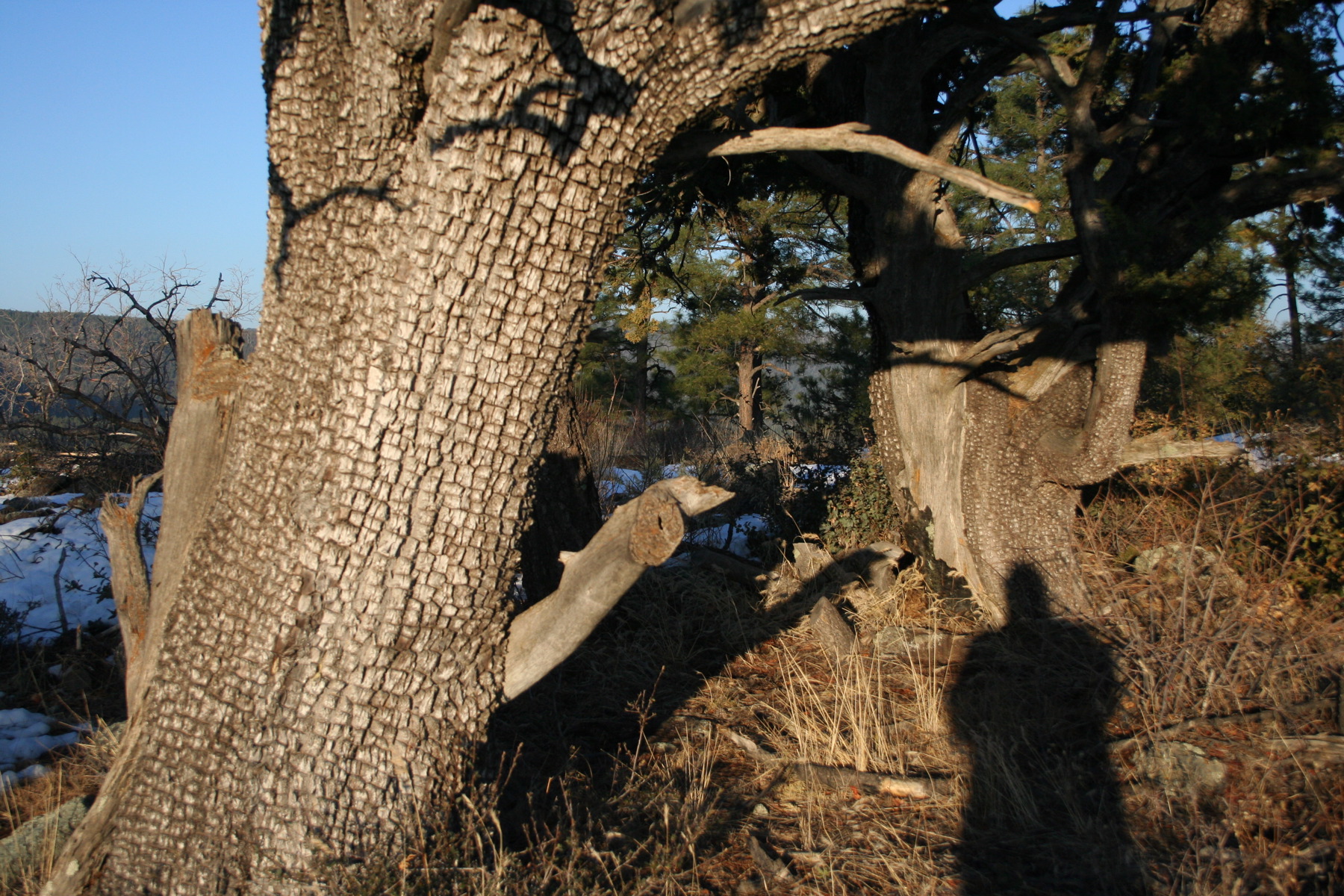
The bark is the tree’s signature feature: thick, ashy gray to brown, and broken into small, roughly square or rectangular plates separated by deep furrows, exactly like the scaled hide of an alligator. This bark is fire-resistant and helps old trees survive the low-intensity fires that once swept through Southwestern woodlands. Trunks are often short and may fork low or split into several stout stems, especially on older trees.
Leaves
Foliage is scale-like, about 1/16 to 1/8 inch long, tightly overlapping along the twigs in the manner typical of junipers. Color ranges from dull blue-green to gray-green, and the foliage often has a slightly grainy or warty texture compared with the smoother scales of one-seed or Utah juniper. Crushed foliage has a resinous, typically juniper-like scent.
Cones & Seeds
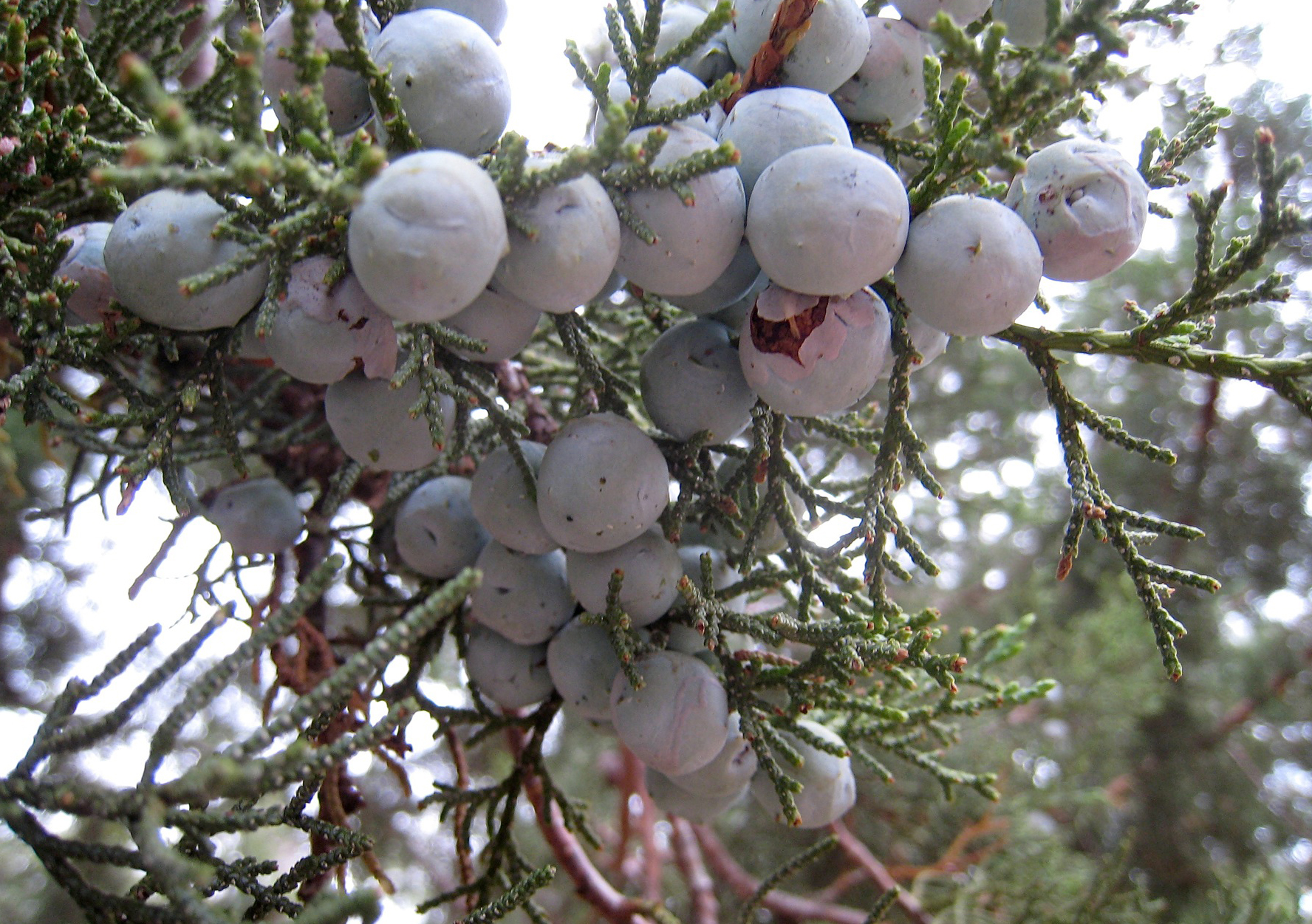
Like all junipers, the “fruit” is technically a fleshy cone that looks like a berry. Alligator juniper’s cones are among the largest of any juniper, 1/3 to 1/2 inch across, reddish-brown to copper or purplish with a whitish bloom, and usually containing 2 to 4 (sometimes more) hard seeds. Cones mature over about 18 months and are an important food source for wildlife through fall and winter.
Quick Facts
| Scientific Name | Juniperus deppeana |
| Family | Cupressaceae (Cypress) |
| Plant Type | Evergreen coniferous tree |
| Mature Height | 20–50 ft (occasionally taller in favorable sites) |
| Mature Spread | 20–35 ft, often as broad as tall |
| Growth Rate | Slow |
| Sun Exposure | Full Sun |
| Water Needs | Low once established; excellent drought tolerance |
| Soil Type | Rocky, gravelly or sandy; well-drained, often limestone-based |
| Soil pH | Neutral to alkaline (about 6.5–8.5) |
| Bloom Time | Spring (cones mature over 18 months) |
| Flower Color | Inconspicuous (wind-pollinated cones) |
| Fall Color | None (evergreen) |
| Fruit | Copper-brown berry-like cones, 1/3–1/2 in, ripening over two seasons |
| Deer Resistant | Yes |
| USDA Hardiness Zones | 6–9 |
Native Range
Alligator juniper is native to the mountains and mesas of Arizona, New Mexico and the Trans-Pecos region of western Texas, extending south through the Sierra Madre into central Mexico. It typically grows at moderate elevations of roughly 4,500 to 8,000 feet, higher than the drier pinyon-juniper woodlands dominated by one-seed or Utah juniper.
Typical habitat is dry, rocky slopes, mesas and canyon rims in oak-juniper or pine-oak woodland, often alongside Emory oak, Arizona white oak, alligator-bark associates like pinyon pine, and at higher elevations, ponderosa pine. Soils are usually shallow, rocky and derived from limestone or volcanic rock, with excellent drainage and low organic matter.
Because it is confined to the Southwest’s sky-island mountain ranges and nearby uplands, alligator juniper is not a plant for gardens outside the Southwest and adjoining high-desert regions. Within its native range it is widely grown, but gardeners farther east or in humid climates should choose a juniper suited to their own region instead.
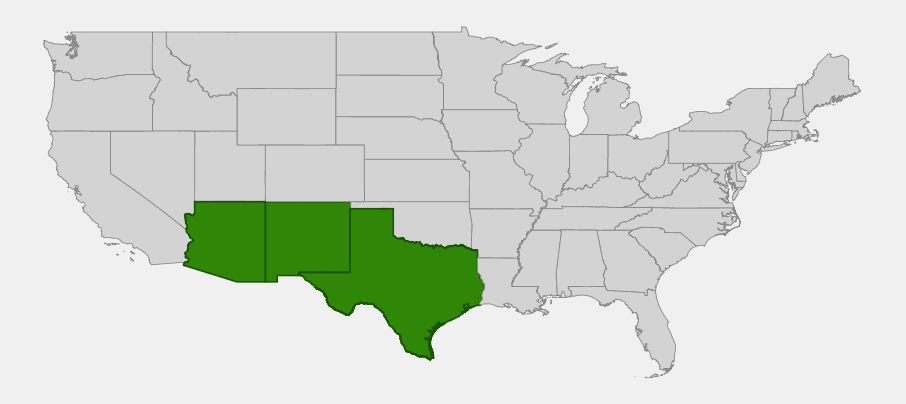
📋 Regional plant lists featuring Alligator Juniper: Arizona & New Mexico
Growing & Care Guide
Alligator juniper rewards patience. It grows slowly, but established trees need almost no care and can live for centuries, making it one of the most durable trees you can plant in a Southwestern landscape.
Light
Give alligator juniper full sun. It is a tree of open, exposed slopes and mesas in the wild and does not perform well in significant shade, which thins the crown and slows growth even further.
Soil & Water
Plant in rocky, gravelly or sandy soil with sharp drainage; alligator juniper is naturally adapted to thin, alkaline, often limestone-derived soils and struggles in heavy clay that stays wet. Water regularly for the first two to three years to establish a deep root system, then taper off. Mature trees are extremely drought tolerant and, once established, typically need no supplemental irrigation beyond natural precipitation in their native range. Good drainage matters more than soil fertility; wet feet, not drought, are what kill this species in cultivation.
Planting Tips
Plant container-grown trees in fall or early spring so roots can establish before summer heat. Choose a site with full sun and excellent drainage, and avoid low spots where water collects after storms. Because mature trees eventually grow quite broad, allow at least 20 to 25 feet from buildings, walls and other trees. Staking is rarely needed once the root ball is settled.
Pruning & Maintenance
Alligator juniper needs very little pruning. Remove dead or crossing branches in late winter if desired, and resist the urge to shear it into a formal shape, since its character comes from its naturally irregular, broad crown. Established trees tolerate neglect well and have no serious pest or disease problems in their native range; watch for juniper bark beetles on stressed or drought-weakened trees.
Propagation
Alligator juniper is grown from seed, though germination is slow and uneven because the hard seed coat requires a period of cold stratification, and some seed lots take two winters to sprout. Clean the pulp from ripe cones, stratify seed in moist sand in the refrigerator for 60 to 90 days, then sow in well-drained potting mix. Nursery-grown seedlings are the practical choice for most home gardeners.
Landscape Uses
- Xeriscape specimen trees where a tough, low-water evergreen anchor is needed
- Native woodland restoration alongside Emory oak and Arizona white oak
- Wildlife plantings, since the cones feed birds and small mammals through winter
- Erosion control on dry, rocky slopes within its native elevation range
- Windbreaks on exposed mesas once trees are well established
Wildlife & Ecological Value
Despite its tough, dry habitat, alligator juniper supports a surprising amount of wildlife through the Southwest’s lean winter months.
For Pollinators
Like other junipers, alligator juniper is wind-pollinated rather than insect-pollinated, so it offers little direct forage for bees or butterflies. Its dense evergreen foliage does, however, provide shelter for many beneficial insects.
For Birds
The berry-like cones are an important winter food source for birds such as American robins, cedar waxwings, Townsend’s solitaires and various jays, which also help disperse the seeds. The dense, often multi-trunked crown provides year-round nesting and roosting cover in otherwise open, exposed terrain.
For Mammals
Coyotes, foxes, ringtails, rock squirrels and other small mammals eat the cones, and mule deer browse the foliage, especially in winter. Black bears have been documented feeding on the fruit in good cone years. Cavities in old, hollow trunks shelter bats and small mammals.
Ecosystem Role
Old alligator junipers, with their thick, fire-resistant bark, often survive low-intensity fires that clear out competing brush, making them long-lived anchors of Southwestern oak-juniper woodlands. Their deep roots help stabilize thin, rocky soils on steep slopes, and their broad canopies create cooler microhabitats that other plants and animals depend on in an otherwise harsh, sun-baked landscape.
Cultural & Historical Uses
Alligator juniper has long been significant to Indigenous peoples of the Southwest, including Apache, Navajo and Pueblo communities, who used the wood for fuel, construction and tool handles because of its durability and resistance to decay. The fibrous inner bark was historically used for tinder, padding and in some basketry and cordage work.
The berry-like cones were gathered and eaten by some Indigenous groups, either fresh or dried and ground, though they are resinous and strongly flavored compared with culinary juniper berries from other species; this is a historical use, not a recommendation, and resin-heavy cones should be sampled with caution. Juniper smoke and foliage also held ceremonial importance in a number of Southwestern traditions.
In more recent history, alligator juniper’s distinctive, durable wood has been prized for fence posts, which resist rot for decades even when set directly in rocky Southwestern soil. Today the species is valued mainly as a long-lived landscape and restoration tree, and old specimens on public land are sometimes protected as notable “champion trees” because of their great age and size.
Frequently Asked Questions
How can I tell alligator juniper from other Southwestern junipers?
The bark is the giveaway: alligator juniper’s bark breaks into small, squarish plates that look like alligator hide, while one-seed and Utah juniper have stringier, fibrous or scaly bark that does not form that checkered pattern. Alligator juniper also tends to have larger cones and grows at somewhat higher elevations.
How fast does alligator juniper grow?
Slowly. Expect modest growth of well under a foot per year in most landscape settings, which is one reason old specimens are so valued. Patience is part of growing this tree.
Is alligator juniper drought tolerant?
Yes, once established it is one of the most drought-tolerant trees available for Southwestern landscapes, needing little or no supplemental water within its native elevation range.
Can alligator juniper be grown outside the Southwest?
It is best suited to its native region and similar high-desert climates with cold winters and dry summers. In humid or very different climates it tends to struggle, so gardeners elsewhere should choose a juniper native to their own area instead.
Are the cones edible?
Historically some Indigenous groups ate the cones, but they are strongly resinous and not a typical food plant today. They are an important wildlife food rather than a garden harvest.

Looking for a nursery that carries Alligator Juniper?
Browse our native plant nursery directory: Arizona · New Mexico · Texas