California Honeysuckle (Lonicera hispidula)
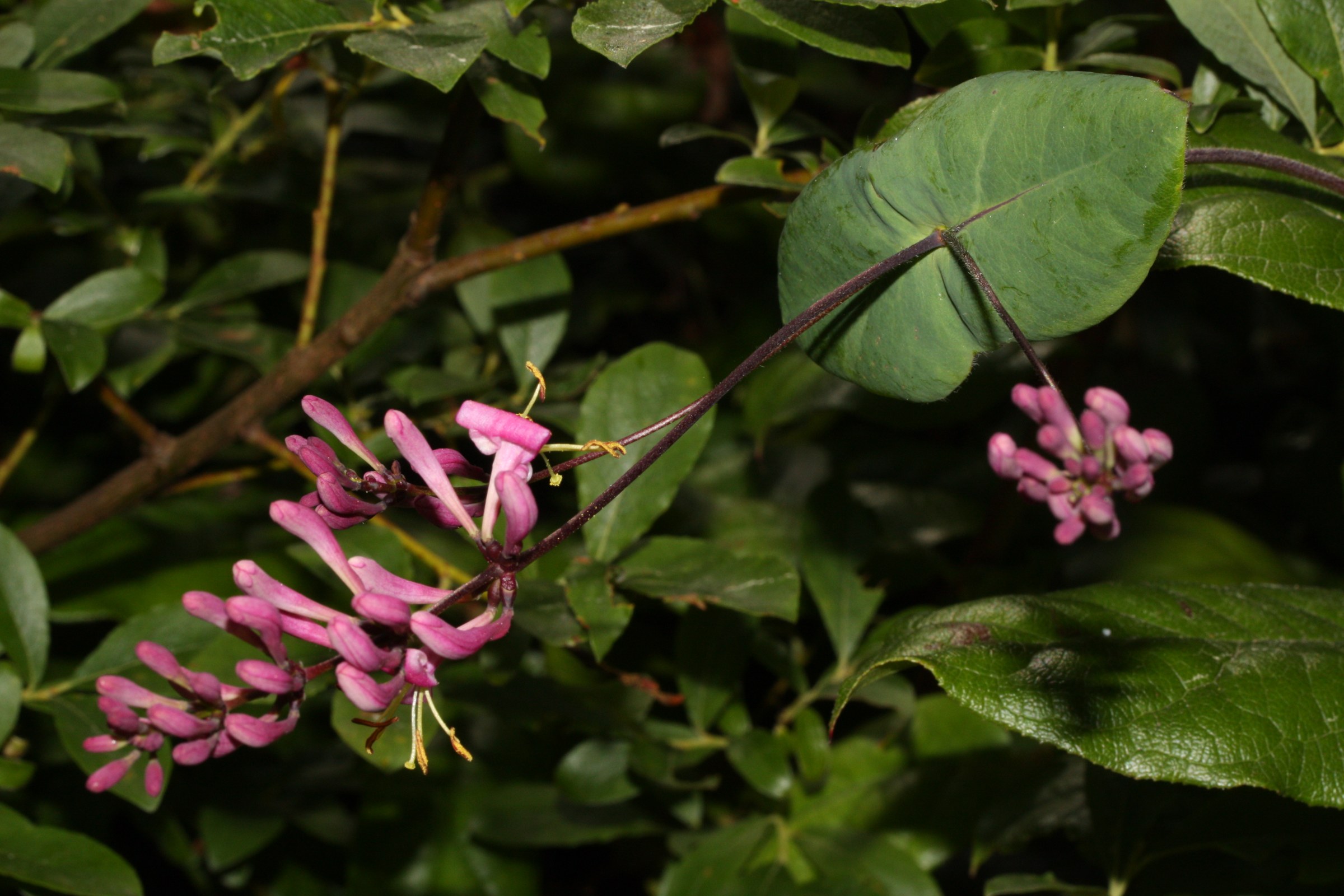
Lonicera hispidula, commonly called California Honeysuckle or pink honeysuckle, is a twining, woody vine of West Coast woodlands and canyons, prized for its clusters of rose-pink, trumpet-shaped flowers held above pairs of rounded leaves that fuse at the base into a single disc around the stem. It scrambles over shrubs and small trees or sprawls along the ground when no support is available, reaching a modest 6 to 15 feet of growth rather than the dramatic height of some cultivated honeysuckle vines.
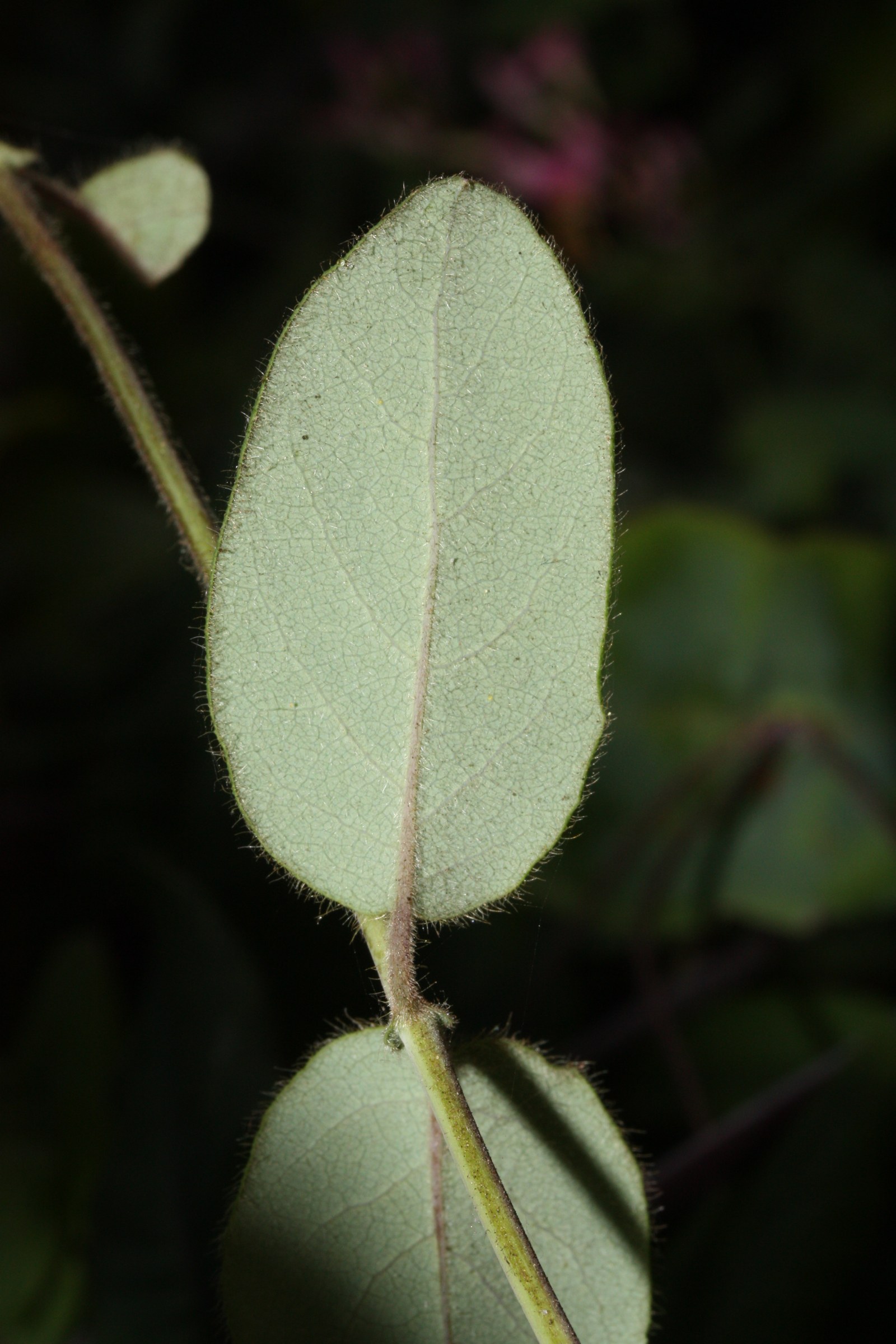
This species thrives in the dappled light of oak woodland, mixed evergreen forest and streamside thickets from northern California into western Oregon and western Washington, generally staying close to the cooler, moister coastal and foothill belt rather than venturing far inland. Its bristly young stems (the species name hispidula means “somewhat bristly”) and glaucous, blue-green leaf undersides help separate it from other native and introduced honeysuckle vines.
For West Coast gardeners, California honeysuckle offers an unfussy native alternative to ornamental Asian honeysuckles, with a long bloom season, hummingbird-friendly flowers and small red berries that birds enjoy in late summer. It is best used informally, scrambling through a shrub border or along a split-rail fence, rather than trained onto a tight trellis.
Identification
California honeysuckle can be identified by its twining habit, paired fused leaves near the flower clusters, and loose, drooping clusters of narrow pink flowers.
Stems & Growth Habit
Stems are slender, twining and woody at the base, often bristly or hairy when young, maturing to a thin, shreddy brown bark. The vine climbs by twining rather than by tendrils or suckers, so it needs something to wrap around, such as shrub branches, a fence or a trellis, or it will sprawl loosely over the ground.
Leaves
Leaves are opposite, oval to elliptic, 1 to 3 inches long, with a notably pale, glaucous (waxy blue-green) underside and a hairy or bristly texture, especially when young. The uppermost one or two pairs of leaves below each flower cluster are fused at their bases into a single round or oval disc that encircles the stem, a distinctive feature shared with other twining honeysuckles.
Flowers & Fruit
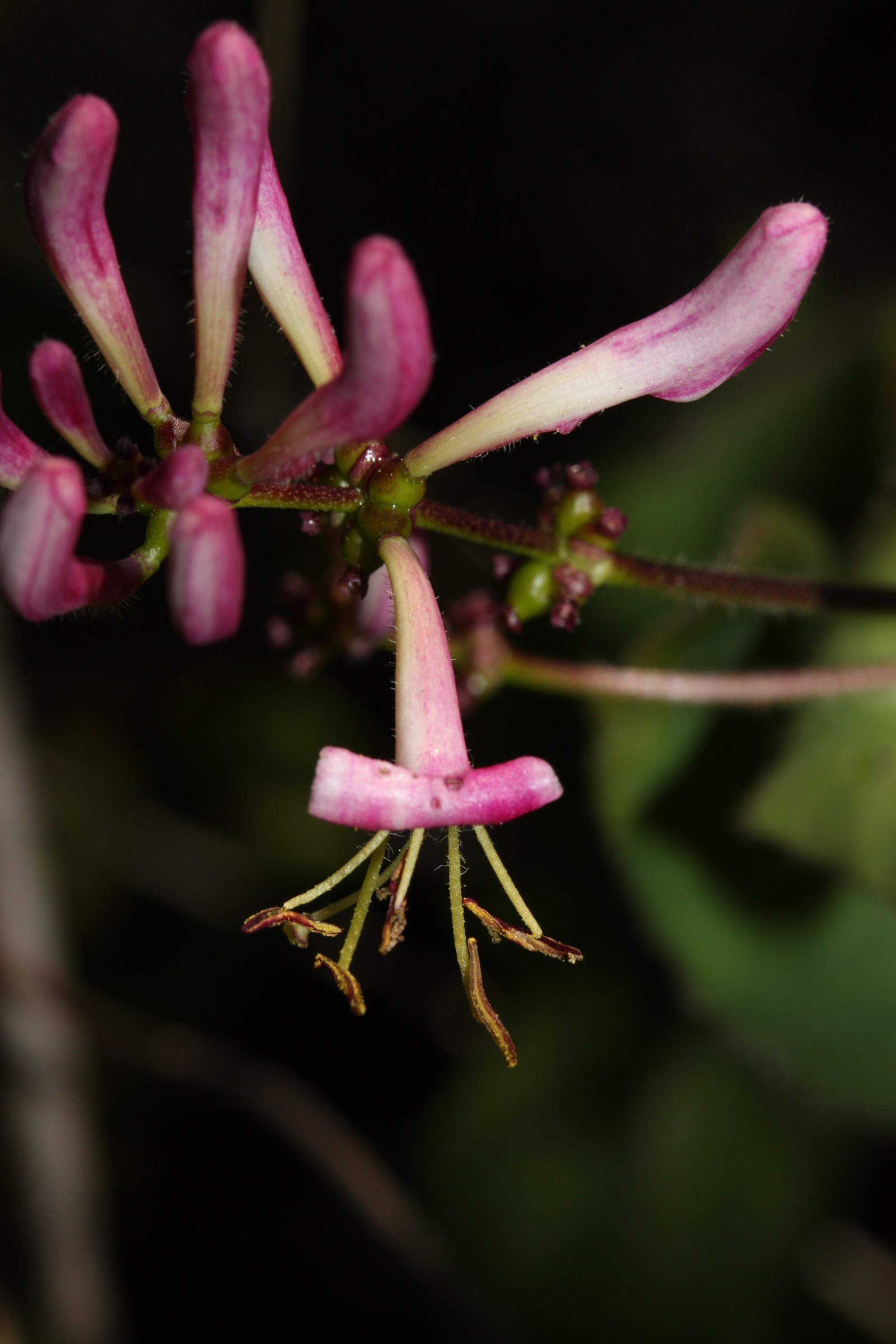
Flowers are tubular to funnel-shaped, about 1/2 to 3/4 inch long, pink to rose-purple on the outside and paler, sometimes yellowish, within, clustered in small whorls at the stem tips from late spring into summer. They are followed by small, round, red to orange-red berries in loose clusters, ripening in late summer and persisting into fall.
Quick Facts
| Scientific Name | Lonicera hispidula |
| Family | Caprifoliaceae (Honeysuckle) |
| Plant Type | Deciduous twining vine / scrambling shrub |
| Mature Height | 6–15 ft of climbing or trailing growth |
| Mature Spread | 6–10 ft or more where allowed to sprawl |
| Growth Rate | Moderate |
| Sun Exposure | Part Shade to Shade (tolerates more sun near the coast) |
| Water Needs | Average; appreciates some summer moisture but tolerates dry shade once established |
| Soil Type | Well-drained loam or clay-loam; tolerates a range of soils |
| Soil pH | Slightly acidic to neutral (about 5.5–7.0) |
| Bloom Time | Late spring – summer |
| Flower Color | Pink to rose-purple, paler within |
| Fall Color | Yellowish before leaf drop; not showy |
| Fruit | Small red to orange-red berries, late summer–fall |
| Deer Resistant | No (browsed by deer) |
| USDA Hardiness Zones | 7–9 |
Native Range
California honeysuckle is native to the Pacific Coast, ranging from northern California through western Oregon to western Washington. It is concentrated in the coastal and foothill belt on the west side of the Cascades and Sierra Nevada, and it is not found natively on the dry east side of those ranges or farther inland.
Typical habitat includes oak woodland, mixed evergreen and coniferous forest edges, chaparral margins and streamside thickets, generally below about 5,000 feet elevation. It often grows in part shade at the edge of a clearing or along a woodland path, twining up through manzanita, coyote brush, coast live oak and other shrubs and small trees, or trailing along banks and rocky slopes where little support is available.
Because its native range hugs the coast and nearby foothills, gardeners well inland or outside the Pacific Northwest and California should not expect California honeysuckle to perform as a true native plant in their region; choose a honeysuckle species native to your own area instead.
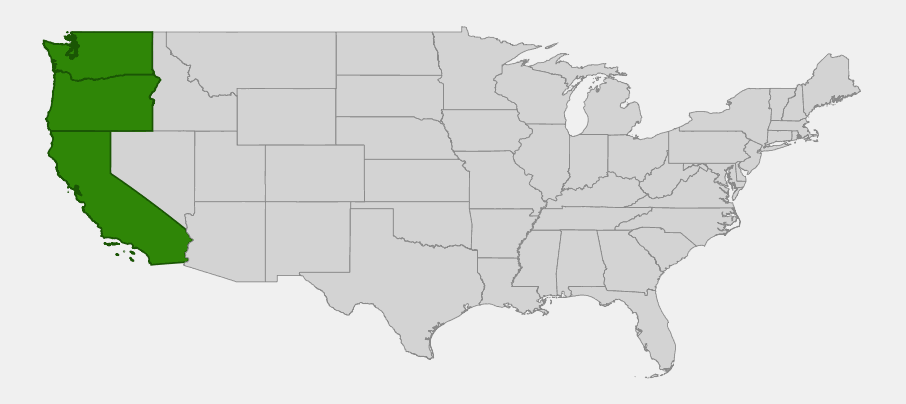
📋 Regional plant lists featuring California Honeysuckle: Western Oregon & Western Washington
Growing & Care Guide
California honeysuckle is an easygoing native vine for West Coast gardens that mimics the dappled light and moderate moisture of a woodland edge.
Light
Give California honeysuckle part shade to shade for the best appearance, though it tolerates more sun in cooler coastal gardens with adequate moisture. Inland or in hot summer climates, afternoon shade helps prevent leaf scorch.
Soil & Water
Plant in well-drained soil enriched with organic matter, similar to a woodland floor. Water regularly through the first one to two growing seasons to establish a strong root system; mature vines tolerate the dry summers typical of the West Coast climate reasonably well in shaded sites, though they look best with occasional deep watering during long dry spells. Avoid soggy, poorly drained soil.
Planting Tips
Plant in fall or early spring near a shrub, fence or trellis the vine can twine around, since it does not cling on its own. Space plants at least 4 to 6 feet from other vigorous climbers to avoid overcrowding, and mulch the root zone to keep soil temperatures moderate. In open, unsupported sites, California honeysuckle will sprawl attractively as a loose groundcover instead of climbing.
Pruning & Maintenance
Prune after flowering to control size and shape, removing any dead, crossing or overly vigorous stems. California honeysuckle tolerates fairly hard pruning if it outgrows its space. Watch for aphids on new growth and powdery mildew in poorly ventilated spots, though neither is usually serious in a well-sited planting.
Propagation
Propagate California honeysuckle from semi-hardwood cuttings taken in summer, which root readily with bottom heat and rooting hormone. Seed propagation works too, but the seed benefits from a period of cold, moist stratification over winter and germinates slowly and somewhat unevenly compared with cuttings.
Landscape Uses
- Informal woodland and shrub borders, twining through coast live oak or manzanita
- Hummingbird and pollinator gardens on the West Coast
- Fence and trellis cover for a naturalistic, low-maintenance screen
- Bank and slope plantings where it can sprawl as an informal groundcover
- Native plant restoration in oak woodland and coastal forest edge habitats
Wildlife & Ecological Value
California honeysuckle is a modest but valuable contributor to West Coast wildlife habitat, offering season-long resources from flower to fruit.
For Pollinators
The tubular pink flowers are visited by hummingbirds, long-tongued bees and some moths and butterflies drawn to the nectar. The extended summer bloom period makes it a useful nectar source through a season when many other native shrubs have finished flowering.
For Birds
Beyond nectar-feeding hummingbirds, the small red berries that follow the flowers are eaten by a variety of songbirds in late summer and fall, including thrushes and other fruit-eating species that help disperse the seeds. The twining stems also provide cover for small birds nesting in shrub thickets.
For Mammals
Deer browse the foliage and stems, which is useful to know when siting the vine in gardens where deer are a concern. Small mammals use the tangled growth for cover, especially where the vine sprawls along the ground rather than climbing.
Ecosystem Role
As a twining understory vine, California honeysuckle adds structural diversity to oak woodland and forest-edge habitats, filling the vertical space between shrubs and the forest floor. Its berries and nectar extend food availability for wildlife into the later part of the growing season, when fewer other native plants are still in flower or fruit.
Cultural & Historical Uses
Some California Indigenous groups historically used various honeysuckle species, including Lonicera hispidula, in minor ways such as making a wash or infusion from the stems and leaves for topical or minor medicinal purposes; these are historical ethnobotanical uses, not modern recommendations, and the berries are not generally regarded as a food source.
The flexible, twining stems of related honeysuckle species have occasionally been used in small-scale cordage and basketry by Indigenous peoples of the West Coast, though California honeysuckle has a less prominent documented role in material culture than some of its more widely used woodland neighbors.
In modern times, the species has found a niche among native plant gardeners seeking a West Coast alternative to non-native ornamental honeysuckle vines, and is increasingly offered by regional native plant nurseries as interest in habitat gardening has grown.
Frequently Asked Questions
Is California honeysuckle the same as Japanese honeysuckle?
No. California honeysuckle (Lonicera hispidula) is a native West Coast species, while Japanese honeysuckle (Lonicera japonica) is a non-native, often invasive vine from Asia. They are different species in the same genus, and only the native species is recommended for habitat gardening on the West Coast.
Will California honeysuckle climb a trellis on its own?
It climbs by twining its stems around a support rather than by tendrils or holdfasts, so it will wrap around a trellis, fence or shrub branches readily, but it needs something slender enough to twine around rather than a flat wall.
Are the berries edible?
The berries are not considered a food plant for people and are valued mainly as bird food; stick to admiring them rather than eating them.
How much sun does California honeysuckle need?
It prefers part shade to shade, as in its native woodland habitat, though it can handle more sun in cooler coastal gardens with reliable moisture.
Can I grow California honeysuckle outside the Pacific Coast?
It is best suited to California, western Oregon and western Washington. Outside that coastal and foothill range, especially in hot, dry or very cold inland climates, it is not considered a true native and may not perform or persist well; choose a honeysuckle native to your own region instead.

Looking for a nursery that carries California Honeysuckle?
Browse our native plant nursery directory: California · Oregon · Washington