
Turk’s Cap (Malvaviscus arboreus var. drummondii)
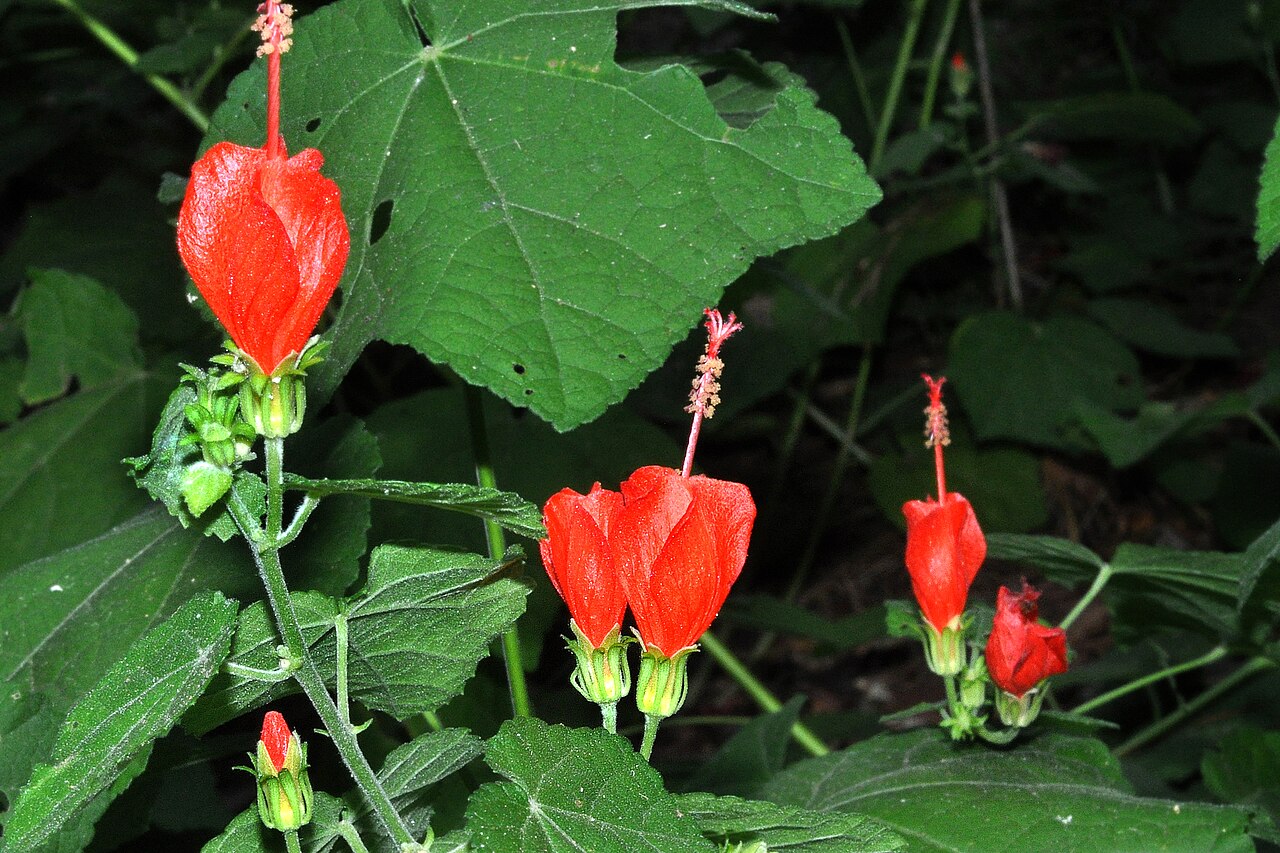
Malvaviscus arboreus var. drummondii, universally known as Turk’s Cap, is a spreading, shade-tolerant shrub of the southeastern and south-central United States that blooms with small, bright red, hibiscus-like flowers all through the hot months. The flower never opens flat the way a typical mallow bloom does; instead its five petals stay loosely overlapped in a tight spiral, with the long staminal column poking out the top, giving the whole flower the look of a small furled turban — hence the common name.
Turk’s Cap belongs to the mallow family (Malvaceae), the same family as hibiscus and cotton, and the resemblance shows in its broad, soft, toothed leaves and its nectar-rich blooms. It is one of the very few native flowering shrubs that performs reliably in part shade to full shade, which makes it a workhorse plant for gardeners trying to add color under trees. In the wild it is most often found as an understory shrub along streams, at the edge of woods, and on shaded limestone slopes, usually in the company of taller trees that shelter it from the harshest sun.
For wildlife gardeners, Turk’s Cap is near the top of the list of reliable hummingbird plants: its tubular, never-fully-open flowers are shaped almost perfectly for a hummingbird’s bill, and the plant blooms continuously from late spring into fall, right through the heat that stalls many other flowering shrubs.
Identification
Turk’s Cap grows as a multi-stemmed, spreading shrub, usually 2 to 4 feet tall and as wide, though it can reach 6 to 8 feet or more in ideal conditions, particularly in the humid Gulf Coast. Stems die back to the ground in a hard freeze across the colder parts of its range but resprout vigorously from the roots each spring.
Leaves
Leaves are alternate, broadly ovate to heart-shaped, 3 to 6 inches long, with shallow lobes and a coarsely toothed margin. They are light to medium green, soft-textured, and arranged densely enough to give the shrub a full, leafy look even in fairly deep shade.
Flowers
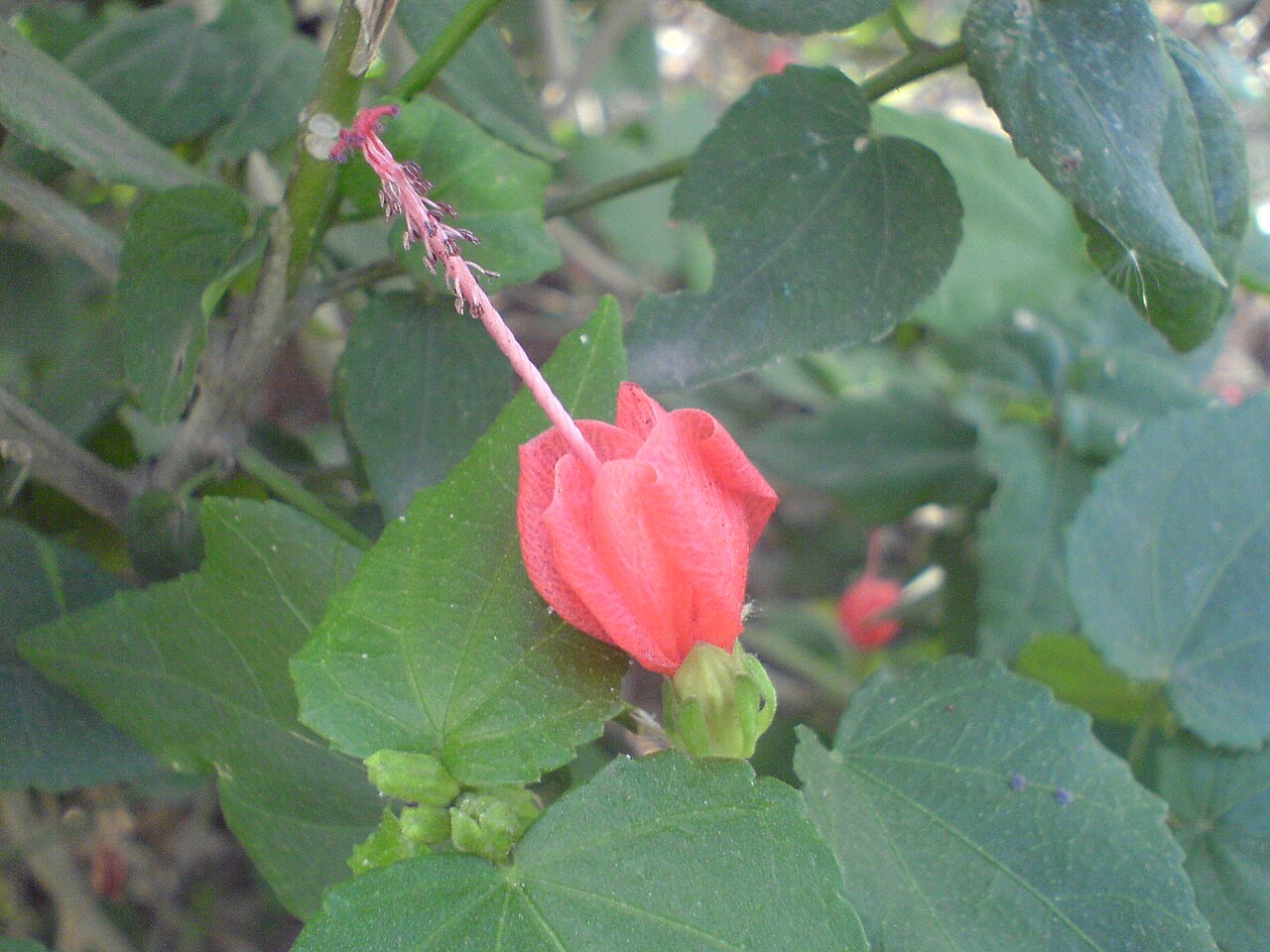
Flowers are 1.5 to 2.5 inches long, bright scarlet-red, and never open flat; the five petals overlap and curl around each other in a loose spiral, forming a tube or “turban” shape with the long, protruding staminal column — tipped in pollen-bearing anthers — extending well past the petals. Flowers appear singly or in small clusters in the leaf axils and continue opening in succession from late spring through the first fall frost, with the heaviest bloom during the hottest part of summer.
Fruit & Seeds
After flowering, Turk’s Cap produces a small, round, dull red berry-like fruit about ½ inch across, maturing through summer and fall. The fruit is edible and has a mild, mealy, apple-like flavor, which is the source of the old Spanish name manzanilla (“little apple”); birds and small mammals eat it readily, and it can be eaten fresh off the shrub, though it is more pulp-and-seed than flesh and is rarely harvested in any quantity.
Quick Facts
| Scientific Name | Malvaviscus arboreus var. drummondii |
| Family | Malvaceae (Mallow) |
| Plant Type | Deciduous to semi-evergreen shrub |
| Mature Height | 2–6 ft (to 8 ft in favorable sites) |
| Mature Spread | 3–6 ft |
| Growth Rate | Fast |
| Sun Exposure | Part Shade to Shade (tolerates full sun with moisture) |
| Water Needs | Moderate; drought tolerant once established |
| Soil Type | Sandy, loamy, clay or limestone soils |
| Soil pH | Circumneutral (about 6.8–7.2) |
| Bloom Time | May – November (year-round in frost-free areas) |
| Flower Color | Scarlet red (white cultivars exist) |
| Fall Color | None notable |
| Fruit | Small dark red berry, edible, mild apple-like flavor |
| Deer Resistant | Moderate |
| USDA Hardiness Zones | 7b–11 (dies back to roots at the cold edge) |
Native Range
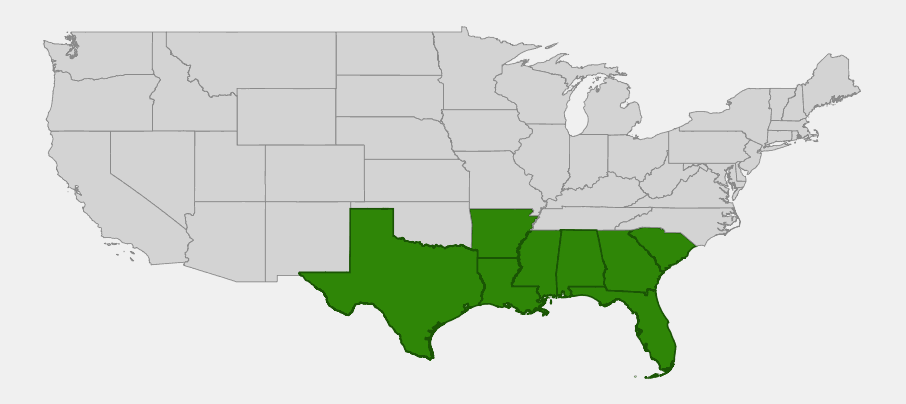
Turk’s Cap is native to the Gulf South and lower Southeast, from central and eastern Texas eastward through Louisiana, Arkansas, Mississippi, Alabama, Georgia and Florida, and north along the coast into South Carolina. Its range continues south through Mexico to the Yucatán and Chiapas; other varieties of the species extend the genus further through Central America.
Typical habitat is the shaded understory: stream banks, woodland edges, and wooded limestone slopes and ledges, usually under a canopy of hardwoods that shelters the shrub from the most intense midday sun. In central Texas it is a common associate of oak-juniper woodlands and riparian hardwood forest; across the Gulf Coastal Plain it turns up at the margins of pine-hardwood forest and along shaded fence rows and creek bottoms.
Turk’s Cap is a popular landscape plant well outside this native range, grown as an ornamental and reliable hummingbird plant as far north as the mid-Atlantic, where it is treated as a root-hardy perennial that dies back each winter. It is not native north of South Carolina or outside the Gulf South states listed above; gardeners further north can still grow it successfully for its flowers and hummingbird value, but should recognize it as a non-native (if well-behaved) perennial rather than a local native species in those areas.
📋 Regional plant lists featuring Turk’s Cap: Arkansas, Louisiana, Eastern Oklahoma & Eastern Texas · Georgia, Alabama & Mississippi · North Carolina & South Carolina
Growing & Care Guide
Turk’s Cap is one of the easiest native shrubs to grow across its range, forgiving of shade, heat and a wide range of soils once it is established.
Light
Part shade to full shade suits Turk’s Cap best and is where it earns its keep as one of the few reliably flowering native shrubs for a shady garden. It will also grow and bloom in full sun if the soil stays reasonably moist, but expect smaller, rougher, more yellow-green leaves and a more compact, stressed look in hot, dry, unshaded sites.
Soil & Water
This shrub adapts to sandy, loamy, clay and limestone-based soils alike, and prefers moist, well-drained conditions, though it tolerates short dry spells once established. Regular water during the first growing season speeds establishment; after that, Turk’s Cap is reasonably drought tolerant, especially in shadier sites where it loses less moisture to the sun.
Planting Tips
Set out container-grown plants in spring or fall. Give Turk’s Cap room to spread, 3 to 6 feet depending on variety and site, since it suckers and layers to form a loose colony over time rather than staying a tidy single-stem shrub. A 2- to 3-inch mulch layer helps retain the even moisture it prefers.
Pruning & Maintenance
In the colder part of its range, stems are routinely killed to the ground by frost; simply cut the dead growth back to a few inches in late winter and the plant will resprout and bloom the same season. Even in mild climates, an annual hard cutback in late winter keeps Turk’s Cap compact, bushy and floriferous rather than leggy. It tolerates heavy pruning well and can be kept smaller with a mid-season trim if needed.
Landscape Uses
Turk’s Cap fills a specific and valuable niche in native gardens across the Gulf South:
- Shade gardens as one of the few natives that flowers reliably under trees
- Hummingbird and pollinator gardens for season-long nectar
- Woodland edges and understory plantings beneath live oak or pine canopy
- Informal hedges or mass plantings that spread and fill in over time
- Erosion control on shaded slopes, thanks to its spreading, layering growth habit
Wildlife & Ecological Value
Few native shade shrubs match Turk’s Cap for season-long wildlife value, especially for nectar-feeding animals.
For Pollinators
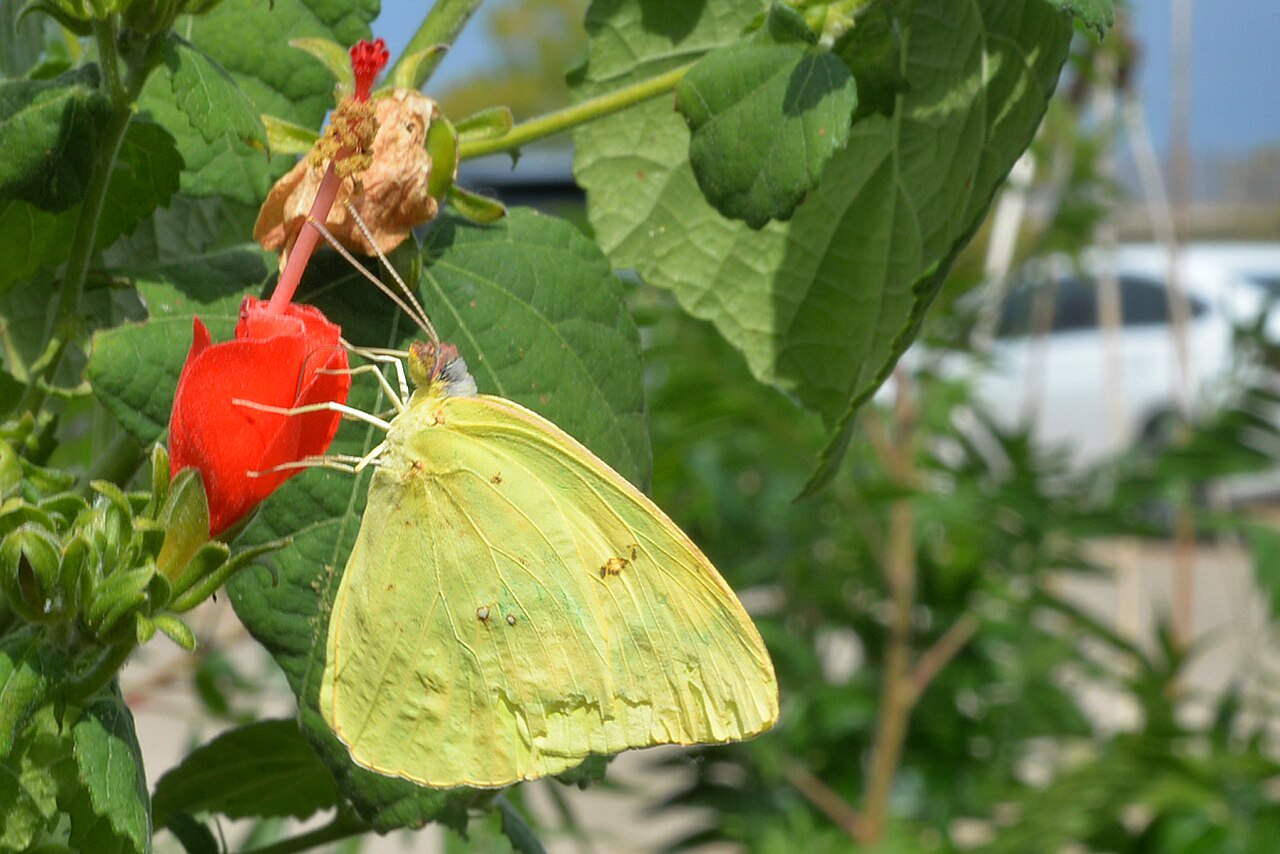
Ruby-throated and black-chinned hummingbirds are the shrub’s star visitors, and research on wild populations has shown it is an especially important food source for female and juvenile hummingbirds during the demanding late-summer migration period. Long-tongued bees, butterflies such as the Cloudless Sulphur, and other nectar-seeking insects also work the flowers heavily through the long bloom season.
For Birds & Mammals
The small red fruits are eaten by a variety of birds and mammals once they ripen, which helps spread the seed to new shaded sites nearby.
Ecosystem Role
As an understory shrub that blooms continuously through the heat of summer, Turk’s Cap fills a nectar gap in shaded woodland habitat during months when many sun-loving wildflowers have stopped flowering, making it an outsized contributor to pollinator and hummingbird nutrition relative to its modest size.
Cultural & Historical Uses
The Spanish common name manzanilla (“little apple”) reflects the historical, informal use of the mild, apple-flavored fruit as a trailside nibble in Texas and Mexico, though it has never been a significant food crop. The plant carries a long list of regional common names — Wax Mallow, Sleeping Hibiscus, Bleeding Hearts, Manzanita — that reflect its long familiarity across the Gulf South and Mexico.
The botanical variety name honors Thomas Drummond, a Scottish naturalist who collected extensively across Texas between 1833 and 1835, working the country between Galveston Island and the Edwards Plateau along the Brazos, Colorado and Guadalupe rivers. His collections, including Turk’s Cap, were among the first from Texas to be widely distributed to scientific institutions, helping introduce the region’s flora to 19th-century botany.
In the modern landscape trade, Turk’s Cap has become a staple ornamental throughout the South and is commercially propagated, including white-flowered and variegated-leaf cultivars, reducing any pressure on wild populations.
Frequently Asked Questions
Do Turk’s Cap flowers ever open all the way?
No. Unlike most of its mallow relatives, Turk’s Cap keeps its petals loosely spiraled around each other even at full bloom, which is exactly what gives the flower its twisted, turban-like shape and its common name.
Is Turk’s Cap native to my state?
It is native to Texas, Louisiana, Arkansas, Mississippi, Alabama, Georgia, Florida and South Carolina. It is widely and successfully grown as an ornamental farther north and west, but it is not native outside that Gulf South and lower Southeast range.
Can Turk’s Cap grow in full shade?
Yes, and it is one of the few native shrubs that reliably flowers in full to part shade, making it a go-to choice for color under established trees. It also tolerates full sun if the soil stays consistently moist.
Are the berries safe to eat?
Yes, the small red berries are edible, with a mild, mealy, apple-like flavor, and both people and wildlife eat them; they are mostly pulp and seed rather than substantial flesh, so they are more a curiosity than a crop.
Why do my Turk’s Cap stems die back every winter?
In the cooler parts of its range, hard freezes routinely kill the above-ground stems, but the root system survives and resprouts vigorously each spring. This is normal; simply cut the dead stems back in late winter before new growth starts.

Looking for a nursery that carries Turk’s Cap?
Browse our native plant nursery directory: Texas & South Carolina · Louisiana & Mississippi · Alabama & Arkansas · Georgia & Florida