
Lacy Phacelia (Phacelia tanacetifolia)
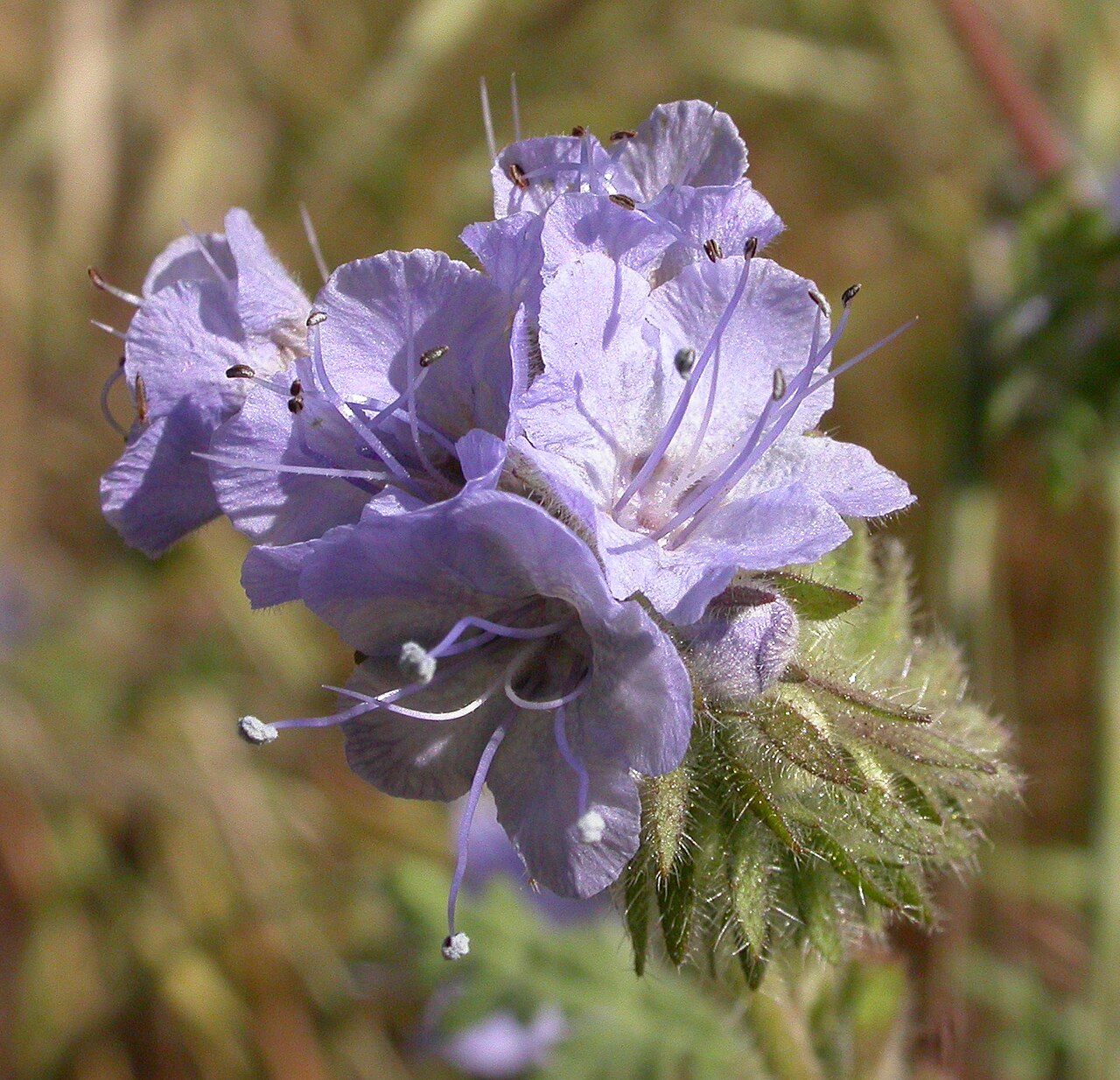
Phacelia tanacetifolia, commonly known as Lacy Phacelia or Blue Tansy, is a fast-growing annual wildflower native to the desert washes, sandy flats and disturbed slopes of the American Southwest. Its common name comes from the finely cut, fern-like leaves that resemble tansy foliage, while the species is best known for its dense, curling clusters of lavender-blue flowers that coil like a scorpion’s tail — a flower arrangement called a scorpioid cyme that is a signature trait of the whole Phacelia genus.
In its home range, lacy phacelia is a true desert annual: it germinates with winter rain, grows quickly through late winter, and puts on a short but spectacular bloom in early spring before setting seed and dying back as the ground dries out. Plants typically reach 1 to 3 feet tall, covered in short stiff hairs, with each curling flower spike opening a sequence of small bell-shaped blossoms over several weeks. Few California native annuals are as attractive to pollinators — the flowers are heavily visited by native bees, honeybees, and hoverflies whose larvae prey on garden pests.
Gardeners should know that lacy phacelia has become far better known outside its native range than within it. It is sown by the acre as an agricultural cover crop, bee pasture and “insectary” planting in vineyards and farms across the country and in Europe, valued for its rapid growth and long bloom. That widespread cultivation does not mean it is native anywhere it is planted — in the ground, it is a true Southwestern desert wildflower, and this profile covers its natural range and garden use within California and Arizona.
Identification
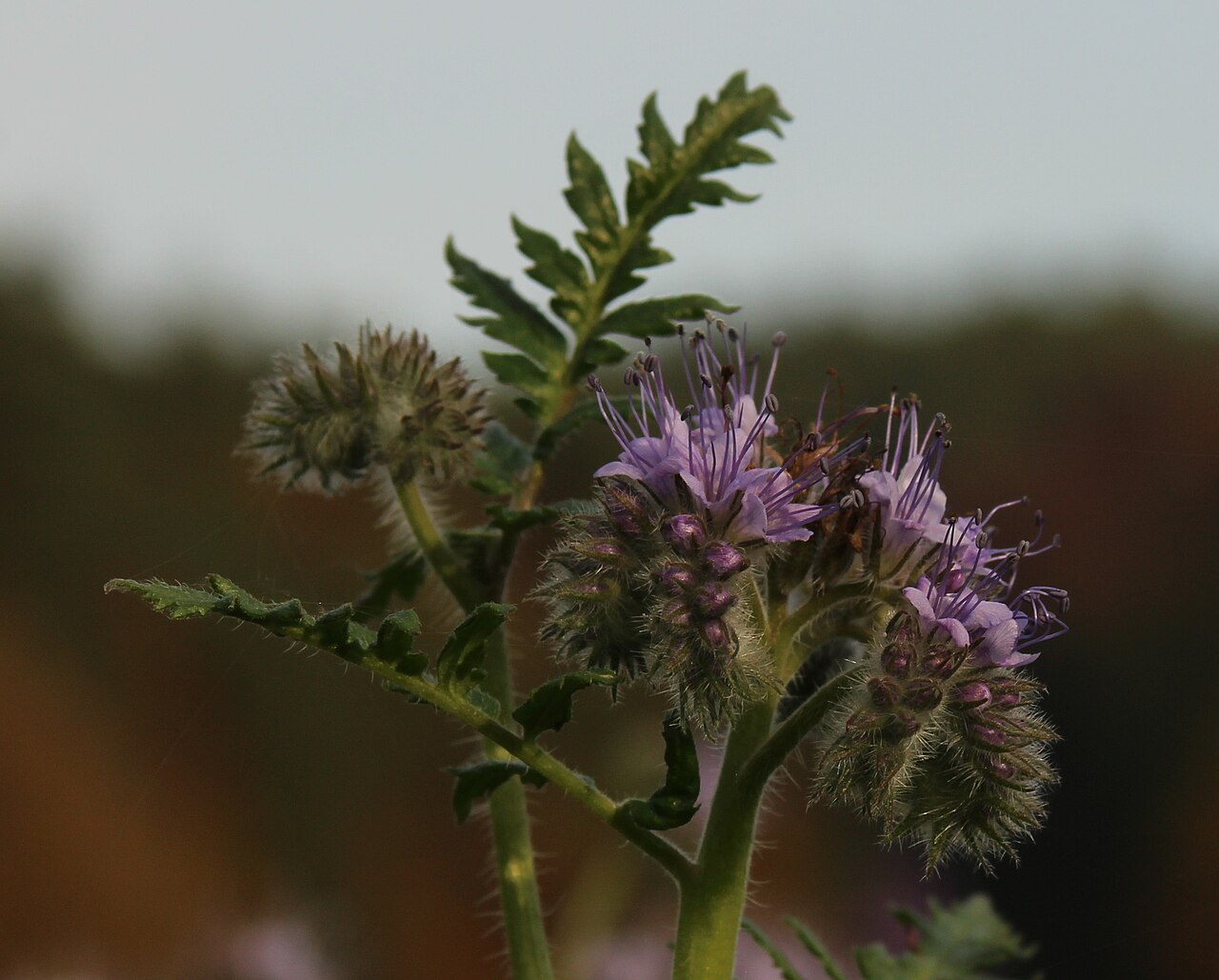
Lacy phacelia is an erect, branching annual herb, usually 12 to 36 inches tall, sometimes taller in cultivation with extra water and fertility. The whole plant is covered in short, stiff, glandular hairs, giving it a slightly rough, grayish-green cast.
Leaves
The leaves are 1 to 8 inches long and deeply divided into narrow, toothed lobes, giving them a lacy, almost fern-like appearance that is the source of both the common name and the species name tanacetifolia (“tansy-leaved”). Lower leaves are stalked and basal; upper leaves are smaller and more deeply cut, clasping the stem.
Flowers
The flowers are the plant’s signature feature: small, bell-shaped, and lavender-blue to violet, packed onto a densely coiled, one-sided cyme that uncurls gradually as new flowers open at the tip, much like a fiddlehead unrolling. Each flower is under half an inch across, but the protruding, whisker-like stamens and styles give the whole cluster a soft, fuzzy look. Bloom is heaviest from March through May, following winter and early spring rains.
Fruit & Seeds
After flowering, each blossom forms a small, hairy, two-chambered capsule holding a few pitted, wrinkled seeds. The seeds are photodormant — they germinate only in darkness — which is why lacy phacelia does best when seed is lightly covered with soil rather than surface-sown in full light. As an annual, the entire plant dies after seed-set, typically by early summer.
Quick Facts
| Scientific Name | Phacelia tanacetifolia |
| Family | Boraginaceae (Borage; formerly Hydrophyllaceae) |
| Plant Type | Annual forb / wildflower |
| Mature Height | 1–3 ft |
| Mature Spread | 1–2 ft |
| Growth Rate | Fast (completes its life cycle in one season) |
| Sun Exposure | Full Sun |
| Water Needs | Low once established; needs moisture to germinate |
| Soil Type | Sandy or rocky, well-drained desert soils |
| Soil pH | 6.0–7.5 (neutral to slightly acidic) |
| Bloom Time | March – May |
| Flower Color | Lavender-blue to violet |
| Fall Color | None (plant dies back after spring seed-set) |
| Fruit | Small two-chambered seed capsules |
| Deer Resistant | Yes (hairy foliage is rarely browsed) |
| USDA Hardiness Zones | 8–11 (grown as a cool-season annual) |
Native Range
Lacy phacelia is native to the Southwestern United States and adjacent northwestern Mexico. Within the United States its native range is concentrated in southern and central California, where it is common in the deserts and dry foothills below about 5,000 feet, and it extends east into Arizona’s deserts and dry washes. It also occurs natively in Baja California and Sonora, Mexico.
It is important to separate this native range from the plant’s modern reputation: lacy phacelia is grown as a cover crop, bee pasture and insectary planting far beyond California and Arizona, including the Pacific Northwest, the Midwest, the East Coast and parts of Europe. In those regions it is strictly an introduced agricultural plant, not a wild native, and it can escape cultivation and turn up along roadsides or field edges outside its true range. This profile covers only its native desert habitat in the Southwest.
Within its native range, lacy phacelia grows on open, sandy or gravelly flats, desert washes, disturbed slopes and the edges of creosote scrub and chaparral, often appearing in large numbers after a wet winter and then vanishing from a site for a year or more in dry seasons. It is an early-successional “fire follower” and disturbance specialist, quick to colonize bare, sunny ground.
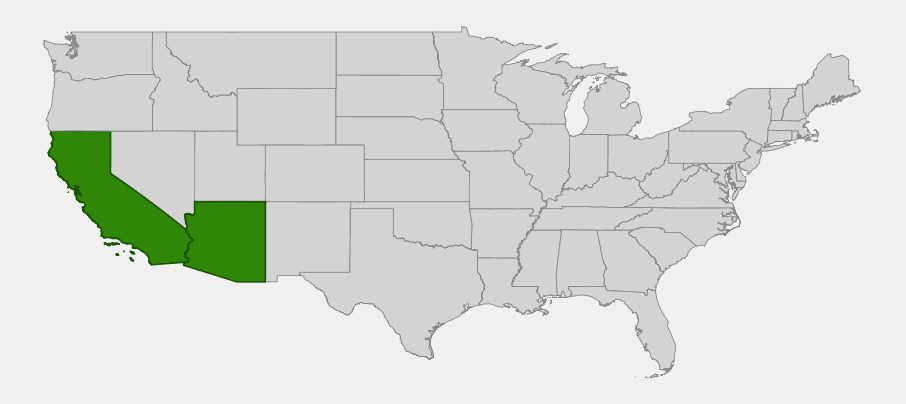
📋 Regional plant lists featuring Lacy Phacelia: Arizona & New Mexico (native to the Arizona portion only)
Growing & Care Guide
Lacy phacelia is one of the easiest Southwestern wildflowers to grow from seed, and it rewards very little effort with weeks of bee-covered blue flowers.
Light
Give it full sun. Like most desert annuals, it flowers and grows most densely in open, unshaded ground; in shade it becomes leggy and blooms poorly.
Soil & Water
Lacy phacelia is not fussy about fertility but needs sharp drainage — sandy, gravelly or rocky soils mimic its native desert washes best. Water to germinate seed in fall or winter, then let natural rainfall carry the plant through its bloom; established seedlings are quite drought tolerant and plants sown in irrigated garden beds will grow lusher and bloom longer than those left to dry conditions, but may also flop over without some support from neighboring plants.
Planting Tips
Sow seed directly in fall or early winter, pressing it lightly into the soil surface and covering it thinly — the seed needs darkness to germinate and will not sprout well if left fully exposed to light. Lacy phacelia resents transplanting, so direct-seeding in place is far more reliable than starting it in pots. Scatter seed at the density you want the mature stand, since thinning a dense sowing is fiddly work among the bristly seedlings.
Pruning & Maintenance
None needed. As an annual, the plant completes its life cycle in one season; simply let spent plants dry and drop seed for a repeat show next year, or cut them down and compost them once bloom has finished and the foliage yellows.
Propagation
Propagation is by seed only. Collect dry capsules once they turn brown, and store seed cool and dry until the next sowing season. No stratification is required, but germination is improved by light scarification and by sowing where the seed will be covered rather than left on the surface.
Landscape Uses
- Pollinator and bee gardens — few native annuals draw as many bees and hoverflies
- Desert wildflower meadows mixed with California poppy and other native annuals
- Cover cropping and soil-building in vegetable gardens and orchards within its native range
- Beneficial-insect strips along garden borders to support aphid-eating hoverfly larvae
- Erosion-prone bare ground that needs a quick-germinating, low-maintenance cover
Wildlife & Ecological Value
Lacy phacelia’s main ecological contribution is as a pollinator magnet, but its quick growth and seed production also support a wider web of desert wildlife.
For Pollinators
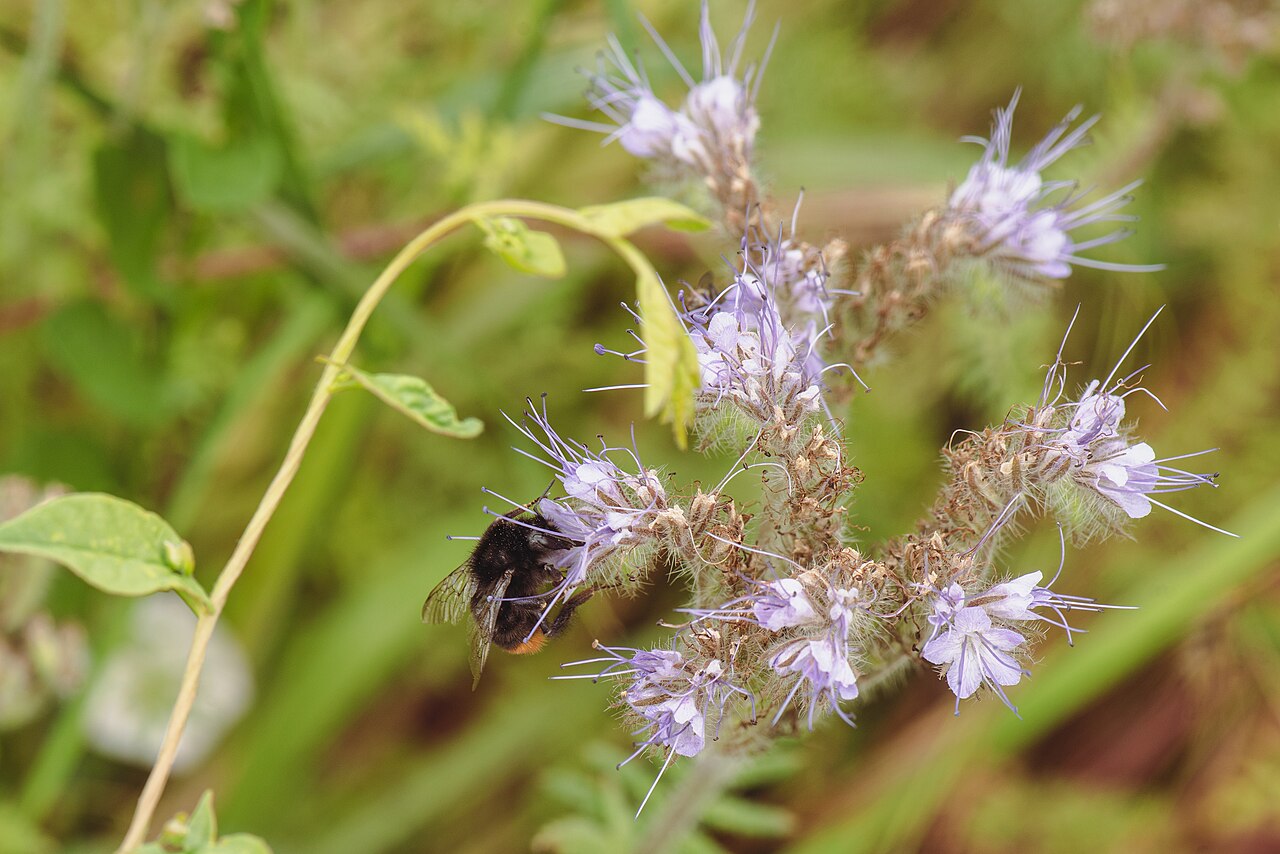
The flowers are exceptionally attractive to bees of all kinds — bumblebees, honeybees, and a long list of native solitary bees forage on the nectar-rich, sequentially opening blossoms. Hoverflies are also drawn in large numbers; their aphid-eating larvae make lacy phacelia a useful ally for gardeners dealing with soft-bodied pests nearby.
For Birds
Seed-eating birds, including native sparrows and finches, take the small seeds once the capsules dry and split open in late spring, adding a modest food source during the lean transition from spring bloom to summer dormancy.
Ecosystem Role
As a fast-colonizing desert annual, lacy phacelia is part of the pulse of “belly flowers” that carpet washes and disturbed ground after wet winters, stabilizing loose soil briefly and cycling nutrients before the dry season. Its heavy bloom also helps support generalist pollinators that, in turn, pollinate longer-lived native shrubs and perennials flowering nearby.
Cultural & Historical Uses
Lacy phacelia does not carry the long traditional-use history of many Southwestern natives, in part because, as an annual with a short and unpredictable bloom, it was less reliable as a resource than longer-lived desert plants. Its main historical significance is more recent and agricultural: twentieth-century farmers and beekeepers in Europe and North America discovered that its long bloom period and heavy nectar production made it an outstanding forage crop for honeybees, and it has been grown commercially as “bee pasture” for generations.
That agricultural reputation is now the plant’s most famous trait worldwide — it is sown as a green manure and soil-builder, planted in vineyard rows to draw in beneficial insects, and used as a flowering strip alongside crop fields from California to the wheat belt of Europe. None of this commercial cultivation occurs within the plant’s native range, and gardeners in California and Arizona can enjoy lacy phacelia simply as a locally wild desert wildflower rather than an imported farm crop.
Frequently Asked Questions
Is lacy phacelia native to my state?
Only if you garden in California or Arizona — its true native range is the Southwestern deserts and northwestern Mexico. It is widely planted as a cover crop and bee plant far outside that range, but those plantings are introduced, not native, populations.
Can lacy phacelia cause a skin rash?
Yes, in sensitive people. Like several other Phacelia species, its glandular hairs can cause a contact dermatitis similar to poison oak. Wear gloves if you are handling a lot of fresh foliage, such as when pulling up spent plants.
Will lacy phacelia come back every year?
It is a true annual, so individual plants die after setting seed. However, it reseeds readily where conditions suit it, so a planting often returns on its own in following years if some seed is allowed to mature and drop.
Is blue tansy the same plant used in essential oils?
The “blue tansy” essential oil sold for aromatherapy is usually distilled from Tanacetum annuum, a different plant in the daisy family grown in Morocco. Phacelia tanacetifolia is sometimes sold under the same “blue tansy” common name because of its similar lacy, tansy-like leaves, but it is not the source of that oil.
Do I need to water lacy phacelia in summer?
No — in its native range the plant is finished and dried out by early summer. Trying to keep it green through a hot, dry summer with extra irrigation goes against its natural annual cycle and will not extend bloom.

Looking for a nursery that carries Lacy Phacelia?
Browse our native plant nursery directory: California · Arizona