
California Red Fir (Abies magnifica)
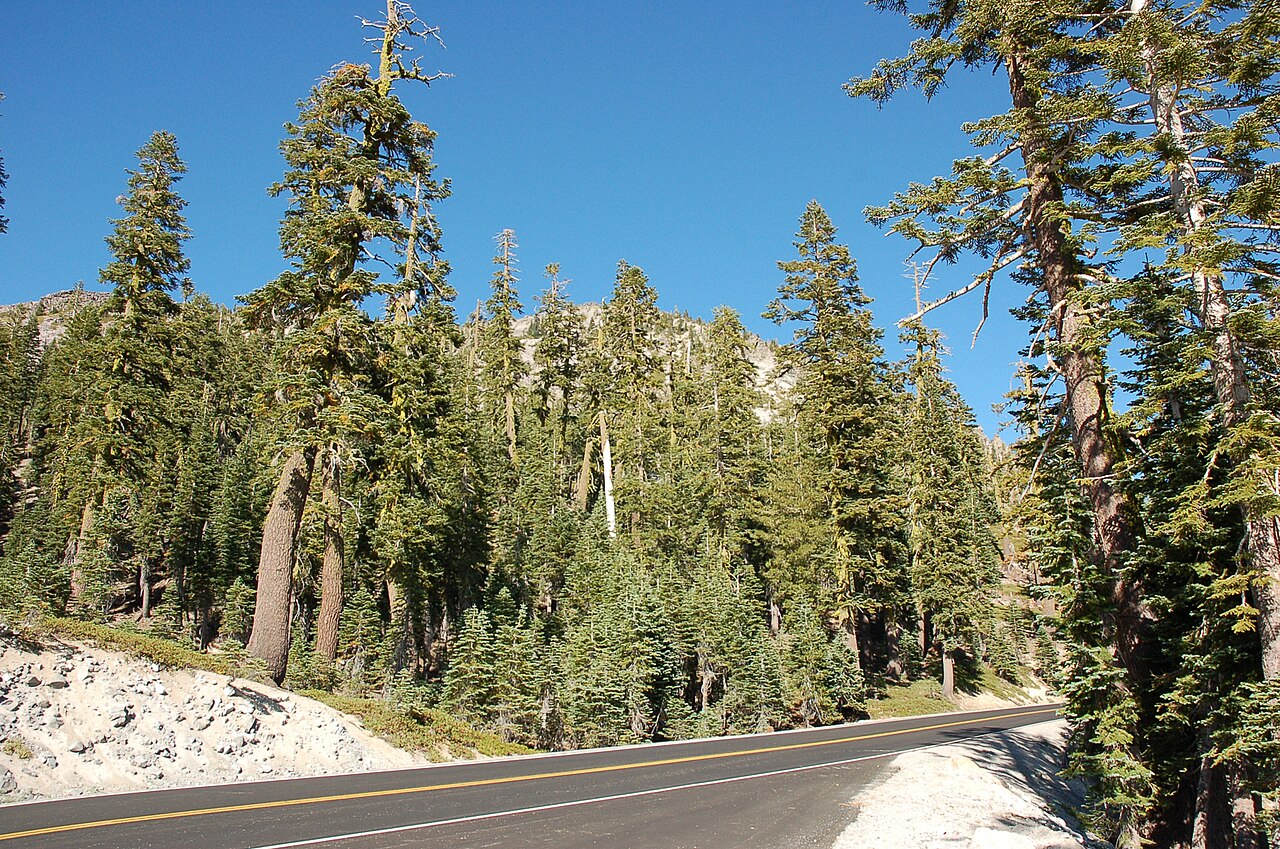
Abies magnifica, commonly called California Red Fir, is a tall, straight-trunked conifer of the high Sierra Nevada and southern Cascade Mountains, named for the thick, reddish-brown bark that develops on older trees. With its narrow, spire-like crown, upward-curving silvery-blue needles and massive upright cones, it forms some of the most striking high-elevation forests in the American West, often growing in nearly pure, parkland-like stands above 6,000 feet.
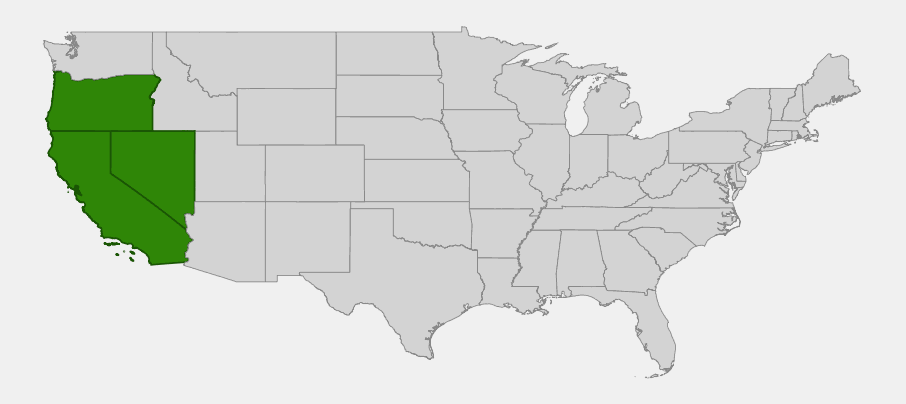
California Red Fir is a true mountain specialist, confined to a narrow band of cool, snowy, high-elevation forest that runs from the southern Cascades of Oregon down through the Klamath and Sierra Nevada ranges of California, with a small extension into the Carson Range of western Nevada. It depends on a deep winter snowpack and short, dry summers, conditions found almost nowhere outside its native mountains.
Because it needs such a specific high-elevation, cold-winter climate, California Red Fir is rarely planted outside the West and is not a typical home garden tree even within its own range; it belongs in large rural mountain properties, restoration plantings and, above all, the wild subalpine forests where John Muir admired its “exquisite order” of branches more than a century ago.
Identification
California Red Fir is a large, single-trunked evergreen conifer with a narrowly conical crown that becomes more cylindrical and irregular with age. Mature trees commonly reach 100 to 150 feet, with the tallest confirmed individuals in Sequoia National Park measured at well over 250 feet, among the largest true firs known anywhere.
Bark & Stems
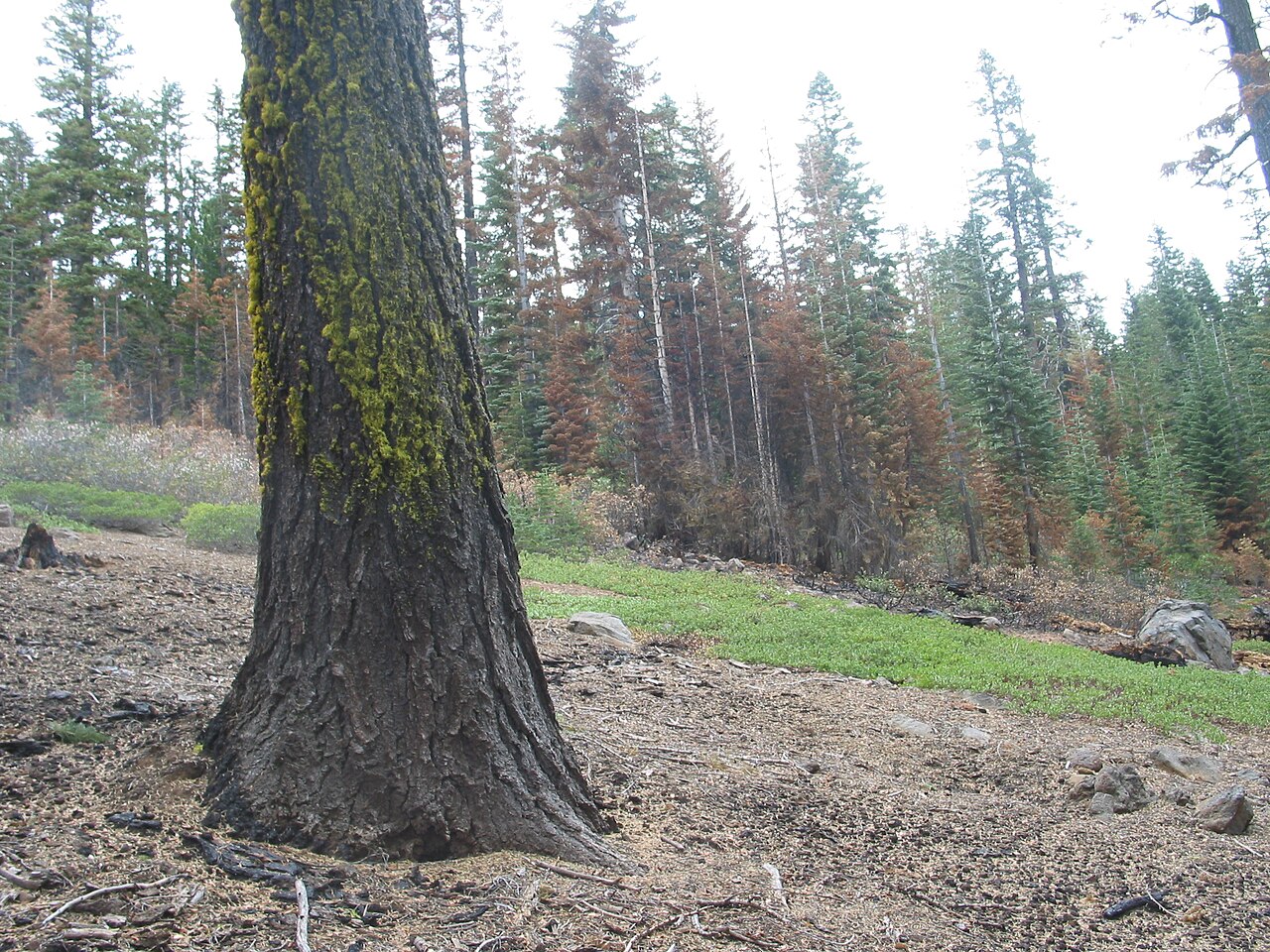
Young trees have smooth, thin gray bark dotted with resin blisters, much like other true firs. With age the bark thickens dramatically, turning a distinctive red-brown and breaking into deep furrows between broad plates, a trait that gives the species both its common name and much of its character in old growth. Twigs are yellow to tan with fine reddish hairs.
Leaves
The needles are 1 to 1.5 inches long, blue-green with a silvery, glaucous cast, especially on new growth, which gives rise to the alternate common name “silvertip fir.” Needles curve upward on the twig and appear roughly two-ranked in shade or more radially arranged in full sun, with a faint camphor-like scent when crushed. The silvery-blue color, upward curve and lack of a strong central groove help separate it from the closely related and sometimes co-occurring noble fir.
Flowers & Fruit
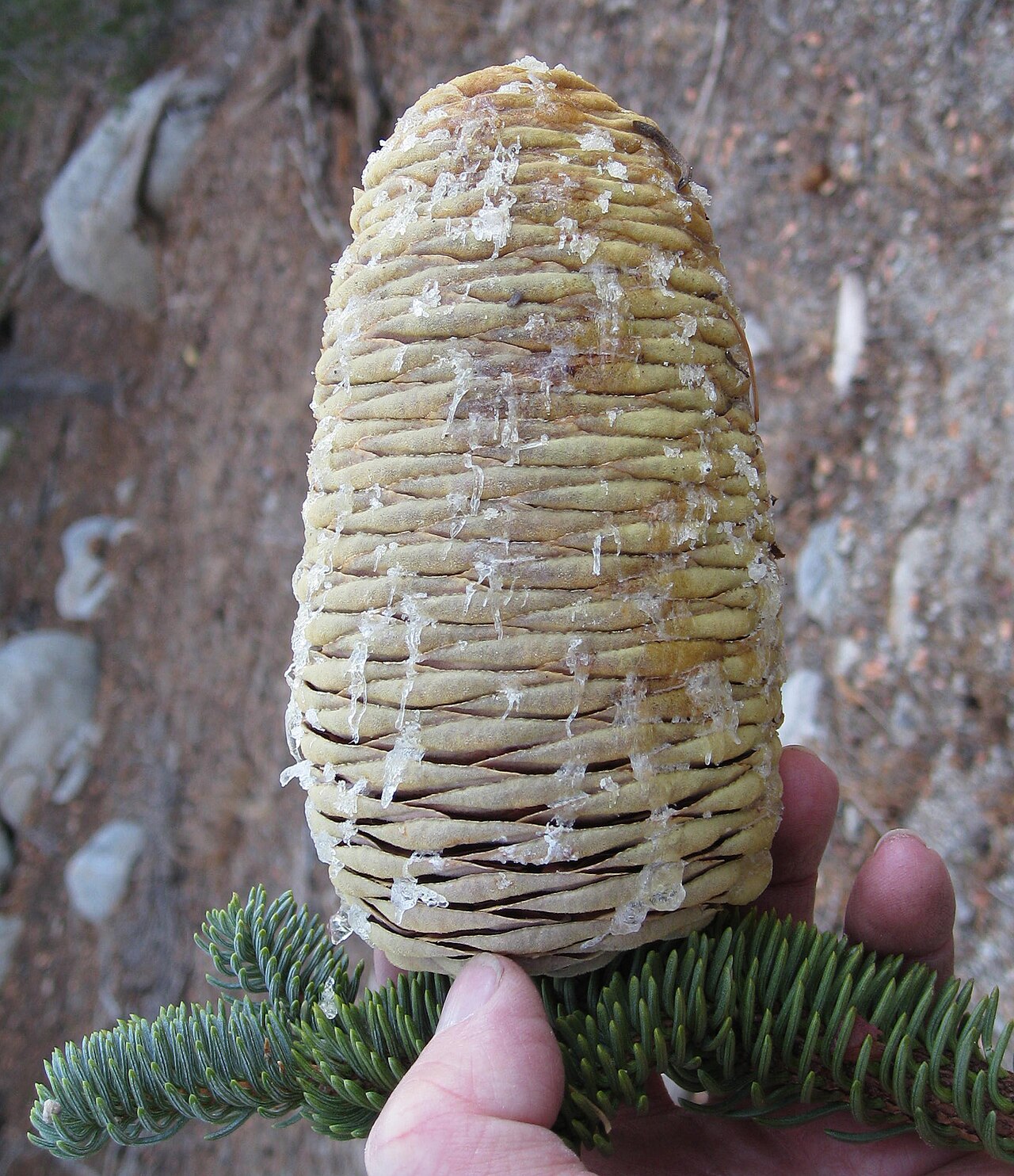
Male pollen cones are purple to reddish-brown and appear on the undersides of branches in late spring, often in showy profusion. Female seed cones are held upright near the top of the crown, oblong-cylindric, 6 to 9 inches long, purple ripening to brown, with the bract scales usually hidden inside the cone scales. As with all true firs, the cones never fall to the ground intact; the scales shatter apart on the branch in late summer and fall, releasing winged seeds and leaving behind a slender spike on the twig.
Quick Facts
| Scientific Name | Abies magnifica |
| Family | Pinaceae (Pine) |
| Plant Type | Large evergreen coniferous tree |
| Mature Height | 100–150 ft; exceptional trees over 200 ft |
| Mature Spread | 20–30 ft; narrow, spire-like crown |
| Growth Rate | Slow to moderate |
| Sun Exposure | Full Sun to Part Shade |
| Water Needs | Average; relies on deep winter snowpack, tolerates dry summers |
| Soil Type | Well-drained, rocky to sandy mountain soils |
| Soil pH | Acidic (about 5.0–6.5) |
| Bloom Time | May – June (pollination; not a showy bloomer) |
| Flower Color | N/A (conifer); male cones purple-red, female cones purple-brown |
| Fall Color | None (evergreen) |
| Fruit | Upright cones, 6–9 in, disintegrate on the tree in fall |
| Deer Resistant | Generally yes (resinous conifer foliage) |
| USDA Hardiness Zones | 5–7 |
Native Range
California Red Fir is native to the high mountains of the American West Coast, occurring from the central and southern Cascade Mountains of Oregon south through the Klamath and Siskiyou ranges and the Coast Ranges of northwestern California, down the length of the Sierra Nevada, with a small outlying presence in the Carson Range of western Nevada near Lake Tahoe.
Typical habitat is high-elevation mixed conifer and subalpine forest, generally between about 4,600 and 9,000 feet, where winters bring deep, long-lasting snowpack and summers are short, warm and dry. Red fir often forms nearly pure, open, park-like stands on these upper slopes, growing alongside western white pine, mountain hemlock and, at somewhat lower elevations, white fir. A broad zone of natural hybridization with noble fir occurs from around Mount Lassen northward into southern Oregon and the Klamath Mountains, producing intermediate trees sometimes called Shasta red fir.
California Red Fir has not naturalized or spread outside this native mountain range; its strict requirement for a cold, snowy, high-elevation climate keeps it confined to the peaks where it evolved. Gardeners at lower elevations or outside the West should not expect to grow it successfully.
📋 Regional plant lists featuring California Red Fir: Western Oregon & Western Washington
Growing & Care Guide
California Red Fir is a specialty tree for large, high-elevation rural properties within or near its native mountain range rather than a typical landscape conifer. Where the climate suits it, mature trees need little care, but establishing one correctly matters a great deal.
Light
Give California Red Fir full sun to light shade; it is less shade tolerant than some other high-elevation firs and typically forms relatively open, park-like stands rather than dense, continuous canopy. Young trees appreciate some shelter from intense sun and wind while establishing, but mature trees want plenty of direct light.
Soil & Water
Plant in well-drained, rocky to sandy mountain soil. This species is adapted to a climate with deep winter snowpack that slowly recharges soil moisture, followed by a warm, dry summer, so it tolerates considerable summer drought once established but will not thrive in soils that stay waterlogged. It is not a good choice for low-elevation or mild-winter gardens, since it needs real cold and a dependable snow season to perform well.
Planting Tips
Plant young container or bare-root trees in spring at a high-elevation site that mimics natural conditions: full sun, good drainage, and a climate with a genuine winter chill and snow cover. Give it plenty of room for its narrow but ultimately very tall mature form, well away from structures and power lines. Expect slow establishment in the first several years as the root system develops.
Pruning & Maintenance
Established trees need very little pruning beyond removing dead or storm-damaged branches. Watch for bark beetles and root disease, which more often attack trees already stressed by drought, overcrowding or fire damage; maintaining good spacing and avoiding soil compaction around the root zone helps keep trees resilient.
Propagation
California Red Fir is propagated from seed collected from cones just as the scales begin to loosen in late summer, since intact cones are rarely found on the ground. Seed typically benefits from a period of cold, moist stratification before sowing to break dormancy. Natural regeneration is often abundant on open, sunny slopes within its native range after fire or other disturbance creates growing space.
Landscape Uses
- High-elevation restoration and reforestation plantings within its native Sierra Nevada and southern Cascade range
- Large mountain properties wanting an authentic, structurally dramatic native conifer
- Naturalistic plantings alongside white fir and mountain hemlock
- Wildlife habitat restoration in subalpine forest settings
- Not recommended for low-elevation gardens or mild-winter climates
Wildlife & Ecological Value
High in the Sierra Nevada and southern Cascades, California Red Fir forest is a defining habitat type that supports a distinctive community of mountain wildlife.
For Pollinators
Like other conifers, California Red Fir is wind-pollinated and does not depend on or specifically attract pollinating insects, though its foliage and bark support bark beetles and other specialist insects that are in turn an important food source for woodpeckers and other birds.
For Birds
Red fir forest provides important nesting and foraging habitat for high-elevation birds, including woodpeckers that excavate cavities in mature and dead trees, and seed-eating species such as crossbills and Clark’s nutcracker that forage on cone seed as the scales loosen each fall.
For Mammals
Douglas squirrels and chickarees are major consumers and dispersers of red fir seed, cutting cones and caching them for winter use. Black bears, mule deer and other large mammals use red fir forest for cover and forage, and the deep, long-lasting snowpack beneath these stands shapes winter habitat and movement patterns for many mountain species.
Ecosystem Role
As one of the dominant trees of the upper montane and subalpine zone, California Red Fir helps define forest structure, snow retention and watershed function across large areas of the Sierra Nevada and southern Cascades. Its relatively open, park-like stands also support a diverse understory and contribute to the scenic character of many high-elevation parks and wilderness areas.
Cultural & Historical Uses
California Red Fir has long been valued by foresters and the timber industry as a general construction-grade wood used for framing lumber and plywood, and in California it also supplies a significant share of the state’s premium Christmas tree market, prized for its symmetrical form and pleasant fragrance. It has served as the U.S. Capitol Christmas tree on more than one occasion.
The species captured the imagination of early naturalists exploring the Sierra Nevada. John Muir wrote admiringly of climbing into the crown of a flowering, fruiting red fir, marveling at the “exquisite order” of its whorled branches and comparing its symmetry to the leaves of a lily. That sense of architectural grandeur still defines the open, cathedral-like red fir forests found today in parks such as Yosemite, Sequoia and Lassen Volcanic.
Indigenous peoples of the Sierra Nevada and southern Cascades lived within and alongside red fir forest as part of a broader high-elevation landscape, though the species itself, with its hard, resinous wood, was used less for direct utilitarian purposes than lower-elevation trees with straighter grain; its larger ecological and cultural role was as a defining feature of the high country itself.
Frequently Asked Questions
Can I grow California Red Fir outside the Sierra Nevada or Cascades?
Generally no. This species needs a cold, snowy, high-elevation climate with a long winter chill and is not well suited to low-elevation, mild-winter or hot-summer gardens outside its native mountain range.
How is California Red Fir different from white fir?
Red fir has thicker, more deeply furrowed reddish bark on mature trees, more strongly silvery-blue, upward-curving needles, and larger cones, and it typically grows at higher elevations than white fir, though the two species can occur near each other on mountain slopes.
Why are there no whole red fir cones on the ground?
Like all true firs, California Red Fir holds its cones upright on the branch, and the scales shatter apart there as seeds ripen, so intact cones are not normally found on the forest floor. Cone fragments or cones cut by squirrels are the usual evidence of seed crops.
What does “Shasta red fir” mean?
Shasta red fir refers to naturally occurring hybrid trees between California red fir and noble fir, found mainly from around Mount Lassen north into the Klamath Mountains and southern Oregon, where the two species’ ranges overlap and interbreed.
How tall does California Red Fir get?
Mature trees commonly reach 100 to 150 feet, and the tallest confirmed individuals, found in Sequoia National Park, exceed 250 feet, making California Red Fir one of the largest true firs in the world.

Looking for a nursery that carries California Red Fir?
Browse our native plant nursery directory: California · Oregon · Nevada