
Port Orford Cedar (Chamaecyparis lawsoniana)
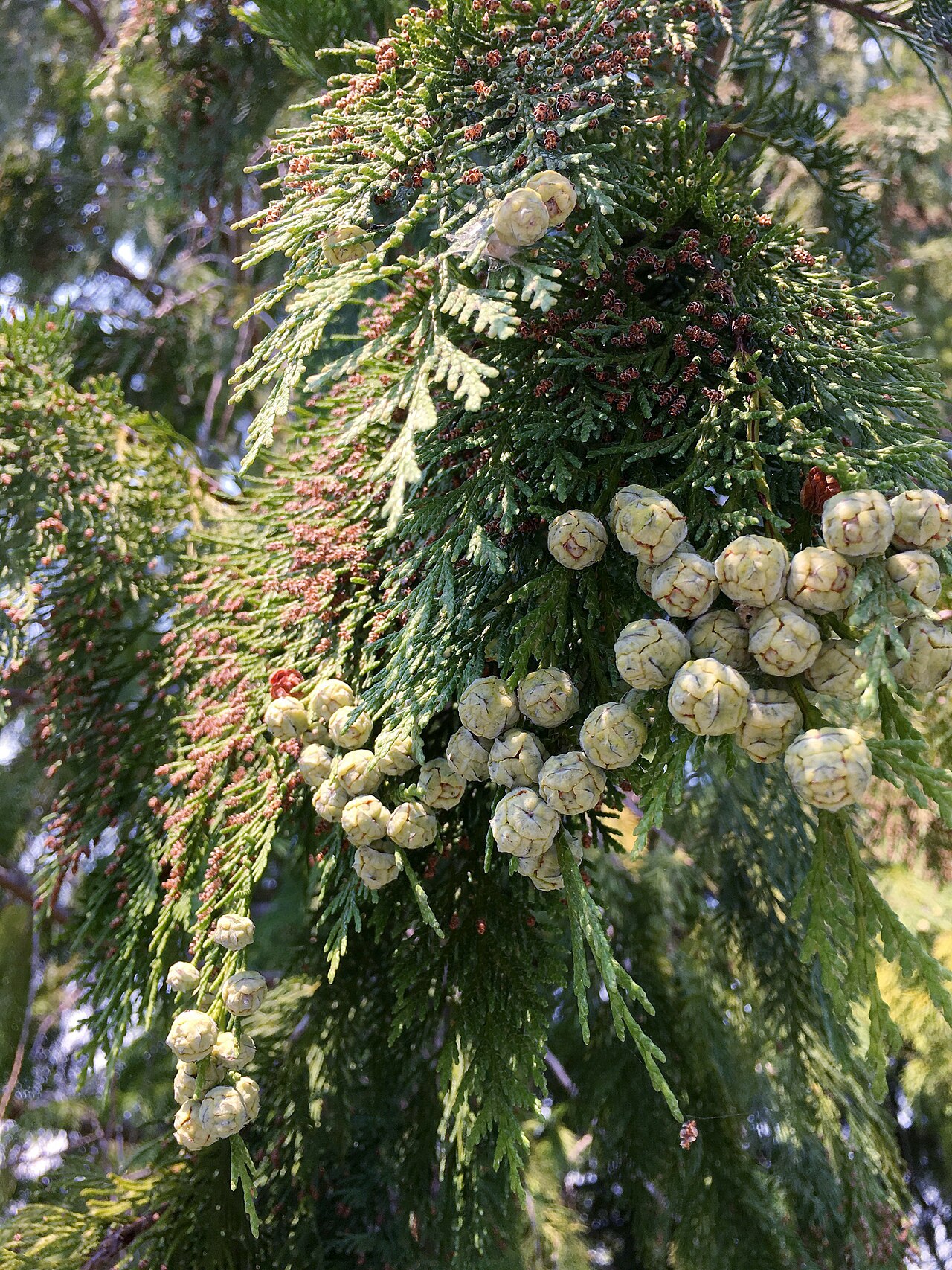
Chamaecyparis lawsoniana, commonly known as Port Orford Cedar or Lawson’s Cypress, is a large, long-lived conifer confined to one of the narrowest native ranges of any North American tree: a coastal strip barely 200 miles long straddling the Oregon–California border. Despite the “cedar” in its common name, it is not a true cedar (Cedrus) at all, but a member of the cypress family, Cupressaceae, closely related to the Alaska cedar with which it is sometimes confused.
In the wild, Port Orford cedar is a striking presence: a narrow, pyramidal tree with a buttressed trunk, drooping branch tips, and lacy, flattened sprays of blue-green foliage that give off a sharp, parsley-like scent when crushed. Old-growth individuals can live for centuries and tower well over 100 feet, making them one of the signature trees of the Klamath-Siskiyou region’s mixed conifer forests.
This species carries real weight in both ecology and commerce — its rot-resistant, fine-grained wood has long been prized for boatbuilding, specialty construction, and export to Japan, where it substitutes for the sacred hinoki cypress in temple building. But it also carries a serious vulnerability: an introduced root disease, Phytophthora lateralis, has been killing Port Orford cedar across its range for nearly a century, and anyone considering planting this tree needs to understand that risk before choosing it for a home landscape.
Identification
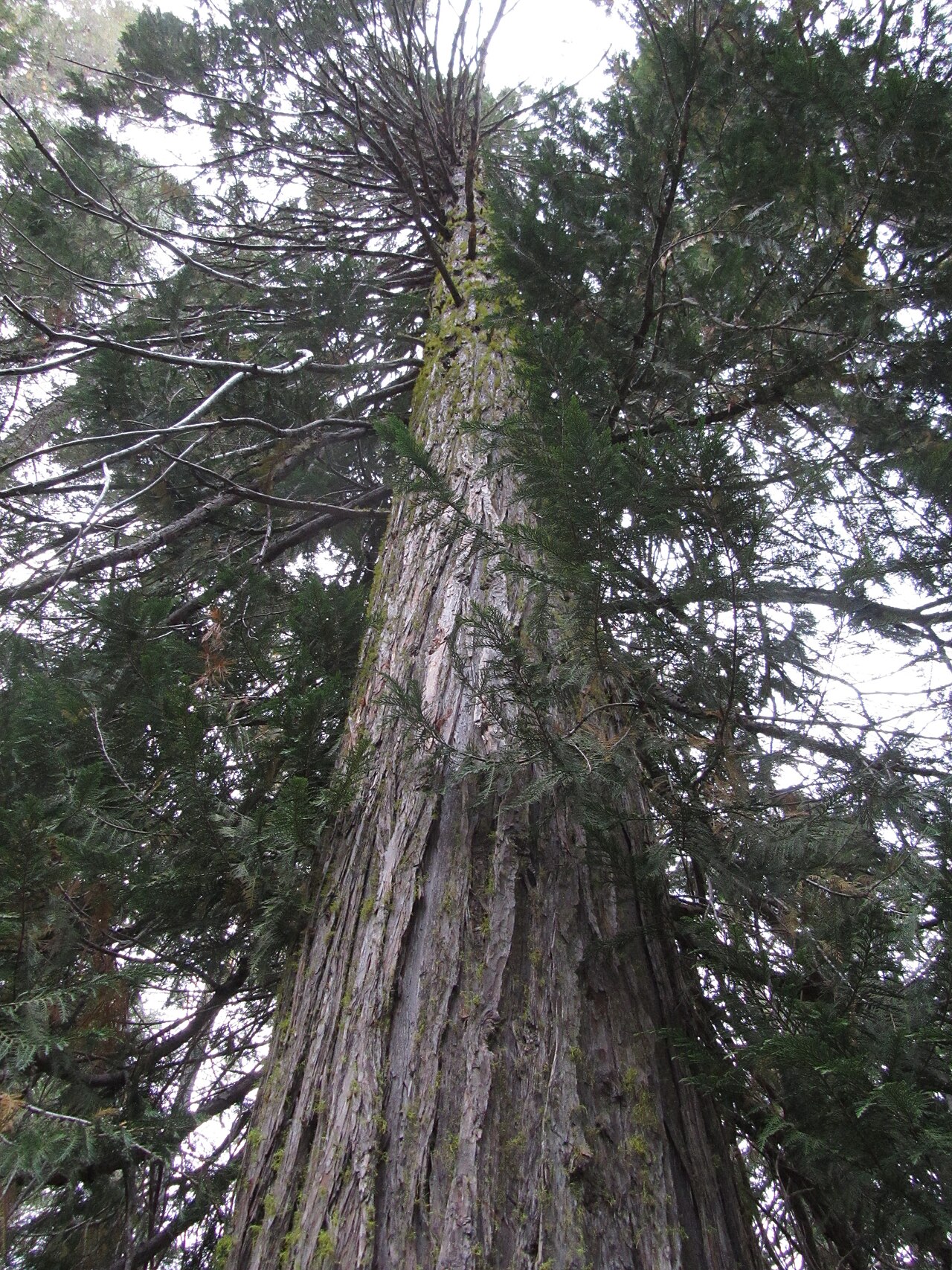
Port Orford cedar grows as a narrow, pyramidal evergreen tree with short, ascending branches that droop gracefully at the tips. Old-growth trees in undisturbed forest can reach 100 to 200 feet tall with trunk diameters of 4 to 7 feet, though cultivated and second-growth trees are far more modest, typically 40 to 80 feet. The trunk is often noticeably buttressed at the base, and old trees frequently lose their lower branches and develop dead, broken tops.
Bark & Stems
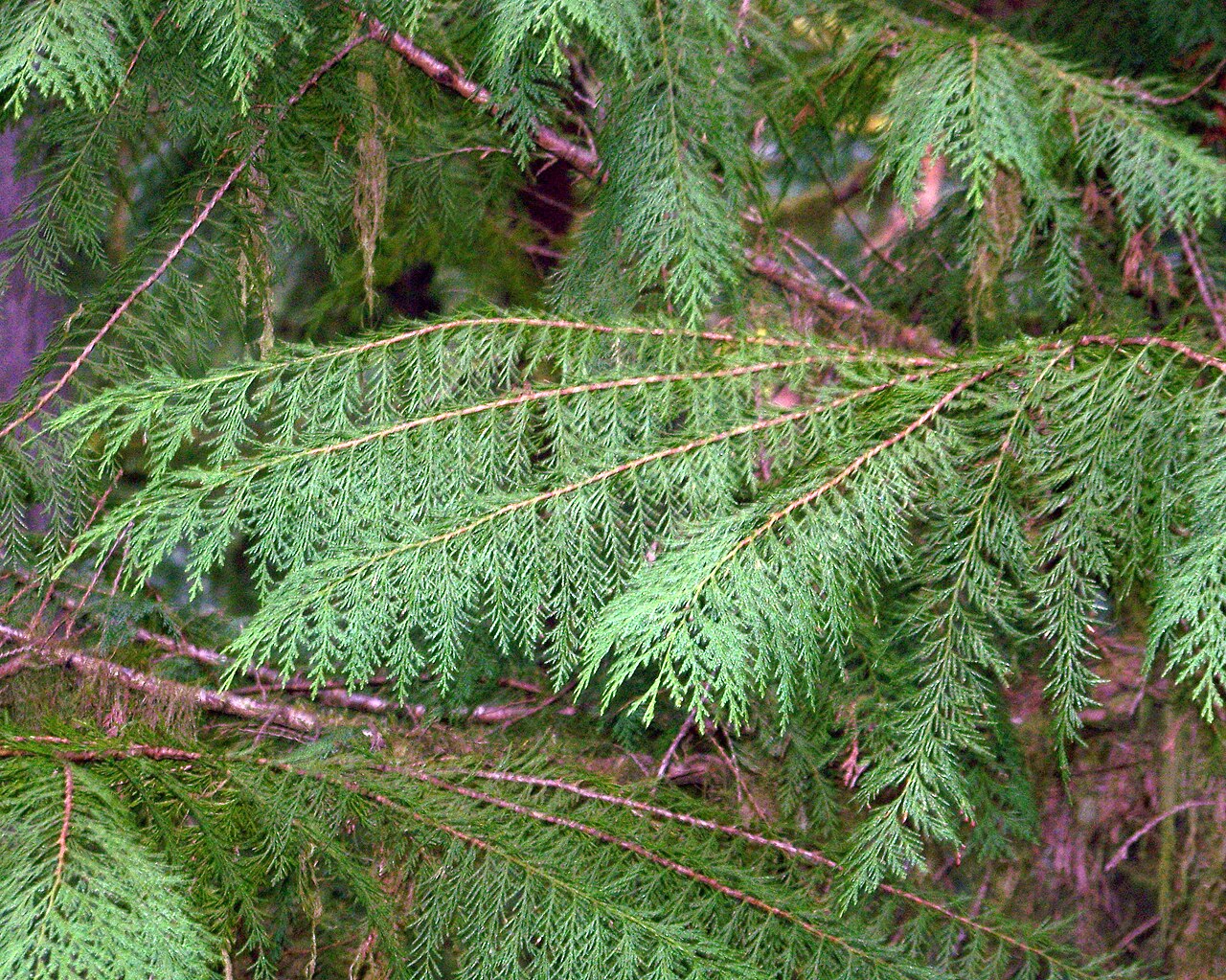
The bark is silvery to reddish-brown, fibrous, and deeply furrowed into flat vertical ridges, growing quite thick (6 to 10 inches) near the base of old trees. The twigs are flattened and arranged in frond-like horizontal sprays rather than growing in a single plane like many other conifers, which gives the whole branch system a lacy, drooping appearance.
Leaves
Foliage is scale-like, 1/8 to 3/16 inch long, pressed tightly against the twig in opposite overlapping pairs. On the underside of the sprays, narrow white, X-shaped or butterfly-shaped markings appear where the stomata are concentrated — one of the most reliable field marks for separating this species from the similar Alaska cedar and western redcedar. Crushed foliage releases a pungent, almost peppery scent, quite different from the sweeter cedar smell of western redcedar. Juvenile foliage on young seedlings and vigorous shoots is more needle-like, soft, and loosely arranged before maturing into the typical flattened scale form.
Flowers & Cones
Male (pollen) cones are small, oblong, and dark red to brown, clustered at branchlet tips and most conspicuous in late winter and early spring. Female cones are inconspicuous when young but develop into small, round seed cones about 1/4 to 1/2 inch across, blue-green at first and ripening to brown with 6 to 10 scales in a single season. The small, winged seeds fall quickly once the cones open and can float, aiding dispersal along the streams the tree so often grows beside.
Quick Facts
| Scientific Name | Chamaecyparis lawsoniana |
| Family | Cupressaceae (Cypress) |
| Plant Type | Evergreen conifer tree |
| Mature Height | 100–200 ft in old-growth forest; 40–80 ft typical where planted |
| Mature Spread | 15–25 ft, narrow pyramidal crown |
| Growth Rate | Slow to moderate |
| Sun Exposure | Full sun to part shade |
| Water Needs | Average to consistently moist; often streamside in the wild |
| Soil Type | Moist, well-drained; tolerates serpentine and rocky soils |
| Soil pH | Slightly acidic to neutral |
| Bloom Time | Late winter–early spring (pollen cones) |
| Flower Color | Dark red pollen cones; inconspicuous female cones |
| Fall Color | None (evergreen) |
| Fruit | Small round cones, 1/4–1/2 in, blue-green ripening brown |
| Deer Resistant | Yes |
| USDA Hardiness Zones | 5–8 |
Native Range
Port Orford cedar has one of the most restricted native ranges of any conifer in North America. It grows only in a narrow coastal and near-coastal band roughly 200 miles long, from southwestern Oregon’s Coos Bay and Lane County area south along the coast to northwestern California, with disjunct inland populations at higher elevations in the Siskiyou Mountains and around Mt. Shasta. It is not native anywhere else in Oregon or California, and it should not be assumed native simply because it is sold at nurseries throughout the Pacific Northwest and beyond — plantings outside this narrow native zone are ornamental, not wild populations.
Within its native range, Port Orford cedar grows from near sea level up to about 5,000 feet in the Klamath Mountains, most often along streams and on moist valley flats and slopes, though the inland populations near Mt. Shasta also occur on nutrient-poor serpentine (ultramafic) soils where it faces less competition from other conifers. It is a component of mixed-conifer and western hemlock forests, frequently growing alongside Douglas-fir, western hemlock, and various true firs.
The species’ already narrow range has been further reduced by logging, wildfire, and especially by the spread of an introduced root disease (see below), which has killed trees across large portions of the historic range, particularly along roads and streams where the pathogen travels most easily. Remaining healthy stands are concentrated in more remote, undisturbed drainages.
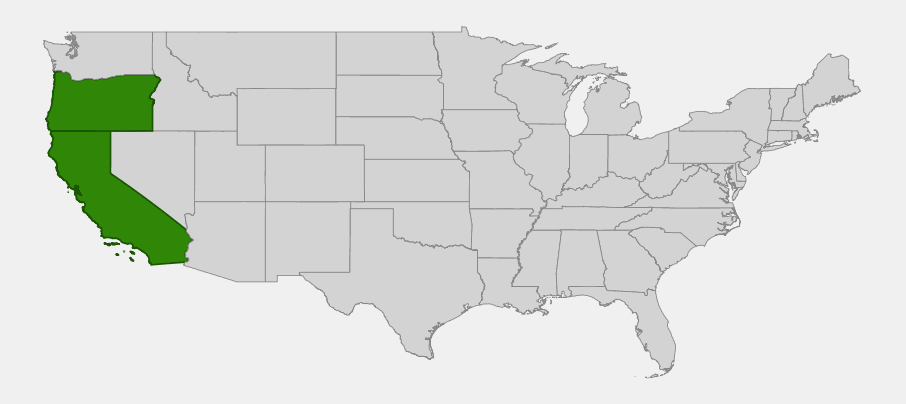
📋 Regional plant lists featuring Port Orford Cedar: Western Oregon & Western Washington (native only to the southwestern Oregon portion of this list’s range)
Growing & Care Guide
Port Orford cedar can make a handsome specimen or screening tree, but before planting one, gardeners should weigh in its serious susceptibility to root disease, discussed in detail below. Where conditions allow it, the straight species and its many ornamental cultivars are long-lived, low-maintenance conifers.
Light
This tree tolerates full sun to part shade. Young trees often establish best with some shelter, especially from drying wind, while mature trees handle open, sunny sites well as long as soil moisture is adequate.
Soil & Water
Port Orford cedar wants consistently moist, well-drained soil; it is not a tree for hot, dry sites. In the wild it is frequently found right along streambanks, and garden specimens perform best with regular water, particularly during the first several years of establishment and through dry summers. It is notably tolerant of poor, rocky, and even serpentine soils, a trait that lets it persist on sites too infertile for most other conifers.
Planting Tips
Plant in fall or early spring. Because the introduced pathogen Phytophthora lateralis spreads readily through wet soil, surface water, and contaminated equipment, avoid planting directly along natural streams or drainages where disease could spread into wild populations, and never move soil or plant material from an infected site to a healthy one. Home gardeners in the Pacific Northwest should look for nursery stock grown from disease-resistant lineages, several of which have been developed and released specifically to reduce losses to this disease.
Pruning & Maintenance
Established trees need little routine pruning beyond removing dead or storm-damaged branches. Avoid wounding roots or the root collar with mowers, string trimmers, or heavy equipment, since wounds provide an entry point for the root disease pathogen. Keep irrigation water from pooling around the trunk base.
Propagation
Port Orford cedar is propagated from seed or, for named cultivars and disease-resistant selections, from cuttings or grafting onto resistant rootstock. Seed viability is often low and germination can be slow and uneven; stratification improves results.
Landscape Uses
- Specimen conifer for large properties with reliable soil moisture
- Windbreaks and screens in coastal and Pacific Northwest gardens
- Streamside and riparian plantings well away from known disease-affected drainages
- Restoration plantings using certified disease-resistant stock in appropriate sites
- Many dwarf and columnar cultivars for smaller gardens, where the species itself would be too large
Wildlife & Ecological Value
As a long-lived component of old-growth and mature mixed-conifer forest, Port Orford cedar contributes significantly to forest structure and habitat complexity across its small range.
For Pollinators
Like other conifers, Port Orford cedar is wind-pollinated and offers little direct forage for pollinators, though its dense canopy and bark provide habitat for a range of forest invertebrates.
For Birds
The dense, evergreen canopy offers cover and nesting structure for forest birds, and small conifer seeds are eaten by songbirds and small mammals. Snags and dead-topped old trees, common in this species, provide cavity-nesting opportunities for woodpeckers and secondary cavity nesters.
For Mammals
Small mammals feed on the seeds, and the structurally complex bark and root systems of old trees provide shelter. Deer and elk generally avoid browsing the foliage, which is one reason the species is considered deer resistant in cultivation.
Ecosystem Role
Port Orford cedar’s root systems help stabilize streambanks and slopes in the steep, often unstable terrain of the Klamath-Siskiyou region. Because the species is now in sharp decline across much of its range due to introduced disease, its loss is reshaping riparian forest composition in affected watersheds, with shifts toward other conifers and hardwoods filling the gaps left behind.
Cultural & Historical Uses
Port Orford cedar was first collected near the town of Port Orford, Oregon, and introduced into cultivation in 1854 by nurseryman Charles Lawson of Edinburgh, Scotland, after whom the species was named. It quickly became one of the most widely planted ornamental conifers in Europe, where nearly 300 cultivars have since been selected — far more than for any other conifer.
In its native range, the wood’s exceptional qualities — straight grain, light weight, strength, rot resistance, and a distinctive ginger-like fragrance — made it commercially valuable for boatbuilding, specialty millwork, battery separators, and arrow shafts. For decades, a significant share of the harvest was exported to Japan, where the wood is used as a substitute for the increasingly scarce native hinoki cypress in temple and shrine construction, a trade that continues to drive high prices for Port Orford cedar lumber.
Since the 1950s, the species’ story has been dominated by its fight against Phytophthora lateralis, an introduced water mold believed to have arrived on nursery stock. The disease attacks the roots and root collar, effectively girdling the tree and killing it, often within a year or two of first symptoms (foliage fading from green to yellow to reddish-brown). It spreads primarily through water-borne spores carried in streams, in surface runoff along roads, and on soil clinging to vehicles, logging equipment, and hikers’ boots — which is why forest managers close roads seasonally and require equipment washing in affected areas. There is no cure once a tree is infected. Decades of research by the U.S. Forest Service and Oregon State University have produced disease-resistant genetic lines, now used in restoration plantings and available in limited nursery supply, but the wild species remains listed as Near Threatened and continues to decline across significant portions of its historic range.
Frequently Asked Questions
Is Port Orford cedar a true cedar?
No. Despite the common name, it belongs to the cypress family (Cupressaceae) and the genus Chamaecyparis, not to true cedars (Cedrus). It is more closely related to Alaska cedar and the false cypresses of Asia.
What is killing Port Orford cedar?
An introduced root disease caused by the water mold Phytophthora lateralis has been killing trees across the species’ range since it was first detected in the 1950s. It spreads through water and contaminated soil and has no cure once a tree is infected.
Is Port Orford cedar native to all of Oregon and California?
No. Its true native range is a narrow coastal and near-coastal band in southwestern Oregon and northwestern California only, plus a few disjunct inland populations in the Siskiyou Mountains and near Mt. Shasta. Trees planted elsewhere in either state are ornamental plantings, not part of the wild native range.
Should I plant Port Orford cedar in my garden?
It can be a fine ornamental tree where root disease is not a local concern, especially using nursery stock grown from disease-resistant lines. Avoid planting it directly along natural waterways, and be aware that susceptibility to Phytophthora lateralis makes it a riskier long-term choice than many other native conifers in areas where the disease is established.
How can the spread of the disease be slowed?
Avoid moving soil, plant material, or muddy equipment between forested areas, stay on established roads and trails (especially during wet weather, when zoospores move most easily), and support agency road closures and equipment-washing stations in affected forests.

Looking for a nursery that carries Port Orford Cedar?
Browse our native plant nursery directory: Oregon · California