
Pink Tickseed (Coreopsis rosea)
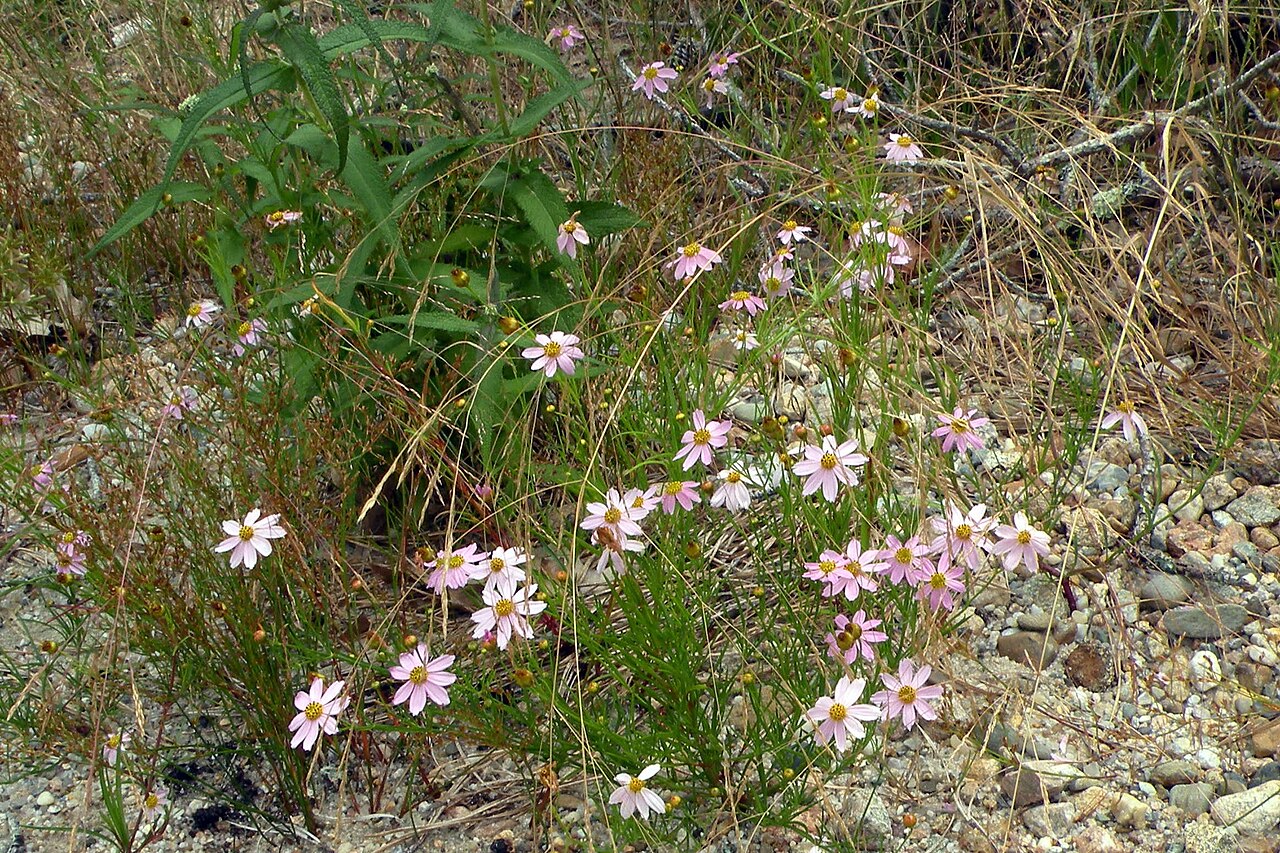
Coreopsis rosea, commonly called Pink Tickseed or Rose Coreopsis, is a small, wiry-stemmed perennial wildflower in the aster family (Asteraceae) and one of only two Coreopsis species in North America with pink rather than yellow ray flowers. It is a true coastal-plain specialist, growing almost exclusively on the fluctuating shores of sandy, acidic ponds and the edges of peaty wetlands from eastern Massachusetts south in disjunct pockets to Delaware, Maryland, and the Carolinas-Georgia border. Where it occurs, it can form loose, airy drifts of inch-wide, soft pink daisies held on thin, branching stems above fine, needle-like leaves.
Pink Tickseed is a genuine rarity. Its entire global population is confined to a narrow habitat niche — “coastal plain pondshores” — that depends on natural water-level fluctuation to stay open and sandy. Shoreline development, dammed or stabilized water levels, and competition from woody encroachment have eliminated it from large parts of its historic range; it is presumed extirpated in Pennsylvania and is considered critically imperiled, imperiled, or vulnerable in every state where it still grows. Because of this, Pink Tickseed should never be dug or collected from the wild. Gardeners who want it should buy nursery-propagated plants from a native plant specialist, not wild-collected stock, and should never introduce it to ponds outside its known native range.
In the garden, Pink Tickseed is valued for a very different reason than its rarity in the wild: it is an easy, long-blooming, low perennial for consistently moist to wet, sunny soil, where it spreads gently by rhizome to form a soft pink groundcover. It pairs naturally with other pondshore and bog-edge natives and is a favorite small-space choice for rain gardens, pond margins, and the damp edges of native plant beds.
Identification
Pink Tickseed is a low, spreading perennial, typically 8 to 20 inches tall, forming loose mats or clumps from slender creeping rhizomes. The stems are thin, wiry, and much-branched, giving the whole plant an airy, see-through quality rather than a solid clump.
Leaves
The leaves are opposite, 1 to 2 inches long, and divided into very narrow, almost thread-like or linear segments — closer in texture to a fine grass or thread-leaf coreopsis than to a typical daisy-family leaf. This fine foliage is easy to overlook when the plant is not in bloom, which is part of why it can be hard to find in the field outside flowering season.
Flowers
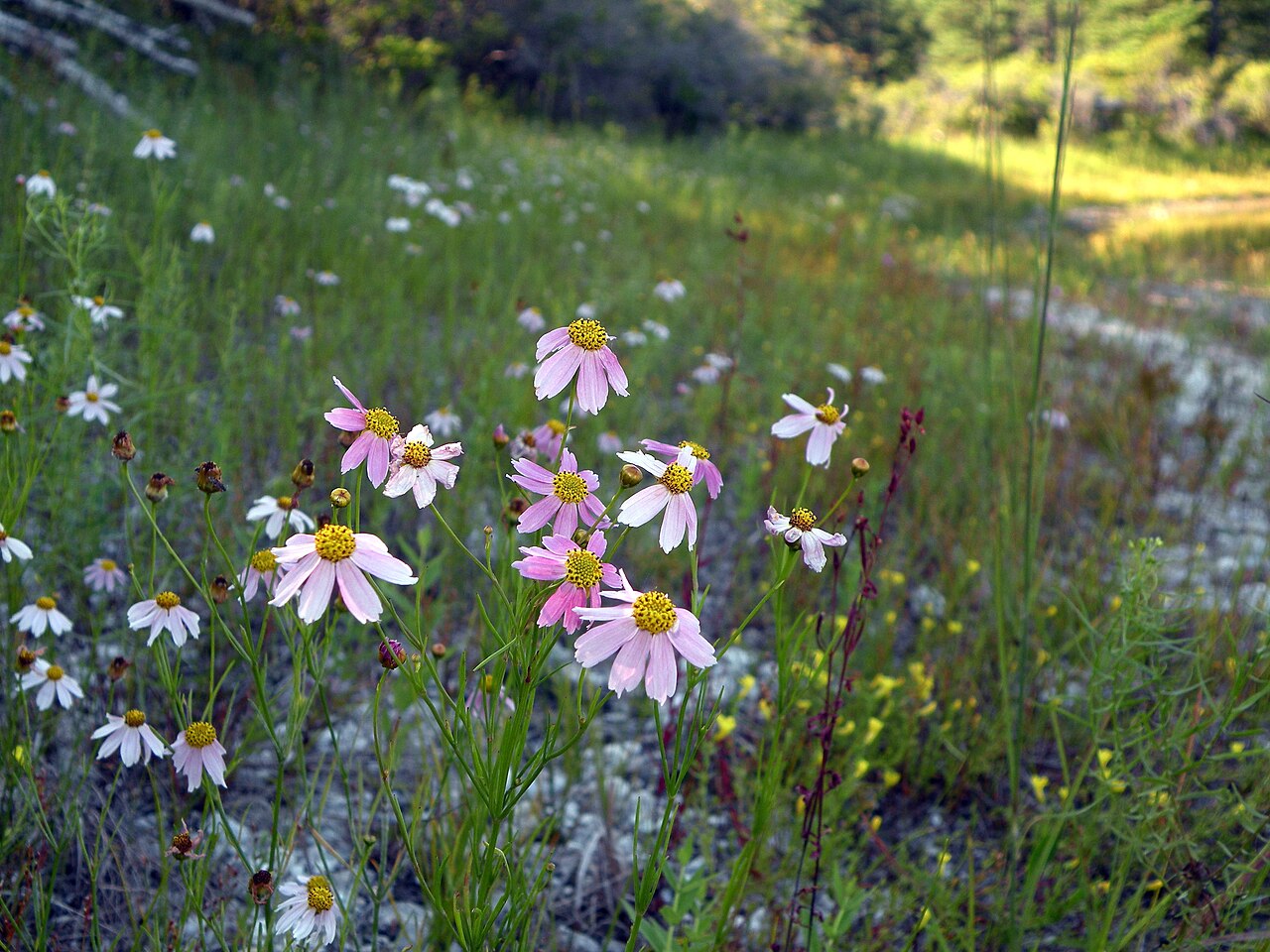
Flower heads are about ¾ to 1¼ inches across, with 6 to 8 pale pink to rose-pink ray flowers (rarely white) surrounding a cluster of small yellow disc flowers at the center. Each ray typically has three shallow notches at its tip. Flowering runs from mid-summer into early fall, and a single plant can carry dozens of blooms at once on its branching stems, giving drifts of the plant a hazy pink cast over the pond margin.
Fruit & Seeds
Like other tickseeds, Pink Tickseed produces small, flattened, winged achenes in the dried seed heads after bloom. The genus name Coreopsis comes from the Greek for “bug-like,” referring to the shape of these seeds.
Quick Facts
| Scientific Name | Coreopsis rosea |
| Family | Asteraceae (Aster) |
| Plant Type | Herbaceous Perennial Wildflower |
| Mature Height | 8–20 in |
| Mature Spread | 12–24 in, spreading by rhizome |
| Growth Rate | Moderate |
| Sun Exposure | Full Sun to Part Sun |
| Water Needs | Moist to Wet; tolerates seasonal drawdown |
| Soil Type | Sandy, peaty or acidic, consistently damp |
| Soil pH | 4.5–6.0 (acidic) |
| Bloom Time | July – September |
| Flower Color | Pale pink to rose-pink, rarely white |
| Fall Color | Foliage dies back, no notable fall color |
| Fruit | Small dry winged achenes |
| Deer Resistant | Yes, generally avoided |
| USDA Hardiness Zones | 5–8 |
Native Range
Pink Tickseed has one of the most restricted native ranges of any plant profiled on this site. It occurs in three widely separated clusters along the Atlantic coastal plain: a northern group centered on southeastern Massachusetts and Rhode Island (including Cape Cod and the Plymouth pond region), a mid-Atlantic group spanning Long Island, New York, southern New Jersey, Delaware, and Maryland, and a disjunct southern group in the Sandhills region of South Carolina and Georgia. The species does not occur, and has likely never occurred, outside this narrow coastal-plain band — it is not native to inland New England, the Appalachians, or the Piedmont.
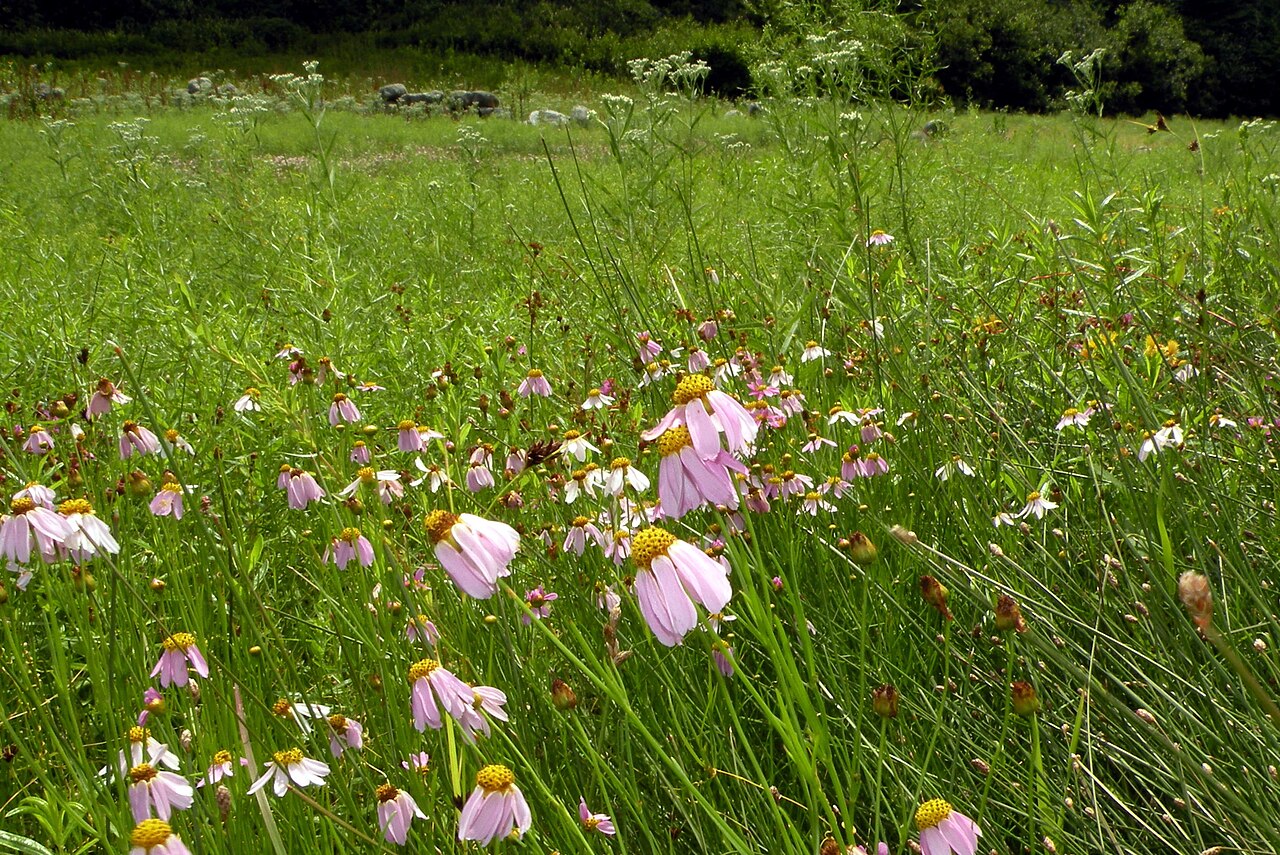
Within this range, Pink Tickseed is tied almost entirely to “coastal plain pondshores”: the gently sloping, sandy or peaty margins of kettle ponds and other seasonally fluctuating freshwater ponds. These shores flood in wet years and draw down to bare, damp sand in dry years, which keeps the ground open and prevents shrubs and trees from shading it out. Pink Tickseed germinates and spreads fastest on the exposed sand left by a summer drawdown, then persists as water levels rise again. It also turns up locally in wet, sandy savannas and seasonally wet depressions with similar fluctuating hydrology.
This dependence on a disappearing, specific habitat — rather than any broad environmental tolerance — is why Pink Tickseed is rare everywhere it grows. Development around pond shores, artificial water-level stabilization (which lets woody plants take over the shore), and off-road vehicle damage to the sandy substrate have all reduced populations across its range. The species is presumed extirpated from Pennsylvania and is tracked as a conservation concern in every state where it survives.
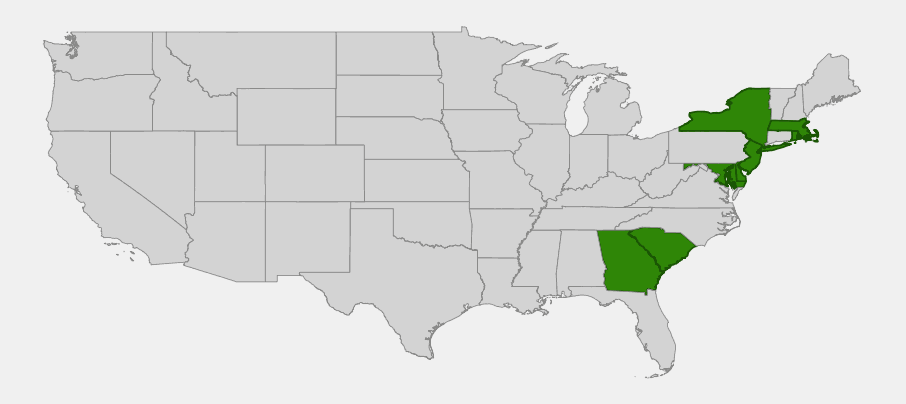
📋 Regional plant lists featuring Pink Tickseed: Connecticut, Massachusetts & Rhode Island · Maryland, Virginia & West Virginia · North Carolina & South Carolina · Georgia, Alabama & Mississippi · Delaware, Southern New Jersey & Long Island, New York
Growing & Care Guide
Pink Tickseed is far easier to grow in the right spot than its rarity in the wild would suggest — it simply needs the one thing most garden beds lack: consistently moist to wet, sandy soil in full sun. Give it that, and it spreads readily by rhizome into a long-blooming, low pink carpet.
Light
Full sun produces the heaviest bloom and the most compact growth. Plants tolerate light part-day shade but become sparser and floppier, with fewer flowers, as shade increases.
Soil & Water
This species wants soil that stays damp to wet through the growing season — think pond margin, rain garden basin, or the low point of a native bed — in sandy, peaty, or acidic soil. It does not perform well in heavy clay or soil that dries out for extended periods in summer. A brief seasonal drawdown to damp (not bone-dry) sand is tolerated and even mimics its natural pondshore habitat, but prolonged drought will weaken or kill it.
Planting Tips
Plant container-grown, nursery-propagated stock in spring, spacing plants 12 to 18 inches apart to allow for rhizome spread. Site it at the damp edge of a pond, rain garden, or low wet spot rather than in average garden soil. Never collect Pink Tickseed from wild populations — it is rare and state-tracked across its entire range; buy only from nurseries that propagate their own stock.
Pruning & Maintenance
Deadheading extends the bloom period into early fall. Cut plants back in late fall or leave standing seed heads through winter for birds, then clean up in early spring. Divide congested clumps every few years in spring to maintain vigor and control spread within the bed.
Propagation
Propagate by dividing rhizomes in spring or by seed sown on consistently moist, sandy soil — seed often germinates best on bare, damp sand that mimics a natural pond drawdown. Avoid any temptation to collect wild seed or plants; use nursery-grown material only.
Landscape Uses
Pink Tickseed shines in wet, sunny niches that are hard to plant with typical perennials:
- Pond and rain garden margins where soil stays consistently damp
- Bog gardens and the wet edges of native plant beds
- Low spots that collect runoff after rain
- Naturalistic drifts combined with other pondshore wildflowers
- Container water gardens set in shallow, consistently moist soil
Wildlife & Ecological Value
Pink Tickseed is a modest but genuine contributor to the specialized pondshore plant communities it grows in, and gardeners who plant nursery stock help take pressure off dwindling wild populations.
For Pollinators
The open, daisy-shaped flowers are easily accessed by small native bees, syrphid flies, and other short-tongued pollinators drawn to the yellow disc florets at the center. Because it blooms through the heat of mid- to late summer, it offers nectar and pollen during a period when many spring wildflowers have finished.
For Birds
Seed-eating songbirds, including sparrows and finches, feed on the small achenes in the dried seed heads through fall and into winter if the stems are left standing.
Ecosystem Role
In the wild, Pink Tickseed is part of a globally rare plant community — coastal plain pondshore flora — that depends on natural, fluctuating water levels. Its presence is often used by conservation biologists as an indicator that a pond shore still has intact, unaltered hydrology. Protecting and restoring natural water-level fluctuation, rather than planting the species itself, is the single most effective action for its wild populations.
Cultural & Historical Uses
Pink Tickseed has no significant documented history of medicinal, culinary, or craft use among Indigenous peoples or early settlers, likely reflecting both its small stature and its naturally scarce, localized distribution — it was never abundant enough across most of its range to become a utilitarian plant in the way that more common species were.
Its modern significance is almost entirely horticultural and botanical. Since the twentieth century it has been used sparingly in rock gardens and bog gardens by native plant enthusiasts, and it has given rise to several popular pink-flowered garden cultivars bred for compact habit and extended bloom. Botanically, the species is notable to taxonomists as one of only two pink-flowered Coreopsis species in a genus otherwise dominated by yellow-flowered plants, a trait that has made it a subject of interest in studies of flower-color evolution within the aster family.
Today, Pink Tickseed’s main cultural significance is as a conservation symbol: a visible, attractive wildflower whose decline tracks the broader loss of naturally fluctuating pondshore wetlands along the Atlantic coast.
Frequently Asked Questions
Is Pink Tickseed endangered?
It is not federally listed, but it is a genuine rarity. It is presumed extirpated in Pennsylvania and is ranked critically imperiled, imperiled, or vulnerable in every state where it still occurs, including Massachusetts, Rhode Island, New York, New Jersey, Delaware, Maryland, Georgia, and South Carolina. Never dig or collect it from wild populations.
Can I grow Pink Tickseed if I don’t have a pond?
Yes, as long as you can offer consistently moist to wet, sandy soil in full sun — a rain garden low point, bog garden, or regularly watered bed can substitute for a natural pond shore. It will struggle and likely die out in average, well-drained garden soil.
Is Pink Tickseed the same as common Coreopsis (Tickseed)?
No. Most garden “tickseeds” sold as Coreopsis are yellow-flowered species such as Lance-leaved Coreopsis. Pink Tickseed (Coreopsis rosea) is one of only two pink-flowered species in the genus and has a much narrower native range and much more specific wet-soil needs.
Does Pink Tickseed spread aggressively?
It spreads by shallow rhizomes to form a loose colony, but it is not aggressive in the way some wetland natives can be. In consistently wet soil it will fill in a damp bed over a few seasons; division every few years keeps it tidy.
Where can I buy Pink Tickseed responsibly?
Only from nurseries that propagate their own stock from seed or division, never from dealers selling wild-collected plants. Given how rare this species is in the wild, buying nursery-propagated plants is an important way gardeners can enjoy it without adding pressure to vulnerable populations.

Looking for a nursery that carries Pink Tickseed?
Browse our native plant nursery directory: Massachusetts & Maryland · Rhode Island & South Carolina · New York & New Jersey · Delaware & Georgia