
Monterey Cypress (Cupressus macrocarpa)
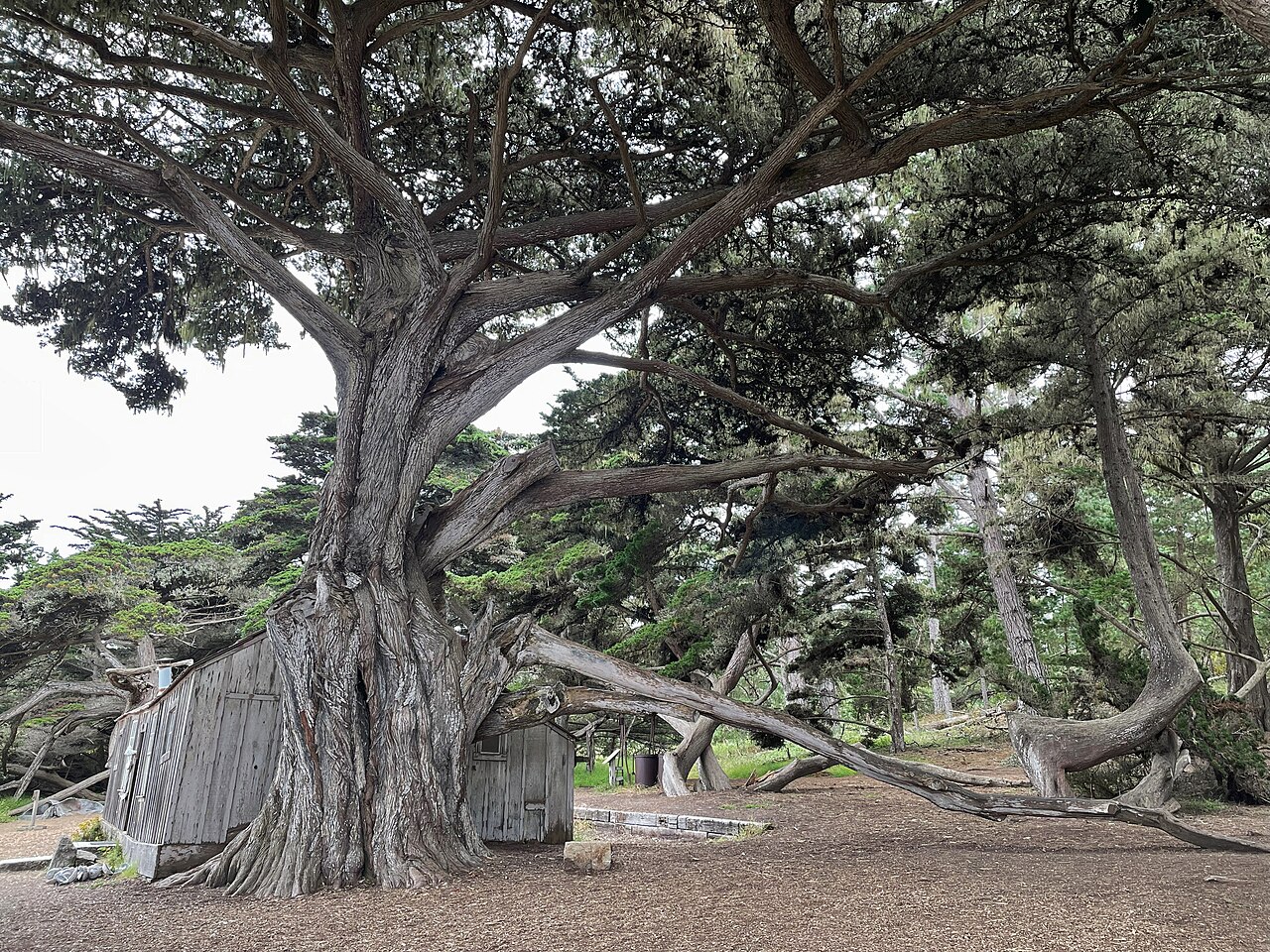
Hesperocyparis macrocarpa (long known as Cupressus macrocarpa), the Monterey cypress, is one of the most instantly recognizable trees on the California coast — and also one of the most narrowly native. Famous for its massive, flat-topped or wind-sculpted crown and for the iconic Lone Cypress of Pebble Beach, it is in truth a glacial relict confined, as a wild tree, to just two small groves on the Monterey Peninsula. Everywhere else you see it growing along the California coast and far beyond, it has been planted.
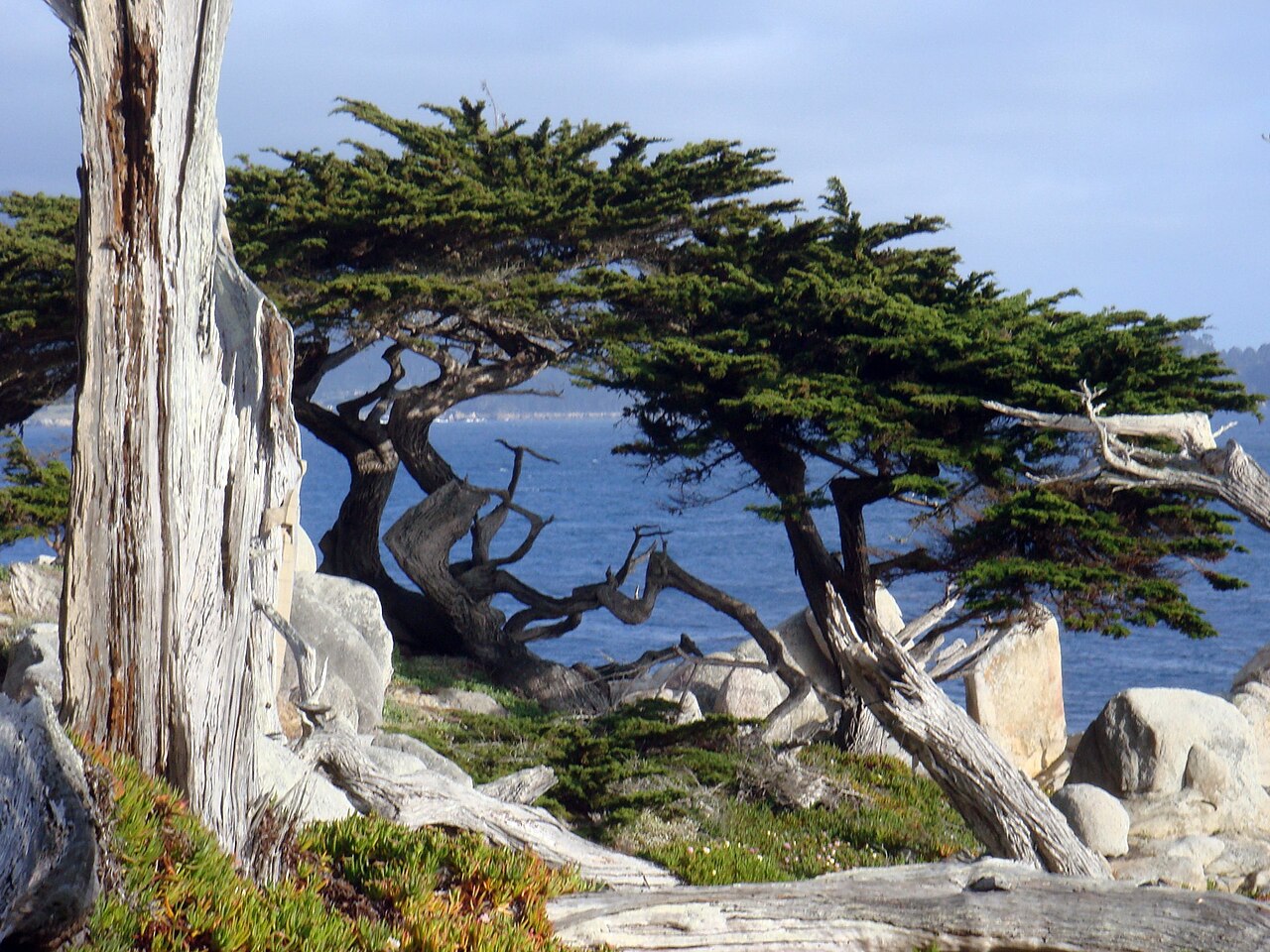
Left to grow unpruned in its sheltered native groves, Monterey cypress becomes a huge tree with a broad, irregular, layered crown and dark, dense, scale-like foliage. On the exposed headlands where the Lone Cypress grows, constant onshore wind trains the same species into the low, flattened, almost bonsai-like form that has become a symbol of the Big Sur and Monterey coastline. The bark is thick, deeply furrowed, and rugged, in sharp contrast with the finer-textured, lighter-foliaged Gowen cypress that shares part of the same peninsula.
Because of its wind tolerance, salt tolerance, and fast growth, Monterey cypress has been planted enormously outside its tiny native range, from windbreaks and hedges throughout coastal California to forestry plantations in places as far away as New Zealand, Australia, and South Africa, where it is often simply called “cypress” or “macrocarpa.” It is important for California gardeners and land managers to understand: this is a widely planted and often naturalized tree, but it is genuinely native only to two groves near Carmel.
Identification
A mature, unpruned Monterey cypress is a large, irregularly shaped conifer, commonly 40 to 70 feet tall with a spread of 20 to 40 feet or more, though old specimens in sheltered native groves can grow considerably larger. Young trees are narrowly conic; with age the crown broadens, flattens, and develops the layered, often asymmetric silhouette the species is known for, especially where exposed to strong, persistent coastal wind.
Bark & Stems
The bark is thick, deeply furrowed, and fibrous, gray-brown to reddish-brown, becoming rugged and plated with age. On old, wind-exposed trees the trunk is often massive, twisted, and buttressed, with branches that sweep low and horizontal rather than upright.
Leaves
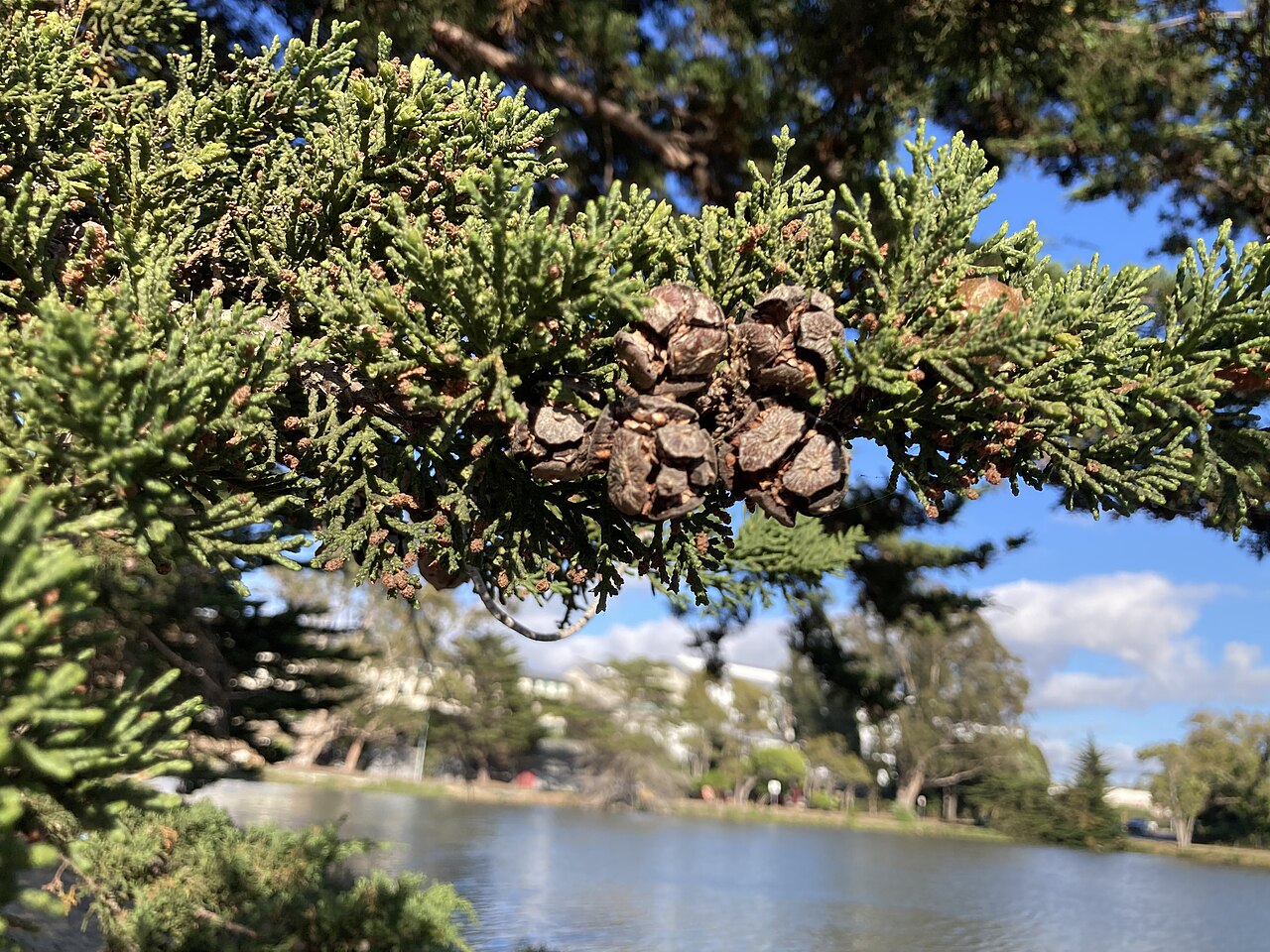
Foliage is made up of tiny, scale-like leaves pressed tightly to rounded, cord-like branchlets, arranged in dense, somewhat flattened sprays. The color is a deep, rich green, noticeably darker than the lighter yellow-green foliage of Gowen cypress. Crushed foliage releases a strong, resinous scent often described as lemony.
Flowers & Fruit
Like other cypresses, Monterey cypress produces no true flowers, only small pollen cones in late winter and separate woody seed cones on the same tree. The seed cones are among the largest of any Hesperocyparis, roughly 1 to 1½ inches across, with thick, knobby scales that mature from green to grayish brown. They often remain closed on the tree for a year or more before opening to release seed.
Quick Facts
| Scientific Name | Hesperocyparis macrocarpa (syn. Cupressus macrocarpa) |
| Family | Cupressaceae (Cypress) |
| Plant Type | Large evergreen conifer tree |
| Mature Height | 40–70 ft (old wild specimens can exceed this) |
| Mature Spread | 20–40 ft, often wider and flat-topped in wind-exposed sites |
| Growth Rate | Fast |
| Sun Exposure | Full Sun |
| Water Needs | Low to moderate; drought and salt tolerant once established |
| Soil Type | Adaptable; well-drained sandy to rocky coastal soils preferred |
| Soil pH | Adaptable, slightly acidic to alkaline |
| Bloom Time | Pollen cones in winter; no showy flowers |
| Flower Color | Not applicable (conifer) |
| Fall Color | None (evergreen) |
| Fruit | Large woody seed cones, 1–1½ in, knobby scales |
| Deer Resistant | Yes |
| USDA Hardiness Zones | 7–10 |
Native Range
Monterey cypress is native only to California, and within California, only to two small relict groves on the Monterey Peninsula in Monterey County: Point Lobos, near Carmel, and Cypress Point / Pescadero Point in Pebble Beach, home to the famous Lone Cypress. It survives there as a glacial relict — a species that was once more widespread along the coast during cooler climatic periods and has since contracted to these two sheltered, fog-influenced headlands.
This is a critical point for gardeners and land managers: outside these two groves, Monterey cypress is not a native tree, even elsewhere along the California coast. It has been planted so extensively as a windbreak, hedge, and ornamental species — and has naturalized so readily from seed in coastal fog belts from San Francisco to Humboldt County and beyond — that many people assume it is native wherever they encounter it. It is not. Treat any Monterey cypress found outside Point Lobos and Cypress Point/Pebble Beach as planted or naturalized, not as a wild native population.
Internationally, Monterey cypress has been planted even more extensively, including large windbreak and forestry plantings in New Zealand, Australia, and South Africa, where it can become locally naturalized. None of that cultivated range should be confused with its true native range, which remains limited to the Monterey Peninsula.
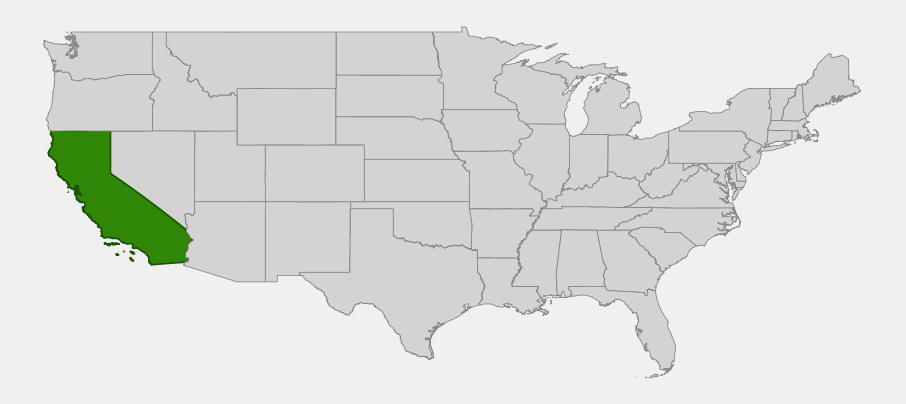
📋 Monterey Cypress’s native range is limited to the California coast, which is not yet covered by one of our regional plant lists.
Growing & Care Guide
Monterey cypress is an easy, fast-growing tree in coastal California gardens, prized for its wind and salt tolerance and its ability to be shaped into windbreaks, hedges, or specimen trees. Because it is genuinely native to only two small groves, plant it as a California native specifically where that is meaningful to your project; elsewhere treat it as a well-adapted regional landscape tree rather than a wildlife-habitat native planting.
Light
Give it full sun. Monterey cypress grows best in open, unshaded sites and is one of the most reliably wind-tolerant conifers for exposed coastal gardens.
Soil & Water
It tolerates a wide range of soils, including thin, rocky, and sandy coastal ground, and performs best with good drainage. Established trees are quite drought tolerant and handle salt spray well, though regular water speeds early growth. Avoid heavy, poorly drained soils, which increase the risk of root and canker diseases in older trees.
Planting Tips
Plant from containers in fall or early spring. Give it plenty of room — mature trees get wide as well as tall — and keep new plantings away from structures and power lines. In hedge or windbreak plantings, space young trees 6 to 10 feet apart and begin shaping early if a dense screen is the goal.
Pruning & Maintenance
Monterey cypress tolerates pruning and shearing well, which is why it has long been used for formal hedges in coastal gardens, but unpruned trees develop the broad, irregular crown the species is admired for in the wild. Older trees are prone to canker diseases (notably coryneum/cypress canker) and to wind damage or limb failure as they age and become top-heavy; periodic inspection of mature specimens near structures or paths is worthwhile.
Landscape Uses
- Coastal windbreaks and hedges, where its wind and salt tolerance are unmatched by most other conifers
- Large specimen tree in parks and open landscapes with room for its eventual spread
- Restoration plantings at Point Lobos and Pebble Beach, using locally sourced seed where appropriate
- Companion planting with coast live oak and bishop pine in coastal native gardens
Wildlife & Ecological Value
Within its tiny native range, Monterey cypress is a keystone tree of the rare closed-cone cypress and coastal headland plant community, and even as a widely planted tree elsewhere it provides significant structural habitat.
For Pollinators
As a wind-pollinated conifer it offers little nectar, but dense cypress stands host insects that in turn feed birds, and the wind-sheltered microclimate inside mature groves supports a wider range of understory flowering plants and their pollinators than the exposed, wind-scoured surrounding headland.
For Birds
The dense, often multi-layered canopy of old Monterey cypress provides valuable roosting and nesting habitat, including for raptors and herons where large planted specimens stand near water; the famous monarch butterfly overwintering groves on the California coast frequently include planted Monterey cypress alongside eucalyptus, because its dense evergreen canopy buffers wind and moderates temperature.
For Mammals
Dense cypress cover, whether in the native groves or in planted windbreaks, offers shelter from wind and weather for small mammals, and old, decaying specimens can provide cavities used by various wildlife.
Ecosystem Role
In its native groves, Monterey cypress anchors one of the rarest plant communities on the California coast, alongside Gowen cypress and bishop pine. Its closed, long-persistent cones tie regeneration to disturbance and fire, while in cultivation its dense, wind-firm canopy makes it one of the most effective living windbreaks for coastal landscapes, indirectly benefiting whatever is planted in its shelter.
Cultural & Historical Uses
Monterey cypress has been a cultural icon of the Monterey Peninsula since at least the 19th century, when its picturesque, wind-shaped form drew the attention of painters, photographers, and early tourists along the newly built 17-Mile Drive. The Lone Cypress at Pebble Beach, estimated to be well over 250 years old, is among the most photographed trees in North America and has served for decades as a visual symbol of the Pebble Beach golf courses and the broader Monterey coast.
Beyond its ornamental fame, Monterey cypress became an important forestry and windbreak species internationally during the 19th and 20th centuries, planted extensively in New Zealand, Australia, and South Africa for shelter and timber. Its wood is moderately durable and has been used locally for fence posts and rough construction, though it has never been a major commercial timber species in California itself.
Because of its narrow natural range, the species has also long been a focus of California conservation efforts, and the two native groves at Point Lobos and Pebble Beach are protected as part of a state natural reserve and private conservation lands, respectively.
Frequently Asked Questions
Is Monterey cypress native to where I see it growing?
Probably not. Monterey cypress is truly native only to two small groves on the Monterey Peninsula — Point Lobos and Cypress Point/Pebble Beach. Almost every other Monterey cypress you see along the California coast, in a hedge, or as a windbreak was planted, or has naturalized from planted trees.
What is the Lone Cypress?
The Lone Cypress is a single, famous, wind-sculpted Monterey cypress growing on a rocky point along 17-Mile Drive in Pebble Beach, within the species’ tiny native range. It is estimated to be well over 250 years old and is one of the most recognized trees in California.
How fast does Monterey cypress grow?
It is a fast-growing conifer, which is part of why it has been planted so widely as a windbreak; young trees can add several feet of height per year under good conditions, slowing as they mature and develop their broad crown.
Is Monterey cypress invasive?
It is not generally classified as a noxious weed, but it does self-seed and naturalize readily in coastal fog-belt areas where it has been planted, sometimes spreading beyond intended plantings. It is not considered invasive in the way some other introduced conifers are, but gardeners outside its native groves should recognize that spontaneous seedlings are naturalized, not native.
Can Monterey cypress be grown as a hedge?
Yes. It tolerates shearing well and has long been used for formal coastal hedges and windbreaks, thanks to its fast growth, dense foliage, and strong tolerance of wind and salt spray.

Looking for a nursery that carries Monterey Cypress?
Browse our native plant nursery directory: California