
California Encelia (Encelia californica)
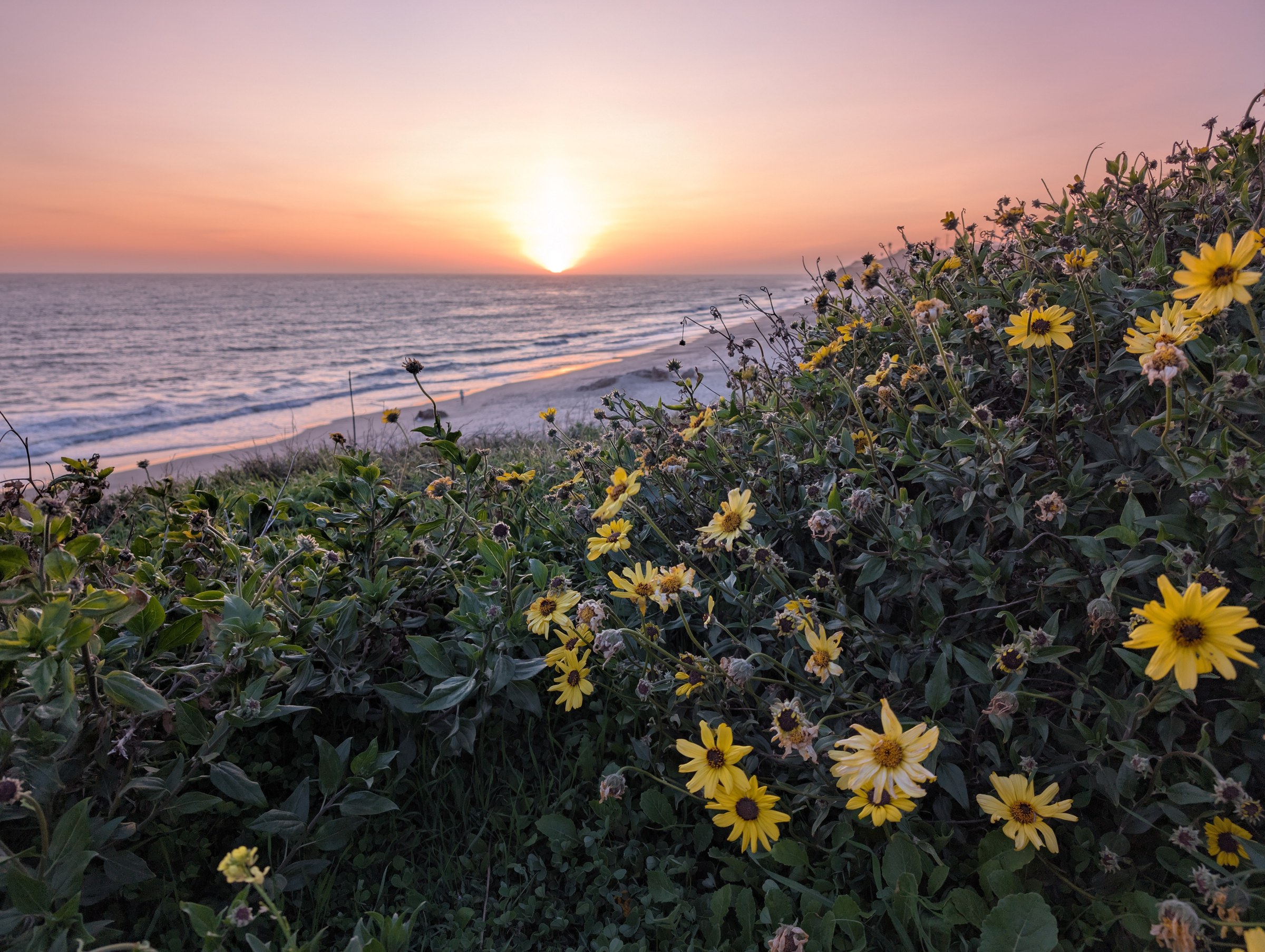
Encelia californica, commonly known as California Encelia or bush sunflower, is a fast-growing, drought-tough shrub that defines the look of Southern California’s coastal bluffs and canyons. From late winter through spring it covers itself in cheerful yellow daisy-like flowers with a dark, almost black-brown center, a combination that makes it instantly recognizable along hiking trails and roadside cuts from San Luis Obispo County to the Mexican border.
California Encelia is a foundation species of coastal sage scrub, the low, aromatic shrubland that once covered huge stretches of the Southern California coast and is now one of the most reduced and fragmented native plant communities in the country. Where coastal sage scrub survives — on undeveloped bluffs, steep slopes, and canyon walls — California Encelia is very often one of the dominant shrubs, growing alongside California sagebrush and black sage in a community adapted to mild, wet winters and long, dry summers.
For gardeners in its native range, California Encelia is about as forgiving as a native shrub gets: fast to establish, almost maintenance-free once rooted in, and reliably covered in flowers for months with no supplemental water. It does, however, go through a scruffy, leaf-dropping phase in the driest part of summer, which is a normal drought response rather than a sign of a dying plant.
Identification
California Encelia is a rounded, somewhat sprawling subshrub or shrub, usually 2 to 5 feet tall and at least as wide, with slender, flexible branches that can arch outward over a bank or wall. The whole plant has a soft, grayish-green cast from fine hairs on the leaves and stems.
Leaves
Leaves are simple, lance-shaped to narrowly triangular, 1 to 3 inches long, with smooth or faintly toothed margins and a slightly rough, grayish-green surface. In response to summer drought, the plant drops a large portion of its leaves, a semi-deciduous habit that conserves water; fresh green growth returns with fall and winter rain.
Flowers
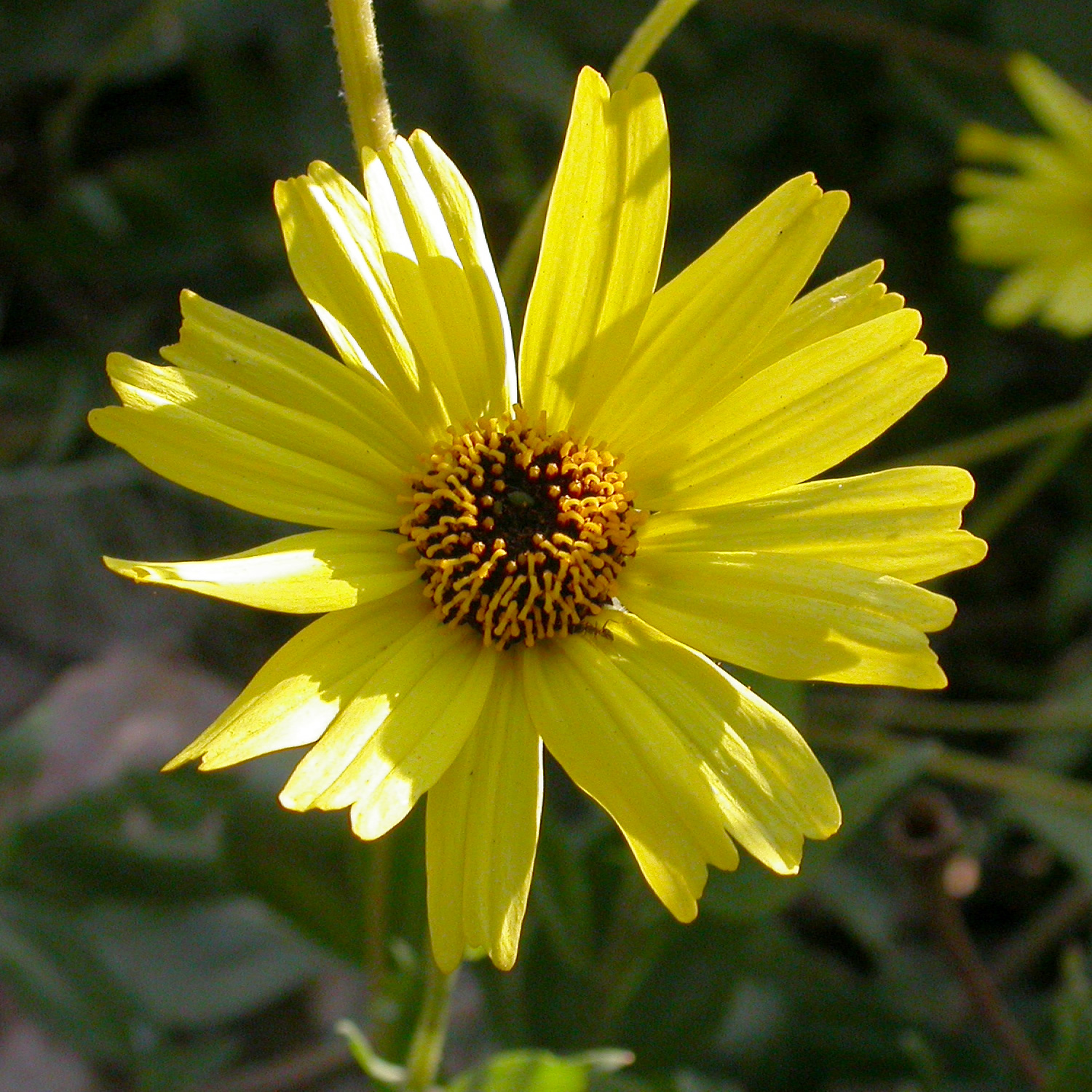
Flower heads are 2 to 3 inches across, with 10 to 20 golden-yellow ray florets surrounding a disk of dark maroon to blackish-brown disk florets — a notably dark center that helps distinguish this species from its desert relative, brittlebush (Encelia farinosa), which usually has a yellow or yellow-brown disk. Flowers are held on long, mostly leafless stalks well above the foliage, and peak bloom runs from February into June, with scattered flowers possible after rain at other times of year.
Fruit & Seeds
After bloom, each disk floret produces a small, flattened, papery achene. The dry seed heads persist on the plant for a time after flowering and are a minor food source for seed-eating birds before the stalks eventually break down.
Quick Facts
| Scientific Name | Encelia californica Nutt. |
| Family | Asteraceae (Aster / Daisy) |
| Plant Type | Semi-deciduous subshrub / shrub |
| Mature Height | 2–5 ft |
| Mature Spread | 3–5 ft, sometimes wider when sprawling |
| Growth Rate | Fast |
| Sun Exposure | Full Sun |
| Water Needs | Low; very drought tolerant once established, best with no summer water |
| Soil Type | Well-drained sandy, rocky or clay-loam soils; tolerates poor soil |
| Soil pH | Slightly acidic to alkaline (about 6.0–8.0) |
| Bloom Time | February – June, sporadic after rain other months |
| Flower Color | Golden yellow rays; dark maroon-brown disk |
| Fall Color | None; drops leaves in summer drought instead |
| Fruit | Small, flattened papery achenes |
| Deer Resistant | Moderately (aromatic foliage) |
| USDA Hardiness Zones | 9–11 |
Native Range
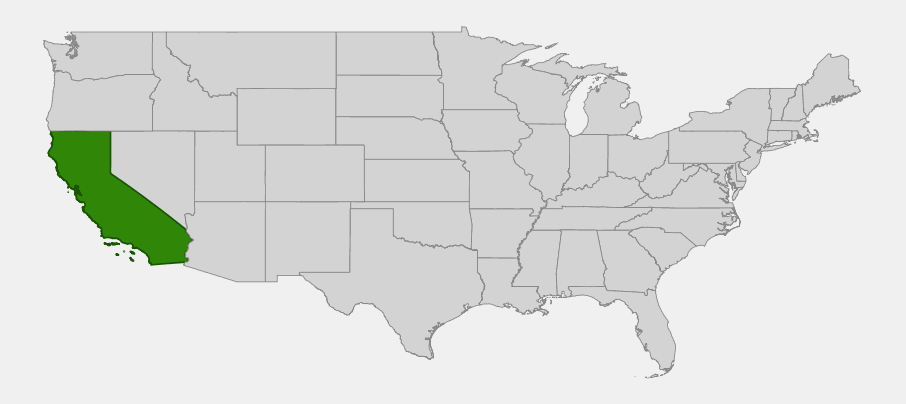
California Encelia is native to a narrow coastal strip of Southern California, from San Luis Obispo County south through Santa Barbara, Ventura, Los Angeles, Orange, Riverside and San Diego counties, continuing into northwestern Baja California, Mexico. It is almost entirely a coastal and near-coastal plant, rarely found more than a few miles inland or much above 2,000 feet elevation.
Within that range it is a dominant or co-dominant shrub of coastal sage scrub, growing on dry, sunny bluffs, canyon walls, and slopes, often on the drier, south- or west-facing exposures where summer heat and aridity are most intense. It typically grows alongside California sagebrush, black sage, California buckwheat, and lemonade berry in a shrubland adapted to the region’s Mediterranean climate of wet winters and long, rainless summers.
Coastal sage scrub is one of the most reduced native plant communities in California, with a large share converted to agriculture and urban development over the past century, particularly in coastal Los Angeles, Orange, and San Diego counties. California Encelia itself remains common where this habitat survives, but planting it in gardens, parks, and restoration projects helps support the broader coastal sage scrub ecosystem and the specialized wildlife that depends on it.
📋 Regional plant lists featuring California Encelia: Not yet featured on a plantnative.org regional plant list (coverage for California is still being developed).
Growing & Care Guide
California Encelia is one of the easiest native shrubs to grow within its climate range, rewarding minimal care with months of bright yellow bloom. The main trick to success is resisting the urge to baby it with extra summer water.
Light
Plant in full sun. California Encelia comes from open, exposed coastal bluffs and performs best, bloomiest, and most compact in a spot that gets direct sun for most of the day; in too much shade it stretches and flowers less.
Soil & Water
This shrub thrives in lean, fast-draining soil, whether sandy, rocky, or clay-loam, and adapts to poor soils that would stress many garden plants. Give it regular water only during its first year or two to establish a deep root system; after that, little to no supplemental irrigation is needed, and in fact too much summer water can cause root rot and shorten the plant’s life. Many California gardeners find it thrives entirely on rainfall once established.
Planting Tips
Set out container plants in fall or early winter, timed to take advantage of the region’s winter rains for establishment. Choose a well-drained site such as a slope, bank, or raised bed, and avoid low spots where water collects. Space plants 3 to 5 feet apart to allow for their naturally sprawling habit.
Pruning & Maintenance
Expect the plant to look scruffy and partly bare in late summer as it drops leaves in response to drought; this is normal and not a sign of distress. A light pruning after the main bloom flush, removing spent flower stalks and shaping lightly, keeps plants tidier and encourages denser growth. Avoid heavy pruning into bare wood, and skip fertilizer, which tends to produce weak, floppy growth on this naturally lean-soil species.
Propagation
California Encelia is easily propagated from seed sown in fall, or from cuttings of semi-hardwood growth taken in late spring or early summer, which root readily. Self-sown seedlings often appear near established plants in a garden setting.
Landscape Uses
- Coastal sage scrub restoration and habitat gardens, as a foundation shrub
- Slope and bank stabilization, thanks to its spreading roots and fast establishment
- Low-water and Mediterranean-style gardens needing reliable winter-into-spring color
- Coastal bluff and dune-edge plantings, where it tolerates wind and salt air
- Pollinator gardens, for its long, reliable bloom season
Wildlife & Ecological Value
As one of the most widespread and reliably flowering shrubs of coastal sage scrub, California Encelia supports a wide range of insects and, indirectly, the birds and other wildlife that feed on them.
For Pollinators
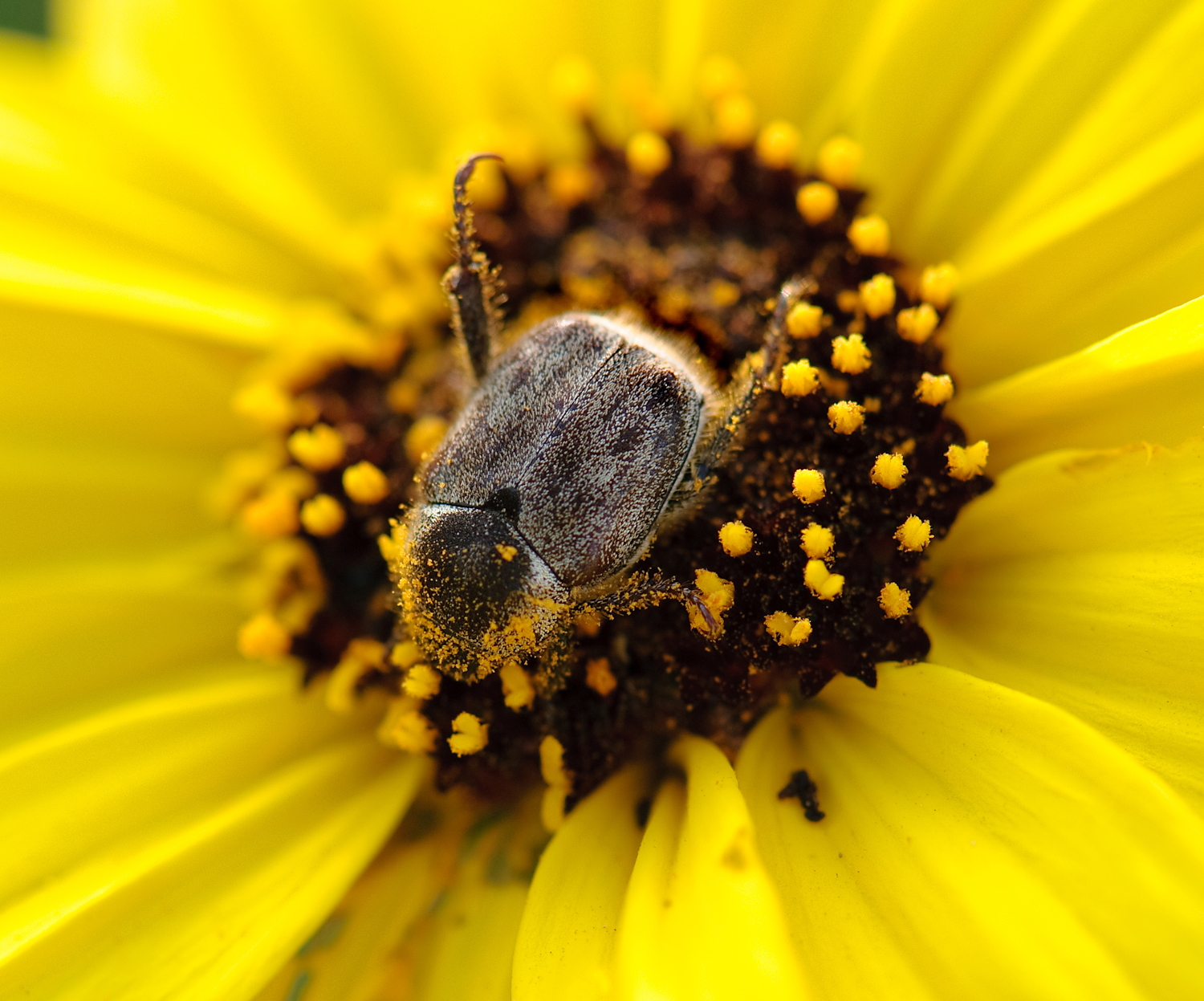
The abundant flower heads attract native bees, honeybees, beetles, and butterflies throughout the long winter-to-spring bloom season, a period when many other coastal plants are not yet flowering. The open, flat disk makes pollen and nectar easy for a wide range of insects to access.
For Birds
Small songbirds forage through California Encelia stands for insects drawn to the flowers, and the dense, twiggy growth offers cover and nesting sites for birds adapted to coastal scrub habitat.
For Mammals
The dense, sprawling growth provides shelter for small mammals typical of coastal sage scrub, such as native mice and rabbits, while the aromatic foliage makes the plant less palatable to deer than many neighboring species.
Ecosystem Role
California Encelia is a foundation species of coastal sage scrub, helping define the structure of a plant community that supports numerous rare and specialized animals, including several sensitive bird species associated with this habitat type. Its fast growth and deep roots also help stabilize erosion-prone coastal slopes and canyon walls.
Cultural & Historical Uses
Coastal sage scrub, the plant community California Encelia helps define, was a central part of life for the Indigenous peoples of Southern California’s coast, including the Chumash, Tongva, and Kumeyaay, who drew food, medicine, fiber, and building material from the diverse shrubs and herbs of this habitat over thousands of years. California Encelia’s close desert relative, brittlebush (Encelia farinosa), has a well-documented history of use by desert peoples such as the Cahuilla and Seri, who heated its aromatic resin and applied it to relieve toothaches and chest pain, and also used the resin as a waterproofing agent and varnish.
Documentation of comparably specific traditional uses for California Encelia itself is thinner, and this page does not claim uses for this species that are properly documented only for its desert relative. What is clear is that California Encelia, like brittlebush, produces an aromatic resinous sap, and as a widespread, abundant shrub across the coastal lowlands it would have been a familiar, available plant to the coastal peoples who lived among it.
In more recent history, California Encelia has become an emblem of coastal sage scrub restoration efforts across Southern California, as conservationists and home gardeners work to replant native shrubland lost to development. Its fast growth and reliable bloom have made it one of the most widely used species in habitat restoration projects along the coast, from public parklands to private hillside gardens.
Frequently Asked Questions
Is California Encelia the same as brittlebush?
No, though they are closely related. Brittlebush (Encelia farinosa) is a grayer, more silvery desert species found in the Mojave and Sonoran deserts, while California Encelia is a greener coastal species found on bluffs and slopes near the ocean. Their flowers are similar, but California Encelia’s disk is typically darker.
Why does my California Encelia look dead in late summer?
It likely is not dead. This species naturally drops many of its leaves during the hottest, driest part of summer as a drought survival strategy, and it typically flushes with fresh green growth once fall and winter rains return. Avoid cutting it back hard during this phase.
Does California Encelia need regular watering?
Only while it is establishing, in its first one to two years. After that, it generally does best with little to no supplemental summer water; overwatering established plants is a common cause of root rot and early decline.
Where can I grow California Encelia outside of California?
It is reliably hardy only in mild, nearly frost-free climates similar to coastal Southern California, roughly USDA zones 9 through 11. In colder regions it is not a practical garden plant and is best enjoyed in its native range or in a protected container that can be moved indoors.
What animals use California Encelia?
Its flowers draw many native bees, beetles, and butterflies, especially in late winter and spring when few other coastal plants are blooming. The dense branching also gives cover to small birds and mammals typical of coastal sage scrub.

Looking for a nursery that carries California Encelia?
Browse our native plant nursery directory: California