
Rough Fescue (Festuca campestris)
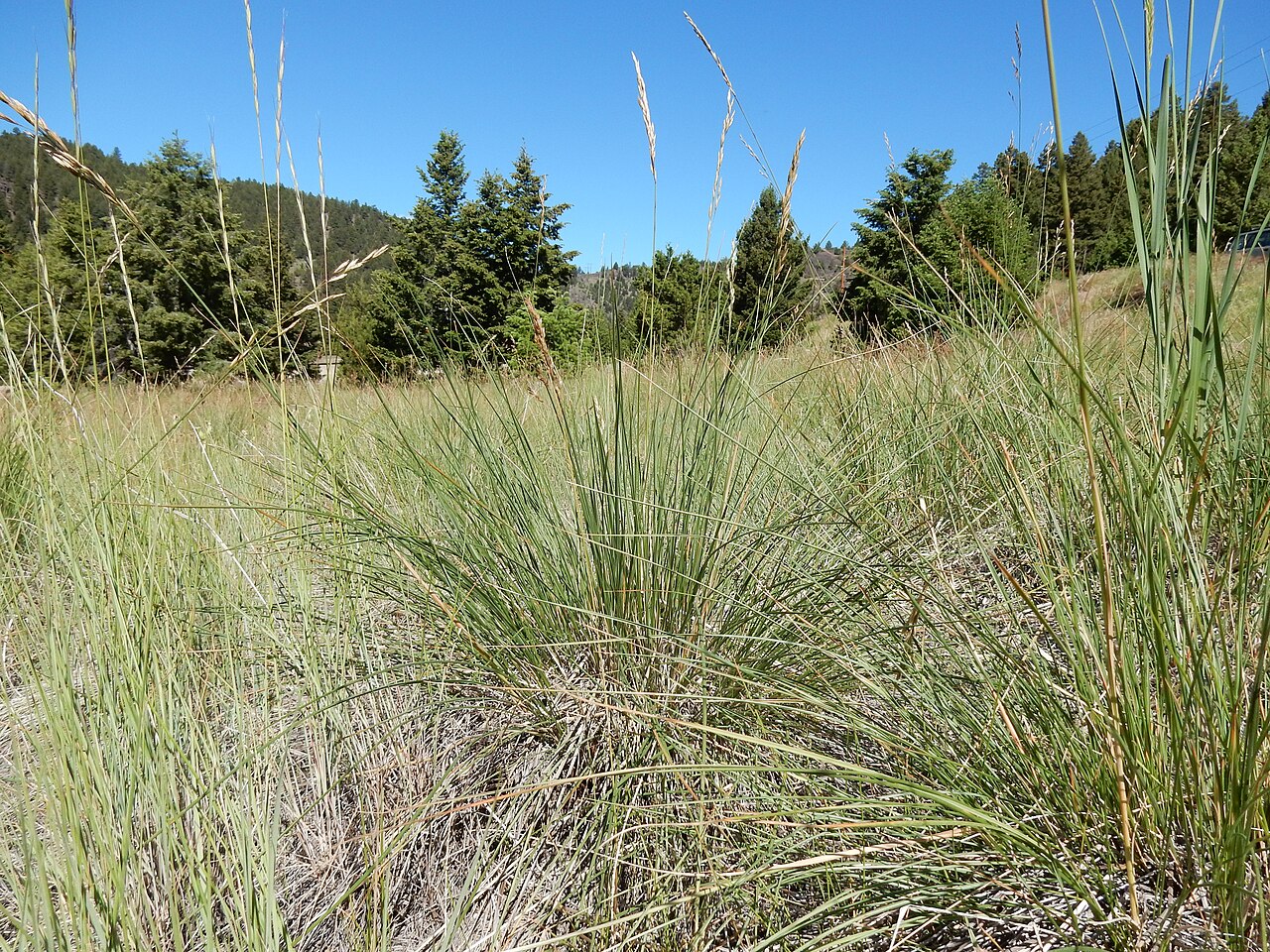
Festuca campestris, commonly known as Rough Fescue or Mountain Rough Fescue, is a long-lived, cool-season perennial bunchgrass of the northern Rocky Mountains and Pacific Northwest interior. A member of the Poaceae (grass family), it forms dense, deep-rooted tussocks that historically dominated vast stretches of montane and foothill grassland from British Columbia south into Montana, Idaho, and the drier mountains of eastern Oregon and Washington.
Rough Fescue grasslands were once among the most extensive native plant communities of the northern Rockies and Canadian prairie foothills, supporting large grazing herds long before European settlement. The species is slow to establish and extremely slow to recover once overgrazed, and heavy livestock grazing over the past century has eliminated or badly degraded many of the fescue grasslands that once covered the region — a loss that makes surviving stands, and restoration plantings, ecologically significant.
In the garden, Rough Fescue is valued as a tough, long-lived, low-maintenance native bunchgrass for cool, dry climates, forming attractive clumps of fine, blue-green foliage that persist through winter as a tan, straw-colored thatch.
Identification
Rough Fescue grows as a dense, rounded bunchgrass, typically 1 to 2 feet tall in foliage, with flowering stems rising to 2 to 3.5 feet. Clumps slowly widen over many years but do not spread by rhizomes, so they remain discrete, well-defined tussocks rather than forming a spreading sod.
Leaves & Base
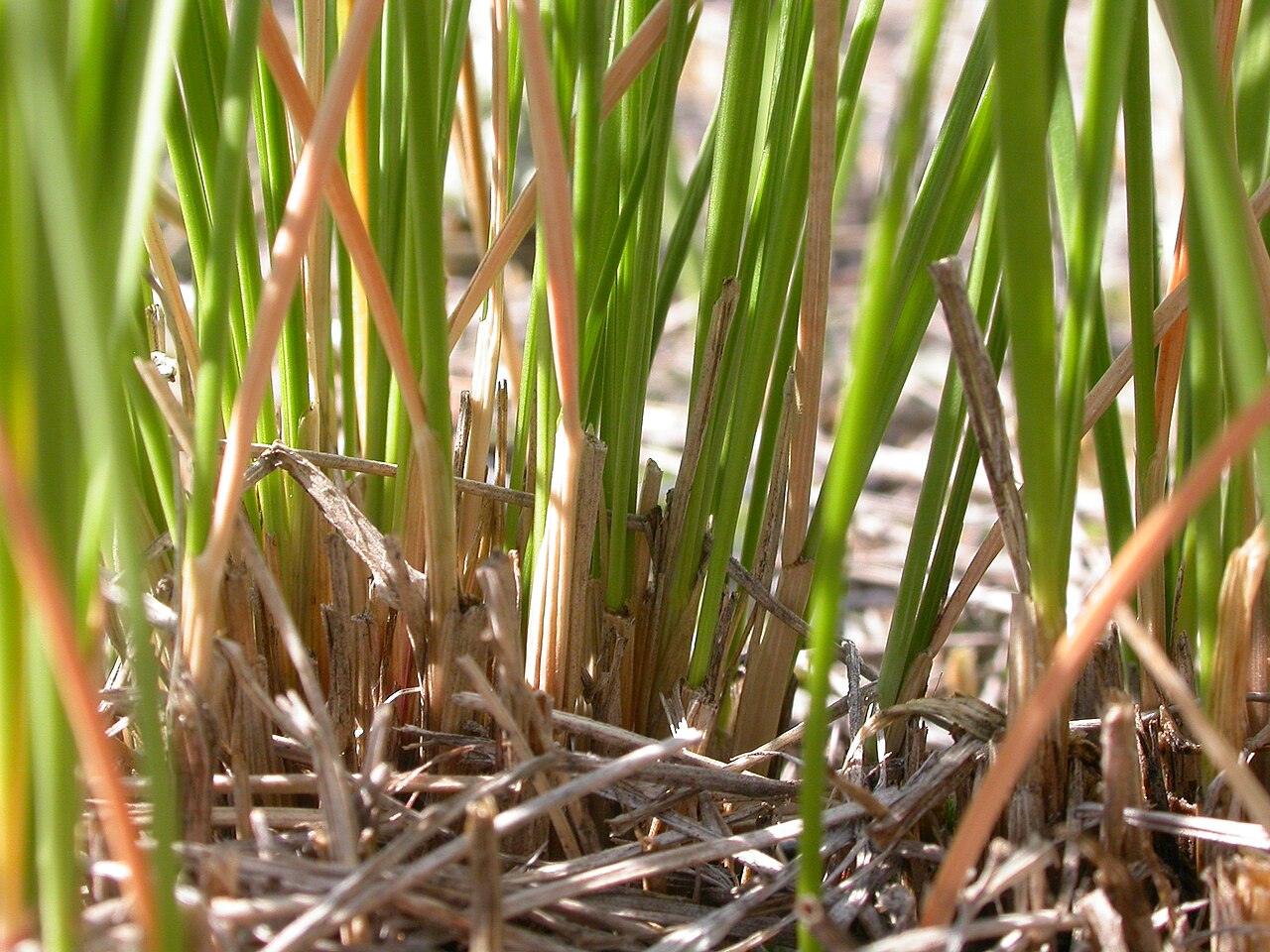
The narrow, rolled or folded leaf blades are blue-green to gray-green, rough to the touch on the upper surface (the source of the common name), and mostly basal, forming a dense tuft. A distinctive identification feature is that old leaf blades abscise, or break away, from their persistent sheaths rather than staying attached, leaving a buildup of tan, fibrous thatch around the base of mature plants.
Flowers & Seedheads
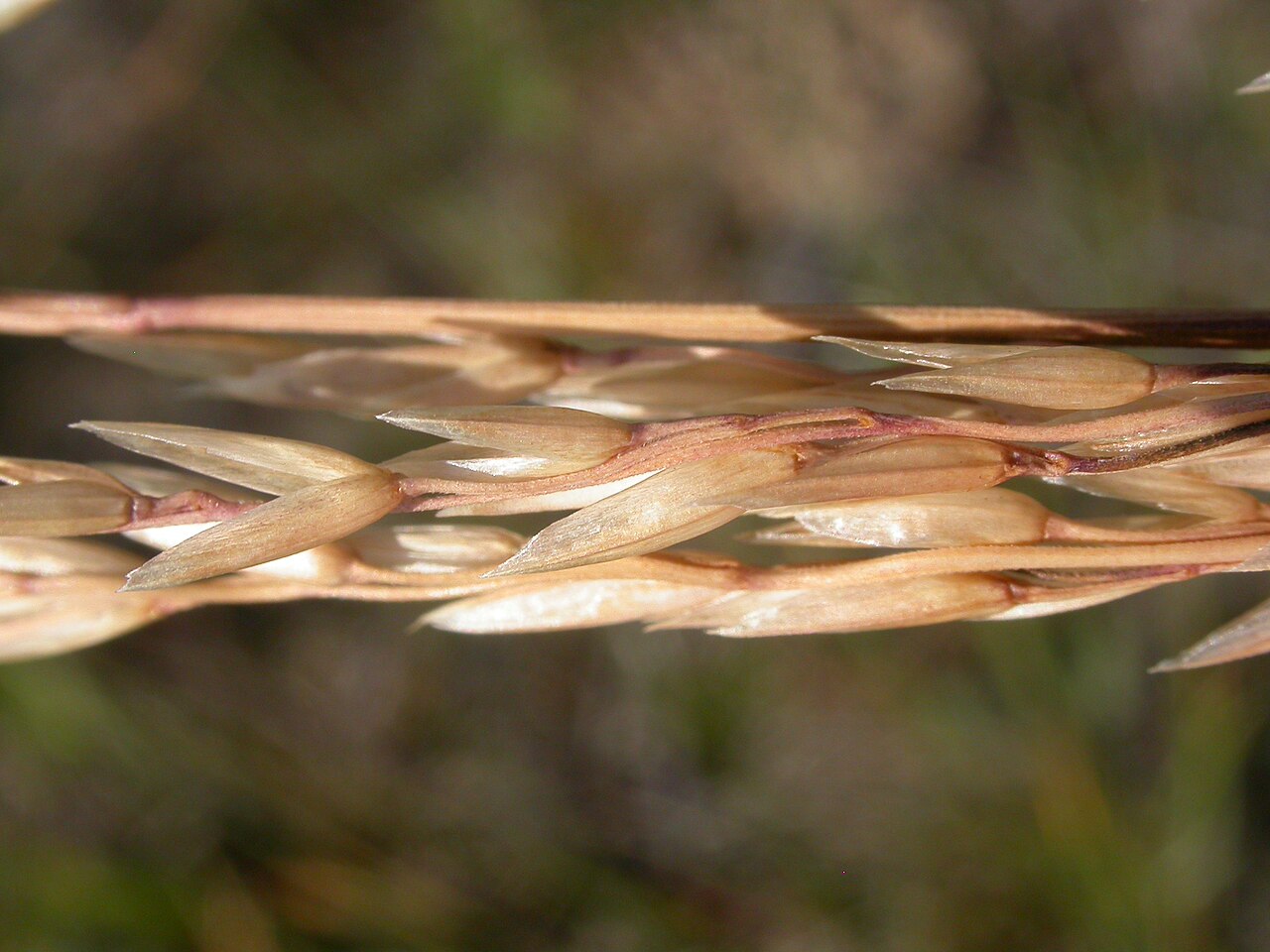
Flowering stems rise above the foliage in early summer, bearing narrow, somewhat one-sided panicles 4 to 8 inches long. The spikelets are purplish to greenish at first, maturing to a light tan, with lemmas that are unawned or only very short-awned — a useful feature for telling Rough Fescue apart from the more widely planted Idaho Fescue, which generally shows finer, more uniformly gray-green foliage.
Roots
Rough Fescue is deeply and densely rooted, an adaptation that allows established plants to survive cold winters, dry summers, and occasional grazing, but also makes the species notably slow to establish from seed and slow to recover once a stand is damaged.
Quick Facts
| Scientific Name | Festuca campestris |
| Family | Poaceae (Grass) |
| Plant Type | Perennial Bunchgrass |
| Mature Height | 1–2 ft foliage; flower stalks to 3.5 ft |
| Mature Spread | 1–2 ft clump diameter |
| Growth Rate | Slow |
| Sun Exposure | Full Sun to Part Shade |
| Water Needs | Low to Moderate |
| Soil Type | Well-drained loam or rocky soil |
| Soil pH | 6.0–7.5 (neutral) |
| Bloom Time | June – July |
| Flower Color | Purplish-green, maturing tan |
| Fall Color | Golden tan |
| Deer Resistant | Moderate (grazed, but slow to recover) |
| USDA Hardiness Zones | 3–7 |
Native Range
Rough Fescue is native to the northern Rocky Mountains and interior Pacific Northwest, found in Montana, Idaho, eastern Oregon, and eastern Washington in the United States, and extending north through British Columbia, Alberta, and southwestern Saskatchewan in Canada. It is not native to Wyoming or the central and southern Rockies, where it is replaced by related fescue species.
Within this range it grows on montane and foothill grasslands, open ponderosa pine and Douglas-fir woodland understories, and subalpine meadows, typically between about 2,000 and 7,500 feet in elevation. It was historically the dominant grass across huge areas of the northern prairie-foothill transition and intermountain valleys, though extensive areas have been lost to cultivation and heavy grazing.
Outside its native mountain West range, Rough Fescue is not commonly grown and is generally unavailable or poorly adapted to warmer, wetter, or lower-elevation climates.
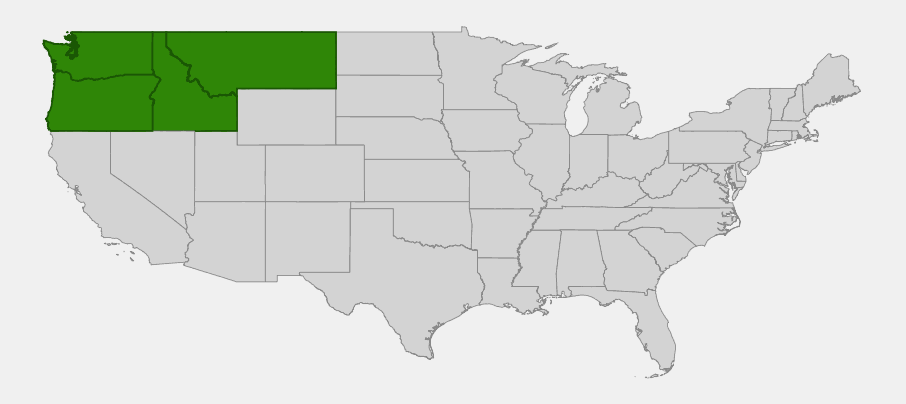
📋 Regional plant lists featuring Rough Fescue: Montana & Wyoming (native to Montana only, not Wyoming) · Idaho, Eastern Oregon & Eastern Washington
Growing & Care Guide
Rough Fescue is a tough, long-lived bunchgrass for cool, dry mountain-climate gardens, but it is slow to establish and rewards patience rather than quick results.
Light
Plant in full sun for the densest, most compact tussocks, though established plants tolerate light to part shade, particularly beneath an open woodland canopy similar to its native ponderosa pine and Douglas-fir habitats.
Soil & Water
Rough Fescue prefers well-drained loam or rocky mountain soils of near-neutral pH and does not tolerate heavy, poorly drained, or consistently wet ground. Once established, it is drought tolerant and needs little supplemental water, though it performs best with some moisture during the growing season rather than extreme aridity. Avoid summer irrigation regimes suited to lawn turf, which favor weeds and can rot the crown.
Planting Tips
Establish from container plants or direct seeding in fall, allowing a full growing season or more before expecting a filled-in appearance; this species germinates and grows more slowly than many common native grasses. Space plants 12 to 18 inches apart for a naturalistic bunchgrass planting. Keep competing weeds down during establishment, since young plants compete poorly with faster-growing annuals.
Pruning & Maintenance
Little maintenance is needed once established. Cutting or burning in late winter can refresh old, thatchy clumps, but Rough Fescue recovers slowly from heavy disturbance, so mowing or grazing should be light and infrequent rather than routine. Avoid repeated close mowing, which the species tolerates poorly compared with true lawn grasses.
Landscape Uses
Rough Fescue fits naturally into several native landscape styles:
- Montane meadow restoration and native grassland plantings
- Dry, cool-climate ornamental grass for structure and winter texture
- Erosion control on slopes in its native elevation range
- Wildlife habitat plantings supporting grassland birds and insects
- Open woodland understory beneath ponderosa pine or Douglas-fir
Conservation Note
Much of the Rough Fescue grassland that once covered the northern Rockies and Canadian prairie foothills has been lost to cultivation or degraded by heavy, continuous grazing, since the species recovers very slowly once overgrazed. Restoration plantings and conservative grazing management are valued tools for protecting the fescue grasslands that remain.
Wildlife & Ecological Value
Rough Fescue grasslands are a foundational habitat type across the northern Rocky Mountain region, supporting a distinct community of grassland wildlife.
For Birds
Grassland birds, including various sparrows and other ground-nesting species, use dense Rough Fescue tussocks for nesting cover and foraging, particularly in intact native grasslands where the species still dominates.
For Mammals
Elk, deer, and historically bison grazed extensively on Rough Fescue grasslands, and the species remains an important forage grass for both wildlife and livestock, though its slow recovery from heavy grazing means it is best managed conservatively.
For Pollinators
While wind-pollinated and not a nectar source itself, Rough Fescue grasslands support the diverse native wildflowers that grow among the bunchgrass tussocks, which in turn provide forage for native bees and other pollinators.
Ecosystem Role
As a long-lived, deep-rooted dominant grass, Rough Fescue stabilizes soil, builds organic matter through its persistent thatch, and structures entire montane grassland plant communities. Its slow recovery from disturbance makes intact fescue grasslands a marker of long-term ecological stability and a priority for conservation.
Cultural & Historical Uses
Rough Fescue grasslands supported large herds of bison, elk, and deer across the northern Rockies and Canadian prairie foothills for thousands of years before European settlement, and Indigenous peoples of the region relied on the wildlife these grasslands sustained. The grass itself was not a significant direct-use plant, but the ecosystem it dominated was central to regional subsistence patterns.
Following European settlement, Rough Fescue grasslands became prime cattle range, and extensive areas were converted to cropland or degraded by heavy, continuous grazing — a land-use history that has made the species a focus of rangeland and grassland conservation research across Montana, Idaho, and western Canada.
Today, Rough Fescue is used mainly in native grassland restoration, conservative rangeland management, and increasingly in native plant gardens seeking an authentic, low-water alternative to traditional lawn and ornamental grasses in its native mountain West range.
Frequently Asked Questions
Is Rough Fescue the same as Idaho Fescue?
No, though they are closely related and often grow together. Rough Fescue generally has coarser, more robust foliage, unawned or very short-awned lemmas, and the persistent sheath thatch at its base, while Idaho Fescue tends to be finer-leaved and more uniformly gray-green.
Why is Rough Fescue slow to establish?
It is a long-lived, deeply rooted bunchgrass adapted to stable, undisturbed grassland conditions, which means it invests heavily in root development early on rather than quick top growth. This same trait makes it slow to recover from overgrazing or disturbance once established.
Can Rough Fescue be mowed like a lawn?
Not well. It tolerates light, infrequent cutting but does not recover quickly from repeated close mowing the way true lawn grasses do, so it is best used as an ornamental bunchgrass or meadow grass rather than turf.
Is Rough Fescue native to Wyoming?
No. Despite being commonly grouped with Montana in regional references, Rough Fescue’s native range does not extend into Wyoming; it is replaced there by other fescue species.
Why are Rough Fescue grasslands considered important to conserve?
They were once one of the dominant native grassland types of the northern Rockies and Canadian prairie foothills, and because the species recovers so slowly from heavy grazing or cultivation, intact stands represent long-term ecological stability that is difficult to restore once lost.

Looking for a nursery that carries Rough Fescue?
Browse our native plant nursery directory: Montana · Idaho · Oregon · Washington