Fishhook Barrel Cactus (Ferocactus wislizeni)
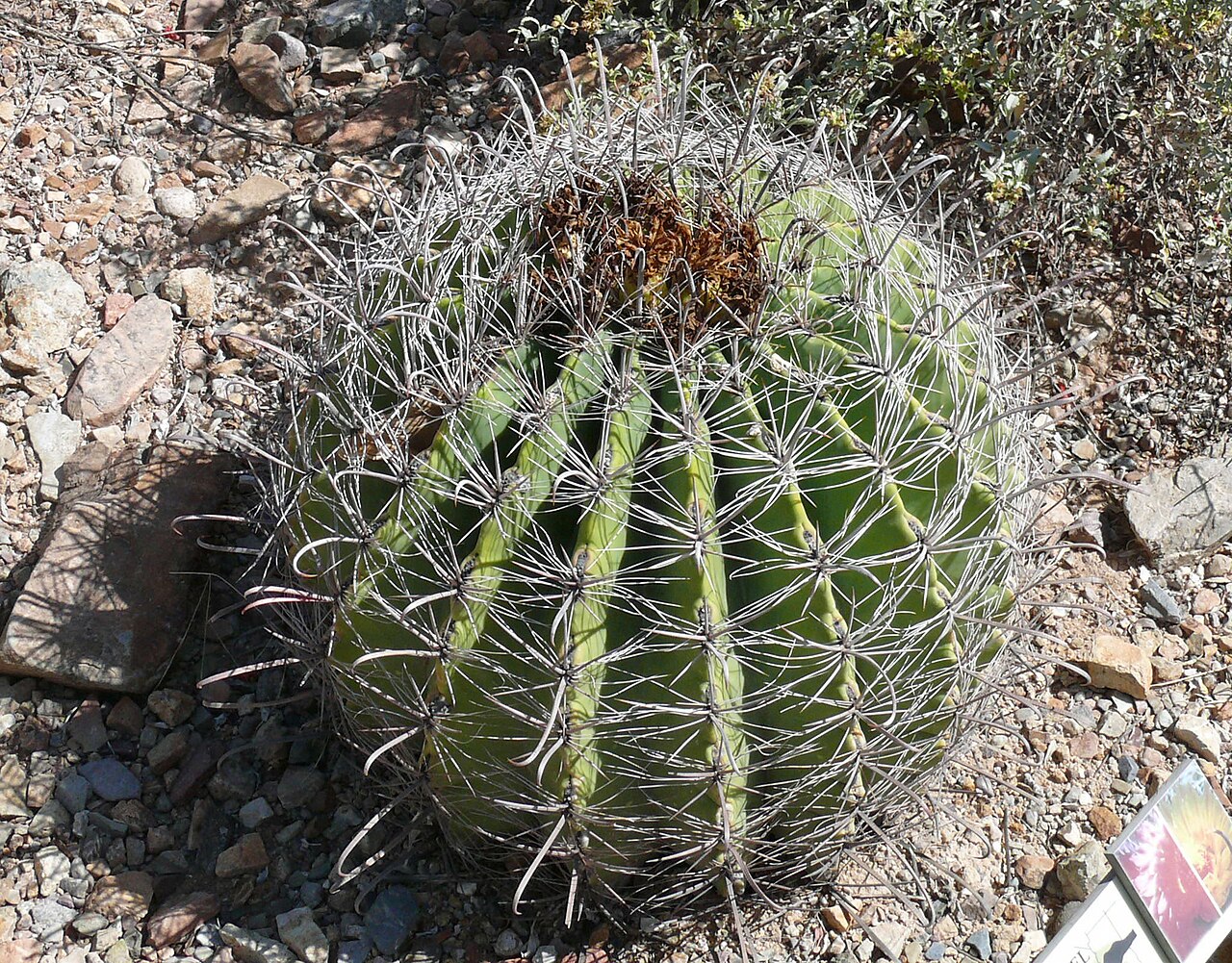
Ferocactus wislizeni, commonly known as Fishhook Barrel Cactus or Candy Barrel Cactus, is one of the signature large cacti of the Sonoran and Chihuahuan Deserts. A member of the Cactaceae (cactus family), it forms a stout, ribbed, barrel- to column-shaped stem armed with strongly hooked central spines that give the species its common name. It is native to southern Arizona, southern New Mexico, and the far western tip of Texas around El Paso, extending south into the Mexican states of Sonora, Chihuahua, and beyond.
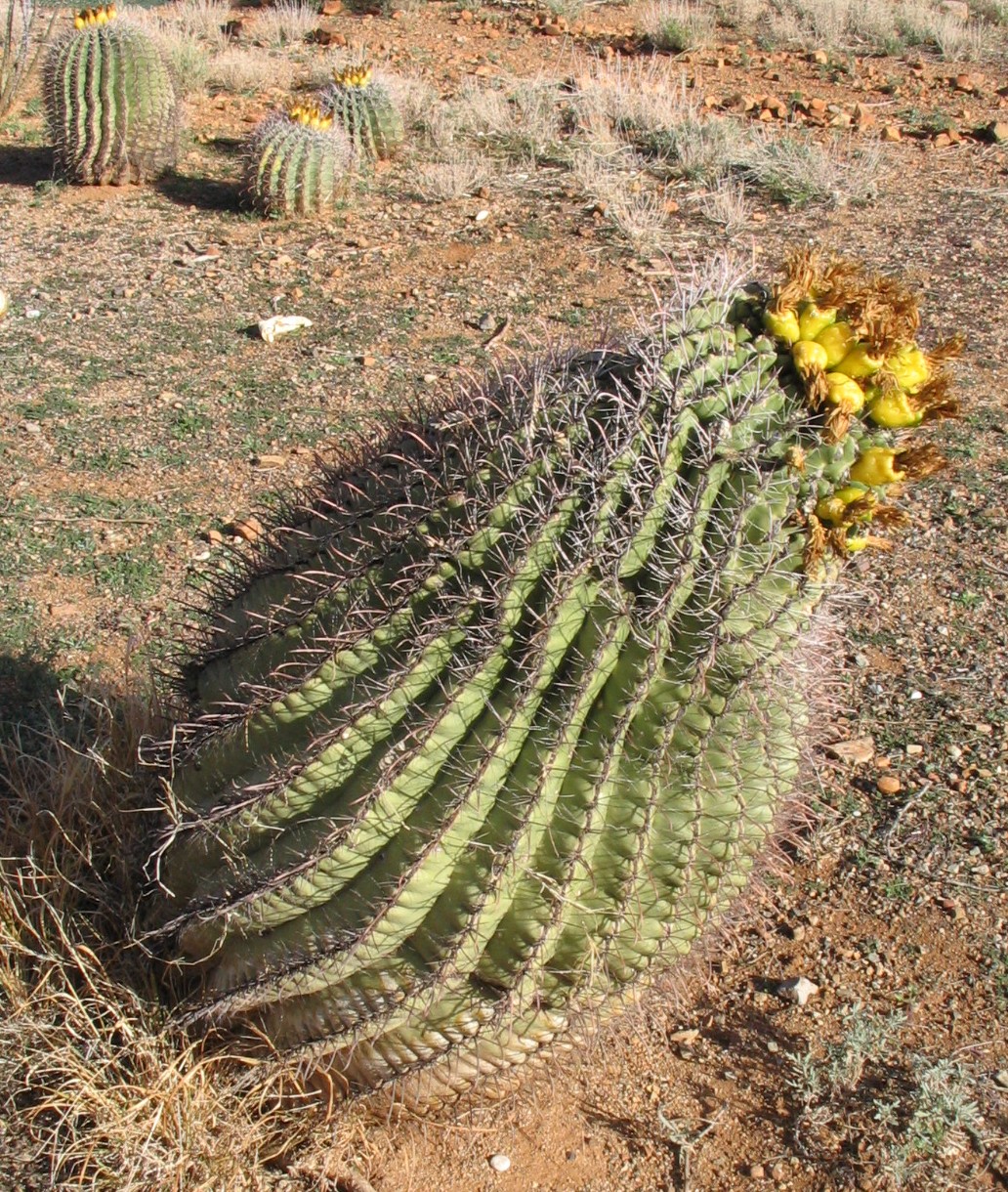
Fishhook Barrel Cactus is a familiar sight across the Sonoran Desert, often growing scattered among paloverde, saguaro, and desert grassland vegetation on rocky slopes, bajadas, and flats. Individual plants grow slowly but can live for well over a century, developing the large, deeply ribbed barrels that make older specimens so distinctive. Many older plants lean noticeably toward the south, a growth habit shared with other barrel cacti.
Like other native barrel cacti, Fishhook Barrel Cactus is protected under Arizona’s native plant law, which restricts collecting or transporting wild specimens without a permit. It should never be removed from the wild; gardeners who want one should buy nursery-propagated plants instead.
Identification
Fishhook Barrel Cactus forms a single, unbranched, barrel- to short-column-shaped stem, typically 2 to 6 feet tall and up to 2 feet in diameter at maturity, though exceptional old plants can grow taller. The stem is strongly ribbed, usually with 20 to 30 vertical ribs running its length.
Stems
The stem is a deep blue-green beneath its spine cover and noticeably rounder and more barrel-shaped than the more cylindrical form of its desert relative, the California Barrel Cactus. It rarely branches, remaining a single large barrel for most of its life.
Spines
Each areole bears several stout central spines, the lowermost of which is flattened and strongly hooked at the tip — the “fishhook” that gives the species its name — along with numerous straighter radial spines. Spine color ranges from red or pink in fresh growth to gray, tan, or straw-colored with age, often banded. The hooked spines are strong enough to snag clothing, skin, or animal fur and should be handled with heavy gloves or tools, never bare hands.
Flowers & Fruit
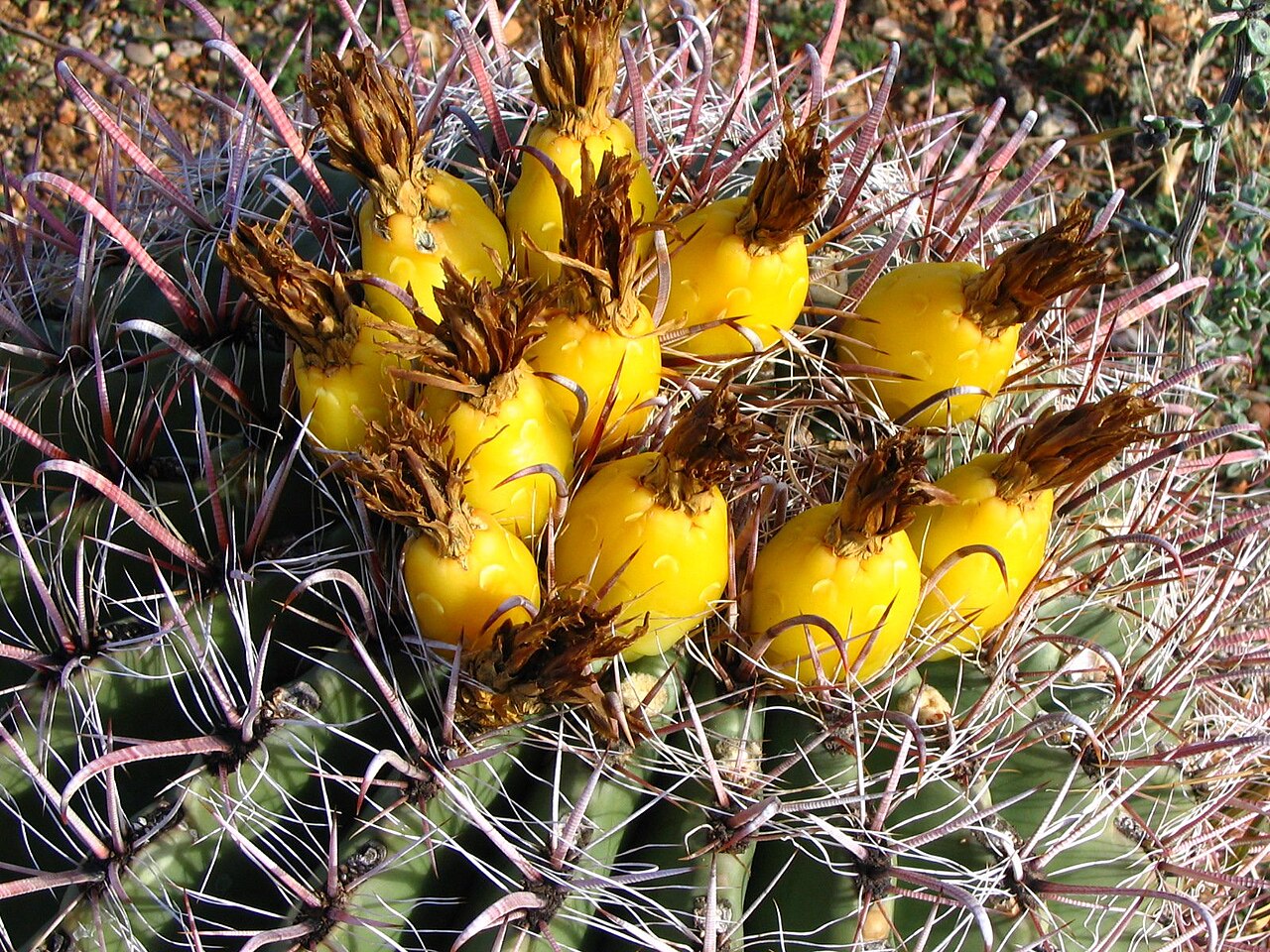
Flowers appear in a ring around the crown in late summer, typically August through October, after the Southwest’s summer monsoon rains, and range from yellow to orange or reddish-orange, each bloom 1.5 to 2.5 inches across. The fruit that follows is a fleshy, bright yellow, barrel-shaped berry about an inch long, tipped with persistent dried floral remains. Fruits ripen in fall and often persist on the crown through winter, making them an important late-season food source for desert wildlife.
Quick Facts
| Scientific Name | Ferocactus wislizeni |
| Family | Cactaceae (Cactus) |
| Plant Type | Barrel Cactus (succulent) |
| Mature Height | 2–6 ft (exceptionally taller) |
| Mature Spread | 1–2 ft diameter |
| Growth Rate | Slow |
| Sun Exposure | Full Sun |
| Water Needs | Low (xeric) |
| Soil Type | Rocky or gravelly, fast-draining |
| Soil pH | 7.0–8.5 (neutral to alkaline) |
| Bloom Time | August – October |
| Flower Color | Yellow to orange-red |
| Fruit | Yellow fleshy berries, persistent into winter |
| Deer Resistant | Yes (spines deter browsing) |
| USDA Hardiness Zones | 8–11 |
Native Range
Fishhook Barrel Cactus is native to the Sonoran and Chihuahuan Deserts of the southwestern United States and northern Mexico. In the U.S. it occurs across southern and central Arizona, southern New Mexico, and a small area of far western Texas around El Paso County; it is not native across Texas generally, only in that western trans-Pecos corner near the New Mexico border. South of the border it extends into Sonora, Chihuahua, and neighboring Mexican states.
Across this range it grows on rocky slopes, bajadas, desert flats, and grasslands, usually between about 1,000 and 5,000 feet in elevation, often alongside saguaro, paloverde, and desert grassland species. It tolerates the caliche and rocky, alkaline soils typical of the Sonoran Desert basin-and-range country.
This species is strictly a hot-desert plant with essentially no frost tolerance; outside its native warm, arid range it cannot survive outdoor winters and is grown only in containers or protected climates.
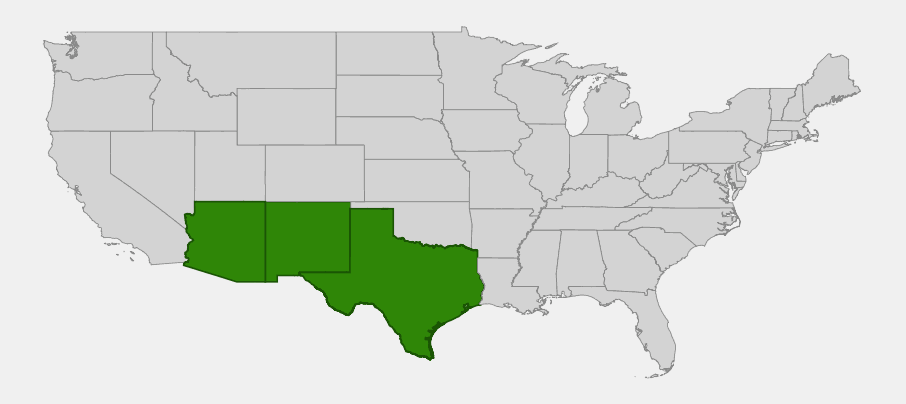
📋 Regional plant lists featuring Fishhook Barrel Cactus: Arizona & New Mexico
Growing & Care Guide
Fishhook Barrel Cactus is a rewarding, nearly carefree landscape plant for hot, dry gardens, as long as it is given sharp drainage and plenty of sun. It is not suited to average garden conditions with regular watering or heavy soil.
Light
Plant in full, all-day sun. This species is adapted to intense desert light and develops its best spine color and form in open, unshaded sites. Plants grown in too much shade stretch, weaken, and become more prone to rot.
Soil & Water
Fast-draining, rocky or gravelly soil is essential; this species tolerates the caliche and alkaline soils common across the Sonoran Desert. Once established, mature plants need little to no supplemental irrigation in their native range and are far more likely to be killed by overwatering than by drought. Where summer rain is unreliable, an occasional deep soak during the hottest months is sufficient.
Planting Tips
Plant in spring, handling the cactus with heavy leather gloves, a folded towel, or cactus tongs — the hooked spines catch readily in light gloves and clothing. Set the plant at its original growing depth; planting too deep invites stem rot. Site it away from walkways, play areas, and low traffic zones where people or pets might brush against the spines.
Pruning & Maintenance
No routine pruning is needed on a single-stemmed barrel cactus. Remove only clearly dead or rotting tissue with a sterilized blade, cutting into clean tissue. Established plants require essentially no ongoing maintenance.
Landscape Uses
Fishhook Barrel Cactus suits a range of low-water Southwest landscape styles:
- Xeriscape accent — its rounded form and fall flowers make it a strong focal point
- Desert habitat gardens that recreate Sonoran Desert plant communities
- Rock gardens combined with other drought-tolerant natives
- Wildlife gardens — late-season flowers and fruit support pollinators and animals
- Security planting beneath windows, where the spines discourage unwanted access
Legal Protection
Fishhook Barrel Cactus is protected under Arizona’s native plant law, which prohibits collecting, transporting, or selling wild-harvested barrel cacti without a permit. New Mexico has similar protections for native cacti. Never dig up a wild plant; buy only nursery-propagated specimens from a reputable native plant nursery.
Wildlife & Ecological Value
Fishhook Barrel Cactus is a valuable late-season resource in the Sonoran Desert, where food can be scarce heading into the cooler months.
For Pollinators
The late-summer flowers, blooming after the monsoon when many other desert plants have finished, attract native bees and other insects at a time when nectar sources are relatively limited.
For Birds
Cactus wrens, curve-billed thrashers, and other desert birds feed on the persistent fruit through fall and winter, and some birds use the dense spine armor near the crown as a safe, predator-resistant perch.
For Mammals
Javelina, ground squirrels, and other small mammals feed on the fallen or damaged fruit and pulp, especially during dry years when other forage is scarce. Pack rats and other desert rodents occasionally den near the base, sheltered by the spine cover.
Ecosystem Role
As a long-lived, slow-growing component of Sonoran Desert scrub and grassland, Fishhook Barrel Cactus adds structural diversity to the landscape and its persistent fruit helps bridge the gap in food availability between the summer monsoon and winter rains.
Cultural & Historical Uses
Indigenous peoples of the Sonoran Desert, including the Tohono O’odham and other Southwestern groups, historically made limited use of Fishhook Barrel Cactus. The fruit pulp was sometimes eaten, and in parts of Mexico the pulp of related barrel cacti has historically been candied into a sweet called “acitrón” — the origin of the alternate common name “Candy Barrel Cactus.” These are historical and ethnobotanical practices, not guidance for present-day foraging, and large-scale harvesting of wild barrel cacti for candying has contributed to population declines in parts of Mexico.
A persistent desert survival myth claims barrel cacti can be cut open for emergency drinking water. This is false and potentially dangerous: the pulp is acidic and mucilaginous, and drinking it can cause nausea and diarrhea that worsen dehydration rather than relieve it.
Today, Fishhook Barrel Cactus is grown mainly as an ornamental and wildlife-value plant in xeriscape and native gardens throughout the Southwest, prized for its sculptural form, fall flowers, and persistent winter fruit.
Frequently Asked Questions
Is it legal to dig up a Fishhook Barrel Cactus in the wild?
No. It is protected under Arizona’s native plant law and similar statutes in New Mexico, and removing a wild plant without a permit is illegal. Buy nursery-propagated plants instead.
Can you drink water from a Fishhook Barrel Cactus in an emergency?
No — this is a common but dangerous desert survival myth. The pulp is acidic and mucilaginous, and drinking it can cause nausea and diarrhea that make dehydration worse. Barrel cacti are not a safe emergency water source.
How is Fishhook Barrel Cactus different from California Barrel Cactus?
Fishhook Barrel Cactus tends to be rounder and more barrel-shaped with strongly hooked central spines, blooms later in the year (late summer into fall), and is native to the Sonoran and Chihuahuan Desert region rather than the Mojave Desert.
Why does the plant lean to one side?
Older barrel cacti, including this species, often lean slightly toward the strongest sun exposure, usually south. The lean develops gradually over decades and is a real but imprecise growth response to light.
Is Fishhook Barrel Cactus cold hardy?
No, it has very limited frost tolerance and is reliably hardy only to about USDA zone 8, which is why it is restricted to warm desert climates or container culture elsewhere.

Looking for a nursery that carries Fishhook Barrel Cactus?
Browse our native plant nursery directory: Arizona · New Mexico · Texas