California Barrel Cactus (Ferocactus cylindraceus)
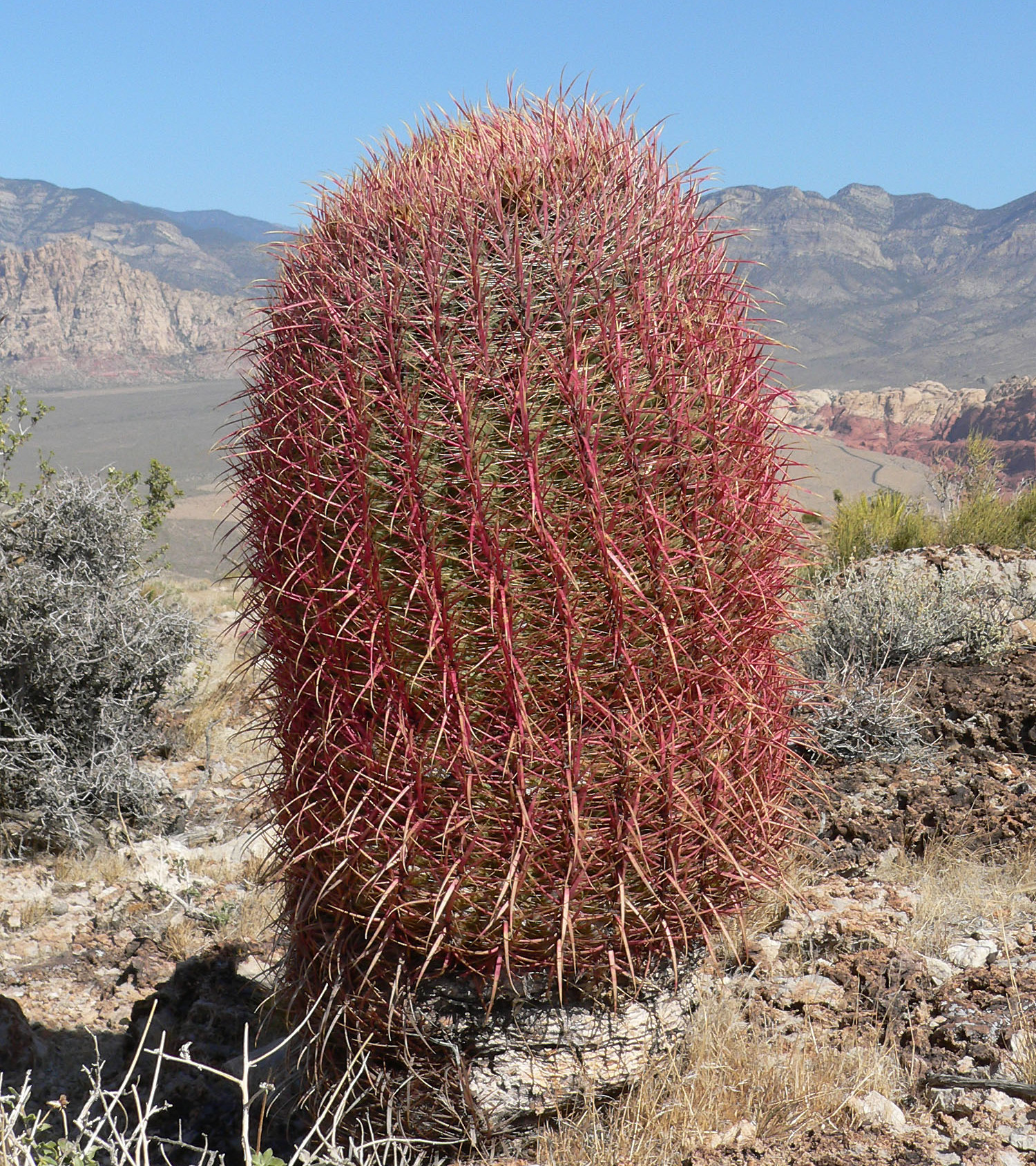
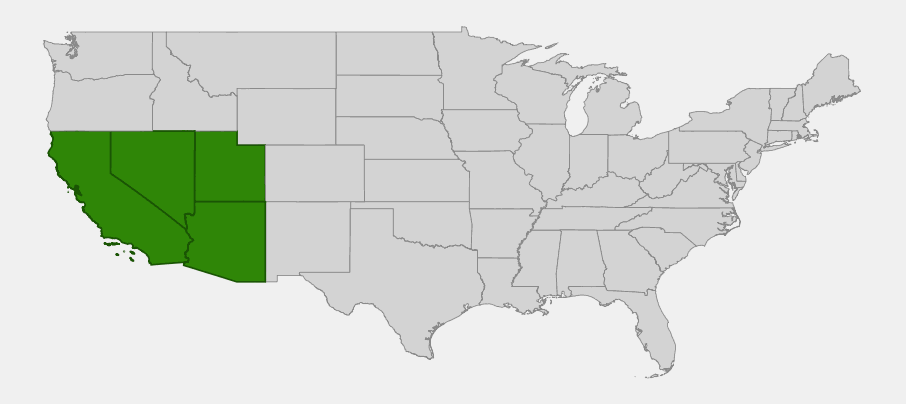
Ferocactus cylindraceus, commonly called California Barrel Cactus, Compass Barrel, or Desert Barrel Cactus, is one of the most recognizable cacti of the Mojave and Sonoran Deserts. A member of the Cactaceae (cactus family), it grows as a solitary, cylindrical to barrel-shaped stem densely armed with curved, reddish to straw-colored spines that catch the light in a way few other desert plants can match. Despite the common name, this species is not limited to California — it ranges east across southern Nevada, Arizona, and into southwestern Utah, and south into Baja California and Sonora, Mexico.
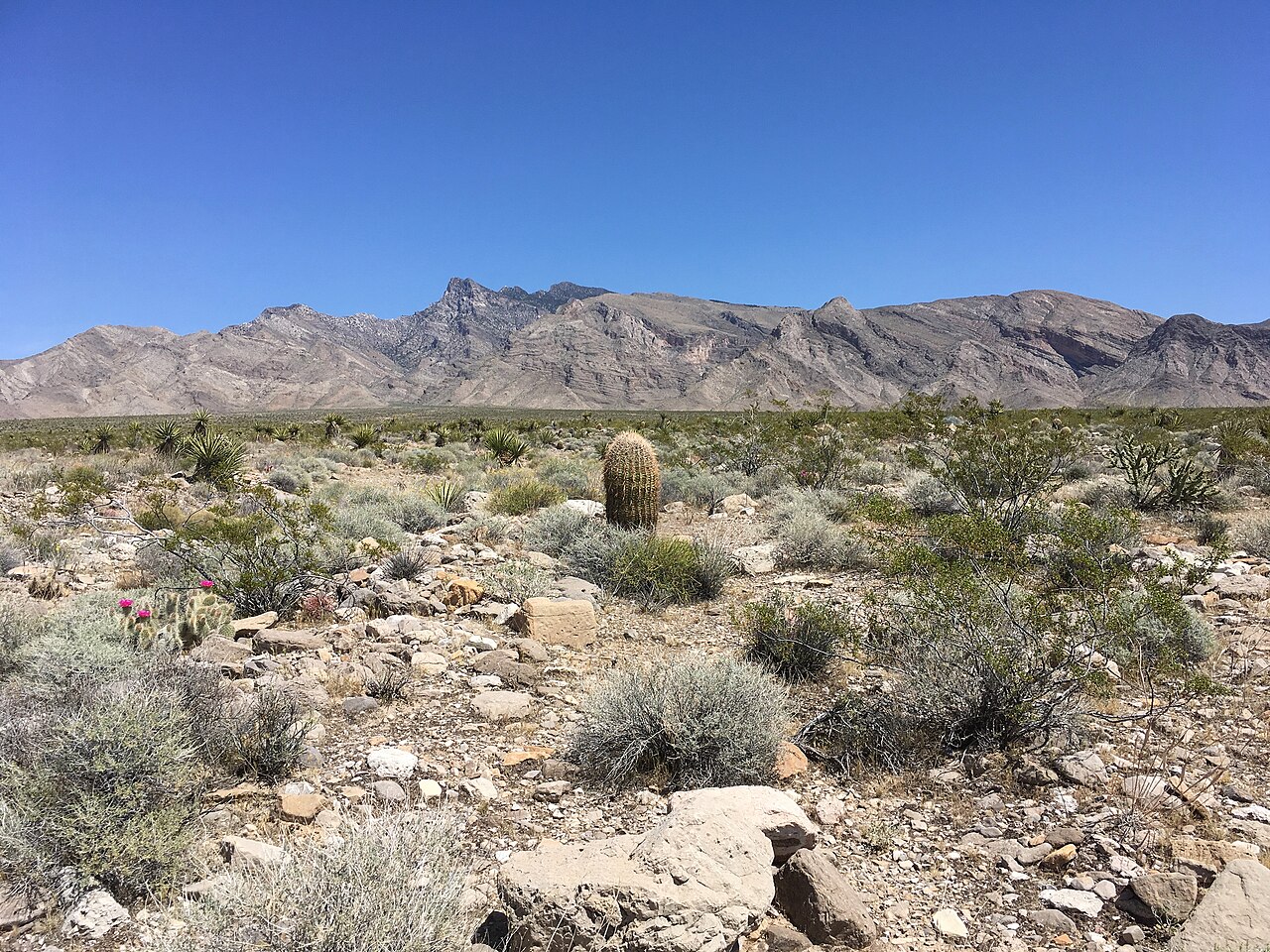
In the wild, California Barrel Cactus grows slowly on rocky slopes, alluvial fans, and canyon walls, often tilting slightly toward the strongest sun exposure — a habit that has earned it the nickname “compass barrel,” though the lean is not reliable enough to use for actual navigation. A healthy specimen may take decades to reach its full height, and old individuals growing on steep, south-facing ground are a familiar sight throughout the Mojave and Sonoran basin-and-range country.
This species is slow-growing, extremely drought tolerant, and essentially maintenance-free once established, which makes it a popular choice for xeriscaping in its native range. It is also, like all native barrel cacti, protected by law in several states where it grows; removing a wild plant without a permit is illegal, and gardeners should only acquire nursery-propagated specimens.
Identification
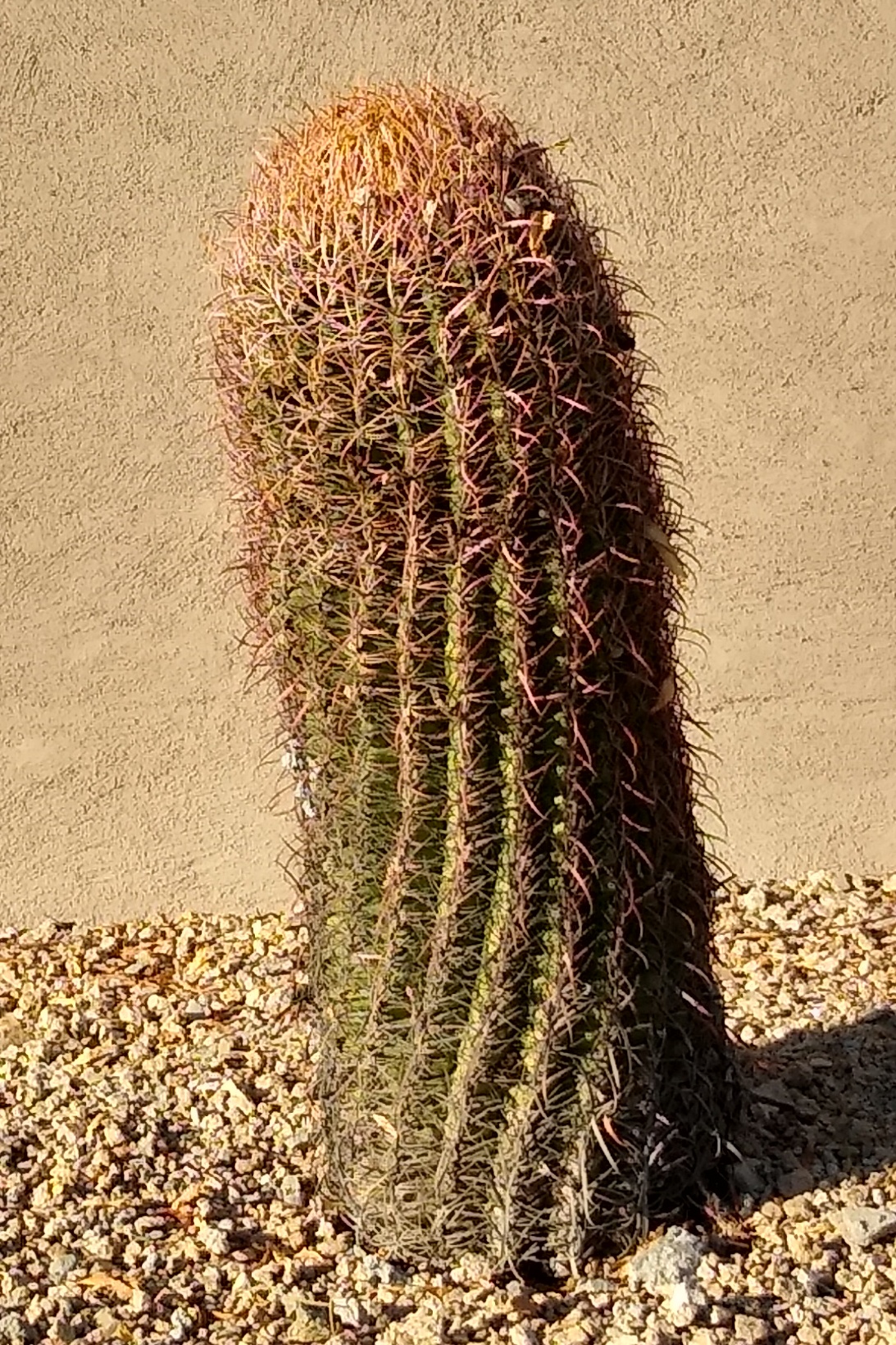
California Barrel Cactus forms a single, unbranched, cylindrical to barrel-shaped stem that is usually 1 to 4 feet tall in cultivation, though old wild individuals can reach 8 to 10 feet with trunk diameters over a foot. The stem is divided into 15 to 27 vertical ribs that run its full length, each one lined with clusters of stout spines.
Stems
The stem is deep green beneath its spine cover, thick-skinned, and strongly ribbed, allowing it to expand and contract like an accordion as it absorbs and loses water. Unlike many columnar cacti, F. cylindraceus rarely branches; most plants remain a single stem for their entire lives, occasionally producing a basal offset after injury.
Spines
Each areole along the ribs bears 4 to 8 stout central spines, flattened and often hooked or curved at the tip, along with numerous thinner radial spines. Fresh spines are typically red to pink, fading to gray-tan with age, which gives young growth at the crown of the plant a distinctive reddish halo. The spines are strong enough to pierce skin or clothing easily and should be treated with respect; mature plants are essentially impossible to touch without protection.
Flowers & Fruit
Flowers emerge in a ring around the crown of the plant from late spring into early summer, each one funnel-shaped, 1.5 to 2 inches across, in shades of yellow, orange, or occasionally reddish-orange. They open during the day and close at night, over a bloom period that can stretch several weeks. The fruit that follows is a small, fleshy, yellow, scaly capsule about an inch long that persists on the crown for months after ripening, providing a reliable late-season food source for desert wildlife.
Quick Facts
| Scientific Name | Ferocactus cylindraceus |
| Family | Cactaceae (Cactus) |
| Plant Type | Barrel Cactus (succulent) |
| Mature Height | 2–6 ft (exceptionally to 10 ft) |
| Mature Spread | 1–2 ft diameter |
| Growth Rate | Slow |
| Sun Exposure | Full Sun |
| Water Needs | Low (xeric) |
| Soil Type | Rocky, gravelly or sandy, fast-draining |
| Soil pH | 7.0–8.5 (neutral to alkaline) |
| Bloom Time | April – June |
| Flower Color | Yellow to orange |
| Fruit | Small yellow scaly capsules, persistent |
| Deer Resistant | Yes (spines deter browsing) |
| USDA Hardiness Zones | 8–11 |
Native Range
California Barrel Cactus is native to the Mojave and Sonoran Deserts of the southwestern United States, found in southeastern California, southern Nevada, Arizona, and the far southwestern corner of Utah, extending south into Baja California and the state of Sonora in Mexico. It is one of the most common large cacti across this range, frequently visible along rocky hillsides and desert washes from near sea level up to around 5,000 feet.
Within this range it favors rocky or gravelly slopes, alluvial fans, and canyon walls in creosote bush scrub, Joshua tree woodland, and Sonoran desert scrub communities, usually in full sun on well-drained substrates. It is notably absent from the lowest, hottest valley floors with fine, poorly drained soils, where it is outcompeted by more salt- and flood-tolerant species.
This species should not be confused with ornamental barrel cacti sold outside the Southwest; outside its native desert range it is strictly a container or protected-climate plant, since it has no frost tolerance to speak of and cannot survive outdoor winters much beyond USDA zone 8.
📋 Regional plant lists featuring California Barrel Cactus: Arizona & New Mexico · Utah & Western Colorado
Growing & Care Guide
California Barrel Cactus is about as low-maintenance as native landscaping gets, provided it is given the sharp drainage and full sun it needs. It is not a plant for average garden soil or regular irrigation, but in the right spot it will outlive the gardener who planted it.
Light
Give this cactus full, all-day sun. It is adapted to some of the most intense light conditions in North America, and plants grown in too much shade become etiolated, weak-spined, and prone to rot. A south- or west-facing slope with reflected heat from rock or pavement mimics its native habitat well.
Soil & Water
Fast drainage is non-negotiable. Plant in rocky, gravelly, or coarse sandy soil, ideally amended with crushed rock or decomposed granite if the native soil holds much moisture. Once established, mature plants need no supplemental water in their native range and can be killed by overwatering or poor drainage far more easily than by drought. In cultivation outside the desert, water sparingly and only during the hottest months, letting the soil dry completely between waterings.
Planting Tips
Plant in spring after the last frost, handling the cactus with thick leather gloves, a folded towel, or tongs — the spines are sharp enough to go through light gloves. Set the plant at the same depth it grew in its container; burying the base can cause stem rot. Avoid planting near walkways or play areas where people or pets might brush against the spines.
Pruning & Maintenance
No pruning is needed or really possible on a single-stemmed barrel cactus. Remove only obviously dead or rotting tissue with a sterilized blade, cutting back to clean, healthy flesh. Established plants are essentially maintenance-free for decades.
Landscape Uses
California Barrel Cactus works well in a variety of low-water landscape settings:
- Xeriscape focal point — its sculptural form and colorful spines stand out among rock gardens
- Desert habitat gardens that mimic native Mojave or Sonoran plant communities
- Rock gardens paired with other low-water natives
- Erosion control on dry, rocky slopes where little else will grow
- Wildlife gardens — flowers and fruit support pollinators and small animals
Legal Protection
Barrel cacti are protected under native plant laws across much of their range, including Arizona’s native plant law, which restricts the collection, transport, and sale of wild barrel cacti without a permit. California and Nevada have similar protections for native desert plants. Never dig up or remove a wild barrel cactus; buy only nursery-propagated plants from a reputable native plant nursery.
Wildlife & Ecological Value
Despite its fearsome spines, California Barrel Cactus is a quietly important resource for desert wildlife, offering food and occasional shelter in an environment where both are scarce.
For Pollinators
The spring and early-summer flowers attract native bees and other desert insects drawn to their nectar and pollen, at a time of year when relatively few desert plants are blooming. Cactus bees in particular are frequent visitors.
For Birds
Cactus wrens, thrashers, and other desert birds feed on the fruit and the insects it attracts, and some birds use the dense spine cover near the crown as a predator-resistant perch or nest site.
For Mammals
Rodents, desert tortoises, and other small animals eat the fallen fruit, and the dense spine armor occasionally provides nesting cover for small mammals that can navigate around the spines. Javelina have been documented feeding on the pulp of damaged or fallen barrel cacti.
Ecosystem Role
As a long-lived, slow-growing component of desert scrub communities, California Barrel Cactus adds structural diversity to otherwise low, open vegetation, and its persistent fruit provides a food source into the cooler months when other resources are limited.
Cultural & Historical Uses
Indigenous peoples of the Mojave and Sonoran Deserts, including the Cahuilla, Tohono O’odham, and other Southwestern groups, historically made limited use of barrel cacti. The fruit pulp was sometimes eaten, and the tough spines were occasionally used as awls, fishhooks, or needles. These uses are a matter of historical and ethnobotanical record, not guidance for modern foraging.
A persistent desert survival myth holds that barrel cacti can be cut open as an emergency water source. In reality, the pulp of Ferocactus species is thick, mucilaginous, and mildly acidic, and drinking the fluid can cause nausea and diarrhea — worsening dehydration rather than relieving it. The myth should be treated as exactly that: a myth, not a survival technique.
Today, California Barrel Cactus is valued primarily as an ornamental and habitat plant, propagated commercially for xeriscape gardens throughout the Southwest, and as a living symbol of the Mojave and Sonoran Desert landscapes it calls home.
Frequently Asked Questions
Is it legal to dig up a California Barrel Cactus in the wild?
No. Barrel cacti are protected under state native plant laws across much of their range, including Arizona’s native plant law, and removing them from the wild without a permit is illegal. Buy nursery-propagated plants instead.
Can you drink water from a barrel cactus in an emergency?
No — this is a common desert survival myth. The pulp is acidic and mucilaginous, and drinking it can cause nausea and diarrhea that make dehydration worse, not better. Barrel cacti are not a safe emergency water source.
How fast does California Barrel Cactus grow?
Very slowly. A plant may take several decades to reach 3 to 4 feet tall, and the largest wild specimens, at 8 feet or more, can be well over a century old.
Why does the cactus look like it’s leaning?
Older plants often lean slightly toward the sun, which is where the nickname “compass barrel” comes from. The lean is a real growth response to light but is not reliable enough to use for actual direction-finding.
Is California Barrel Cactus cold hardy?
Not very. It is reliably hardy only to about USDA zone 8 and can be damaged or killed by hard freezes, which is why it is limited to warm, dry climates or container culture outside the desert Southwest.

Looking for a nursery that carries California Barrel Cactus?
Browse our native plant nursery directory: California · Nevada · Arizona · Utah