
Longstalk Holly (Ilex collina)
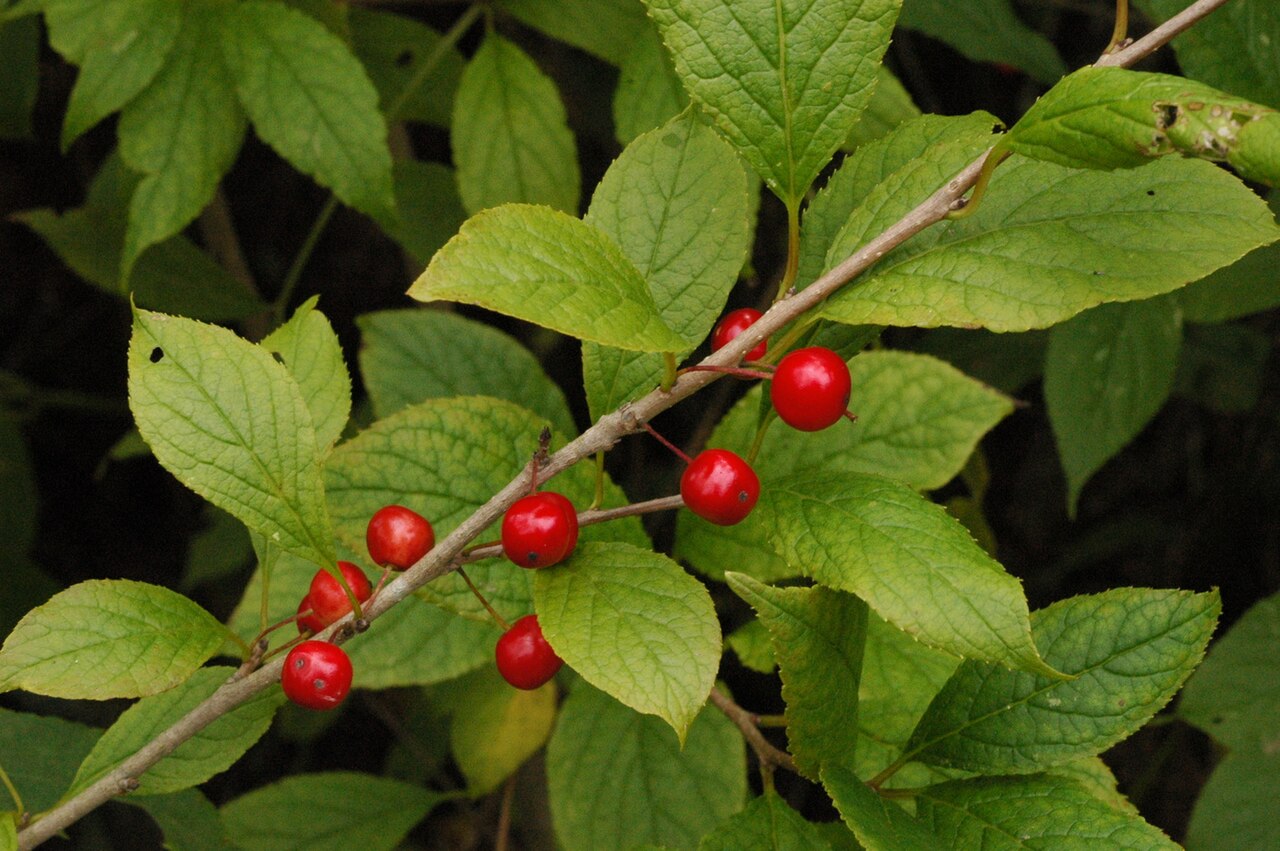
Ilex collina, commonly known as Longstalk Holly, is a rare deciduous shrub found only in a scattering of high-elevation bogs and wet thickets in the central and southern Appalachian Mountains. It is one of the most restricted native hollies in North America, known from roughly three dozen documented occurrences across five states, and it takes its common name from the unusually long, slender stalks (pedicels) that hold its bright red fruit well clear of the foliage — a feature that makes a fruiting branch easy to recognize even from a distance.
Unlike the evergreen hollies most gardeners know, Longstalk Holly drops its leaves each fall after a show of soft yellow color. It grows as a large, many-stemmed shrub to small tree, typically 6 to 13 feet tall, forming loose thickets at the margins of mountain bogs, seepage swamps and pond edges, often in the company of red spruce, eastern hemlock and rosebay rhododendron. Because its habitat — high-elevation Appalachian bogs — is itself rare and shrinking, Longstalk Holly carries a global conservation rank of G3 (vulnerable), and botanists estimate only a few thousand individual plants remain in the wild.
Longstalk Holly is not a plant most nurseries carry, and it is not well suited to typical garden conditions, since it needs the same cool, consistently wet, acidic soil as its native bogs. For gardeners in the right setting — a boggy low spot, a rain garden margin, or a native wetland restoration in the mountains of Virginia, West Virginia, North Carolina, Tennessee or Georgia — it is a distinctive, little-used native shrub worth seeking out from specialty native plant nurseries rather than collecting from the wild, where every remaining population matters to the species’ survival.
Identification
Longstalk Holly grows as an upright, loosely branched shrub or small tree, usually 6 to 13 feet (2–4 m) tall, often forming small thickets from root suckers where conditions suit it. Like other hollies it is dioecious, meaning individual plants are either male or female, and only female plants bear the showy fruit.
Bark & Stems
Stems are slender and gray-brown, smoother than many shrub hollies, with young twigs that can show a faint reddish or olive tint. The overall branching habit is open and somewhat willowy rather than dense, which along with the deciduous leaves helps distinguish it from the area’s common evergreen hollies such as mountain holly and American holly.
Leaves
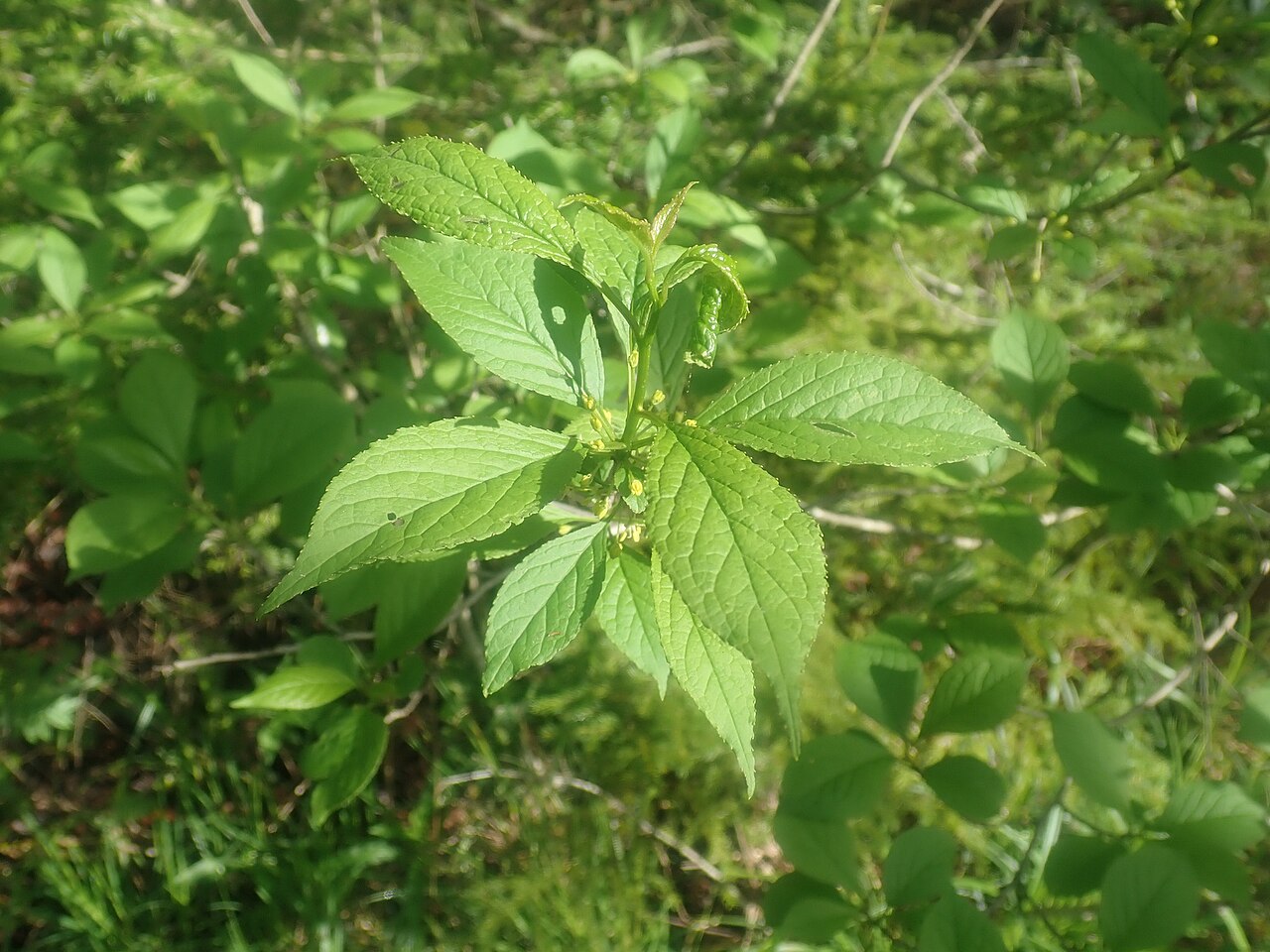
The leaves are deciduous, alternate, oval with a pointed tip, and finely serrated (toothed) along the margins — unlike the spiny-edged leaves of evergreen hollies. They are a dull to medium green through the growing season and turn a soft yellow in autumn before dropping, a trait shared with its close relative, common winterberry.
Flowers
Small, four-parted, yellow-green flowers appear in May, clustered at the leaf axils. They are easy to overlook against the foliage and are not showy, but they are an important early-to-mid-spring nectar source for small native bees and other insects in the high-elevation bog habitats where few other shrubs are yet in bloom.
Fruit & Seeds
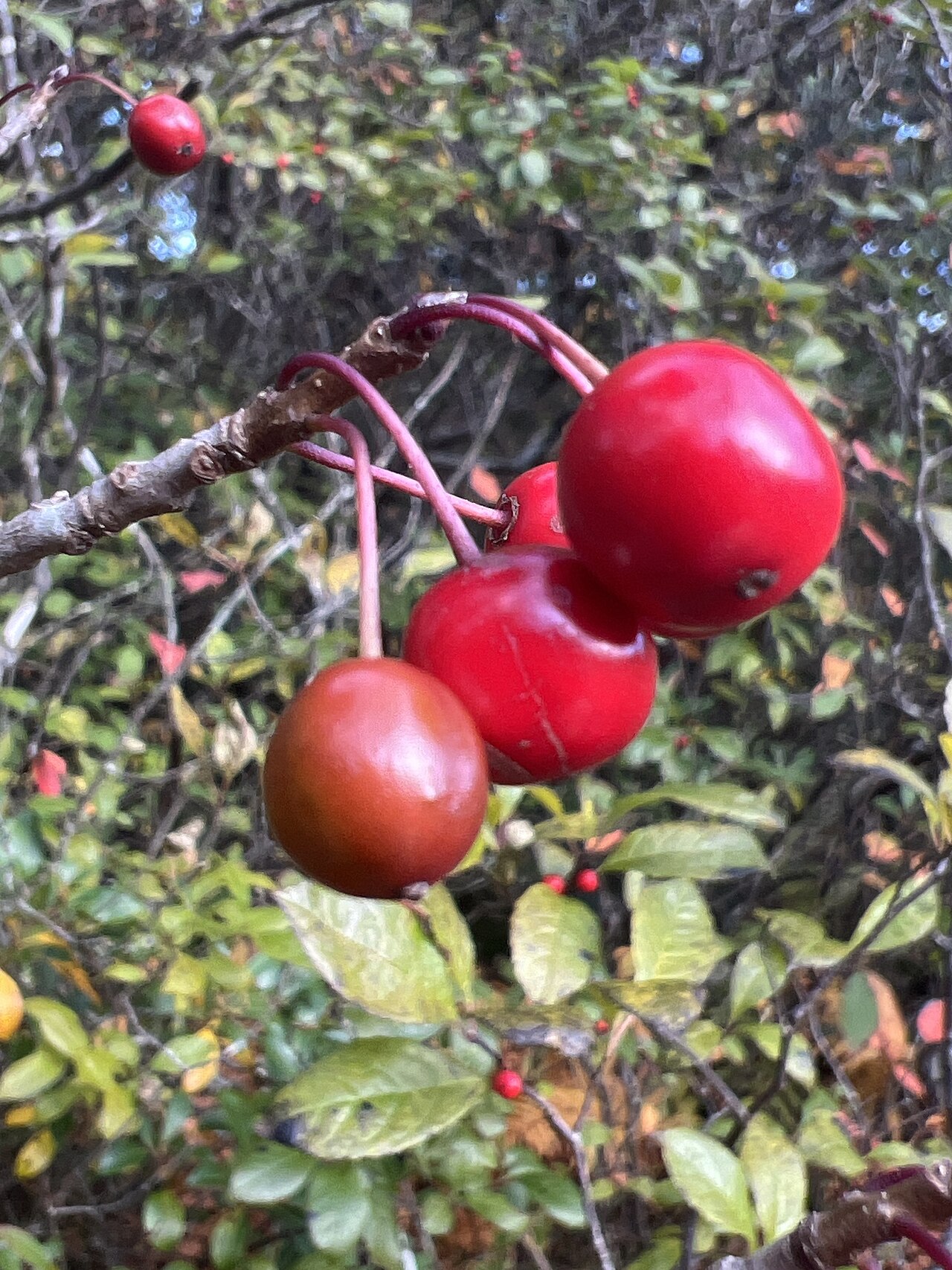
The fruit is a round drupe just under half an inch wide, ranging from red to yellow, that matures in fall and is held on a conspicuously long, slender stalk — often noticeably longer than the stalks of other native hollies, which gives the species both its common name and a useful field mark. The fruit typically persists into winter on female plants and is an important late-season food source for birds in its mountain bog habitat.
Quick Facts
| Scientific Name | Ilex collina |
| Family | Aquifoliaceae (Holly) |
| Plant Type | Deciduous shrub to small tree |
| Mature Height | 6–13 ft (2–4 m) |
| Mature Spread | 4–8 ft, often thicket-forming |
| Growth Rate | Slow |
| Sun Exposure | Part Shade to Full Sun |
| Water Needs | High; wet to consistently moist soils required |
| Soil Type | Peaty, boggy, organic wetland soils |
| Soil pH | Acidic (about 4.5–5.5) |
| Bloom Time | May |
| Flower Color | Yellow-green |
| Fall Color | Soft yellow |
| Fruit | Red to yellow drupes on long stalks, fall into winter |
| Deer Resistant | Not well documented |
| USDA Hardiness Zones | 5–7 |
Native Range
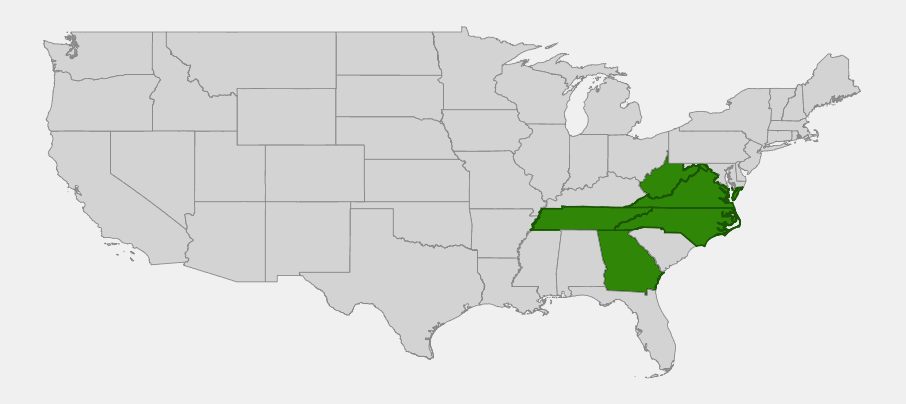
Longstalk Holly is native to the central and southern Appalachian Mountains, with confirmed occurrences in Virginia, West Virginia, North Carolina, Tennessee and Georgia. Within this range it is extremely local, known from only about three dozen documented sites, nearly all of them high-elevation bogs, seepage wetlands and pond margins in the mountains rather than lowland habitat.
Typical habitat is a cool, acidic, high-elevation bog or thicket at the margin of a mountain wetland — places like West Virginia’s Cranberry Glades, among the highest-elevation bogs in the eastern United States. It grows in and around thickets at the wet-to-dry transition of these bogs, often alongside eastern hemlock, black birch, mountain holly, red spruce and rosebay rhododendron, species characteristic of high-elevation Appalachian bog and swamp-forest communities.
Because suitable habitat — intact, undrained mountain bogs — is itself rare and has been lost to drainage, logging and development throughout the Appalachians, Longstalk Holly is ranked G3 (vulnerable) by NatureServe, with an estimated total population in the low thousands of individuals across all known sites. It is not available in typical retail nurseries; gardeners interested in the species should seek plants from native plant societies or specialty growers that propagate from cultivated stock, never from wild-collected material.
📋 Regional plant lists featuring Longstalk Holly: Maryland, Virginia & West Virginia · North Carolina & South Carolina · Kentucky & Tennessee · Georgia, Alabama & Mississippi
Growing & Care Guide
Longstalk Holly is a specialist of cool, wet, acidic mountain soils, and it will not thrive — or in most cases, survive — in an average dry or well-drained garden bed. It is best reserved for gardeners who already have, or are building, a genuinely boggy or consistently saturated planting area, ideally at a higher elevation or in a cool microclimate.
Light
In the wild it grows at bog margins ranging from fairly open, sunny conditions to the dappled shade of surrounding conifers and hardwoods. In cultivation, part shade to full sun suits it best; full sun is fine as long as the soil never dries out, while some afternoon shade helps in warmer, lower-elevation gardens near the edge of its hardiness range.
Soil & Water
This is a true bog plant: it needs consistently wet to saturated, acidic, peaty soil and will decline quickly in average garden soil that drains or dries between waterings. A rain garden’s wettest zone, a bog garden built with a liner, or a naturally seepy, undrained low spot are the kinds of settings where it can succeed. Mulch with pine straw or shredded leaves to help hold moisture and maintain soil acidity.
Planting Tips
Plant container-grown stock in spring, in a site that stays wet through the growing season — if the chosen spot has ever fully dried out in a normal summer, it is not wet enough for this species. Because it is dioecious, a female plant is needed to produce the showy fruit, though a nearby male (even an unrelated nearby native holly species) can aid pollination. Given its rarity and specialized needs, this is a plant for dedicated wetland or bog gardeners rather than a general-purpose landscape shrub.
Pruning & Maintenance
Little pruning is needed beyond removing dead or damaged wood. Because the plant can sucker and form thickets, gardeners who want a more contained shrub can remove root suckers as they appear; those who want a naturalistic bog thicket can simply let it spread.
Propagation
Propagation is typically from semi-hardwood cuttings taken in summer, rooted under mist in a moist, acidic medium, which is the method most often used by the handful of specialty native plant nurseries and botanical gardens that grow this species for conservation and restoration purposes. Seed propagation is difficult, as holly seeds typically require an extended cold-moist stratification period and can take more than a year to germinate. Given the species’ vulnerable status, gardeners should source plants only from nurseries propagating cultivated stock, never from wild populations.
Landscape Uses
- Bog gardens and constructed wetlands, where it can reach full size and fruit well
- Rain garden wet zones that stay saturated through the growing season
- Native wetland restoration projects in its mountain range, using nursery-propagated stock
- Specialty collector and conservation gardens focused on rare regional natives
- Wildlife plantings near ponds or seeps, for its persistent winter fruit
Wildlife & Ecological Value
As a rare species confined to a rare habitat, Longstalk Holly plays an outsized role in the small number of Appalachian bog communities where it persists.
For Pollinators
The small yellow-green May flowers provide early-season nectar and pollen for native bees and other insects active in cool, high-elevation bog habitats, where flowering shrubs are relatively scarce compared to lowland forests.
For Birds
The persistent red to yellow fruit, held conspicuously on long stalks into the winter months, is eaten by birds that forage in and around mountain bog thickets, providing a food source after most other fruit has been stripped from surrounding vegetation.
For Mammals
The dense, suckering thickets the species can form at bog margins offer cover for small mammals moving through the otherwise open, wet terrain typical of mountain bogs.
Ecosystem Role
Longstalk Holly is a characteristic shrub of a globally rare habitat type — high-elevation Appalachian bogs — and its presence is often used by botanists as an indicator of an intact, undrained bog community. Protecting existing populations, rather than relocating or collecting from them, is central to the species’ conservation.
Cultural & Historical Uses
Longstalk Holly has no significant recorded history of Indigenous or settler use as a food, medicine or material plant, likely reflecting both its rarity and its restriction to remote, hard-to-access mountain bogs that saw little agricultural or extractive use historically.
The species was first described by the botanist Edward Johnston Alexander in the twentieth century, and it has remained primarily a subject of botanical and conservation interest rather than horticultural use, given how narrowly it is restricted to specialized wetland habitat.
Today, Longstalk Holly’s main significance is as a conservation priority: its presence at a site is often a signal of a high-quality, undisturbed mountain bog, and botanical gardens and native plant societies in its range have worked to document and, in some cases, propagate the species to support its long-term survival.
Frequently Asked Questions
Why is it called Longstalk Holly?
Its fruit is held on an unusually long, slender stalk compared with other native hollies, a feature visible even from a distance on a fruiting branch and the basis for both its common name and a useful field identification mark.
Is Longstalk Holly evergreen like other hollies?
No. Unlike American holly and most hollies gardeners know, Longstalk Holly is deciduous, dropping its leaves each fall after they turn a soft yellow.
Can I grow Longstalk Holly in a normal garden bed?
Generally not successfully. It requires consistently wet to saturated, acidic, peaty soil similar to its native mountain bogs, and it will struggle or fail in average garden soil that drains or dries out between waterings. It is best suited to bog gardens, rain garden wet zones or naturally seepy sites.
Is Longstalk Holly rare?
Yes. It is known from only around three dozen documented sites across Virginia, West Virginia, North Carolina, Tennessee and Georgia, and NatureServe ranks it G3 (vulnerable) due to its small number of populations and the ongoing loss of mountain bog habitat.
Where can I buy Longstalk Holly?
It is not typically available at general garden centers. Because of its vulnerable conservation status, seek plants only from specialty native plant nurseries or native plant society sales that propagate from cultivated stock, and never collect plants or cuttings from wild populations.

Looking for a nursery that carries Longstalk Holly?
Browse our native plant nursery directory: Virginia & Tennessee · West Virginia · North Carolina · Georgia