
Giant Blue Iris (Iris giganticaerulea)
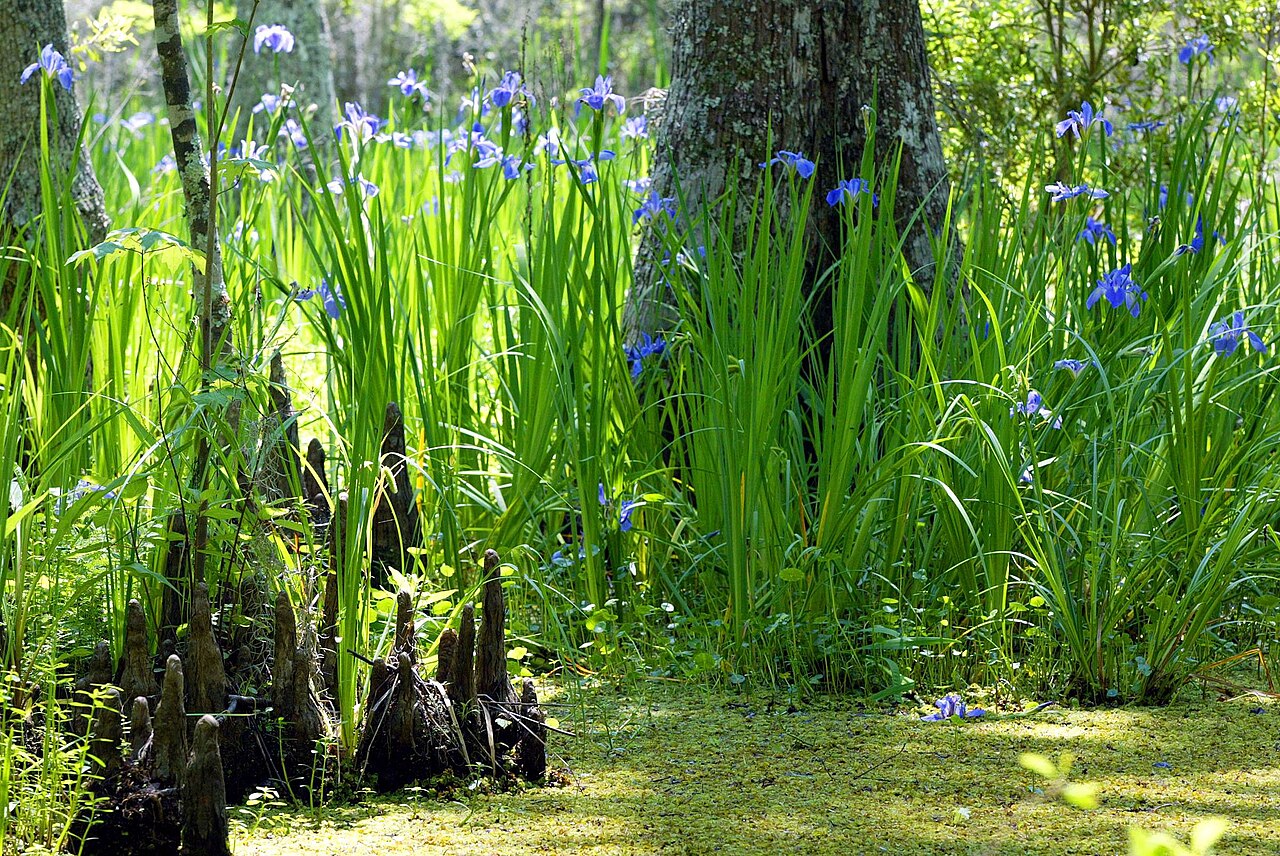
Iris giganticaerulea, known as Giant Blue Iris or simply “Louisiana Iris,” is the largest-flowered of the wild Louisiana iris species and the plant most people picture when they hear the name — the signature wildflower of the cypress swamps and coastal marshes of the western Mississippi River delta. Its species name, meaning “giant sky-blue,” describes both the exceptional size of its blooms and their striking pale-to-deep blue-violet color.
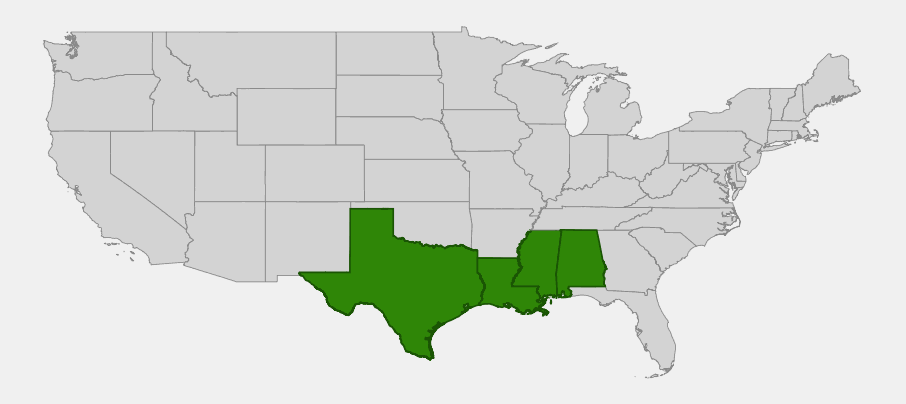
Giant blue iris is a robust, clump-forming perennial that can reach 3 to 5 feet tall in ideal conditions, with sword-like leaves and flowers up to 6 inches across — among the largest of any North American wild iris. It is restricted to a surprisingly narrow native range compared to its zigzag iris relative, found only in freshwater and brackish wetlands in Louisiana, the western edge of the Mississippi River in Mississippi, eastern Texas, and Alabama.
Because of its outsized flowers and abundance in the bayous and roadside ditches of south Louisiana, giant blue iris has long been associated with the state and is a parent species of countless ornamental Louisiana iris hybrids grown in gardens worldwide, prized for bringing exceptional flower size and that distinctive deep blue color into the breeding line.
Identification
Giant blue iris forms large, vigorous clumps 3 to 5 feet tall when in bloom, among the biggest of the native wild irises, spreading steadily by thick rhizomes to form sizeable colonies in favorable wetland sites.
Stems
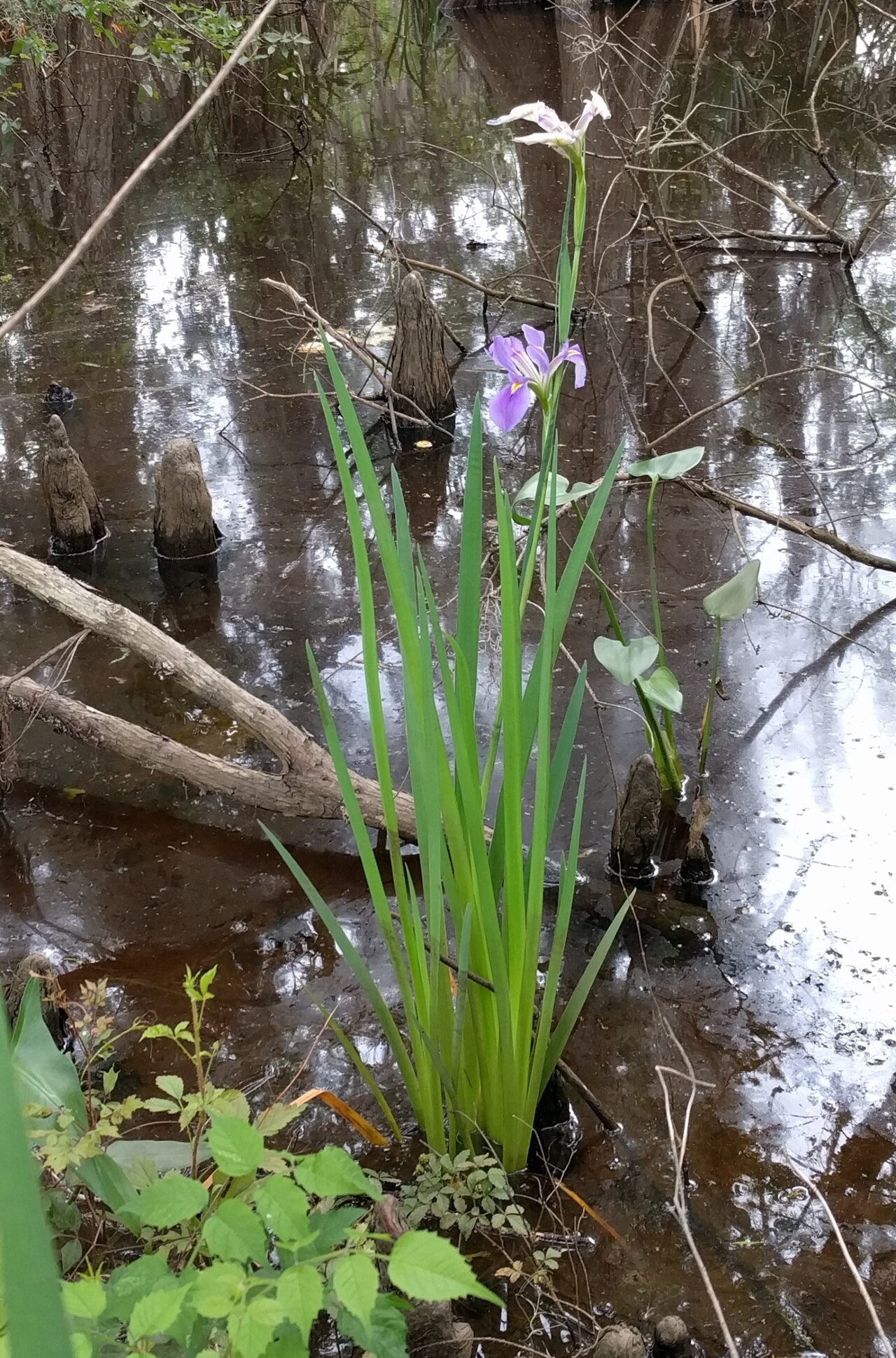
Flowering stems are tall, sturdy, and typically unbranched or lightly branched, rising well above the foliage. Unlike the sharply bent stem of its relative zigzag iris, the giant blue iris stem grows relatively straight, a useful field mark where the two species’ ranges overlap.
Leaves
Leaves are long, strap-like, and arching, often 2 to 3 feet long and up to 1½ inches wide, forming substantial fans at the base of each stem. They are bright to medium green and persist well into the growing season, dying back after flowering is complete and conditions turn hot and dry.
Flowers
The flowers are the species’ claim to fame: up to 6 inches across, among the largest of any native North American iris, in shades ranging from pale sky-blue to deep violet-blue. Each of the three drooping falls carries a prominent yellow central signal and fine darker veining, while the upright standards are narrower and a slightly lighter shade. Several flowers typically open in succession on each stem through the bloom period in early-to-mid spring.
Fruit & Rhizomes
Following bloom, three-angled seed capsules develop and eventually split open to release flattened, buoyant seeds that can float and disperse along waterways — an effective strategy in the swamps and bayous where the species grows. The plant’s thick rhizomes spread the clump outward over time. All parts of giant blue iris, especially the rhizomes, are toxic if ingested and the sap can irritate skin; always wear gloves when dividing or handling the plant.
Quick Facts
| Scientific Name | Iris giganticaerulea Small |
| Family | Iridaceae (Iris) |
| Plant Type | Herbaceous Perennial (rhizomatous) |
| Mature Height | 3–5 ft (0.9–1.5 m) in bloom |
| Mature Spread | 2–3 ft, forming expanding colonies |
| Growth Rate | Moderate to Fast in favorable wet sites |
| Sun Exposure | Full Sun to Part Shade |
| Water Needs | High; thrives in shallow standing water or consistently wet soil |
| Soil Type | Rich, wet to saturated muck, clay, or loam |
| Soil pH | 5.5–7.0 (slightly acidic to neutral) |
| Bloom Time | Early to mid-spring |
| Flower Color | Pale sky-blue to deep violet-blue with yellow signals |
| Fall Color | Foliage dies back after bloom; no notable fall color |
| Fruit | Three-angled seed capsule; rhizomes toxic if ingested |
| Deer Resistant | Yes |
| USDA Hardiness Zones | 7–10 |
Native Range
Giant blue iris has a comparatively narrow native range centered on southern Louisiana, extending into the western edge of the Mississippi River in Mississippi, eastern Texas, and Alabama. This constricted distribution reflects the species’ relatively limited cold hardiness and its strong preference for the warm, consistently wet freshwater and brackish marshes of the western Gulf Coast.
Within this range, giant blue iris is most abundant in the bayous, cypress-tupelo swamps, roadside ditches, and coastal marshes of southern Louisiana, where it can form spectacular colonies of thousands of blooming plants each spring. It also grows in shallow freshwater sloughs and wet meadows further from the immediate coast.
Giant blue iris frequently grows alongside zigzag iris and other wild Louisiana iris species where their ranges overlap, and natural hybrid swarms are common in the Louisiana bayou country — a genetic mixing that has made the wild Louisiana iris populations a rich and much-studied resource for understanding plant hybridization and for breeding the many ornamental Louisiana iris cultivars sold today.
📋 Regional plant lists featuring Giant Blue Iris: Georgia, Alabama & Mississippi · Arkansas, Louisiana, Eastern Oklahoma & Eastern Texas
Growing & Care Guide
Giant blue iris rewards gardeners who can offer it what it has in the wild: constant moisture, rich soil, and warm winters. It is less adaptable to dry soil than zigzag iris, but spectacular where conditions suit it.
Light
Plant giant blue iris in full sun for the heaviest bloom, though it tolerates light shade, especially in the hottest parts of its range, where some afternoon shade can help prevent the foliage from scorching.
Soil & Water
This iris wants consistently wet, rich soil and performs beautifully in shallow standing water at a pond or bog garden edge — unlike zigzag iris, it does not tolerate extended dry spells well. Heavy clay or muck soils that stay saturated through the growing season suit it best. It is not reliably cold hardy much north of USDA zone 7, reflecting its naturally southern range.
Planting Tips
Plant rhizomes shallowly in fall or late winter, setting the top of the rhizome at or just below the soil or water surface. Space plants 18 to 24 inches apart to allow for the large clumps this vigorous species forms. It is an excellent choice for the deep end of a rain garden, a pond margin, or a bog planting where water stands for part of the year.
Pruning & Maintenance
Deadhead spent flower stalks to tidy the planting, and cut back foliage once it yellows after bloom. Divide crowded clumps every 3 to 4 years in late summer, replanting divisions promptly in consistently moist soil. Always wear gloves when dividing, since the rhizomes are toxic and can irritate skin.
Landscape Uses
- Pond and bog gardens where plants can stand in shallow water
- Rain garden centers and the wettest parts of a bioswale
- Bayou and wetland restoration plantings in the Gulf Coast region
- Large-flowered specimen plantings for spring color at water’s edge
- Wildlife and pollinator gardens in warm-winter climates
Wildlife & Ecological Value
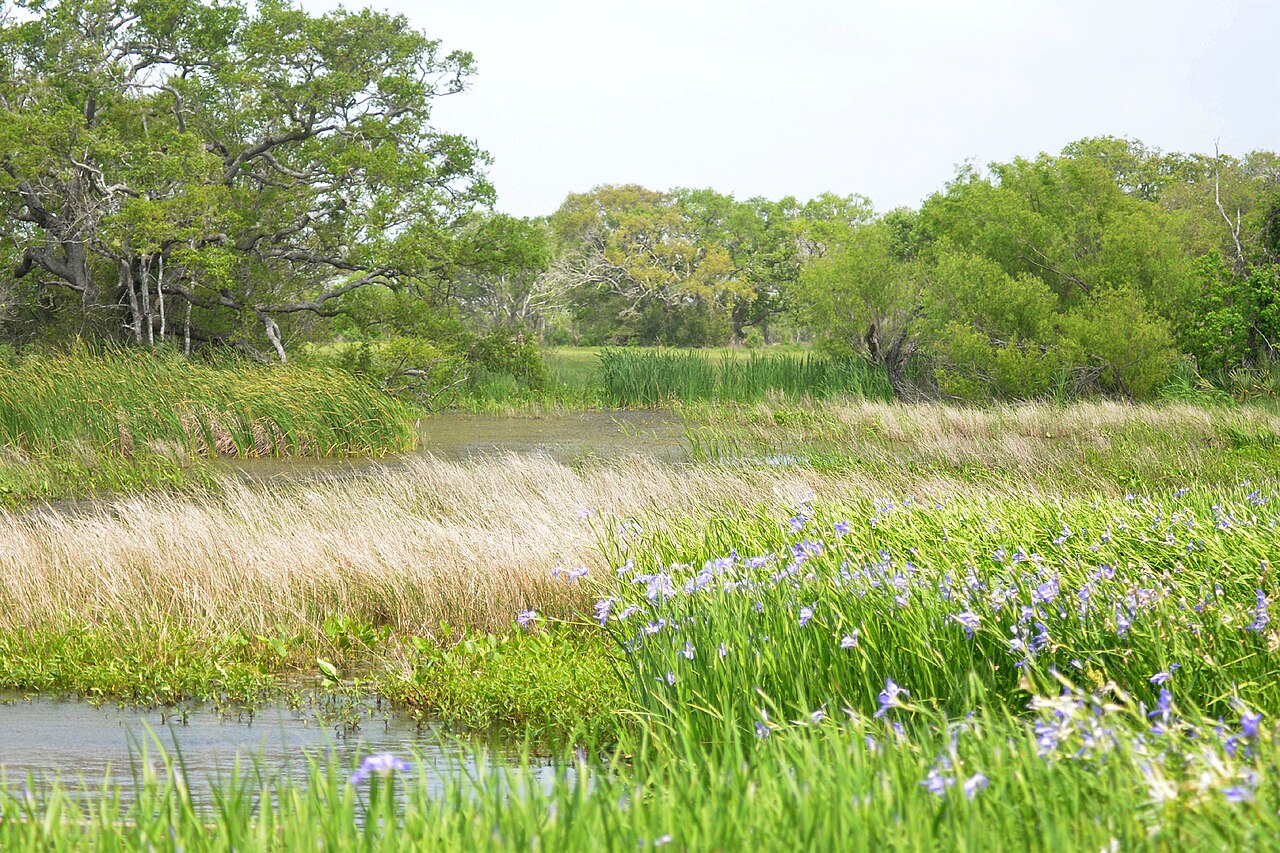
Giant blue iris is a conspicuous and ecologically important part of the Gulf Coast wetlands it calls home, especially in the spring bloom season when its flowers carpet the bayous.
For Pollinators
Large bumblebees and other strong-bodied bees are the primary pollinators, able to force their way past the hinged falls to reach nectar and pollen, picking up pollen on their backs in the process. The bold yellow signal patches guide pollinators directly to the flower’s reproductive structures.
For Birds
The dense stands of tall foliage provide valuable cover and nesting habitat for marsh birds and wading birds in the swamps and bayous where giant blue iris grows most abundantly, including species that rely on emergent marsh vegetation for shelter.
For Mammals
The toxic foliage and rhizomes deter browsing by deer and other mammals, while the dense root mats help stabilize soft, waterlogged soils that might otherwise be disturbed by wildlife movement through the marsh.
Ecosystem Role
As a dominant emergent plant in many Louisiana bayous and coastal marshes, giant blue iris helps stabilize soft wetland soils with its extensive rhizome network, slowing erosion along bayou banks and marsh edges. Its spectacular spring bloom also makes it an indicator species for healthy, undrained wetland habitat in the region.
Cultural & Historical Uses
Giant blue iris is deeply woven into Louisiana’s cultural identity. Its abundance in the bayous surrounding New Orleans and across south Louisiana made it one of the most recognizable wildflowers of the region, and it became a foundational species in the Louisiana iris breeding movement that began in the early-to-mid twentieth century, when horticulturists began collecting, naming, and crossing the wild iris species found growing together in the swamps.
Because of its exceptional flower size and vivid blue coloring, giant blue iris has contributed these traits to countless modern Louisiana iris hybrids grown in gardens around the world today — plants that trace a direct genetic line back to wild populations still found in the cypress swamps of the Mississippi River delta.
As with other irises, there is little documented history of giant blue iris being used as food or as a home remedy by Indigenous or later communities in its range; irises are consistently noted in historical and botanical references primarily for their toxicity rather than any traditional use. The plant’s lasting legacy is horticultural and ecological rather than culinary.
Frequently Asked Questions
Is giant blue iris the same plant people call “Louisiana iris”?
Giant blue iris is the best-known and showiest of the five wild species that make up the “Louisiana iris” group. The bare name “Louisiana iris” more often refers to the whole group of wild species and their many garden hybrids, so giant blue iris is one specific, accepted species within that broader group.
Can you eat giant blue iris?
No. The rhizomes and other plant parts are toxic if ingested and the sap can irritate skin. It is grown strictly as an ornamental wetland plant.
Does giant blue iris need to stand in water?
It does not strictly require standing water, but it performs best and grows most vigorously in consistently wet to saturated soil or shallow water, reflecting its native swamp and marsh habitat. It is less drought-tolerant than zigzag iris.
How cold-hardy is giant blue iris?
It is reliably hardy only to about USDA zone 7, reflecting its naturally warm, southern native range along the Gulf Coast. Gardeners farther north typically grow cold-hardy Louisiana iris hybrids instead, many of which were bred using zigzag iris for extra hardiness.
Why are giant blue iris flowers so much larger than other wild irises?
Exceptionally large flowers are simply a defining trait of this species, reflected in its scientific name “giganticaerulea.” Blooms up to 6 inches across are typical, among the largest of any native North American iris.

Looking for a nursery that carries Giant Blue Iris?
Browse our native plant nursery directory: Alabama · Louisiana & Mississippi · Texas