
Common Madia (Madia elegans)
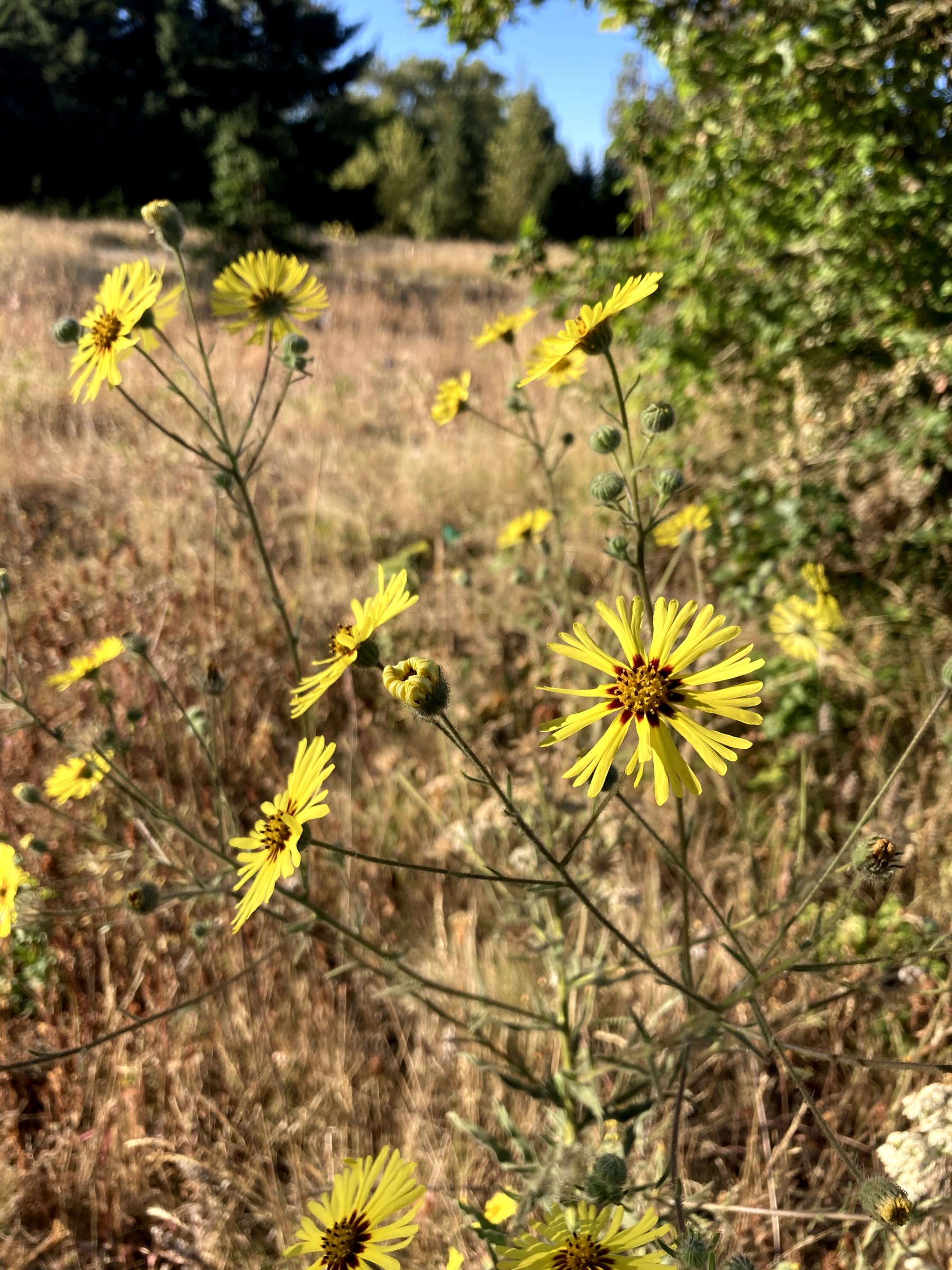
Madia elegans, commonly called Common Madia or Showy Tarweed, is a West Coast native annual wildflower in the aster family (Asteraceae) that brightens dry meadows and open woodlands with cheerful yellow daisy-like flowers from late spring through fall. The “tarweed” in its common name comes from the sticky, aromatic glandular hairs covering its stems and foliage, which give the plant a resinous scent when brushed or crushed — a feature that, while off-putting to some gardeners at first, is part of what makes this plant such a tough, drought-resistant survivor of California’s dry summers.
Growing 1 to 4 feet tall on branching, hairy stems, common madia produces bright yellow flower heads, sometimes with a dark maroon blotch at the base of each ray petal, that close up at night and on overcast days and reopen in full sun. Several named subspecies and varieties are recognized across its range, including the showy tarweed (Madia elegans subsp. densifolia) and spring madia (subsp. vernalis), but all share the same basic garden value: season-long bloom with essentially no supplemental water once established.
For gardeners from Washington to California who want a true dryland wildflower that blooms when most other natives have gone dormant for summer, common madia is an easy, reliable choice. It thrives in exactly the lean, fast-draining soil and baking sun that many other garden plants struggle with, and its late bloom period makes it a valuable late-season nectar and pollen source for bees and other pollinators.
Identification
Common madia is an annual forb that grows from a basal rosette into a branching, upright to sprawling plant 1 to 4 feet tall, depending on growing conditions and moisture. The entire plant is covered in short, stiff hairs, with stalked glands concentrated near the flower heads that exude a sticky, aromatic resin.
Leaves & Stems
The leaves are narrow, lance-shaped to linear, up to about 8 inches long on robust plants, and arranged alternately along branching green stems. Both leaves and stems are hairy and glandular-sticky, especially toward the flowering tips, giving the foliage its characteristic tarweed aroma when touched.
Flowers
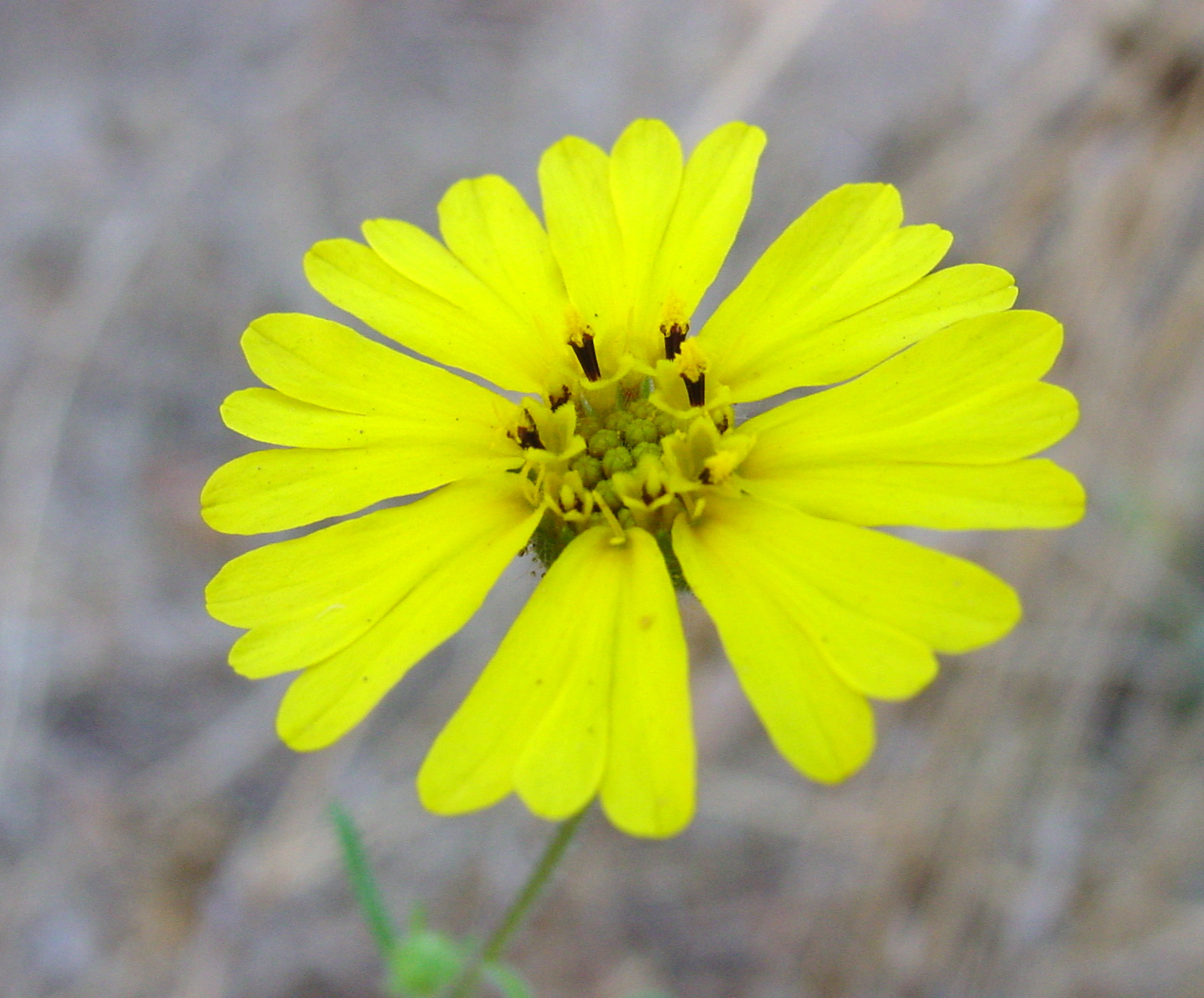
Flower heads are daisy-like, typically 1¼ to 2 inches across, with numerous thin, bright yellow ray flowers surrounding a cluster of central disk flowers. The ray flowers may be solid lemon yellow or marked with a dark maroon spot at the base of each petal, depending on the plant and subspecies. The flowers are strongly scented, close at night and in cloudy weather, and bloom from spring into fall, with the longest bloom period of any tarweed in cultivation. Flower heads are borne singly at the ends of slender branches, giving mature plants an airy, uncrowded look rather than a dense mound of bloom.
Fruit & Seeds
Like other tarweeds, common madia produces small, dry, one-seeded fruits called achenes after the flowers fade. These were historically an important food source, gathered and processed by Indigenous peoples of California. As an annual, the plant completes its life cycle in a single season, setting seed and dying back after flowering, then re-seeding itself readily in open, undisturbed soil the following year.
Quick Facts
| Scientific Name | Madia elegans |
| Family | Asteraceae (Aster/Sunflower) |
| Plant Type | Annual wildflower |
| Mature Height | 1–4 ft |
| Mature Spread | 1–2 ft, branching |
| Growth Rate | Fast (completes life cycle in one season) |
| Sun Exposure | Full Sun |
| Water Needs | Low once established; drought tolerant |
| Soil Type | Lean, fast-draining soil; tolerates poor and disturbed ground |
| Soil pH | Adaptable, neutral preferred |
| Bloom Time | Late spring through fall |
| Flower Color | Yellow, sometimes with a maroon center spot |
| Fall Color | None (annual, dies back after seeding) |
| Fruit | Small dry achenes |
| Deer Resistant | Yes (sticky, aromatic foliage deters browsing) |
| USDA Hardiness Zones | 7–10 (grown as a reseeding annual) |
Native Range
Common madia is native to the West Coast of North America, ranging from south-central Washington south through Oregon and California to northern Baja California, Mexico. It is most abundant and diverse in California, where several geographic subspecies are recognized, but it also occurs across much of Oregon and into the drier interior valleys of south-central Washington.
Typical habitat includes dry, open grasslands, oak woodlands, chaparral margins and disturbed or recently burned ground, from near sea level into the mountains. It is a classic component of California’s spring and summer wildflower displays, often appearing alongside other drought-tolerant annuals in grassy openings and along roadsides where competition from shrubs and trees is limited.
Common madia is still widespread and does not have special conservation status anywhere in its native range. It is not currently covered by a dedicated California or Nevada regional list on this site; gardeners in those states can still use the range and care information here with confidence, since the species is well documented as native throughout California’s valleys and foothills.
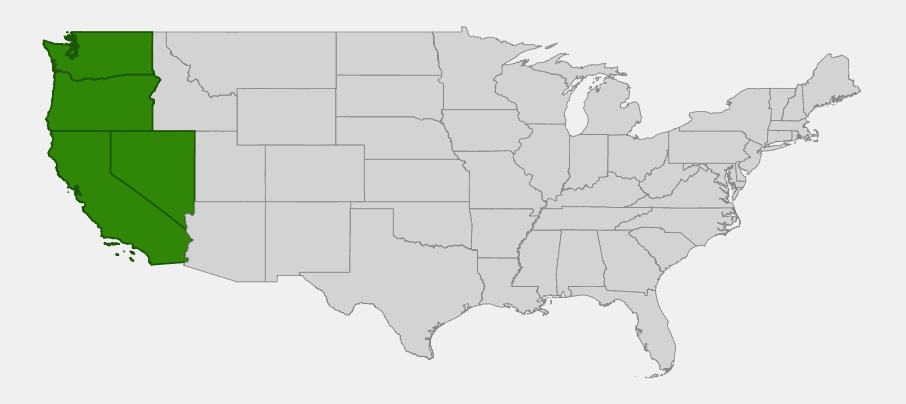
📋 Regional plant lists featuring Common Madia: Idaho, Eastern Oregon & Eastern Washington · Western Oregon & Western Washington
Growing & Care Guide
Common madia is one of the easiest California native annuals to grow from seed, rewarding minimal effort with months of cheerful bloom through the dry season when little else is flowering.
Light
Plant common madia in full sun. It is adapted to open, unshaded grassland and performs poorly with significant shade, becoming leggy and blooming sparsely. The flowers themselves close on overcast days and reopen as the sun returns, so a consistently sunny spot gets the most visual reward.
Soil & Water
This species thrives in lean, fast-draining soil and needs very little supplemental water once seedlings are established — in fact, rich, regularly irrigated soil can cause it to flop and encourage disease. Let the soil dry between waterings, and avoid heavy clay that stays wet. It tolerates poor, rocky or disturbed ground better than fertile garden beds.
Planting Tips
Direct-sow seed in fall or early winter so seedlings can establish over the cool, moist season and bloom through spring and summer, mimicking the natural germination cycle of California’s Mediterranean climate. Scatter seed on bare, lightly raked soil rather than burying it deeply, since many California annuals need light to germinate. Thin or allow self-sown seedlings to fill in; established plantings often self-sow reliably for years once a seed bank builds up in the soil.
Landscape Uses
- Dryland wildflower meadows mixed with California poppy and other drought-tolerant annuals
- Low-water gardens that need little to no summer irrigation once established
- Pollinator gardens for late-season nectar and pollen when many natives have finished blooming
- Slope and roadside plantings on lean, disturbed soil
- Fire-following restoration on recently burned or cleared ground
Wildlife & Ecological Value
Common madia’s late, long bloom period makes it an outsized contributor to pollinator support during the driest part of the California growing season.
For Pollinators
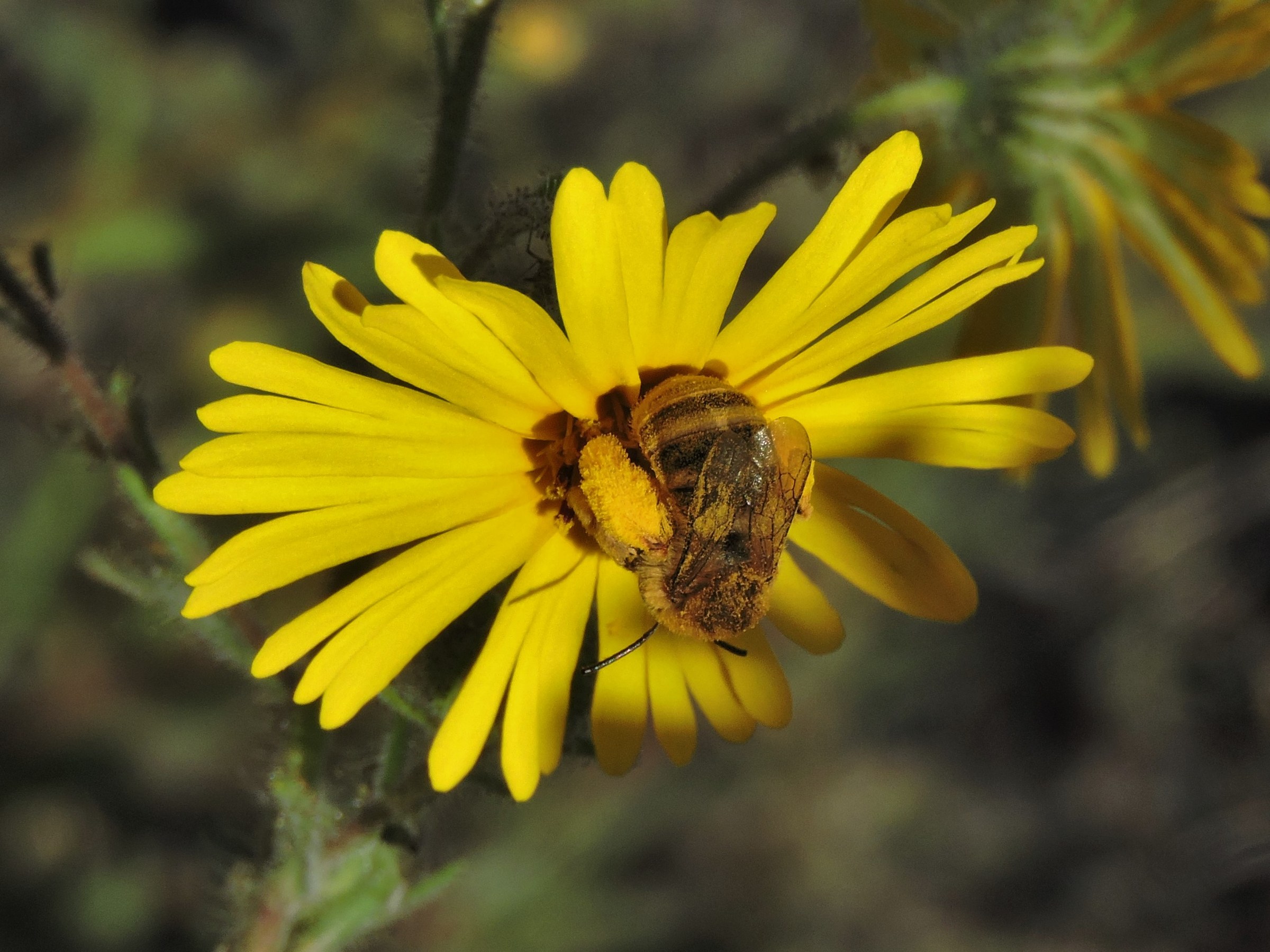
The flowers are visited by a wide range of native bees, including long-horned bees of the tribe Eucerini, as well as honey bees, butterflies and hoverflies. Because common madia keeps blooming well into summer and fall, after many spring annuals have finished, it provides an important late-season nectar and pollen resource when floral options are otherwise scarce.
For Birds
Small seed-eating birds forage on the ripe achenes in late summer and fall, and the open, branching structure of mature plants offers modest perching and foraging habitat for sparrows and finches moving through dry grassland.
For Mammals
The sticky, aromatic, resinous foliage strongly discourages browsing by deer and other mammals, making common madia one of the more reliably deer-resistant native annuals for California gardens.
Ecosystem Role
As a fast-growing, early-successional annual, common madia readily colonizes disturbed and recently burned ground, helping stabilize soil and add floral diversity while longer-lived perennials and shrubs reestablish. Its historical food use by Indigenous Californians also reflects its role as a once-significant, reliably abundant seed source in native grassland ecosystems.
Cultural & Historical Uses
The small, oil-rich achenes of common madia and related tarweeds were an important traditional food source for many Indigenous peoples of California, including the Pomo and Miwok, who parched and ground the seeds into a nutritious flour or meal. Tarweed seed harvesting was historically significant enough that early European visitors to California described vast fields of blooming tarweed and documented the seed-gathering practices of Native communities.
The genus name Madia derives from “madi,” the Chilean name for a related oil-seed plant once cultivated for its edible oil, reflecting the broader historical importance of tarweed relatives as food and oil sources across the Americas.
Today common madia is grown primarily as an ornamental wildflower rather than harvested for food, valued by native plant gardeners for its drought tolerance, long bloom season and ease of growth from seed.
Frequently Asked Questions
Why does common madia smell sticky or resinous?
The foliage and stems are covered in glandular hairs that exude an aromatic, sticky resin, which is the source of the common “tarweed” name shared by this genus. The scent is more noticeable when the foliage is brushed or crushed and is generally considered pleasant, if strong, by most gardeners.
Is common madia the same as showy tarweed?
“Showy tarweed” is one of several common names used for Madia elegans, particularly for the subspecies densifolia. All forms of the species share the same basic garden value: drought tolerance, bright yellow daisy flowers and a long summer bloom season.
Does common madia need water in summer?
No. Once established, it needs very little or no supplemental water and actually performs better in lean, dry soil. It follows the natural pattern of California’s wet winters and dry summers, germinating with fall and winter rain and flowering through the dry season.
Will common madia reseed itself in the garden?
Yes, readily. As an annual, it completes its life cycle in one season, but it self-sows reliably in open, undisturbed soil, often returning year after year once a seed bank is established, without needing to be replanted.
Is common madia deer resistant?
Yes. The sticky, aromatic, resin-coated foliage discourages browsing by deer and most other mammals, making it a reliable choice in gardens where deer pressure is a concern.

Looking for a nursery that carries Common Madia?
Browse our native plant nursery directory: California · Oregon · Washington · Nevada