
Arizona Muhly (Muhlenbergia arizonica)
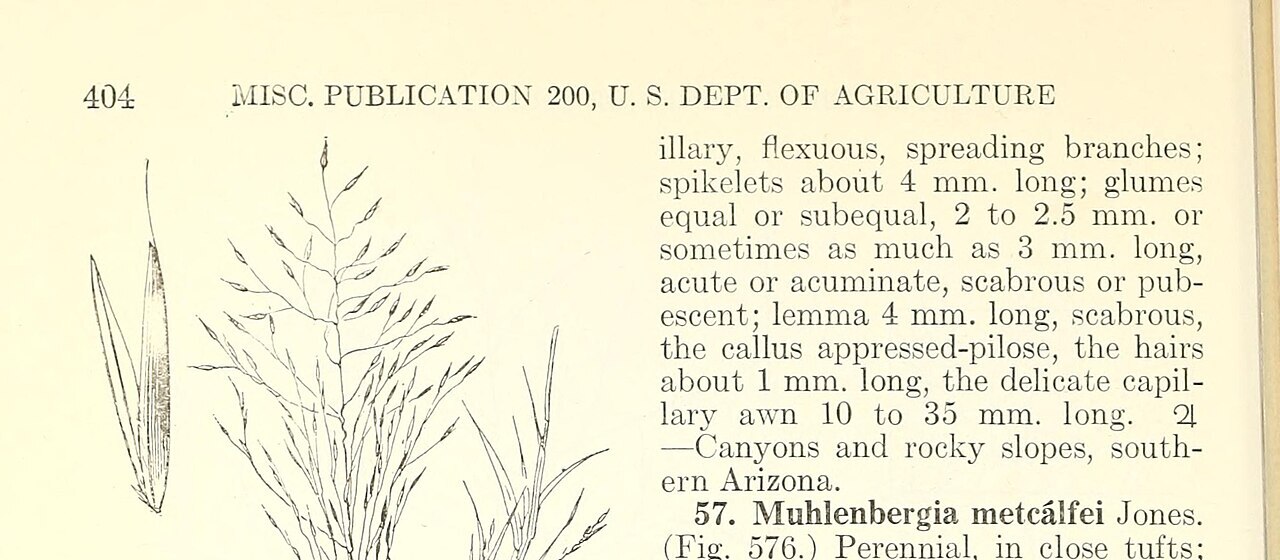
Muhlenbergia arizonica, commonly known as Arizona Muhly, is a small, little-known tufted grass found only in the canyons and rocky slopes of southeastern Arizona and adjoining New Mexico. It belongs to the large genus Muhlenbergia, a group of warm-season grasses named for the Pennsylvania botanist and clergyman Gotthilf Heinrich Ernst Muhlenberg, and it is one of the more obscure members of that genus — rarely offered in the nursery trade, seldom photographed, and known mostly from herbarium records and the mountain ranges where botanists have gone looking for it.
What sets Arizona muhly apart from look-alike muhlys is its spikelet: each floret carries a slender, delicate, hair-like awn that can stretch 10 to 35 millimeters — several times the length of the floret itself — giving the narrow flowering heads a wispy, cobwebbed look when backlit. The plant itself stays modest, usually 6 to 20 inches tall, forming small, loosely tufted clumps rather than the dense, sprawling mats of some of its relatives.
Because it is native to a narrow slice of the Madrean sky islands and adjacent New Mexico borderlands, Arizona muhly is not a plant most gardeners will encounter in a nursery catalog. It is included here as a genuinely wild, narrowly distributed native grass worth recognizing on a hike through its home canyons, and worth growing from seed collected or sourced responsibly within its own range if you garden in southern Arizona or southwestern New Mexico and want to represent the full diversity of the region’s native grasses.
Identification
Arizona muhly is a perennial, warm-season bunchgrass. Like most muhlys, it is cespitose — it grows in discrete tufts from a fibrous root system rather than spreading by rhizomes — so established plants hold their ground as a shrubby little clump rather than a running sod.
Culms & Leaves
Culms are slender, 15 to 50 cm (6 to 20 inches) tall, erect to somewhat decumbent (leaning, then turning upward), and lightly roughened (hispidulous) below the nodes. The leaf blades are narrow and mostly clustered near the base of the plant, rarely reaching more than halfway up the culm, which gives the plant an airy, open-topped look when it flowers — most of the visual mass is foliage near the ground, with slender flowering stems rising well above it.
Flowers & Fruit
The inflorescence is a narrow, loosely branched panicle with flexuous, somewhat spreading branches. Spikelets are about 4 mm long with nearly equal glumes 2 to 3 mm long, acute to acuminate and roughly scabrous (lightly roughened) in texture. The lemma is about 4 mm long, scabrous, with an appressed-pilose callus (a tuft of short hairs, about 1 mm, at its base) and — the plant’s most distinctive feature — a fine, hair-thin capillary awn 10 to 35 mm long. That long, delicate awn is the single best field mark separating Arizona muhly from the many superficially similar muhlys that share its range, most of which have short awns or none at all. Flowering occurs in late summer and fall, typically following the onset of the Southwest’s summer monsoon rains, which is when most Arizona grasslands green up and bloom.
Quick Facts
| Scientific Name | Muhlenbergia arizonica |
| Family | Poaceae (Grass) |
| Plant Type | Warm-season perennial bunchgrass |
| Mature Height | 6–20 in (15–50 cm) |
| Mature Spread | Small, loose tufts, under 1 ft wide |
| Growth Rate | Slow to moderate |
| Sun Exposure | Full Sun to Part Shade |
| Water Needs | Low to average; drought tolerant once established |
| Soil Type | Rocky, gravelly, well-drained soils |
| Soil pH | Neutral to slightly alkaline |
| Bloom Time | Late summer – fall (monsoon season) |
| Flower Color | Pale green to straw, with threadlike awns |
| Fall Color | Tan/straw as foliage cures |
| Fruit | Small caryopsis (grain) typical of the grass family |
| Deer Resistant | Generally yes (grasses are low browse priority) |
| USDA Hardiness Zones | 7–9 |
Native Range
Arizona muhly is a narrow regional endemic of the American Southwest. It is confirmed native to Arizona, where it is most frequently collected from the canyons and rocky slopes of the southeastern “sky island” mountains, and it extends into adjoining southwestern New Mexico. It is not a widespread grassland dominant like many of its muhly relatives; rather, it occupies a comparatively small, specific niche within a limited geographic area, and most botanical records come from rugged, rocky terrain rather than open valley floors.
Typical habitat is rocky slopes, canyon walls, and well-drained gravelly ground in oak woodland and desert grassland transition zones, generally at middle elevations in the borderland mountains. These are sites with excellent drainage, intense summer sun, and a pronounced monsoon-driven growing season, conditions the plant is clearly adapted to given its drought tolerance and late-summer bloom period.
Because it has such a restricted range and modest stature, Arizona muhly is easy to overlook in the field and is not commonly represented in cultivation or in regional native-plant trade. Gardeners within its native range who want to grow it should seek seed or plants from reputable native-plant sources rather than collecting from wild populations, which are already limited in extent.
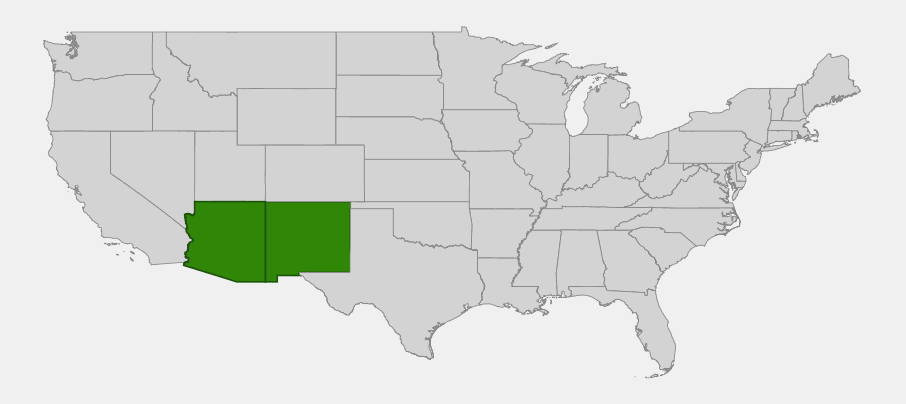
📋 Regional plant lists featuring Arizona Muhly: Arizona & New Mexico
Growing & Care Guide
Arizona muhly is not a plant you will find much cultivation guidance for — it has little history in horticulture — but its native habitat tells you most of what you need to know. It wants the same conditions as the rocky, sun-baked canyon slopes where it grows wild: sharp drainage, full exposure, and minimal supplemental water once established.
Light
Give Arizona muhly full sun to very light part shade, mimicking the open, rocky slopes of its native canyons. Deep shade will produce a thin, weak plant.
Soil & Water
Plant it in lean, rocky, fast-draining soil — a raised bed, rock garden, or slope with gravelly native soil suits it far better than rich, moisture-retentive garden loam. It is adapted to a strongly seasonal rainfall pattern (dry spring, wet summer monsoon), so water sparingly through spring, let a few deep soakings carry it through summer if monsoon rain is light, and avoid winter wetness, which these high-desert bunchgrasses do not tolerate well.
Planting Tips
Because nursery stock is scarce, most gardeners will start from seed. Sow in late spring to catch the onset of summer warmth and monsoon moisture, which mimics its natural germination cue. Space small plants a foot or so apart to allow each tuft room to fill out; given its modest size, it works well tucked among rocks or paired with other small southwestern bunchgrasses rather than used as a large-scale groundcover.
Pruning & Maintenance
Little maintenance is needed. Cut back dead growth in late winter before new shoots emerge in spring, as you would with most warm-season bunchgrasses. It is not aggressive and will not need dividing or containment.
Landscape Uses
Arizona muhly’s small scale and rocky-ground preference suit a few specific garden roles:
- Rock gardens and gravel beds that echo its native canyon habitat
- Regional seed-mix restoration within its native southeastern Arizona/southwestern New Mexico range
- Specimen interest for collectors of true Southwest native grasses
- Dry slope stabilization on lean, rocky ground where little else will establish
Wildlife & Ecological Value
As with most native bunchgrasses, Arizona muhly plays a modest but real supporting role in its canyon and grassland habitat, even though it has not been the subject of focused wildlife studies.
For Birds
Seed-eating sparrows and other grassland and canyon birds forage on the small seed heads of southwestern muhly grasses generally, and the fine tufted growth form offers low cover for ground-foraging species.
For Mammals
Small mammals and, where present, grazing wildlife make use of muhly grasses as a minor forage component, particularly once the plant cures to a drier, more palatable stage after flowering.
Ecosystem Role
Like other canyon and slope grasses, Arizona muhly’s fibrous root system helps hold thin, rocky soils in place on the steep ground it favors, reducing erosion after the Southwest’s intense summer thunderstorms. Its presence also adds to the overall diversity of native grasses in a region already rich in muhly species, many of which subtly partition the landscape by elevation, aspect, and soil type.
Cultural & Historical Uses
Arizona muhly has no significant documented history of use by Indigenous peoples or settlers, distinct from the broader pattern of native grasses being grazed by livestock across the Southwest since the late 1800s. It was first described botanically in the early twentieth century, based on specimens collected in the mountain canyons of southern Arizona, and it remains primarily known today through herbarium records and regional floristic surveys rather than through any folk or commercial use.
Because of its narrow range and inconspicuous size, Arizona muhly has largely stayed outside the spotlight that some showier Southwest natives have received in both ethnobotany and horticulture. Its chief interest today is to botanists documenting Southwest grass diversity and to gardeners and land stewards within its native range who value representing the full, specific flora of their own corner of Arizona or New Mexico rather than substituting a more generic, widely sold native grass.
Frequently Asked Questions
Is Arizona muhly the same as other common “muhly” grasses sold in nurseries?
No. The muhly grasses commonly sold for landscaping, such as pink muhly (Muhlenbergia capillaris) or deer muhly (Muhlenbergia rigens), are different, more widespread species. Arizona muhly is a separate, narrowly distributed species with a much more limited native range and no real nursery trade presence.
Where can I see Arizona muhly in the wild?
It grows in the canyons and rocky slopes of the “sky island” mountain ranges of southeastern Arizona and adjoining southwestern New Mexico. Because it is inconspicuous and easily confused with other muhly species, it is best identified in late summer or fall when its long, hair-thin awns are visible on the flowering heads.
How can I tell Arizona muhly apart from similar grasses?
Look for the long, delicate, hair-like awn on the lemma — 10 to 35 millimeters long, several times the length of the floret itself. Many similar-looking muhly grasses in the same canyons have much shorter awns or none at all.
Is Arizona muhly available at native plant nurseries?
Rarely. Because of its narrow range and inconspicuous habit, it has little history in the nursery trade. Gardeners within its native range who want to grow it should look for seed from reputable regional native-seed sources rather than collecting from wild, already-limited populations.
Is Arizona muhly drought tolerant?
Yes. Its native habitat — rocky, fast-draining canyon slopes in a monsoon-driven desert climate — makes it well adapted to low water conditions once established, though like most seedlings it benefits from regular moisture during its first growing season.

Looking for a nursery that carries native grasses for Arizona muhly’s range?
Browse our native plant nursery directory: Arizona · New Mexico