
Knobcone Pine (Pinus attenuata)
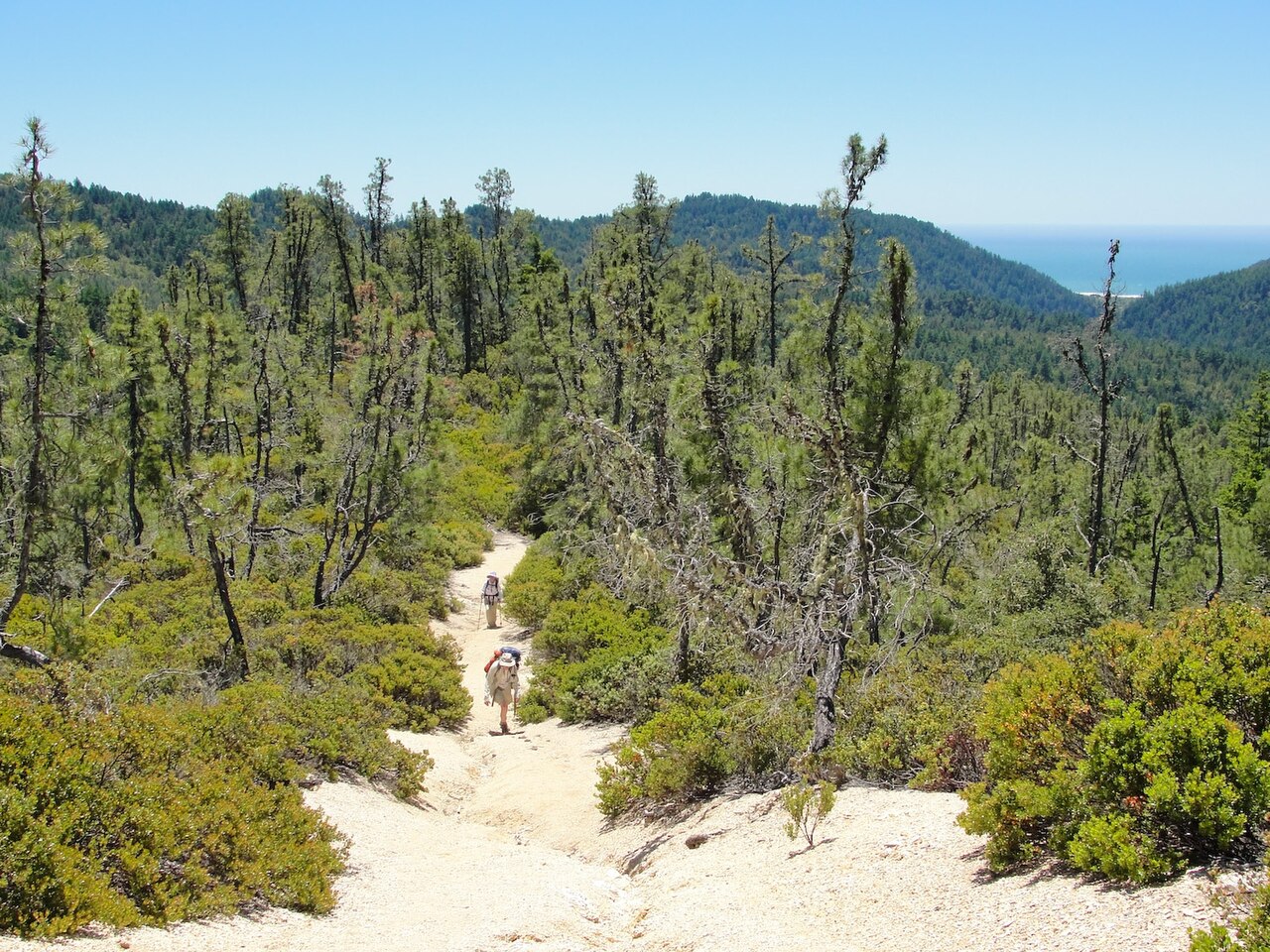
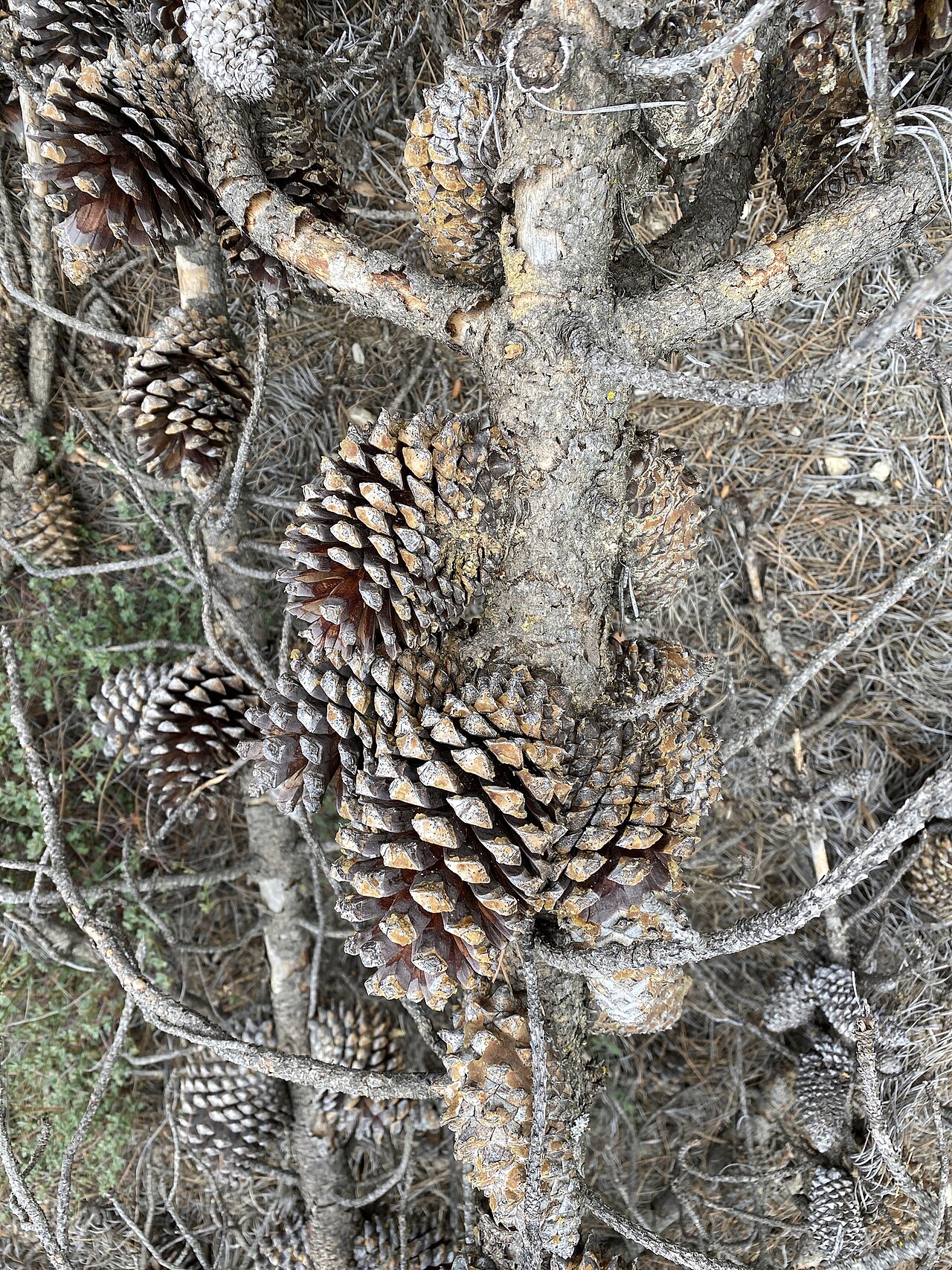
Pinus attenuata, the Knobcone Pine, is one of the most distinctive conifers of California and southern Oregon, instantly recognizable once you know its trick: this is “the tree that swallows its own cones.” Rather than opening and dropping seed each year like most pines, Knobcone Pine produces tough, lopsided, knobby cones that stay sealed shut with resin for years or even decades, gradually becoming embedded in the growing branch or trunk around them. Only intense heat — usually from wildfire — melts the resin and triggers the cones to pop open, releasing a bank of stored seed onto a freshly burned, sunlit seedbed exactly when the tree’s seedlings have the best chance of success.
This serotiny (heat-triggered cone opening) makes Knobcone Pine a classic “fire-type” pine, and it shapes everything about where and how the tree grows. It thrives on poor, rocky, often serpentine soils in the hot, dry foothills and coastal mountains from the Oregon-California border south through the Coast Ranges and into the Sierra Nevada foothills, forming dense, even-aged stands that regenerate in pulses after fire rather than through gradual, continuous reproduction.
Knobcone Pine is not a tree for a tidy suburban yard — it is often scraggly, asymmetrical, and short-lived by pine standards — but it is an excellent choice for restoration plantings, fire-adapted native landscaping, and difficult, rocky sites in its native range where few other trees will grow at all. Its strange, cone-studded branches and trunks also make it one of the more conversation-worthy native conifers you can plant.
Identification
Knobcone Pine is a small to medium evergreen conifer, typically 20 to 80 feet (6–24 m) tall, though it is often smaller and more irregular in form on poor sites. The crown is usually open, asymmetrical, and somewhat scraggly compared with the symmetrical crowns of many other pines, and the trunk is frequently obscured by whorls of old, embedded cones.
Bark & Stems
Bark on young trees is smooth and gray, becoming thin, dark gray-brown, and shallowly furrowed with age — notably thinner than the thick, fire-resistant bark of Ponderosa Pine, which reflects Knobcone Pine’s different fire strategy: rather than surviving fire as individuals, whole stands are often killed and then regenerate en masse from the seed released by heat-opened cones.
Leaves
Needles are yellow-green, 3 to 7 inches (8–18 cm) long, and borne in bundles (fascicles) of three. They are slightly twisted and somewhat stout compared with the softer needles of some other California pines, and persist on the branch for several years, giving the crown a fairly dense, tufted appearance toward the branch tips.
Fruit & Seeds
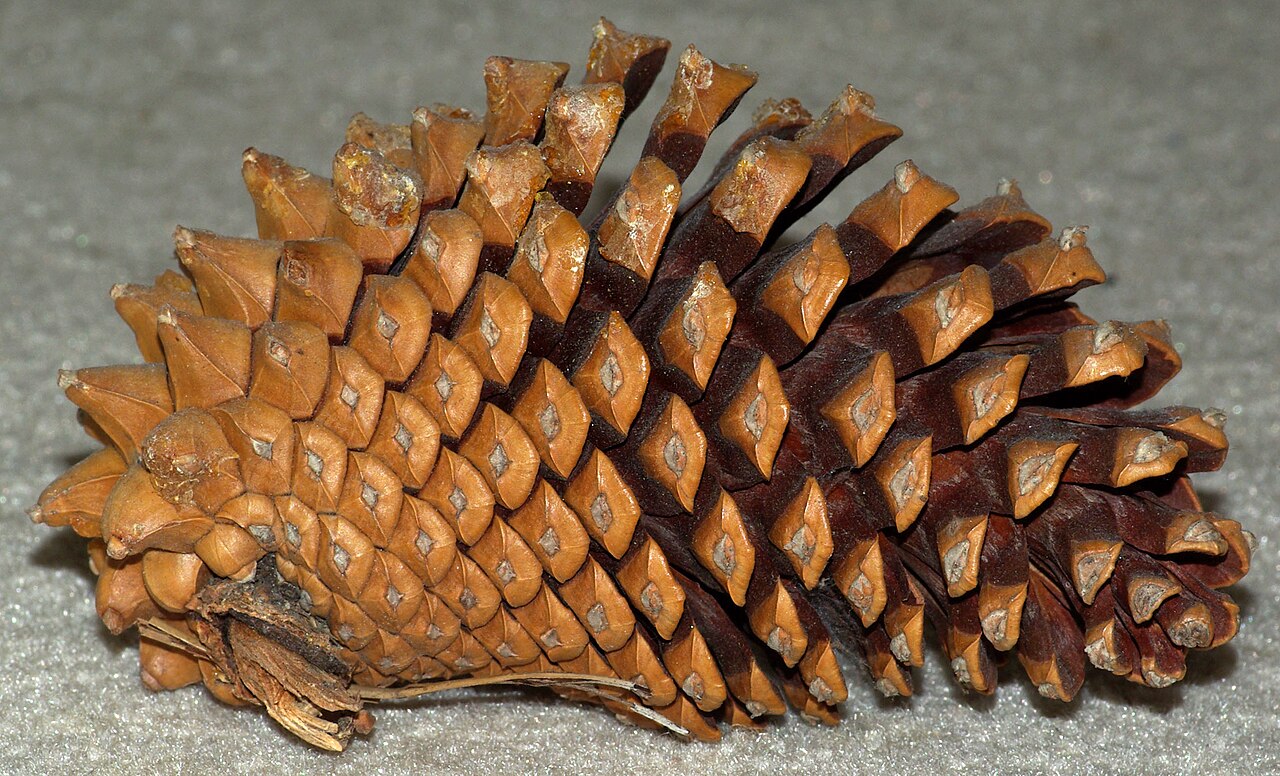
The cones are the signature feature of this species: asymmetrical, 3 to 6 inches (8–15 cm) long, curved, and armed with prominent, outward-pointing knobs or prickles on the outer (lower) side of each scale — the feature that gives the tree its common name. Cones form in tight whorled clusters of three to six or more around the branches and trunk, remain tightly closed and glossy for years, and can become partially grown-over by expanding wood, visibly bulging out from otherwise smooth bark. They open only when exposed to the heat of fire, at which point they release many small, winged seeds onto the newly cleared ground.
Quick Facts
| Scientific Name | Pinus attenuata |
| Family | Pinaceae (Pine) |
| Plant Type | Evergreen Coniferous Tree |
| Mature Height | 20–80 ft (6–24 m) |
| Mature Spread | 15–25 ft (4.5–7.5 m) |
| Growth Rate | Fast when young |
| Sun Exposure | Full Sun |
| Water Needs | Low once established |
| Soil Type | Poor, rocky or serpentine; well-drained |
| Soil pH | 5.0–7.0 (acidic to neutral) |
| Bloom Time | Spring (pollen cones) |
| Flower Color | Yellow (male cones) |
| Fall Color | None (evergreen) |
| Fruit | Asymmetrical, knobby, serotinous seed cones |
| Deer Resistant | Yes (mature bark and foliage) |
| USDA Hardiness Zones | 7–9 |
Native Range
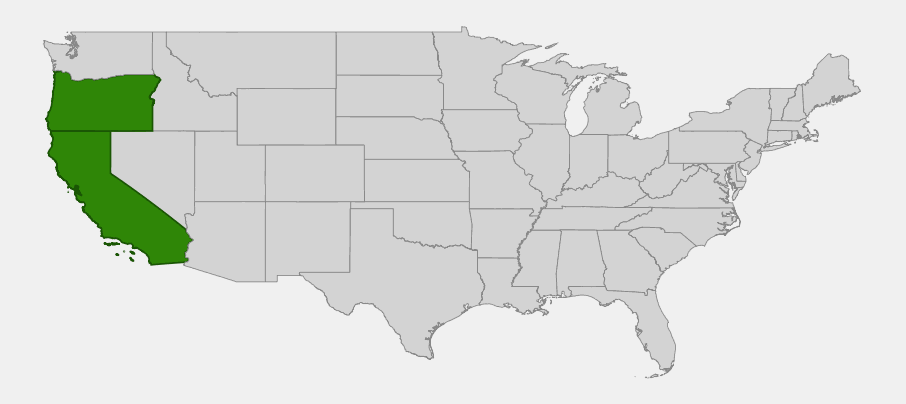
Knobcone Pine ranges from the Umpqua and Rogue River drainages of southwestern Oregon south through California’s Klamath Mountains, Coast Ranges, and Sierra Nevada foothills, extending into northern Baja California, Mexico. Within California it is widespread in the Coast Ranges, from the Oregon border south through the Bay Area hills and Santa Cruz Mountains to the Transverse Ranges of Southern California, and it also occurs locally in the Sierra Nevada foothills. The greatest concentration of the species is along the California–Oregon border and through northern California’s Klamath region.
It occupies some of the poorest, driest, and rockiest sites available — ridgetops, serpentine barrens, and thin mountain soils where fire is frequent and competing vegetation is limited — typically at elevations from near sea level to about 5,000 feet. Because it depends on periodic stand-replacing fire to regenerate, Knobcone Pine forms dense, even-aged thickets that establish in pulses after a burn rather than the more continuous, uneven-aged stands typical of many other pines.
Knobcone Pine is often found growing with other fire-adapted chaparral and foothill species, including various manzanitas and ceanothus, and transitions into mixed-conifer forest with Ponderosa Pine, Jeffrey Pine, Coulter Pine, Douglas Fir, and canyon live oak on somewhat better sites nearby.
📋 Regional plant lists featuring Knobcone Pine: Western Oregon & Western Washington
Growing & Care Guide
Knobcone Pine is a tough, low-maintenance choice for the right site: hot, dry, rocky, and sun-baked, where many other trees struggle. It is not a good fit for a manicured, irrigated lawn setting, but it is excellent for native restoration, fire-wise landscaping, and difficult slopes within its native range.
Light
Plant in full sun. Knobcone Pine is intolerant of shade at every life stage and will not persist under a closing canopy — in the wild it depends on open, recently burned or disturbed ground to establish.
Soil & Water
This species is specifically adapted to poor, infertile, well-drained soils, including serpentine and other rocky substrates that few other conifers tolerate well. It needs little to no supplemental water once established and, in fact, performs poorly on rich, consistently moist garden soil, where it grows weak and becomes more susceptible to disease. Avoid heavy clay or poorly drained sites.
Planting Tips
Plant young container stock in fall to take advantage of winter rains for root establishment. Choose an open, sunny site with lean soil rather than amended garden beds. Because this is a fire-adapted, relatively short-lived pine (often 50 to 100 years), it is best used in naturalistic plantings and restoration contexts rather than as a long-term specimen or street tree.
Pruning & Maintenance
Minimal pruning is needed or even desirable — the irregular, asymmetrical form is natural to the species. Remove dead wood for fire safety near structures, since accumulated dead branches and the resin-rich, persistent cones can increase fire hazard close to buildings. Because of this fire-carrying tendency, give some thought to defensible space if planting near a home in a fire-prone area.
Landscape Uses
Good uses for Knobcone Pine include:
- Fire-adapted restoration plantings on dry foothill and ridge sites
- Serpentine and rocky-soil landscaping where few other trees succeed
- Wildlife habitat plantings in chaparral-woodland transition zones
- Erosion control on steep, poor-soil slopes
- Naturalistic, low-water native gardens away from structures
Wildlife & Ecological Value
Knobcone Pine’s fire-dependent life cycle makes it a keystone species of early post-fire succession in its range, rapidly reclothing burned slopes and providing structure and food in habitats that would otherwise take much longer to recover.
For Birds
Seed-eating birds, including pine siskins and various finches, feed on seed released from fire-opened cones, and dense young stands provide cover for brush-dwelling species such as wrentits and California towhees. Woodpeckers forage on insects in standing dead trees, which are common in Knobcone stands as they age and self-thin.
For Mammals
Chipmunks and other small rodents cache and consume seed, while deer browse young foliage and use dense thickets for cover. The brushy, fire-origin stands typical of this species provide important escape and thermal cover in otherwise open chaparral and foothill terrain.
For Pollinators
As a wind-pollinated conifer, Knobcone Pine does not depend on insect pollinators, but the chaparral and foothill woodland plant communities it grows within — rich in manzanita, ceanothus, and other flowering shrubs — are important nectar sources for native bees and other pollinators.
Ecosystem Role
Knobcone Pine is a textbook example of a serotinous, fire-type conifer: its entire reproductive strategy is built around stand-replacing fire, and it plays an outsized role in quickly stabilizing and revegetating burned slopes with woody cover. Its presence is also a strong indicator of recent fire history and of poor, often serpentine soils that shape distinctive plant communities found nowhere else.
Cultural & Historical Uses
Indigenous peoples throughout Knobcone Pine’s range, including groups in the Klamath and Coast Range areas, made use of pines broadly for building material, fuelwood, and pitch, though Knobcone Pine’s small size, twisted form, and resin-heavy wood made it less prized for timber than larger, straighter conifers such as Ponderosa Pine or Douglas Fir growing nearby.
In more recent history, the tree’s striking, cone-studded trunks and branches have made it a subject of interest to foresters and naturalists studying fire ecology, and the species has become something of a textbook example in the study of plant adaptations to fire, cited in ecology courses and nature programs for its remarkable serotiny.
Because it readily colonizes disturbed and burned ground, Knobcone Pine is occasionally used in erosion-control and reforestation projects on poor, fire-affected sites, valued less for its wood than for its ability to quickly establish woody cover where little else will grow.
Frequently Asked Questions
Why are Knobcone Pine cones called “knobcones”?
Each scale of the cone bears a small, pointed, outward-facing knob or prickle, giving the whole cone a bumpy, knobby texture unlike the smoother cones of most other pines. This feature, combined with the cone’s lopsided shape, makes the species easy to identify once you know what to look for.
Why don’t Knobcone Pine cones open on their own?
The cones are sealed with resin and stay tightly closed — sometimes for decades — until exposed to the intense heat of wildfire, which melts the resin and allows the scales to open and release seed. This strategy, called serotiny, times seed release to follow fire, when competing vegetation has been cleared and bare mineral soil is exposed.
Is Knobcone Pine a good yard tree?
It can work in the right setting — a hot, dry, rocky, low-water native garden or restoration planting — but its irregular form, relatively short lifespan, and fire-adapted biology make it a poor choice for a formal or irrigated landscape. It is best suited to naturalistic plantings within its native range.
How tall does Knobcone Pine get?
Most trees reach 20 to 80 feet, with height and form varying considerably depending on soil quality and site conditions — trees on the poorest, rockiest sites are often small and scraggly, while those on somewhat better soil can grow taller and straighter.
Is Knobcone Pine native to Oregon?
Yes, though its U.S. range there is limited to the southwestern corner of the state, in the Umpqua and Rogue River drainages near the California border; the great majority of its range lies within California.

Looking for a nursery that carries Knobcone Pine?
Browse our native plant nursery directory: California · Oregon