
Desert Chia (Salvia columbariae)
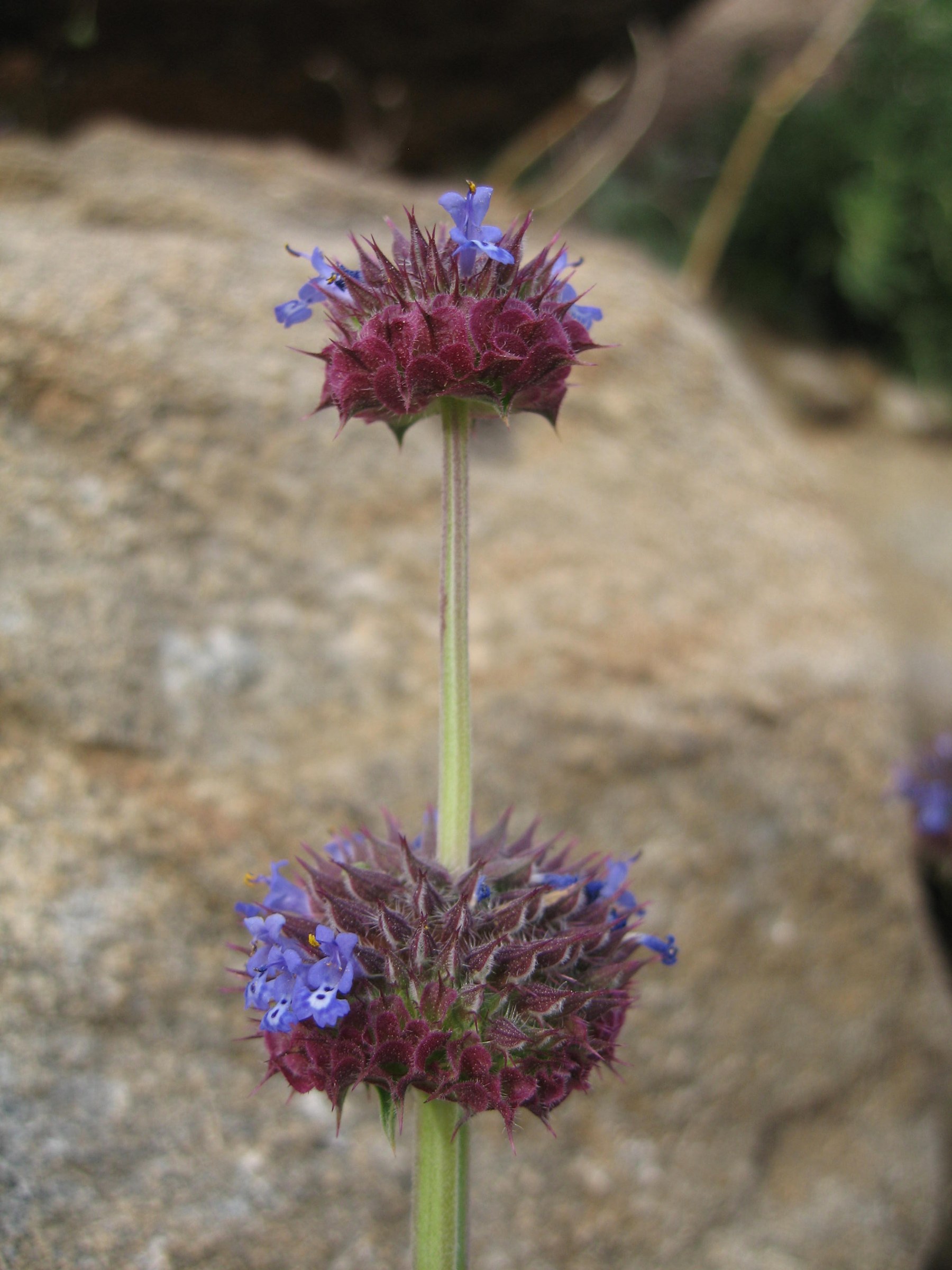
Salvia columbariae, known as Desert Chia, chia sage, or golden chia, is a small annual wildflower of the warm deserts and dry foothills of the American Southwest. Every spring after adequate winter rain, it emerges from seed, flowers quickly, sets seed, and dies back — a classic desert-annual life strategy timed to make the most of a short window of moisture before the dry season returns. Its most recognizable feature is not the flower itself but the ball-like clusters of spiny, maroon-tinged bracts that cup the small blue blossoms, giving each flower head a distinctive pincushion look that persists long after the petals are gone.
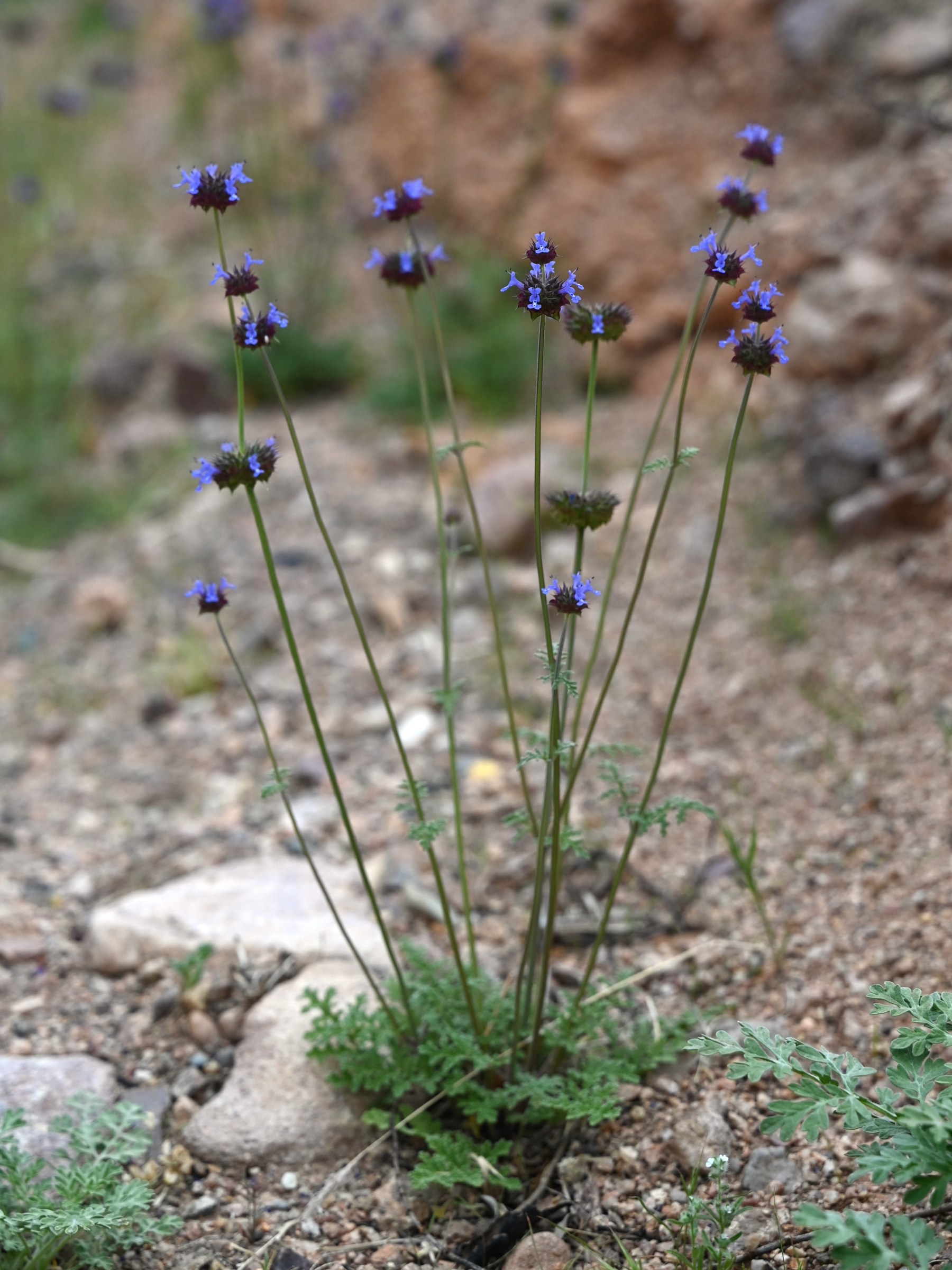
Desert Chia rarely exceeds 20 inches tall, with a handful of slender, square flowering stems rising from a basal rosette of finely divided, fern-like leaves. Despite its small stature, it was one of the most important wild food plants of Indigenous peoples across its range, and its common name comes directly from its edible seeds, used in much the same way as the seeds of its more famous relative, the commercial chia crop plant.
In the garden, Desert Chia is a low-water annual well suited to desert wildflower meadows, rock gardens, and naturalistic plantings across its native range in California, Nevada, Utah, Arizona, and New Mexico. It reseeds readily where conditions suit it, returning each spring without replanting once established in a bed with the right soil and sun.
Identification
Desert Chia is a slender, erect annual herb, typically 4 to 20 inches (10–50 cm) tall, though plants in good rain years can be noticeably larger than those struggling through a dry spring. The whole plant has a somewhat hairy, grayish-green cast.
Stems
Stems are square in cross-section, as in all mints, slender, and usually branching from near the base. They are covered in short, soft hairs and often take on a purplish tinge, especially toward the flowering heads.
Leaves
Leaves are mostly basal, forming a rosette close to the ground, with a few smaller leaves along the lower stem. They are pinnately divided or deeply lobed, giving them a fern-like or parsley-like texture that is a useful field mark even before the plant flowers. The leaf surface is gray-green and finely hairy.
Flowers
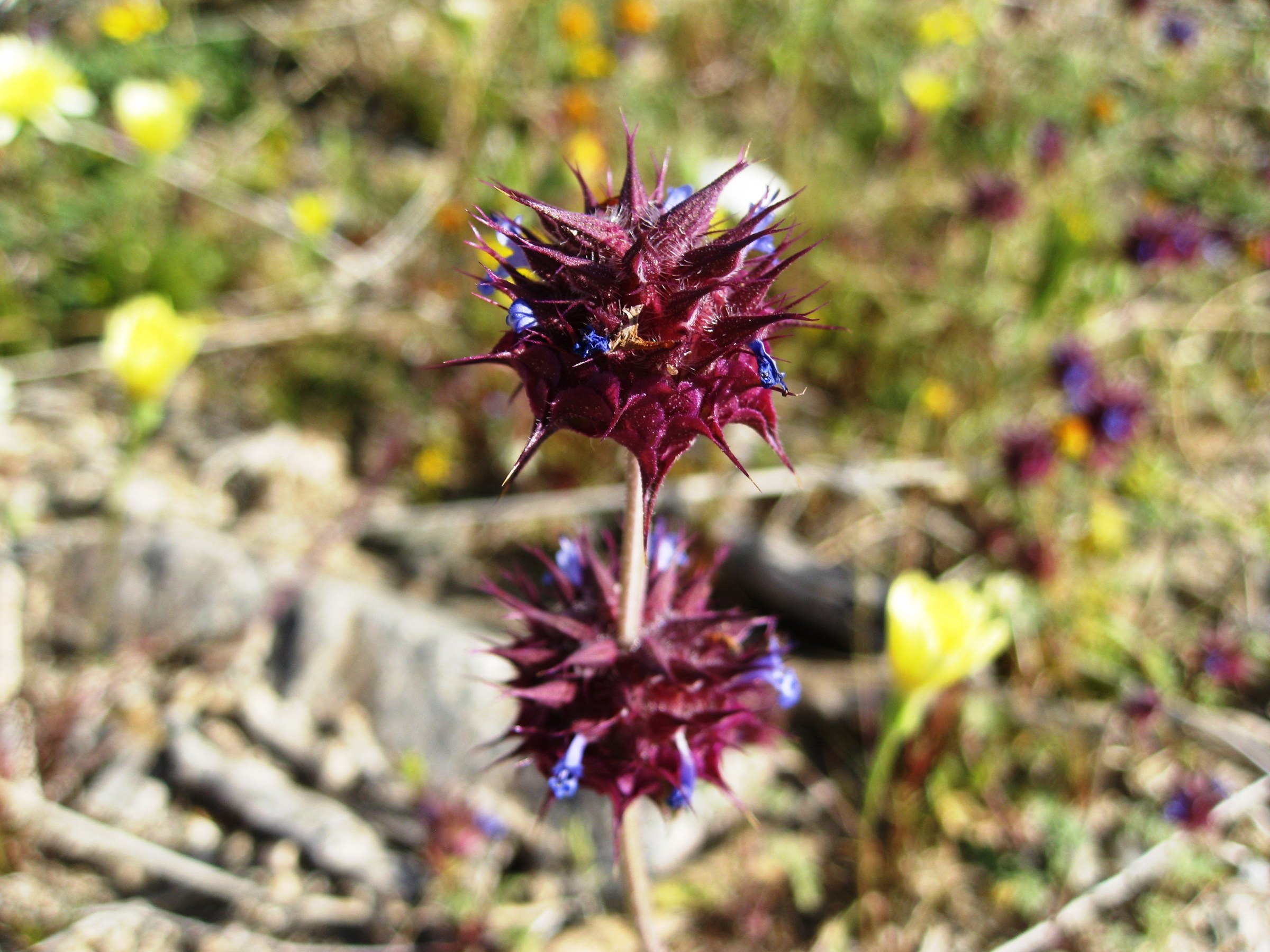
The flowers are small, two-lipped, and pale blue to lavender-blue, but they are easy to overlook compared to the structure that holds them: dense, ball-shaped whorls (verticillasters) of spiny, purplish-maroon bracts, usually two to several per stem, stacked like beads along the flowering stalk. Each bract ends in a sharp, needle-like point. Bloom typically runs from March into May or June, depending on elevation and rainfall, and is strongly triggered by winter and early-spring precipitation — in drought years, plants may barely flower at all.
Fruit & Seeds
After flowering, each spiny bract cluster dries to a hard, persistent seed head holding numerous tiny, mucilaginous nutlets. These seeds swell and become gelatinous when soaked in water, the same trait that makes commercial chia seed popular today. The dried flower heads often remain standing on the dead stems well after the rest of the plant has withered, a useful identification aid into summer.
Quick Facts
| Scientific Name | Salvia columbariae |
| Family | Lamiaceae (Mint) |
| Plant Type | Annual Wildflower |
| Mature Height | 4–20 in (10–50 cm) |
| Mature Spread | 6–12 in (15–30 cm) |
| Growth Rate | Fast (completes life cycle in one season) |
| Sun Exposure | Full Sun |
| Water Needs | Low; relies on winter/spring rain |
| Soil Type | Sandy, gravelly or rocky; fast-draining |
| Soil pH | 6.5–8.0 (neutral to alkaline) |
| Bloom Time | March – June |
| Flower Color | Pale to lavender-blue |
| Fall Color | None (annual, dies back after seeding) |
| Fruit | Tiny mucilaginous nutlets in spiny bract clusters |
| Deer Resistant | Yes (aromatic foliage, spiny seed heads) |
| USDA Hardiness Zones | 8–11 (grown as a self-seeding annual) |
Native Range
Desert Chia is native across the warm deserts and dry foothills of the southwestern United States, occurring in California, Nevada, Utah, Arizona, and New Mexico, and continuing south into northern Mexico in Baja California and Sonora. It is most abundant and widespread in California, where it ranges from the coastal sage scrub of the southern coast through the interior valleys and into the Mojave and Colorado deserts.
It typically grows at low to middle elevations, from near sea level in coastal Southern California up to around 5,000 feet (1,500 m) in desert foothills and washes. Typical habitat includes sandy or gravelly washes, open desert flats, chaparral and coastal sage scrub openings, and disturbed ground — it is often one of the first and showiest wildflowers to appear in a good desert bloom year.
Because it is an annual that depends on adequate rainfall to germinate and flower, Desert Chia’s visible abundance varies enormously from year to year. In drought years it may barely appear above ground; after a wet winter it can carpet desert flats in dense stands alongside other spring annual wildflowers.
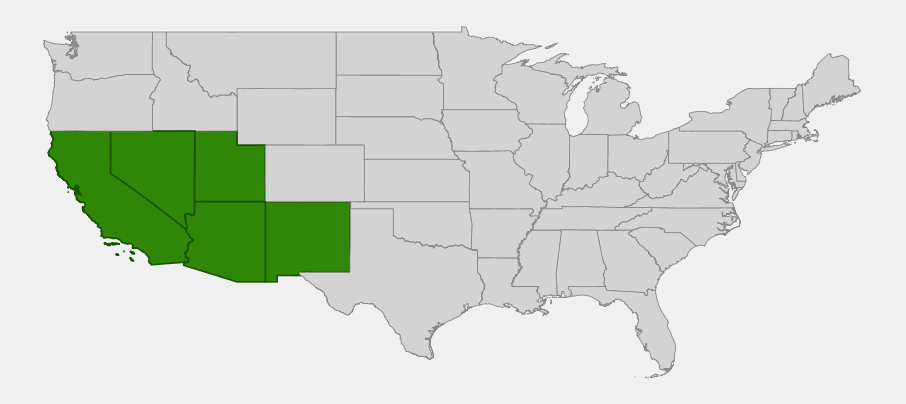
📋 Regional plant lists featuring Desert Chia: Arizona & New Mexico · Utah & Western Colorado
Growing & Care Guide
Desert Chia is easy to grow from seed and asks for almost nothing once sown in the right spot — its biggest requirement is simply matching its natural rainfall pattern.
Light
Give it full sun. This is an open-desert annual adapted to intense, unshaded light, and it will not perform well, or may not germinate at all, in shaded garden spots.
Soil & Water
Fast-draining, sandy or gravelly soil is essential; heavy, wet clay will rot the seed before it can germinate. In the garden, sow seed in fall so winter rains can trigger germination, just as they do in the wild. Established seedlings need little supplemental water beyond natural rainfall in most of their native range, though an occasional deep watering during an unusually dry spring can extend the bloom.
Planting Tips
Scatter seed directly where plants are wanted in fall, lightly raking it into the soil surface rather than burying it deep — these seeds germinate best with light and winter chill. Desert Chia resents transplanting because of its sensitive taproot, so direct seeding is far more reliable than starting plants in containers. Once established in a bed with suitable drainage, it will self-sow in subsequent years whenever winter rainfall is adequate.
Pruning & Maintenance
None needed during the growing season. After flowering and seed set, the plant dries and dies back naturally; leaving the spent seed heads in place through summer allows seed to disperse for next year’s bloom and provides a food source for birds in the meantime.
Propagation
Propagation is almost always by seed, collected from dried bract clusters in early summer or purchased from a native-seed supplier. No stratification is typically needed beyond the natural cold and moisture of a winter sowing.
Landscape Uses
Desert Chia fits naturally into several low-water garden styles:
- Desert wildflower meadows mixed with other spring annuals
- Rock gardens and gravel beds with sharp drainage
- Pollinator and bee gardens, especially in early spring
- Naturalistic restoration plantings in disturbed desert soils
- Container plantings for a season of desert-authentic bloom
Wildlife & Ecological Value
As an early-blooming desert annual, Desert Chia plays an outsized role in the spring food web of arid Southwestern ecosystems.
For Pollinators
Native bees are the primary visitors to Desert Chia’s small blue flowers, working the stacked whorls methodically from bottom to top. In a good bloom year, Desert Chia can be an important early-season nectar and pollen source when few other desert plants are yet flowering.
For Birds
The tiny, oil-rich seeds held in the dried, spiny bract clusters are eaten by sparrows, finches, and other seed-eating birds, which forage on the standing dead flower heads well into the dry season after the rest of the plant has withered.
For Mammals
Small mammals, including desert rodents, gather and cache the seeds, incidentally helping disperse the plant to new ground. The spiny bracts likely discourage larger browsers, and the aromatic foliage is not a preferred forage for deer.
Ecosystem Role
As one of the earlier and more conspicuous spring annuals across its range, Desert Chia contributes to the pulse of nectar, pollen, and seed that supports desert insect and bird populations through the brief, resource-rich window after winter rains. Its rapid germinate-flower-seed cycle is itself a model of desert-annual adaptation, allowing it to persist as a dormant seed bank through long dry years and reappear reliably when conditions allow.
Cultural & Historical Uses
Desert Chia seed was one of the most valued wild food plants across its range, gathered by the Cahuilla, Kumeyaay, Cupeño, and many other Indigenous peoples of California and the greater Southwest. The small seeds were parched, ground into a meal called pinole, and mixed with water to make a nourishing, energy-dense drink or paste — prized by travelers because the seeds swell with water and are easy to carry in a compact, lightweight form. Early Spanish and American accounts of California frequently noted the importance of “chia” harvests to Indigenous diets, and the plant’s seed was significant enough to be traded between groups across considerable distances.
It is worth noting that the “chia” sold commercially in grocery stores today, prized for its omega-3 content, comes from a different though related species, Salvia hispanica, native to central Mexico and Guatemala and cultivated as a modern commercial crop. Desert Chia (Salvia columbariae) is the wild North American species whose traditional food use gave rise to the common “chia” name, but it is not the source of the chia seed found in supermarkets today.
Beyond its use as food, the plant held a broader place in traditional ethnobotanical knowledge across the region, reflecting how closely Indigenous communities tracked the timing and uses of this modest but valuable desert annual.
Frequently Asked Questions
Is Desert Chia the same plant as the chia seed sold in stores?
No. Commercial chia seed comes from Salvia hispanica, a related but distinct species native to central Mexico and Guatemala. Desert Chia (Salvia columbariae) is the wild Southwestern U.S. species that gave the common name “chia” its origin, historically gathered and eaten by Indigenous peoples, but it is a different plant from the one grown commercially today.
Why didn’t my Desert Chia seed germinate?
Germination is strongly tied to adequate fall or winter rainfall and cool temperatures. In a dry year, seed can remain dormant in the soil for a season or more, waiting for conditions to improve — this is a normal survival strategy, not a sign the seed has failed.
Does Desert Chia come back every year?
As an annual, an individual plant does not persist, but it reliably self-sows where conditions suit it, so an established patch typically reappears each spring as long as winter rainfall is sufficient to trigger germination.
Is Desert Chia good for a bee garden?
Yes. Its early spring bloom provides nectar and pollen at a time when relatively few other desert plants are flowering, making it valuable for native bees in particular.
Can I grow Desert Chia outside its native desert range?
It can be grown as a seasonal wildflower in other dry-summer climates with similar drainage and winter-rain patterns, but it performs best, and is ecologically most valuable, when planted within or near its native range in California, Nevada, Utah, Arizona, or New Mexico.

Looking for a nursery that carries Desert Chia?
Browse our native plant nursery directory: California · Arizona · Utah · Nevada & New Mexico