
Annual Checkerbloom (Sidalcea calycosa)
Sidalcea calycosa, known as Annual Checkerbloom and also called checker mallow or vernal pool checkerbloom, is a California endemic in the mallow family (Malvaceae). Unlike the many perennial checkerblooms that dot California’s grasslands and coastal bluffs, this species is unusual within its genus for spending most of its life cycle as a true annual — though one coastal subspecies breaks that rule entirely, as described below. It is a modest, rhizomatous herb rarely more than knee-high, topped in spring and summer with loose clusters of pink to purplish, occasionally white, cup-shaped flowers.
Annual Checkerbloom is a plant of wet places: vernal pools, freshwater marshes, seasonally flooded swales in oak woodland and grassland, and openings in chaparral where water collects after winter rains. Two disjunct parts of California hold nearly the entire population — the North Coast and adjacent inner Coast Ranges from Mendocino County south to the northern San Francisco Bay Area, and a separate cluster of occurrences in the western Sierra Nevada foothills from Butte County south to Tulare County. Nowhere in this range is the species common in the way that roadside wildflowers are common; it shows up in scattered colonies tied to specific wet microsites, and in many years the annual form can be almost invisible outside a narrow germination and bloom window.
For gardeners this is a specialty plant rather than a general-purpose groundcover. It belongs in a rain garden, a seasonal wetland restoration, or the damp edge of a pond — anywhere that mimics the wet-winter, dry-summer rhythm of a California vernal pool. It is rarely offered by conventional nurseries, so most garden populations trace back to seed collected (with permission) from local native-plant society seed programs rather than purchased nursery stock. Because the coastal perennial subspecies is genuinely rare, gardeners in Mendocino, Sonoma and Marin counties should treat any wild plants they encounter as off-limits to collection and instead seek seed-grown material of known, legal origin.
Identification
Annual Checkerbloom grows from a slender taproot (in the common annual form) or from creeping rhizomes (in the rare coastal perennial form), sending up one to several stems 12 inches to just over 3 feet tall. The plant has the gently hairy, slightly sticky-rough texture typical of the mallow family, without being as conspicuously bristly as some of its perennial relatives.
Leaves
Leaves are rounded in outline but deeply cut, especially higher on the stem, into narrow, finger-like lobes that are almost leaflet-like at a glance — a useful field mark that separates this species from rounder-leaved checkerblooms. Lower, basal leaves are less deeply divided and more kidney-shaped, with scalloped margins. The foliage is a dull to medium green and dies back completely by late summer in the annual form.
Flowers
Flowers open from April into September depending on elevation and how long the wet site stays saturated. Each flower has five petals, pink to purplish-pink or occasionally near-white, up to about an inch across, arranged in a showy, somewhat crowded cluster (panicle) at the stem tips. The flowers share the classic mallow shape: a shallow cup with petals fused briefly at the base and a central column of fused stamens, typical of the hollyhock and hibiscus family this species belongs to.
Fruit
After flowering, the plant sets the small, disc-shaped, segmented fruit (a schizocarp) characteristic of mallows, which splits into several single-seeded sections at maturity. Seed set is the annual form’s only strategy for persisting through the dry season and into the next wet winter, since the above-ground plant does not survive summer drought.
Quick Facts
| Scientific Name | Sidalcea calycosa |
| Family | Malvaceae (Mallow) |
| Plant Type | Annual herb (coastal subspecies is a rhizomatous perennial) |
| Mature Height | 1–3 ft |
| Mature Spread | 1–2 ft, loosely clumping |
| Growth Rate | Fast (germinates, flowers and sets seed in one wet season) |
| Sun Exposure | Full Sun to Part Shade |
| Water Needs | Wet to seasonally saturated; poor drought tolerance |
| Soil Type | Heavy, poorly drained clay or loam that holds winter water |
| Soil pH | Neutral to slightly alkaline (about 6.5–7.8) |
| Bloom Time | April – September |
| Flower Color | Pink to purplish-pink, occasionally near-white |
| Fall Color | None; annual form dies back by late summer |
| Fruit | Small disc-shaped segmented schizocarp |
| Deer Resistant | Not notably resistant; low deer pressure in wet microsites |
| USDA Hardiness Zones | 8–10 |
Native Range
Annual Checkerbloom is endemic to California — it grows nowhere else in the world. Its distribution is split into two separate clusters. The larger occupies the North Coast and the adjacent inner North Coast Ranges, from Mendocino County south through Sonoma and Lake counties into the northern San Francisco Bay Area in Marin and Napa counties. A second, disjunct group of populations sits far to the east, in the western foothills of the Sierra Nevada from Butte County south to Tulare County, where the species occupies vernal pools and seasonal wetlands at the edge of the Central Valley.
Habitat in both areas is defined by standing winter and spring water: freshwater marshes, vernal pools, seasonally flooded swales within valley and foothill grassland, openings in oak woodland and chaparral where runoff collects, and, in the coastal subspecies, the margins of coastal salt and brackish marshes. The plant needs saturated or standing water through winter and early spring, followed by the dry-down that triggers flowering and seed-set — the same boom-and-bust rhythm that defines vernal pool ecosystems statewide.
Within this range, the coastal perennial form (treated by botanists as Sidalcea calycosa subsp. rhizomata, sometimes called Point Reyes checkerbloom) is genuinely rare, known only from a handful of swampy sites in Mendocino, Sonoma and Marin counties and tracked by the California Native Plant Society as a plant of conservation concern. The widespread annual form (subsp. calycosa) is not similarly rare, but like other vernal pool specialists it depends on habitat that has been heavily reduced by wetland drainage and development across California, so existing colonies deserve protection rather than collection.
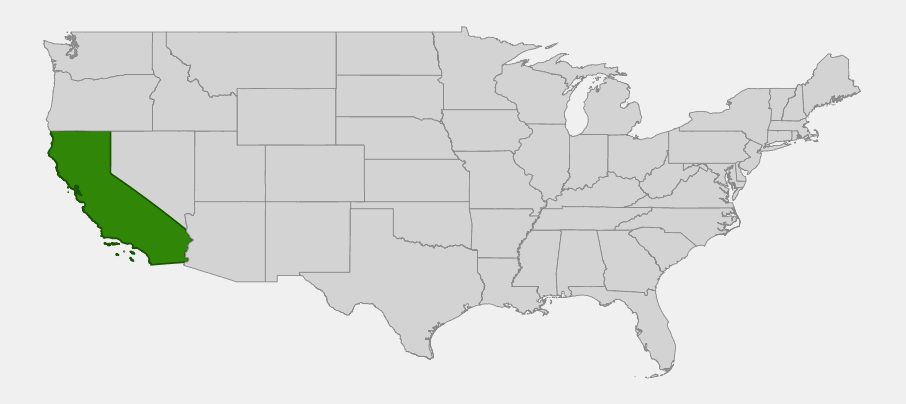
Annual Checkerbloom’s native range sits outside the states covered by PlantNative’s current regional lists, so no 📋 regional list currently features this species; it is included here for California gardeners restoring vernal pool and seasonal wetland habitat.
Growing & Care Guide
This is not a plant for the average dry California garden bed. It is a specialist that wants to replicate a vernal pool or wet meadow, and it rewards gardeners who have — or are willing to build — a low, poorly drained spot that collects and holds winter rain.
Light
Annual Checkerbloom grows well in full sun near the coast, where fog and cool temperatures keep soil moisture up, and appreciates light shade in hotter inland foothill sites. The main requirement is water, not shade; a sunny but reliably wet spot will outperform a shaded but dry one.
Soil & Water
Plant it in heavy clay or clay-loam soil engineered or chosen to perch winter water near the surface — the opposite of the fast-draining soil most California natives prefer. A constructed rain garden basin, a vernal-pool-style depression lined with clay, or the naturally boggy edge of a pond are all appropriate. The soil should stand wet or saturated from late fall through spring, then dry out completely by midsummer; the plant’s life cycle is tuned to exactly that cycle, and permanent year-round wetness favors cattails and rushes over this species.
Planting Tips
Because nursery stock is scarce, most gardeners start Annual Checkerbloom from seed sown in fall, directly on the saturated soil surface of a vernal pool basin or rain garden, where winter rains will provide the cold, wet stratification the seed needs to germinate. Avoid digging seed or plants from wild populations, especially anywhere in Mendocino, Sonoma or Marin counties where the rare coastal perennial subspecies occurs — use only seed of documented, legally collected or nursery-propagated origin.
Pruning & Maintenance
The annual form needs no pruning; simply allow the plant to complete its cycle and drop seed before removing the dried stems, which helps the colony persist from year to year. Keep the planting basin free of aggressive wetland weeds like perennial pennywort or non-native rushes that can crowd out the small checkerbloom seedlings as they establish each fall.
Landscape Uses
- Vernal pool and seasonal wetland restoration, paired with other obligate vernal pool natives
- Rain gardens designed to pond briefly after storms
- Pond and stock-tank margins that stay wet through winter and spring
- Educational and demonstration wetland plantings at schools and nature centers
- Seasonal color in a managed wet meadow alongside native sedges and rushes
Wildlife & Ecological Value
Like other members of its genus, Annual Checkerbloom contributes nectar and pollen to the insect community of a habitat type — vernal pools and seasonal wetlands — that is otherwise dominated by grasses, sedges and small annual wildflowers with less showy blooms.
For Pollinators
The open, cup-shaped flowers are visited by native bees, including small solitary bees that specialize on mallow-family pollen, as well as syrphid flies and occasional butterflies. Because the plant blooms through a long window from spring into early fall, it can provide a nectar source after many other vernal pool annuals have already finished and dried down for the season.
For Birds & Other Wildlife
Seed-eating birds forage the small schizocarp fruits in late summer, and the seasonal wetland habitat the plant depends on supports a much broader community, including migratory waterfowl and amphibians that use the same vernal pools for breeding earlier in the year.
Ecosystem Role
As a vernal-pool obligate, Annual Checkerbloom is both an indicator of intact seasonal wetland hydrology and a minor contributor to the structure of that community, filling the brief window between pool drawdown and full summer drought with color and pollinator resources. Vernal pool habitat of this kind has been reduced dramatically across California by agricultural conversion and development, which makes every intact colony of this species, and the wetland it occupies, ecologically significant.
Cultural & Historical Uses
Annual Checkerbloom has no significant recorded history of use by Indigenous peoples of California or in post-contact agriculture or medicine; it is a modest, inconspicuous wildflower of wet ground rather than a plant that was gathered, cultivated or traded. Its modern significance is almost entirely botanical and conservation-related: it is one of several Sidalcea species that California botanists and land managers use as an indicator of healthy vernal pool and seasonal wetland function.
The species was first described in the late nineteenth century by the botanist Marcus E. Jones, part of the broad wave of California floristic work that also described many of the state’s other vernal pool specialists. Today the plant appears mainly in rare-plant surveys, wetland restoration planning documents and native-plant society seed programs rather than in any tradition of cultivation or harvest.
Because the coastal perennial subspecies is uncommon and restricted to a few counties, botanists and conservation groups treat documentation of new or persisting populations as valuable, and discourage any collecting of whole plants from the wild. For most home gardeners interested in growing this species, the appropriate path is seed obtained through a California native plant society chapter rather than field collection.
Frequently Asked Questions
Is Annual Checkerbloom the same as other checkerblooms sold at native plant nurseries?
No. Most checkerblooms commonly sold for gardens, such as Sidalcea malviflora, are perennial, drought-tolerant plants of grassland and coastal bluffs. Annual Checkerbloom (Sidalcea calycosa) is a wetland specialist with very different water needs and is rarely available commercially.
Can I grow Annual Checkerbloom in a normal dry garden bed?
It is unlikely to thrive there. This species needs standing or saturated soil through winter and spring, drying out only in summer. Without that seasonal wet period, seed germination and flowering will be poor or absent.
Is it legal to collect this plant from the wild?
The common annual form is not formally listed as endangered, but the rare coastal perennial subspecies (Point Reyes checkerbloom) is a California plant of conservation concern found at only a few sites. Wild collection of either form is discouraged; use seed from a native plant society or other documented legal source instead.
Where in California is this species found?
In two separate areas: the North Coast and North Coast Ranges from Mendocino County to the northern San Francisco Bay Area, and the western Sierra Nevada foothills from Butte County to Tulare County. It does not occur between these two regions.
Does Annual Checkerbloom have showy flowers like other mallows?
Yes — the pink to purplish, inch-wide flowers are attractive and bloom over a long season, but the plant’s small size and wetland habitat requirement mean it is seen far less often than its showier, drought-tolerant perennial relatives.

Looking for a nursery that carries Annual Checkerbloom?
Browse our native plant nursery directory: California