Prairie Dock (Silphium terebinthinaceum)
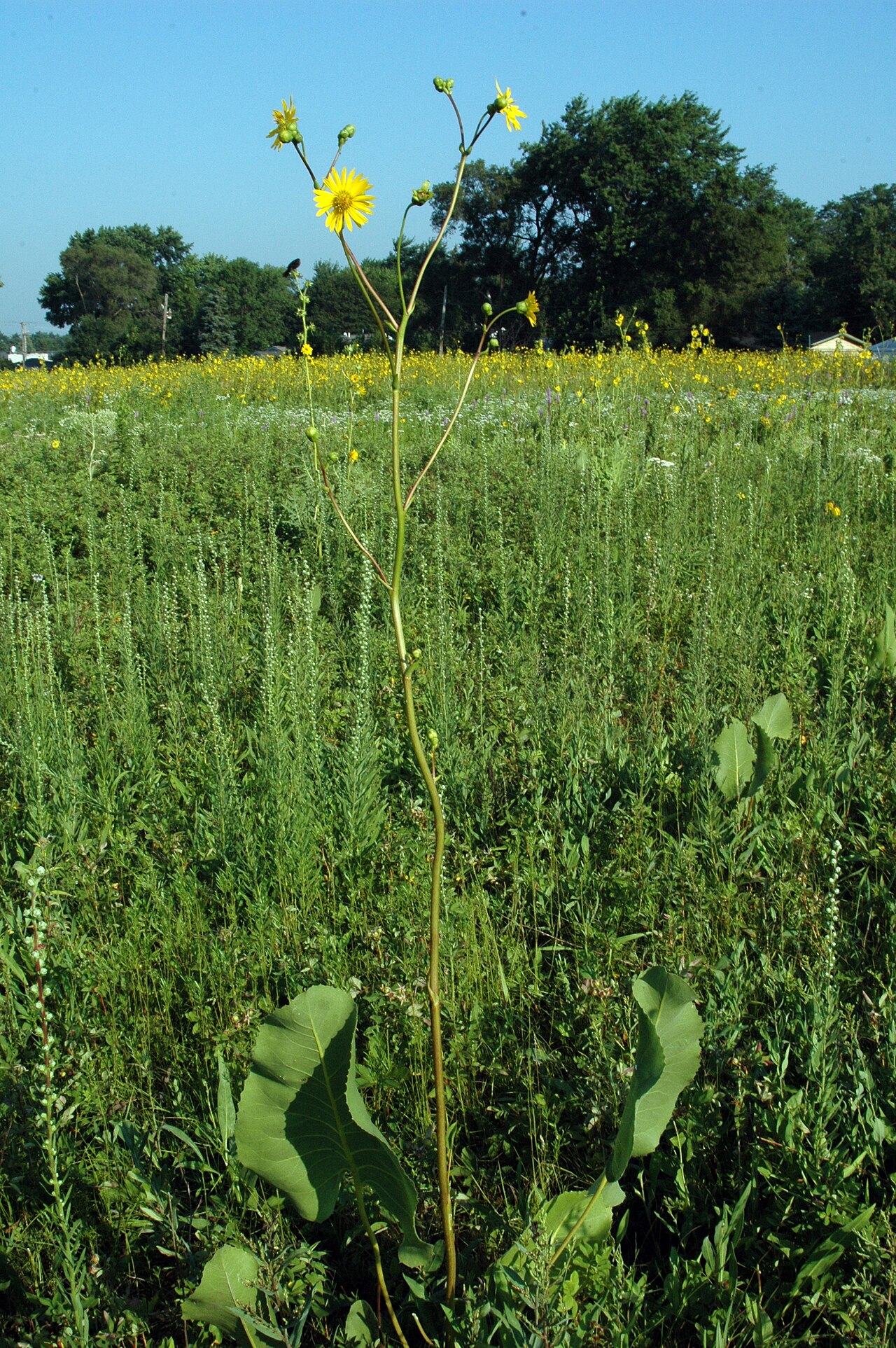
Silphium terebinthinaceum, the Prairie Dock, is one of the signature giants of the tallgrass prairie — a long-lived perennial in the sunflower family best known for two things: leaves the size of dinner plates sitting flat on the ground, and a nearly leafless flower stalk that shoots 4 to 10 feet into the air each summer, topped with small sunflower-like blooms. Few native perennials make a bolder architectural statement, and few are tougher once established.
Prairie Dock is native to the tallgrass prairie region and adjacent open woodlands of the Midwest and mid-South, from Iowa and Wisconsin east through Michigan, Ohio and the Virginias, and south through the Ozarks and the uplands of the Southeast as far as Georgia and Alabama. It is also called “prairie rosinweed,” a name shared with several of its Silphium relatives, because the stems and cut leaves ooze a sticky, resinous sap with a faint turpentine-like smell when injured.
In the garden, Prairie Dock is a slow-to-establish but ultimately indestructible plant, anchored by a taproot that can reach 14 feet down to the water table. It needs real room — a single mature clump can spread its leaves 2 to 3 feet across — and it is not a plant for a small border, but in a prairie planting, a sunny back-of-border spot, or anywhere a bold, drought-tough native centerpiece is wanted, nothing else quite matches it.
Identification
Prairie Dock has one of the most distinctive silhouettes of any tallgrass prairie plant: an entirely basal rosette of enormous leaves at ground level, and a tall, smooth, nearly bare flowering stem rising well above them, branching only near the top into a loose cluster of flower heads.
Leaves
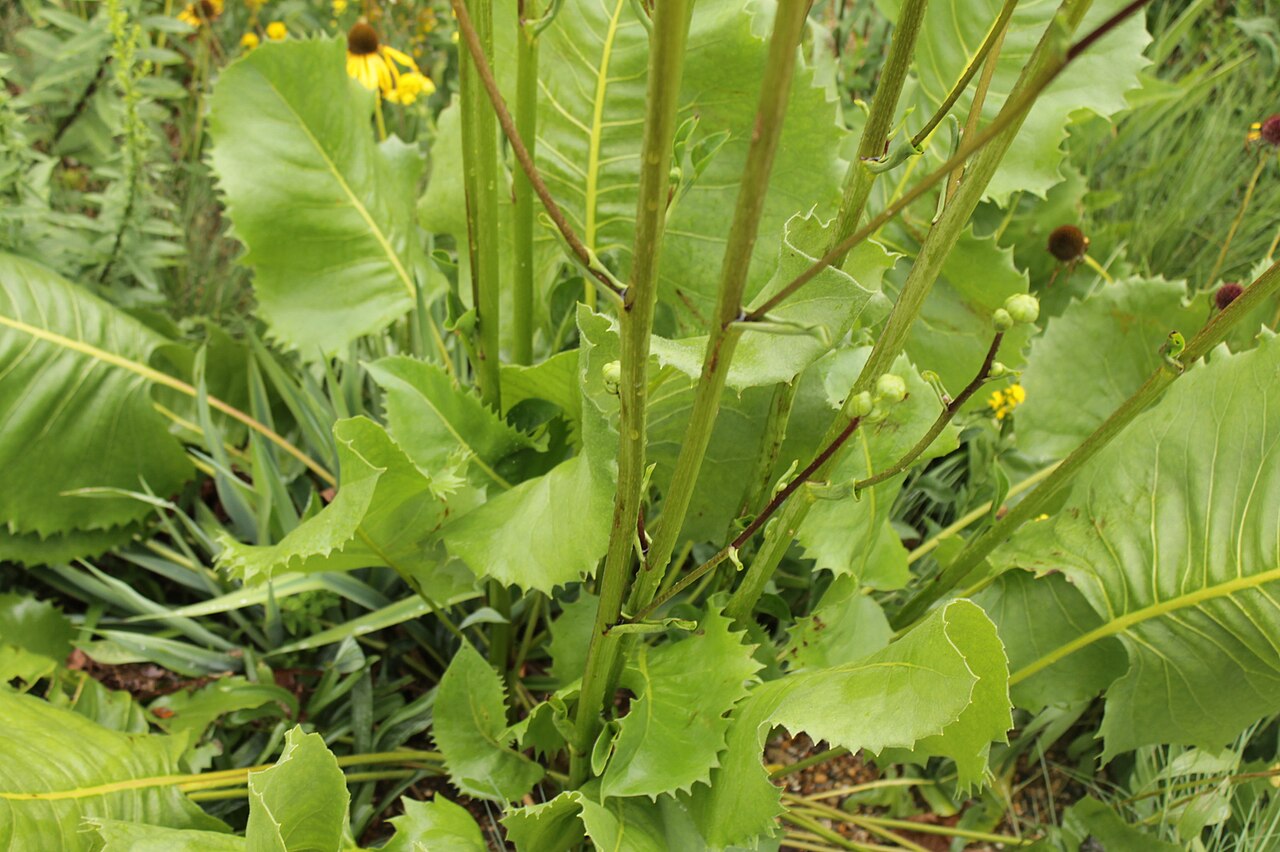
The basal leaves are the plant’s signature feature — large, spade- or heart-shaped, rough-textured on the surface, and often 12 to 24 inches long on their own long petioles. Unlike most plants, Prairie Dock orients these leaves vertically and along a north–south axis rather than flat and face-up to the sun, a specialized adaptation that keeps the leaf surface cooler at midday and reduces water loss while still capturing morning and evening light. Researchers have found that the majority of a plant’s leaves hold remarkably close to this north–south, near-vertical orientation. No true stem leaves exist; the flowering stalk is bare or has only a few small, reduced leaves.
Flowers
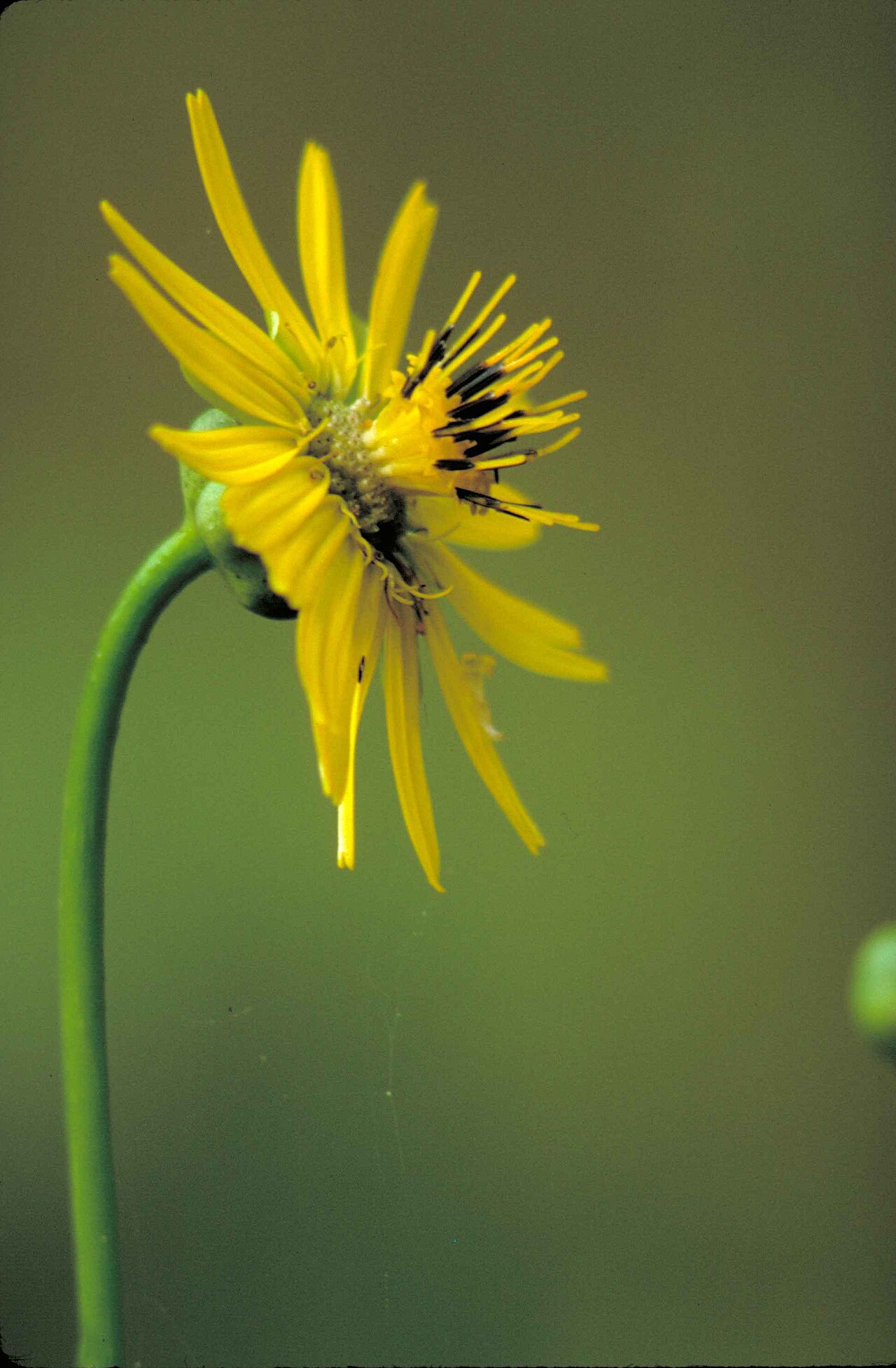
From mid to late summer, smooth green-gray flowering stalks rise 4 to 10 feet tall, branching sparingly near the top into a loose, open array of yellow, sunflower-like flower heads 2 to 2.5 inches across. Each head has a ring of yellow ray florets around a center of yellow-and-black disc florets. The stalks are stout enough to stand upright without staking even at full height, though wind and heavy rain can occasionally topple an especially tall specimen.
Sap & Stems
Breaking a leaf or stem releases a clear, sticky resin that dries into a gum with a faint pine-like scent — the source of the alternate common name “prairie rosinweed.” This resinous sap is a family trait shared with the closely related compass plant (Silphium laciniatum) and cup plant (Silphium perfoliatum).
Quick Facts
| Scientific Name | Silphium terebinthinaceum |
| Family | Asteraceae (Aster/Sunflower) |
| Plant Type | Herbaceous perennial wildflower |
| Mature Height | 4–10 ft in flower (basal leaves 1–2 ft) |
| Mature Spread | 2–3 ft basal rosette |
| Growth Rate | Slow to establish; vigorous once the taproot is deep |
| Sun Exposure | Full Sun |
| Water Needs | Average; excellent drought tolerance once established |
| Soil Type | Deep loam preferred; tolerates gravelly or rocky soils |
| Soil pH | Neutral to slightly alkaline (about 6.0–7.5) |
| Bloom Time | July – September |
| Flower Color | Yellow |
| Fall Color | Leaves brown and persist into winter |
| Fruit | Flat, winged achenes in the dried flower heads |
| Deer Resistant | Yes, the rough, resinous leaves are rarely browsed |
| USDA Hardiness Zones | 4–8 |
Native Range
Prairie Dock is native to the tallgrass prairie and prairie-woodland margin of the Midwest, extending into the Appalachian foothills and uplands of the Southeast. Its range runs from Iowa and Missouri in the west to Wisconsin and Michigan in the north, east through Illinois, Indiana, Ohio, West Virginia and Virginia, and south through Kentucky, Tennessee, Arkansas, North Carolina, South Carolina, Mississippi, Alabama and Georgia. A small, critically imperiled population also occurs in Ontario, Canada, at the northern edge of the species’ range.
Typical habitat includes black-soil tallgrass prairie remnants, gravel and hill prairies, dry to mesic prairie openings in oak woodland, and limestone glades, nearly always in full sun. Prairie Dock is notably persistent along roadsides and old railroad rights-of-way, some of the last refuges of unplowed prairie soil in much of its range, which is one reason it survives in areas where the original prairie has otherwise been converted to agriculture.
Habitat loss to agriculture is the main historical threat to Prairie Dock, but the species itself is resilient: its deep taproot lets it recover quickly after fire, mowing, or even grazing, by resprouting from below ground. This toughness has helped it persist in degraded and fragmented prairie remnants far better than many other prairie specialists, and it remains widespread, if never abundant, across its range today.
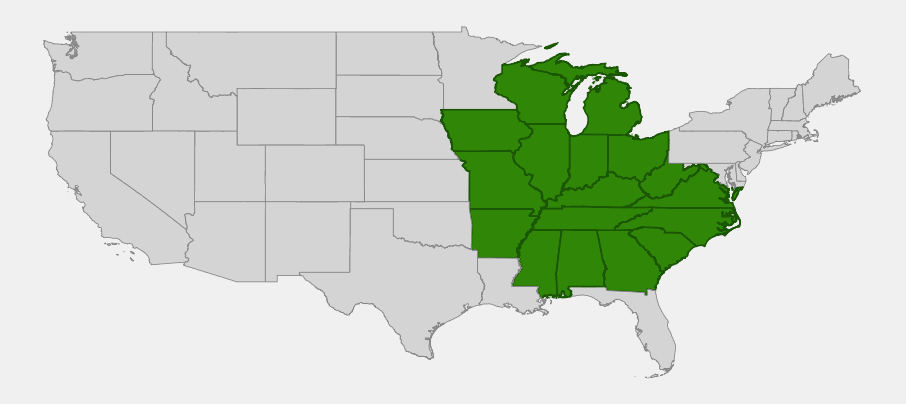
📋 Regional plant lists featuring Prairie Dock: Illinois, Iowa & Missouri · Michigan, Wisconsin & Eastern Minnesota · Ohio & Indiana · Kentucky & Tennessee · Arkansas, Louisiana, Eastern Oklahoma & Eastern Texas · Georgia, Alabama & Mississippi · Maryland, Virginia & West Virginia · North Carolina & South Carolina
Growing & Care Guide
Prairie Dock asks for patience up front and gives almost no trouble afterward. Give it room, sun and time to put down its taproot, and it will anchor a prairie or sunny border for decades.
Light
Full sun is essential. Prairie Dock is a true prairie plant that needs at least 6 to 8 hours of direct sun to flower well and hold its stalks upright; in shade it grows leggy, flowers poorly, and is more prone to flopping.
Soil & Water
Deep, loamy soil is ideal, letting the taproot descend without obstruction, but established plants tolerate rocky, gravelly or clay soils reasonably well. Water regularly through the first one to two growing seasons while the taproot develops; after that, Prairie Dock is remarkably drought tolerant and rarely needs supplemental watering except in severe, prolonged drought.
Planting Tips
Plant small container stock rather than trying to move an established plant, since the long taproot makes transplanting mature specimens difficult and often fatal. Give each plant at least 3 feet of clearance in every direction — the basal leaves alone can span 2 to 3 feet across, and crowding stunts the rosette. Expect little visible growth above ground in the first year or two while the plant builds its root system; flowering often does not begin until the third or fourth year.
Pruning & Maintenance
Prairie Dock needs almost no maintenance. Leave the dried flower stalks standing through winter for seed-eating birds, then cut them back in late winter before new growth begins. The basal leaves persist, browning gradually, and can be tidied in spring. No fertilizer is needed; rich soil can actually make the plant grow larger than many gardens have room for.
Landscape Uses
- Prairie and meadow restoration, as one of the classic tallgrass “signature” species
- Back-of-border accent in a sunny native perennial bed, where its height adds vertical structure
- Bold foliage specimen for gardeners wanting a tropical-looking leaf in a fully hardy native plant
- Pollinator gardens, paired with compass plant, coneflowers and native grasses
- Erosion control on slopes where its deep taproot helps stabilize soil long-term
Wildlife & Ecological Value
Prairie Dock is a long-season resource for prairie wildlife, from its summer bloom through its persistence as winter seed and cover.
For Pollinators
The yellow flower heads attract a wide range of native bees, including specialist bees that nest beneath or within prairie dock plants or use parts of the plant in nest construction, along with honeybees, butterflies and beneficial wasps. Because it blooms in mid- to late summer, Prairie Dock provides nectar and pollen during a period when many spring prairie wildflowers have already finished.
For Birds
Goldfinches and other seed-eating songbirds forage the ripe seed heads in fall and winter, and the tall, sturdy stalks left standing through the cold months offer perching and foraging structure above the snow line.
For Mammals
The rough, resinous leaves are seldom browsed by deer or rabbits, making Prairie Dock one of the more reliably deer-resistant tall native perennials, useful in gardens where browsing pressure limits other choices.
Ecosystem Role
As a long-lived, deep-rooted prairie dominant, Prairie Dock plays an outsized structural and ecological role: its taproot draws water and nutrients from well below the reach of shallow-rooted grasses, its persistence on roadsides and rail corridors has preserved fragments of prairie genetic diversity, and its ability to resprout after fire or disturbance helps anchor prairie restoration on even badly degraded sites.
Cultural & Historical Uses
Several Indigenous nations of the tallgrass prairie region used Prairie Dock medicinally, preparing root tea for a variety of purposes, including as a treatment for liver ailments, fever and enlarged spleen, and using the smoke from burning the plant for nerve pain, congestion and rheumatism. The resinous sap that gives the plant its “rosinweed” name was also chewed, in the manner of chewing gum, by some communities, a use shared with other resin-producing Silphium species such as compass plant.
These traditional medicinal applications are a matter of historical and ethnobotanical record rather than a current recommendation; Prairie Dock is considered potentially toxic in some preparations, and none of its historical uses should be treated as guidance for self-medication today.
In more recent history, Prairie Dock became an emblem of the tallgrass prairie conservation movement of the twentieth century, prized by prairie restorationists and naturalists both for its ecological toughness and for its sheer visual drama — a plant that, as one longtime observer put it, looks almost unreal towering over the grass with leaves like elephant ears at its feet.
Frequently Asked Questions
Why are Prairie Dock’s leaves oriented the way they are?
Researchers have found that the plant orients most of its leaves close to vertical and facing north–south rather than flat and sun-facing. This arrangement appears to reduce leaf temperature and water loss at midday while still capturing useful light earlier and later in the day, an adaptation to the hot, dry conditions of open prairie.
How long before Prairie Dock blooms from a young plant?
Patience is required. Most plants spend their first two to three years building the deep taproot before producing a flowering stalk, so don’t be concerned if a young plant shows only basal leaves at first.
Is Prairie Dock the same as Compass Plant?
No, though they are close relatives in the same genus and often grow together. Compass plant (Silphium laciniatum) has deeply cut, fern-like leaves and leafy flowering stems, while Prairie Dock has smooth-edged, spade-shaped leaves confined to the base of the plant, with a nearly bare flowering stalk.
Can I eat or use Prairie Dock medicinally?
Various Indigenous communities historically used root tea and smoke from this plant for a range of ailments, but the plant is considered potentially toxic, and those historical uses are not a safety guide. Treat it as a garden and wildlife plant, not a food or home remedy.
How much space does Prairie Dock need?
More than most prairie perennials. The basal leaf rosette alone can reach 2 to 3 feet across, and the plant is very long-lived, so give it a permanent spot with at least 3 feet of clearance rather than planting it in a tight border.

Looking for a nursery that carries Prairie Dock?
Browse our native plant nursery directory: Michigan, Missouri, Kentucky & Mississippi · Wisconsin & West Virginia · Illinois, Indiana & Iowa · Ohio & North Carolina · Tennessee, Virginia & South Carolina · Arkansas & Alabama · Georgia